Richard P. Spencer House – Deep River Public Library // 1881

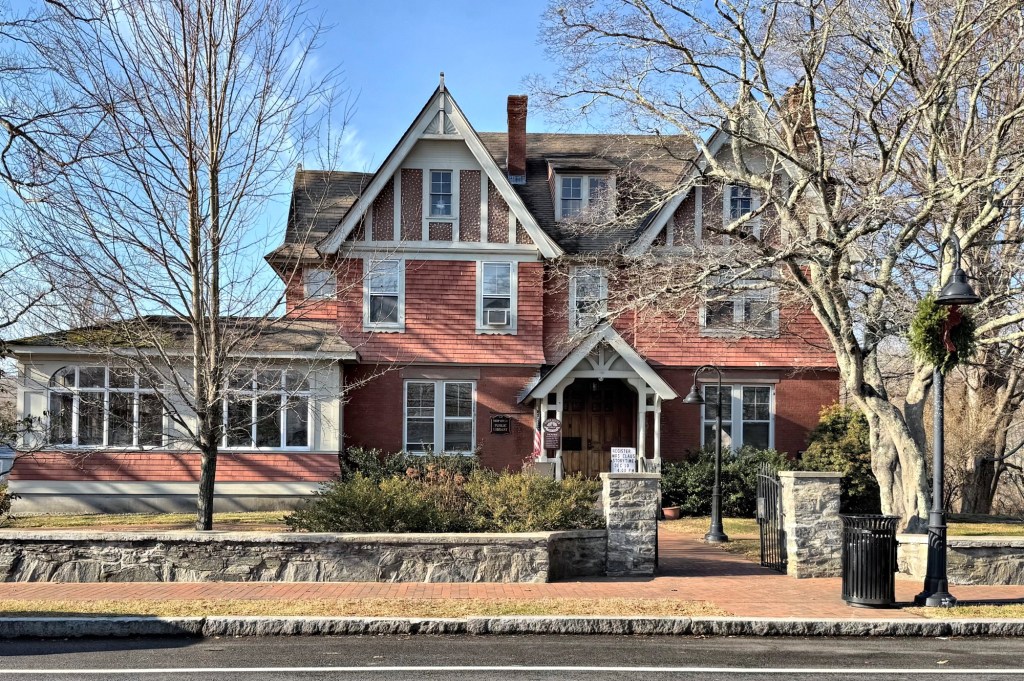
The finest extant Queen Anne Victorian-era house in the town of Deep River, Connecticut, is located on Main Street and since the 1930s, has been home to the town’s public library! How’s that for adaptive reuse?! This residence was built in 1881 for Richard Pratt Spencer (1820-1910), a local prominent businessman who lived to be 90 years old. Spencer lived here with his second wife, Juliana Selden, who was 32 years his junior, and three children until his death in 1910. When Spencer’s widow died in 1932, the heirs sold the property to the Saybrook Library Association (before the town renamed Deep River in 1947), which then, in turn, sold the building to the town for a small price in order to convert it into a library. Opened to the public in 1931, the Deep River Public Library has been preserved inside and out with historic fireplaces, woodwork, and features. The only notable change occured in 1995 when a children’s room addition was built to resemble an old porch. The library even retains the original pebbledash finish in the gables, a rare detail not commonly found in typical old houses of the period.


Harcourt Wood Memorial Library // 1902

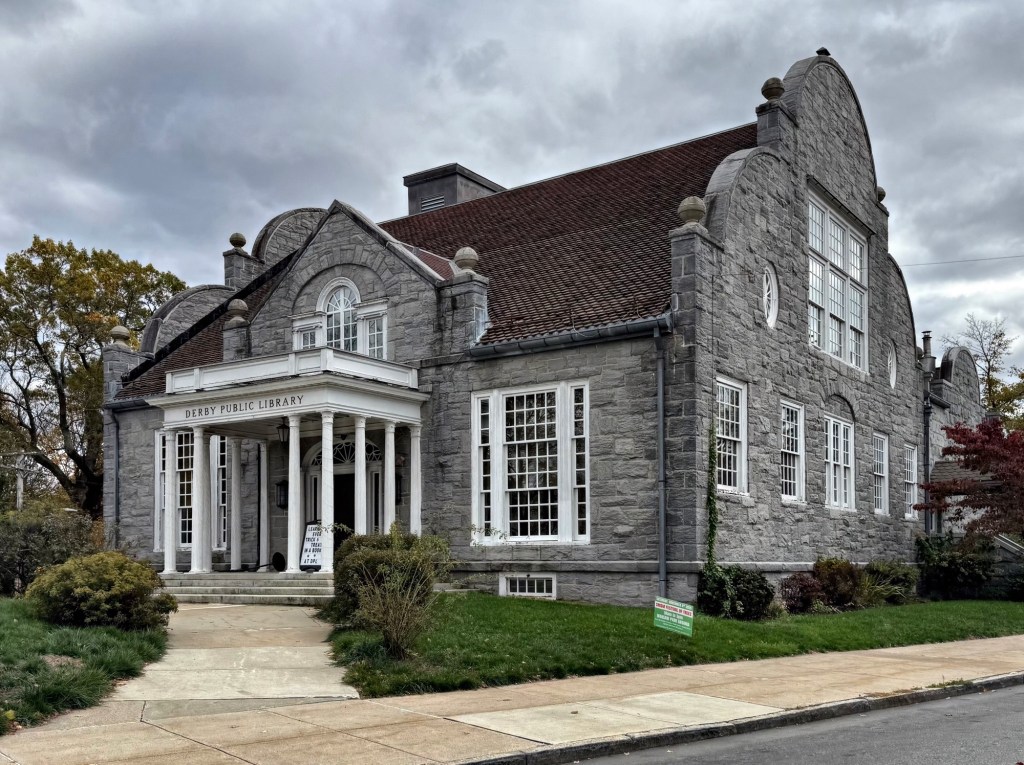
Derby’s main public library building, the Harcourt Wood Memorial Library, is located a few blocks from the city’s downtown on a unique triangular lot formed by Elizabeth and Caroline Streets. The one-story library is one of the finest of its period in all of New England and is built primarily out of Ansonia granite. The library was designed by architect Hartley Dennett and is notable for its Colonial Revival style porticoed entrance and distinctive rounded Flemish gables on the side walls. The interior is said to retain most of its original woodwork and many of its original furnishings. The building was constructed in 1902 following the donation of land and funds for its construction by Hamilton Holton Wood, a native of Montreal who made his fortune operating Derby’s streetcar railway system. The library is named in honor of Wood’s son Harcourt, who died at the age of 12 in 1897. The community does a great job at preserving the structure, which is one of the finest of its type in the region. 

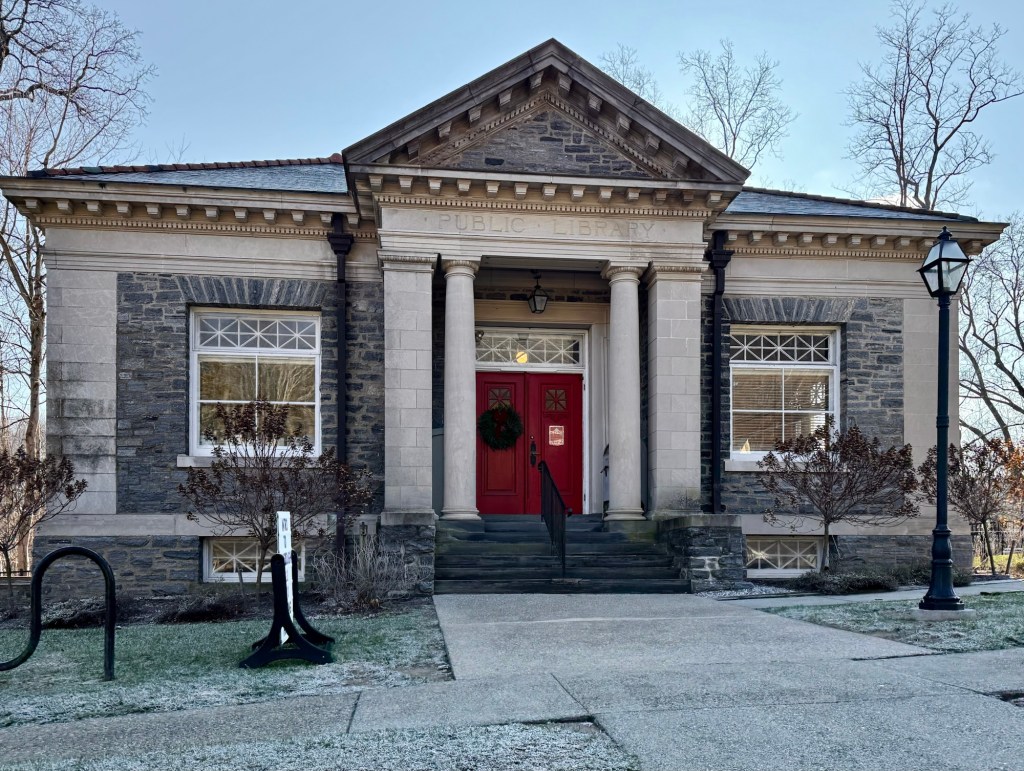
Derby Neck Library // 1907

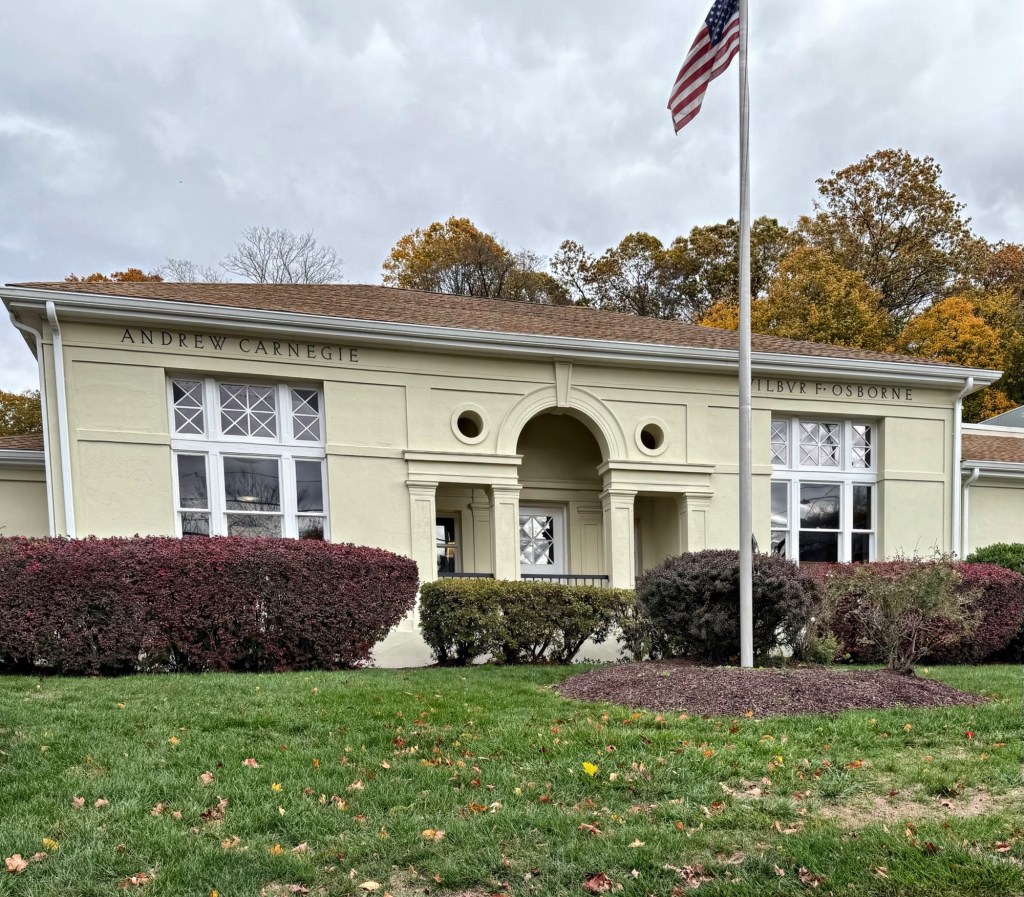
The Derby Neck Library in Derby, Connecticut, is a beautiful example of an early 20th century library and one of a few Carnegie libraries in the state. The beginnings of the library began in 1897, when Wilbur F. Osborne and his wife, Ellen Davis Osborne, who lived at the nearby Osborne Farm, donated $50 to the nearby school to begin a small library in the building. After years of growth, Wilbur Fisk Osborne, requested funds from Andrew Carnegie, who was donating money to communities all across the country for such purposes, to build a new library for Derby Neck. In 1906, Carnegie donated $3,400 to the community, and planning began on the building. Sadly, Osborne died around the time the library opened in 1907. The building was designed in the Classical Revival style by architect, Henry Killam Murphy of Connecticut. Osborne’s daughter, Frances Osborne Kellogg, who inherited her father’s farmhouse nearby, directed the library until her death in 1956. The building was expanded in 1972 and again in 1999.

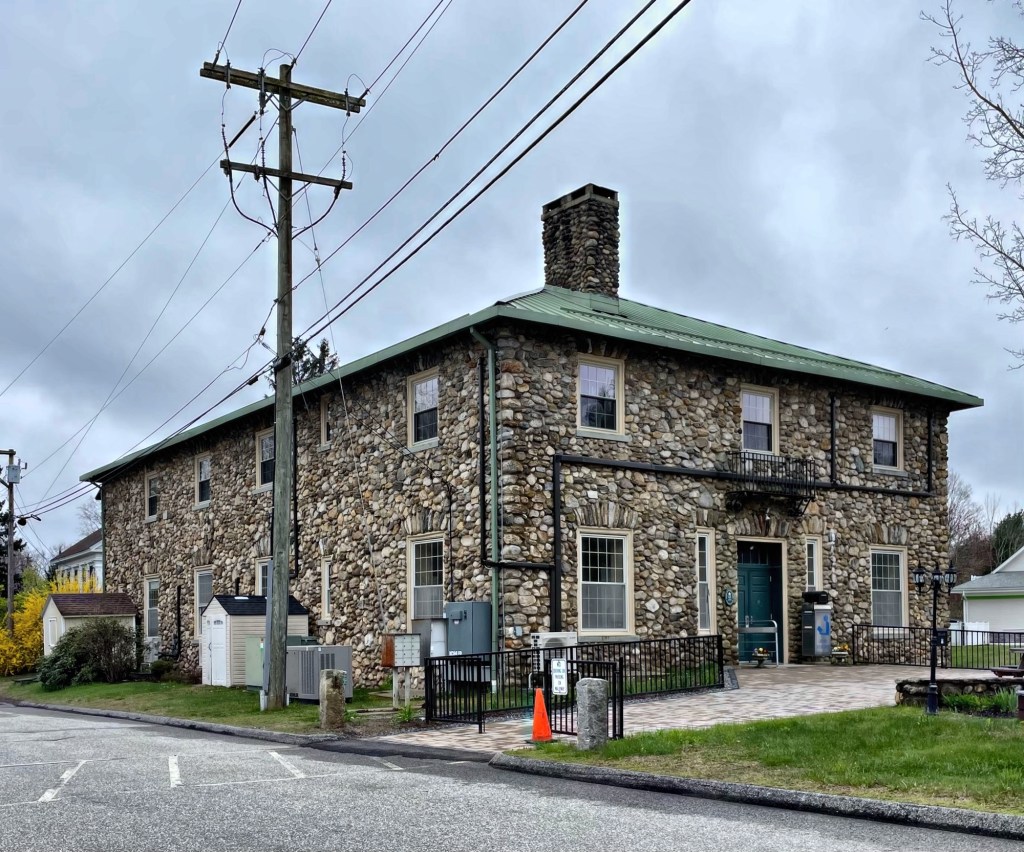
Former Cornwall Public Library // 1908

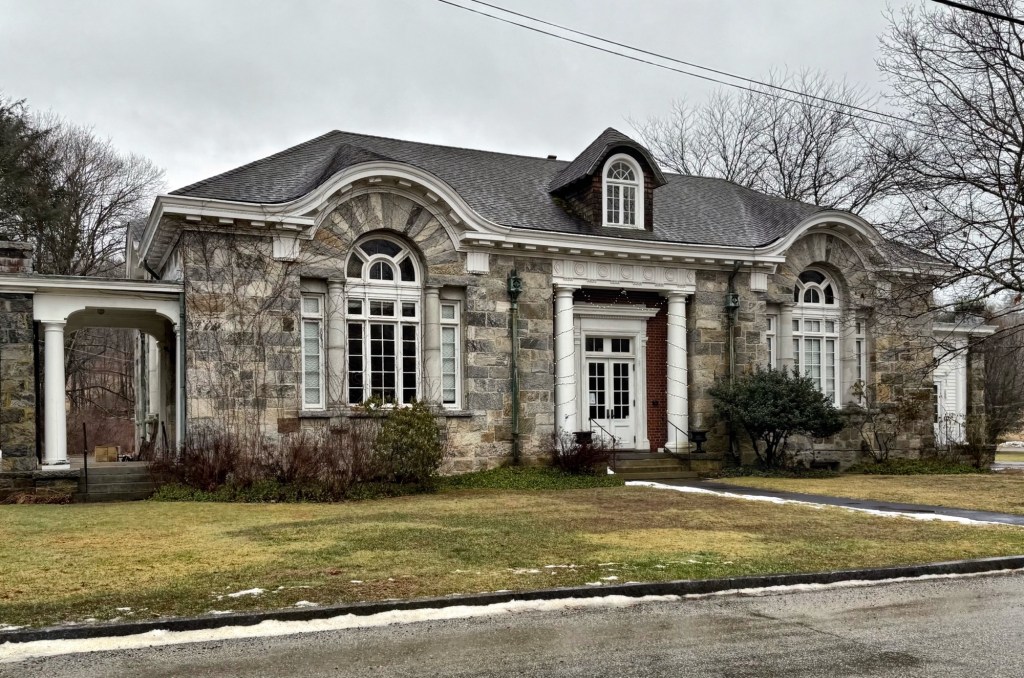
Constructed of random-coursed stone, this charming building in Cornwall, Connecticut, exhibits a prominent classical entry, Tuscan pilasters, and modillion eaves. This handsome structure was completed in late 1908 following a substantial donation to the town for it’s first purpose-built library by summer resident John E. Calhoun. Mr. Calhoun had cultivated an interest in architecture and is said to have designed the building, and later designed his own home in the village years later. The high-style architectural building documents the transformation of Cornwall from a sleepy agricultural town into a fashionable residential retreat in the late nineteenth and early twentieth centuries. The building operated as the town’s public library until 2002 when the contemporary library building was completed. This stone structure was converted to the town hall.

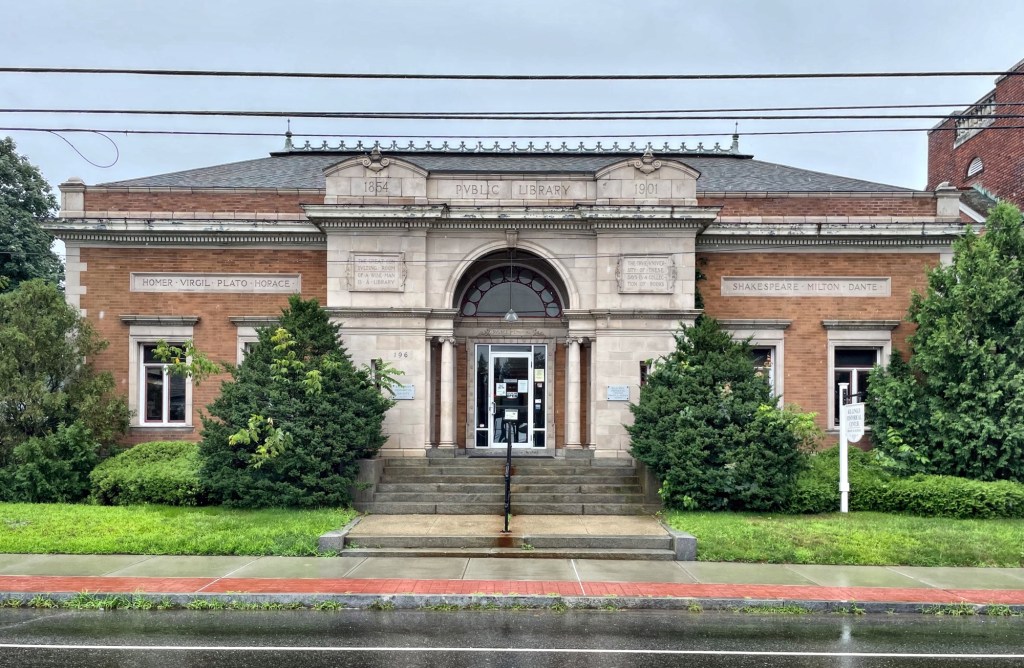
Bugbee Memorial Library // 1901

The Bugbee Memorial Library sits on Main Street in Danielson, the main village in the town of Killingly, Connecticut. The library was built in 1901 and financed by a bequest from Edwin Holmes Bugbee, who made his fortune at local mills. When Bugbee died in 1900, his estate left his entire collection of books along with funds for a new library for Danielson. Boston architect Walter Jefferson Paine designed the library building in the Classical Revival style with buff brick and stone construction. The names of Homer, Virgil, Plato and Horace, along with Shakespeare, Milton and Dante, are boldly emblazoned across the facade denoting the building as a house of learning. The library was outgrown, and a new library was built nearby in 1994. The old Bugbee Memorial Library has since been occupied by the Killingly Historical Society.

Old Chaplin Public Library // 1911

In his will, lifelong Chaplin, Connecticut resident William Ross (1833-1908) bequeathed his hometown funds to erect its first purpose-built public library. As planning began, his widow, Emily Jones Ross donated even more to fund a building fitting of her late husband. The Queen Anne/Romanesque Revival style library is built of pressed brick with granite trim and features a prominent rounded corner bay of cedar shingles. The masonry work was done by George E. Snow but I could not locate the architect. The town outgrew the library and moved it into a new building nearby, selling the William Ross Public Library to a private owner, who appears to be renovating it now.

Ivy Glenn Memorial Hall // 1847

Methodists established a small congregation in Eastford, Connecticut by 1826, and by 1831, a new meeting house was built in the center of the village. The meeting house was used jointly by Methodists and Universalists, each having the right to occupy it half the time. By 1847, Methodists here were able to erect their own church, this building, in the Greek Revival style. Originally, the building had two doors on either side of a center window in the façade. There was a steeple and, rare in those days, a pipe organ in the sanctuary.  In 1916, the church joined with the nearby Congregational church, requiring them to sell the building ten years later. The town of Eastford bought the structure for $200 in 1926 for use as a town hall. In 1934, the Civil Works Administration provided funds to renovate the building with the town library being installed in a portion of the basement along with town offices and a vault. Town meetings were held in the former sanctuary space upstairs. When the space was outgrown for town offices, a new building was constructed elsewhere and this building transitioned to solely library use. The renovation project was paid for by money bequeathed by Wilmer Glenn, a New York stockbroker who spent summers town. He donated funds in memory of his late wife, Ivy.  The present-day name of the building came to be the Ivy Glenn Memorial and the library moved into its new spacious home in 1972.

Babcock Library – Knowlton Memorial Hall // 1924

In the 1840s, Archibald Babcock (1780-1862) from Ashford, Connecticut, went west to engage in the California Gold Rush to seek his fortune. He did well and upon his return, moved to Charlestown, Massachusetts and began purchasing property for redevelopment. Upon his death in 1862, Mr. Babcock bequeathed $3,000 to the Town of Ashford start a “free” library there. For the next 60 years the library was located in a variety of private homes and country stores in town until the 1920s when this stone structure was built to house the town hall and library. Construction was made possible by a gift from Charles Knowlton, whose family had lived in the area since the 18th century. When built, it featured a number of modern innovations, including electrical service (generated on site), and steam heat. In addition to town offices and the library, the building also has an auditorium which is used for town meetings. Architect Herbert Loud furnished plans for the building which is rustic Arts and Crafts in style with randomly laid fieldstone walls with wide mortared joints. The roof eaves show exposed rafter tails below the shallow hipped roof.

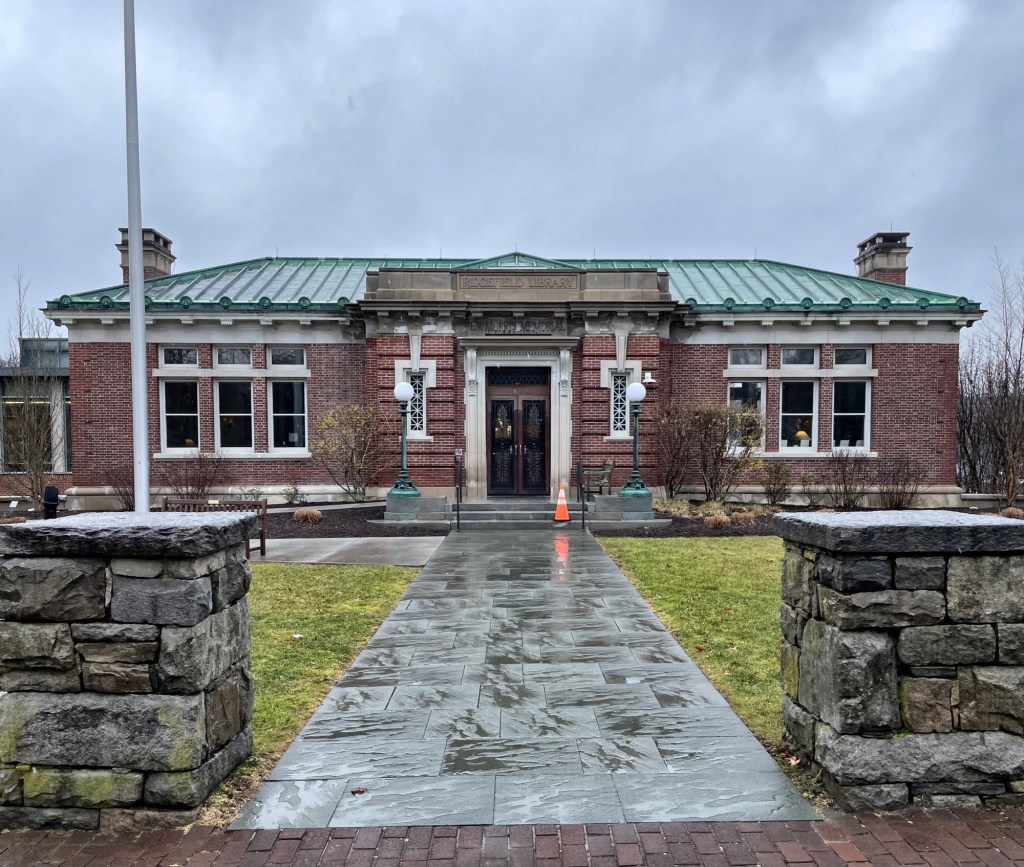
Ridgefield Public Library // 1901

The Ridgefield Public Library is an intriguing Beaux Arts style building from the turn of the 20th century. Built in 1901, the brick structure replaced the Smith Tavern, a 1798 frame structure built by Amos Smith right on Main Street. In 1900 the Smith Family sold the property to James N. Morris who had this library built in memory of his wife, Elizabeth, donating it to the town. Architect Raleigh G. Gildersleeve is credited with the design which is comprised of a one-story building constructed of brick with cast stone trim details and ironwork at the door. The library was given later additions, which are recessive in location and detailing to let the original building shine, as it should!