Partridge House // c.1908

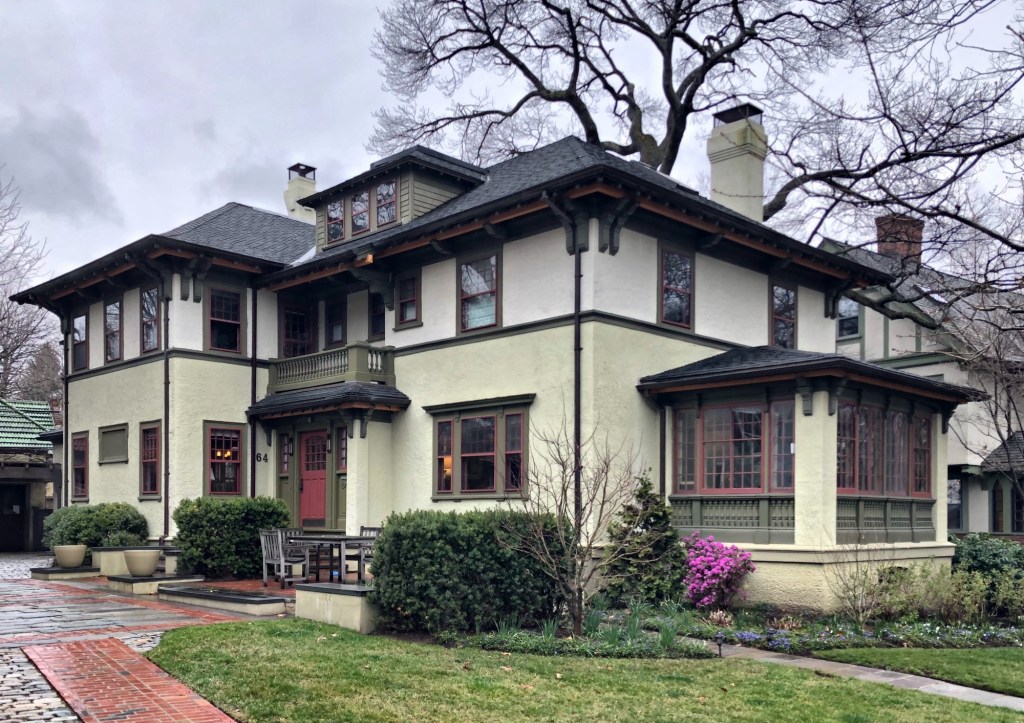
Located on Amory Street in Brookline, this handsome Arts and Crafts style residence dates to about 1908 and while clearly Craftsman in style, does appear to follow the horizontality and form of the Prairie School of architecture, popularized by famed architect, Frank Lloyd Wright. While the architect of this house is unclear, we do know that the first owners were Mr. Frank T. Partridge and his wife, Edith Stevens Partridge. The stucco house features a horizontal belt course, shallow hip roof with broad eaves supported by brackets, and elaborate entry and porches. The colors enhance the architecture of the home perfectly. 
John Smith House // c.1895

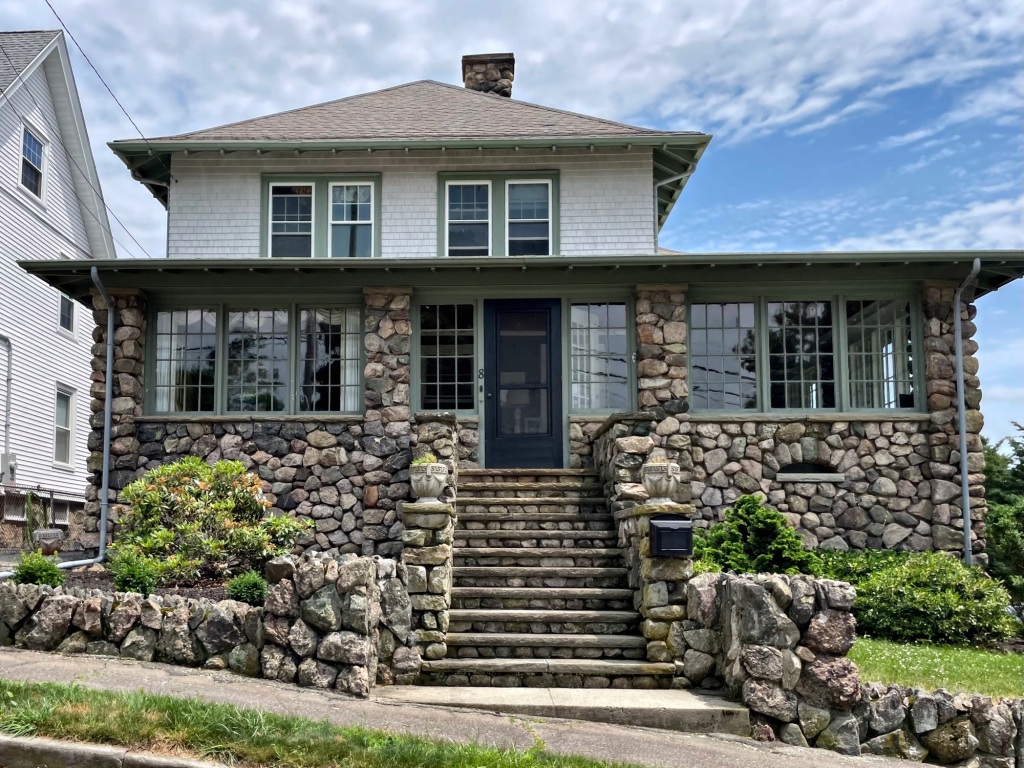
Hull, Massachusetts is an often overlooked town (besides Nantasket Beach Reservation), but there are some really great old houses and buildings to be found in the seaside town. This is the John Smith House on Meade Avenue in the Atlantic Hill neighborhood inland from the peninsular part of town. Development here was fairly slow, but took-off in the late 19th century when cottagers began to develop some house lots here. They were soon joined by year-round residents like John Smith, an ice merchant who built this home around 1895. Craftsman in style, the house exhibits a mix of building materials with a rough fieldstone porch and two matching stone chimneys together with wood shingle siding. The stunning stonework extends from the foundation, uniting the house to its terraced, rocky site. It is one of a handful of homes here that have not yet been altered or covered up by vinyl siding.

Megunticook Clubhouse // 1901

As coastal communities in Maine’s mid-coast began to see more wealthy summer residents, these enclaves of cottages needed clubhouses and spaces to spend their summer days. In 1899, Philadelphian (and Rockport summer resident) Charles Wolcott Henry converted a section of his oceanfront summer estate at Rockport’s Beauchamp Point to a newly established golf club which quickly outcompeted all others nearby. Within a few years, Boston architect Charles H. Brigham, was hired to design this Craftsman style clubhouse that sits on an elevated site with an expansive wraparound veranda providing views of the new course and the Penobscot Bay. The rubble-stone foundation and walls clad in brown-stained shingles are well suited to the rugged coastal Maine site. The golf course, also designed in 1901, was planned by groundskeeper Thomas Grant as a 9-hole course. The recreational complex has been meticulously preserved and is a great example of a turn-of-the-century clubhouse in coastal Maine. The 1901 clubhouse is also said to be the oldest golf building in Maine!

Rochester Grange Hall // 1924

The Grange, officially named The National Grange of the Order of Patrons of Husbandry, is a social organization that encourages families to band together to promote the economic and political well-being of the community and agriculture. Grange Halls can be found in rural towns and villages all over New England, and historically served as a gathering place to discuss agriculture-based business, crops, trade, and issues faced in the community. The Rochester Grange Hall was constructed in 1924 to the designs of architects Brown and Poole of New Bedford, MA and is of the Craftsman style. The National Grange has sharply declined in membership since the late 19th century. In 2013, the Grange signed on to a letter to Congress calling for the doubling of legal immigration and legalization for undocumented immigrants currently in the United States. The Grange now emphasizes an expansion in the H-2A visa program to increase legal immigration and address the crisis-level labor shortage in agriculture.

Sippican Tennis Club // 1908

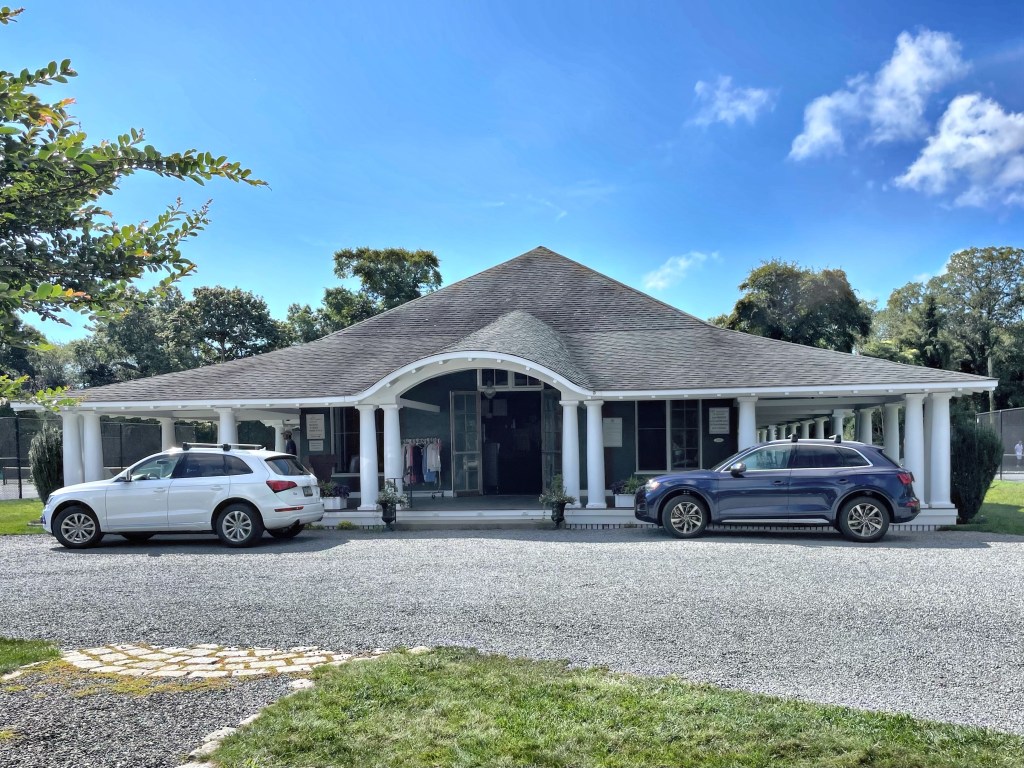
The Sippican Tennis Club in Marion, Massachusetts, was established in 1908 for the purpose of athletic exercise and a place for social gatherings in town. Historically, the town’s population surged in the summer months when wealthy city residents would flock here and stay in their waterfront mansions for a few months a year. The large hipped roof rectangular building was constructed just before the club opened in 1908, and it is flanked by eight tennis courts. Charles Allerton Coolidge, a principal in the well known firm, Shepley Rutan and Coolidge, was one of the original shareholders as well as the architect for the building. He also was a summer resident himself (his home was previously featured). The building is constructed of concrete and features paired, tapered columns which run the perimeter of the structure, supporting a deep porch. The broad elliptical arch and exposed rafters add to the Craftsman style flair of the building.

St. Rita’s Roman Catholic Church // 1916

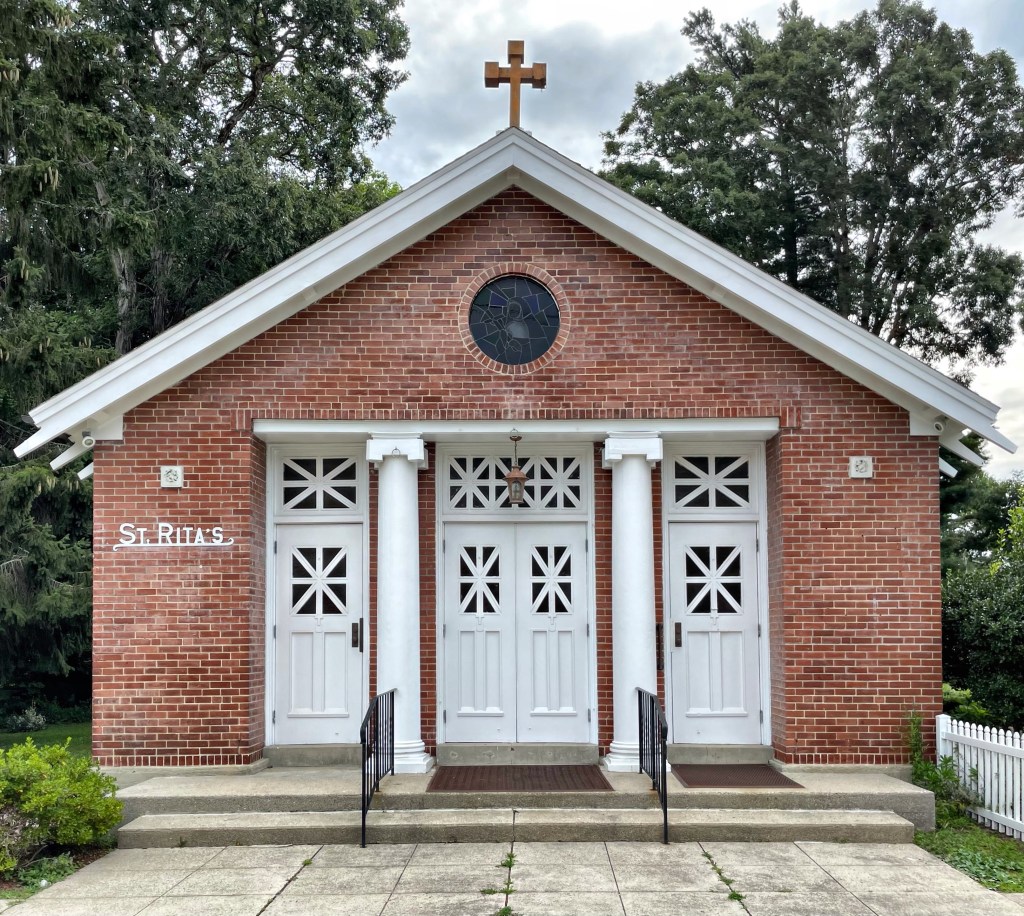
A Roman Catholic parish was established in the South Coast/Cape Cod area by 1830 in Sandwich, where a large glass company employed a number of Irish immigrants. Over the course of the 19th century, several mission churches were established, and eventually a second parish, St. Patrick’s, was established in Wareham in 1911. Soon after, a mission was established in nearby Marion to serve the summertime Catholic community there. A parcel of land was acquired by the Roman Catholic Bishop of Fall River and they hired architect Matthew Sullivan to furnish plans for the small church. Matthew Sullivan (1868–1948) trained in the office of Edmund M. Wheelwright, Boston City Architect (1891-1894). Sullivan succeeded Wheelwright as City Architect and served in that position from 1895 to 1901, when he became a junior partner in the firm of Maginnis, Walsh and Sullivan, which was widely known for its ecclesiastical work, where he too specialized in religious buildings. St. Rita’s Roman Catholic Church is an example of an early 20th century chapel in the Craftsman style, characterized by eaves marked by long projecting rafter tails and a bold entry framed by Tuscan columns.

Brookfield Theatre // 1907

The Curtis School for Boys was founded in 1875 in Bethlehem, Connecticut by Frederick S. Curtis as a private school for young men aged 9-13. Curtis moved the school to Brookfield Center in 1883 and began constructing a campus. Buildings for the 30 pupils and five instructors included a dormitory, President’s residence, schoolhouse, caretaker’s cottage, and gymnasium on 50 acres. The school never expanded beyond a few dozen students, likely under Frederick Curtis’ supervision. The school closed in 1943, at the onset of America’s involvement in WWII, and it never re-opened. The campus sat in the village center for over a decade, with many of the buildings falling to the wrecking ball for safety reasons. Possibly the only building remaining is the 1907 gymnasium, constructed of rubblestone. The building was purchased by the Brookfield Country Players in 1959 and remodeled as a community theater. The theater group was founded two years prior, and it required its own theater space after a school complained about an actor appearing on stage without a shirt, the horror! The group remains a regional institution in the arts and is a great caretaker of their historic Arts and Crafts style building.