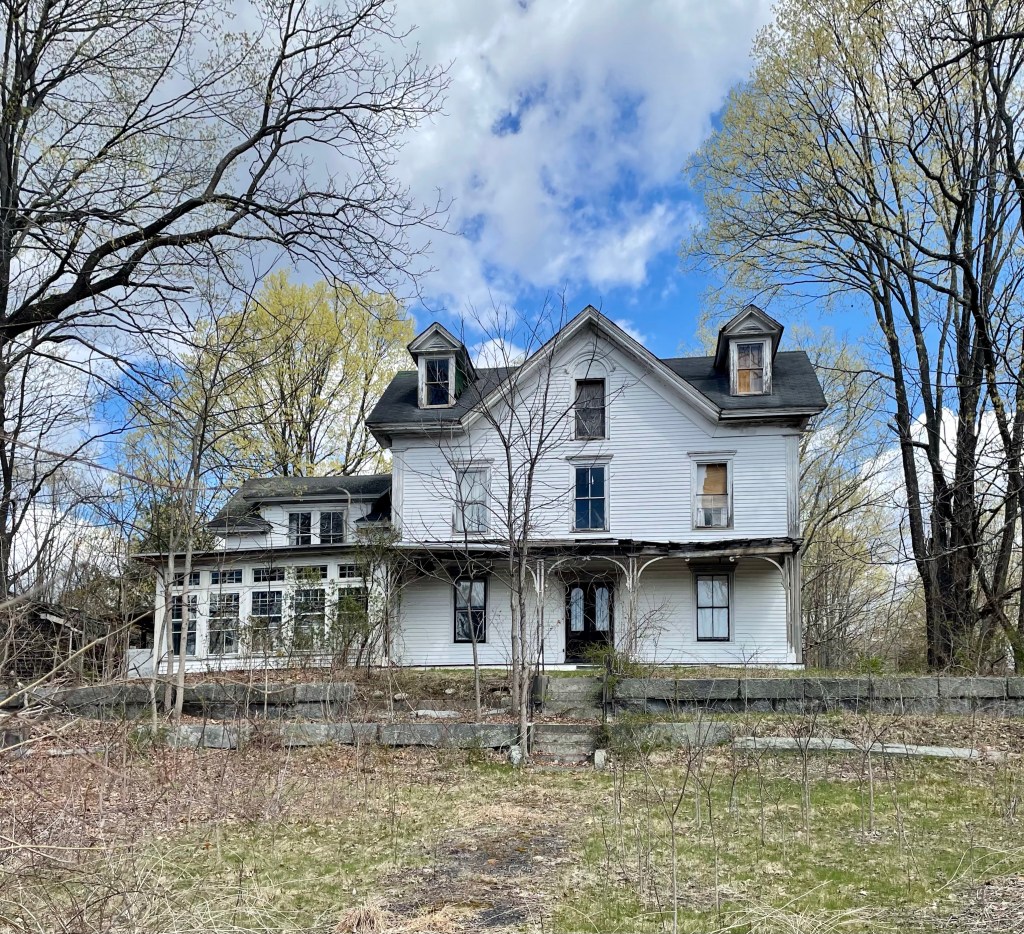
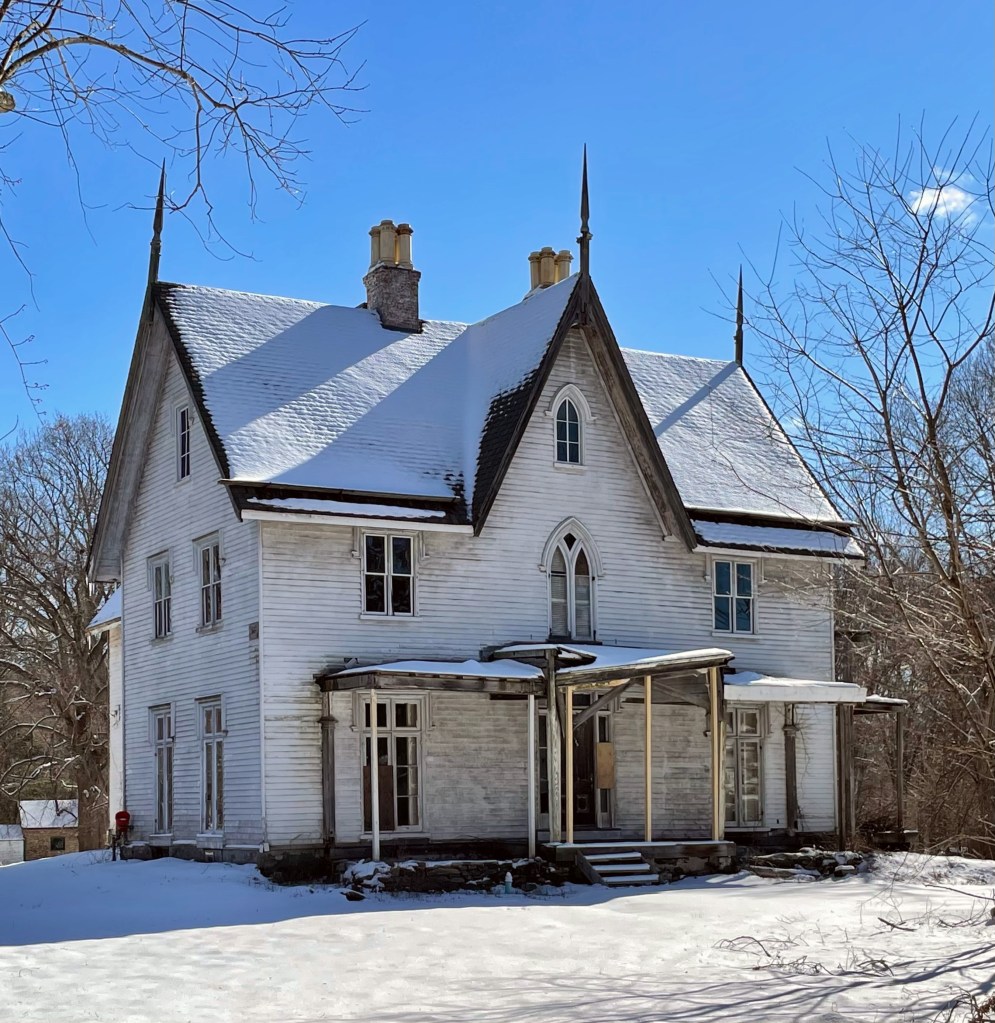
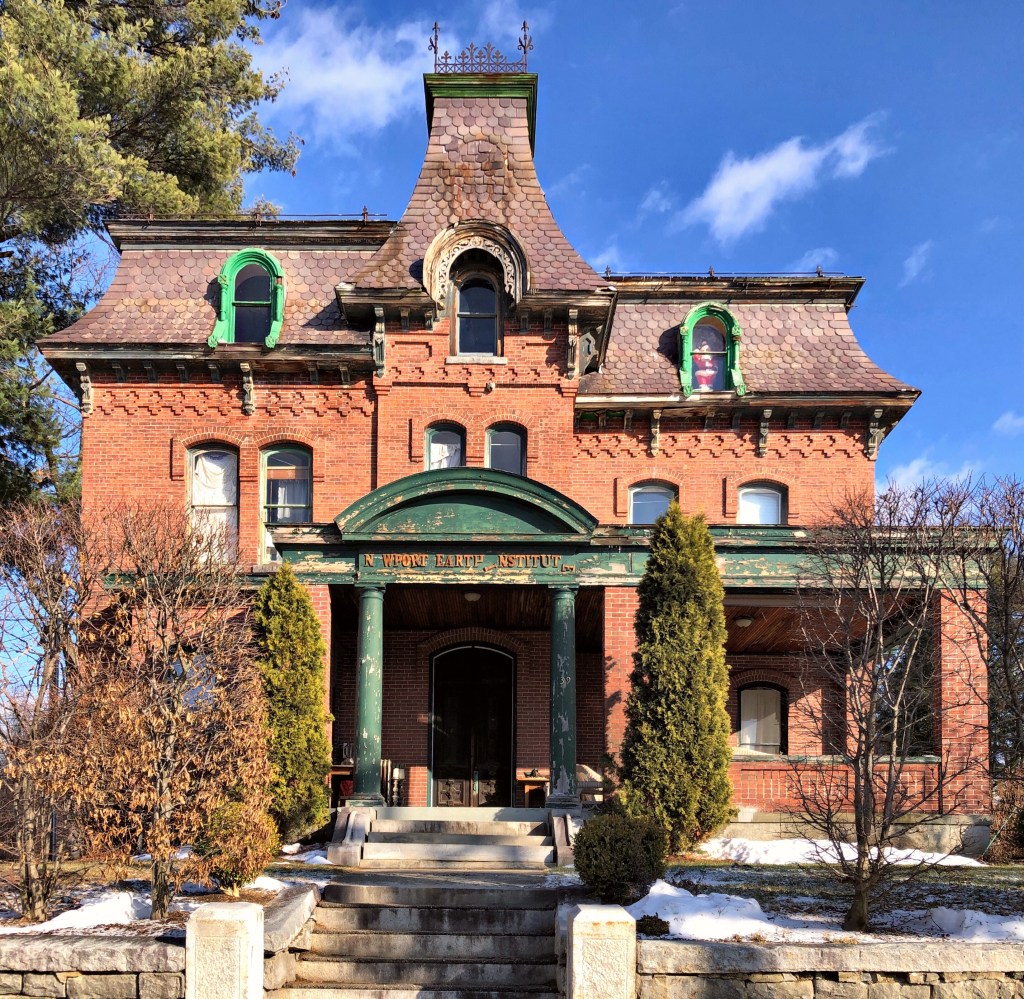
Lancaster Industrial School for Girls – Rogers Cottage // 1855

The Lancaster Industrial School for Girls in Lancaster, Massachusetts, was was established in 1854 as one of the most progressive correctional institutions of its day, and the first in the U.S. for girls. Throughout the 19th century, state governments struggled with how to best deal with youthful law-breakers and vagrants. Some states began to provide correctional facilities, often known as “Industrial Schools,” while other states continued to incarcerate “delinquents” in prisons alongside adults who often were charged with much more heinous crimes. Institutions like the Lancaster Industrial School led the way in social reform, copying a cottage system created in France that emphasized a wholesome, family-like atmosphere and the opportunity to rise above the “low life” slums from which Victorians assumed delinquent children came from. All girls who were under 17 years old at the time of commitment, were housed in one of eight “cottages” where they would each have their own rooms and chores. The Rogers Cottage seen here was one of a handful of the earliest cottages, all identical in design. Matrons and teachers taught the girls the domestic arts, including how to cook and sew. The Industrial School closed in the 1970s and has been used in an ever-diminishing role by the State of Massachusetts ever since. There have been talks about this complex being sold for redevelopment with some old buildings saved, but I am not holding my breath.

Orne-Derby House // 1808

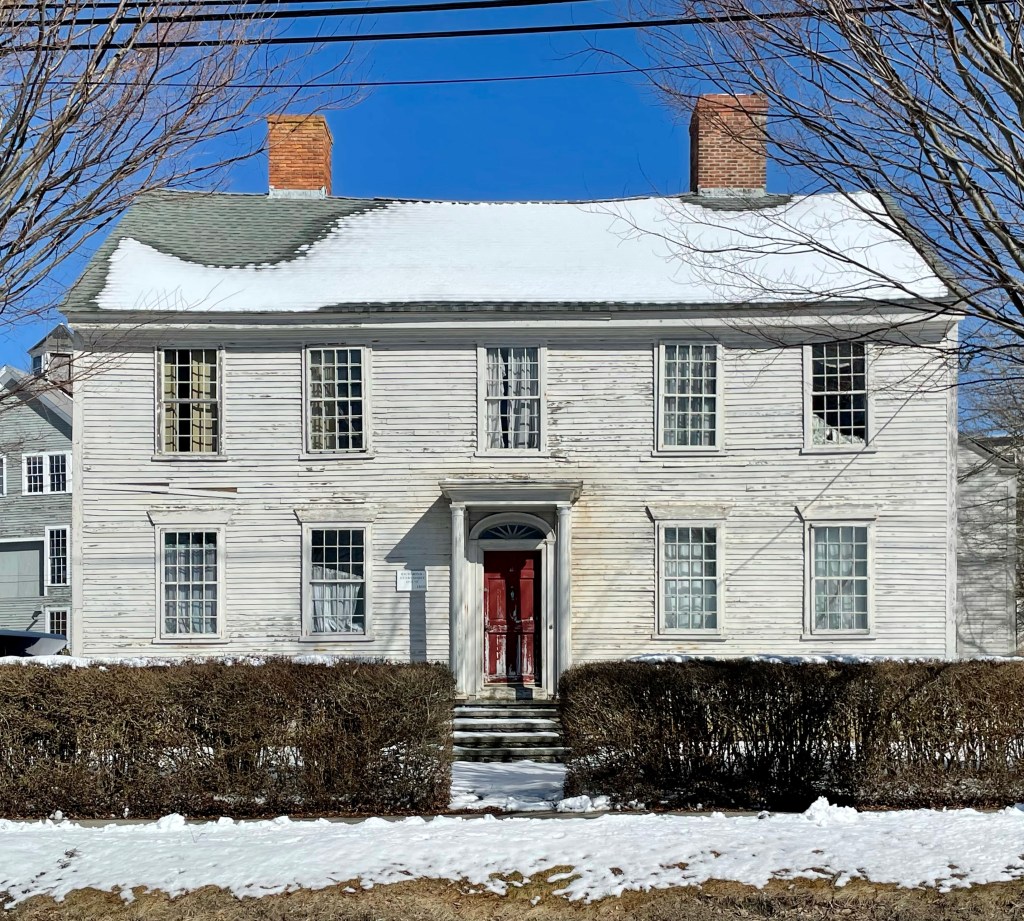
It’s rare to find a house with so much potential in Salem, a town where seemingly every old house has been purchased and lovingly maintained or restored. This home on Federal Street could use some TLC to restore her to her former glory. In 1808, William Orne Jr., a housewright and his wife Polly acquired a mortgage for the lot here and he built a large, Federal style home with gambrel roof, showcasing his building skills. The property was a little more than the couple could handle financially, which was compounded by the War of 1812, and the Royal British Navy blockading maritime trade, which especially hurt Salem’s port. The Orne House was sold in 1817 to Captain John Derby III, who died just a year later, leaving his widow Sarah (Felton)
Derby all his estate. Sarah rented the home to family, but was allowed to live there until her own death in 1857. The stunning home with fanlight at the front door, historic wood windows, and pair of large brick end chimneys all could be saved with a good restoration of the home. Fingers crossed!

Seaside Sanatorium – Superintendent’s Residence // 1936

The last stop we will see at the stunning Seaside Sanatorium campus in Waterford, Connecticut is the former Superintendent’s Residence. Built in 1936, the home is elegantly sited at the waterfront, which would have provided amazing views for the man in charge of running Seaside, the Tuberculosis hospital for children here. Like the Maher Building, Nurse’s Residence, and Duplex Residence previously featured, this building was designed in the Tudor Revival style and is also credited as a work of architect Cass Gilbert. The Superintendent’s Residence is interesting as it has two completely different facades. The campus-facing facade features an L-shape with a garage wing and projecting entry pavilion in stone. Above, a diamond-pane window would allow natural light into what may be the stairhall. At the waterfront, a large open porch (since boarded up) and large windows at the first floor, would provide natural light and air into the building, along with amazing views of Long Island Sound. Additionally, a catslide roof extends from the rightmost bay and covers a recessed porch with basketweave brickwork above. I would for sure live here, could you?

Waterfront Facade

Seaside Sanatorium – Maher Building // 1933

One of the most entrancing and clearly haunted places in Connecticut is the Seaside Sanatorium on the coast of Waterford, CT. It’s founding dates back to the early 1900s, when tuberculosis killed 252 of every 100,000 people living in the state, making it the leading killer in the state early in the century. When Connecticut Tuberculosis Commission members, including Chairman Dr. Stephen J. Maher, a New Haven physician, began hearing of success in Europe with exposure not only to ocean air, but to strong sunlight, they began pushing for a new location in Connecticut to treat children with tuberculosis. The first Seaside was established in Niantic in 1918, which was outgrown, and a newer, modern facility on the coast was needed. The State found a site on the coast of Waterford and hired world-renowned architect Cass Gilbert to design the complex in the Tudor Revival style, a departure from the Colonial or Classic Revival styles favored at the time for such projects. When the facility opened, children would spend as much time as possible exposed to the sun’s rays as part of their treatment here. They played sports, took lessons, ate, read, and played music outside year-round, either on the beach, the lawns, or the three levels of south-facing porches. By the early to mid-1950s, tuberculosis became curable with antibiotics that required limited bed rest and could be given in a regular hospital setting. After its use as a TB facility ceased, the state re-opened Seaside as a hospital for people with mental illness, which too closed in the 1990s. The massive campus has sat vacant since, rotting away as a State Park. Apparently the State has been looking for a developer to revitalize the campus as a hotel or other use, but sadly, nothing has materialized.

Detail at one end.

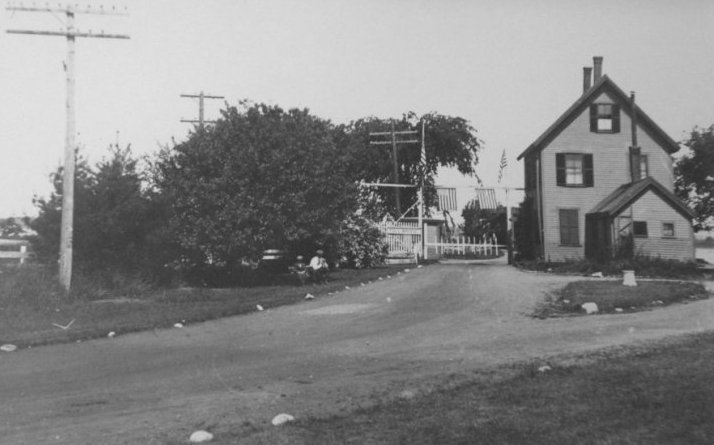
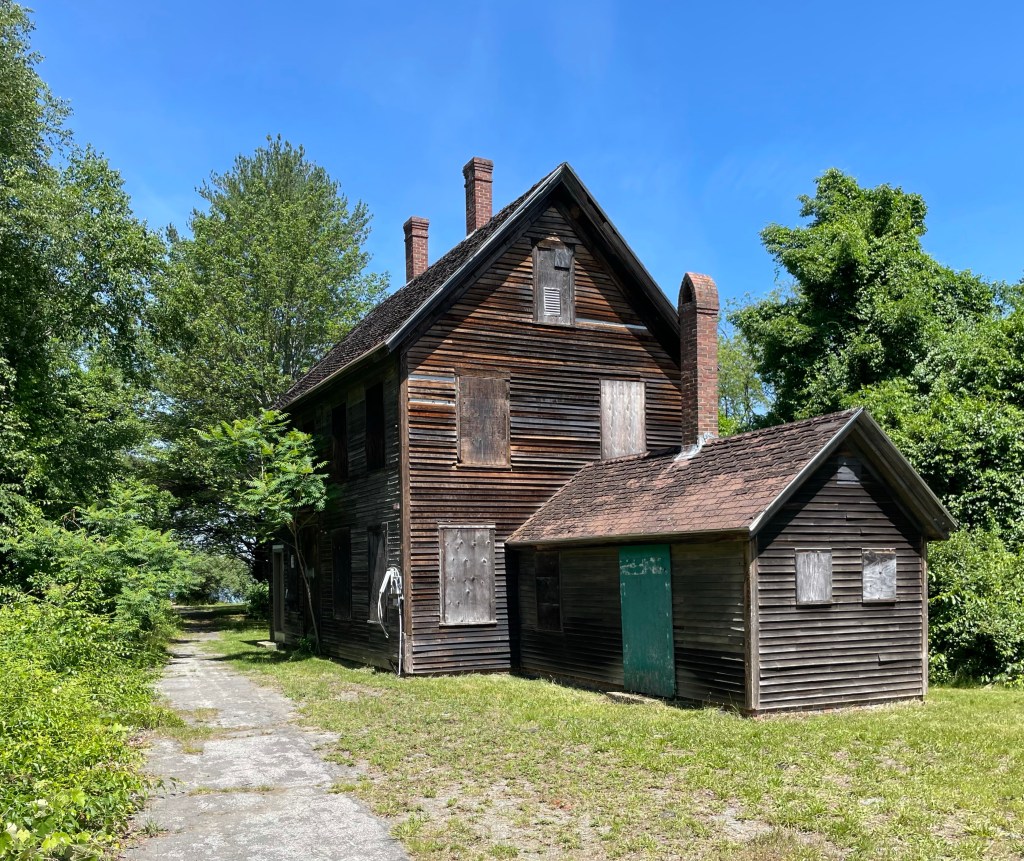
Newington Railroad Depot // 1873

The Newington Railroad Depot was built in 1873 at the narrowest point at the Piscataqua River as part of the Portsmouth and Dover Railroad. The Portsmouth and Dover Railroad Company was chartered in 1866 in order to provide a link between the eastern and western divisions of the Boston and Maine Railroad and also included the means to cross Great Bay. The rail line was completed in 1874 and included this railroad depot which included a residence for the stationmaster while he collected tolls for pedestrians and carriages crossing the bridge nearby, and operated the swing section of the bridge to permit boat traffic to pass. By 1915, the one story wing was constructed which served as a 10’x20′ waiting room and ticket office. The offshoot rail line remained in service until the completion of the General Sullivan Bridge in 1934, due to the popularity of the automobile. The rail line was subsequently abandoned, and the nearby tracks were taken up in 1940. Elmer Brooks, the longtime stationkeeper was allowed to remain in the old depot, renting the building from the State of New Hampshire, who acquired the site in 1940. He lived here until his death in 1971. After which, the building has decayed. The State of New Hampshire should restore this valuable piece of history and has an amazing opportunity for a park in the surrounding area. Hopefully something is done to preserve the building!

Odiorne Homestead // c.1800

Located on Odiorne Point in Rye, New Hampshire, this old farmhouse has overlooked the Atlantic Ocean for over 200 years. Before that, this land was Pannaway Plantation, the first European settlement in what is now currently the state of New Hampshire. By 1630, the plantation was abandoned, and the settlers moved to Strawbery Banke in what is now Portsmouth. John and Phillip Odiorne (likely brothers) arrived to Portsmouth in 1657 from England, and some of their descendants moved south to modern-day Rye. This home was built by a descendant around 1800, and although built as a farm house, not as a city mansion, it is quite large. The house is a Federal period farmhouse with later alterations and additions, but has deteriorated since the property was acquired by the State of New Hampshire from the Odiorne Family in 1942. More on the property next!

George C. Wright House // 1861

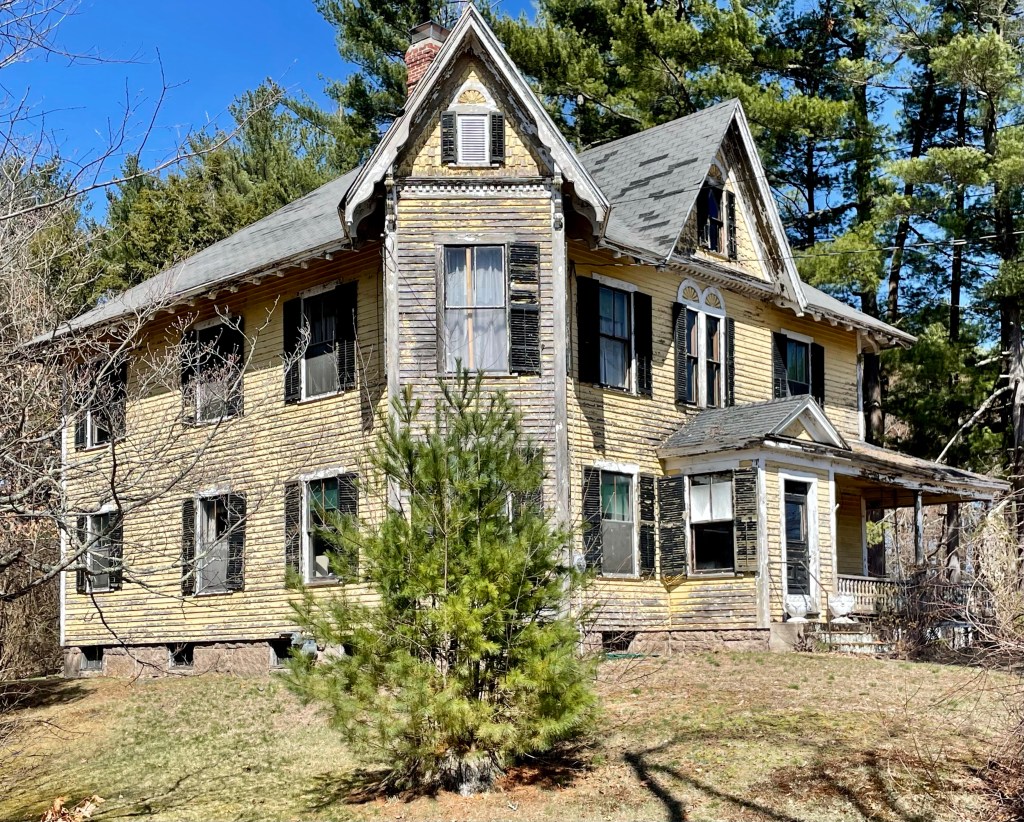
Perched high on a hill in Acton, Massachusetts, this once grand Italianate mansion has been slowly deteriorating without a caretaker. The home was built in 1861 for George C. Wright (1823-1910), a wealthy coffee and spice merchant at Dwinell, Hayward, and Co., a powerhouse in the coffee industry in Boston. In 1855, he was overworked in Boston and fell ill for two years, which worried his wife, who convinced him to relinquish some of his work and move back to Acton, which he did. Soon after he built this house, not too far from the village train depot which would give him easy access to Boston. In papers, he stated, “I felt that good air and a plenty of sunshine would do more for my health than anything else. For this reason, we built upon a hill and arranged the rooms of the house so as to get the sun to its fullest degree.” Wright later served as a State Representative, and remained active in local politics in the suburban town. His home was connected to a large barn (since demolished) and featured a large belvedere (removed after a hurricane) to provide sweeping views from his house on the hill. In recent years, an absentee owner did not appear to maintain the home and it has deteriorated, but good news! The house sold the week that I took these photos, so hopefully it will be restored to its former glory soon!

Hiram P. Dinsmore House // 1894

In 1894, Hiram P. Dinsmore, a clerk at the nearby Tewksbury Almshouse, purchased land not too far from his work to build a home for his family. The well-designed late-Victorian home features a wrap-around porch, a corner tower, twin sunburst or flower motifs, and the use of shingle and clapboard siding, all hallmarks of the Queen Anne style. After Hiram’s death, his wife and children lived in the home, and it was later willed to his daughter Beatrice and her husband, both of whom worked at the Tewksbury Almshouse (since renamed Tewksbury Hospital). The home has seen some deterioration with large sections of siding completely open to the elements unobscured by paint and a sagging porch roof. Hope to see this beauty restored.

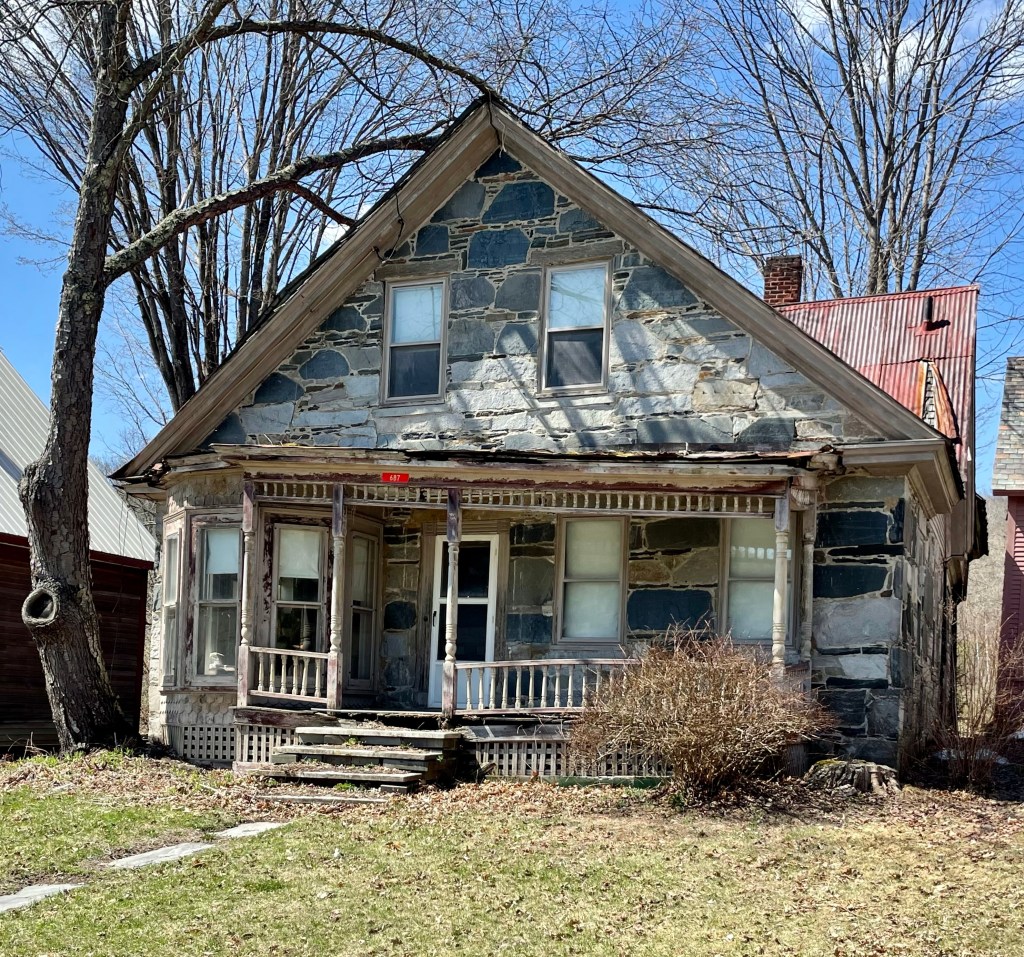
Snecked House // c.1850

In the early 1830s, skilled masons from Scotland and Ireland came to central Vermont to work on building projects. A number of these workers, mainly from the Aberdeen area, and specialized in a specific building style in which plates of stone are affixed to a rubblestone wall. This method of bonding stonework is so prevalent in Scotland and
Ireland it has been referred to in some journals as ‘Celtic Bond’, but in Vermont, it is known as “snecked ashlar”. The mixture of stone sizes and colors produces a strong bond and an attractive finish. This home is a rare example in the state, which is estimated to have about 50 of these homes left. I could not locate any information on the owners of the home, but the house has seen better days, with the wooden front porch shifting away from the main house. Also, if you look closely, you can see the original wood shingle roofing breathing under the sheet metal roof!

Richmond-Herreshoff House // c.1803

Located on Hope Street, just south of the downtown area of Bristol, Rhode Island, this beautiful Federal-style home overlooks the water, and once oversaw a large ship-building empire. The home was built by Lemuel Clarke Richmond (1782-1876), possibly in response to his marriage to Hannah Gorham in 1803. Richmond was a wealthy whaler who owned nearly twenty ships, including the Empress, a Bristol-built bark. The Federal style home features a five-bay facade with central entry. A modest portico surrounds the door which has a fan light transom above. Oh, and there are some gorgeous 12-over-12 windows on the home, at the ground floor the windows have flared lintels above. The home was sold by Richmond in the early 1850s and rented out to Charles and Julia Ann Herreshoff, who resided there with their eight children! It was here where sons John and Nathanael overlooked the water as young boys and became consumed by the beauty of the ships that sailed by their front yard. The brothers later ran the internationally renowned Herreshoff Manufacturing Company, which occupied land all around the home (and was featured previously). The home was acquired by the family in the 1860s, and often changed hands within the family over the next decades until it was inherited by Norman F. Herreshoff. A collector of Americana, Norman Hcrreshoff completed a series of renovations to the family home, including remodeling of the kitchen to be “old-fashioned” and replacement of the front porch with the small Ionic portico which we see today. The home is owned by the Herreshoff Marine Museum, but has seen better days.