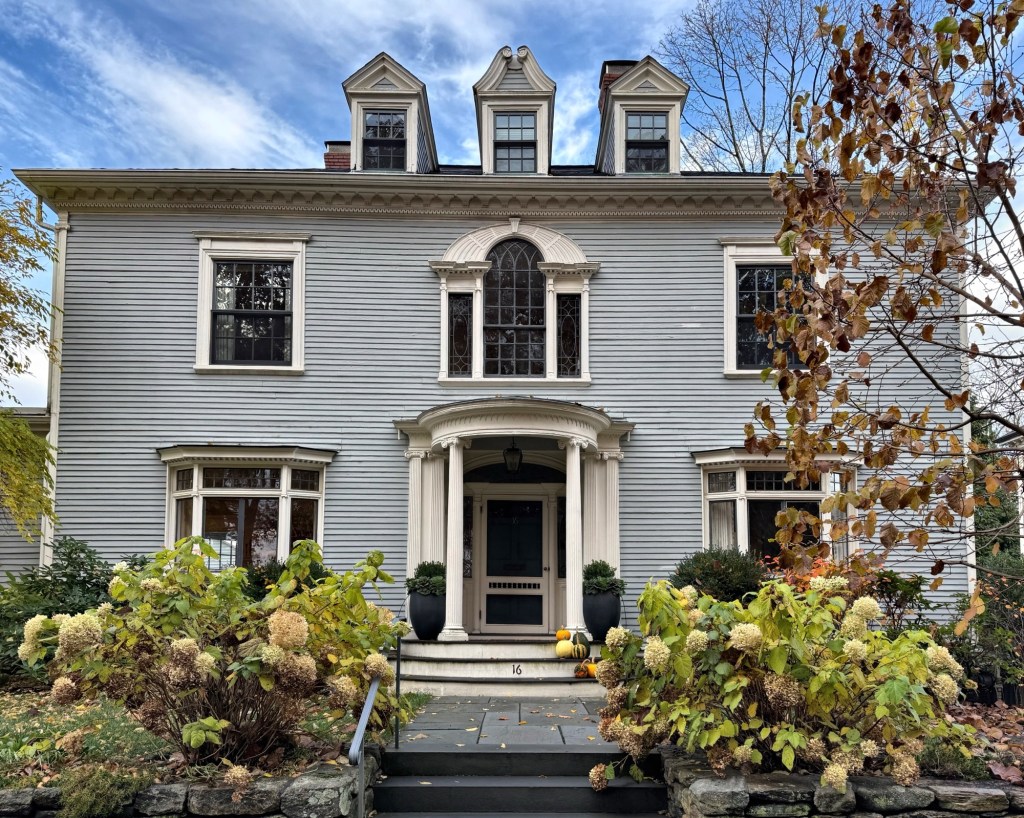
George P. Davis House // 1893

This Colonial Revival style single-family house on Emerson Street in Brookline Village, was built in 1893 on the former Emerson Estate, that was subdivided by the heirs of Elijah Emerson as Brookline Village filled in during the late 19th century. This house was seemingly built for Elijah’s daughter, Sarah C. Emerson Davis, and her husband, George Peabody Davis from plans by Boston architect, Olin Wesley Cutter. Of particular note, the Davis House features a symmetrical facade with round entry portico, Palladian stairhall window with leaded glass, and pedimented dormers, with the center dormer in a swan’s neck pediment. The oddly proportioned pilasters with tiny Ionic capital on the corners of the house were great to see as well!
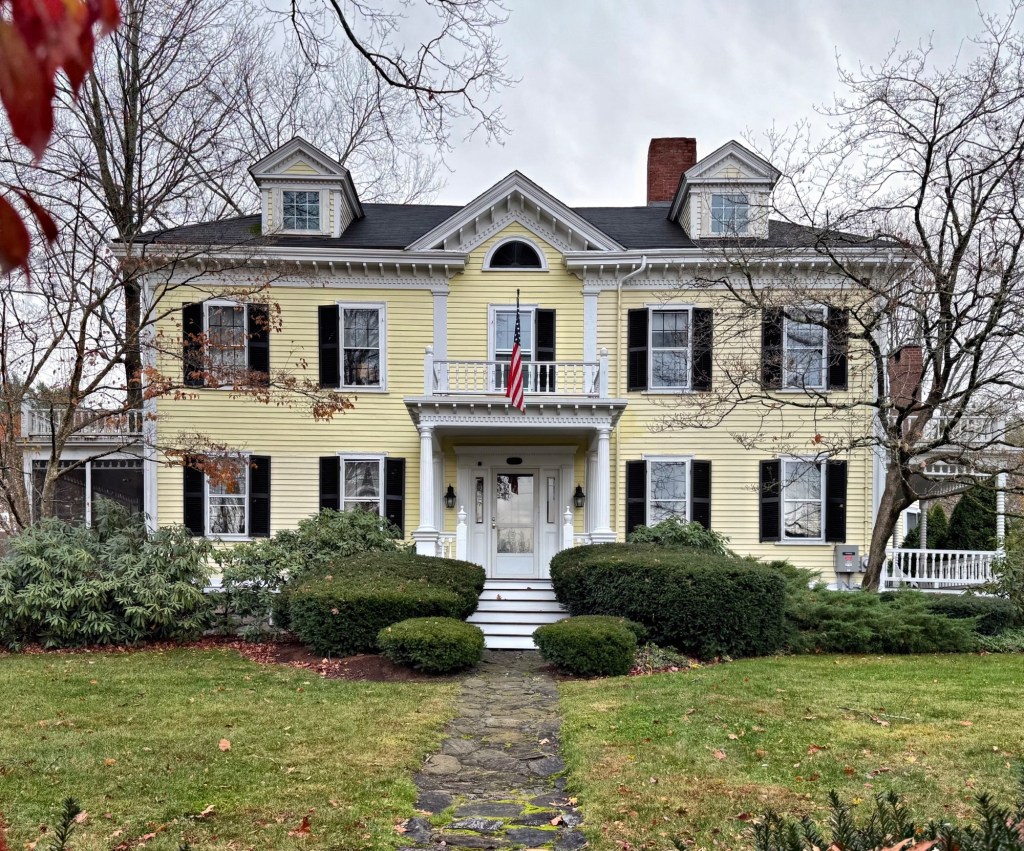
Warren Gould Roby House // 1888

The Warren Gould Roby House at 11 Concord Road in Wayland is located just north of the town’s public library building and is one of the community’s finest examples of the Colonial Revival style. The Roby family occupied this land going back to 1725, when Ebenezer Roby (1701-1772) came to Wayland and built a house on this site. His son, Dr. Ebenezer Roby, Jr. (1732-1786), inherited the large Georgian house which also had an office for his medical practice. The old homestead passed to Dr. Roby’s son, William Roby, and eventually to his grandson Warren Gould Roby who lived in Cambridge and worked as a metal merchant and would spend summers at the family homestead. The old colonial Roby House burned in 1886 which is when Warren Gould Roby (1834-1897) rebuilt a Queen Anne residence on the site. Before his death in 1897, Warren Roby donated a half-acre of his land to the south and $25,000 to the town for the purpose of constructing a library that would be as fireproof as possible, the result is the Wayland Public Library. After his death, the Roby heirs, who lived in Cambridge, sold the family estate to Daniel Brackett, a lawyer who also served as the Wayland Town Clerk and Assessor. It was likely Mr. Brackett who expanded the home in the early 20th century in the Colonial Revival style and form we see today.

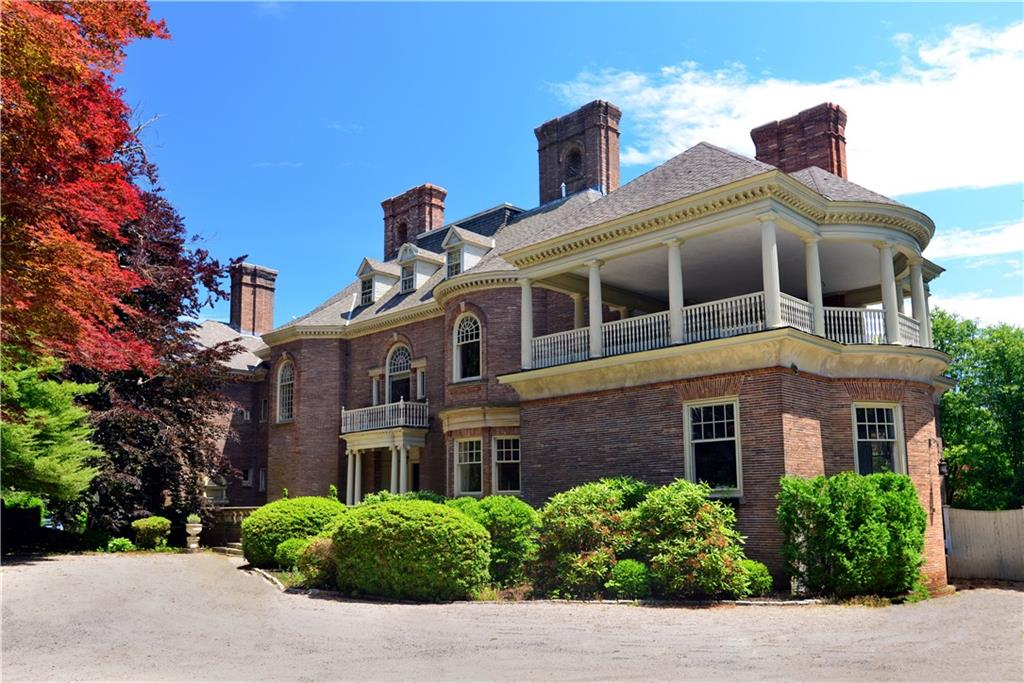
Sunnyside // 1886

Photo from recent real estate listing

During the height of the Shingle and Queen Anne styles’ popularity, architect Stanford White of McKim, Mead & White completed plans for one of the earliest Colonial Revival style residences, “Sunnyside” in Newport, Rhode Island. The residence was built in 1886 for “Commodore” William Edgar (1810-1887) and his wife, Eliza Lucille Rhinelander (1832-1916). William was a co-founder of the New York Yacht Club in 1844 and heir to a New York fortune. Eliza was an aunt of Edith Wharton and a grand-daughter of William Rhinelander, co-founder of the Rhinelander Sugar Refinery. The property remained in the Edgar Family as Lucille Rhinelander Edgar (1858-1948), an unmarried daughter of the couple, would live here year-round with servants. The house is built of buff-Roman-brick with a large central block flanked by L-plan wings under a hipped roof punctuated by massive chimneys. Of special note on the facade are the rounded bays, entry portico with Palladian window above, and side porch.