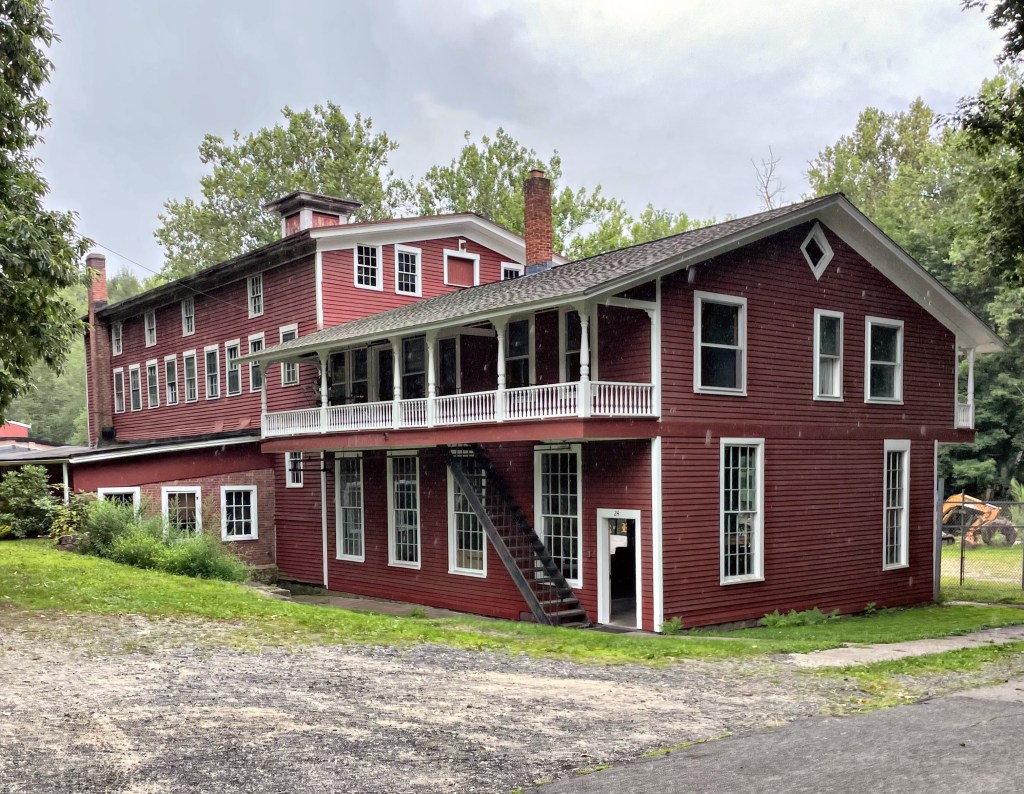
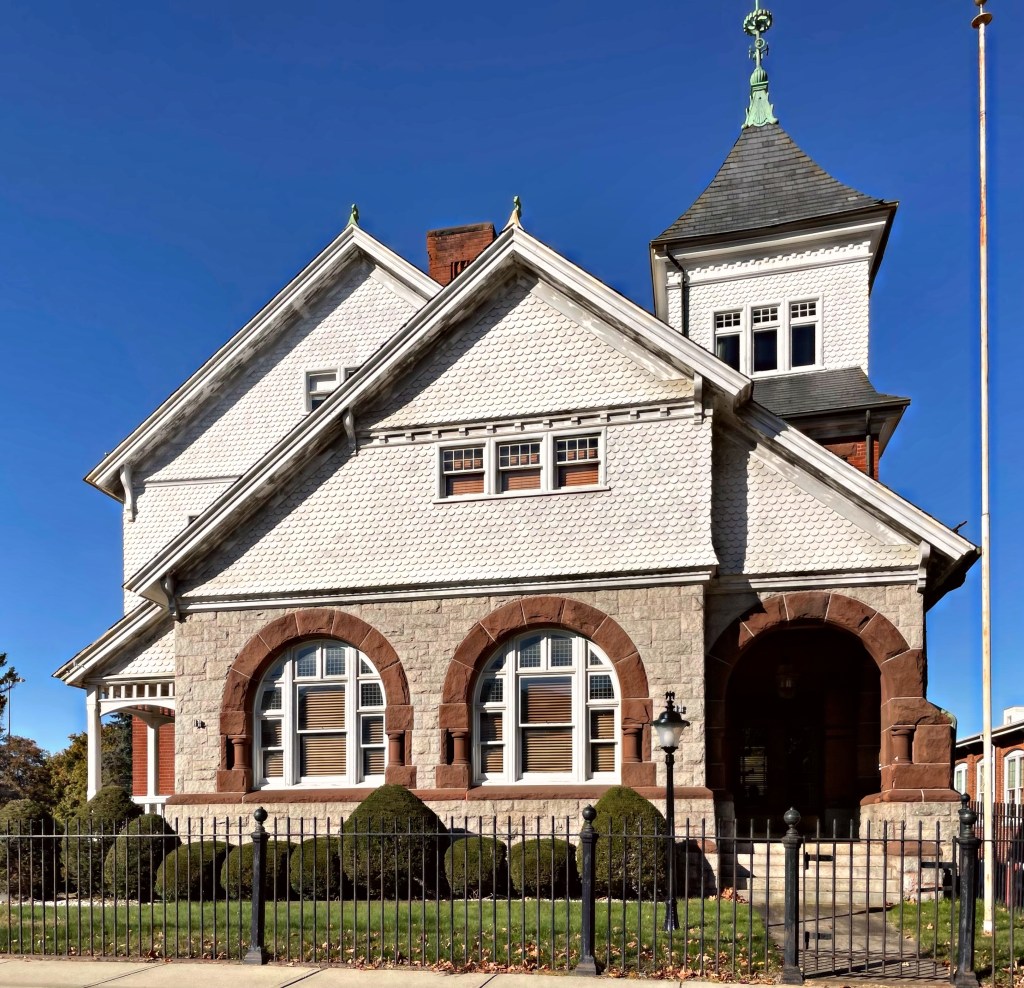
George H. Gilbert Company Offices // 1885

South of the Ware River in Ware’s Industrial Village, you will find this absolutely charming former manufacturing office on the side of the road. The building was constructed in 1885 for the George H. Gilbert Co., a textile manufacturer, as the company offices. The building’s architect could not be readily located, but the building appears to have been the work of a skilled designer. When the Gilbert Company relocated north to a new industrial village of Gilbertville, the Joseph T. Wood Shoe Company moved in. The building now appears to be owned by the present occupant of the mill building nextdoor, American Athletic Shoe Company. The former Gilbert Co. Office is one of the more high-style buildings in the town of Ware and exhibits the best in Queen Anne and Romanesque Revival architecture.

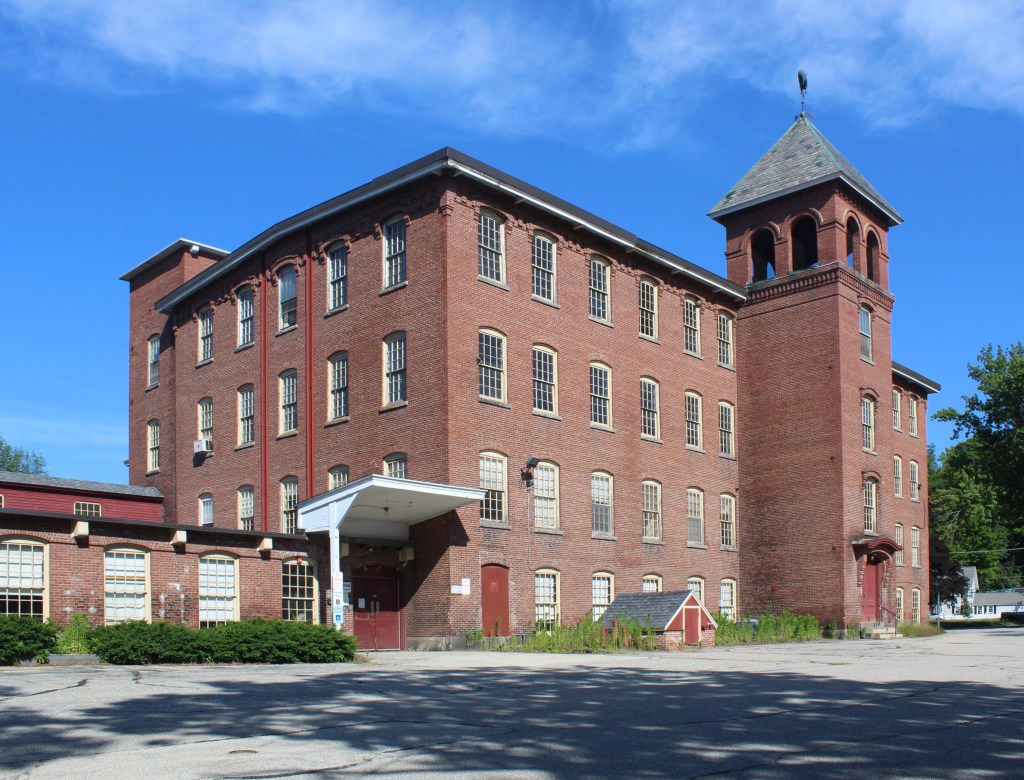
Colony-Abbott Worsted Mill // 1882

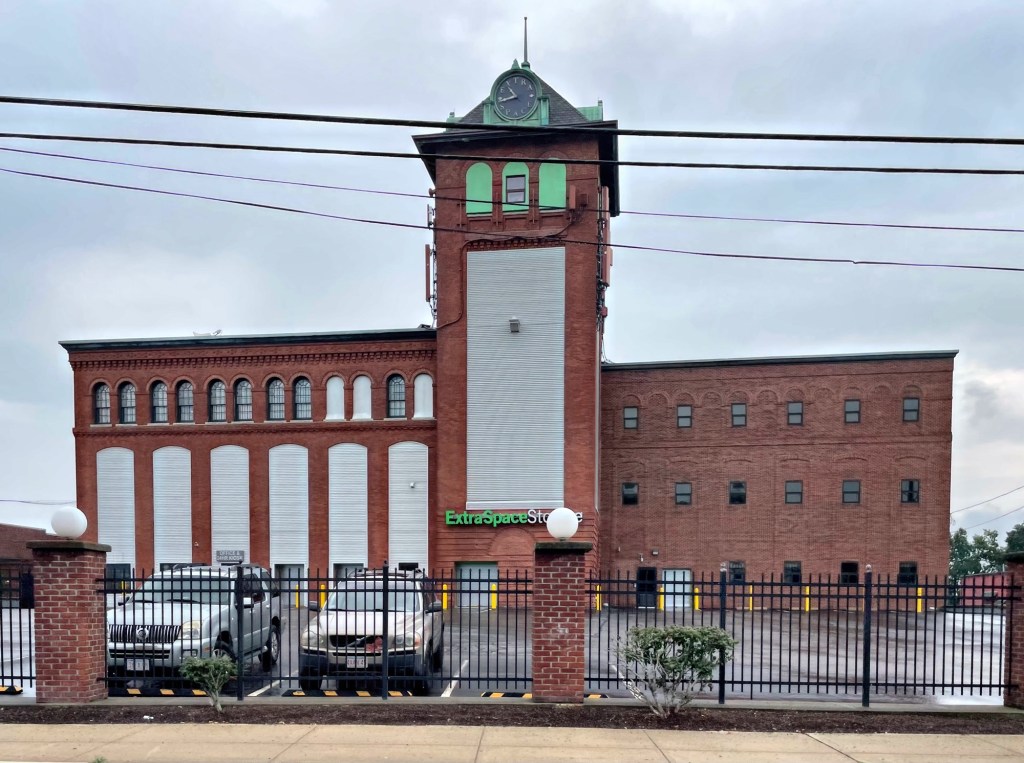
The site along the southern bank of the Souhegan River in East Wilton, NH has been the location of successive mills since 1814. These wooden mills were wiped out by fire, and the land was vacant until 1882, when members of the mill-owning Colony family of Keene, NH bought the site for a new cotton mill. That year they built a three-story brick mill building atop a raised basement level. Colony Bros., the company, began their manufacturing in early 1883. They produced woolen flannel and other woolen goods and employed 70 workers in the factory. The building was powered by steam and water from the adjacent Souhegan River. In 1894, the Colony Bros. mill passed into the hands of Philip Amidon, who formed the Wilton Woolen Company, who produced everything from traditional woolen goods to the finest cashmere. In 1932, the struggling mill was purchased by the Abbotts, owners of two local mills and others in Massachusetts. Abbott Worsted produced a very fine finished cloth, with much of their product going to New York City where it was made into fine men’s suits. The building was later purchased in 1971 by Leonard Peterson, to house his growing company, Label Art. The company has for many years been a nationwide distributor of pressure sensitive labels. Their occupancy likely saved the buildings from the wrecking ball, like so many others did at the time!

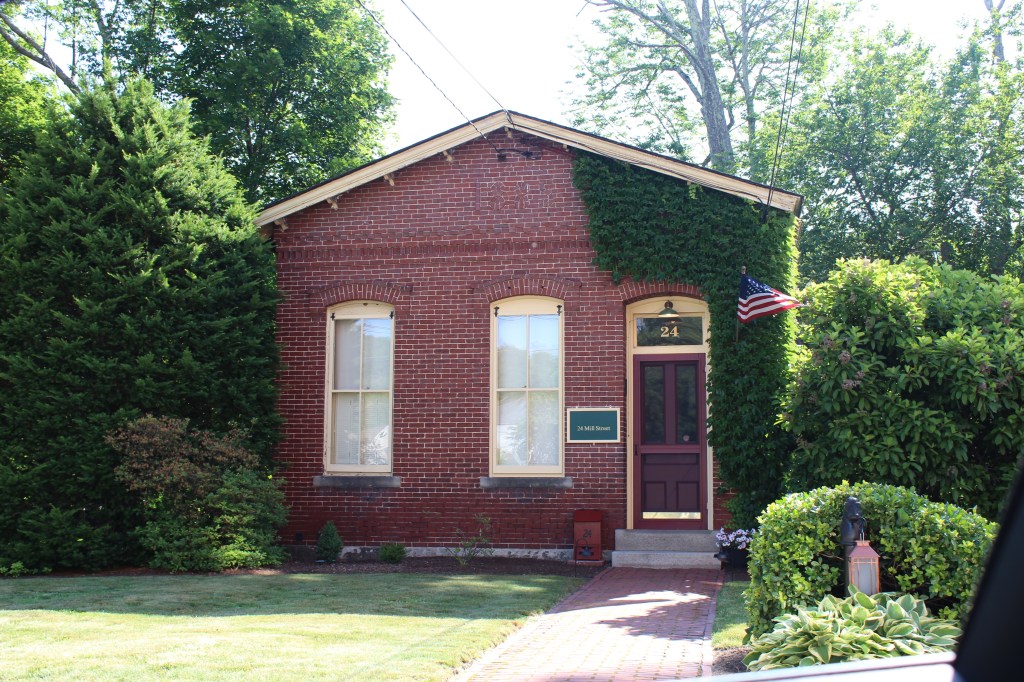
Oh, and how cute is the 1885 office for the mill?! The date is found in the brickwork!

Collins Axe Company Factory // 1826-1966

Image courtesy of Keith Thom

The first ready-to-use axes produced in the United States came from the Connecticut-based Collins Company, which was founded in the early 1800s. Prior to the firm’s establishment, consumers either purchased unground axes imported from Europe or looked to a local blacksmith who, along with his other activities, might also make axe heads. The Collins Company factory opened in 1826 by Samuel W. and David C. Collins, with the purchase of an old gristmill and a few acres of land along the Farmington River in Canton. As the company grew, the village of South Canton grew around it, and was later renamed Collinsville after the company (imagine if we had Starbuckstown or Walmartville!) In the 1840s, the company expanded and sold internationally with their machete; it sold more than 150 varieties of machetes in 35 countries, supplying 80% of the world’s machetes at that time. In the 1860s, the company built several dams along the Farmington River to produce hydroelectric power to run its factory. It saw steady growth during World Wars I and II. However, after the Flood of 1955 wiped out the railroad line, the company could not match the foreign competition. Portions of the business were sold to the Stanley Works in New Britain and to other firms. In 1966, the Collins Company closed after 140 years in business. Some of the old buildings along the river have since been demolished, others left vacant. Some have been repurposed into other uses, thankfully.

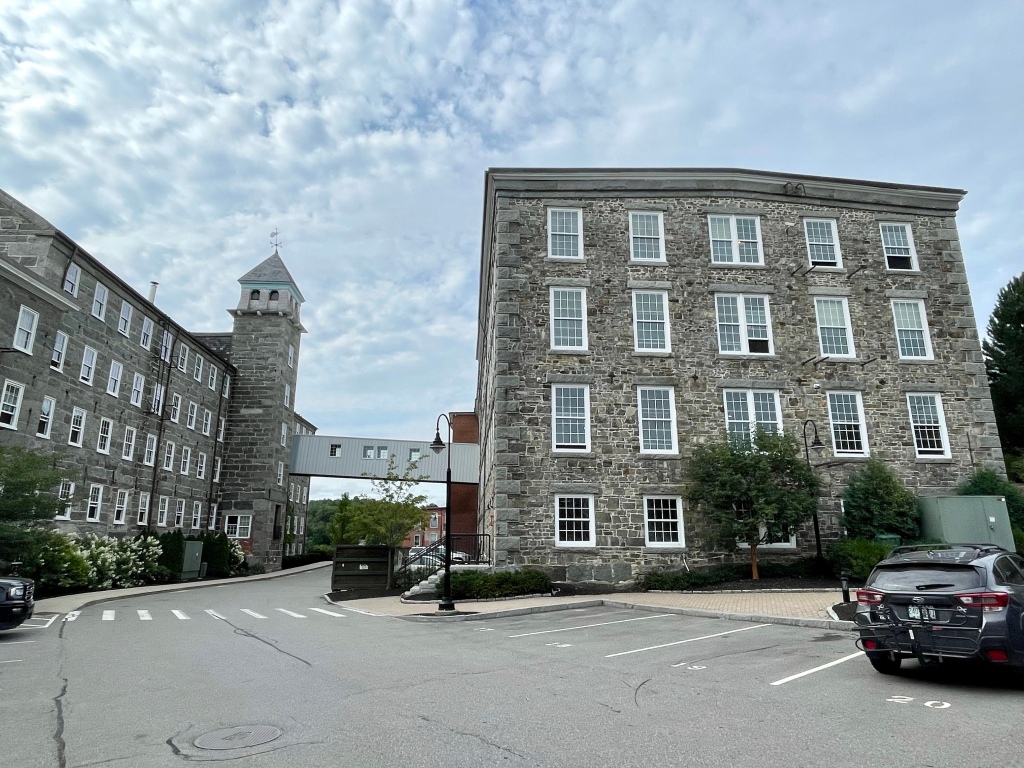
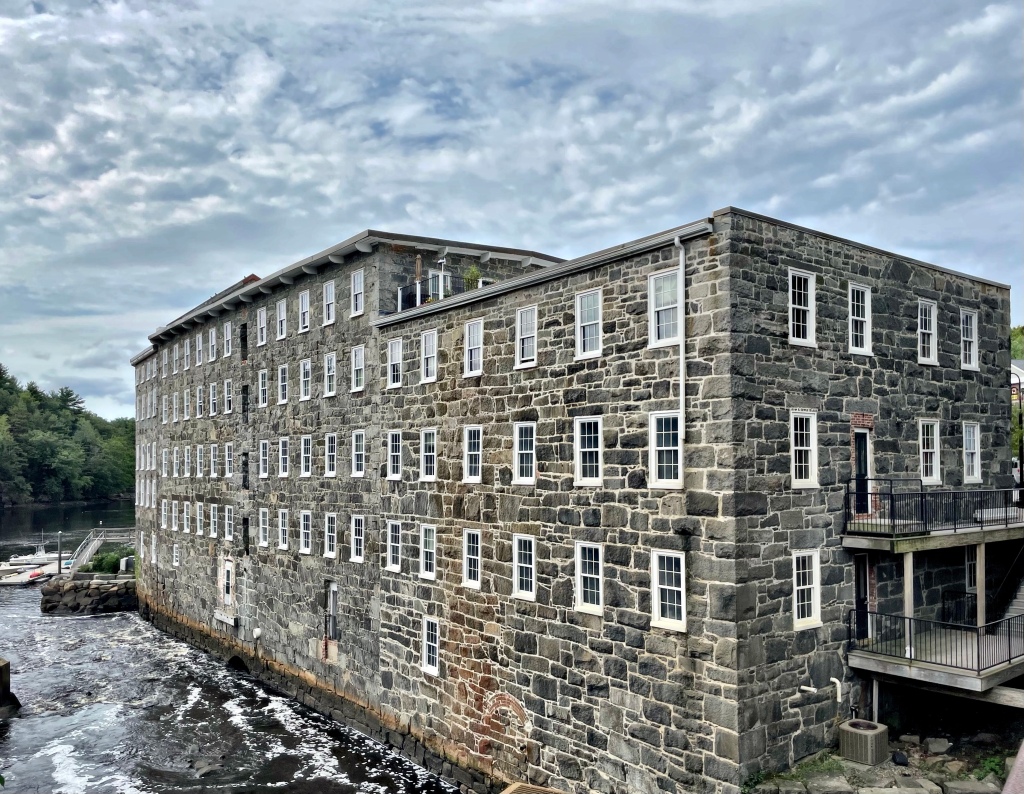
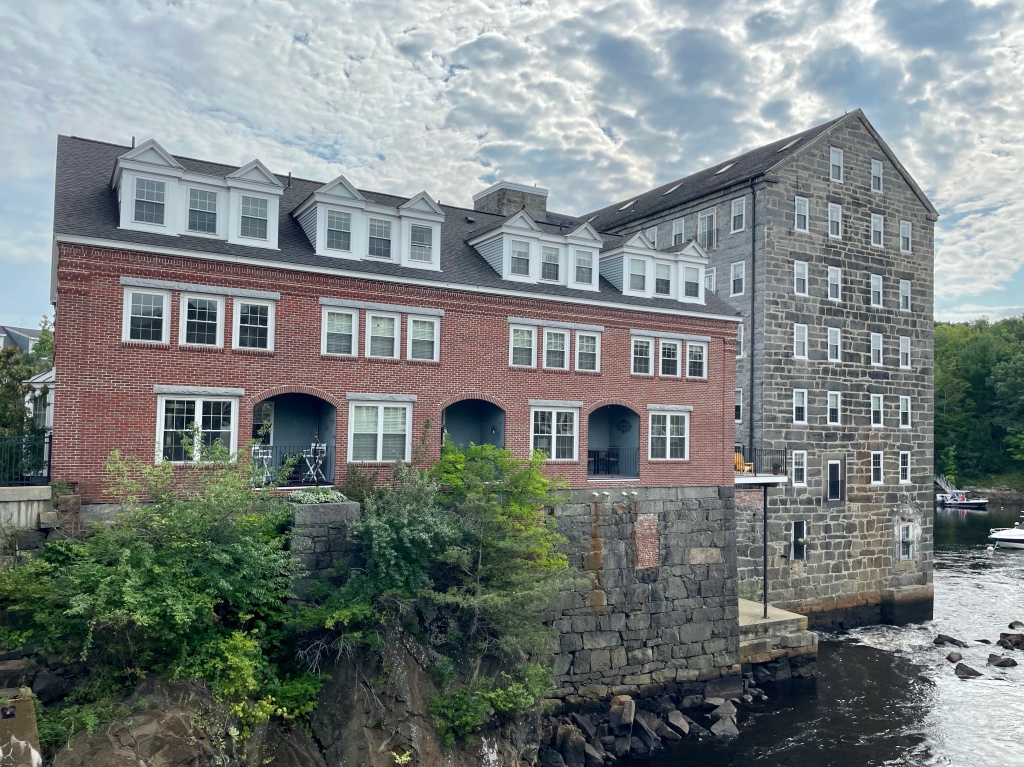
Newmarket Manufacturing Company Complex // 1823+

In 1823, the Newmarket Manufacturing Company built its first mill along the Lamprey River, dominating the waterfront and the economy of Newmarket, New Hampshire. Harnessing water power at the base of the falls, the cotton textile manufacturing community grew to include seven textile mills, with factory buildings, a machine shop, office, storage buildings, and corporate boarding houses; totaling some 140 buildings in all. During its peak production, 700 employees made up to 300,000 yards of cotton products each week, and 2.7 million yards of silk cloth each year. The mills operated continuously at this site until 1929 when a dispute between mill owners and workers erupted leading to their closure. Between 2010 and 2012, eight large mill buildings within the Newmarket Manufacturing Company property underwent a conversion to mixed use, including residential, retail, and office units, thanks to Historic Preservation Tax Credits, and many professionals who worked together with the vision to see such a large project through. Today, the complex is a excellent case-study on the power of adaptive reuse and historic preservation.

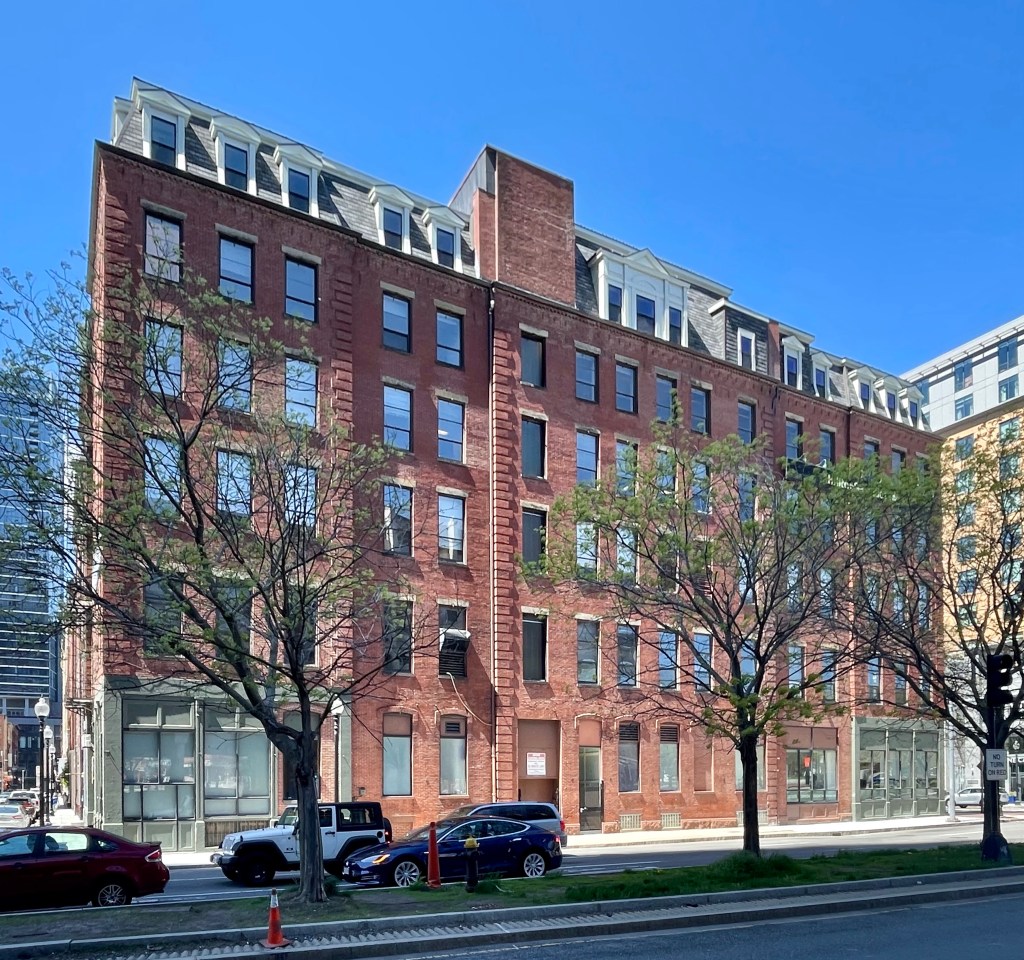
Paine’s Furniture Factory // 1871

Founded in 1835, Paine’s Furniture Company was at one time the largest furniture manufacturer and dealer in New England and had a nationwide business. The company was founded by Leonard Baker Shearer, who was joined in business in 1845 by John S. Paine, his son-in-law. Upon the death of Shearer in 1864, the name of the firm was changed to Paine’s Furniture Company. The company occupied a couple wooden and metal buildings on this site in the Bulfinch Triangle until a fire destroyed the complex. The growing firm took this opportunity to hire one of the most successful architect Gridley J. F. Bryant who worked with a colleague, Louis P. Rogers, to design the fire-proof building. The Second Empire style building with mansard roof was split into three sections with the rear two rented out to other companies, while Paine’s occupied the south-facing (main) facade. When Paine’s moved to their new building in the Back Bay, they sold this building and later alterations severely diminished the original design of the building. The current hodgepodge of alterations creates a mess of what was once an undeniable architectural landmark.

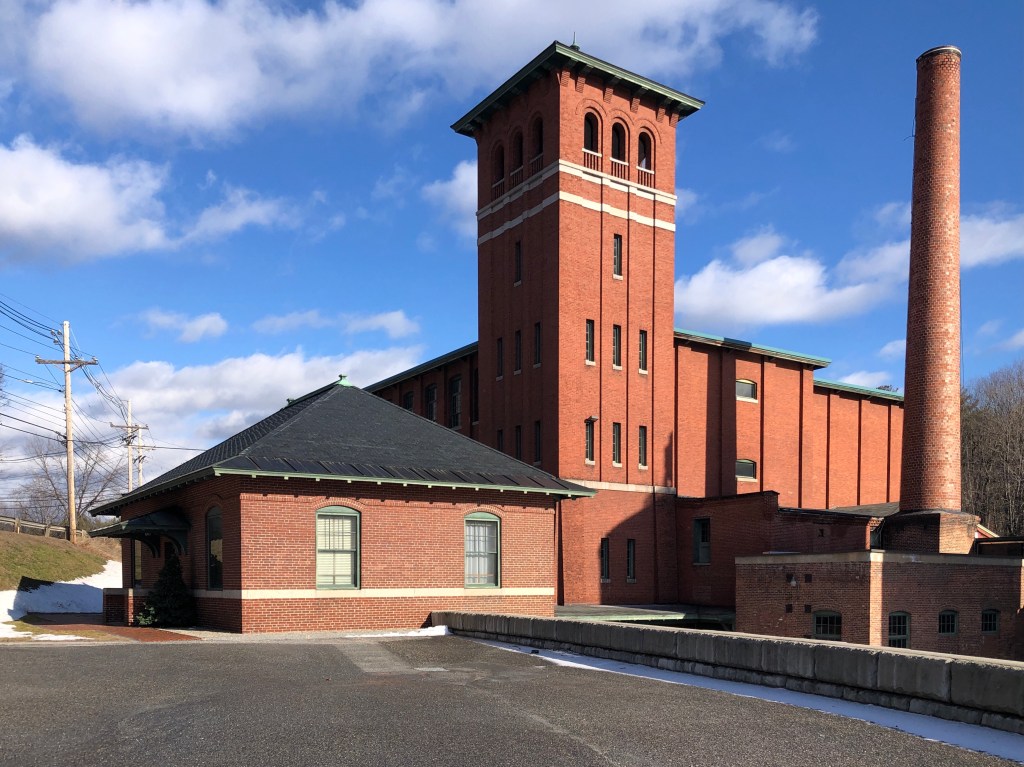
Dexter Richards and Sons Woolen Mill // 1905

The Dexter Richards and Sons Woolen Mill is the last surviving textile mill in Newport, New Hampshire. It was one of the city’s largest and most successful industries and employers. Built in 1905 on the banks of the Sugar River – which supported industrial activity as early as 1768 – the mill reflects the evolution of water-powered mills throughout the city and the region for more than a century. Designed by Peterborough native Edward A. Buss, Richards Woolen Mill is a typical three-story brick mill building from the early 20th century with granite, brick and metal architectural flourishes; it stands out for its five-story Romanesque tower with three tall arched windows on each side. At the base of the tower, above the entrance, are two slate roundels with the dates “1848” and “1905,” marking when both a previous mill on the site and the existing mill were built. In addition to running the mill, the Richards family was instrumental in establishing the Newport Electric Company (1892) and brought both Western Union Telegraph service (1866) and the Concord & Claremont Railroad (1871) to Newport. Richards and Sons, Inc. dissolved in 1926. The property was purchased by Harry W. Brown and Associates and was renamed the Gordon Woolen Mill. That business made wool linings for Army clothing during World War II. The mill was later owned by William Ruger Jr. an heir to the Ruger Firearms Company. Within the last couple years, the mill was purchased for redevelopment into housing, which has not yet materialized.