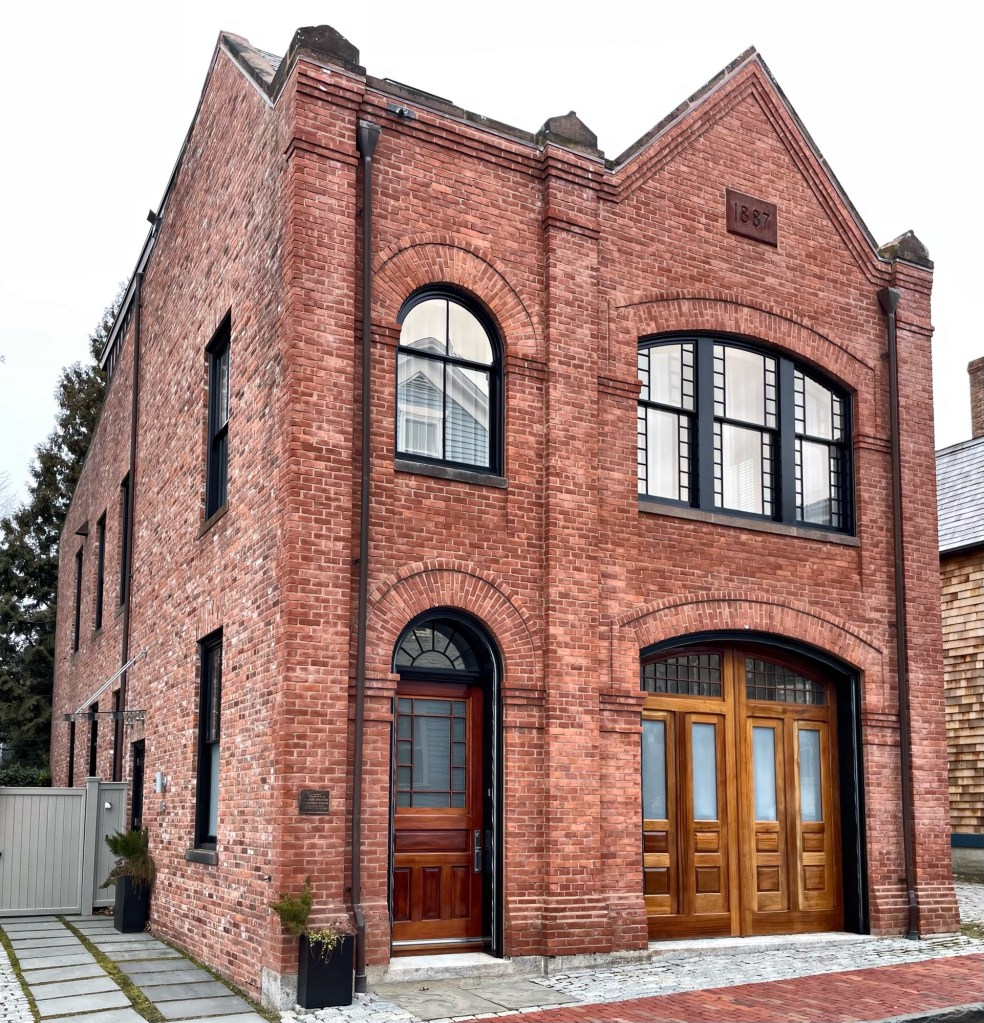
Newport Old Fire Station No.1 // 1885

Central Newport, Rhode Island is best-known for its Colonial and early 19th century architecture, so when a Victorian-era building is spotted, it always stands out! This ornate building was constructed in 1885 as one of a half-dozen fire stations in Newport. This fire station housed one of the nation’s first organized fire companies known as Old Torrent No. 1. It was home to Newport’s first horse drawn steam engine until the steamers were replaced with motor-driven equipment in 1913. Unfortunately, these early model fire trucks weren’t designed to handle the steep incline of Mill Street. So, after 29 years of service, the station was closed and the horses, steamer, and the building were sold in 1915. The building saw numerous uses and deferred maintenance until 1991, when it was restored by local residents. Today, the one-of-a-kind features include original brass fire pole, private roof deck, and a 65 foot lookout tower with views of the Newport Harbor in the distance. It recently sold in 2022 for over $3 Million and is a residence!

Franklin Street Fire Station // 1886

When your town grows organically without zoning, fire prevention becomes even more important to the preservation and protection of the town. Before paid firemen worked for the town, volunteers would either be stationed or rush to the aid of those in trouble via these neighborhood stations. The Franklin Street Firehouse in Marblehead, Massachusetts, was constructed in 1886 by local contractors Ramsdell Brothers replacing the former on the same site with plans drawn by Nathan P. Sanborn. The station was built to house a horse-drawn handtub and the horses were stabled nearby. The wood-frame structure blends Second Empire and Stick style detailing elegantly and is one of my favorite old buildings in Marblehead.

Stoneham Fire Station // 1916

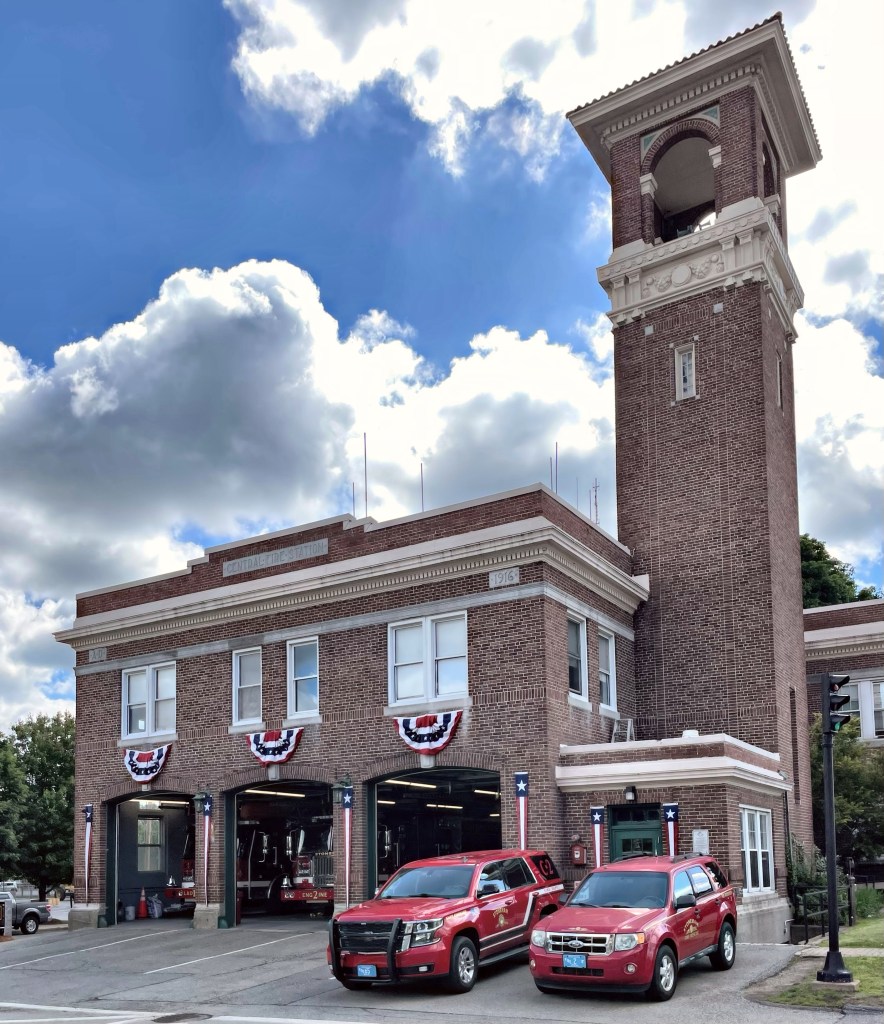
Fire stations are some of the most recognizable and iconic buildings in any city or town, but to find historic fire stations is becoming less and less common as larger trucks and facilities put a strain on the older buildings. The two-story brick Renaissance Revival fire station in Stoneham, Massachusetts was built in 1916 and continues to serve as the town’s central fire station. Its most prominent feature is its four-story hose drying tower, which is reminiscent of Italian Renaissance-era towers. The building was designed by architect Penn Varney and has been well-maintained by the town for over 100 years.

Portland Central Fire Station // 1924

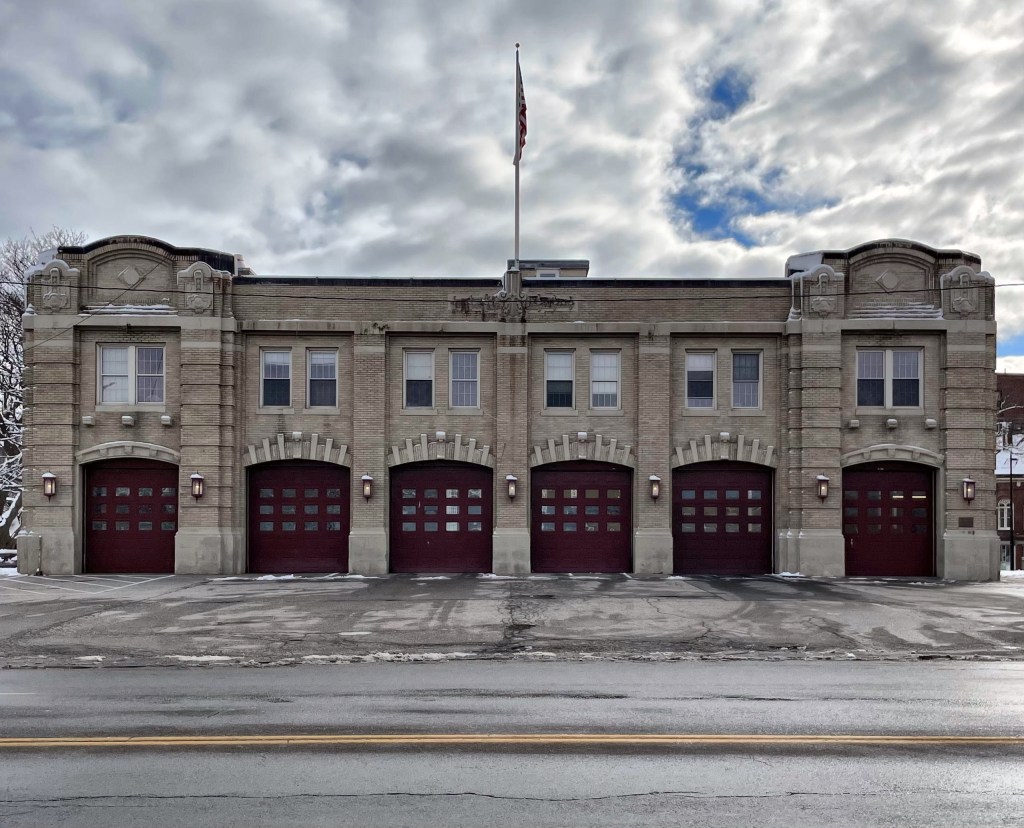
The Central Fire Station in Portland, Maine was built in 1924 and designed by William R. Miller & Raymond J. Mayo, architects located at 465 Congress. Lester I. Beal, a draftsman employed by Miller & Mayo, participated in the design. It was erected to contain the administrative offices of the Portland Fire Department, as well as to house fire engines and other apparatus of the inner city district. Portland has one of the oldest fire departments in the nation, 1768, when Falmouth appointed fire wardens to look for fires at night and alert the residents. In 1786, the citizens of Falmouth formed a separate town in Falmouth Neck and named it Portland, after the isle off the coast of Dorset, England. After the Great Fire of 1866 destroyed much of Downtown Portland, a new central station was built in 1867. The structure was deemed obsolete with new, large ladder trucks replacing smaller engines. The entire downtown block was demolished for the current Central Fire Station for the present building. The small building is at the center of a large lot, which is likely a candidate for redevelopment in the future (after some adjacent surface parking lots are developed).

Sprague Former Town Hall and Fire Station // 1911

At the turn of the 20th century, the town of Sprague (including Baltic Village), had 1,300 residents. Just ten years later, in 1910, the population doubled, largely due to Frederick Sayles‘ purchase of the Sprague Mill and re-investment in the village’s housing and buildings. The need for new town offices and a fire station was evident, and this building in the village was constructed in 1911 to serve both needs. The old Town Hall and Fire Station is a late example of Romanesque Revival style architecture with the arched windows at the second floor and in the dormer. The space was outgrown again and the town offices relocated to a Modern building down the street after WWII.

Lower Falls Firehouse // 1900

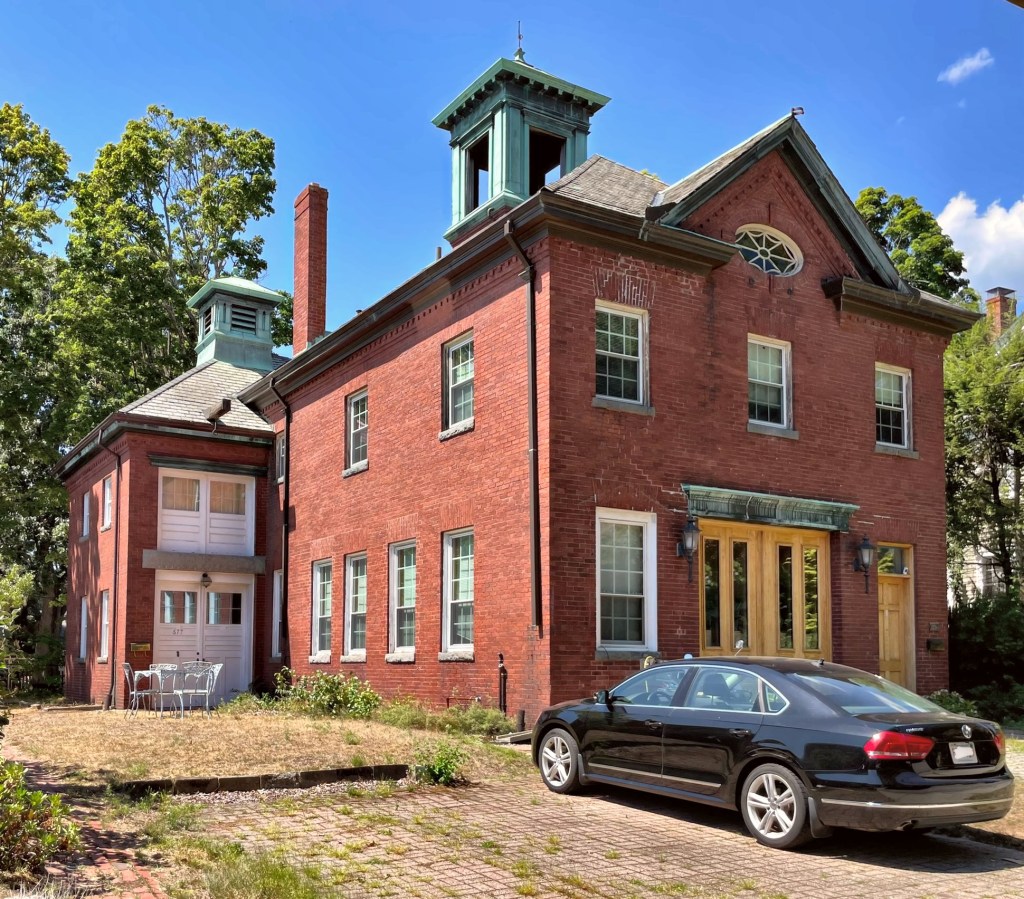
The Newton Lower Falls Firehouse was built in 1900 to serve the village’s fire prevention needs. As nearby Waban Village’s population surged (along with a stronger tax base) the City of Newton constructed a new fire station in 1918, that could serve both areas. This, the already outdated station, was converted to a village library on the ground floor with a janitor’s apartment and storage above. The space was determined to be surplus by the City and was sold off in 1979, quickly converted to housing by a developer. The building retains much of its original character, down to the hose-drying tower.

Everett Central Fire Station // 1908

There is something so enchanting about historic fire stations! The Central Fire Station in Everett, Massachusetts was built in 1908 from designs by the Boston architectural firm of Loring and Phipps (who also designed the first Everett High School and the Masonic Hall in town). The flat-roofed red brick structure displays Georgian Revival detailing including concrete quoins and oval windows. Originally there were four engine bays, but the station was converted to two large bays around 1980 as fire trucks got larger and larger. The building replaced an earlier, wood-frame fire station which was deemed unsatisfactory as horse-drawn apparatus made way for vehicular fire trucks.

Proctorsville Firehouse // 1883

Industrial villages like Proctorsville in Cavendish, Vermont, have always been susceptible to fire and complete destruction. As a result, many such villages erected firehouses or barns where apparatus (and sometimes horses) would be kept in case of emergency. The Proctorsville Volunteer Fire Department was formed in 1883, and this structure was built to house the fire apparatus and possibly a small apartment or living quarters above. Today, the building appears to be home to the Fire Society.

Chemical Engine #13 Firehouse // 1909

Just a block from the Bethel AME Church (last post) in Jamaica Plain, Boston, you will find this absolutely charming old fire station. The station was built in 1909 about the same time as the new Forest Hills Train Station was completed, signaling a huge population and development boom in the area. To provide emergency and fire service to the newly developing neighborhoods surrounding the train station, the City of Boston hired the architectural firm of Moller and Smith to design a new station that would allow for horses and related apparatus as well as a new fire automobile to enter the building. The Arts and Crafts style building is constructed of brick supported by structural steel finished with Carolina pine at the interior. The building retains its pyramidal hipped roof in slate and a unique corner tower capped with a castellated parapet.

Bramanville Fire Station // 1883

A short distance to the Lapham Woolen Mill, this historic fire station can be found right on the street in Bramanville, an industrial village in Millbury, MA. The fire station was built in 1883 by the Lapham Woolen Mill owners as an insurance protection from fire and complete loss of their lucrative business. After Lapham’s death in 1893, the company sold the mill, worker’s housing, store and fire station to the Mayo Woolen Company which began production almost immediately. Sadly, like many former industrial buildings nearby, the future is unclear for this amazing old building. What would you repurpose the Bramanville Fire Station into?