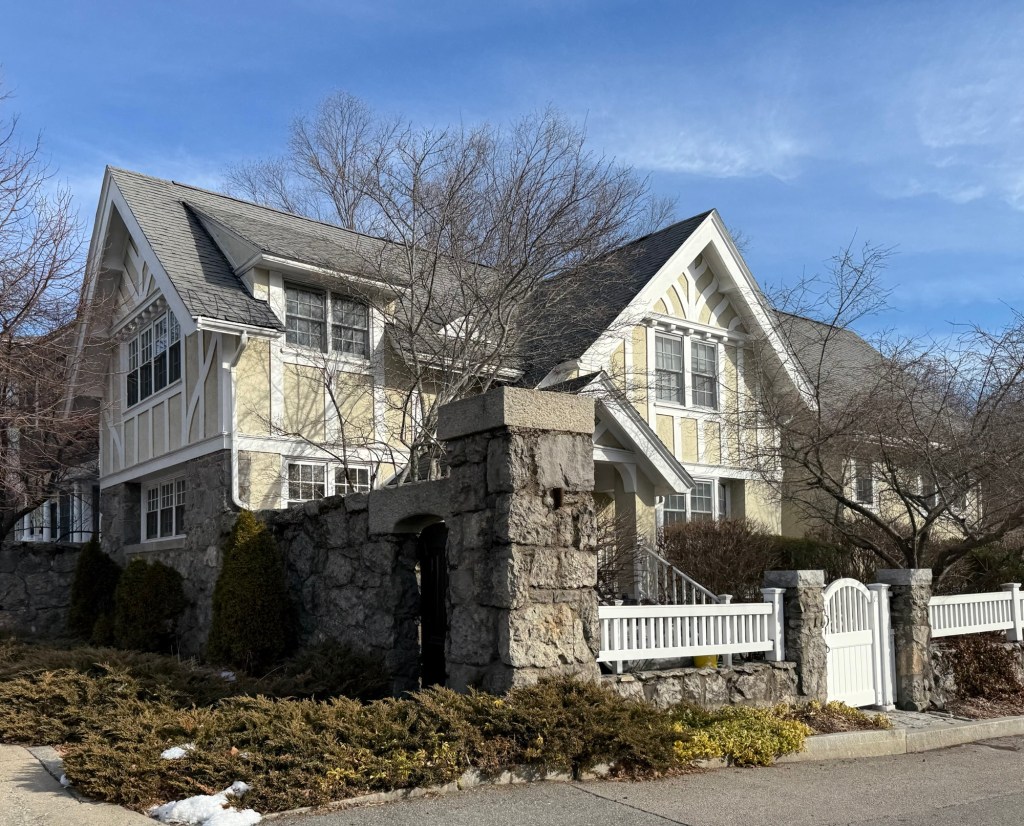
Wright Estate Gatehouse // 1907

Besides the former Wright Carriage House (now the Soule Recreation Center), the only other extant building that was built on the grounds of the former John G. Wright Estate in Brookline, Massachusetts, is this structure, the historic gatehouse to the property. Built in 1907 at the same time as the manor house, the gatehouse was also designed by architects Chapman & Frazer and served as the entry to the expansive grounds with a room for the gatekeeper to sleep in overnight. The Tudor Revival style building is less ornate than the stone mansion, the half timbering and stucco work well to compliment the other buildings. While the formerly dark half timbering has since been painted a white, the building still maintains its character. While the remainder of the Wright Estate was subdivided and sold off by the heirs of next owner, wool merchant, Andrew Adie, the gatehouse remained and survived the destruction that befell the main manor. The old gatehouse was converted to a full-time residence and remains to this day.

Spot Pond Gatehouse // 1900

The Middlesex Reservoir and Spot Pond are located just north of Boston and have long been a little piece of the outdoors near the heart of New England’s largest metropolitan area. In 1894, the Massachusetts Legislature established the Metropolitan Parks Commission, which was endowed with the authority to acquire, maintain, and make recreational spaces available to the public. By 1900 the new commission had acquired 1,881 acres for the reservation. Part of this reservation, Spot Pond, is a natural water feature that for a number of years was integrated into the Boston area public drinking water supply, servicing the towns of Stoneham, Melrose, and Malden with drinking water. As part of this, gatehouses were built with hardware to open and close the pipes delivering the water to the adjacent towns. This gatehouse is in Stoneham was built in 1900 by the architectural firm of Shepley, Rutan & Coolidge, to not only protect the machinery inside, but to beautify the parkland, then maintained by the Metropolitan Parks Commission. The Renaissance Revival style building is today surrounded by a tall chain link fence, which really diminishes its presence in the landscape (but it does help prevent graffiti).

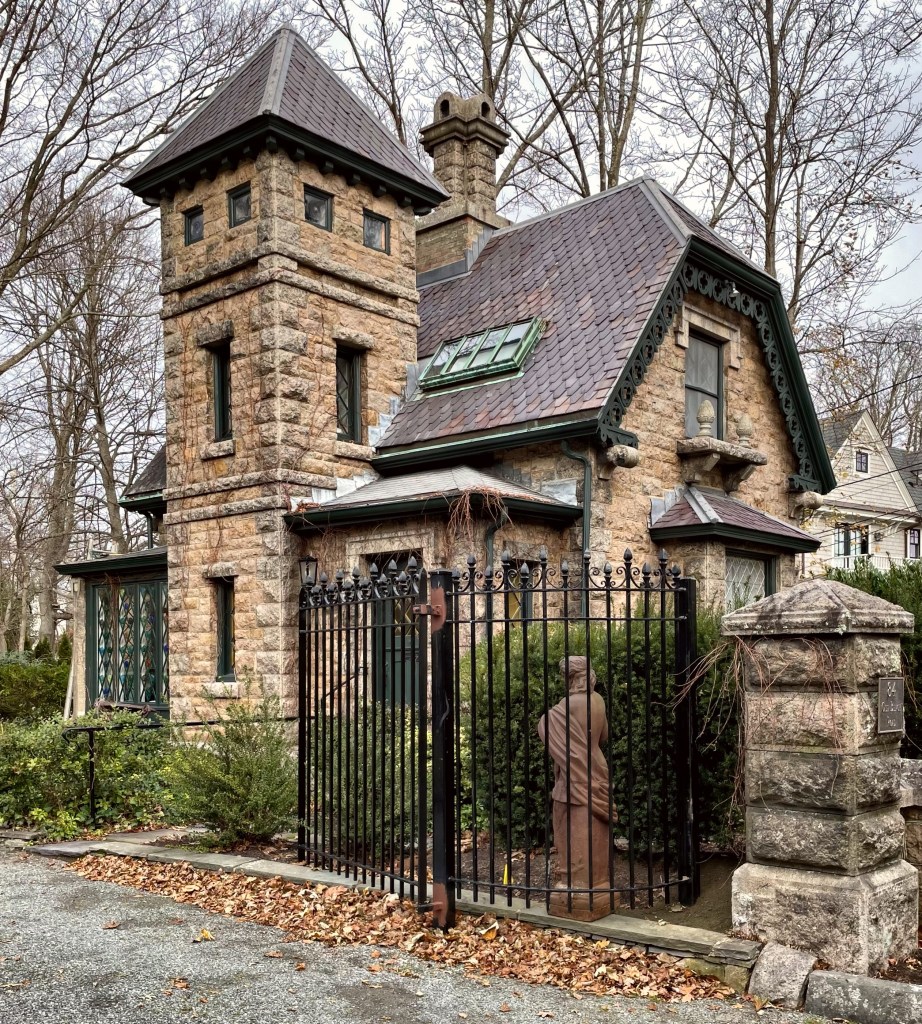
Belair Gate Lodge // 1870

Located at the historic entry to Belair (last post), one of the largest estates in Newport, you would be greeted by this charming stone building, the Belair Gate Lodge. The building is symmetrically massed, 1½-story and built of rough-face-granite-ashlar, similar to the main house. This building can be classified as French Eclectic in style and was designed by Newport architect Dudley Newton, who also designed the 1870 Second Empire renovations to the main house at the same time for owner George Henry Norman. When the Belair estate was subdivided, the gate lodge was sold off as a separate unit, and is now a single family home, aka my dream home. There is something so enchanting about gatehouses!

Mount Williams Reservoir Gatehouse // 1914

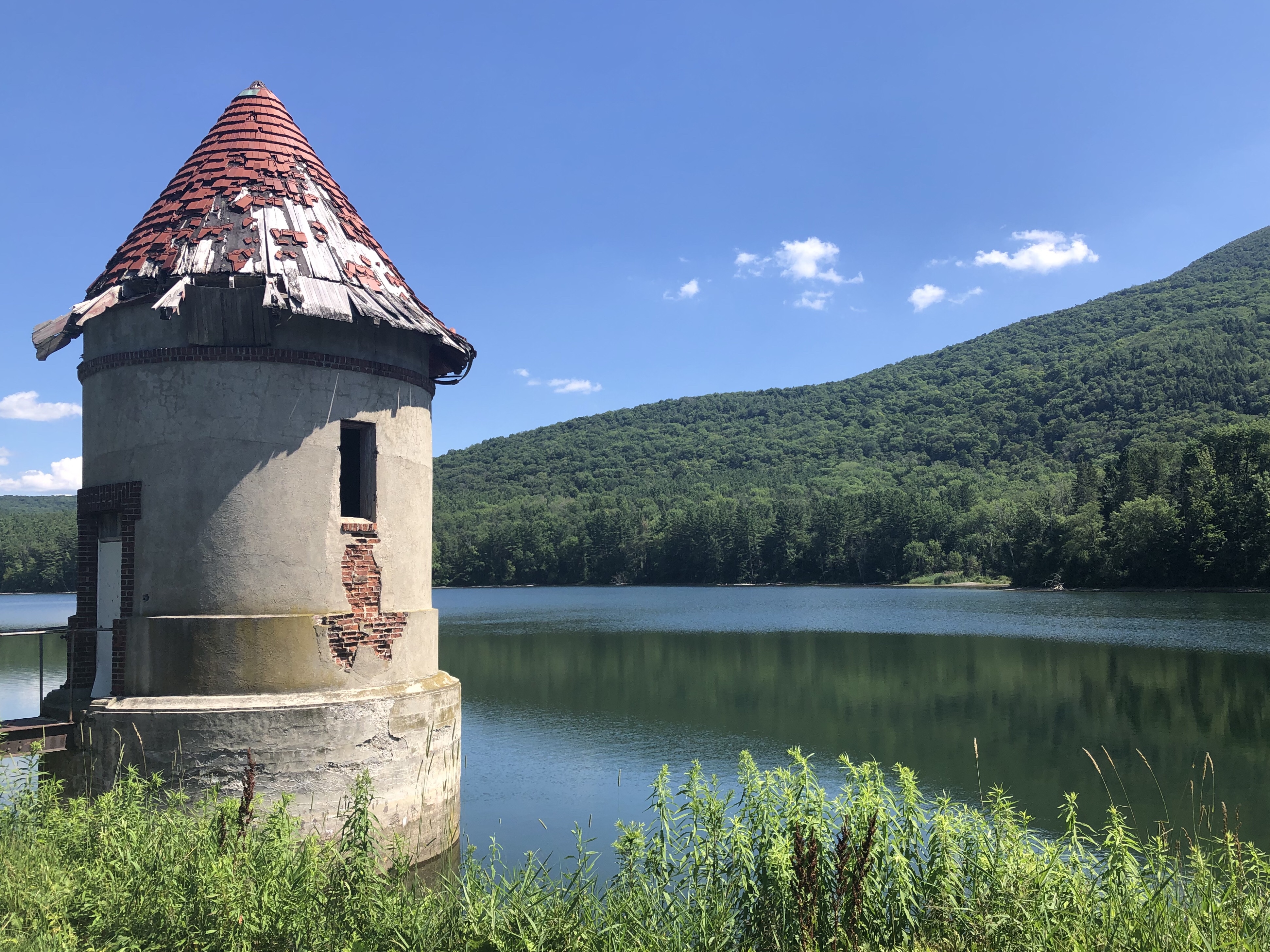
An adequate water supply for the residents and industry of North Adams was from the late 19th century, an issue of paramount importance to residents. For the next several decades the population grew at such a high rate that a reservoir was required, and in 1914, the Mount Williams Reservoir was planned and constructed. Land was selected where a small Brook passed through and a concrete core dam was designed and built that year to impound the brook. At the waters edge, a gatehouse, once perched upon the shore like a castle, is decaying. The gatehouse is a cylindrical brick structure clad in stucco, capped with a red tiled conical roof. The structure remains active to this day with a more modern structure nearby providing support to North Adams’ waterworks system.