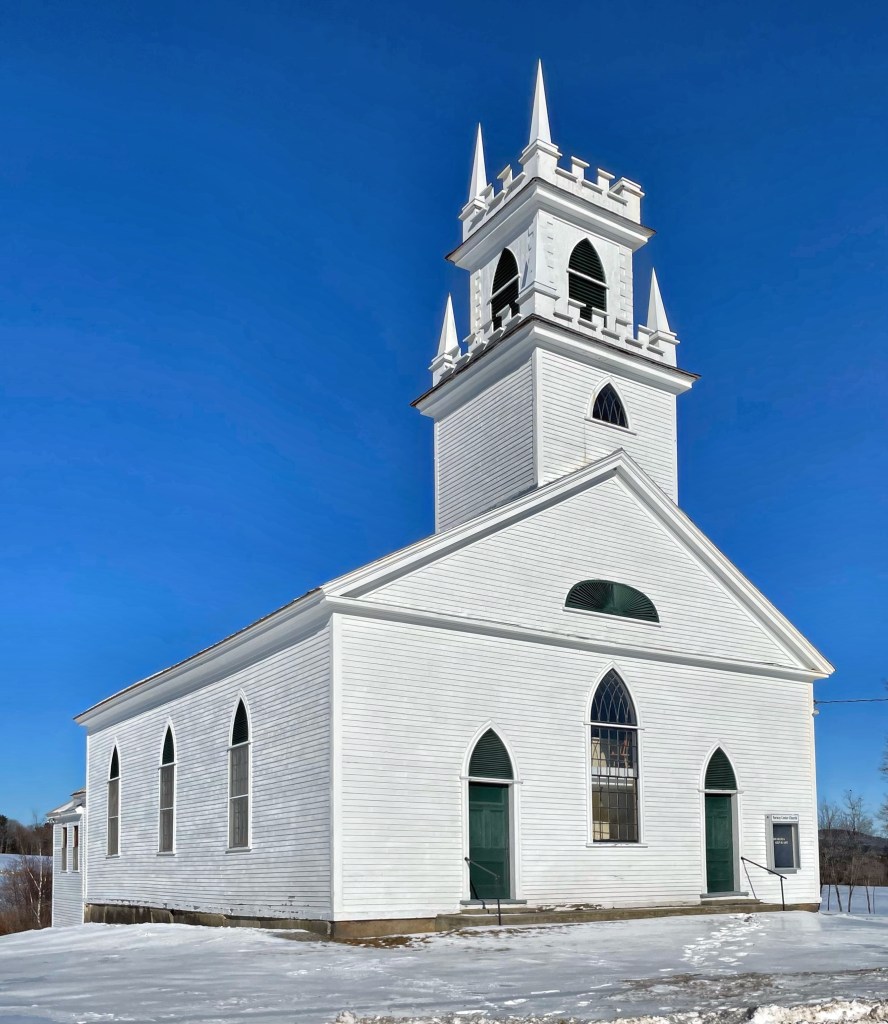
This beautiful, bucolic church in Norway Center was built in 1840 to replace an earlier meeting built in 1808-09 on the site. The present building is Gothic Revival in style with louvered panels making the windows appear lancet in shape and the amazing lancet window centered on the facade. The two-tiered tower is ornamented with crenellation and a wooden spire at each corner (besides one missing). The church features a louvered fan and strong pediment, which are nods to other prominent styles of the early-mid 19th century, Federal and Greek Revival respectively. This church quickly saw membership drop as Norway Village became the population center of town, with Norway Center becoming more agricultural and rural.
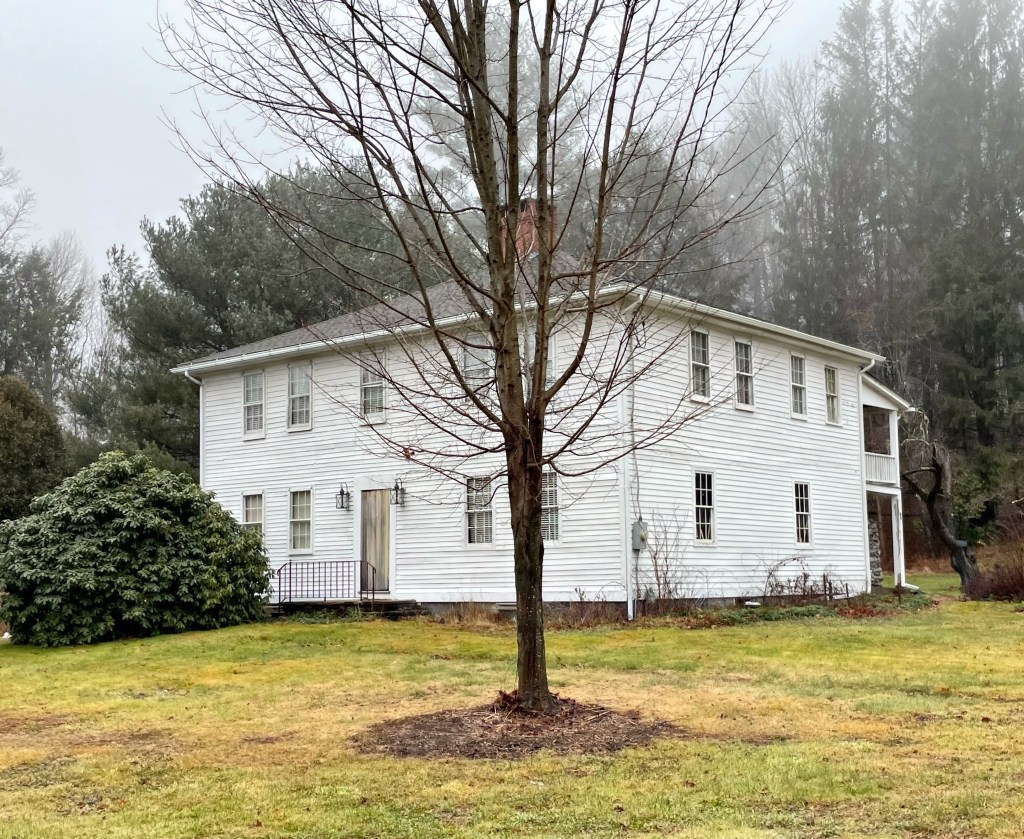
While architecturally significant mansions, churches and civic buildings are great, the smaller wood-frame buildings such as this really tell the story of New England. When the town of Sweden, Maine was still in her infancy, the Nevers Family helped to establish the town and diversify its output from the typical agricultural village. Sweden supported an interesting variety of nineteenth century businesses including: general stores, saw mills, copper and cobbler shops, and a straw hat factory. The town of Sweden was distanced from major trade routes, railroads and navigable rivers, so it saw a period of decline from the late 19th to the 20th century. The town has since been a sort of “bedroom community” where people mostly live, but travel outside the town for commerce and work. This blacksmith shop shows us an example of a trade that has largely gone away, but it was a common structure and profession in early America.
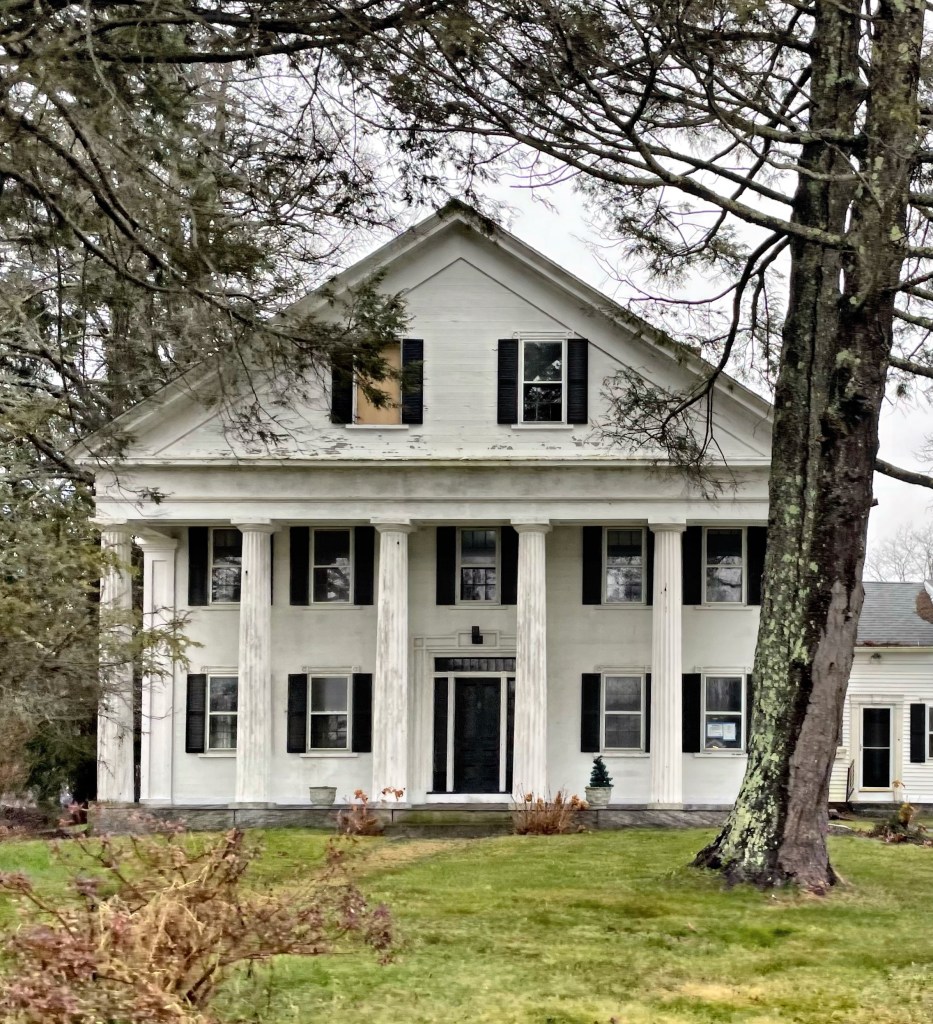
Located on Tolland Turnpike in Willington, east of the Town Common, this temple-front Greek Revival home stands in an excellent state of preservation. The home was built for General Orrin Holt (1792-1855) in about 1840 after his work as a member of the Connecticut State House of Representatives 1830–1832, and in the Connecticut Senate in 1835 and 1836. He was re-elected as a Democrat to the Twenty-fifth Congress, serving until 1839. After leaving Congress, he served as Inspector General of the Connecticut State Militia, until his death in 1855. He likely built this home after leaving Congress in 1839, in his hometown. There is something about a temple-front home like this, they are so stately!
The Daniel Glazier Tavern is located at the west end of the Willington Green, an area showcasing great vernacular examples of Federal and Greek Revival architecture. The tavern was apparently built by Daniel Glazier as a stop along the route connecting Norwich, CT to Springfield, MA, where visitors could grab a bite to eat and/or stay the night to rest. Daniel’s son Isaac was the first tavern-keeper, followed by Daniel’s son-in-law Arial Eldridge until his death in 1849. The ballroom of the tavern had long been used in the winter months for town meetings, as he basement of the Town Meetinghouse, used for town meetings, lacked any form of heat. Since 2009, the property has been owned by the Willington Historical Society, who have restored the building.
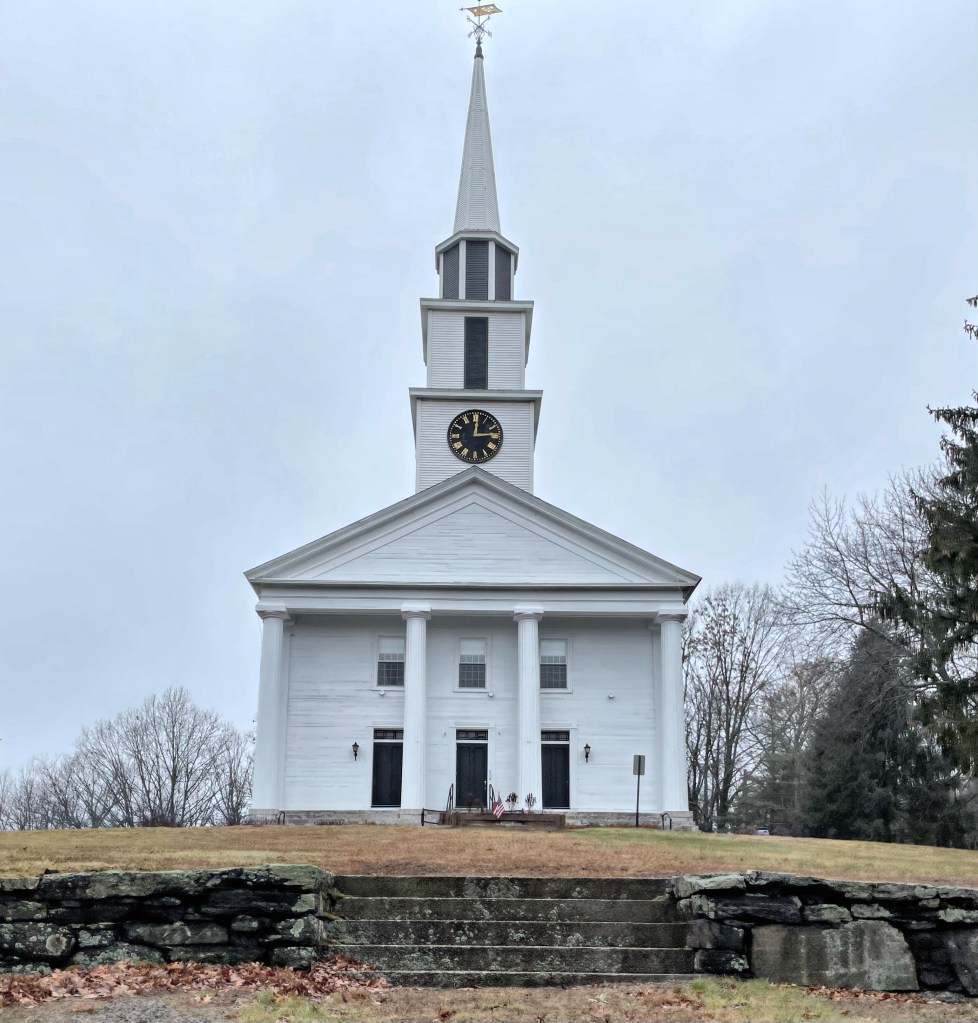
The Congregational or Town Church of Willington, Connecticut, has existed since the town’s incorporation in 1728, but originally met in a member’s small home on the Town Green. The Victorian Gothic style church we see today was built in 1876, after members gathered funds to construct the building. Land, materials, and labor were donated to offset costs for the small congregation. The church flourished until a split in the beliefs led to the formation of the Baptist Church of Willington. Eventually, the Congregational Church merged with the Willington Baptist Church in 1911 to form The Federated Church of Willington. The congregation then moved to the Baptist meeting house across the Green. In 1924, the Old Congregational meeting house, which was erected in 1877, was sold for $1 to the Town of Willington with certain restrictions, the most important of which was that, if it should cease to be used for public meetings under the control of the selectmen, possession would revert to the Congregational Ecclesiastical Society. From 1926-1974, the church was used as town hall (when the smaller building next door was outgrown. The church’s bell was removed during World War II to allow plane-spotters to use the tower. Instead of being placed back in the tower, it was mounted on a pedestal outside the building, where it remains today. The Willington Town Offices moved to a former industrial building a short distance away, but retain and maintain the building.
Located on the southern edge of Willington Connecticut’s town common, this vernacular example of the Federal style with later alterations is really appealing, mostly for its simplicity and proportions. The house was built around 1820 for Hiran Rider, who served as a judge, county sheriff, and town selectman. The Rider Family were hit by tragedy in 1851 when dysentery hit the household, killing Hiram, his wife Sarah, and their daughter. The home was altered by a later owner with 2-over-2 windows, an Italianate style door, and a door hood.
Elijah Waters (1773-1846), a hardscrabble farmer in West Millbury inherited his father’s large farm and resided there for over thirty years before wanting something more his style. Unmarried and without children, Elijah (who was 72 at the time), had this impressive Greek Revival farmhouse constructed near his old family homestead. He was possibly looking to spend money saved up and without a wife or heirs to will it to. The massive temple-front Greek Revival mansion has a stunning doorway and six columns supporting a projecting pediment. Within a year after the home was built, Elijah died. The home was willed to his nephew, Jonathan Waters. The house is for sale for $384,000 which is a STEAL!
Not just your typical white New England church here… this one was moved! This church was built in 1804 in the north parish of Sutton (present day Millbury, Massachusetts). In the 1700s, the members of the northern part of Sutton petitioned to have a parish church of their own, rather than trekking across the large town to gather for town meetings and religious purposes. They were permitted to erect a parish church inn 1743, and built a church. The building was replaced in 1804, thanks to the wealth and new members of town moving there for manufacturing. Years later, the parish petitioned the Commonwealth of Massachusetts to have the North Parish of Sutton become the town of Millbury, due to the difference in needs being a mill town compared to Sutton’s more pastoral living, and they were designated as a town in 1813. The first town meeting of Millbury was held at First Congregational Church of Millbury that year on the town common. As industry along the Blackstone River picked up, so came waves of workers, many of whom were recent immigrants to New England. It was soon decided that the town church should relocate to provide a new center for town. In 1835, this church was moved about a mile away and erected high on a hill, in Bramanville village, a bustling industrial village. The church has remained in its location in Bramanville, even after the town center again moved, this time eastward to its present location. The Greek Revival style church elegantly reflects the significance of ecclesiastical buildings in early New England towns.
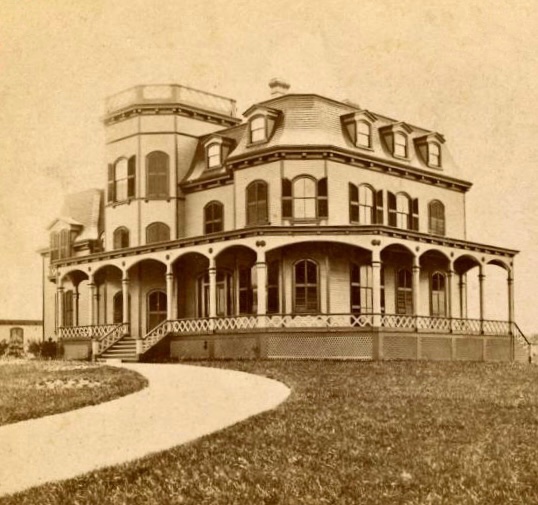
Not to be confused with The Villa, an extant mansard-roofed cottage in Newport, this beautiful example of the Second Empire style sadly is no longer around for us to gawk at. “Train Villa” was built as a summer cottage for George Francis Train (1829-1904), a nutty, attention-seeking businessman, who in 1870-1, traveled around the world in 80 days. The feat caused a sensation, but only after a writer named Jules Verne fictionalized it, naming the main character Phileas Fogg. Train was already one of the most famous men in America, but he was not happy that Verne co-opted his story. “Remember Jules Verne’sAround the World in 80 Days?” he told English reporters. “He stole my thunder. I’m Phileas Fogg.” Train undertook a total of three trips around the world, each time attempting to beat the record of 80 days, with his final trip clocked in at just sixty days. Ironically, Amazon Prime just released the story as a new series (literally airing days ago). Before his inaugural trip around the globe, Train had this summer cottage built in Newport, where he could relax after his globetrotting. After his death, the property was renamed “Beachholm” and owned by Woodbury Blairof Washington D.C..The home was one of the most eye-catching in town and was located in front of the Seaweed Cottage (featured previously), until a fire in the early 1970s led to its demolition.
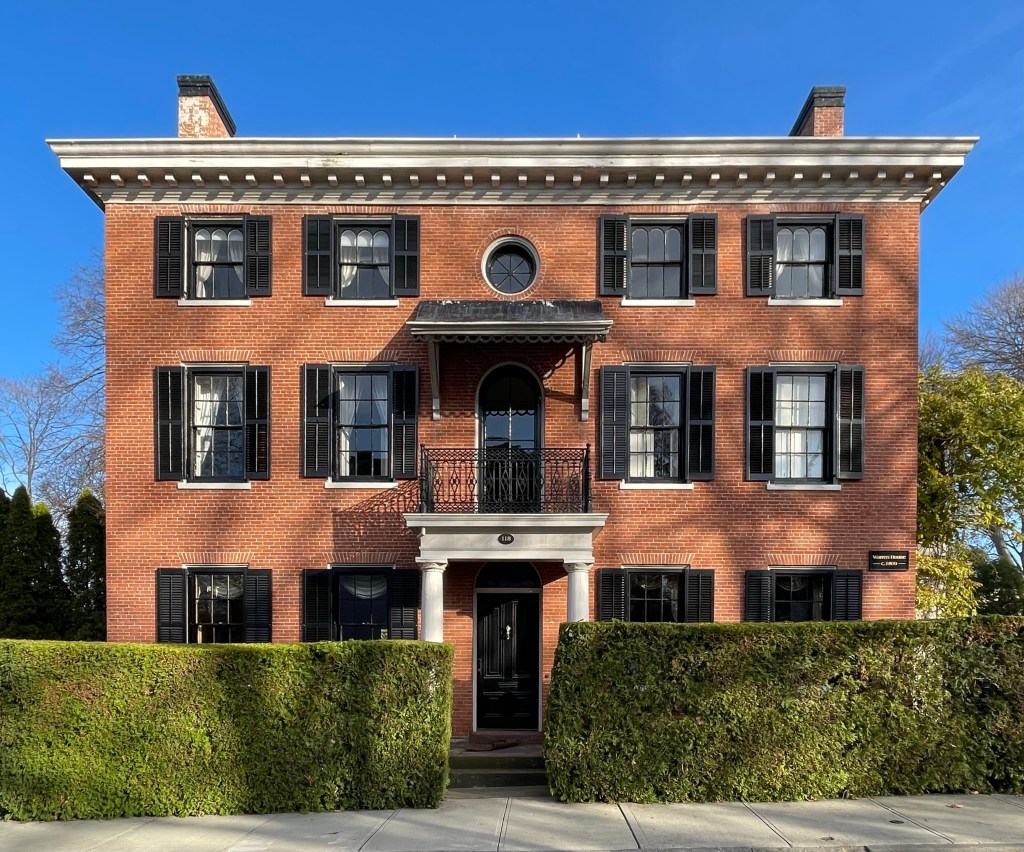
The Lawton-Warren House is one of the few large, brick Federal mansions in Newport, and is located a short walk from the Tillinghast House (last post) and the mysterious Newport Tower in Touro Park. The collapse of maritime trade in Newport following the British occupation was so complete that this house style, prevalent in Providence, is virtually nonexistent here. Robert Lawton was a sea captain and merchant who died at sea in 1818 off the coast of Africa and left the house to his wife, Penelope. After Penelope’s death in 1855, the traditional Federal style home was given Italianate detailing at the second floor. The home was likely painted around this time, which thankfully has been removed. The home was purchased in 1932 by George Henry Warren and his wife Mrs. Katherine Urquhart Warren. Katherine was a preservationist and art collector interested in preserving the Colonial town of Newport. To assist with this endeavor, she convinced the Countess Szycheni, a descendant of the Vanderbilt family and owner of The Breakers, to open The Breakers mansion to the public for tours. It was the start of the Preservation Society of Newport County. She would later be appointed by First Lady, Jacqueline Kennedy, to the committee to restore the White House in 1961. Katherine died in 1976, she willed the home here to the Preservation Society, and it held offices there until 1994. The home was sold to a private owner who restored the home to near original conditions, keeping the Italianate detailing.




 Buildings of New England