In 1790, Joshua Ballard built this house on a prominent triangular lot on the turnpike connecting New Hampshire’s largest city at the time (Portsmouth) with the future Capital (Concord). The main door is flanked by fluted pilasters and surmounted by a pediment with dentils and strong proportions. The old tavern was purchased in the late 1800s by Charles A. Hoitt, a granger and selectman in town. As with many old homes on Main Street in town, the house was converted to apartments with a small commercial space at the ground floor.
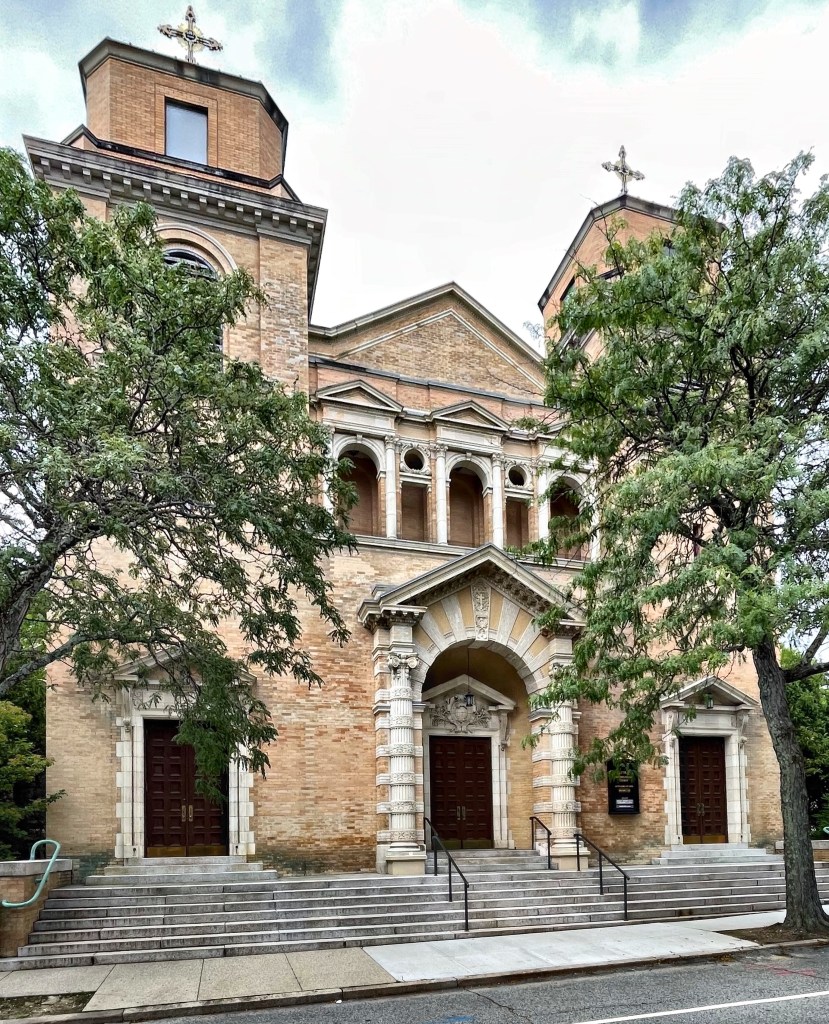
One of the best examples of Renaissance Revival architecture in Rhode Island is the Central Congregational Church of Providence. Constructed between 1891-1893, this building was the new home to a growing congregation, which outgrew its original Thomas Tefft-designed building on Benefit Street (which has since been occupied by RISD). Famed architect Thomas Hastings of the firm Carrère and Hastings of New York City, was hired to furnish plans, and worked closely with Reverend Edward C. Moore to make sure the building was fitting of the site. The church is cross-gabled in form and is constructed of yellow brick with terracotta trimmings, evocative of Spanish and Italian Renaissance styles. The facade has a detailed central pavilion which is flanked by two towers. These towers were originally surmounted by elaborate belfries, but these were damaged by a hurricane in the mid 20th century and replaced by the present brick caps. The dome and vaulting is of tiles by Rafael Guastavino, it is the first dome that he constructed in the U.S., making this building even more significant.
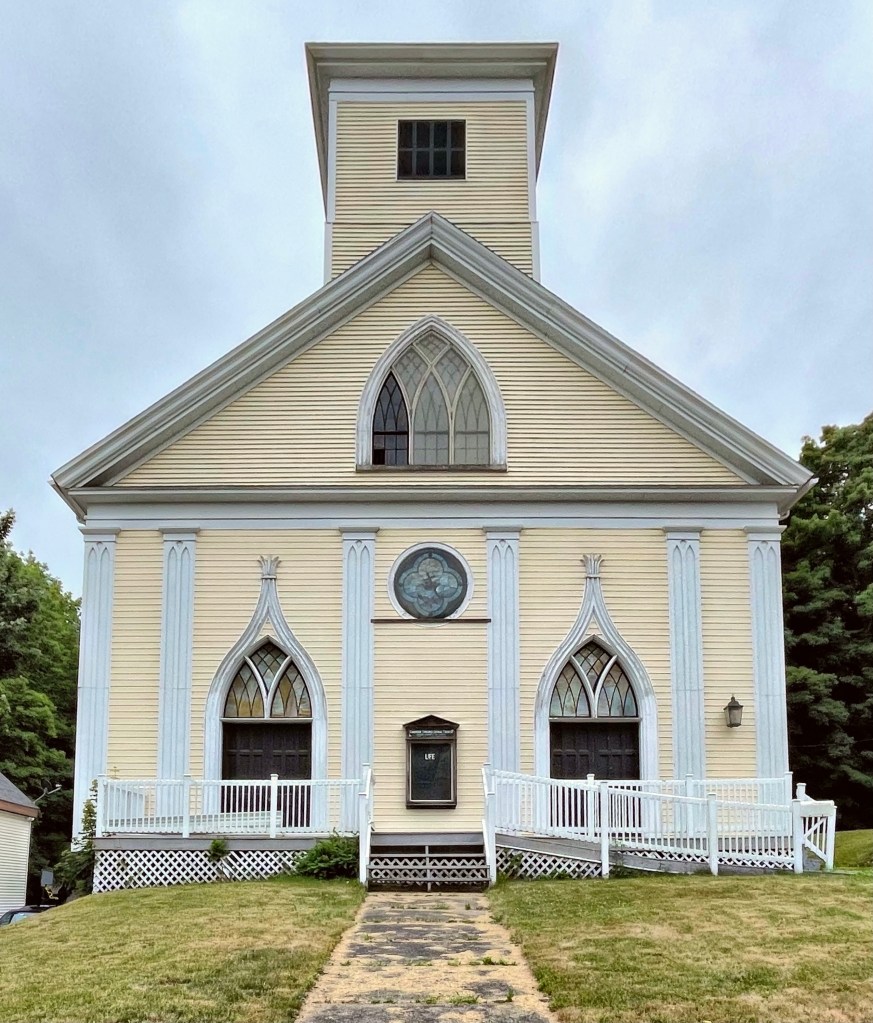
This stunning Gothic Revival church was built in 1843, on the site of the blockhouse, erected 80 years prior for the settlers of the area from native attack. In the 17th and 18th centuries, many rural parts of New England had blockhouses erected to allow the settlers a defensive fort from attack. The blockhouses were often garrisoned wooden structures with small windows on all sides to allow for gunfire to attackers below. The structure would protect those inside from arrows and melee weapons. This building however, was constructed later for the Universalists, who believed in “universal salvation,” who had been meeting since 1821 in a schoolhouse beside the town common. The church, in its original state with its steeple and clock, was an extremely sophisticated example in wood of the Gothic Revival style with its pinnacles, lancet windows and pilasters. Sadly, the steeple and clock were removed in the early 1920’s for safety reasons as the structure could not support it without significant engineering. The church and congregation changed to the United Church of Christ-Congregational denomination in 1964. After that, the building was occupied by a brewery (believe it or not), before being reverted back to a church by the current congregation.
The Octagon form of architecture was conceived in 1848 in the prolific mind of Orson Squire Fowler, phrenologist and author of books on sex, family relations, and many other subjects. His book A Home for All, or, the Gravel Wall and Octagon Mode of Building struck the fancy of a certain few, and Octagon homes were built across the country, for just about a decade until they fell out of favor almost overnight. This home in West Gardiner, Maine, was built by Jesse Tucker in 1856 on land his father had cleared, replacing a more standard structure. The new octagon house was being constructed as a gift to Jesse’s soon-to-be wife, but tragically fell from the roof of the barn when building, and died. The home was completed, and it was seemingly acquired by Jesse’s twin brother David. The home remained in the Tucker family until the 1950s.
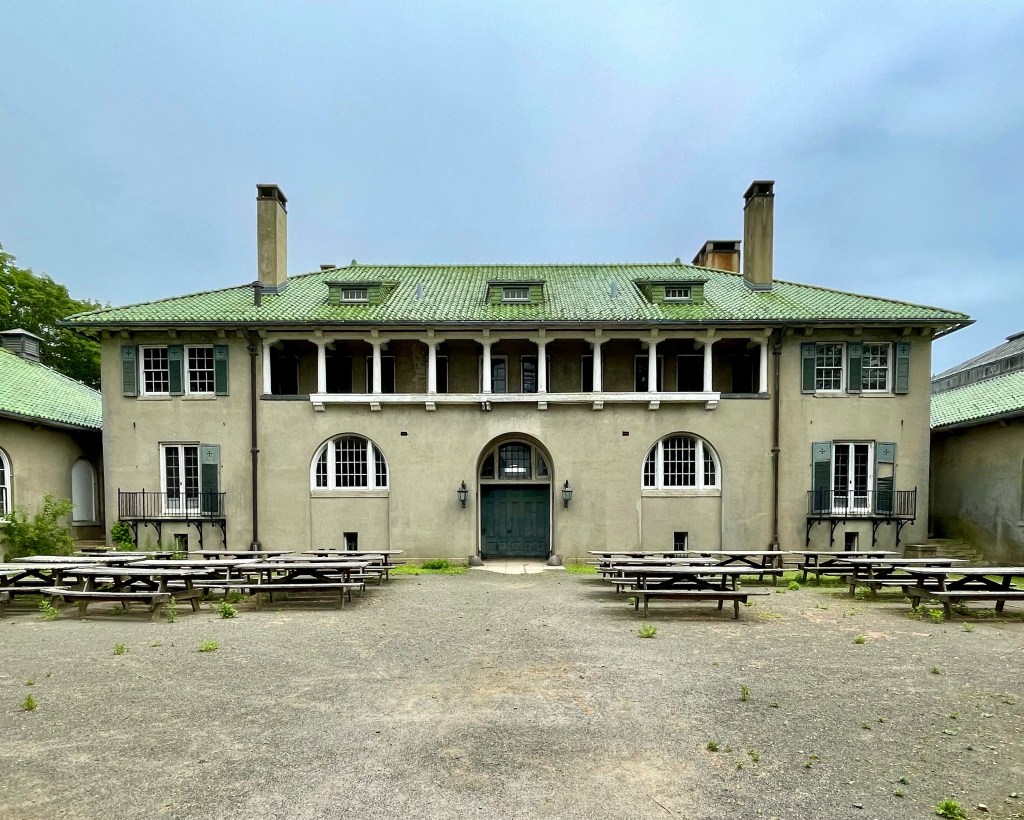
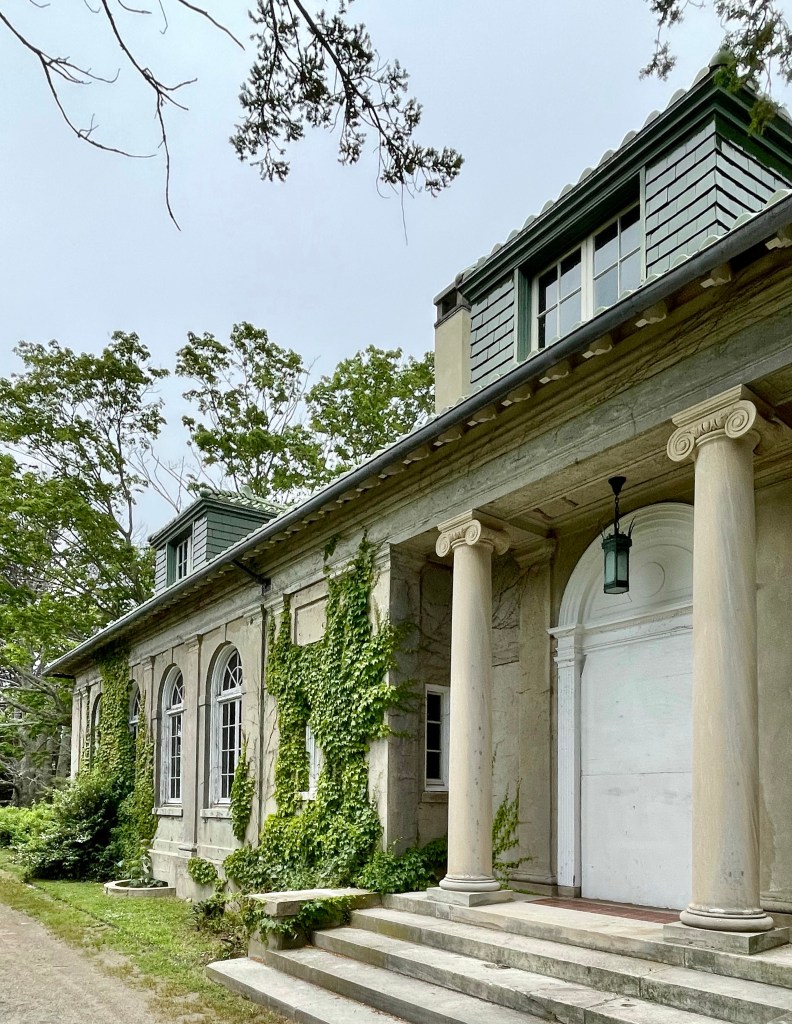
Another of the stunning buildings on the Harkness Estate is this massive all-purpose building that served a variety of functions, but I will call it the Carriage House. The building was constructed in 1908 and designed by James Gamble Rogers, mimicking the Renaissance Revival grandeur of the main home, Eolia. As previously mentioned, the large, U-shaped building was a multi-use support compound for the Harkness Family and their farm. The South Wing (right) of the building served as a clubhouse for Edward Harkness and his friends, with a billiards room, squash court, and two bowling lanes. This wing has large windows looking out towards the ocean and the large gardens on the property. The central block contained a garage with a turntable to facilitate the parking of limousines, a gas pump and a car wash for Mr. Harkness and his growing automobile collection. The North Wing (left) contained the horse stables, carriage area, tack room, smithy, and even a space dedicated to dog grooming. Upon close inspection you can see small rounded stones near the portals to allow the wheels to hit them rather than damage the building. Perhaps most importantly, the Carriage House was the location for the furnace room with its huge steam boiler. This boiler heated the Carriage House as well as the Mansion via an underground steam line. Apparently the building will soon be undergoing a restoration. Fingers crossed!
Another of the handful of original structures extant on the Seaside Sanatorium campus in Waterford, Connecticut, is this gorgeous Tudor Revival style duplex constructed for medical staff housing. Like the Main Building and Nurse’s Residence, this duplex is credited as a design by the great Cass Gilbert. While the building was constructed after Gilbert’s death in 1934, the plans were likely all drawn up at the time the Maher (main) building was in 1933. The duplex residences feature a symmetrical facade with two main entranceways, located in slightly projecting pavilions, and are set within basket-arched openings, detailed with alternating brick and granite voussoirs. There are three-part windows above the doors which project from the wall plane and have cross-braced faux balustrades of wood below. Identical sun porches are recessed at either end of the house. The small associated garage to the immediate northeast has a simple design, but one that reflects the style of the houses. Like the other buildings on the campus, this structure is vacant and is slowly rotting away. So sad to see.
Next to the Maher Building at Seaside Sanatorium, the Nurse’s Residence building (1935) sits in the same sad state but retains a lot of its architectural character and charm. The Nurse’s Residence was built for… you guessed it, housing for the nurses who worked at the Seaside Sanatorium and treated the young children with Tuberculosis. Like the main building, this structure was designed by famed architect Cass Gilbert in the Tudor Revival style. In designing the buildings, Gilbert met the requirements of the sanatorium to have a self-contained hospital for the children and a large separate dormitory for the nursing staff, but adapted an essentially domestic architectural style to de-institutionalize their appearance through the use of applied, decorative detail and an extraordinary wealth of materials. The Nurse’s Residence is constructed of brick and is capped with a polychrome slate roof which is lined by 15 dormers on each slope, alternating in size. The end gables, which are similar to those of the main building and in surprisingly decent condition given the circumstances, are covered with decorative tile and add a punch of architectural intrigue. Oh too see these buildings restored one day…
Founded in 1710, when Waterford was still part of New London, the Baptist Church was one of the dominant institutions in the historical development of the Jordan Village, which became the historic population center of town. The fact that Jordan Village in Waterford sprang up around a Baptist and not a Congregational church gives it an unusual religious significance in the state. The Baptist denomination was introduced to Connecticut from Rhode Island in 1705. The separation from the City of New London, which was organized around the locally supported Congregational church, was due in large part to the differences between the the formal, structured, Congregationalists and the evangelical Baptist farmers. In 1848, when this church in Jordan Village was built, many residents followed the architectural vocabulary and built Greek Revival homes nearby, creating a large development boom in the new town center. The church remains today as an active member of the community.
In the 1890s, Charles Strong Guthrie and wife Frances Amelia Lampson Guthrie began vacationing at Pequot Colony, a resort community in New London, CT, with considerable social cachet and popular with wealthy New Yorkers like themselves. Charles Guthrie was an industrial mogul who served as President of the Republic Iron and Steel Corporation. In 1901, the couple acquired 12-acres of land overlooking the Long Island Sound, and hired renowned Summer home architect William Ralph Emerson to design a mansion with the Olmsted Brothers commissioned to design the site and landscaping. Upon completion in 1902-03, the estate became known as “Meadow Court”, taking its name from the six-acre wildflower meadow overlooking the Sound. The home was a landmark in the Mission/Spanish Revival style, which became popular in the early 20th century, coinciding with other architectural revivals. Charles Guthrie died prematurely in 1906 at age 46, and not long after, Frances began spending summers on Long Island. In the 1920s, she sold off some of the land to a developer, who constructed more modest summer cottages, and sold the mansion, which soon after re-opened as the Lighthouse Inn. The summer hotel flourished through the mid 20th century, boosted by great management and luxury events. A fire in 1979 destroyed some of the building, but it was restored. It closed in 2008 and sat vacant until recently, when a new owner has begun the long process of restoration, looking to restore the light back to the Lighthouse Inn.
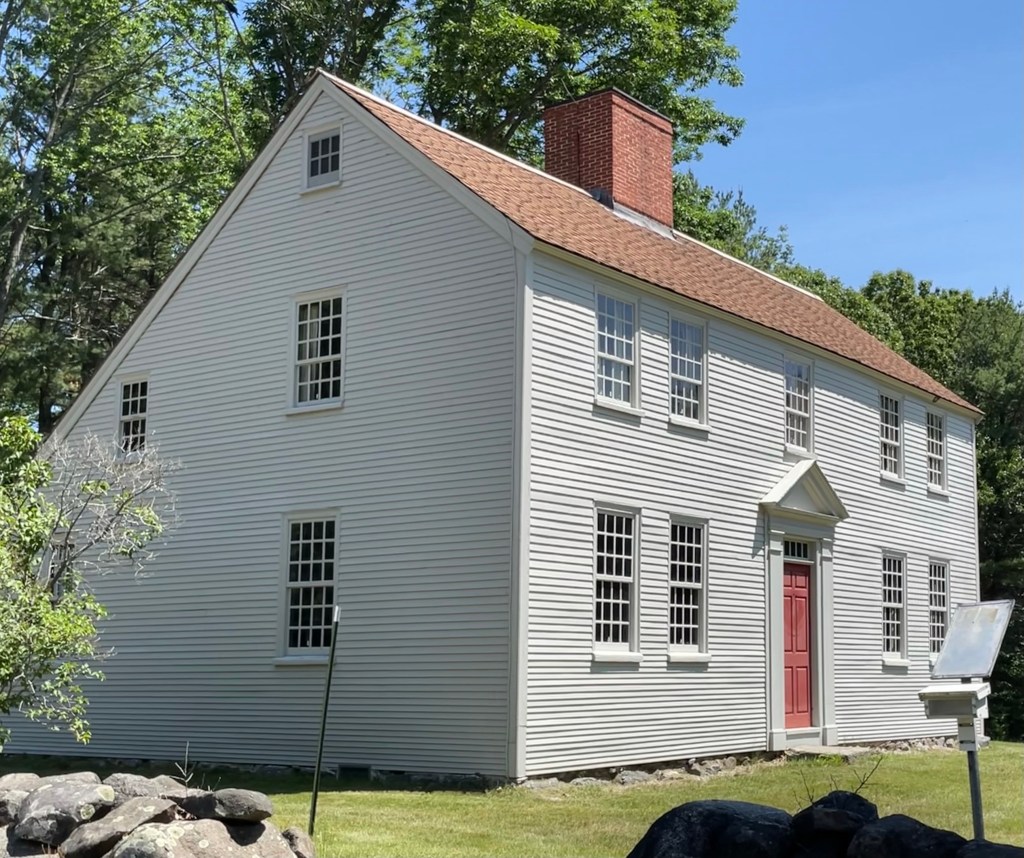
The Old Parsonage in Newington, NH, is a rare survivor from the 1700s in the tiny town. It is one of few extant “saltbox” houses to be found in the New Hampshire seacoast. Like most houses of this type, the parsonage has a lean-to that was added a few years after the house was built. Like the nearby meeting house, the parsonage has long been inextricably connected to the public life and the identity of Newington. Unlike the much-altered meeting house, the parsonage retains the appearance of the 1700s and has been extremely well-preserved, giving a glimpse into 18th century life in Newington. The parsonage is estimated to have been constructed in 1725 when Richard Pomeroy, the first Sexton of the church, sold the property here for 19 pounds, with no mention of a dwelling. It was acquired by a John Knight (1685-1765). After his death, the dwelling was sold to the Town of Newington and restored to be used as a parsonage.
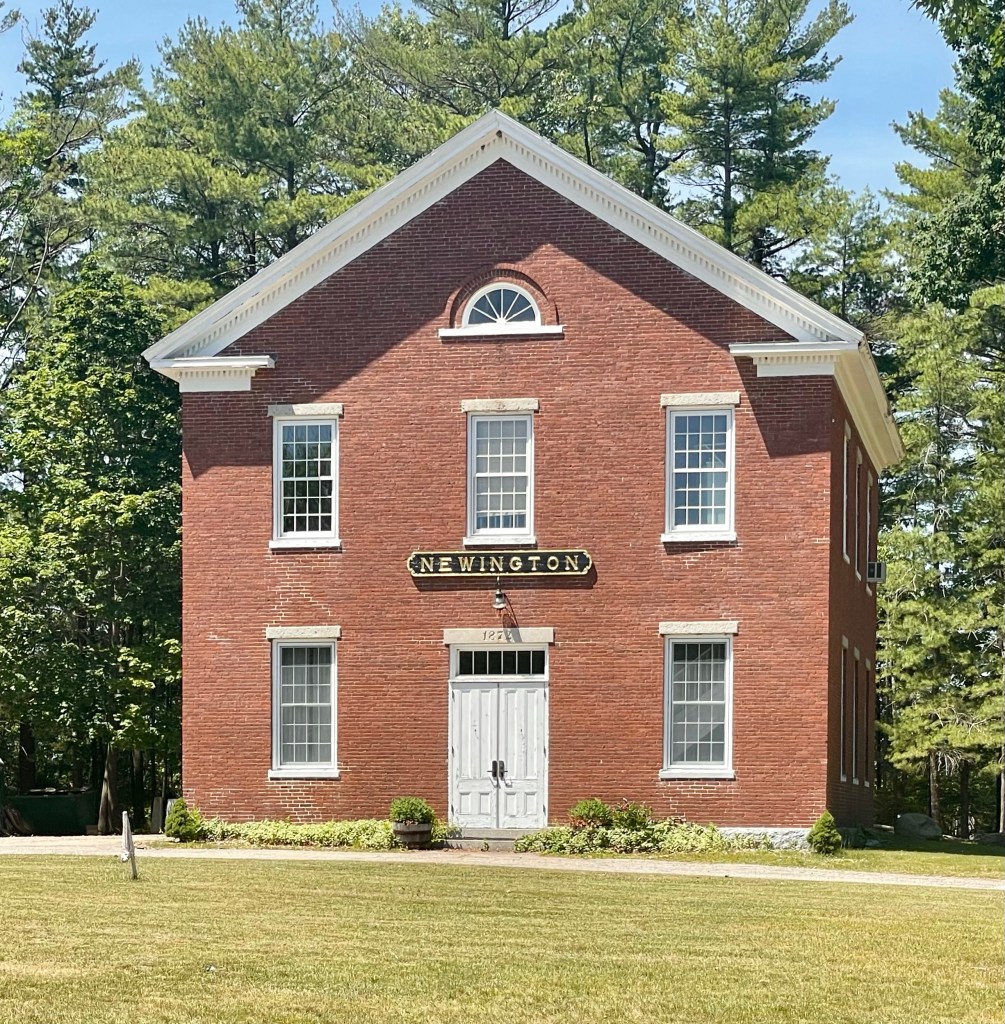
Set in Newington Center, the historic core of the quaint town of Newington, NH, this old Town Hall building looks much like it did when constructed 150 years ago. Newington was originally a part of the town of Dover, and due to boundary disputes among early river settlers and native people, this area was later called Bloody Point. The town was eventually incorporated in 1764, and town functions were held in the local meetinghouse, a common tradition at the time before the separation of church and state. After the American Civil War, the town erected this town hall building which was a one-stop shop for civic functions. The Old Town Hall has served as a school, meeting hall, government office building, home of the local Grange hall and as a local social hall. In 1872 when the building was completed, the town had just 414 residents, a number that has only doubled since that time. The design of the brick town hall is a blending of styles, all were out of fashion when this was built, which include Federal and Greek Revival elements. By the second half of the 20th century, new town offices were built nearby.
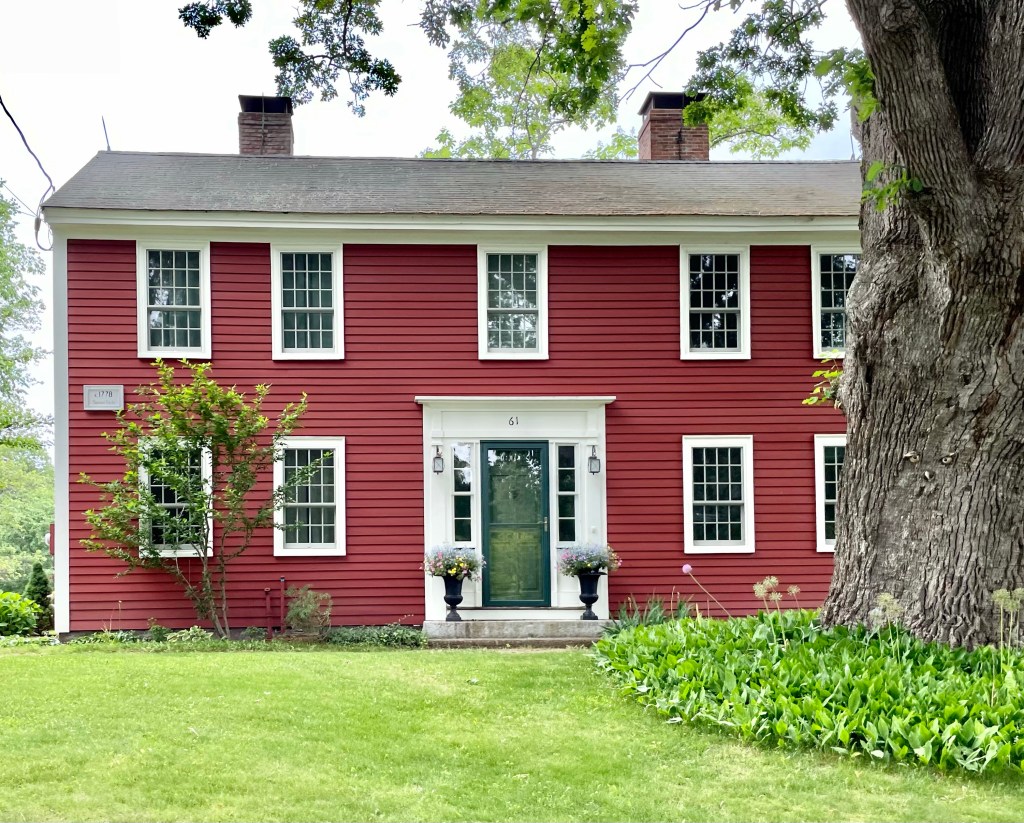
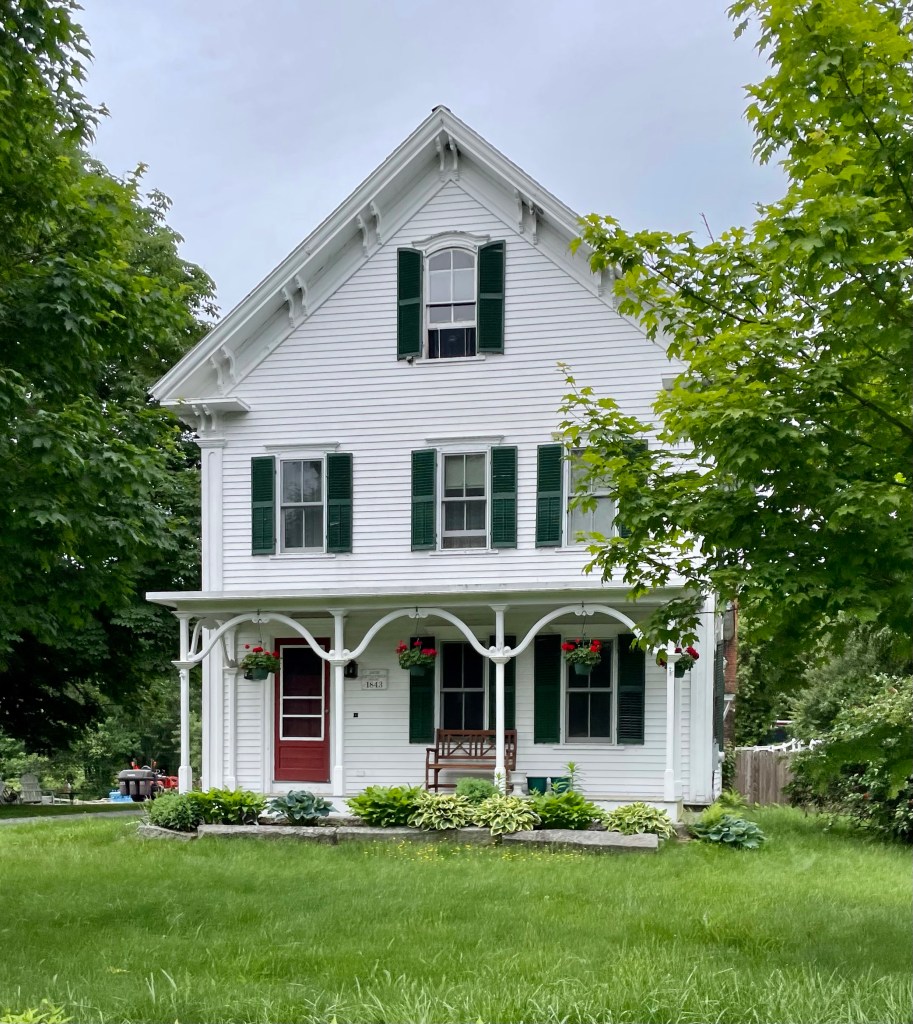
Tracing the history of old New England homes can be difficult and finding the history of this house is no different! The rural property here in Boxborough, MA, was owned in 1731 by Moses Foster, a teacher according to a deed of that year. A home was built here, but it appears it was a one-story house, which is verified as the 1798 tax lists report two single-story houses on the property. It is likely that a subsequent owner modified one of the homes and added a second story to fit a growing family here, probably in the early 19th century. To add more layers to this, the historical commission’s research lists the house date as c.1731, the sign on the house reads c.1778, and my estimation is c.1810. Who said historic preservation and house research is easy?!
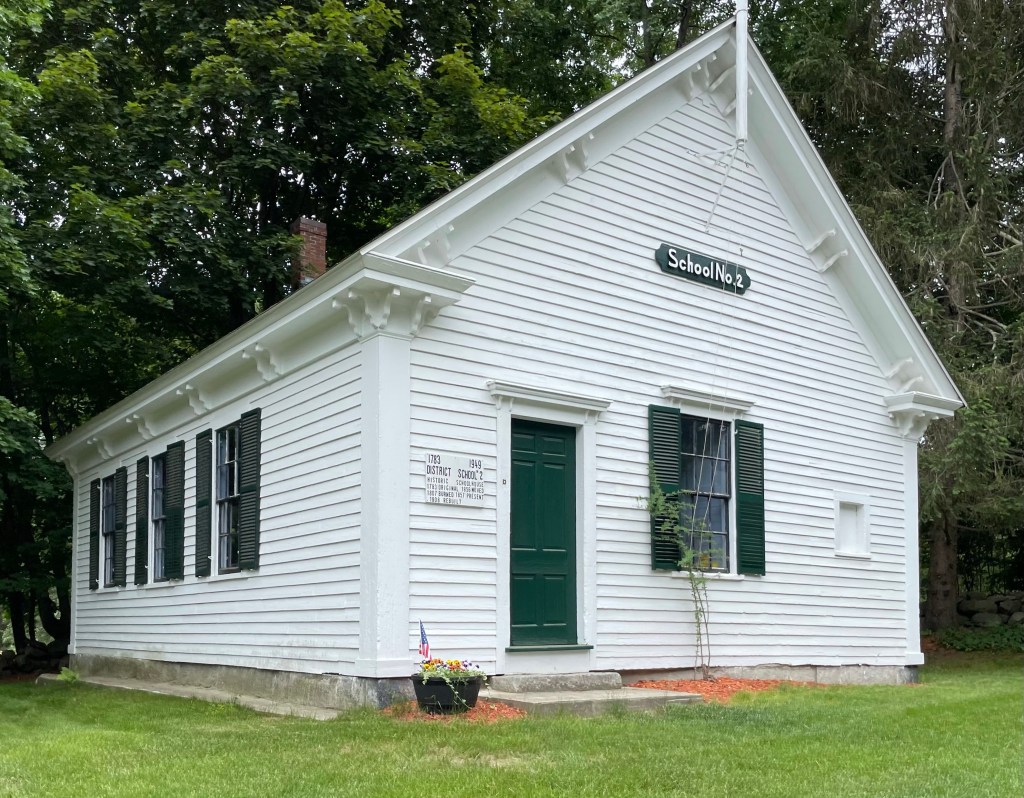
Before most small New England towns had single school buildings for elementary, middle and high school, small one-room schoolhouses like this dotted the landscape, especially in rural towns. Having smaller schools spread out allowed for a greater number of students to attend school without traveling by horseback long distances, and more local school buildings was a great solution. This c.1857 school building was in use until 1949, and it didn’t even have heat, running water, or electricity until the 1930s, making smart design a necessity to get the most out of the building. Large windows would provide natural light to flood the classroom and the steep gable roof would ensure snow to slide off the roof. Sadly, many towns have lost these buildings, but some have been restored or even repurposed as homes!
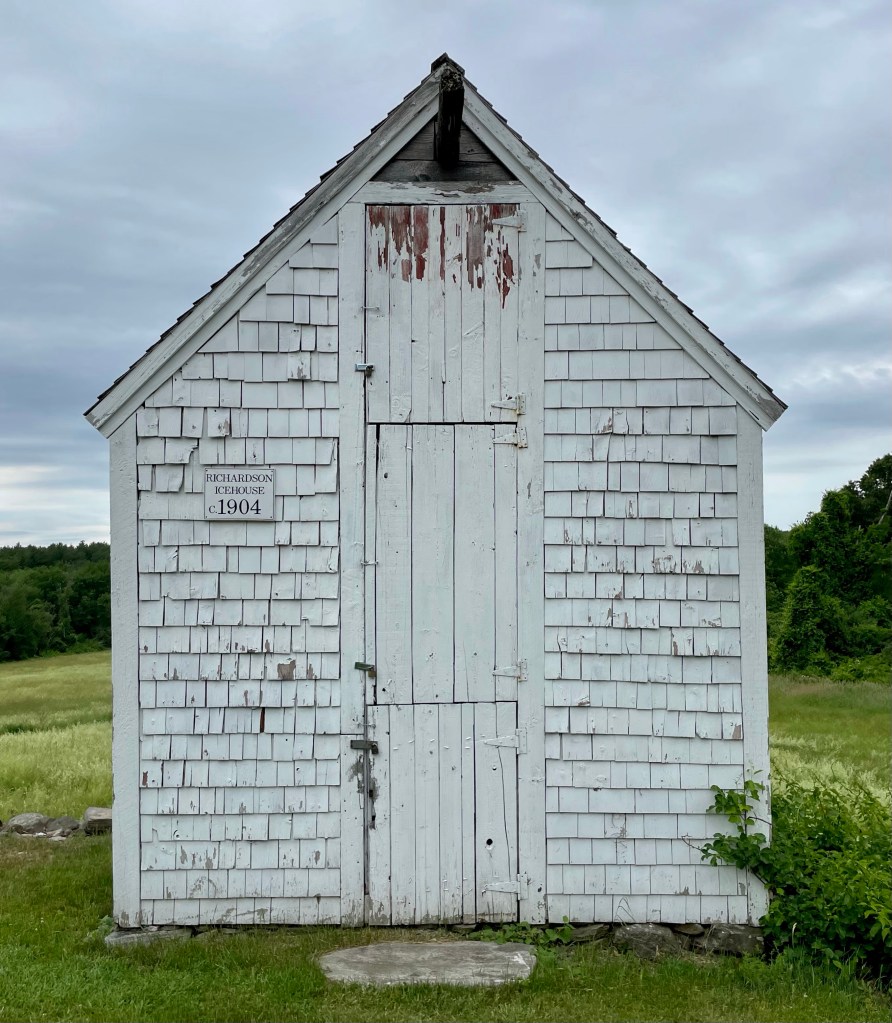
In 1775, Silas Wetherbee gave three acres of land in present day Boxborough, MA, to be used as a meetinghouse and burial ground site for the new town that he and 17 other outlying farmers of Stow, Harvard, and Littleton hoped to establish. That year, having formed a new religious society, they acquired the old meetinghouse in the nearby town of Harvard, dismantled it, and began to reconstruct it on land donated by Wetherbee. In 1783, the Town of Boxborough was officially incorporated, with the meetinghouse at its approximate center. That next year, Silas sold his son Levi, “60 acres of land, half of a building referred to as the “old house,” and half of a barn, all located just east of the townhouse. The farm was run by Levi until his death in 1829, when it came into the possession of his son, John Wetherbee (1800-1858). In 1908, the property was sold out of the family when it was purchased by Burpee Clark Steele, who owned it for the next seventeen years. Steele had immigrated from Nova Scotia to Boxborough in 1886, and he quickly became known for his expansive apple orchards. In 1925, Burpee Steele conveyed the farm to his son, Burpee Franklin Steele. Under his ownership, the old barn blew down in the Great Hurricane of 1938, and he constructed a new barn years later. Also a later addition, the Richardson Ice House was moved to the site by the local historical society in the 1990s. The farm today is protected by the town, but the buildings could use some better maintenance. Hopefully the town funds their preservation so they do not decay.
One thing I really love about small towns in New England is the prevalence of amazing old homes on the winding back roads. Located in Boxborough, MA, the Jacob Littlefield Farmhouse showcases the agricultural character and charm seen in the town. The farmhouse and outbuildings were built by Jacob Littlefield, who likely hired a housewright from town as the home is a near match to a home built on a nearby street. Mr. Littlefield was a farmer from Wells, Maine with seven children and a wife named Anna. After his death, his wife Anna owned the farm, until her death in 1896. Their son Albert ran the farm from about 1896-1922, after which time Jacob’s grandson Earl was the owner. Earl was taxed in 1928 for ownership of two horses, 17 cows, a bull, the house, barn and shed, tool house, ice house, root house, hen house, garage, and a second house on 101 acres. He resided here until 1929 when it was sold out of the family. Since then, subsequent owners have restored the home and the various outbuildings to maintain the architectural and historic integrity of the property. We need more stewards of old homes like this!