After sharing the old Central Fire Station building in Lancaster (last post), I couldn’t help myself but to share another mini-mansard fire station constructed in town! Located in North Village, this station was built in 1888, and provided fire service to the more rural part of town. The wood-frame structure features a central tower which may have been used originally as a hose-drying tower. In the 1940s, the building was occupied by volunteers of the Ground Observer Corps, an American civil defense organization. The building’s tower provided unobstructed views of airspace where one could keep their eyes open for invading German aircraft. After the War, the Town of Lancaster sold the building, which then converted to a private residence. Sadly, a fire in 2015, damaged much of the interior of the building, but she survives!
Stephen King, the world-renowned author of some of the most popular horror novels, was born in Maine, and has used the state as the setting for many of his stories. From blood-soaked Carrie, to the haunted hallways in The Shining, to the evil clown Pennywise in “It”, Stephen King has long been one of the leaders in horror, terrifying millions with his books and film adaptations. Instead of living in a larger metropolitan area, he has long resided in Bangor, Maine, in one of the most visually striking homes in the state. The home was built in 1854 for William Arnold, who operated prosperous livery stables in town. The home is a rare example of an Italianate Villa in the state. While Stephen King now spends most of his time at his home in Florida, his Bangor mansion with its iconic wrought-iron gate ornamented with spiders and webs, bat-winged creatures, and a three-headed reptile are much more fitting of the horror author’s essence.
The only brick building in the Canterbury Shaker Village, the Trustees’ Office, built in 1831, served as the office of the Lead Ministry and also housed a U.S. Post Office for the community beginning in October 1848. The building was made of bricks manufactured by a local family. The building was designed as the hub of the Canterbury Shaker’s considerable commercial enterprises. It housed only those Shakers who had the authority to conduct Village business, and they often hosted guests and clients who arrived from distant places, and met with townspeople and local officials to discuss civic matters impacting the community. Due to the community-facing nature of the building, the community spared no expense inside and out.
This large, shingled horse barn at Canterbury Shaker Village in New Hampshire, was built in 1819 and measures 60 x 40 feet. The massive barn structure showcases the significance of horses and agriculture for the rural community, which lived off the land.
Constructed in 1811 as a guest house for the Canterbury Shakers, this beautiful structure follows the Georgian, center-hall residential floor plan constructed in the Federal period. Shaker records indicate that in 1849, the building was converted to an infirmary and the next year, the roof was tinned and the portico over the front door, called a “jet” by the Shakers, was added. After 1892, the first floor housed the nurses’ quarters, pharmacy, nurses’ sitting room and office and the dentist’s office. Upstairs, the patients’ rooms were fitted with lavatories and running water. The attic was used to store medical supplies and as a mortuary. All for the growing Shaker community here. Following the death of the last nurse in 1937, the building ceased to be used as an infirmary and was used as living quarters for sisters.
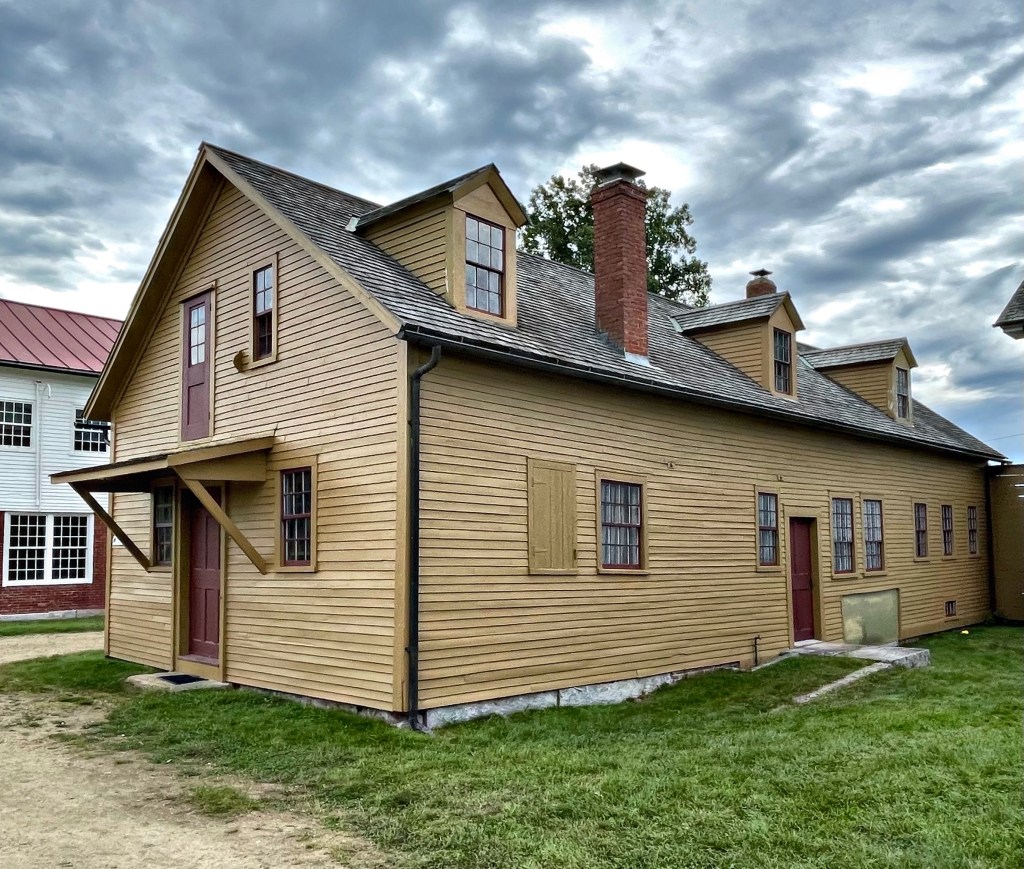
The original purpose served by this small clapboard building in the Canterbury Shaker Village, built in 1837 and measuring just 12 x 25 feet is subject to some debate, although it was definitely used as a drying house. Early writings indicate it was built as an apple-drying house while others state that the original purpose was to dry lumber. The present off-center gable-roofed cupola on the gable roof served as a ventilator. In 1865, the building became the headquarters of the bee keepers of the local Shakers.
When Benjamin Whitcher donated his farm for the beginnings of a utopian Shaker community, the land and buildings became the catalyst for the next 200 years of Shaker life in the community. It is known that Benjamin Whitcher constructed his farmhouse sometime between 1775 and 1782. With the arrival of the first Shakers in 1783, Whitcher allowed families to reside on the farmland, with the 1790 Census counting 35 people on the Whitcher property. This structure was one of the original structures on the old Whitcher Farm, and is possibly the oldest extant building in the Shaker village today. The building was moved to its present location in 1841 and was used for distilling sarsaparilla syrup for medicinal purposes by members of the community.
The second oldest purpose-built building in the Canterbury Shaker Village (after the 1792 Meeting House), is the dwelling house, constructed in 1793. The T-shaped structure was expanded numerous times and contains 56 rooms. The structure is the largest in the village and is notable for the large domed cupola, housing a Paul Revere bell. The first floor contained the village butcher shop, bakery, communal kitchen and dining room. For many years the second floor consisted of four bedrooms, two for elders and two for the sisters and the brethren. The third floor is also devoted to dwelling rooms. The Dwelling House was the residence of Canterbury’s last remaining Shaker sister, Ethel Hudson, who died in September 1992, the 200th anniversary year of the founding of the Canterbury Shaker community.
The Canterbury Shaker Village was one of two Shaker communities existing in present-day New Hampshire (the other being Enfield Shaker Village, featured previously on here). In 1782 Israel Chauncey and Ebeneezer Cooley from the Mount Lebanon village of Shakers traveled to Canterbury and converted several prominent figures of the community by convincing some of the Christian farmers that the Shaker way was what they had been seeking. Among those converted to the Shakers, the Whitcher, Wiggin and Sanborn families, donated land to house the Canterbury Village community of Shakers and the Canterbury Village was founded in 1792, led by Father Job Bishop. The village expanded over time, and in 1803 there were 159 members in three families. Nearly fifty years later in 1850, the site contained 3,000 acres with a community of 300 housed in 100 buildings!
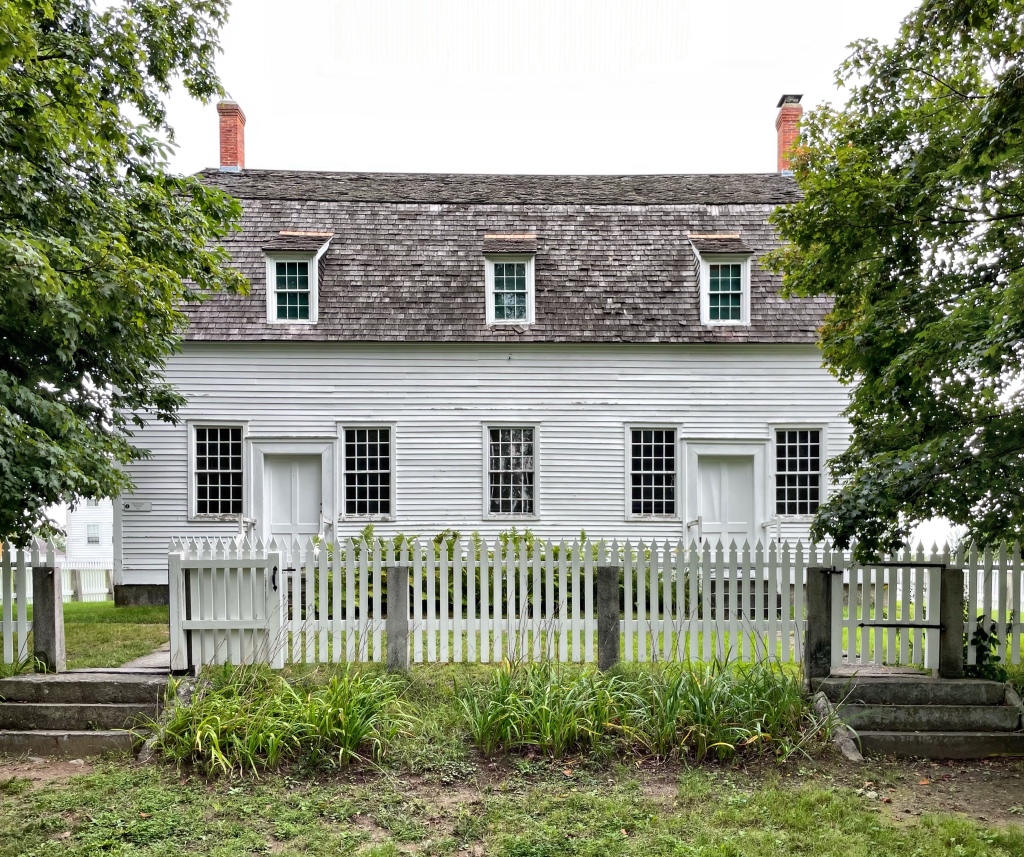
The first building of the Canterbury Village was the Meeting House. The Gambrel roofed building was constructed by members in reverent silence and supervised by Moses Johnson (1752-1842) who served as master builder of seven Shaker meetinghouses all over the Northeast. Inside, there were two stairways, one for men and one for women, located in the northwest and southwest corners of the building, each easily accessed by separate entrances, which led brothers and sisters from the first floor meeting room to the second story sleeping lofts.
In 1992, Canterbury Shaker Village closed, leaving only Sabbathday Lake Shaker Village open as a functioning community. There are apparently only two active Shakers left in the country, both at Sabbathday Lake in Maine. Many other villages like Canterbury, have been converted to museums, which give historians and the general public a great insight into how these places have functioned.
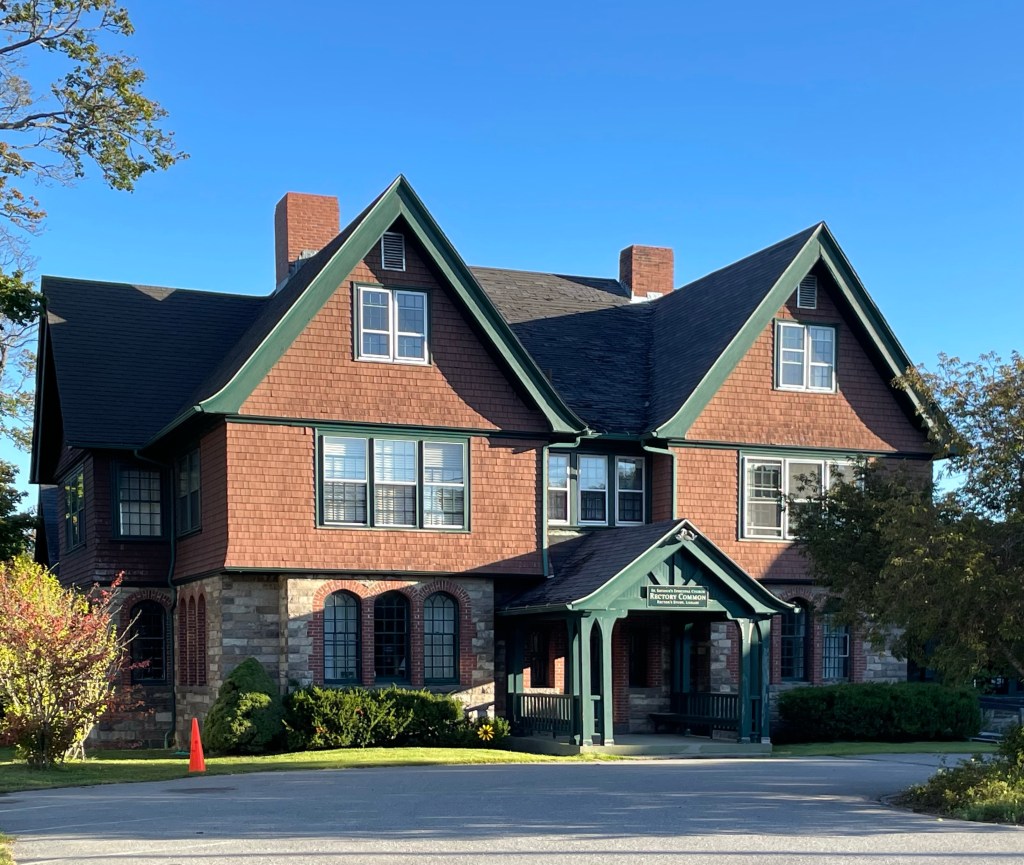
Standing adjacent to the beautiful St. Saviour’s Episcopal Church in Bar Harbor (last post), the church’s Rectory building fits very well into the landscape here. Built in 1898, the rectory is a two-and-a-half-story stone and frame home with a projecting entrance porch at the facade framed by a pair of steeply pitched gables. The Rectory was designed by Westray Ladd who grew up in the area, and worked in the office of Wheelwright & Haven in Boston, Massachusetts as well as with William Emerson and Peabody & Stearns before opening up a firm in Pennsylvania.
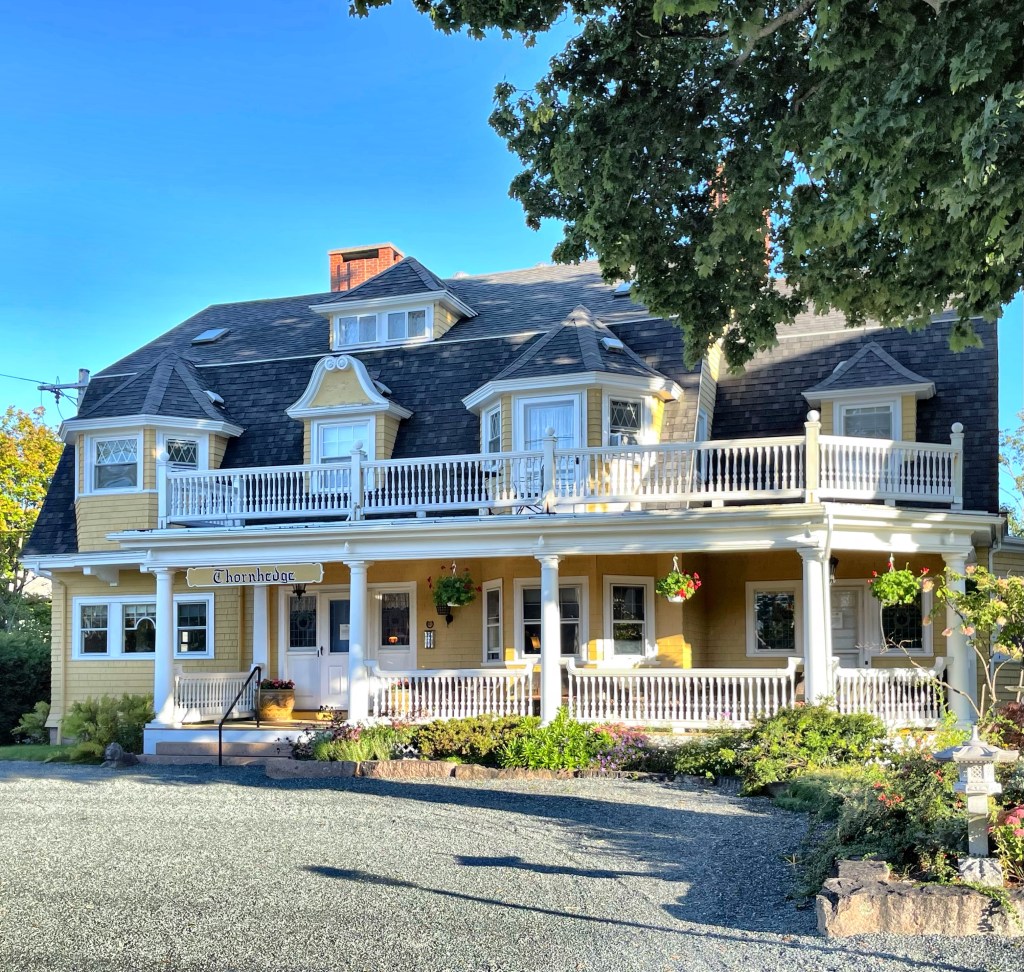
Located next door to “The Poplars” (last post), another summer cottage Thornhedge, stands out for its architectural splendor and great state of preservation. Similar to “The Poplars”, the home was built in 1900 for Lewis A. Roberts, a retired book publisher from Boston. Roberts ran the publishing house with his brothers, and they published work by authors including Emily Dickinson, Fyodor Dostoyevsky and George Sand, the first American edition of Treasure Island by Robert Louis Stevenson, and had their greatest commercial success with Little Women by Louisa May Alcott. The business was purchased by Little and Brown Publishing in 1898. Lewis Roberts died in 1901, only a year after completing Thornhedge, and the house came under the care of his son, Lewis Niles Roberts. Mr. Roberts kept the house as a summer residence until 1920, then sold it to the family of William F. Frick, a prominent judge from Baltimore. The home became an inn by the 1970s. Thornhedge is a Queen Anne style cottage which was originally organized with the first and second floor serving as the living quarters and the top and bottom floors for the servants. The laundry, servants dining hall, and kitchen were out of sight in the finished basement, with a dumb-waiter to bring hot food to the butler’s pantry. The third floor was the servants’ living quarters.
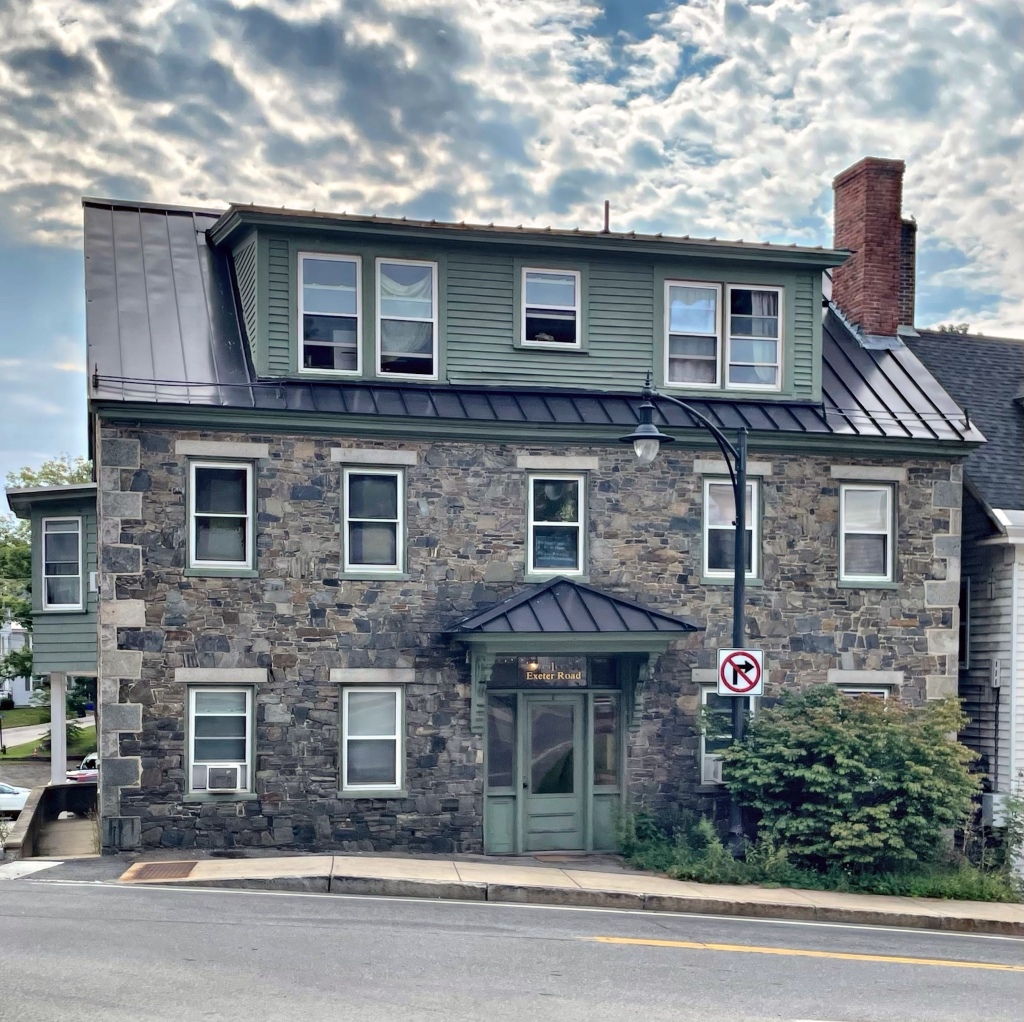
Benjamin Mathes built this stone home around 1835 for his family, of the same stone he used to build a storeacross the street. The Federal/Greek Revival building has amazing granite quoins (stone blocks at the corners) and lintels (blocks above the windows). Even though there are later alterations, including the bracketed door hood and massive central dormer at the roof, the home remains one of the most visually stunning buildings in town.
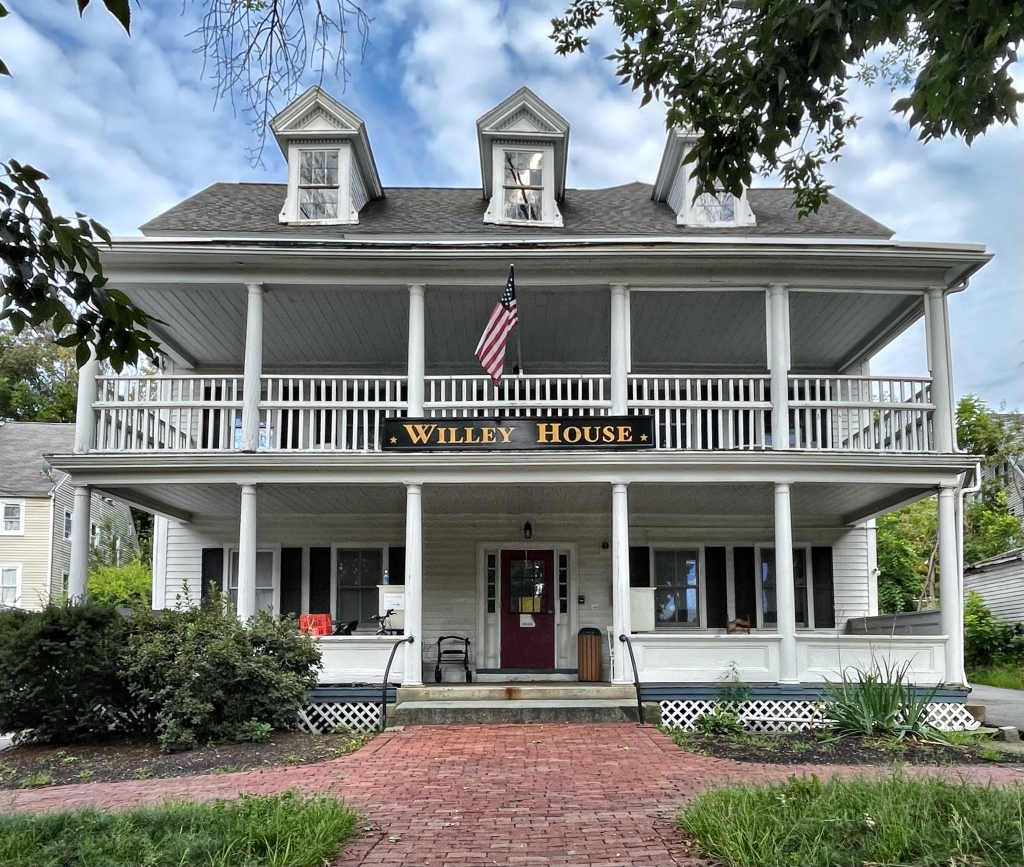
Originally an old tavern/inn, this wood-frame building in Newmarket, NH, was built for a member of the Rundlett Family who settled in town from nearby Portsmouth. The old building was known as Rundlett’s Tavern for a number of years, later renamed the Washington House, and eventually Silver’s Hotel by 1870. Under owner Joseph B. Silver, the Federal style building was updated with Victorian-era flair, marketing to visitors of town who had business with the Newmarket Manufacturing Company across the street. After Silver died in 1898, the building was purchased by George H. Willey and renamed the Willey Hotel/Willey House. He oversaw renovations in the 1920s to give it the Colonial Revival appearance we see today. The building is now apartments.
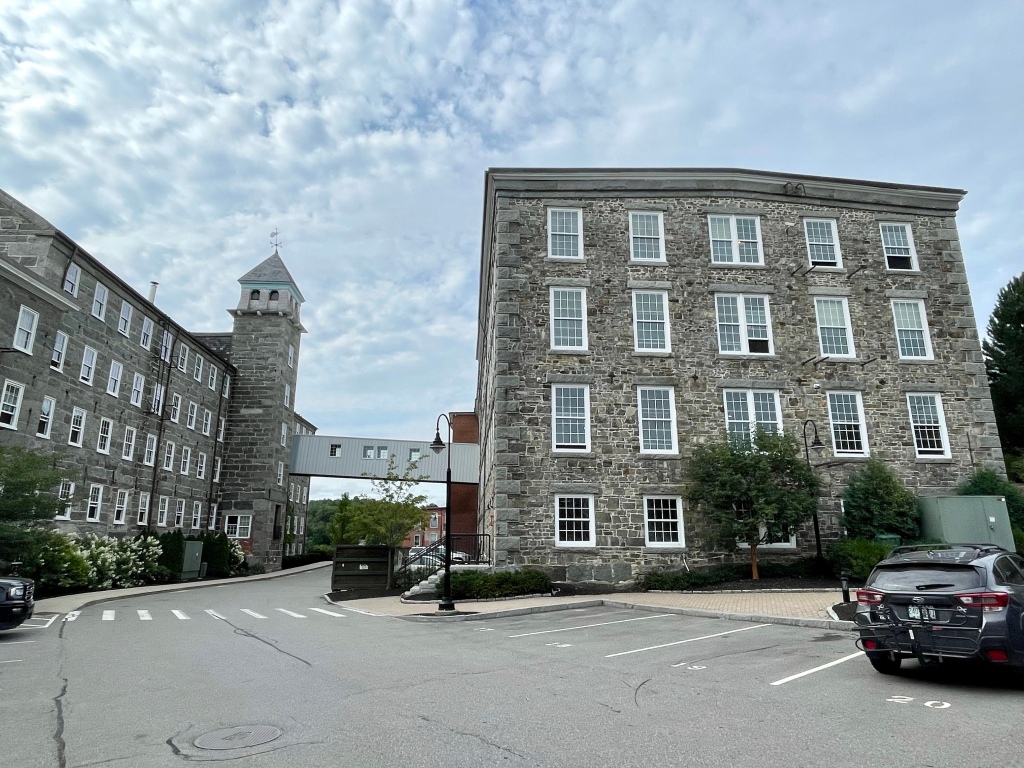
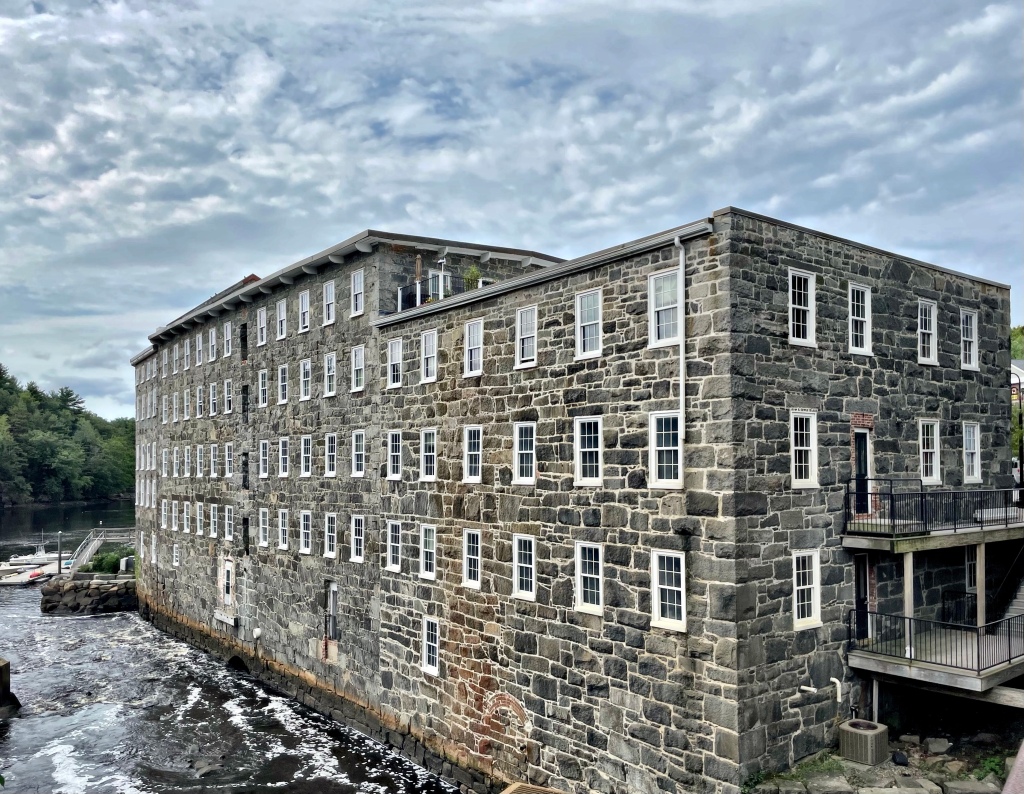
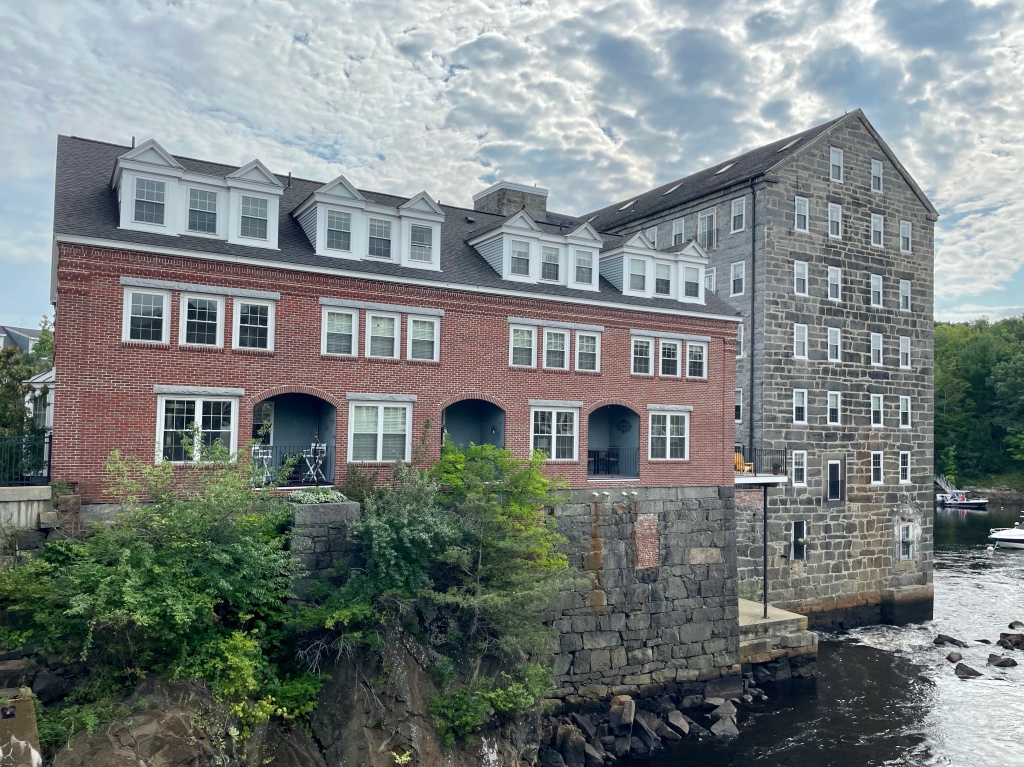
In 1823, the Newmarket Manufacturing Company built its first mill along the Lamprey River, dominating the waterfront and the economy of Newmarket, New Hampshire. Harnessing water power at the base of the falls, the cotton textile manufacturing community grew to include seven textile mills, with factory buildings, a machine shop, office, storage buildings, and corporate boarding houses; totaling some 140 buildings in all. During its peak production, 700 employees made up to 300,000 yards of cotton products each week, and 2.7 million yards of silk cloth each year. The mills operated continuously at this site until 1929 when a dispute between mill owners and workers erupted leading to their closure. Between 2010 and 2012, eight large mill buildings within the Newmarket Manufacturing Company property underwent a conversion to mixed use, including residential, retail, and office units, thanks to Historic Preservation Tax Credits, and many professionals who worked together with the vision to see such a large project through. Today, the complex is a excellent case-study on the power of adaptive reuse and historic preservation.
Calvin Chaddock (1765-1823) graduated from Dartmouth in 1791 and three years later earned a Master of Arts degree from the college. In 1792, he married Meletiah Nye and they settled in Rochester, Massachusetts, where he became pastor of a Congregational parish in the rural northern part of town. In 1798, he opened an academy for boys and girls in the village and built this beautiful Federal style home as a boarding house for students to reside in (the schoolhouse is no longer extant). By 1804, he had “a respectable number of students from different parts of the United States.” The man moved to Ohio before settling in Charlestown, West Virginia, where he lived in a homestead with his family and three enslaved people, Charles, Thomas, and an unnamed woman. Upon his death in 1823, the three people enslaved by Chaddock, were sold at auction. The former boarding house in Rochester was later occupied as a tavern and stagecoach stop, and a store, when it was given some 19th century alterations. It has been a private home for the past hundred years.