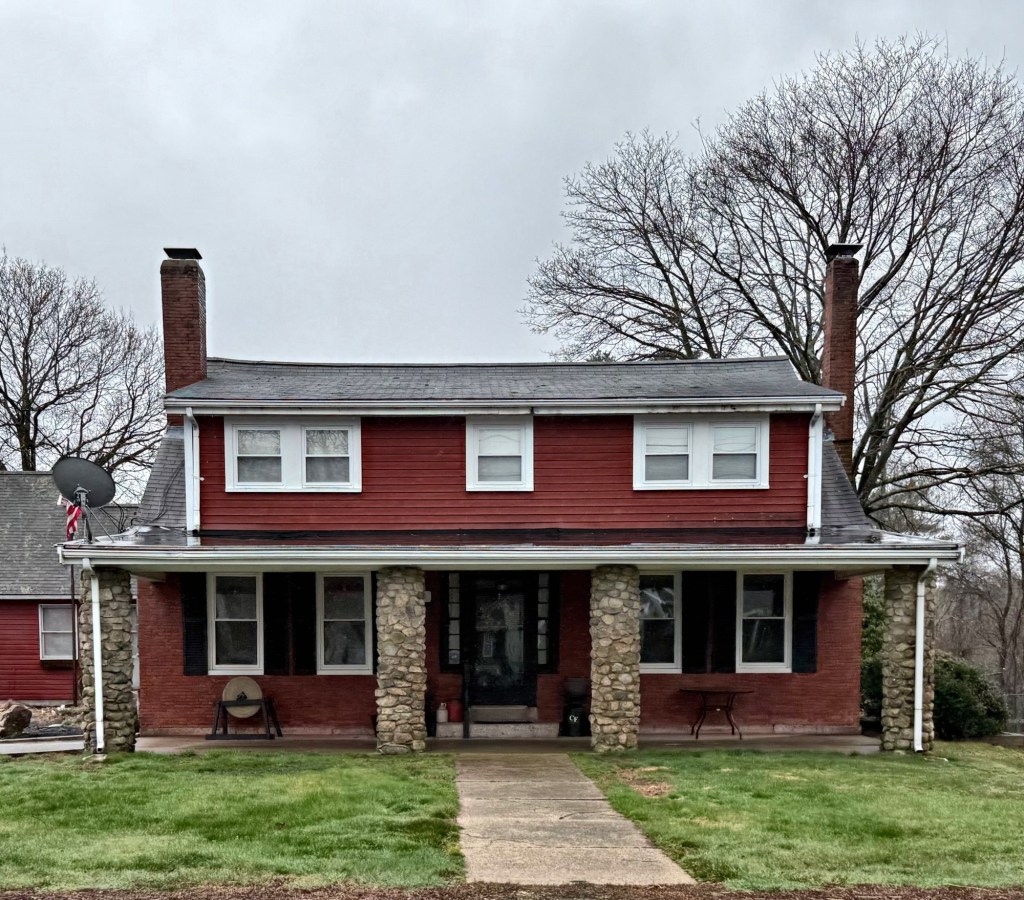
Nathaniel C. Allen House // 1793

The Nathaniel C. Allen House is a two-story Federal style residence located in New Gloucester, Maine. The house was built in 1793 by Shubael Marsh, a local builder (and father of Shubael Jr. (1797–1867), who moved to Texas with Stephen F. Austin) and sold to Nathaniel Coit Allen, an early settler in New Gloucester, who served as a General during the American Revolution. The property was purchased by Col. James Madison Thompson, then owner of the Glen House, an early White Mountains hotel in New Hampshire, who renovated the home by replacing the central chimney with two narrow ones and raised the ceilings and introduced Victorian interior woodwork. A subsequent owner added large Colonial Revival porches on the front and side entrances along with a new entry. The house showcases the changing tastes from Federal style to Victorian back to traditional tastes.

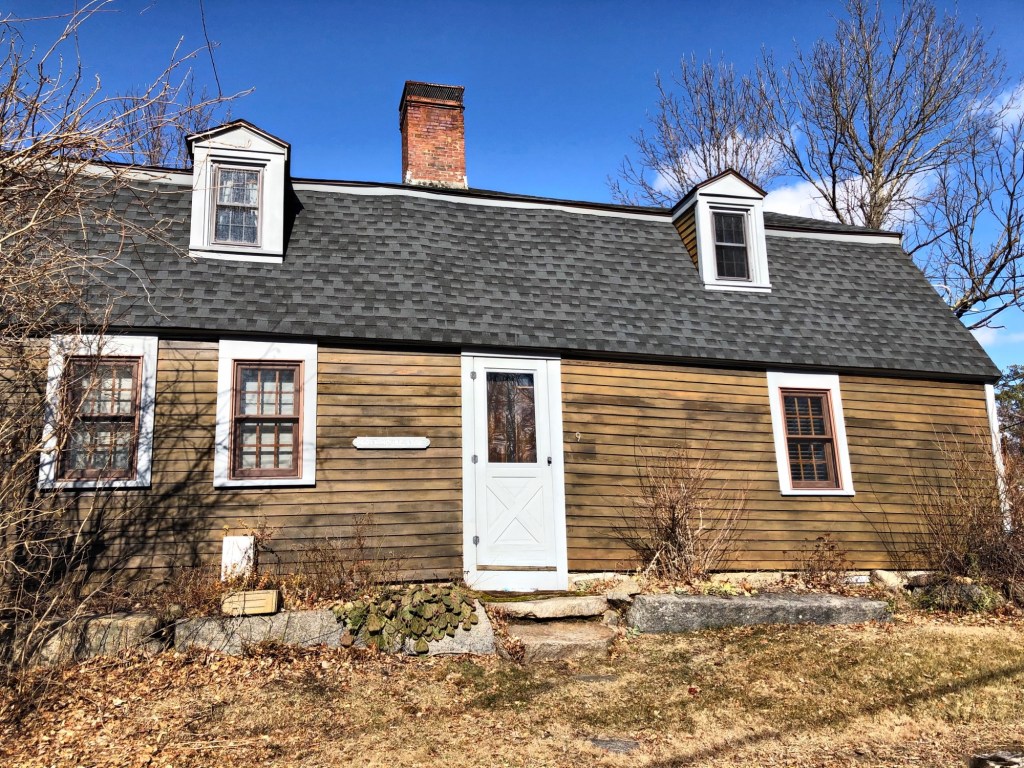
“The Old Castle” // c.1712

Located in Pigeon Cove, the northern section of Rockport, Massachusetts, the “Old Castle” is an iconic landmark in the charming coastal town. The exact year it was built is not known, but it is believed to have been built in 1712 by Jethro Wheeler (1692-1755), a shoemaker who settled here from nearby Rowley. In 1724, Jethro deeded the property to his son Benjamin, and he moved out of town. Benjamin, is turn sold the property to his son Benjamin in 1769. Benjamin Jr.’s son, John D. Wheeler in 1792 inherited the property and added the lean-to/kitchen room to the rear to create the present saltbox roof form. Various Wheelers continued to own the Old Castle for another hundred years. The property was gifted in 1929 to the Pigeon Cove Village Improvement Society, and is presently under ownership of the Sandy Bay Historical Society, who manage the property as a house museum. The house with its overhanging second story reads like a garrison, a common element in First Period houses in Essex County.

Gott House // 1702

Halibut Point State Park in Rockport is one of the most enchanting places in Massachusetts and it has so many layers of history! Before white settlement, Halibut Point was used seasonally by the Pawtucket people who came to harvest its wild fruits, fish and game on the land. In 1702, Samuel Gott (1677-1748) purchased eight of the 6-acre lots on Halibut Point. At the time, there were no roads to Halibut Point, but Samuel built this house on the land, and he began to farm here. The property passed down the family line and was later owned by Joshua (1754-1846), who came of age just as the War for Independence began. Joshua enlisted with the Revolutionary Army as it was being formed in Boston, and in 1776, he joined General Washington’s forces in the unsuccessful defense of New York. He returned home to lead a long and useful life as farmer and fisherman and was known as Captain Gott. As of the 2010s, the property remained in the same family, handed down through the generations from Samuel Gott over 320 years to today. How cool!

Hooper Mansion // 1889

One of the finest Richardsonian Romanesque style mansions in America is this stunner at the corner of Beacon and Hereford streets in Boston’s Back Bay neighborhood. Built in 1889, the mansion was commissioned as a private residence for Robert Chamblet Hooper (1849-1908) and his wife, Helen Angier Ames Hooper. Helen’s father, Frederick Lothrop Ames one of the wealthiest men in Massachusetts and major benefactor to in the town of Easton, funded and oversaw construction of the Ames Free Library and the Easton Town Hall both by H. H. Richardson in his namesake Romanesque style. It was likely her family’s prevalence for the style that led to her own home in Boston’s Back Bay to follow suit. The firm of Andrews and Jacques are credited with designing the stately mansion which in 1889, cost over $100,000 to build. Robert Chamblet Hooper was treasurer and later president of the Constitution Wharf Company. A noted dog fancier, he was owner of “Judge” (also known as “Hooper’s Judge”), credited as the ancestor of the Boston Terrier breed. So we have the Hooper’s to thank for Boston’s iconic mascot! In 1913, the building transferred from the Hoopers to Mabel Slater, daughter of painter William Morris Hunt (and niece of architect Richard Morris Hunt) an eccentric widow and inventor. Mrs. Slater is credited with developing an ice-cooled refrigerator, a sleeping bag that doubled as a garment used by soldiers in World War I, and a doll head with movable eyes. Mabel routinely left open a rear door of the mansion in order to encourage the poor to find their way into the kitchen for shelter and food. She had a one-story ballroom built at the rear of the mansion in 1914. The house was converted into 6 condominium units in 2016 and restored at the exterior thanks to the architecture and design studio, Hacin.

Reverend Graham-Howard Richmond House // c.1715

Who doesn’t love a good Colonial house in Connecticut!? This house in Southbury was originally built at the beginning of the 18th century and was later altered and expanded in the fashionable Federal style at the end of the century. The house was built around 1715 by a Nathan Strong, who sold the property to Reverend John Graham who was the town’s pastor for over forty years. The house was later owned by antiques dealers Daniel and Marguerite Croucher. They used the former White Oak Schoolhouse (nextdoor) to store and sell some of their finds! After later owners, the property (which includes the schoolhouse) was purchased by Howard K. Richmond had been a graphic designer and art director in New York. He created the original layout and logo for Life magazine in 1936. He also did advertising and publicity work for Lord & Taylor, Bloomingdale’s, Elizabeth Arden and Saks Fifth Avenue. So many layers of history in over 300 years!

Simon Bradstreet House // 1723

Walking the warren of tight streets and hidden alleys of Marblehead, Massachusetts, you are taken back centuries to a simple time, and of a town that has largely maintained its pre-automobile urban fabric. Many pre-Revolution homes still stand in town and have survived cycles of the coastal town’s prosperity and economic hardship, and the increased pressure of gentrification in more recent years! The Simon Bradstreet House sits right in the village and is a well-preserved Georgian-period home. The house was built in 1723 (earlier reports said in 1738) and it was later owned by Rev. Simon Bradstreet (1709-1771), who arrived to Marblehead to serve as the second minister of the Second Congregational Church a year prior. Reverend Bradstreet was the great-grandson of the last Bay Colony Governor of the same name. Chance Bradstreet, an enslaved African that was a subject of the “within these walls” exhibit at the National Museum of American History was born in this home in 1762. He was later sold to Abraham Dodge of Ipswich by Isaac Story, the third minister of the Second Congregational Church. Stories like this are necessary for us to remember that slavery was a huge part of New England’s economy historically.

Nichols Homestead // c.1815

At the end of the War of 1812, Captain John Nichols settled in Assonet and appears to have had this Federal style house built soon after. The house remained in the family for at least two successive generations, seeing little exterior modifications during that time. After John’s death in 1848, the property was inherited by his second-born son, Thomas. Dr. Thomas Nichols left town as a young man and studied medicine at Jefferson Medical College in Philadelphia, and returned to Freetown to begin the practice of medicine in 1847, likely to assist his ailing father. In Freetown, Thomas was involved with the local church, politics, medicine, and worked for a local gun manufacturer. After Dr. Nichols died with paralysis, his son, Gilbert inherited the family home. The family home is a great example of the Federal style with a symmetrical facade, low hip roof, twin interior chimneys, and central doorway with sidelights and blind, elliptical fan above. The side porch was likely added in the early 20th century.