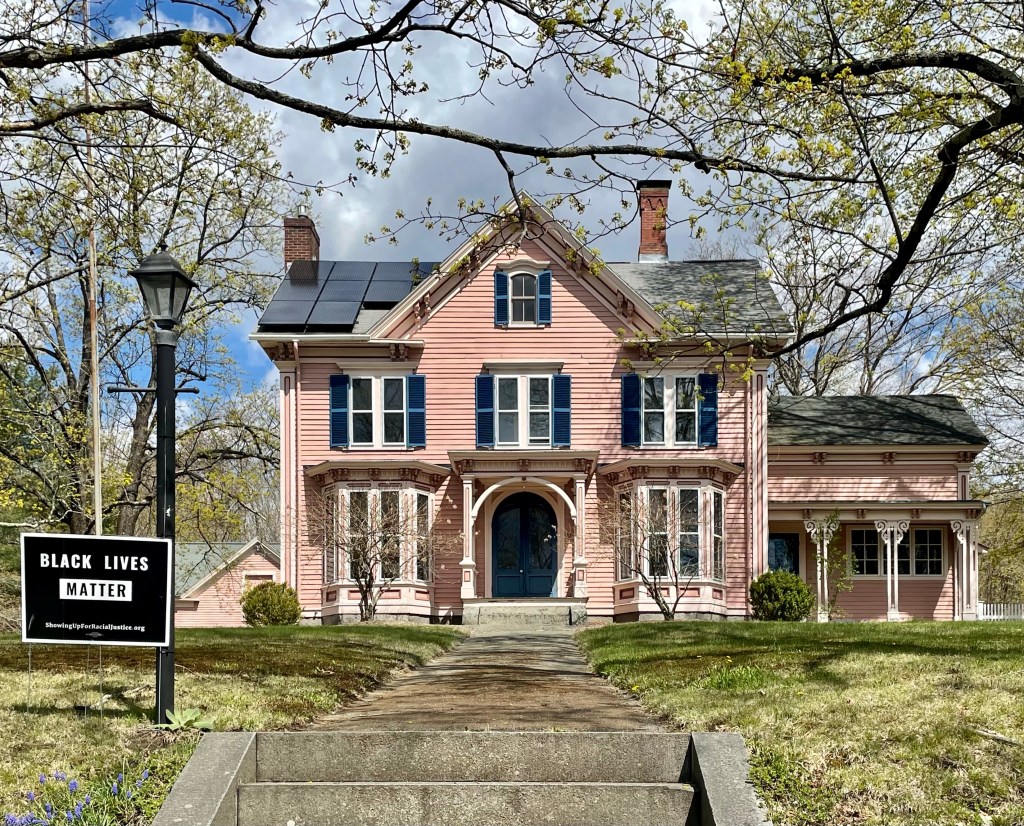
This large Italianate house in Acton was built in 1873 for Henry Waldo Tuttle (1847-1916), who ran a grocery store business in town with his father, James Tuttle. The business did quite well as Henry built this massive home around his 26th birthday, likely around the time of his marriage. The exuberant Italianate home features a wide central gable and a projecting central entrance porch accessed by double entrance doors. The home has a detached stable to the left of the home too!
In 1794, four men from Acton, Abel Conant, Dr. Abraham Skinner, John Robbins and Horace Tuttle, jointly purchased a $5.00 ticket in a lottery run by Harvard College to raise funds for the construction of Stoughton Hall in Harvard Yard. This house, built for Dr. Abraham Skinner, is one of the four, and is the most grand of the four. Dr. Skinner was the third physician to practice in Acton and the first to arrive from out of town. He came to Acton in 1781 from Woodstock, Connecticut, and continued in practice until his death in 1810. The Federal style home is nearly square with five bays on all sides, with the facade and rear being slightly less crowded. The main entry includes a pediment with dentils, 4-pane side lights and a 4-panel, wooden door with elongated, rectangular, top panels. A similar entry, without sidelights, centers the south elevation. Time to buy some lottery tickets!
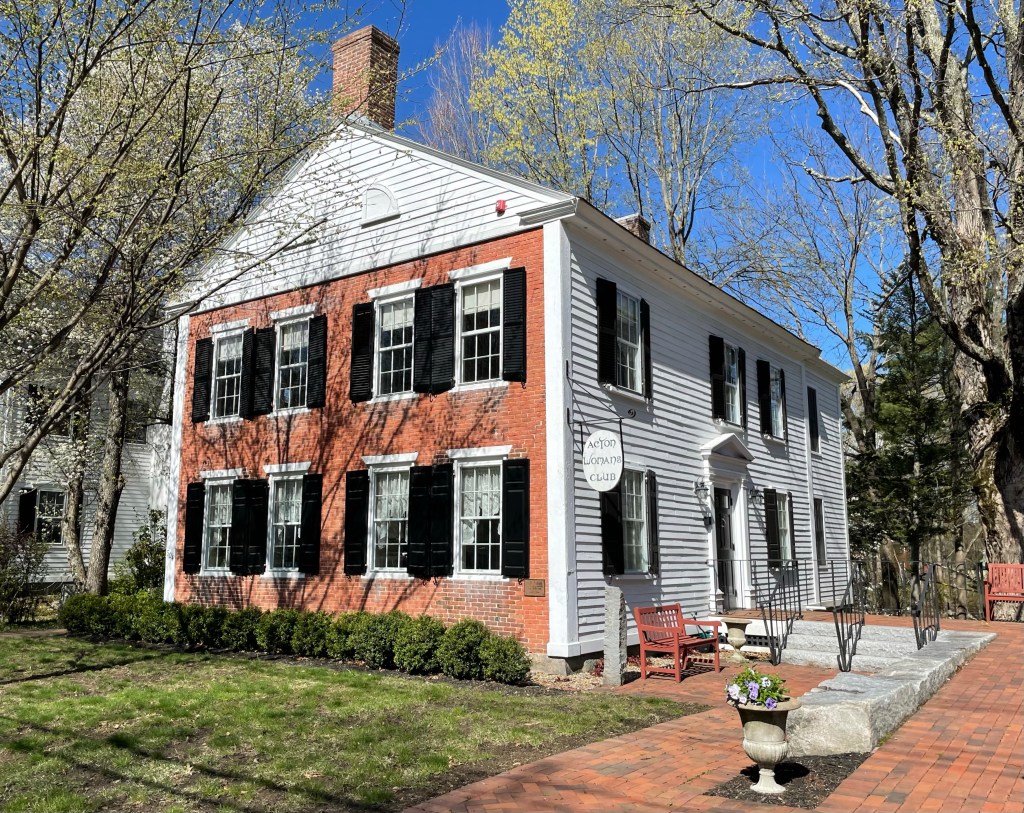
In 1912, a group of under twenty young mothers of Acton, Massachusetts, formed a club to provide a space to discuss issues ranging from child-rearing to larger topics like prohibition and women’s right to vote. The women began meeting at their homes before it was determined that they would need a permanent home. In 1915, the Acton Women’s Club acquired the old Dr. Cowdrey House (last post) next door occupying it and the attached barn. The 1829 Chapel for the Evangelical Society in Acton was part of the property and deteriorating. The Acton Women’s Club decided to sell the historic Cowdrey Home and use those funds to restore and occupy the old brick-end chapel. In 1940, the Club ceremoniously held a Mortgage Burning Party, having proudly paid off its debt. Today, the Acton Woman’s Club is the oldest and last standing brick- ended Federal structure in town.
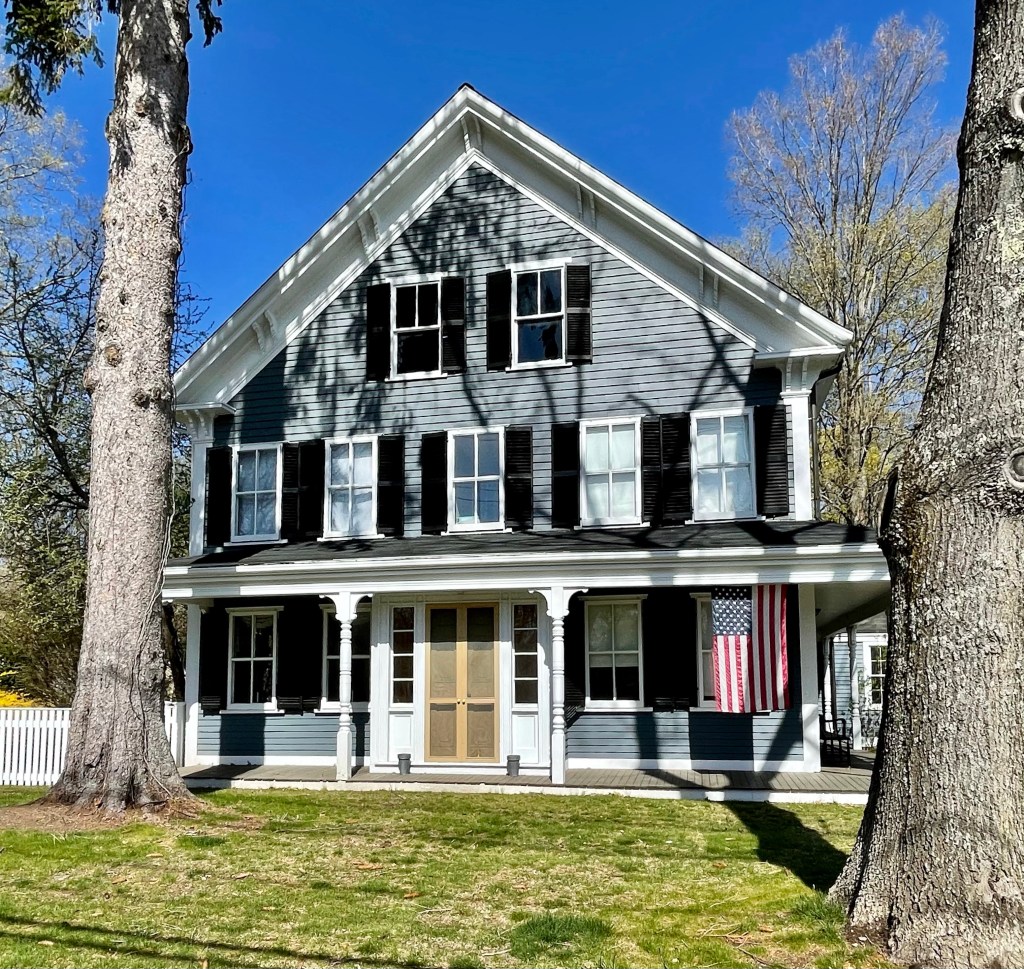
Located in Acton Center, the Dr. Harris Cowdrey House represents the emergence of Acton, Massachusetts from a sleepy rural town to a wealthy suburban town. This home was built in 1830 by Dr. Harris Cowdrey (1802-1875) as a 1 1/2-story gable end Greek Revival home. It was evidently enlarged to its present size decades later, possibly around the time Dr. Cowdrey and his wife Abigail growing their family. The Cowdreys had two children , Arthur who became a physician, after serving in the Civil War as a surgeon, and a daughter Helen who married a doctor herself, Dr. Charles Little also of Acton. After Dr. Harris Cowdrey died in 1875, Helen Cowdrey Little (who’s husband died young at just 32 years old) remained in Acton living with her mother in this house until 1886 when both women died. The home was later occupied by the Acton Women’s Club, who ran a crafts school for children out of the barn. The house showcases the original Greek Revival form, but features mostly Italianate detailing from the brackets, to the wrap-around front porch supported by turned posts.
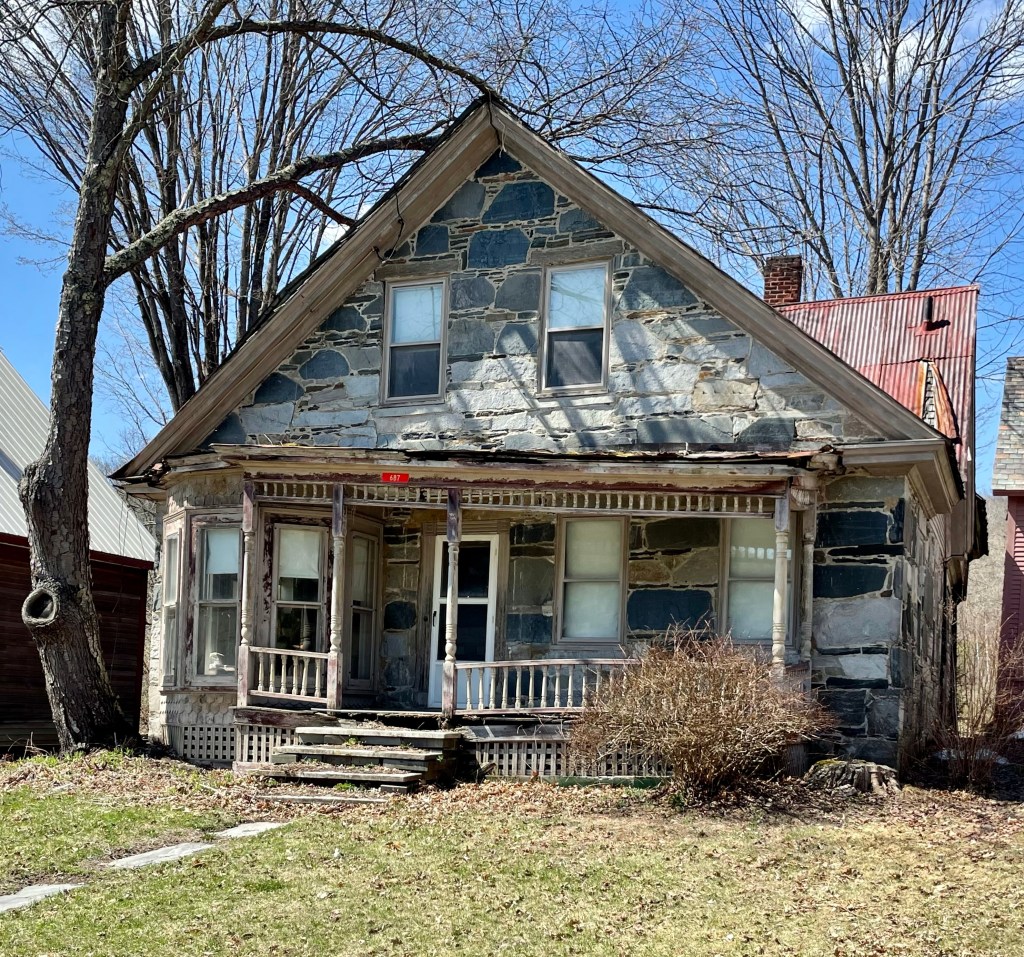
In the early 1830s, skilled masons from Scotland and Ireland came to central Vermont to work on building projects. A number of these workers, mainly from the Aberdeen area, and specialized in a specific building style in which plates of stone are affixed to a rubblestone wall. This method of bonding stonework is so prevalent in Scotland and Ireland it has been referred to in some journals as ‘Celtic Bond’, but in Vermont, it is known as “snecked ashlar”. The mixture of stone sizes and colors produces a strong bond and an attractive finish. This home is a rare example in the state, which is estimated to have about 50 of these homes left. I could not locate any information on the owners of the home, but the house has seen better days, with the wooden front porch shifting away from the main house. Also, if you look closely, you can see the original wood shingle roofing breathing under the sheet metal roof!
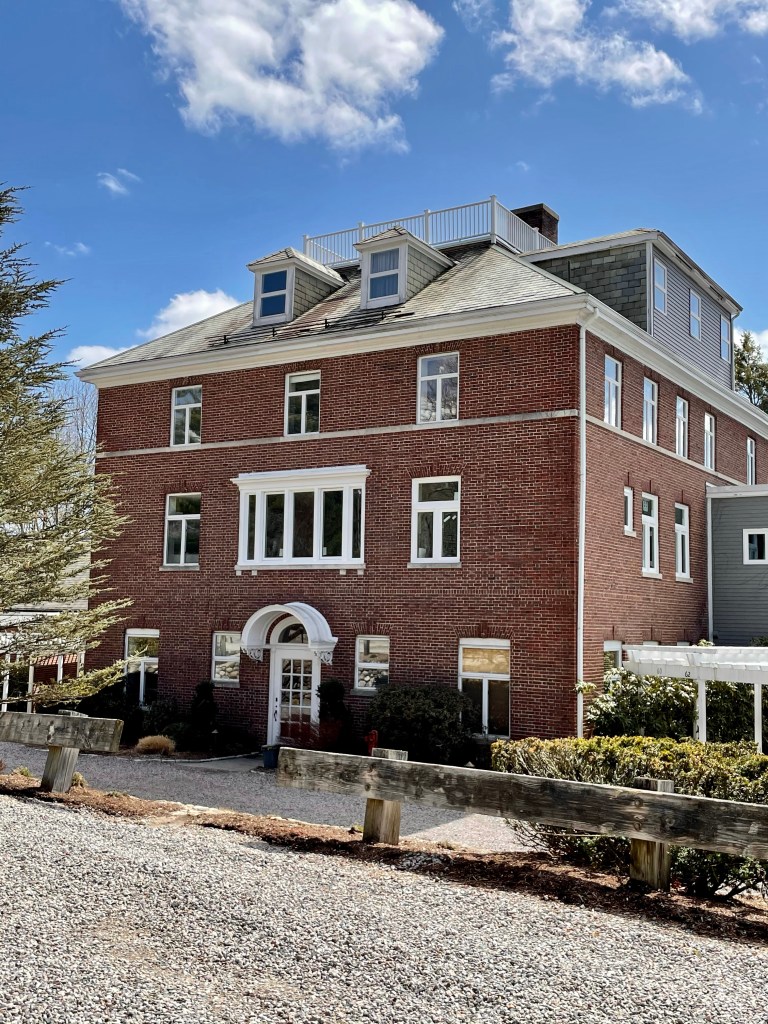
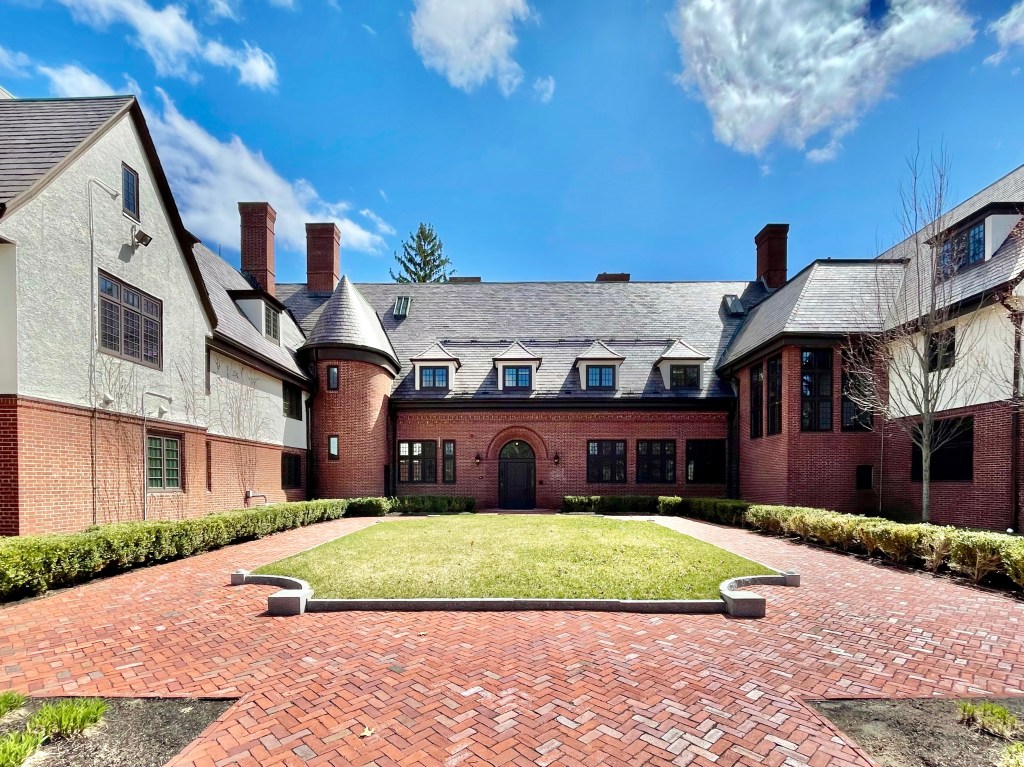
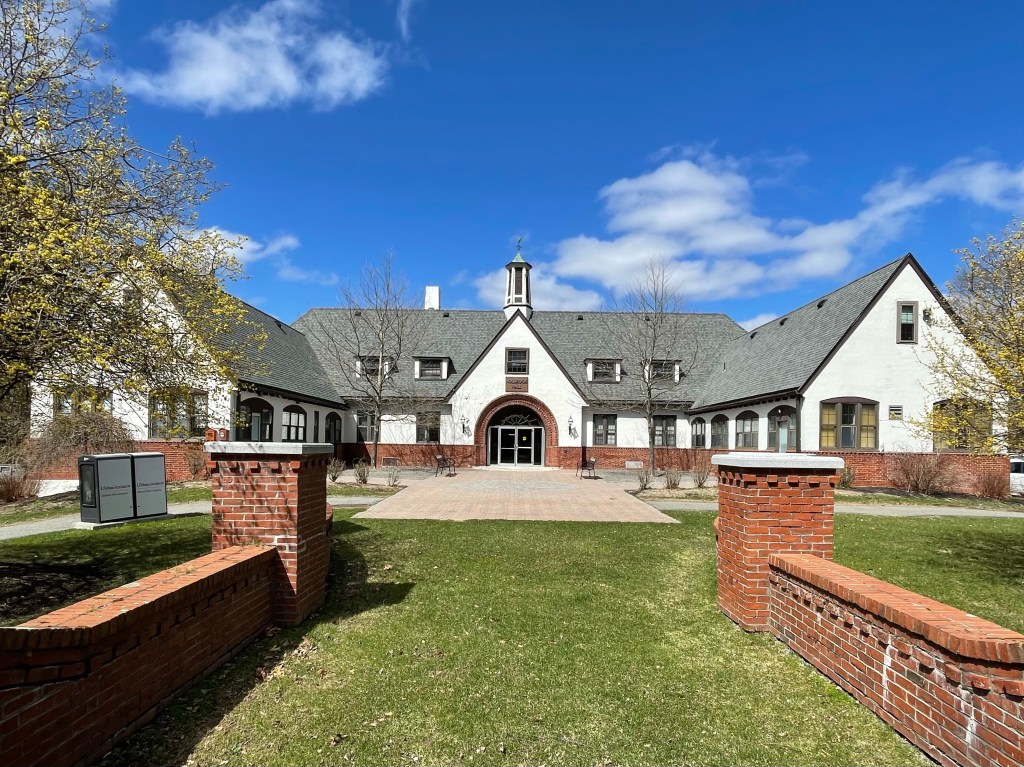
In 1907, the 86-acre Bigelow Estate (featured yesterday), was purchased by Horace K. Turner, owner of an art publishing company founded in Boston about 1904. Turner moved his workshops to the estate so the artists could work in healthy country surroundings. The firm required the long wings contoured into the hillside to provide ample natural light and views to the distance for the workers. In 1920, the entire property, including the Bigelow House and the bungalow workshops, were acquired by the New England Peabody Home, which had been located in Hyde Park for 25 years. It was set up as a school and hospital for “crippled children” and this brick building was added to the center section. Architects for this addition were Coolidge and Shattuck, successors to the firm of Shepley, Rutan, and Coolidge. The Peabody Home was among the first to use sun treatment as a cure for physical ills and the extensive porches were well suited to this purpose. The Peabody Home became obsolete and the property was sold off in the mid-20th century. In 1979, the Peabody Home was sold to Edward Leventhal, who converted the buildings into 22 condominiums. Architects for the project were Jung/Brannen.
Born into the heart of Boston Brahmin society (Boston’s elite class), Robert Gould Shaw II (1872-1930) had a life of great opportunity, but full of tragedy. Robert was born in Boston and was a first cousin of Robert Gould Shaw, the famed military officer who accepted command of the first all-Black regiment (the 54th Massachusetts) in the Northeast. Robert II had a life of leisure, and enjoyed his position in society by drinking and enjoying elite sporting events. He became a wealthy landowner around Boston, and international polo player of the Myopia Hunt Club in the North Shore. He gained a reputation for alcohol abuse and promiscuity and divorced his first wife after just four years, she would later move to England and marry Waldorf Astor, and become the first woman seated as a Member of Parliament. The couple’s only son Robert Gould Shaw III followed his mother to England, but was eventually imprisoned there for six months for “homosexual offenses”. His alcoholism and his mother’s death, may have led to his suicide in 1970. Robert Gould II in Boston, remarried and purchased land in Oak Hill, Newton to build a country estate. He hired James Lovell Little Jr. to design the Tudor style property with a mansion, and various outbuildings including a carriage house and stable. As the Gilded Age gave way to the Progressive Era and eventually the Great Depression, the Shaw fortune collapsed. Shaw died in New York in 1930. The estate was later purchased as the new home to Mt. Ida College, now a regional campus of UMass.
As another piece of this interesting family’s history… Louis Agassiz Shaw II, one of Robert’s four children in his second marriage, had all the opportunities of his father, as he attended Harvard, had a sizable bank account, but was a recluse and had some mental issues and paranoia. Like his elder half-brother Robert Gould Shaw III, and father, Louis struggled with depression and alcoholism and in 1964, he strangled his 64-year-old maid, who he said was plotting to murder him in his sleep. He confessed but plead not guilty; he was committed to Danvers State Hospital and later McLean, where he lived for 23 years until his death. After which, much of his art collection, which he intended to donate to the Fogg Museum at Harvard, was discovered to be fakes.
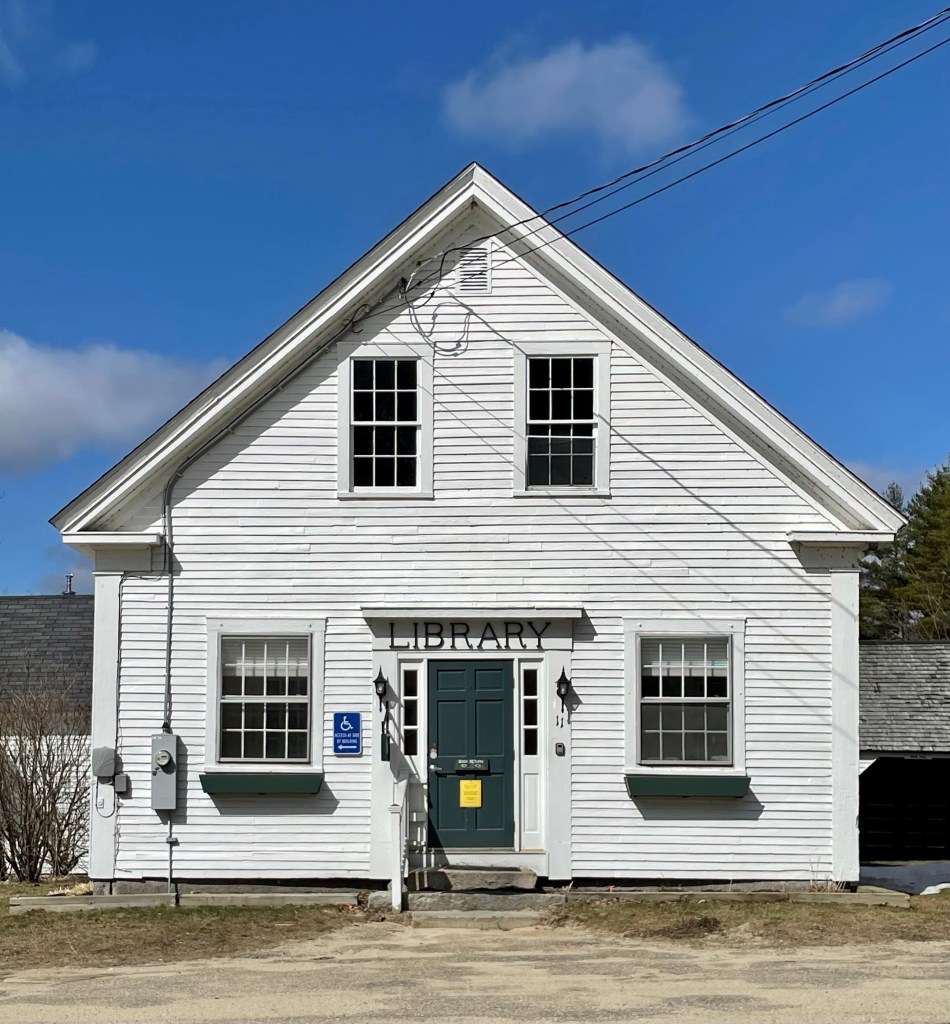
Driving through the quaint village of Wilmot Center in New Hampshire, I had to pull over to snap a photo of this little library building. When I got home, I learned that the building was constructed in 1854 not as a library, but as a schoolhouse! The vernacular Greek Revival school served as one of many district schoolhouses in the region, dispersed around small towns to be within walking distance of the sparsely developed parts of the state. With population growth in the 20th century and the proliferation of the personal automobile, these small regional schools became obsolete. Many of these buildings were converted to other civic uses or as personal residences, but most were demolished. The Wilmot Public Library located in the former schoolhouse in 1972 and is now connected to the town offices next door.
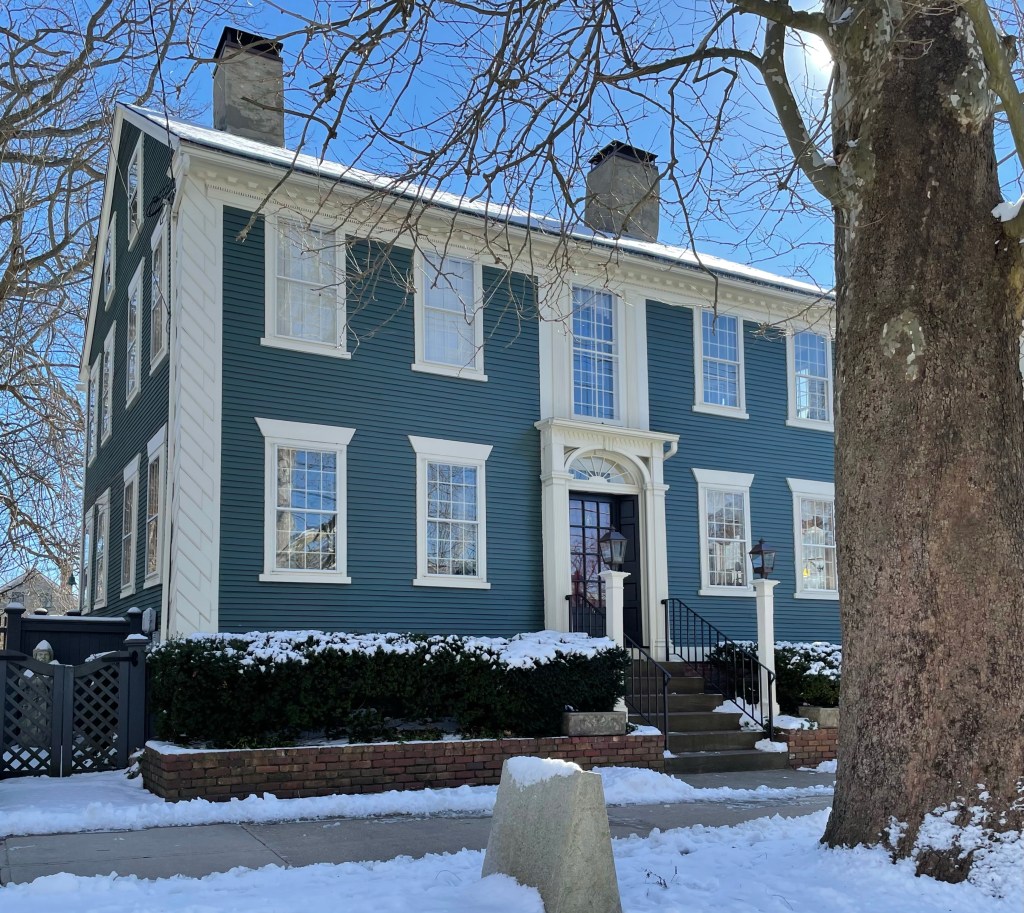
Architect Russell Warren (1783-1860), who I have featured on here numerous times, built this 2-story, 5-bay, hip-roof Federal house in Bristol, Rhode Island. This residence as interpreted by Warren as an example of the Federal style with stylistic features most notably being the angulated quoins (at the corners of the house). The house was designed for William Van Doom, a Bristol tailor of modest means. In 1814, Warren, a young and aspiring architect, saw the significant wealth in Bristol and decided to buy this home he designed. Siting himself in the vicinity of the extremely wealthy DeWolf family, he gained recognition and success by designing three expensive and elaborately crafted houses for them at this time, only Linden Place remaining. Warren lived in this house from 1814 until 1823.
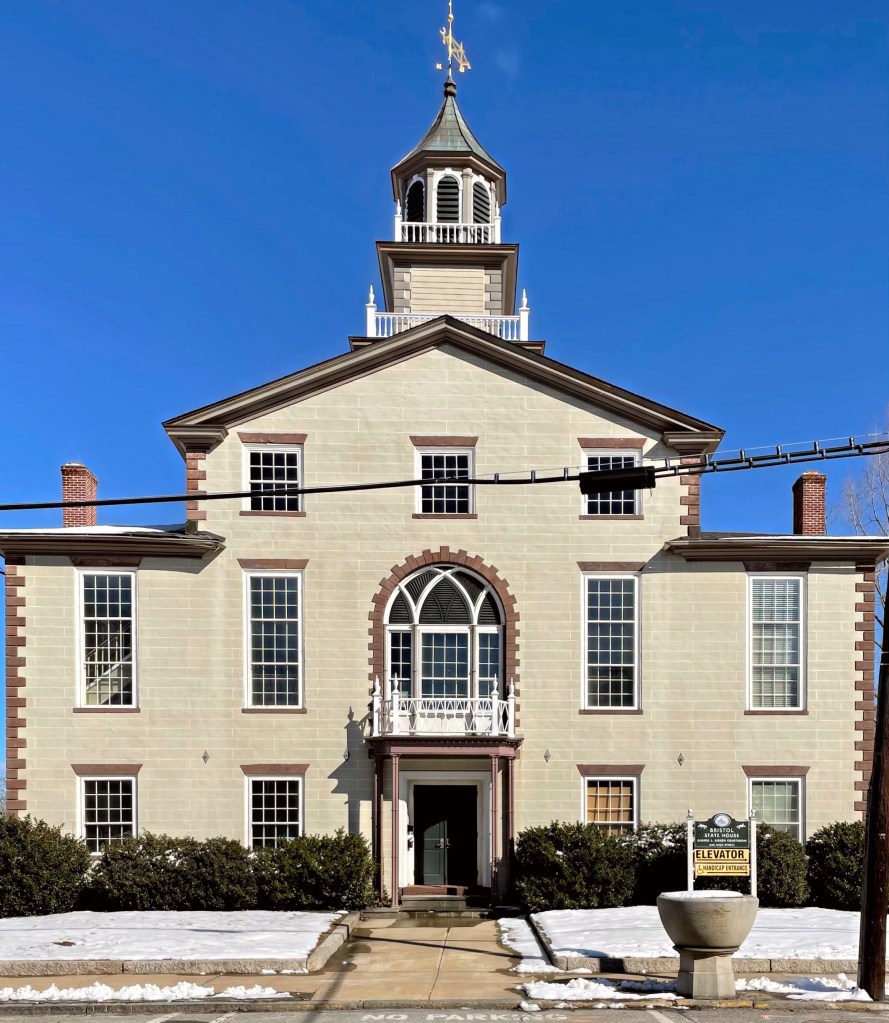
Located on the Bristol Town Green, facing the main commercial area and harbor, the old Bristol County Courthouse is a well-preserved example of a building for civic use in town, at the height of its growth. It is believed that the courthouse is the work of architect Russell Warren, who lived in a home he designed just blocks away. This Federal-style stone building is faced with brick and subsequently stuccoed, giving it the unique composition it has today. The focus of the symmetrical facade is the large central arched window with granite quoins, and Y-tracery that echos Gothic design. As part of the 1836 state Bicentennial, the stucco facing was added over the original brick facing, and the exterior was painted a Gothic Revival sand color with darker trim, replicated in a 1976 restoration. From 1819, the courthouse served as one of the five state houses used in rotation by the Rhode Island General Assembly (in 1854, the General Assembly decided to meet only in Providence or Newport). In 1853, it reverted to courthouse use, a function which ceased in the early 1980s. The Bristol County Sheriff maintained offices there until 1997, when the building was purchased from the state for $1 by the Bristol Statehouse Foundation. The nonprofit foundation has worked to restore and maintain the building. Today, the building is used for education, community programs, meetings, and events.

 Buildings of New England