Located on Beech Road overlooking the “village common” of Longwood Mall, this 1920s Georgian Revival mansion showcases the curb appeal and perfect siting of suburban houses of the period . The home was built in 1927 for Benjamin Green, a real estate dealer and his family. The Green’s hired architect Harry Morton Ramsay, a noted area architect who specialized in suburban single-family homes of this period, to design the Georgian Revival style home. The brick residence features a symmetrical facade, half-round portico with Corinthian columns, round arched first floor and dormer windows, and decorative brickwork.
If you love Colonial Revival style homes, the Longwood neighborhood in Brookline is a must-visit area to stroll around! This house is tucked away in the neighborhood and was a treat to stumble upon. This large home was designed by the underappreciated architect, James Templeton Kelley for a George G. Quincy. The Colonial Revival style dwelling is actually built of wood with a brick veneer and has an open pedimented entry with fanlight and transom surround. The round-headed windows on the first floor are especially notable.
No trip to Longwood in Brookline would be complete without checking in on one of the finest multi-family housing developments of New England… This is Longwood Towers. The development was originally built in 1925 from plans by architectural/engineering firm Kenneth DeVos and Co. who built three near-identical developments in the early 1920s: Detroit (1922), Brookline (1925), and finally Philadelphia (1928). The complexes were all originally called Alden Park Manor. Kenneth DeVos worked with local architects for each project to oversee construction details and furnish interior detailing as needed. For Brookline, he hired Harold Field Kellogg, who earlier served as the first director of the Boston Housing Authority. The design is Tudor Revival in style with towers connected by social spaces and a lobby linking the towers with a dining room for residents, a ballroom, lounge, day care facilities, barber and beauty shops, and a garage. The idea of a parking garage incorporated into an apartment complex was a very new idea when these were built, so much so it was written about as a new amenity for future developments to emulate. Another interesting tidbit about the complex is that it was featured in architectural journals in 1926 as it solved the “garbage problem” with trash chutes on each floor which terminated down in a brick incinerator (no longer in use). The Longwood Towers in Brookline were eyed as innovative and set trends for later developments, here’s to hoping future developers take cues to what makes good design and finishes rather than just profit with so many new boxy, uninspiring 5-over-1 apartment buildings going up all over the region.
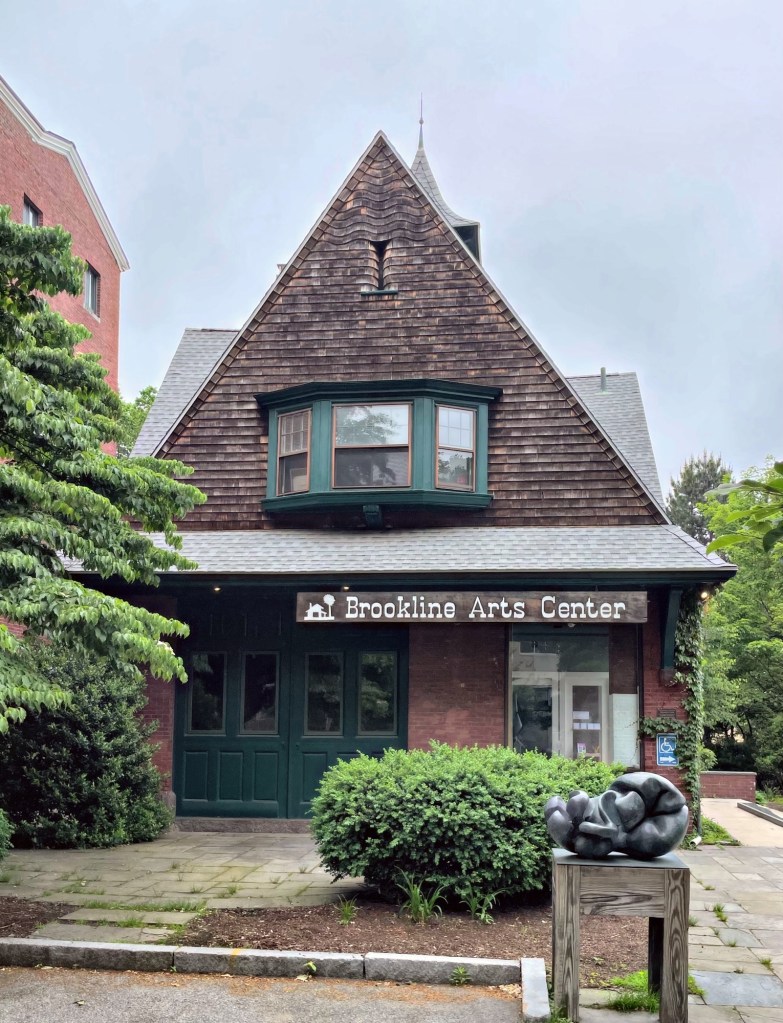
The Longwood area of Brookline, Massachusetts, is among my favorite neighborhoods to stroll and admire great old buildings. The area is home to many grand houses, churches and later high-style apartment buildings but this diminutive building is often overlooked at the edge of the neighborhood! The structure was erected in 1886 by the Town of Brookline as a new Chemical Engine House. The locally renowned architectural partnership of Peabody and Stearns designed the Shingle style fire station for the town, an important hire as the surrounding neighborhood was dominated by stately old homes in a suburban setting. Eventually, in 1965, the firehouse was closed and in 1968, the Brookline Arts Center renovated the building, where their programs have been continuously based in the years since. The brick and shingle building is maintained by the non-profit, preserving a significant piece of the town’s history for the public to enjoy!


 Buildings of New England