Cape Elizabeth Twin Lights // 1873

East Light.

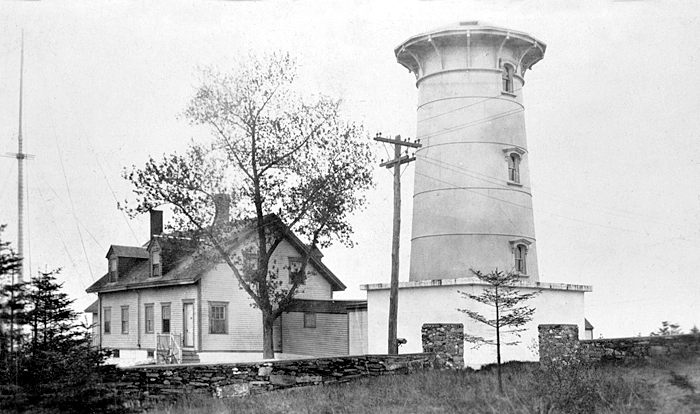
At the southern tip of Cape Elizabeth, Maine, two lighthouses have long provided a beacon to ships that sailed the rocky coast where the town protrudes into the ocean. The story of Cape Elizabeth’s Two Lights begins in 1614, when Captain John Smith, who sailed along New England’s shores, gave the appellation to the cape in honor of Princess Elizabeth, King Charles’ sister. After the American Revolution, Portland Harbor became an important trading port, and ships from all over the world would dock there. In 1827, the decision was made to use two lights at this location, a fixed light in the east tower and a revolving light in the west one, so the station would not be confused with the lights at nearby Portland Head Light or Wood Island Light in nearby Biddeford. After land was purchased for a mere $50, the towers were built, spaced by 895 feet and topped by octagonal wrought-iron lanterns housing lamps and reflectors, first shone their lights in October 1828. The stone towers were poorly constructed and keepers would consistently complain about poor working and living conditions. A $30,000 appropriation was made in 1873 to fund the erection of two matching sixty-seven-foot, brick-lined, cast-iron towers set 923 feet apart and featuring elegant Italianate details. In 1878, a new wood-frame, one-and-a-half-story dwelling was built for the principal keeper near the east tower, designed in the Gothic Revival style. During World War II, the west tower became an observation tower after a cylindrical turret was installed atop, which had had its lantern room removed after being discontinued. It was auctioned to the highest bidder in 1959. In 1971, actor Gary Merrill, ex-husband of Bette Davis, purchased the west tower for $28,000. Merrill sold it in 1983, and a new house was built next to it. The keeper’s cottage at the east tower is also privately owned, but the tower is retained by the Coast Guard, and is automated today.

West Light.

Portland Head Light // 1791

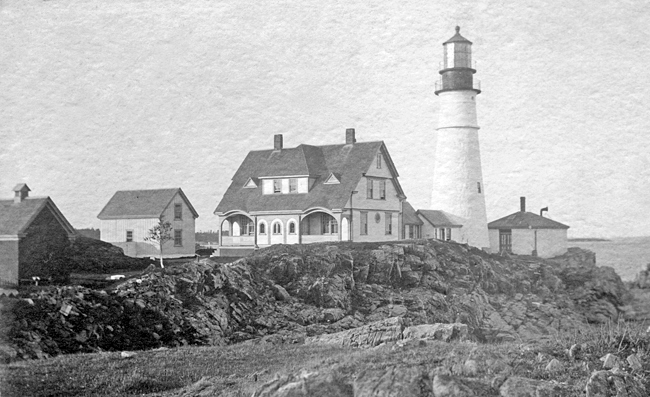
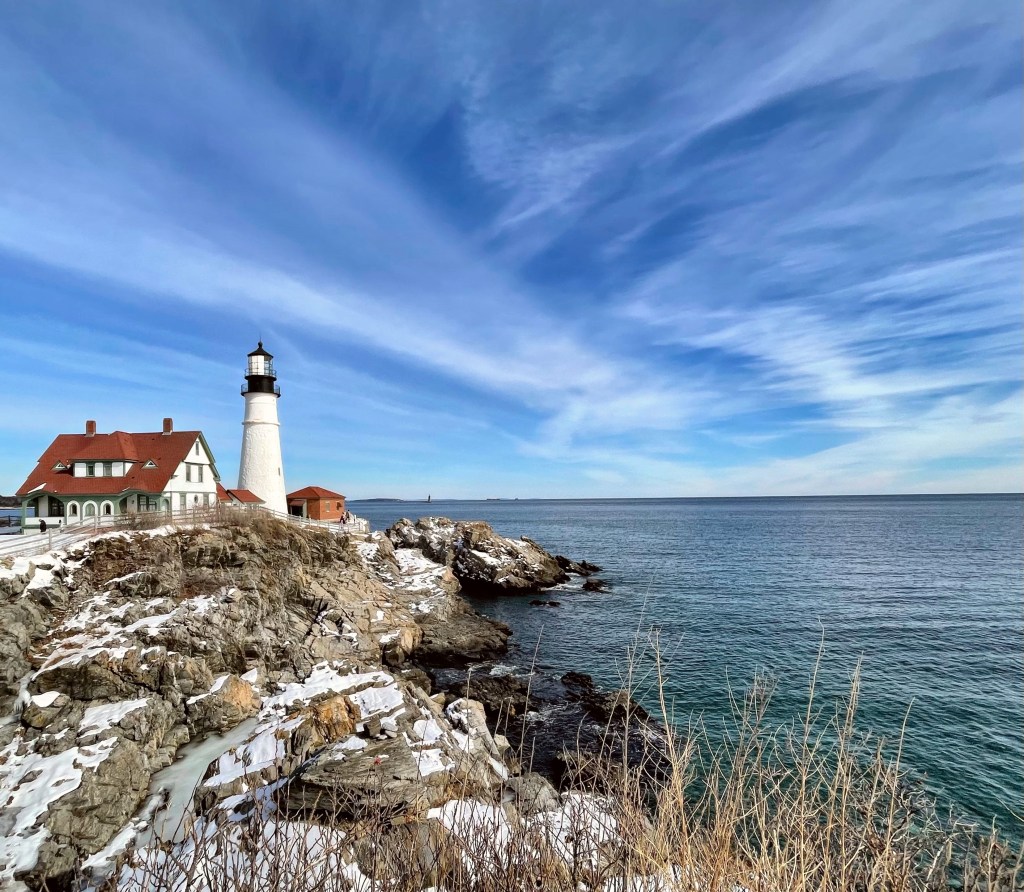
When I think of Maine, I think of rocky coastline, lobster, and lighthouses. Located in Cape Elizabeth, just south of Portland, you will find the Portland Head Light, an obscenely beautiful lighthouse, which has provided a beacon to sailors for centuries (and more recently Instagrammers). In 1787, while Maine was still part of the state of Massachusetts, President George Washington engaged two masons and instructed them to take charge of the construction of a lighthouse on Portland Head. Washington reminded them that the early government was poor, and said that the materials used to build the lighthouse should be taken from the fields and shores surrounding the site. The original plans called for the tower to be 58 feet tall, but when the masons were finished, they climbed to the top of the tower and realized that it would not be visible beyond the land to the south. When the masons were ordered to increase the height another twenty feet for visibility reasons, one quit, leaving a single man to finish the lighthouse and a small dwelling. It was completed, and the light, powered by sixteen whale-oil lamps, first shone on January 10, 1791, following its dedication by Marquis de Lafayette. Over the next century, many issues plagued the building and light-keepers, from cold winters and rogue waves icing over the pathways, to a poorly constructed top of the lighthouse, which was re-constructed due to safety concerns. In 1891, the station’s old stone light-keeper’s house was demolished, and upon its foundation a two-story wood double dwelling was constructed. A square brick oil house was also built at the same time along with a flight of steps at the landing. Portland Head Lighthouse was extinguished from June 1942 through June 1945 to avoid aiding German submarines, which did not work as planned. In 1945, the USS Eagle PE-56 just miles off the coast, was sunk by a German submarine (though previously thought to have been sunk by a boiler explosion), only 13 of the 62 crew survived. The lighthouse is now owned by the town, but the US Coast Guard retains control of the light and fog signals.

Ram Island Ledge Lighthouse // 1905

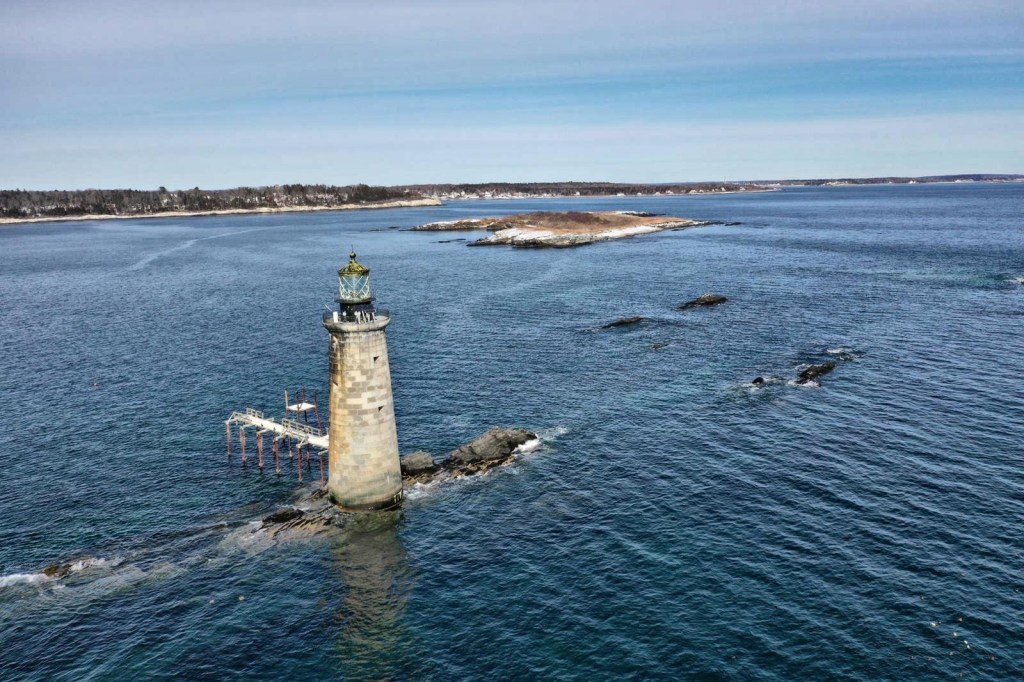
Ram Island, about a mile offshore from Portland Head near the entrance to Portland Harbor in Maine, is surrounded by dangerous ledges. For as long as ships have been navigating Portland Harbor, they have crashed into the rocky shore, losing supplies and lives. Because of this, a Congressional act on June 28, 1902, authorized the construction of a lighthouse and fog signal on Ram Island Ledge, to work together with the Portland Head Light to guide ships through the treacherous channel. The next year, the federal government purchased Ram Ledge from two Cape Elizabeth families for $500, to erect a new lighthouse. Before the lighthouse could be constructed, at least two ships, the Glenrosa and the Cora & Lillian schooner sunk in the bay. As the ledge was underwater for much of the year, a stone tower was required. Granite from Vinalhaven was shipped in and a crew of 25 men built the tower which was complete in 1905. The iconic double flash of light has guided sailors ever since. The lighthouse was manned by multiple keepers until the late 1958, when an underwater power cable was laid between Portland Head and Ram Island Ledge, allowing the ledge lighthouse to be automated. In 2008, the structure was deemed “excess to the needs of the United States Coast Guard” and auctioned off. After a bidding war, a local doctor from Maine purchased it for an estimated $190,000.

312 Ocean House Road // c.1870

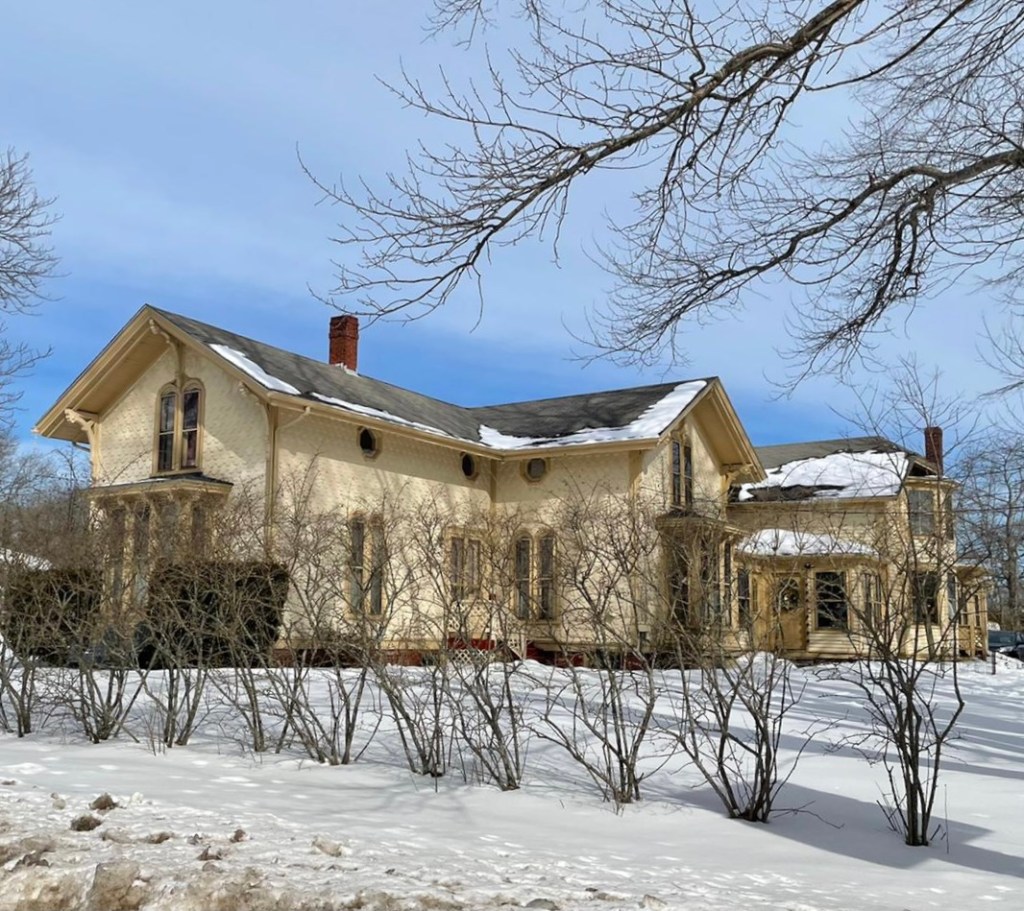
This charming home in Cape Elizabeth, Maine looks to have been built after the American Civil War, as an interesting Italianate cottage. The home is clad with scalloped shingle siding which works well with the paired round headed windows facing the street. The deep overhanging eaves are supported by brackets. Running under the eaves on the sides are octagonal windows, a very unique detail. The home is located at the center of town, away from the summer cottages which sprouted up along the rocky coastline in town starting around this time. It was converted into condominium units sometime in the late 20th century.

Goddard Mansion // 1859-1981

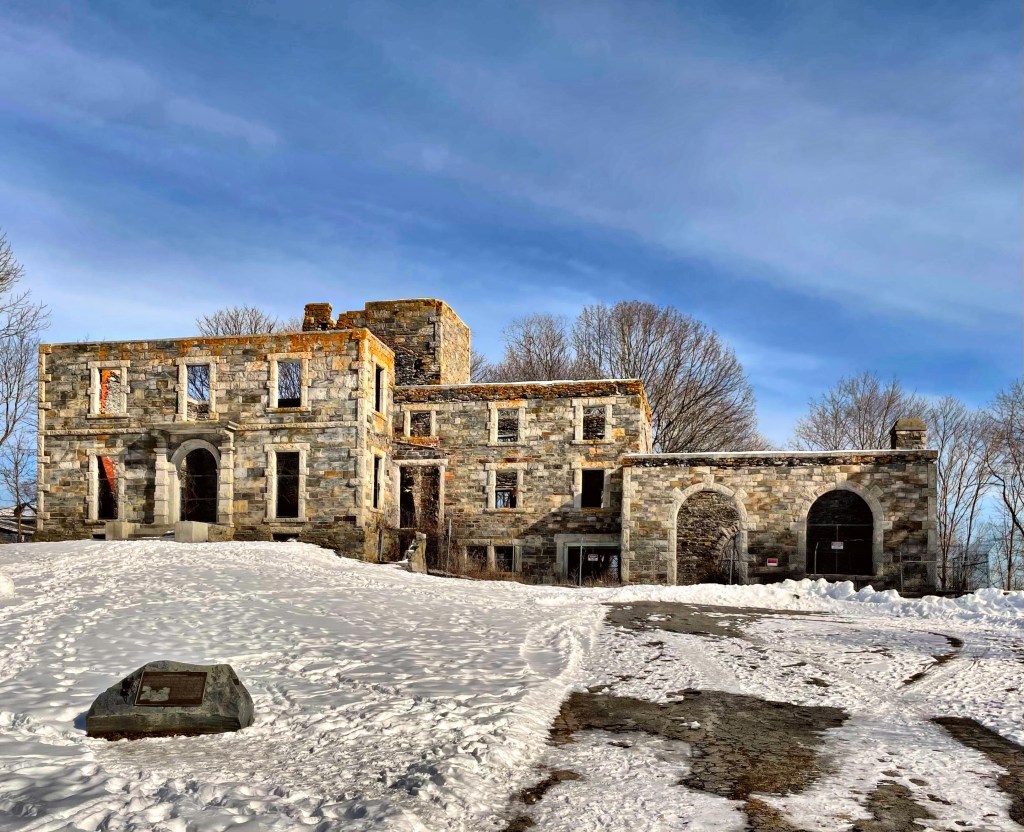
This shell of a former mansion was built in 1859 for Colonel John Goddard (1811-1870), a Civil War Union Army Officer. Goddard was a “lumberman” who amassed substantial wealth before the outbreak of the Civil War, and he hired architect Charles A. Alexander, to design an estate house for him and his family. The home appears to have been constructed of local stone with white granite trim and featured a prominent tower, emulating an Italian Villa. The home was purchased in 1898 by Judge Joseph W. Symonds, who presided over the Maine Supreme Judicial Court. Just two years later in 1900, during the expansion of Fort Williams, the estate was acquired by the Federal government. The home was used for housing married enlisted men and their families while stationed at Fort Williams. The basement was converted into the fort’s Non-Commissioned Officers’ Club. At the time of the town’s purchase of the Fort in 1964, the mansion was already in serious disrepair and its future was uncertain. People routinely broke in and damaged the interior, which suffered numerous small fires over the years, until the town decided in 1981 to hold a controlled burn of the home, leaving the shell. The shell remains a significant architectural landmark and a massive opportunity for the town.

Cape Elizabeth Town Hall // 1900

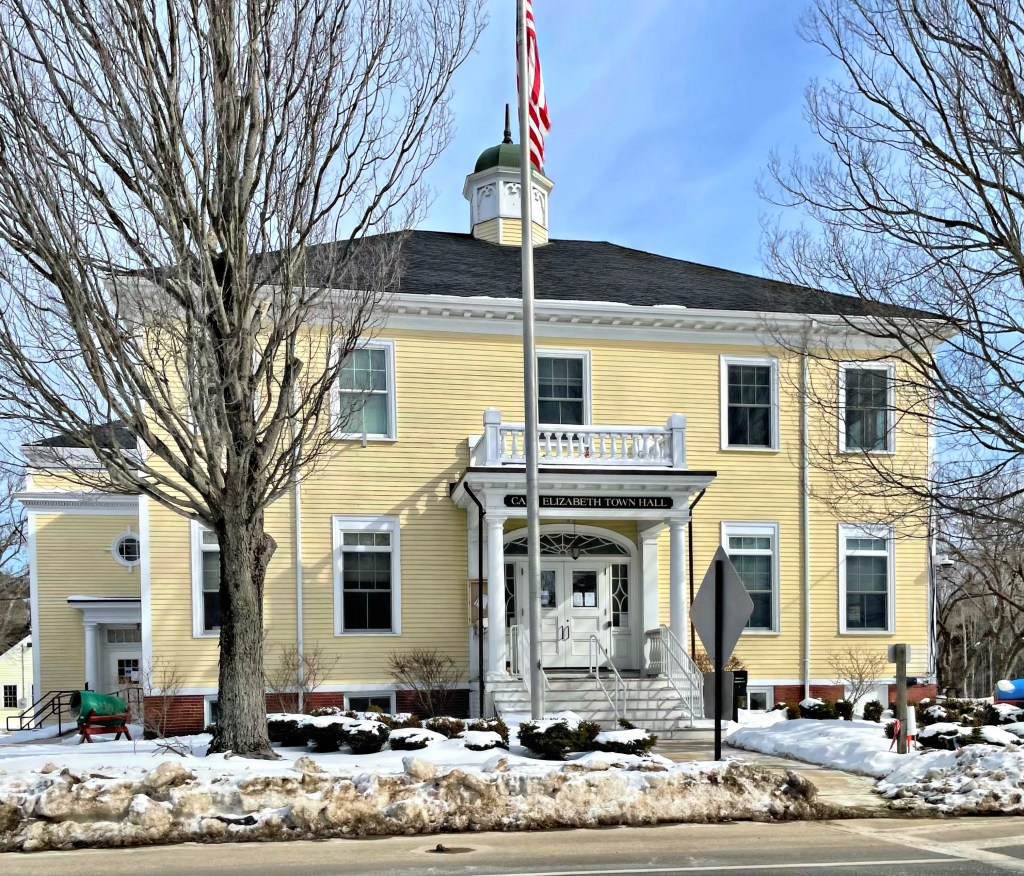
The town of Cape Elizabeth, Maine was originally a part of Portland (named Falmouth at the time) until the citizens there petitioned for and obtained their own government in 1765. Commercial and industrial growth in the north end of the town, nearest the harbor (now South Portland), was in sharp contrast to the continuing rural character of the southern tip of the Cape. In 1895, the two sections agreed to separate, and from that date forward the southern end of the original town became the present town of Cape Elizabeth. Shortly after the separation of South Portland, funding for a new town hall was appropriated, and the town hired Portland-based architect Frederick A. Tompson to design the new building to mark the start of the new town. The Town Hall building was constructed in 1900 and is an excellent example of Colonial Revival architecture with its hipped roof with cupola, classic central portico, and entry with Federal Revival sidelights with a fanlight above.

Bayberry Cove Cottage // 1915

Perched atop a seaside cliff on a neck jutting into the Atlantic ocean, this large summer cottage exhibits the rugged, yet enchanting character of the Maine coast. The house is part of the Cape Arundel Summer Colony and is one of the last built as part of the original period of development. The home was designed by Henry Paston Clark, a Boston architect who previously built a home on Cape Arundel and had summered there for years. His most notable design here is St. Ann’s Church, built for the summer residents of the area. The Bayberry Cove Cottage was built in 1915 for James Harrison and his wife and employed the use of cedar shingles, stone, and slate, to blend in with the rugged plot of land.

Inglesea Cottage // 1889

One of the larger Shingle style homes in Kennebunkport, Inglesea Cottage, was designed in 1889, possibly by Henry Paston Clark, who designed or worked on many homes and buildings in the summer colony. The original owner, Dr. George Frederick Brooks, a doctor based out of New York, who spent his childhood on the coast of Maine, and decided to spend his elderly summers there. By 1903, the home was purchased by Ms. Lucy Fay (1864-1937) of Fitchburg, MA, who hired Henry P. Clark, to add the cross gambrel addition to enlarge the home. Lucy Fay was the daughter of the the wealthy industrialist George Flagg Fay and his wife, Emily Upton, and upon their deaths, inherited their fortune (her sister died at just seven years old, making her an only child). The home remains in impeccable shape and is a head-turner everytime I drive down the coast.

Talbot Cottage // ca.1890

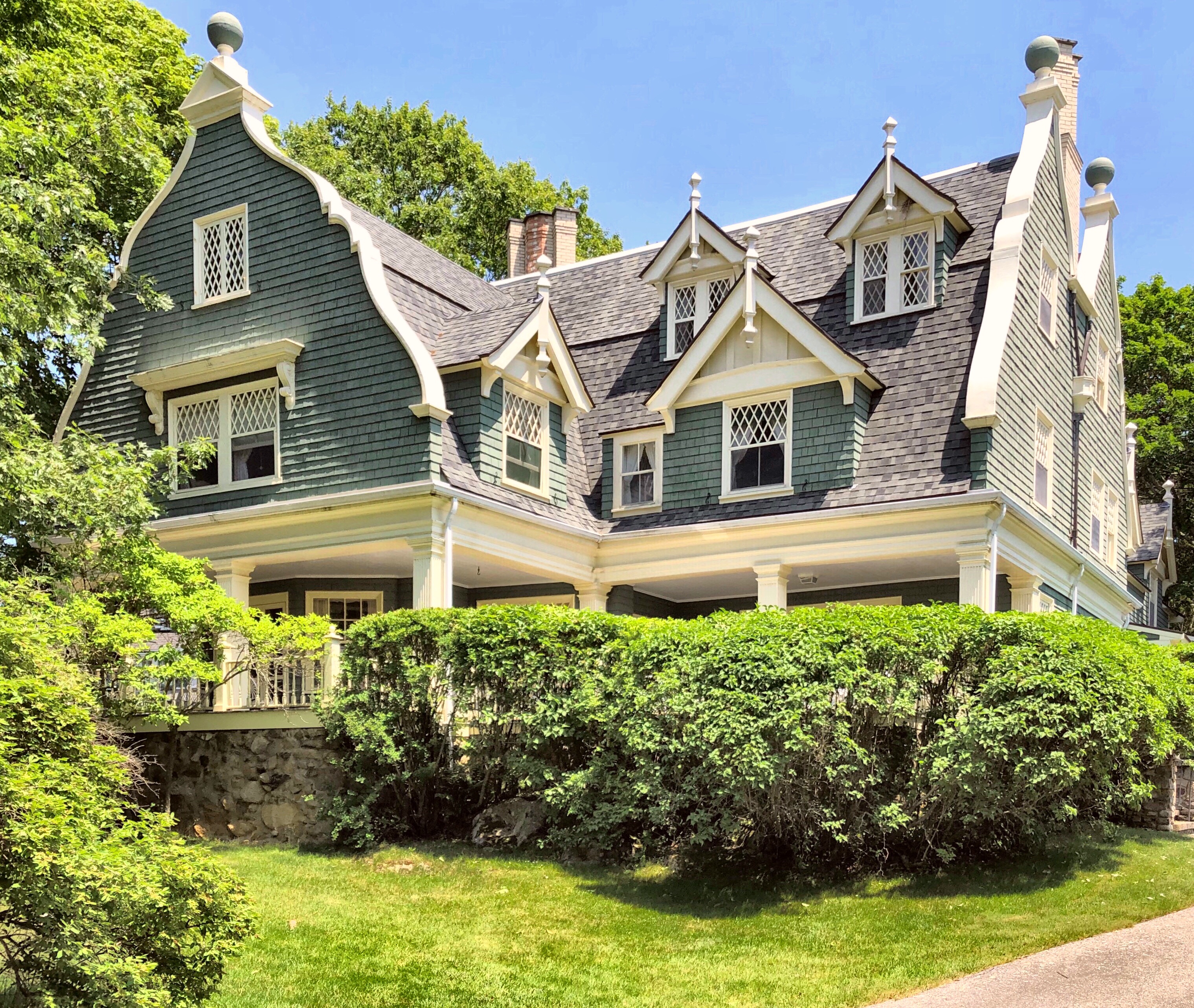
One of the more unique summer cottages in Kennebunkport is the Talbot Cottage, a ca.1890 eclectic Shingle style home. The home features curvilinear Flemish gables crowned with ball finials, diamond paned windows, gabled dormers with finials and pendants, and a wrap-around Colonial Revival porch with fluted columns. The stunning home was built for Julian Talbot, of the Talbot Family who ran a mill in Lowell, MA. The home was soon after sold to George Hubbard Clapp, a Pittsburgh pioneer in the American aluminum industry, who summered in Kennebunkport.

Nathaniel Lord Mansion // 1812

Thought to be the largest home in Kennebunkport, the Nathaniel Lord Mansion remains one of the most significant and ornate in the region. Captain Nathaniel Lord (1776-1815) was the son of Tobias Lord, a Revolutionary War veteran and later, a shipbuilder in Kennebunk. He followed his father’s footsteps and ran a shipyard, owning many ships and being one of the most prosperous merchants in the area. Kennebunkport was an important shipbuilding center and port of entry until during the War of 1812, when the British blocked the mouth of the Kennebunk River. All ship building and commerce ceased in this area at that time. Consequently, with no shipping being done, and no ships being built, the ship carpenters became idle. Nathaniel Lord commissioned these men to build him a large house and barn upon a piece of land given to his wife, Phoebe Walker, by her father Daniel Walker, who’s home stands to the north. The home was passed down for generations in the female line until the 1970s when it was restored and converted to the gorgeous Nathaniel Lord Inn.