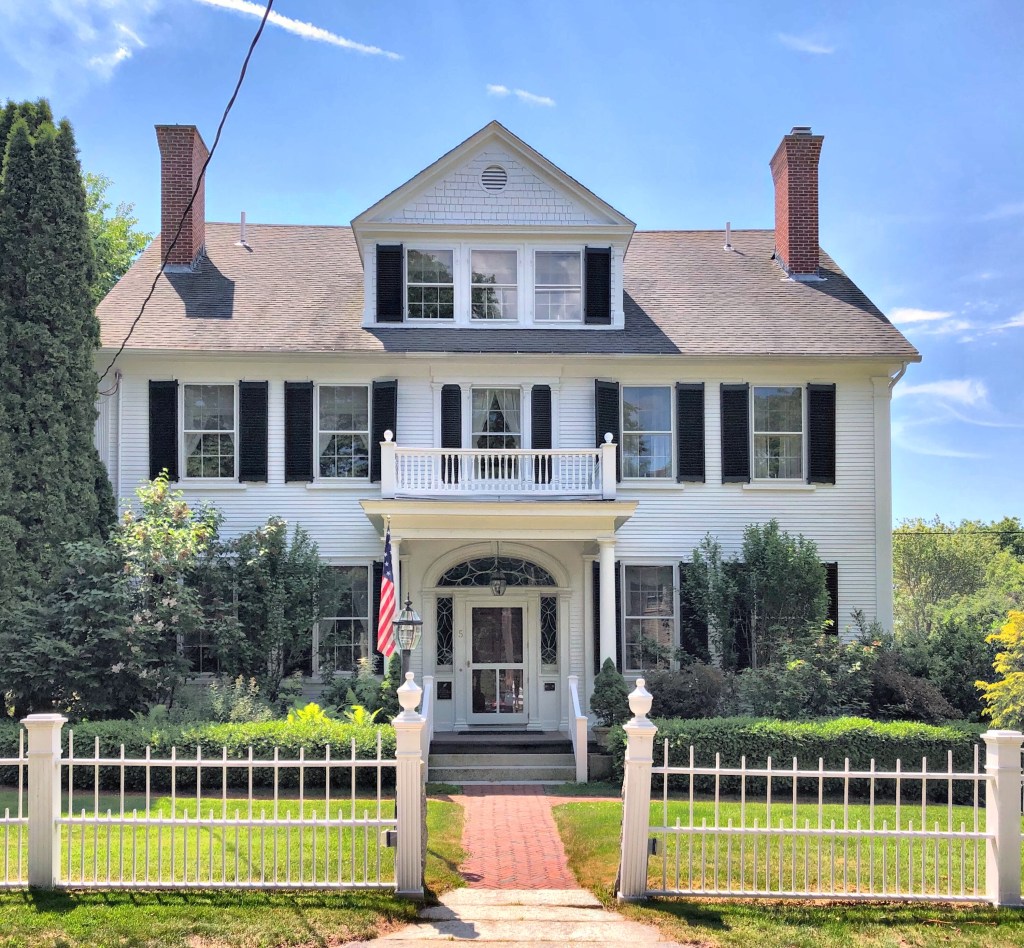
William Jefferds House // 1804

William Jefferds Jr. was born August 30, 1779 in Kennebunk. On October 25, 1802 he married Sarah (Sally) Walker who was born in Arundel on March 4, 1783. Twenty years later, in 1803, Captain Daniel Walker gifted his son-in-law, Captain William Jefferds, Jr., “80 square rods of land, with love and affection” on the lane leading to Walker’s Wharf (he also gifted land to his other son in law, Nathaniel Lord. In 1804 the 2-story, Federal-style building that now houses Captain Jefferds Inn was built as their private home.

Capt. Jefferds was a ship owner and captain in the West Indian trade; he later became a merchant in Kennebunkport. He and Sarah had 11 children, and their family was considered one of the most aristocratic in Kennebunkport. Following Sarah’s death at age 88 in 1871 (her husband had predeceased her in 1851), the household furniture was sold at public auction and the home sold outside of the family.

The house was a two-story hipped roof Federal style dwelling, somewhat outdated by the latter half of the 19th century. By the 1880s, the Agnew Family who owned it at the time, had the home remodeled with Colonial Revival detailing, including the portico and large central dormer. The home was eventually converted to an inn, and is known as the Captain Jefferds Inn.

Check the Inn’s website for more images and history!

Daniel Walker House // 1784

One of the older extant homes in Kennebunkport is the Daniel Walker House on Maine Street. After the American Revolution, shipbuilding and other maritime industries grew along the Maine coast, especially in Kennebunkport (then still named Arundel). Sea captain Daniel Walker built the home on ample land on the outskirts of the village at the time. By the early 19th century, he sold off much of his land closer to the river to family and friends. The Georgian home is minimal, yet commanding with its massive facade, rusticated lintels and corners, an elaborate entry and a large central fireplace.

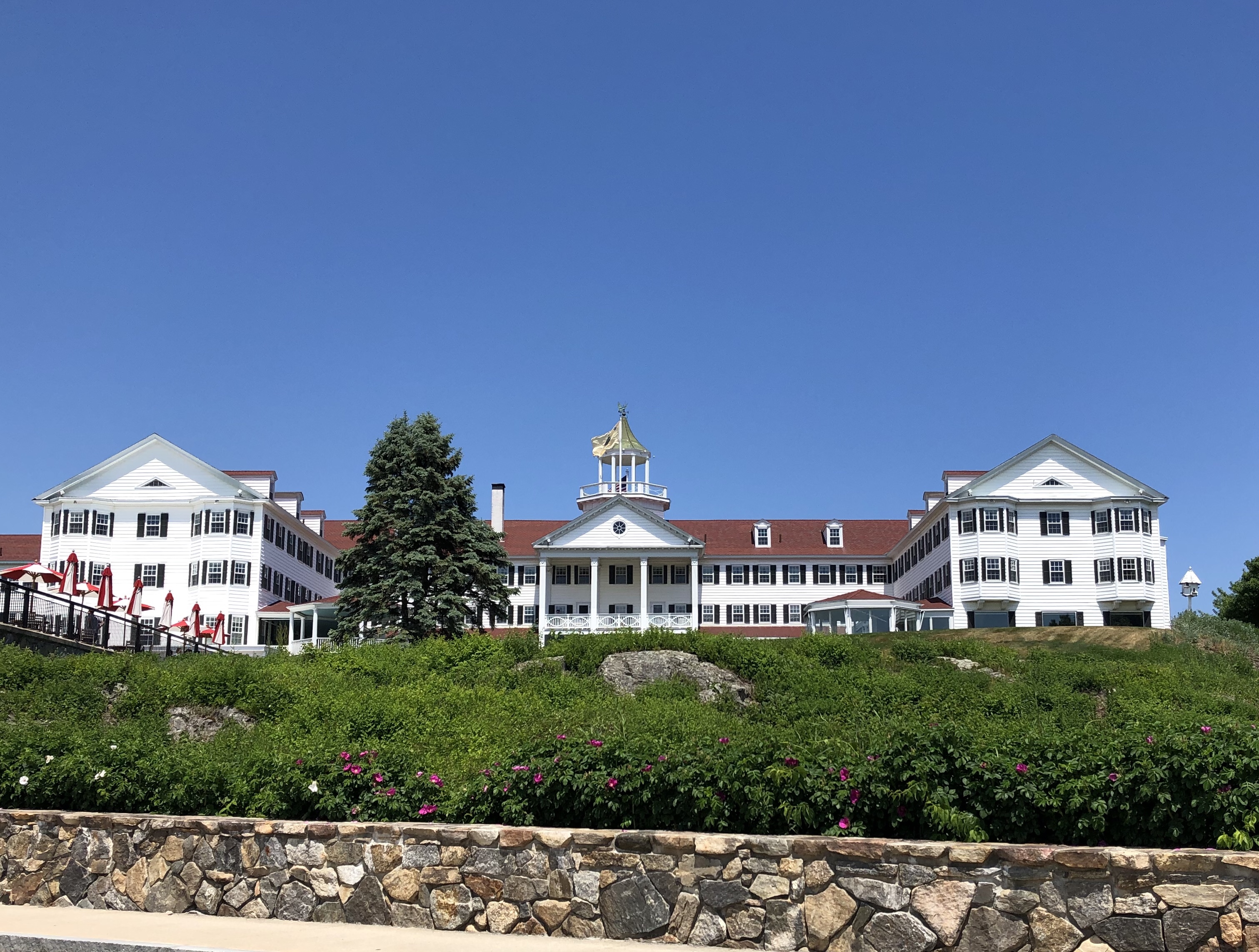
Colony Hotel // 1914

One of the larger hotels in Kennebunkport, the Colonial Revival Colony Hotel, built in 1914, provides historic charm with views of the Kennebunk River and Atlantic Ocean. Owner Ruel W. Norton had the new hotel built on the site of the Ocean Bluff Hotel (1873, burned 1898), to attract summer people, many of which stayed for months at a time. The Colony was originally called Breakwater Court until 1947, when George Boughton purchased Breakwater Court and changed the name to The Colony Hotel to complement their Florida property, The Colony Hotel in Delray Beach Florida. The hotel was designed by John Calvin Stevens, who lived in Maine and designed an estimated 1000+ buildings in the state, many of which in the Shingle or Colonial Revival styles.

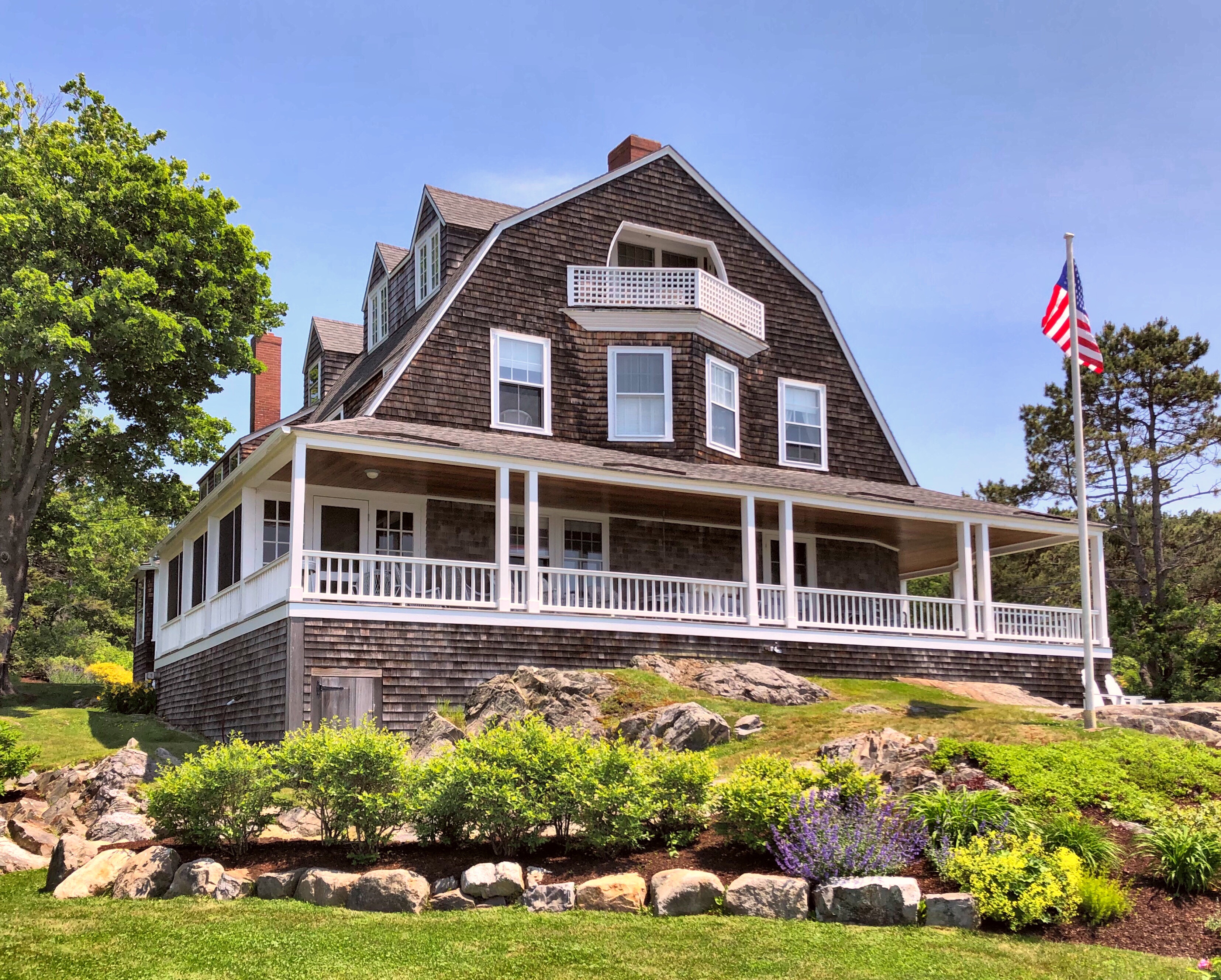
Rock Ledge Cottage // 1887

One of the jewels of the Cape Arundel summer cottages in Kennebunkport is the Rock Ledge Cottage, sited prominently on a hill overlooking the Atlantic. Rock Ledge was a cottage built in 1887 for Elon Dunbar Lockwood (1836-1891) of Philadelphia. Lockwood was a merchant who started a dry goods business with his brother, forming W. E. & E. W. Lockwood. Elon became a highly respected businessman in Philadelphia and later became a member of the Committee of Fifty, a group formed to devise measures for the 1876 Centennial Exposition in Philadelphia which would showcase the city for the first ever World’s Exposition in the United States. Elon’s wife Elizabeth died in 1884, and a couple years later, he had this summer cottage built, where he would apparently entertain, giving him the designation as a womanizer until his death in 1891 at the age of 54. The cottage was designed by William Ralph Emerson, one of the busiest architects in New England at the time, with commissions all over the region, including many summer cottages in Maine.

Clock Farm // ca.1850

Away from the busy coast of Kennebunkport, Clock Farm, a mid-19th century farmhouse with an odd clock-tower caught my eye while driving by. Clock Farm is a rambling extended farm complex that remains a landmark in the more rural section of town. According to historians, the oldest part of the complex was a home that was later converted to one of the ells, was built in 1773 by a Peter Johnson. By the 1850s, the 1 1/2-story Greek Revival home and barn were built. In the late 19th century, the property was purchased as a summer residence by Thomas Lemmons, factory owner in Lawrence, MA. The story associated with the clock is that originally was mounted on his factory, but kept such bad time that his employees complained. In the early 20th century Emmons had the tower specially built to house the clock, which was transported here from Lawrence.

Louis T. Graves Memorial Library // 1813

What is known today as the public library of Kennebunkport, the Louis T. Graves Memorial Library was not always used for books and learning. Built in 1813 as a branch office of the Kennebunk National Bank, the brick structure was valuable as a local bank for the growing port neighborhood. By 1831, the Kennebunk Bank’s charter was revoked and they sold their branch location to the U.S. Government as a Customs House (the second floor was already partially occupied as a Customs House). By the end of the 19th century, the second floor was leased out to the Kennebunkport Public Library. The Customs District was eliminated in 1913, and by 1920, the building was acquired by Mr. and Mrs. Abbott Graves, who purchased the property at auction for $1,350., the couple lived just a couple blocks away in a rare Prairie style home. In 1921, the Graves family deeded the property to the Library Association on the condition that the Library be named in memory of their deceased son Louis T. Graves who valued books all his life.

Davis House-Aunt Felicia’s Folly // 1805

If you stroll down Maine Street in Kennebunkport, you cant help but notice the most charming saltbox house. Constructed in 1805 by Samuel Davis, a master builder in Kennebunkport, the Federal home likely had a saltbox roof originally which would have housed the kitchen. After the Civil War, the home was owned by Silas Perkins, who then sold the home to his daughter, Felicia (Perkins) Cleaves and her husband, Albert, a teacher. By the 1870s, Felicia had the Colonial home completely renovated, turning into a Gothic Revival showpiece. Mrs. Cleaves added a new wing to the right of the original house, for she desired the high ceilings that were common during the Victorian era. The building became known in town as “Aunt Felicia’s Folly” and alternately, “the Witch House.” In 1966, owners restored the home back to what it likely looked like before the 1870s renovation, adding a saltbox roof.

Undated image showing “Aunt Felicia’s Folly” with Gothic alterations.

St. Martha’s Catholic Church // 1903

A happy blending of Mission, Colonial Revival and Shingle Styles for the Maine coastal community of Kennebunkport, the St. Martha’s Catholic Church exemplifies the charm of this town. The church is sited on a corner lot with a belfry at its corner. The nave features a central entry with Colonial pilasters and pediment above the second floor windows. The roofline is shaped with Mission style parapet walls and arched openings at the tower, showcasing the Spanish influence in the design. The entire building is wrapped with cedar shingles, as a nod to the coastal summer resort it resides. The church operated here until the mid-late 20th century when it was converted to an art gallery, and now is home to condos.

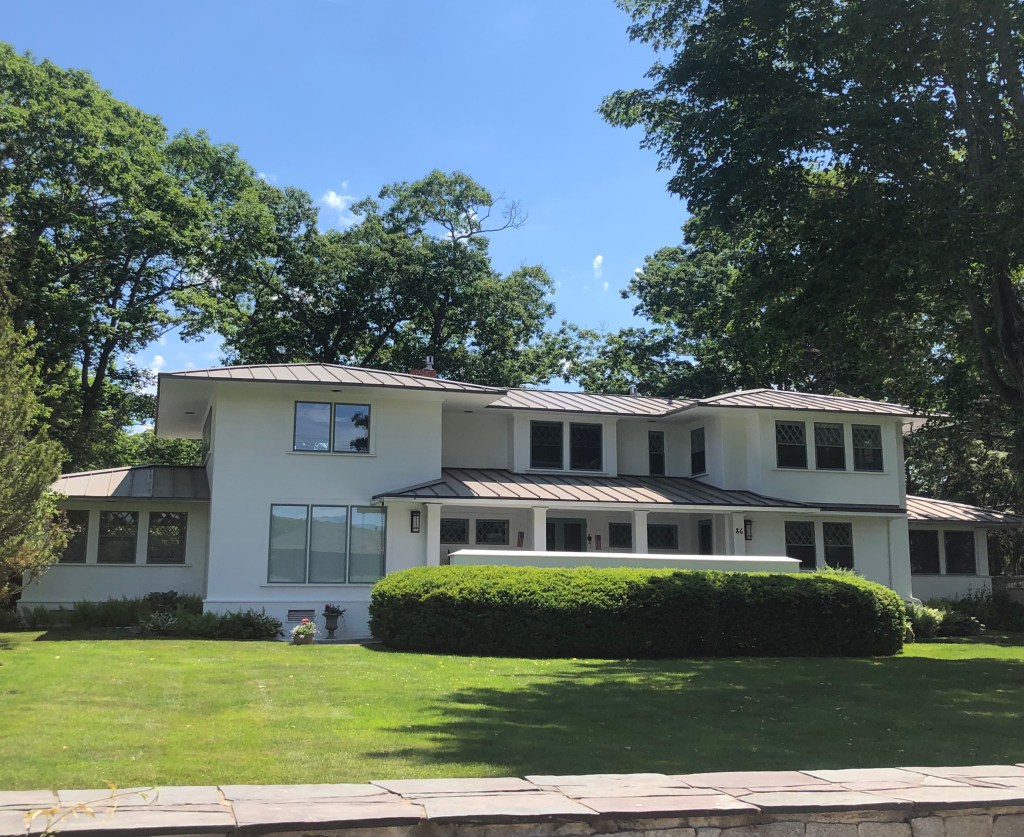
Westlook // 1905

One of a handful of Prairie style homes in Maine, the Abbott Graves House – named ‘Westlook‘ – of Kennebunkport, was designed by Graves himself and built in 1905. The two-story residence is of frame construction with a low-hipped metal roof (originally red tile) and three internal brick chimneys. The exterior is covered with a simulated stucco finish.

Born in Weymouth, Massachusetts in 1859, Graves began architectural studies at the Massachusetts Institute of Technology in 1867 but was forced to leave due to financial problems before completing the program. For a few years he supported himself by working in a florist’s establishment where he earned a reputation as an arranger of flowers for interior decoration. An amateur painter since early youth, he began in earnest to develop this talent, concentrating on floral still life. He was eventually able to support himself in a small Boston studio and in 1884 to 1887 studied in Paris. His work was exhibited in the Paris Salon in 1887 and received the first of five medals he was to be awarded by that illustrious institution. Returning to Boston in 1889, he opened his own school and established himself as a distinguished painter of floral scenes and genre works. He brought his family and some students to Kennebunkport for the first time in the summer of 1891 staying at one of the first hotels in that newly emerging resort community. Graves fell in love with the community spending more and more time there each year until eventually he became a year round resident. In 1905 he designed Westlook, as he named it, and resided there until his death in 1936.

Ivory Goodwin House // c.1808

Built by Ivory Goodwin (1783-1851), a joiner who moved to Kennebunkport from Berwick, Maine in 1799. Goodwin and his wife Mary, lived in this small Cape house with their six children, a pretty amazing feat in its own right! The Federal/Greek Revival home is five bays wide with a central entry with sidelights and pilasters flanking.