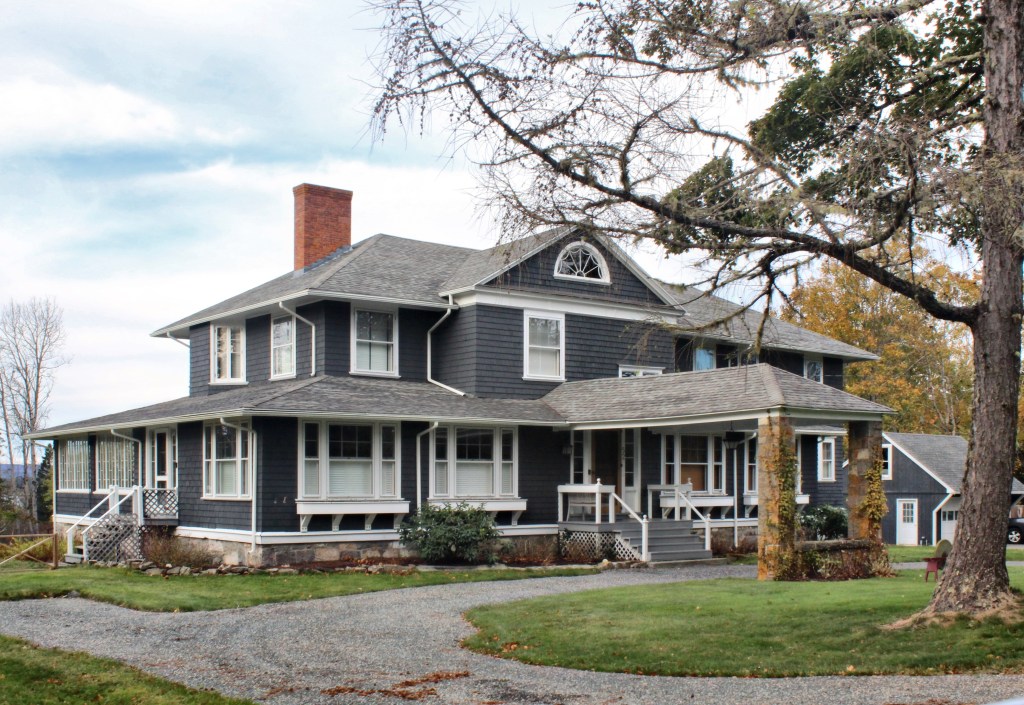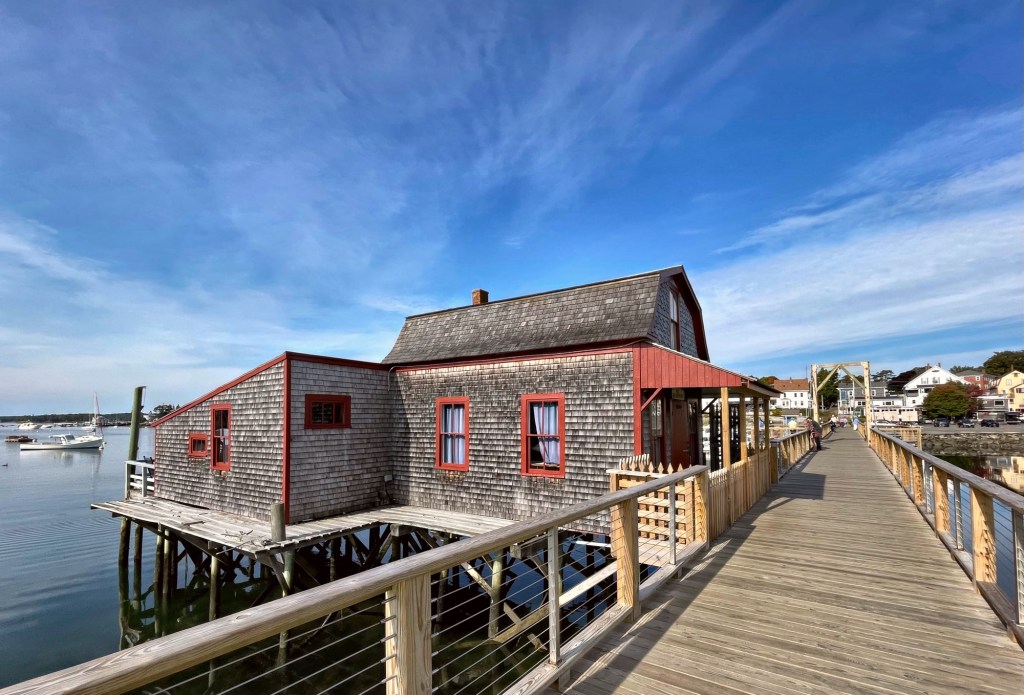
Boothbay Harbor Bridge House // 1902

In 1901, a footbridge was built in Boothbay Harbor, Maine, connecting the downtown area with the Mt. Pisgah and Spruce Point areas, which both developed as summer colonies. Within a year, this bridge house was built and occupied by William Foster, the bridge-tender who likely operated some sort of swing to allow vessels to pass by until the footbridge was largely replaced after the Great Freeze of 1918, without a swing or draw. When Mr. Foster operated the footbridge, others in town suspected some wrongdoing. A local selectman began investigating and as the story goes, Mr. Foster had been smuggling liquor into town via ships to this bridge house through a trap-door in the floor of the building. Maine was a dry state, and William would have been able to bring in illegal alcohol to the town. Later uses of the building included a candy shop, gift shop, and the bridge house is now a private residence, with thousands passing by every summer.
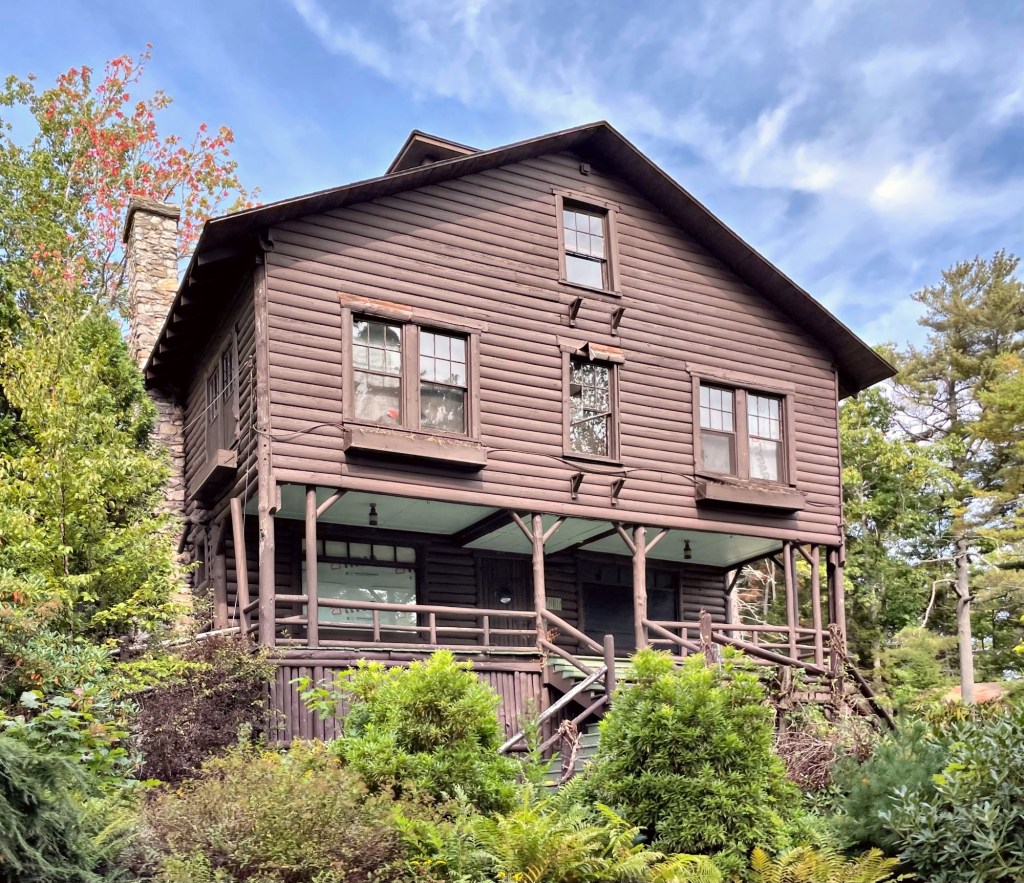
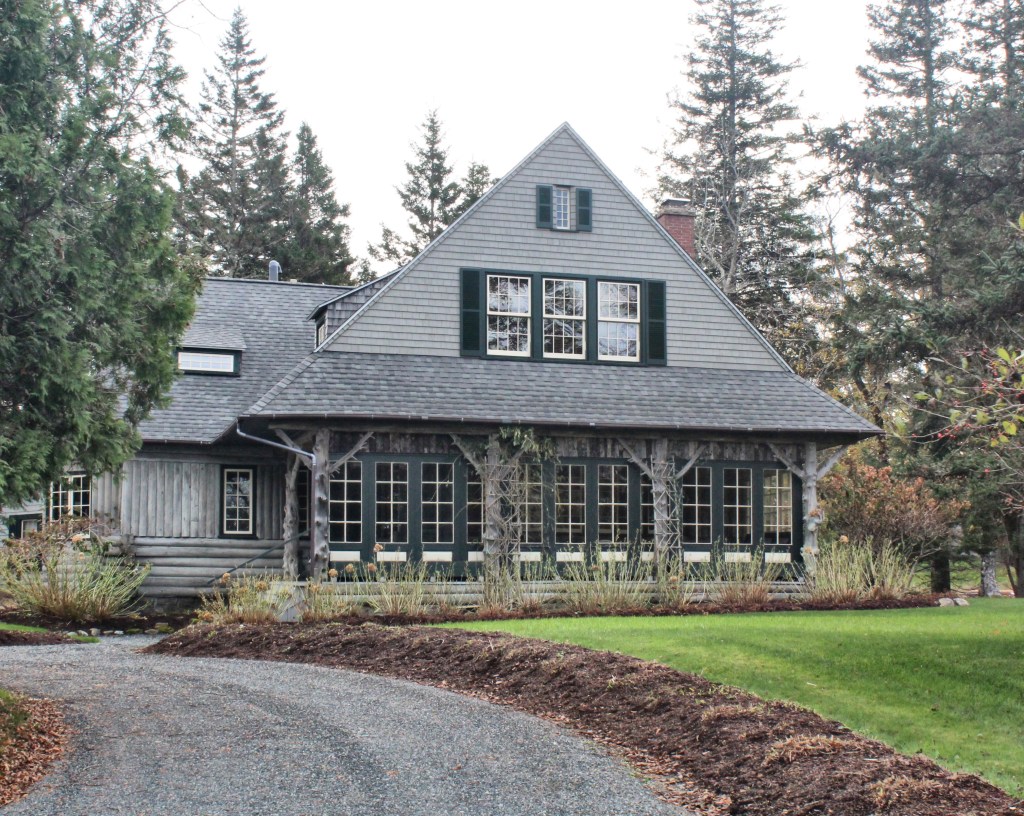
Sprucewold Lodge // 1927

Sprucewold Lodge, nestled in the picturesque coastal town of Boothbay Harbor, Maine, boasts a rich history that dates back to the early 20th century. Established in 1911 by a group of visionary investors and rusticators, the lodge was designed as a summer retreat for families seeking solace in nature. Like the Spruce Point Inn, the building was developed with modest means, but quickly expanded and grew as the unique and rugged site on Spruce Point drew flocks of visitors every year. Its unique blend of craftsman and Adirondack style architecture and stunning natural surroundings quickly made it a popular destination. The investors hired Portland architect John P. Thomas to design a grand log hotel. The hotel was advertised as the largest log cabin in the world until it burned down just years later in 1930. A 31-room annex, this building, was added in 1927 and assisted to serve the over 60 rental cabins, tennis courts, a swimming pool, recreation hall, and a thirty-car garage. When the original Sprucewold Lodge burned down, this building became the new lodge, and it has remained so nearly 100 years later. This enclave of rustic log cabins on Spruce Point is very evocative of the early days of Maine, and it is easy to see why the state garnered the nickname, Vacationland.

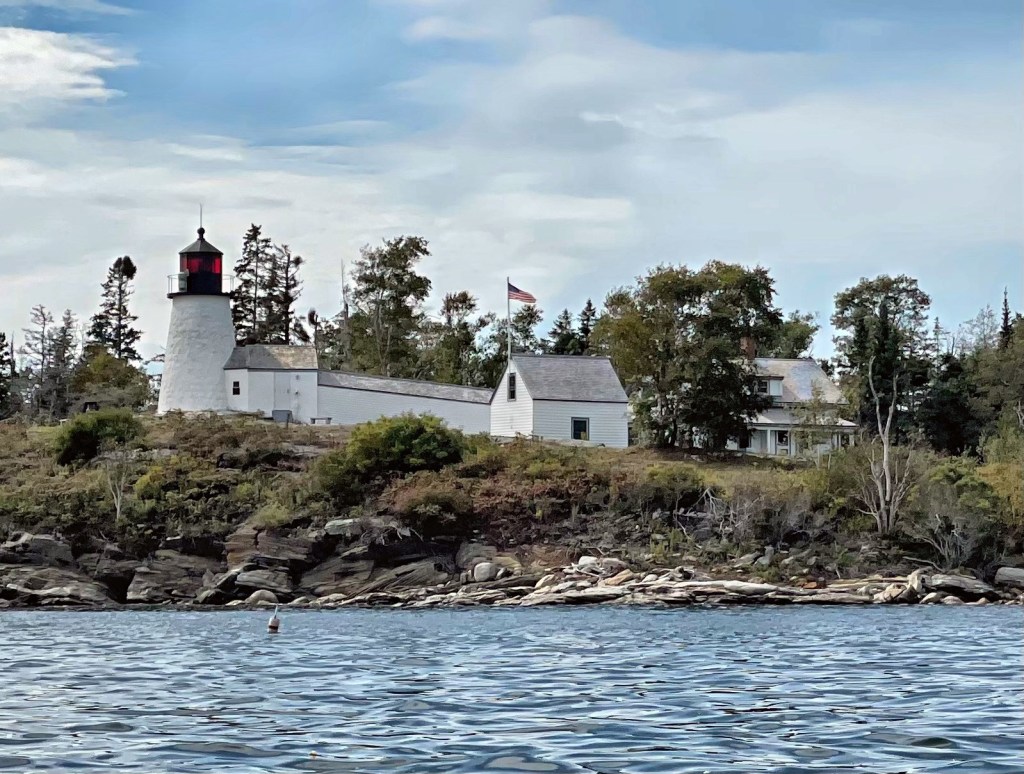
Burnt Island Light // 1821

The Burnt Island Light Station was built in 1821 on the west side of the entrance to Boothbay Harbor, opposite the Spruce Point Inn (which I kayaked from to get a better view of this lighthouse). The federal government purchased the island for $150 from local businessmen Jacob Auld and Joseph McCobb. The government’s builders constructed a stone lighthouse and keeper’s dwelling using granite blocks cut from the island. The lighthouse was built on Burnt Island, which took its name from the historic practice of burning the island’s vegetation in order to keep the land clear for sheep grazing. Its purpose was the guidance of ships, the carriers of cargo destined for the development of industry and commerce, into Boothbay Harbor over a mile away. Built just one year before Maine became a state, the Burnt Island Light Station has served mariners for over 200 years. In fact, it’s considered the state’s oldest unaltered lighthouse, and it was manned until 1988 when the light was automated. In 1998, the island and light station were transferred to the State of Maine Department of Marine Resources as part of the Maine Lighthouse Program.

Megunticook Clubhouse // 1901

As coastal communities in Maine’s mid-coast began to see more wealthy summer residents, these enclaves of cottages needed clubhouses and spaces to spend their summer days. In 1899, Philadelphian (and Rockport summer resident) Charles Wolcott Henry converted a section of his oceanfront summer estate at Rockport’s Beauchamp Point to a newly established golf club which quickly outcompeted all others nearby. Within a few years, Boston architect Charles H. Brigham, was hired to design this Craftsman style clubhouse that sits on an elevated site with an expansive wraparound veranda providing views of the new course and the Penobscot Bay. The rubble-stone foundation and walls clad in brown-stained shingles are well suited to the rugged coastal Maine site. The golf course, also designed in 1901, was planned by groundskeeper Thomas Grant as a 9-hole course. The recreational complex has been meticulously preserved and is a great example of a turn-of-the-century clubhouse in coastal Maine. The 1901 clubhouse is also said to be the oldest golf building in Maine!

Dixmont Corner Church // 1834

Dixmont, a small rural town in central Maine was originally originally a land grant by the Commonwealth of Massachusetts (of which Maine was then a part) to Bowdoin College, which sold the first settlers their land for profit to build on their campus. As a result, the town was originally called “Collegetown”, which was obviously short-lived. Dr. Elijah Dix (1747-1809) of Boston, who never lived there but took an interest in its settlement, encouraged others to settle there, and when the town was officially incorporated in 1807, it named itself after Dix, as Dixmont. A “malignant fever” broke out among the settlers in the early years, also killing Elijah Dix while in Dixmont on a trip there in 1809, he was buried in the Dixmont Corner Cemetery. Elijah was the grandfather of reformer and nurse Dorothea Dix. The early settlers had this church built by 1834 by Rowland Tyler, a local master builder whose only other documented work is the 1812 City Hall of Bangor. The Dixmont Corner Church is one of Penobscot County’s oldest Gothic churches and also exhibits some Greek/Classical elements.

Thompson Cottage // c.1892

Who doesn’t love a good porte-cochere? In case you don’t know what they are, a porte-cochere is a covered porch-like structure at an entrance to a building where either a horse and carriage (historically) or car (today) can pass under to provide arriving and departing occupants protection from the elements. They are normally found on larger residences and institutional building where the wealthy frequent. The Thompson Cottage on Grindstone Neck in Winter Harbor was built around 1892 for James B. Thompson from Philadelphia. The original cottage was largely updated after Thompson’s death in 1915, the property was owned by Annie Cannell Trotter, who summered at another house in the colony with her husband Nathan Trotter, until his death.

Charles and Elizabeth Doremus Cottage // c.1892

In 1889, the Gouldsboro Land Improvement Company, bought 300 acres of farmland to build a residential summer colony as an alternative to the busy Bar Harbor across the bay. They hired landscape architect Nathan Franklin Barrett to design the subdivision of 198 cottage lots of at least one acre and arranged them on roughly parallel roads, with a primary road (Grindstone Avenue) running the length of the peninsula’s spine through woodlands to dramatic ocean views at the tip. The summer colony has many great cottages and chapels tucked away on rocky outcroppings with towering spruce trees all around. This charming cottage was built for Charles Avery Doremus and his wife Elizabeth Ward Doremus around 1892. Charles was a scientist, the son of chemist and physician Robert Ogden Doremus. He graduated from the College of the City of New York in 1870. He became a professor in chemistry and became a leading specialist on toxicology, often called into court cases to help solve crimes. Elizabeth was a playwright from Kentucky and her father and his brother owned plantations in Mississippi before the American Civil War. The couple summered at this cottage on Grindstone Neck until Charles’ death in 1925. It is a great example of a rustic Shingle style summer cottage.

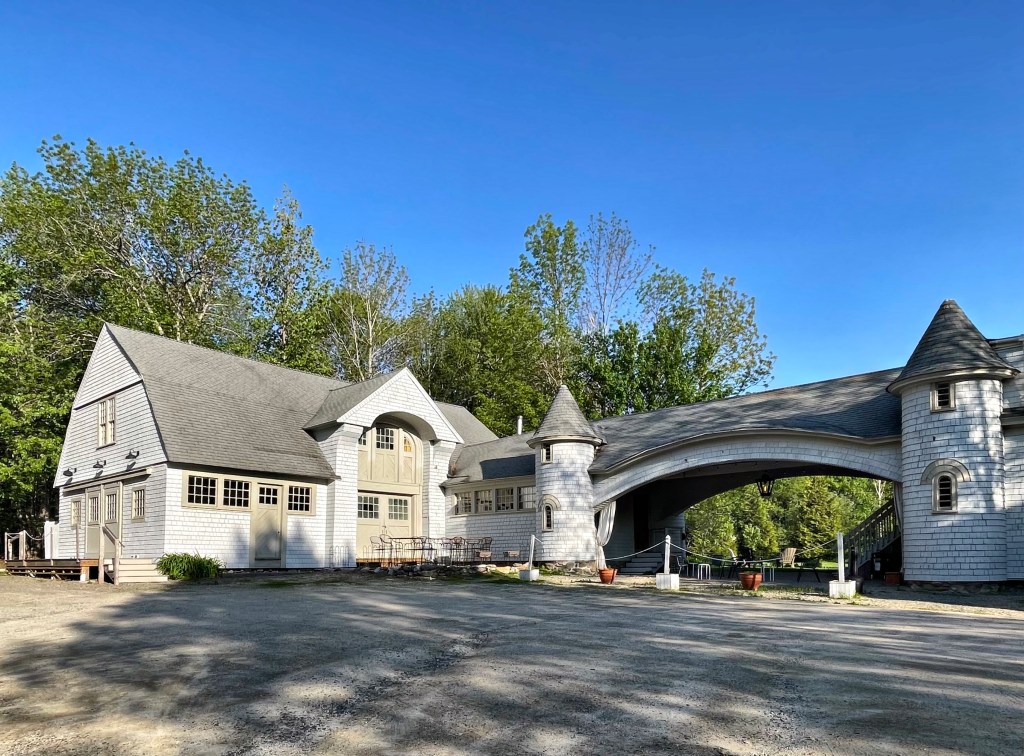
Barncastle // 1884

Barncastle, located in the Town of Blue Hill, Maine, is an elaborate and distinctive house. Designed by George A. Clough and built in 1884, the building is a sprawling complex in the Shingle style with additional eccentric details. As Blue Hill and other coastal communities of Down East Maine saw popularity as summer colonies of wealthy city-dwellers flocking to the rugged coastline, many new residents either built new “cottages” or renovated older (often ancestral) homes. Effie Hinckley Ober (1843-1927) who was born in town, married Virgil P. Kline, personal attorney to John D. Rockefeller, and for thirty years worked as attorney for the Standard Oil Co. of Ohio. Effie founded the Boston Ideal Opera Company in 1879 and traveled with the group extensively, retiring in 1885, upon that time, she would move into Barncastle for summers (then named “Ideal Lodge” after her opera company). In 1884, before her retirement, Effie hired her childhood friend, architect George A. Clough, who was born in Blue Hill and worked in Boston, to completely redesign her ancestral home. Clough’s design engulfed a smaller Cape Cod-style house owned by Effie’s mother Mary Peters Hinckley Ober Atherton, a descendant of early Blue Hill settlers, creating an absolutely elegant Shingle-style summer cottage. The house is highly visible on a main street, but what many do not see is the arch-and-turret link between kitchen wing and carriage barn. “Barncastle” is now home to an elegant inn and restaurant!

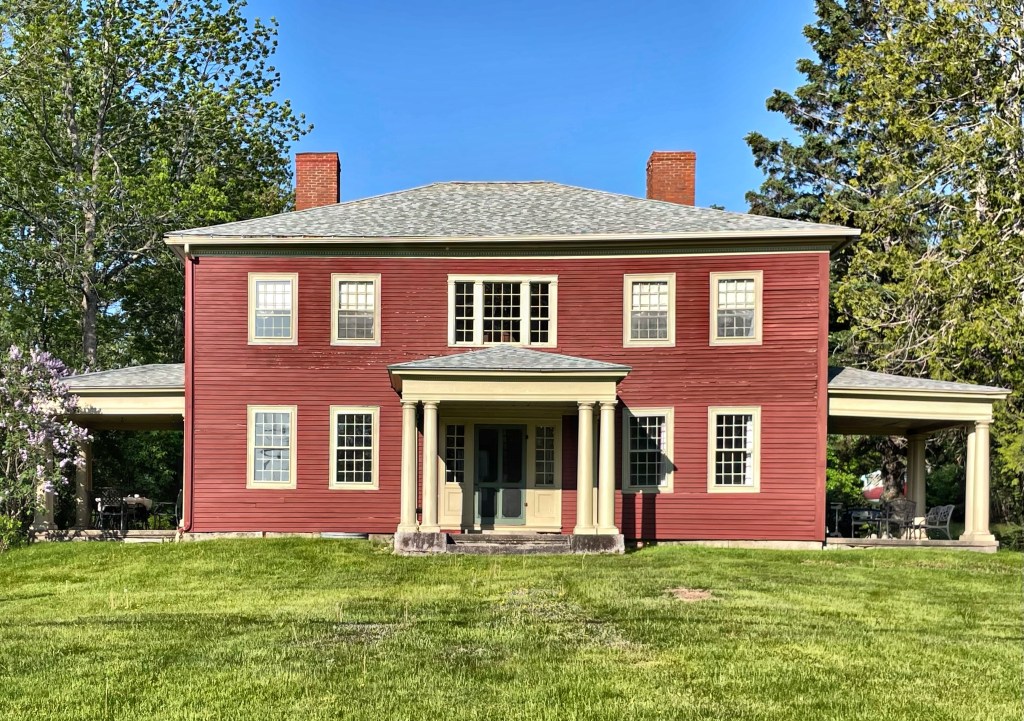
Parker House // 1814

Wrapping up this series on a tour of buildings in Blue Hill, Maine, we have two stunning old homes left! 

This landmark Federal style house was built sometime between 1812 and 1816 by Robert Parker, whose wife was a daughter of Joseph Wood, one of the first two white settlers of Blue Hill. The home is significant not only architecturally, but for its connections to a number of old settlers to Blue Hill and their families.

By the turn of the 20th century the farming, mining and granite producing town of Blue Hill had been discovered. Writers, artists, musicians, and wealthy urban families from all over the East Coast found inspiration or retreat in many coastal Maine communities including Blue Hill, building “cottages” to summer at. Not all those who arrived to Maine were ‘from away’, as many built new or renovated their old ancestral homes to be occupied when seeking the peace and tranquility of coastal Maine. The Parker House was no different. In 1900, it was renovated in the Colonial Revival style as a summer home for Frederick A. Merrill and his wife, Elizabeth, residents of Boston. The couple hired George A. Clough, who worked as the first City Architect of Boston, but grew up locally in Blue Hill. Mrs. Merrill was descended from Mrs. Robert Parker’s sister. The current owner, the Merrill’s great-grandson, has undertaken a restoration of the house which pays homage to its Colonial Revival past. The stunning house can even be rented!

Amen Farm // c.1850

Can I get an “Amen”?! Amen Farm was built in the mid-19th century on 47 acres in Brooklin, Maine, overlooking the Blue Hill Bay and Acadia National Park in the distance. The Cape house, like many on Blue Hill peninsula, is modest and was enlarged by telescoping ells as space was needed. The house was long owned by the Bowden Family who farmed the land, later adding a small gas station to the side of the road (since removed). Later owner, Joseph “Roy” Barrette (1896-1995) likely helped give the home its name. Barrette got his first look at Maine in 1919 from a ship, when he was a deck-hand on an 800-ton coal barge, hauling West Virginia coal from Norfolk to Portland. He had bought this farm in 1958 and was looking forward to his retiring years, which he intended to spend in a library of some 3,000 volumes and indulging his hobbies as a gardener, a gourmet, and a connoisseur of fine wines. John Wiggins, associate editor of The Ellsworth American newspaper, impressed by Barrette’s garden, his literary tastes, and his writing style, persuaded him to write a column, which he called “The Retired Gardener.” He wrote many essays and three books from this home in Brooklin where he never fully retired. Roy died in 1995 and the property was eventually listed for sale in 2019. The house is undergoing some work and landscaping upon the time of the photos.