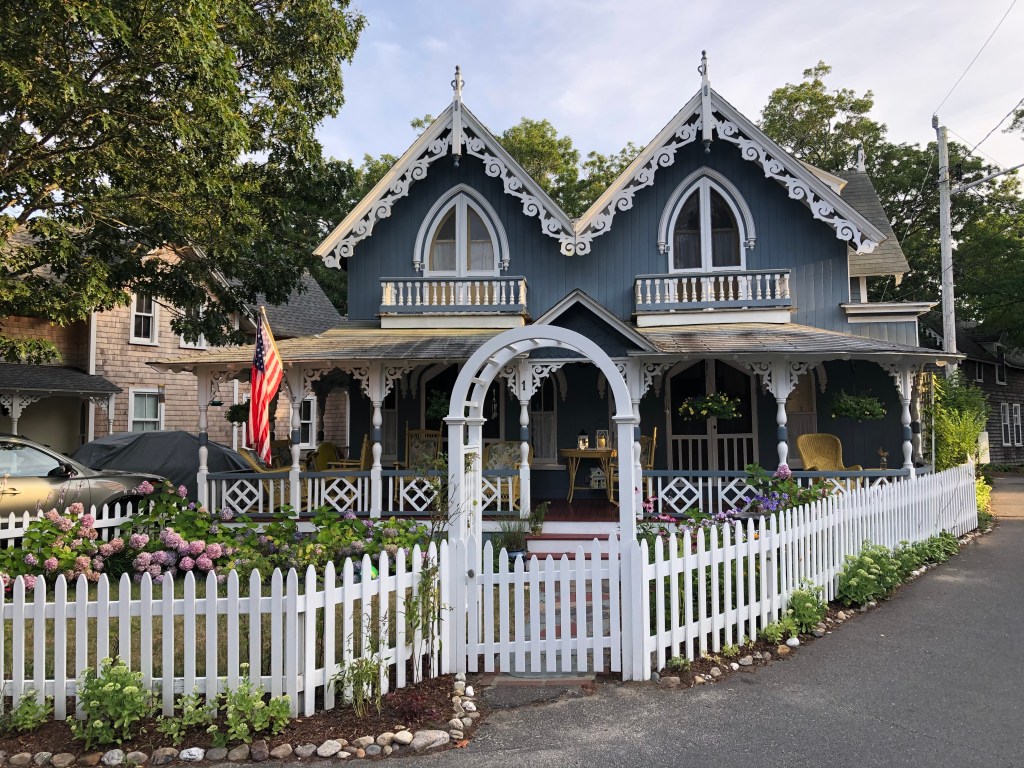
Kickemuit Cottage // 1869

Summer is here and I am missing my favorite place to explore, Oak Bluffs on Martha’s Vineyard. The town is sleepy most of the year, but in the Summer, the place explodes with summer residents and tourists, providing such a lively and diverse atmosphere. One of the most beautiful of the cottages in the Wesleyan Grove campground is the Kickemuit Cottage, built in 1869 for a family from Rhode Island. They so-named the cottage after the Kickemuit River which runs from Massachusetts through Warren, RI and spills out into the Mt. Hope Bay. The story goes that this double cottage was actually just a single peaked home until it was combined with another giving it the double-peaked appearance we see today. The cottage retains the turned posts, delicate gingerbread detailing, and the lancet windows and doors. Swoon!

Side note: If anyone has a cottage in Oak Bluffs that they’ll let me rent, I would love to be in touch!
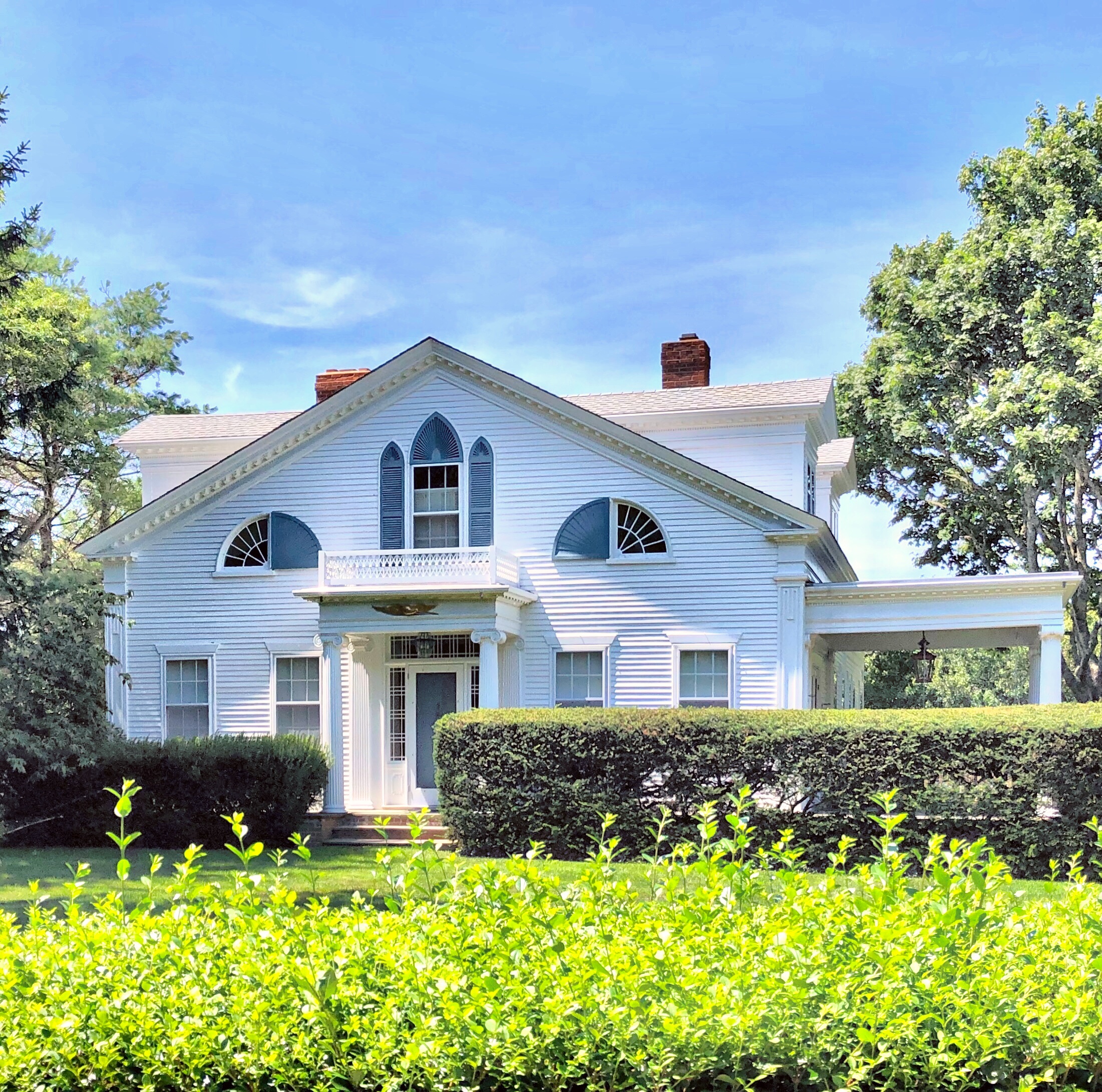
Baylies-Pease House // c.1845

This stunning house on Starbuck Neck in Edgartown was originally built on Main Street by Frederick Baylies Jr., as his own residence. Baylies was the architect of the town’s original Methodist church, the Old Whaling Church, and a couple other extant churches in town in the early 19th century. The home was sold to William Cooke Pease, a shipbuilder and merchant. In 1839, he joined the United States Revenue Cutter Service, an armed customs enforcement service, and he quickly rose in rank, spanning the transition from sail to steam. Capt. Pease designed and built new Cutter ships for the Great Lakes and refitted many aging vessels on the West Coast. Today, he is regarded as a founder of the modern Coast Guard, which in 1915, was created by the consolidation by an act of Congress of the U.S. Revenue Cutter Service the United States Life-Saving Service to form the United States Coast Guard as we know it today.

Frank A. Ferris House // 1890

Located north of downtown Oak Bluffs, this oceanfront summer estate exemplifies the grandeur of Martha’s Vineyard at the end of the 18th century. This home was built in 1890 for Frank A. Ferris, a Manhattan meat dealer who processed and shipped his product to wealthy customers, markets, luxury hotels and restaurants all over the east coast. His processing plant on Mott Street in Manhattan remains an excellent example of Romanesque Revival architecture in the city. He lived at 5 Russell Terrace in Montclair, NJ, and in summers, stayed in this waterfront mansion overlooking the Atlantic. His summer home is a great blending of the Queen Anne and Shingle styles, both very common at the time.

Hills-Claflin House // 1871

This grand home was built in 1871 for George Hills, one of the original investors in the Oak Bluffs Land & Wharf Company development, a development to the east of Wesleyan Grove. The home was designed by Samuel Freeman Pratt, a Boston carpenter turned premier architect of Oak Bluffs, who likely designed the home in his distinct Stick Style with intricate wood carvings and posts. In 1877, the home was purchased by Governor William Claflin after his time in office as a summer retreat from his home in Newton, MA. The governor was an ardent Methodist who was involved with liberal causes such as abolition and Native American and female enfranchisement. Within 10 years of his purchasing of the home, he modified and enlarged it with Colonial Revival motifs including the gambrel roof, Tuscan columned porch, and simplified dormers.

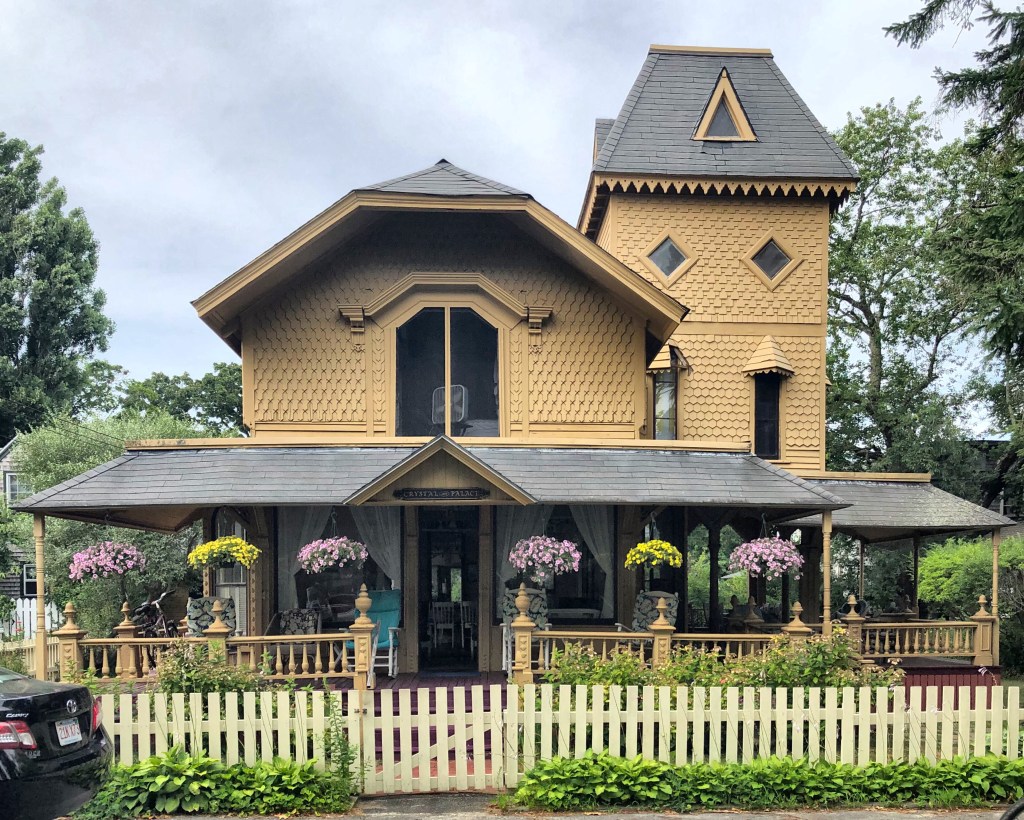
Crystal Palace // c.1870

The Crystal Palace cottage Pequot Avenue in Oak Bluffs was built by Henry Clark, a local builder of many summer homes on the island of Martha’s Vineyard. The cottage is a charming blend of Stick, Shingle, and Queen Anne styles, which works perfectly. The wrap-around porch is supported by turned posts with a balustrade capped by urns, the square tower has two elongated windows with eyebrow lintels resembling a face with bushy eyebrows. Oh the charm of Oak Bluffs, architectural eccentricity on every street!

Union Chapel // 1870

One of the most unique buildings I have ever seen is the Union Chapel in Oak Bluffs on Martha’s Vineyard. The chapel, built in 1870 in the American Stick Style, is in the form of an Octagon, very unique for churches. Built as an inter-denominational house of worship, it is significant as the first non-sectarian religious building to be erected in a community that until 1870, was noted primarily for its strong association with the Methodist Church and its summer camp meeting (Wesleyan Grove) assemblies. The Chapel offered islanders and seasonal visitors regardless of religious affiliation
not only an opportunity to worship but a gathering place for cultural activities. According to historic images, the chapel once had more elaborate stick work and finials, since removed, likely due to storms and general maintenance concerns. The chapel was designed by island resident Samuel Freeman Pratt (1824-1920) who had no known architectural training besides working as a wood carver in Boston, yet his work is characterized as having a dynamic and festive style. Pratt’s other major contribution to Oak Bluffs’ architecture, the Sea View Hotel, was erected at the head of the wharf in 1872, but burned down in 1892.

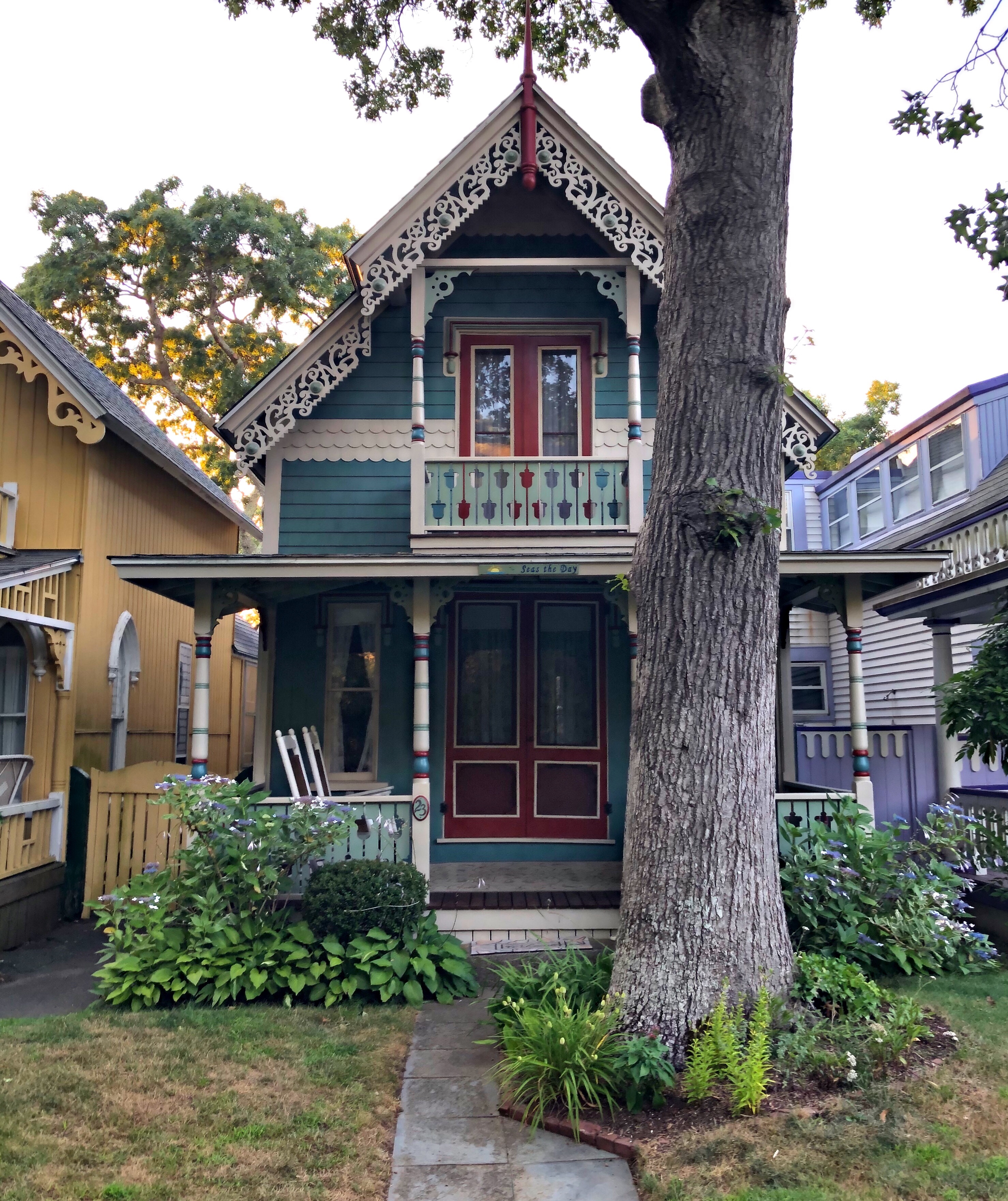
“Seas the Day” Cottage // 1875

This quaint little summer cottage in Wesleyan Grove was built in 1875 for Hanson Arnold, a merchant and methodist from Woonsocket, R.I. The home is typical of many other summer cottages in Oak Bluffs on Martha’s Vineyard, with its delicate stick work, turned posts, full-length porch, and second story balcony with pierced bargeboards. The home was at one point named “Seas the Day”, a trend of naming the cottages occurred sometime in the 20th century by families who summered on the island, many incorporating the family’s name somehow. The home was restored recently with all new detailing and a reversion back to the original porch configuration.

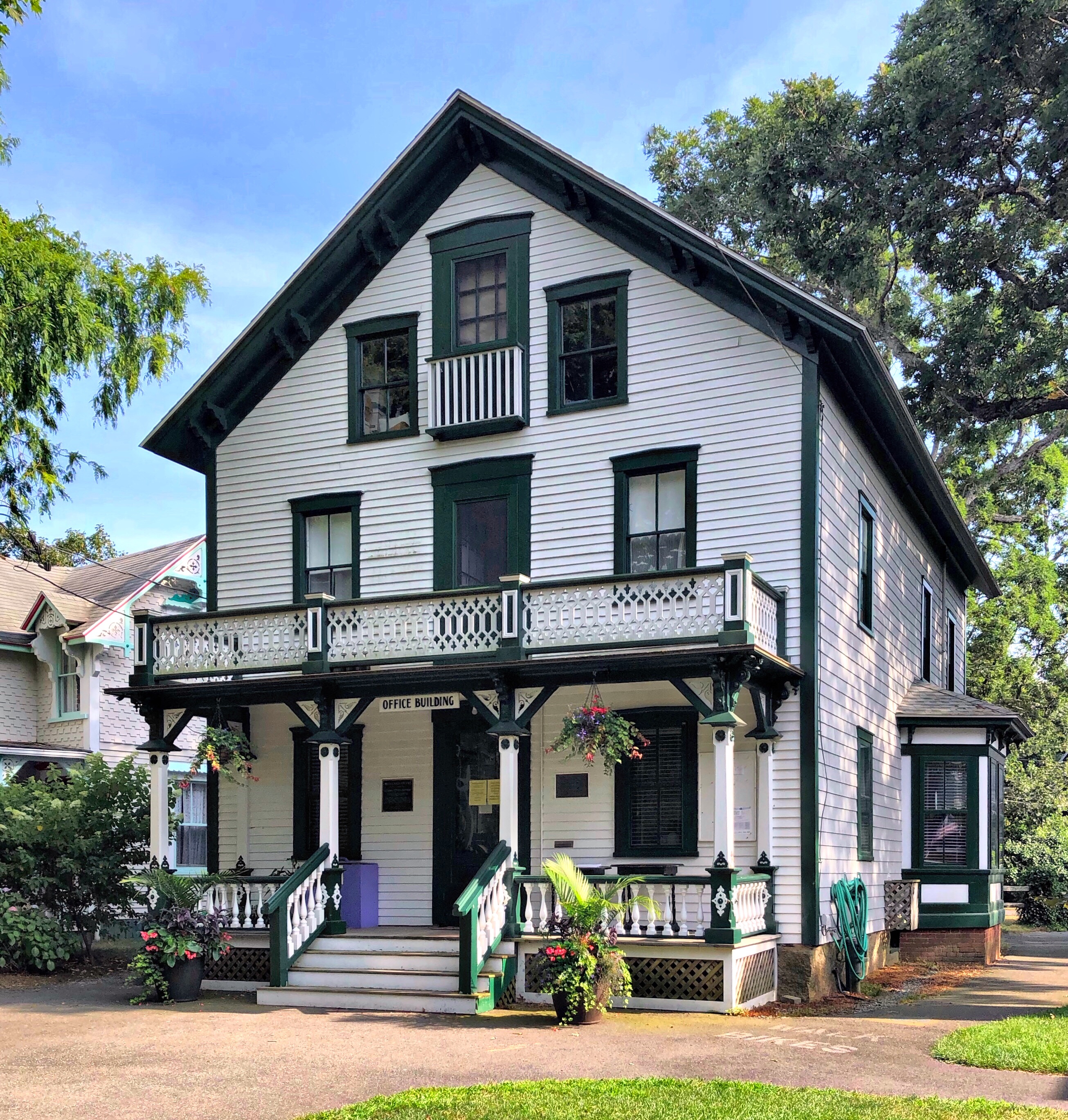
Methodist Camp Meeting Association Office // 1859

Located at the center of the Wesleyan Grove, – the Martha’s Vineyard Camp Meeting Association – this Italianate building has long served as a hub of the active summer community. The building was constructed in 1859, before any cottages were built in the newly formed summer colony. The office building was not only the headquarters for the Camp Meeting Association, it also served as a storage space for the baggage of the many who stayed in tents, many who didn’t have the means to purchase or rent a cottage. The building even was home to the associations’ post office. It now houses the Association director’s offices and contains the lease holders records back to 1864, a great way to learn about the diverse groups of people who visited and worshiped in this camp.

Riday-Evans Cottage // c.1880

This cottage on Ocean Ave in Oak Bluffs was built before 1880 for J.F. Riday, a manager at the American Mail and Export Journal at the Wesleyan Building on Bromfield Street in Boston. The quaint cottage was photographed shortly after it was built with Riday and two women (one likely being his wife) posing on the front porch overlooking the ocean. By the early 20th century, the home was owned by George and Corielle Evans, a couple from Mexico. They likely modified the home with the shingled siding and front porch with sheltered balcony above, while the original lancet windows and doors remained.