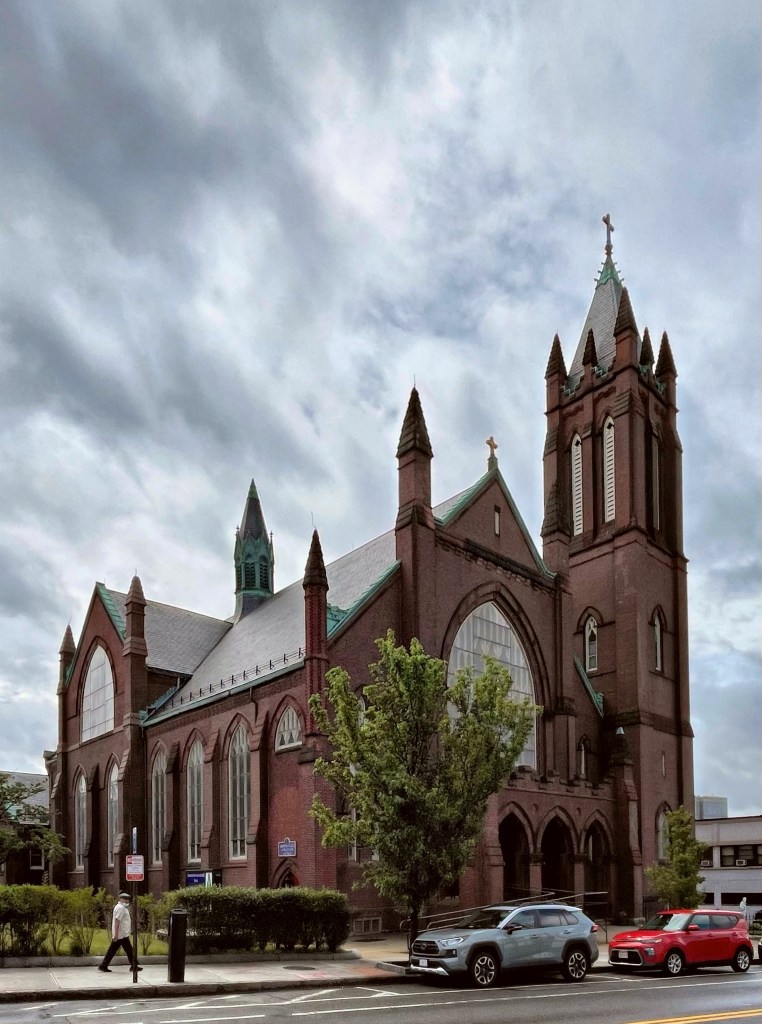
Immaculate Conception Catholic Church // 1896

The Immaculate Conception Roman Catholic Church in Everett, Massachusetts, is an imposing Gothic Revival building, that shows how the church spared no expense to build imposing and awe-inspiring edifices all over New England. Constructed of red brick with Longmeadow brownstone trim, the church was designed by preeminent Catholic Church architect Patrick W. Ford and the cornerstone was laid in 1896. Ford was born in Ireland and in 1872, he moved to Boston and opened his own practice. He was widely recognized as an authority on church architecture and his practice focused primarily on designing churches and institutional buildings for the Roman Catholic Church in New England. Ford died suddenly at age 52 in August 1900. Due to a lack of funds, the church was not completed until 1908, so Ford did not see this church completed in his lifetime. The work was completed by architects Reid & McAlpine and is stunning with its square corner tower topped by a pyramidal spire with smaller pinnacles marking the corners of the tower. The projecting entry porch has three, pointed arch openings and is topped by crenellation. The congregation appears pretty active to this day.

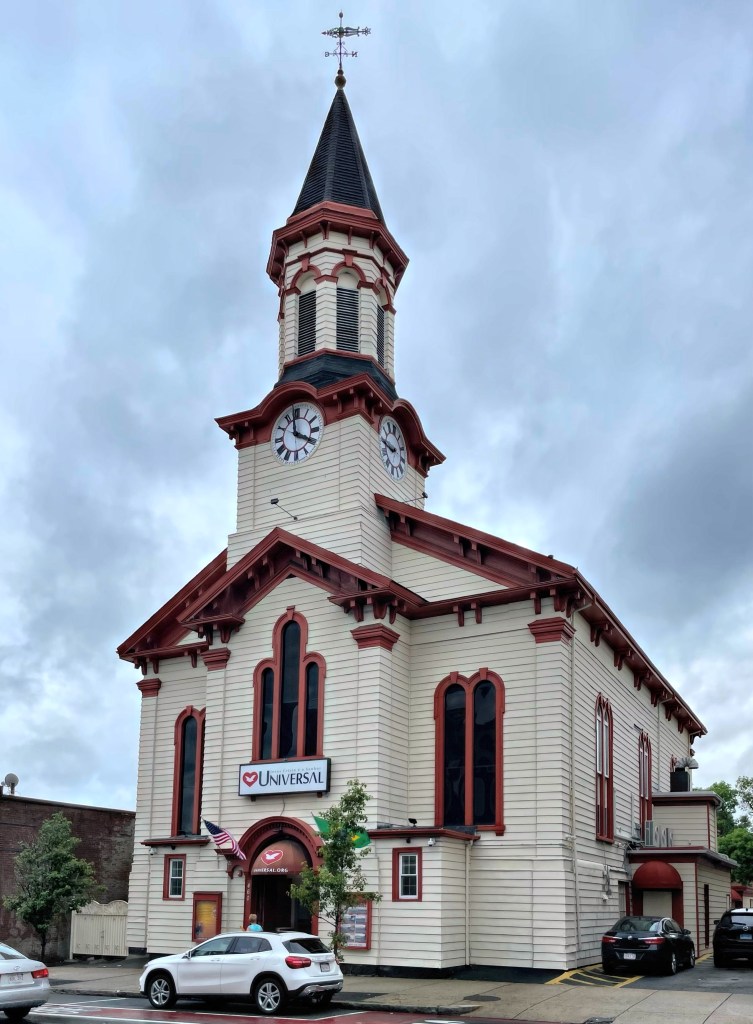
First Congregational Church, Everett // 1852

The oldest surviving church in Everett, Massachusetts is this one, the First Congregational Church, built in 1852 when the city was still a part of Malden. As in many other communities, this church was formed when the surrounding area of South Malden had grown and had the means to support its own religious society. Before this, residents had to travel to Malden Center for services. In 1848, it was voted to establish the church calling it the Winthrop Congregational Church, as at the time, it was thought that when South Malden would split away, the new town would be named “Winthrop”. When the town finally split in 1870, another town had already taken that name. Originally, the Italianate-style building was sheathed in wood clapboards and outlined by pilasters, both of which were covered or removed for the installation of aluminum siding, very common in the city after WWII. Remaining hallmarks of the Italianate style include the paired cornice brackets and the round-headed windows. The tower was originally capped by a taller steeple above an open octagonal arcaded belfry, but was replaced by the present spire in 1911. The church was possibly an early design by architect Thomas Silloway. Today, the church is occupied by Universal Church USA, a congregation that originated in Brazil, showing how the local community and demographics have shifted in Everett from 150 years ago.

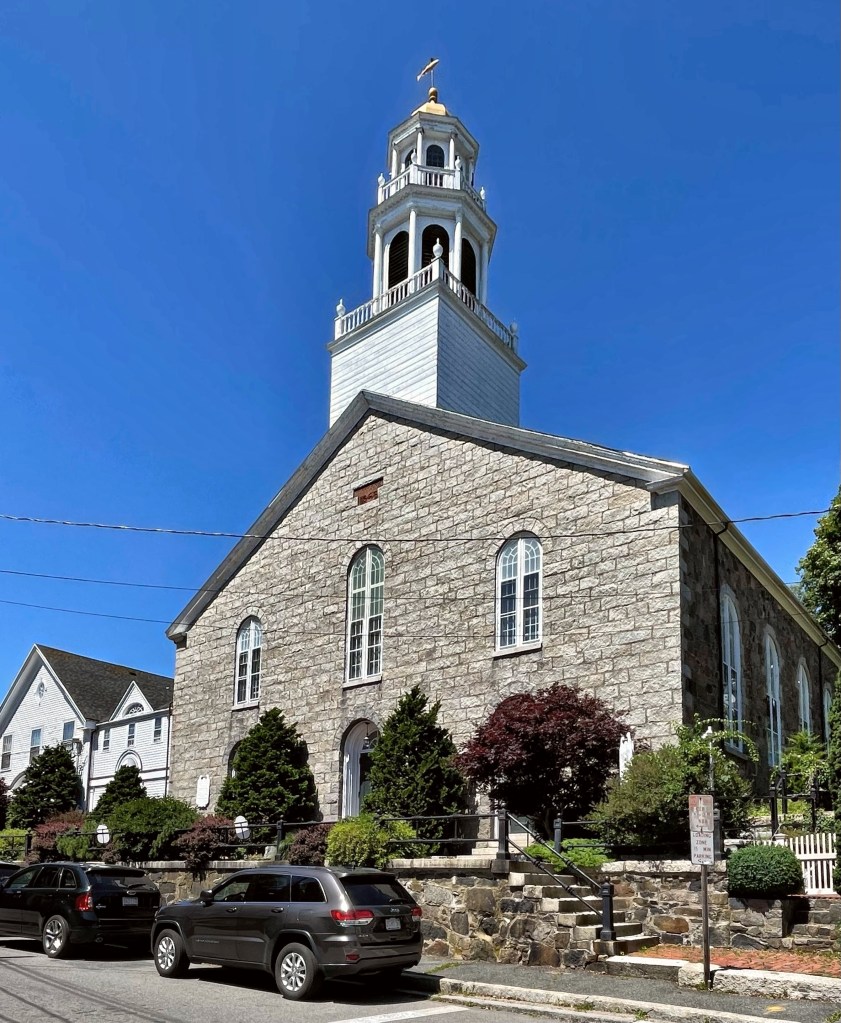
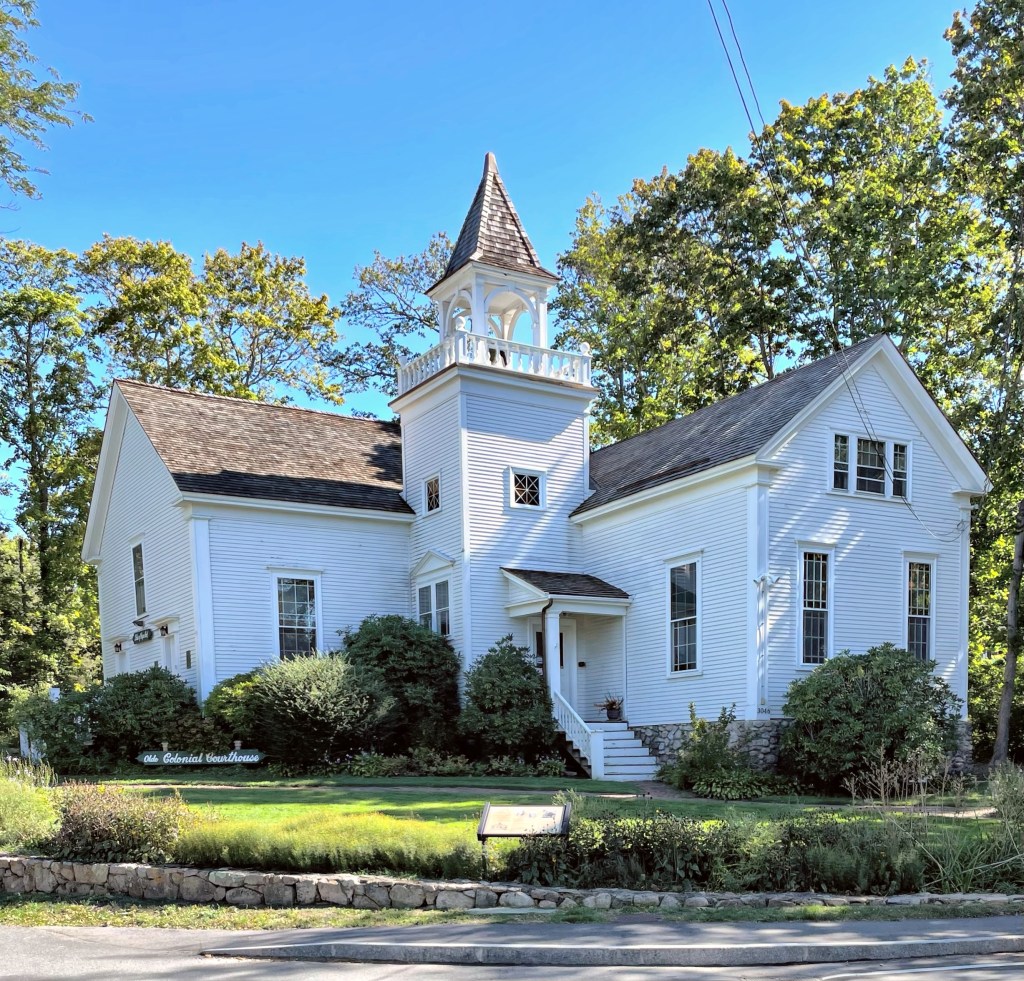
Assonet Congregational Church // 1808

The Assonet Congregational Church, now the United Church of Assonet was originally known as the Town Church and was organized in 1704. In 1807, fifteen residents of town, all from prominent families, gathered to ‘‘manifesting the desire to enter into a Church estate.’‘ Land was deeded to the church in 1807, and the Federal style edifice was constructed the next year. Documentation on its construction is limited, with research stating, “we can only speculate on the construction of this beautiful Church
building. It is believed that Ebenezer Peirce (1777-1852) of Assonet and Middleboro was the master builder assisted by ship builders of the village. Mr. Peirce sent his sloop “Unicorn” to the Penobscot River region in Maine to procure most of the lumber.” The church is in great condition today, even retaining its bell, cast by Paul Revere, and original box pews. Sadly, in October 1910, the steeple was struck by lightning and the acorn top blew off. The 1880s clock was damaged but repaired. The steeple was re-installed or reconstructed, but deferred maintenance required the church to remove it and the Revere bell in the early 2000s until funding could be gathered to restore, nothing yet. What I wouldn’t do to see the original acorn top of this steeple again!

Lancaster Industrial School for Girls Chapel // c.1840

The Lancaster Industrial School for Girls was a self-sustained campus of housing, dining, farming, and functional buildings giving the State of Massachusetts little need to worry about its day-to-day function or funding. In 1838, the First Universalist Society in South Lancaster (then known as New Boston), built a house of worship for members living there. When the southern part of Lancaster reincorporated as the separate town of Clinton, members of the church relocated a short distance to the new manufacturing-oriented community for prosperity. This church was closed, but was purchased by the Industrial School for Girls, who moved the building 1.5 miles to their campus, for use as a chapel. The building was added onto and altered a couple times, but has sat deteriorating since the school closed.

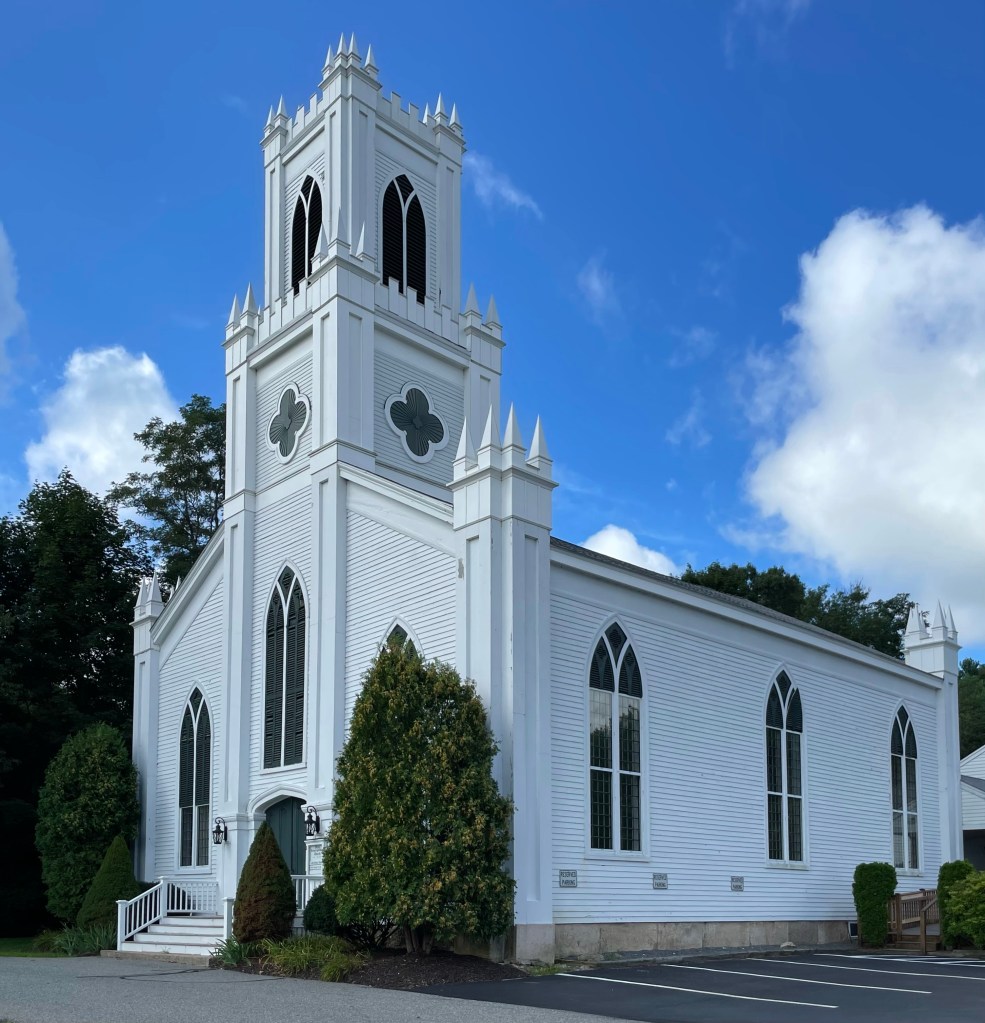
Rochester Congregational Church // 1837

Rochester’s First Congregational Church is the oldest extant building still standing on the Town Green in Rochester Center and is the fourth house of worship to occupy the site. Constructed in 1837 to the designs of architect, Solomon K. Eaton, the beautiful Gothic Revival church building is among the most beautiful in the state. Eaton was well-known for his ecclesiastical structures, but also designed other prominent civic buildings in Southeastern Massachusetts. A fun fact about Eaton is that at age 55, he volunteered for the Union Army during the Civil War and his unit saw action in North Carolina, he returned home after the war and lived out his final days. The church stands out to me for the quatrefoil windows on the bell tower, the pointed finials and comer posts, and large lancet windows. Swoon!

St. Therese of the Infant Jesus Church // 1927

This church in Agawam was built in 1927, replacing the first Catholic church in town, which was established in 1873. The earlier church was destroyed by a fire in 1925, causing the congregation and Archdiocese to fund construction of a new, fireproof church building. The Neo-Gothic Revival building features lancet windows, buttresses, and a central steeple. The building is now occupied as the Moldovian Baptist Church.

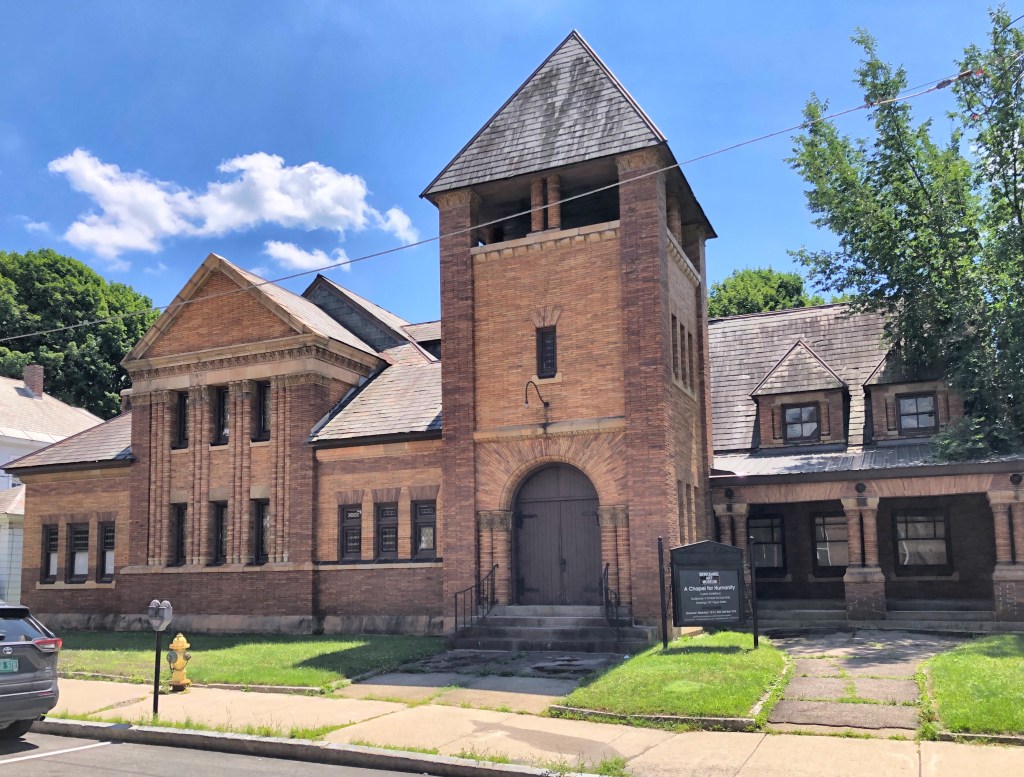
North Adams Universalist Church // 1893

Tucked away off Main Street in North Adams you’ll find this charming little church. The Universalists were organized in North Adams in 1842, restoring an existing church near the Hoosic River. The congregation chose a site for a new church in 1852, and erected a white wooden chapel. It is unclear if the church was outgrown or a fire destroyed it, but the Unitarian society voted to build this church for a cost of approximately $25,000 in 1892. Architect Henry Neill Wilson of Pittsfield drew the plans, and the firm of Porter and Harnam of North Adams constructed the church. Due to the declining population in town in the mid-20th century, the church struggled and was sold to a private owner. The building began to decay by the 1970s and was later sold in 1996 to Barbara and Eric Rudd to house artist Eric Rudd’s installation entitled “A Chapel for Humanity”. The building is currently used as the Berkshire Art Museum Annex.