Rosebrook Lodge // 2020

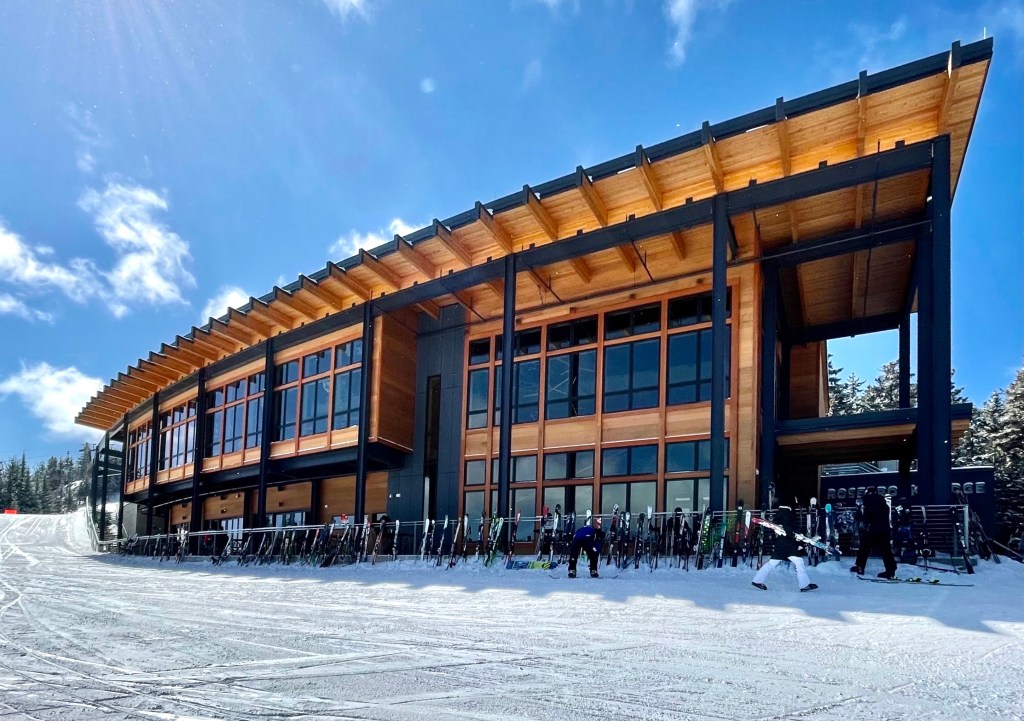
Located at the top of Rosebrook Mountain in the Bretton Woods Ski Resort, this stunning modern lodge building provides possibly the best mountain views in New England. After a couple runs on the slopes, I took the gondola up to the top, exiting to a sweeping view of the White Mountains and the iconic Mount Washington Hotel (more on that later). At the top, is this large, well-sited lodge which is perched upon the mountainside, and an excellent example of Contemporary design done right! Appropriately named Rosebrook Lodge, the new building was just completed in 2020 by designs from architectural firm Bull Stockwell Allen from San Francisco, with help from TruexCullins on the interior design. The two-story lodge is constructed from of timber, steel, stone and glass, which complement the region’s rugged natural beauty and provide a sleek space for on-mountain dining or aprés ski. Inside, the building highlights the outside with walls of windows with warm lighting and woodwork that make relaxing effortless.

Potter House // 1949

Cape Elizabeth is full of amazing late-19th and early-20th century summer cottages, but one of the best examples of early International-style architecture can also be found here! This house was designed by Marcel Breuer, one of the most famous architects working in the International Style in the mid- 20th century. The house plays on the traditionally New England vocabulary, but Breuer, a proponent of the Bauhaus Movement, turned it on its head. The house appears to emerge from its ‘ancient’ fieldstone foundation towards the street and levitates over the hilly landscape, supported by light columns. The house originally was painted a shade of white, common in the International style, but a later owner preferred the natural wood finish. The home is one of the most significant examples of the style in New England, and an uncommon example in Maine.

St. Paul’s Cathedral, Burlington // 1973

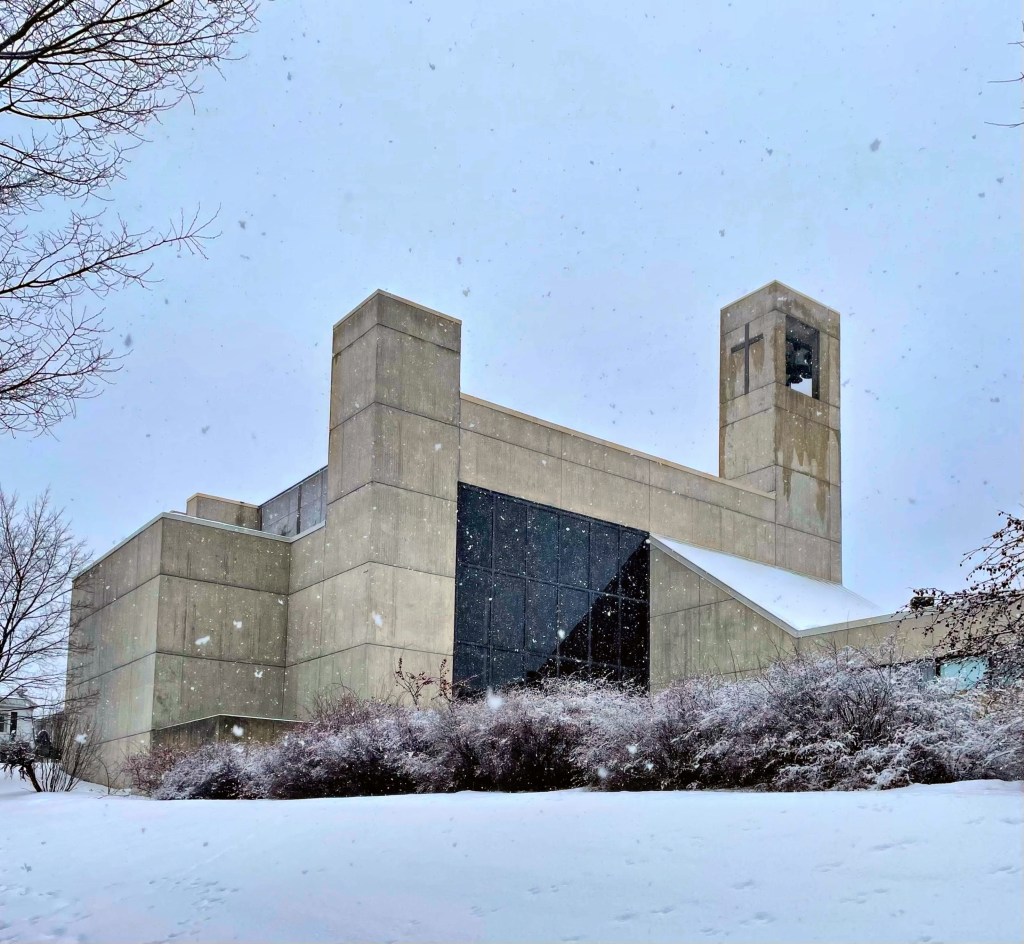
St. Paul’s Church in Burlington, Vermont, was organized in 1830, when Burlington’s population was about 3,500. About 55 Episcopalians met at a local hotel and laid the groundwork for the parish. In 1832, the fledgling parish dedicated its new building, a neo-Gothic limestone structure, which was enlarged multiple times as the congregation grew as the city did. In 1965, the Diocesan Convention voted that St. Paul’s Church be designated a Cathedral Church of the Diocese (one of two in the state). Just six years later, it was destroyed by fire, sparked by an electrical malfunction in the basement, leading to a new evolution of the church. At the time of the fire, the City of Burlington was engaged in massive urban renewal projects. As a part of this program, the City offered to swap the land on which Old St. Paul’s had stood for a spacious new tract overlooking Lake Champlain and the Adirondacks. Although the decision to change locations was a contentious one, the parish did accept the offer. When discussing designs for a new cathedral, there was a strong desire to make a new statement in architecture, diverging from the traditional Gothic or Colonial designs seen all over the country. An international competition was held to determine the architect of the new Cathedral. The winner was the local firm Burlington Associates, now Truex, Cullins & Partners. Completed in 1973, the Cathedral is made of stressed concrete. The structure stands strong and firm, yet is welcoming. Windows provide sweeping views of Lake Champlain and the distant Adirondacks.

Socony-Mobil Building // 1956

One of the unsung heroes of Modernist architecture in New York City is one of my personal favorites, the Socony-Mobil Building at 150 E 42nd Street in Manhattan. Completed in 1956 from plans by Wallace Harrison of the iconic firm of Harrison & Abramowitz, the development stands out amongst the competing masonry buildings and glass skyscrapers in the area. At the time of its completion, the Socony–Mobil Building was the first skyscraper to have its exterior wall entirely clad with stainless steel, as well as being the largest air-conditioned building in the world! The base is clad with opaque blue glass panels framed with stainless steel moldings; above, the tower and wings are clad in over 7,000 embossed stainless steel panels. The firm reviewed over 100 different designs until they settled upon the four raised relief panels: a rosette-like motif for above and below the windows; a large and small rosette to flank the windows, and two variants displaying a design of interlocking pyramids. The panels were likely designed by or inspired by Oskar Nitzchke (1900-91), a German-born designer who worked at the firm and worked on the similar style Alcoa Building (1953) in Pittsburgh. The building was developed as a speculative project, but the largest tenant, the Socony-Mobil Oil Company, later renamed Mobil, helped to give way to the naming rights. The building was landmarked by the City of New York in 2003.

Woodshed // 2017

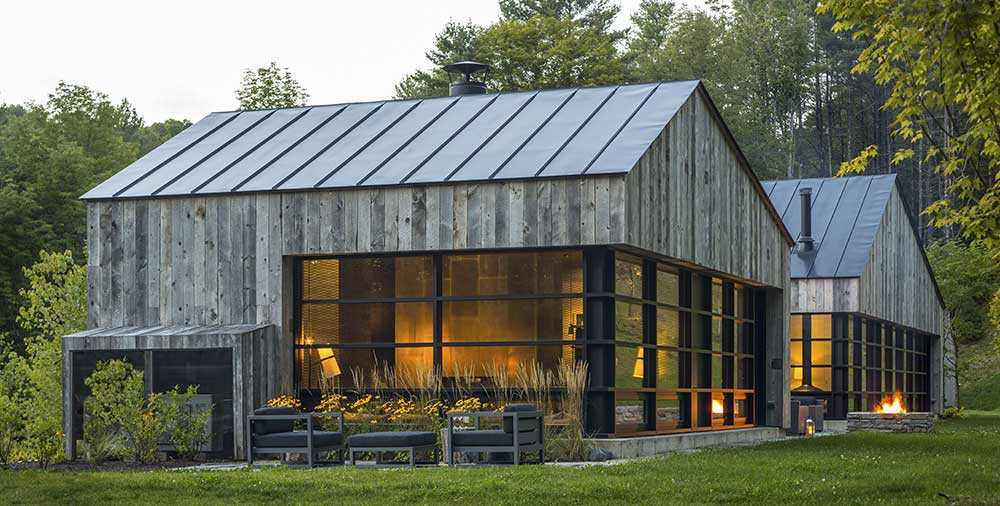
“Woodshed”. Image by Jim Westphalen.

In researching historic buildings in the tiny Vermont town of Pomfret, I was stunned to find images of this stunning Modern design in the town. Designed by the Birdseye Design Firm based out of Richmond, VT, “Woodshed” was completed by 2017 and serves as both a guest house and entertainment space for the main residence down the road. From the firm’s website, “The project is conceptually inspired by the vernacular woodshed, a familiar and iconic element in the Vermont landscape. The residence is composed of two asymmetric gable roof forms, akin to the traditional woodshed, connected by a central entryway”. The common thought on new construction is typically bland and “cookie-cutter” McMansions or boxy apartments, but this project is a testament to thoughtful Modern design found in even the smallest towns in the region!