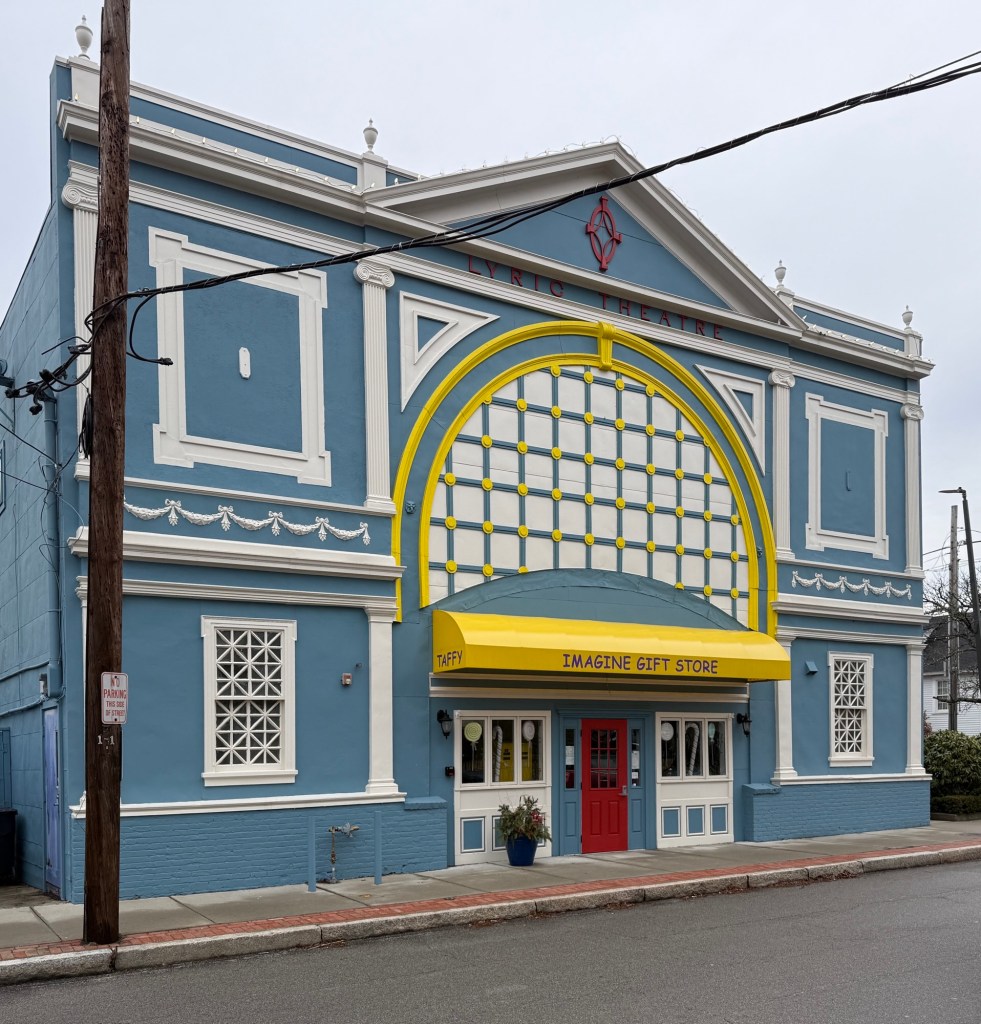
The most whimsical and unique building in Warren, Rhode Island, is this architectural landmark, the former Lyric Theater on Miller Street. Built in 1914, the building historically had a large projecting marquee, and today retains the large blind arch with applied ornament in the form of Ionic pilasters, panels, frets, and swags to decorate the facade. The Lyric remained active as a motion-picture theatre until 1967 and was converted to retail use in the 1980s, becoming an antique store in 1992.
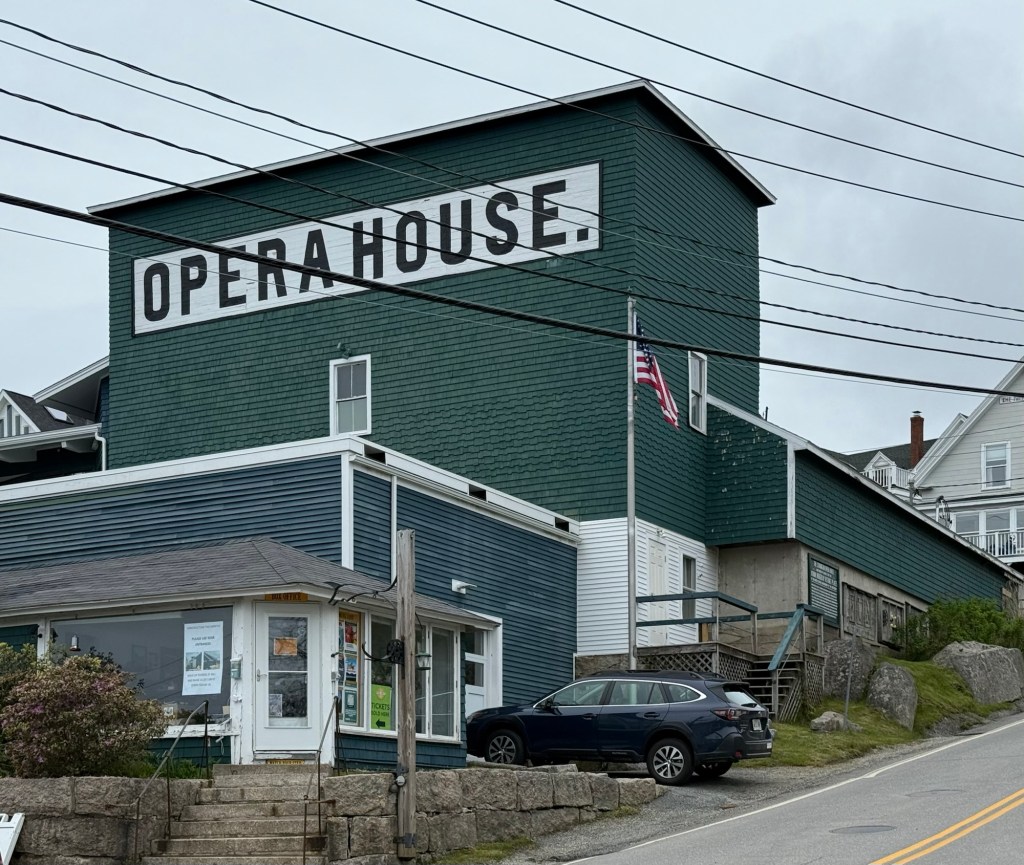
The Stonington Opera House in Stonington, Maine, is a historic early 20th century community center and theater in a vernacular style. The theater was built in 1912, on the site of an earlier hall built in 1886, that seated more than 1,000 people and hosted national touring shows that arrive via steamboat from Rockland. The original theater was destroyed by fire in 1910 and was soon-after rebuilt. It continued the practice of the earlier facility, hosting theatrical productions, lectures, and community events. Its floor was covered with removable folding chairs, so that the space could be used for dances and other social events. It was fitted for screening films around 1918, which came to dominate its uses in the mid-20th century. Unlike other early theaters, which were generally incorporated into municipal buildings, this one was specifically built as a profit-making venture, and was designed to accommodate elaborate theatrical productions, and is probably the oldest of this type in the state. After being vacated for much of the later half of the 20th century, the Stonington Opera House was restored and reopened by Opera House Arts, a local nonprofit, in 2000, and is once again used primarily for film screenings and theatrical productions.
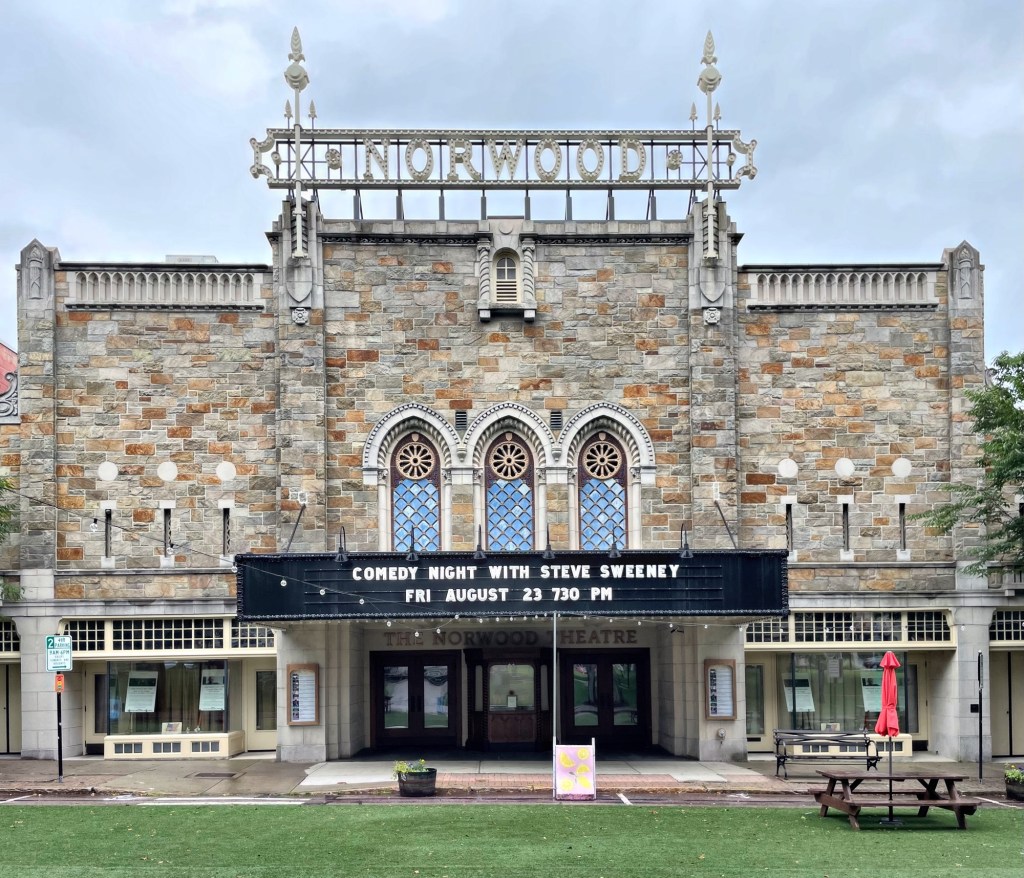
The Norwood Theatre was built in 1927 as a high-style showpiece for the re-invigorated downtown of Norwood, Massachusetts. Built at the same time as the Norwood Town Hall building, the building was constructed at a time of great development in the town, as local entrepreneur and philanthropist, George Willet and landscape architect Arthur A. Shurcliff, created a plan to evolve Norwood from a sleepy rural town to a commercial center. Architect William G. Upham is credited with designing the theatre and he enjoyed a prolific career which encompassed the design of masonic temples, commercial blocks, theatres, homes, and of course, the Norwood Town Hall. The Norwood Theatre was designed in a high-style Spanish Renaissance Revival style and was designed for motion pictures but also included a stage for possible vaudeville and theatrical productions. By the mid-20th century, a Modern sign covered much of the original facade, and lasted until the building came under its current ownership in 2010. A careful two-year restoration brought the theatre back to its former glory.
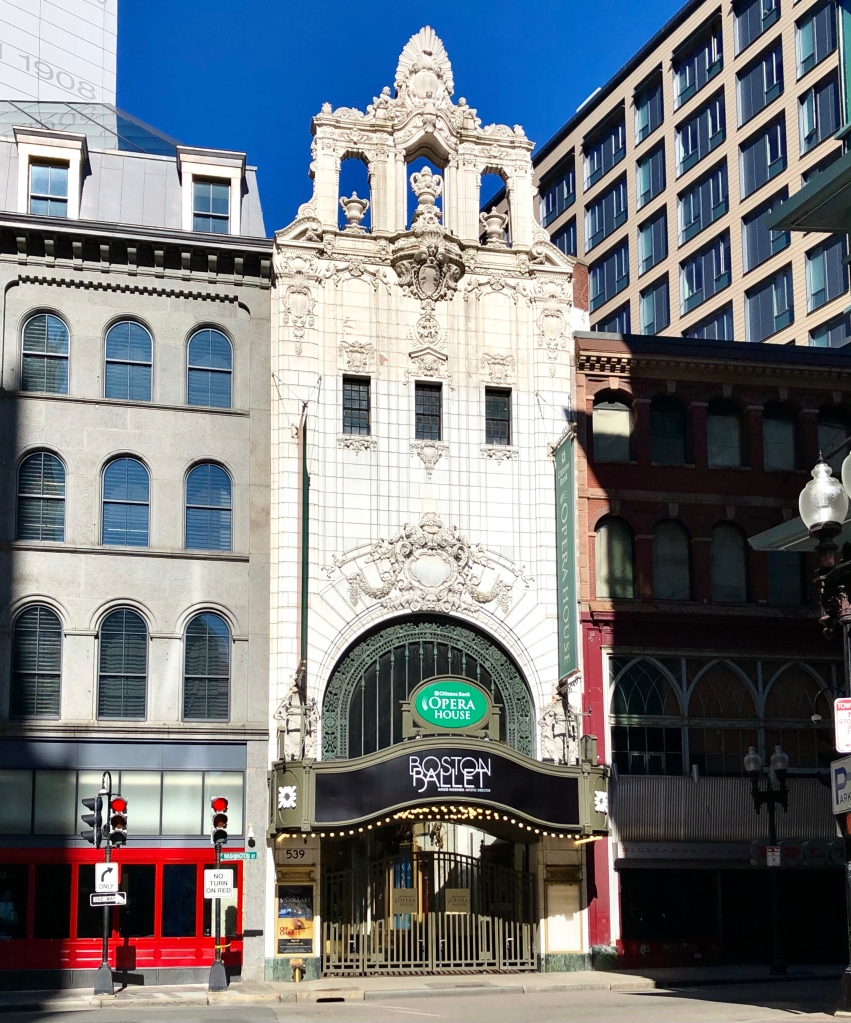
Not to be confused with the former B.F. Keith’s Boston Theatre (last post), the B.F. Keith Memorial Theater on Washington Street, remains as one of the most sophisticated architectural compositions found in Boston. The Keith’s Memorial was one of his most elaborate designs of the prominent theater architect Thomas W. Lamb. The B. F. Keith Memorial Theatre was erected under the close personal supervision of Edward Franklin Albee as Albee’s tribute to the memory of his late partner and friend, Benjamin Franklin Keith. For that reason, it was built with a degree of luxury in its details and design that is almost unrivaled. On October 23, 1928, just before the theater opened, the Radio-Keith-Orpheum (RKO) company was formed and became the owner of the theater after consolidations and mergers. The Keith Memorial theater opened on October 29, 1928, presenting first-run films along with live vaudeville. By 1929, the theater had converted to showing only films and remained a leading Boston movie showcase through the 1950s. In 1965, the theatre was purchased from RKO by Sack Theatres, and the new owners refurbished the building, and renamed it the Savoy Theatre. The theater used the frontage, formerly used by the B.F. Keith’s Boston Theatre on Tremont Street to showcase a large marquee. In the early 1970s the massive arch framing the opening between the stage and the auditorium was bricked up, and a second auditorium was installed within the stage. The theatre was then named the Savoy 1 & 2. The twinned theatre continued to operate as a pair of film houses until 1978, when it was bought by the Opera Company of Boston, who renamed the building the Boston Opera House. After a decade, the group could not maintain the ornate building and The Opera Company closed the theatre in 1991, and the building began a period of rapid deterioration. In the early 2000s, the gorgeous building was restored and re-opened as the Citizens Bank Opera House, which (pre-Covid) runs a steady rotation of touring Broadway productions, Boston Ballet Nutcracker holiday shows and more. Also, if you havent been inside the building for a tour, you are missing out!
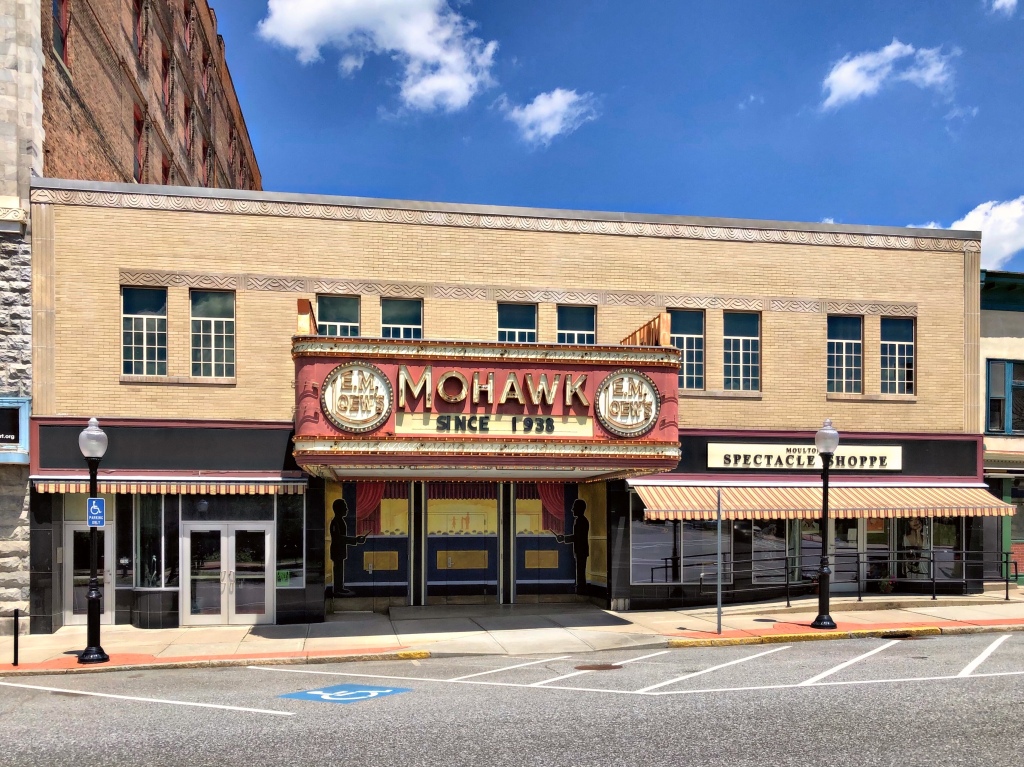
Local theaters once dominated the urban landscape, providing flashing neon lights and marquees on Main Street USA. After WWII, many downtowns saw populations move to the suburbs and through the advancement in technology, many of these historic movie houses were demolished. Large cineplexes with 10+ screens were built, and the death of the small movie theater coincided with the death of many Main Streets in the mid and late 20th century. Fast forward to today, we see many Main Streets thriving (before the COVID crisis) thanks to women and minority-owned businesses investing in their communities.
 Buildings of New England