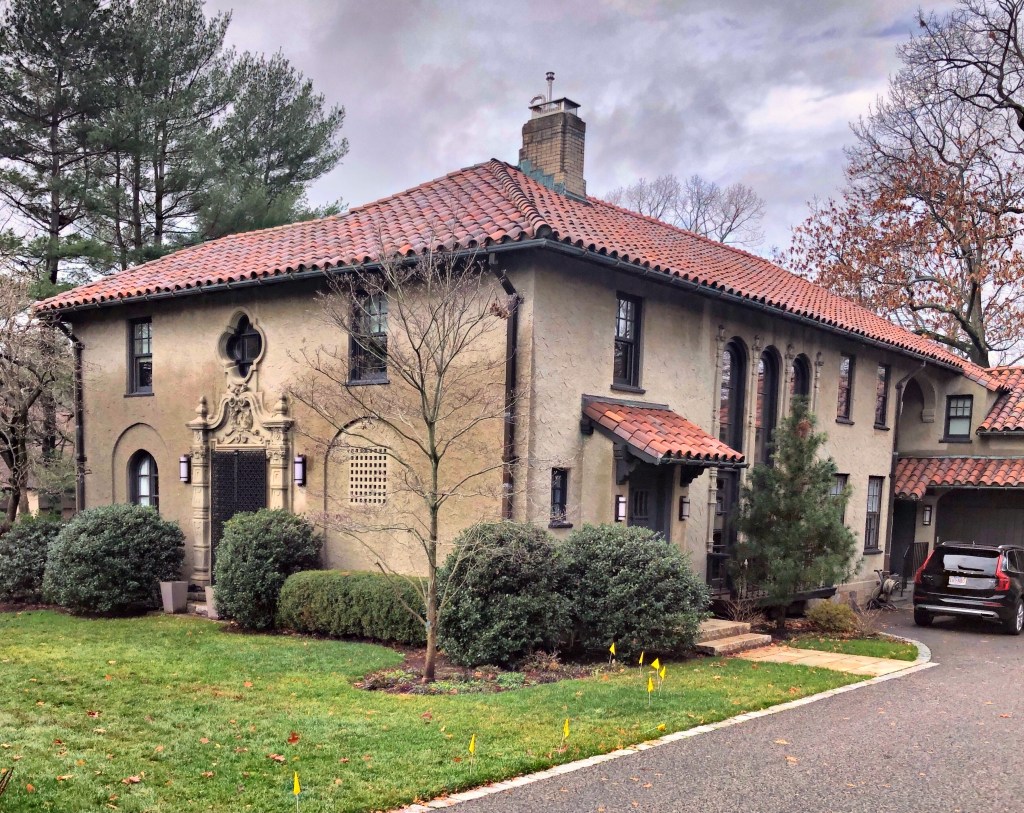
“Puddingstone” // 1927

Located across the street from Larz Anderson Park and the former Larz Anderson Estate, this stunning Spanish Revival home, built in 1927, was constructed as a guest house for visitors of Larz and Isabel Anderson. Between 1925-29 the Andersons constructed three guest houses outside the estate on Goddard Avenue. The designs were intended to call to mind places the Anderson’s had visited. “Puddingstone”, was named for a nearby outcropping of puddingstone on the Anderson estate, and was modeled after a house the couple had seen in Santa Monica, California. The Andersons used the buildings occasionally as guesthouses for relatives or friends who came for long stays at Weld, especially when Larz and Isabel were not in residence there. But for the most part, the houses remained empty and it was only after Larz’s death in 1937 that Isabel disposed of them. She donated them to Boston University for use as the Brookline Campus, who in turn, sold them off as private residences years later. Built in a Spanish Colonial style, it features a red terra cotta tile roof, adobe-colored stucco walls, and a center entrance framed by an elaborate cast stone surround in a Spanish Baroque style. To the right of the front door, a clathri (grid/lattice in architecture) over a window can be found in a blind arch.

.

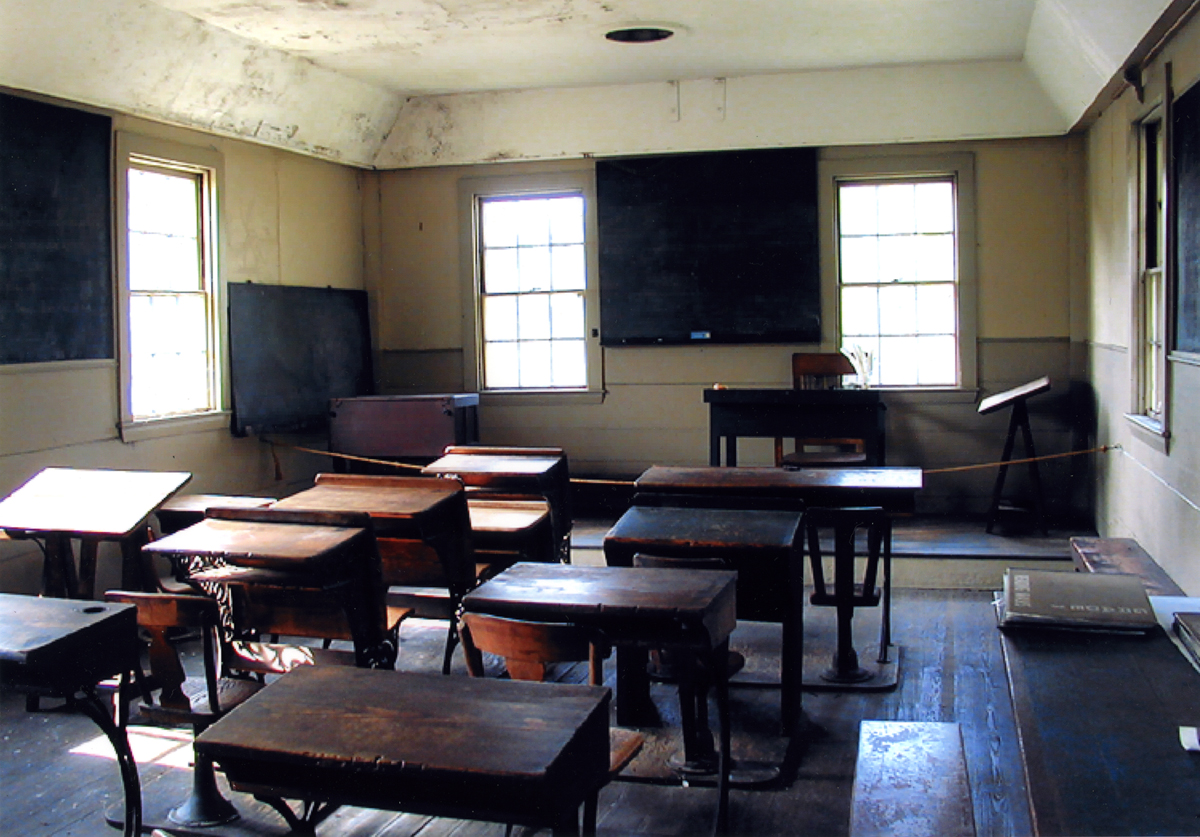
Putterham School // 1768

Colonial-era one-room schoolhouses once dominated the landscape of New England, providing a learning space for young children. The number of these structures have plummeted due to changing development patterns and limited funding to preserve or adaptively reuse such buildings. In the town of Brookline, this c.1768 schoolhouse has been altered frequently, showing various styles and techniques in construction used during the eighteenth, nineteenth, and twentieth centuries. The original one-room school house was enlarged in 1840 by an addition to the rear to fit additional pupils. In 1847 a shed was built for storing coal or wood and providing an entry vestibule. According to town records, in 1855 the ceiling in the schoolroom was raised, the windows enlarged, and the desks and chairs repaired. The double privy was built around 1898, probably replacing an earlier single privy. There is some evidence that in 1938 the school was used temporarily as a Catholic church and at some time following World War II as a synagogue. In 1966, the school was moved from its original site on Grove Street to its present location at Larz Anderson Park for the future preservation of the building by the town and local historical society. The schoolhouse is normally open for tours at various points during the year or by appointment.

Hannah Harris House // c.1772

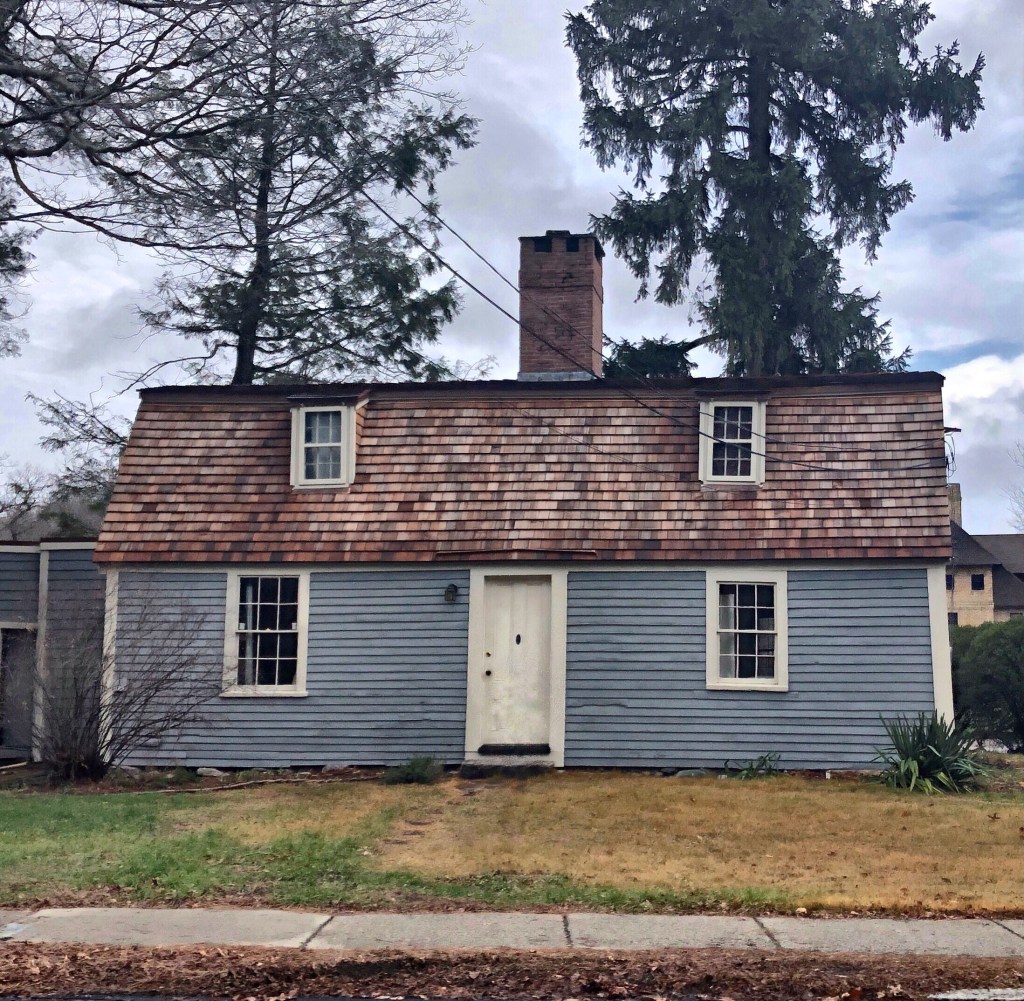
This cute little Georgian home in Brookline was built around 1772 for Hannah Winchester Harris, a widow at the time. Hannah’s husband, Timothy died in 1772 and it appears the widow had this small gambrel-roofed home constructed sometime soon after. Ms. Harris died in 1805 and the home was occupied by a new family, who added the saltbox addition. The home is today owned by the Town of Brookline, who maintain the building through the Brookline Historical Society. the home sits on the boundary of the old Weld Estate.

Marion Nichols Summer Home // 1935

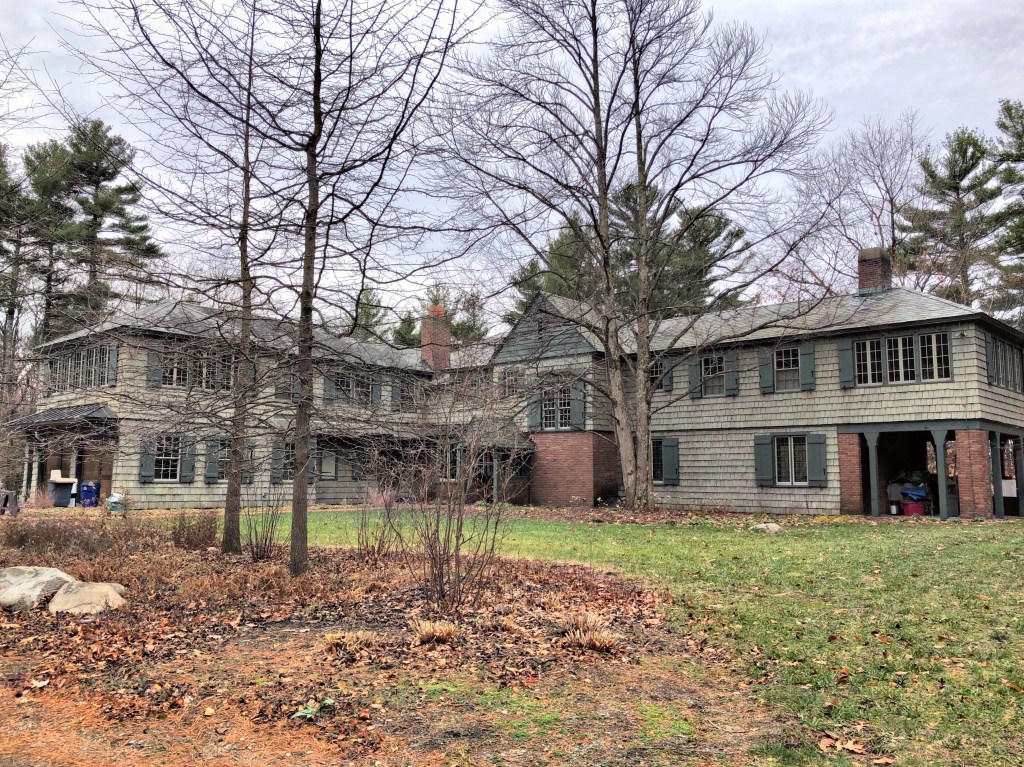
This summer estate in Hollis, NH epitomizes the hidden architectural splendor that can be found off the beaten path in many small New England towns. Hollis began serving as a summer destination in the late 1880s and the trend continued until WWII. In many cases, old family homesteads became summer residences for descendants who had moved to the city but desired to return to their “roots” periodically. The Nichols Home is unique in Hollis as it was designed to be a summer retreat for a well-to-do widow and her considerable servant staff, combining all the comforts available with the advantages of a rural retreat. The design of the main house offers separate living spaces for the family and the servants, including a library, living room and dining room for the use of the family. The servants’ wing was designed to include a two-car garage, a butler’s pantry, a manual dumbwaiter connecting the basement and first floor used to transport fireplace wood and a receiving unit for the delivery of milk, groceries and other goods. Sleeping porches, capitalizing on the benefits of the fresh country air, are an integral component of the house design and are included in both the family and servant wings. The home was designed by the Boston architectural firm of Densmore, LeClear & Robbins, who were hired by the 52 year old widow’s children for their mothers’ summer home. It is said that Ms. Nichols never liked the home and decided to summer instead at the old family summer home down the street.

Hollis Social Library // 1910

An excellent example of Classical Revival architecture, the Hollis Social Library in Hollis, New Hampshire is a single-story building displaying an Ionic portico and capped by a copper dome. The building, which fronts the town green, was constructed in 1910 according to plans by architects Magee and Rowe of Boston. The building was dedicated on August 24, 1910. The Hollis Social Library is believed to be one of the oldest libraries established in the State of New Hampshire. An association was formed in 1851 and a small library was kept in the Congregational Church vestry. After the new Town Hall was built the library was located there until the construction of the current building.

Gates Cobbler Shop // c.1864

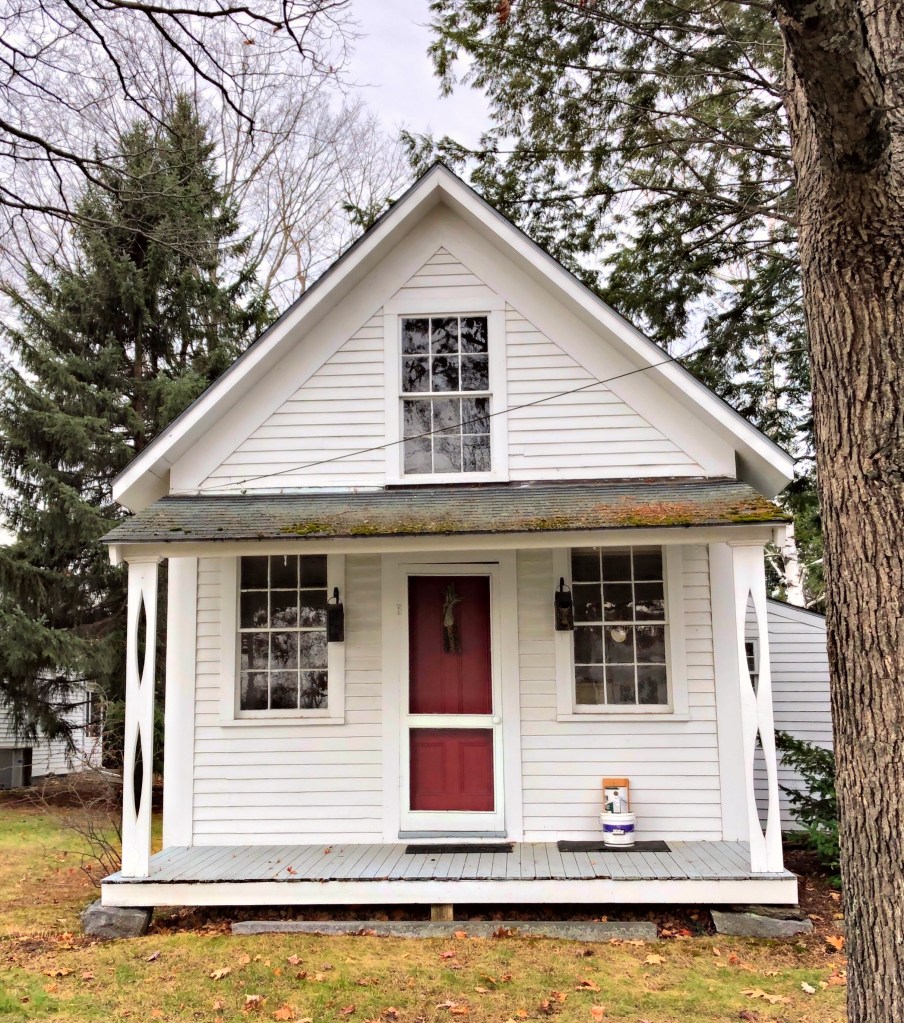
This cute little building was built around 1864 according to public records, as a cobbler (shoe repair) shop in Hollis, New Hampshire. The building, on Main Street, is located adjacent to the former Gates house and was used as his workshop for shoe repairs. The building was used for various purposes until the early 20th century when it was converted to a vehicular garage. The building was restored sometime after WWII and converted to a workshop/study by the owner, bringing the building back to its former glory, though altered. The building, seemingly balancing on stones from the photo, adds much to the pleasant streetscape of Main Street in Hollis.

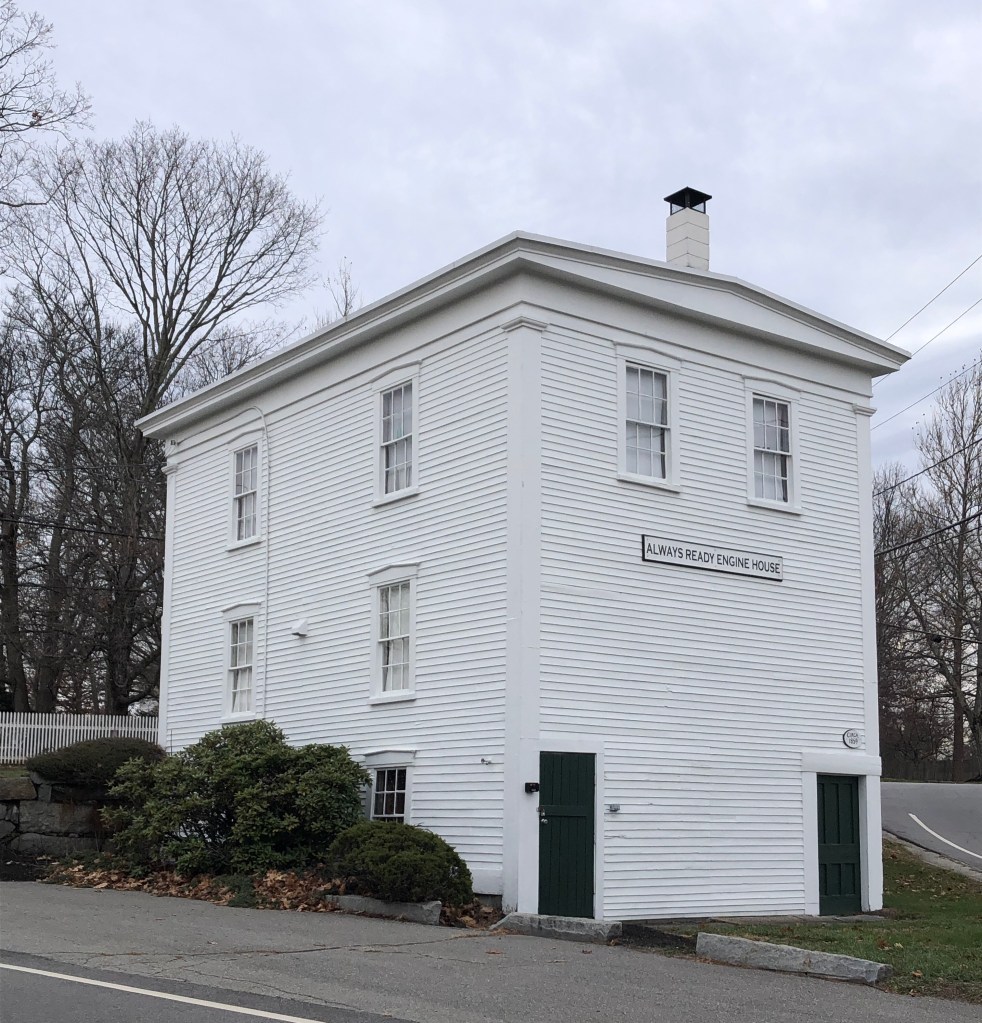
Always Ready Engine House // 1859

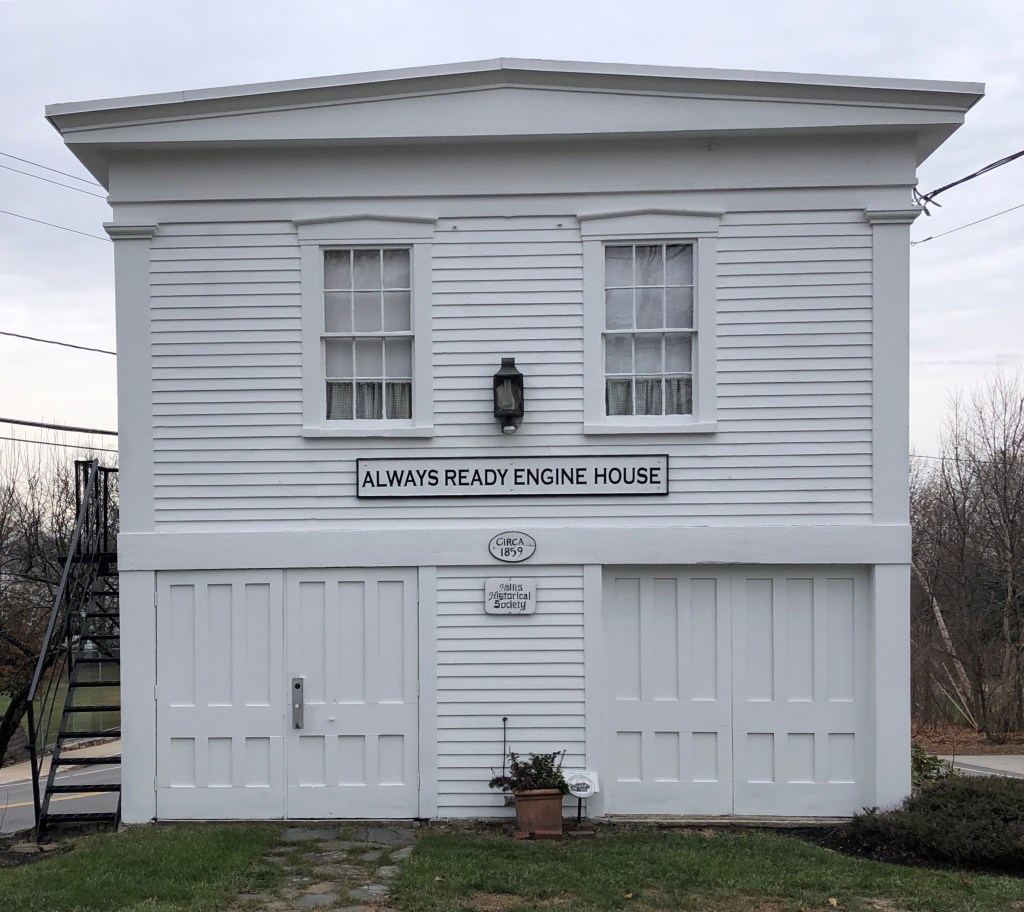
Located in a triangular island at the corner of Main Street and Monument Square in the charming town of Hollis, NH, the Always Ready Engine House is a two-story clapboarded building with a lower level exposed on the east end due to the sloping site. The simple Greek Revival-style building is capped by a low-pitched gable roof and is outlined by simple pilaster cornerboards. The building was constructed in 1859 by the Town and furnished by the local fire company. Initially the building was kept for the exclusive use of the engine company but in 1862 the Soldiers’ Aid Society was granted permission to meet here. In 1877 the building was altered to accommodate the Town Hearse and in 1878 part of the basement was fitted as a local police lock-up and tramp shelter. The fire department finally vacated the structure in 1950 and the building served as the police station from 1971 to 1987. It was given to the Hollis Historical Society shortly after who hold documents, objects and photos which display the history of the town inside.

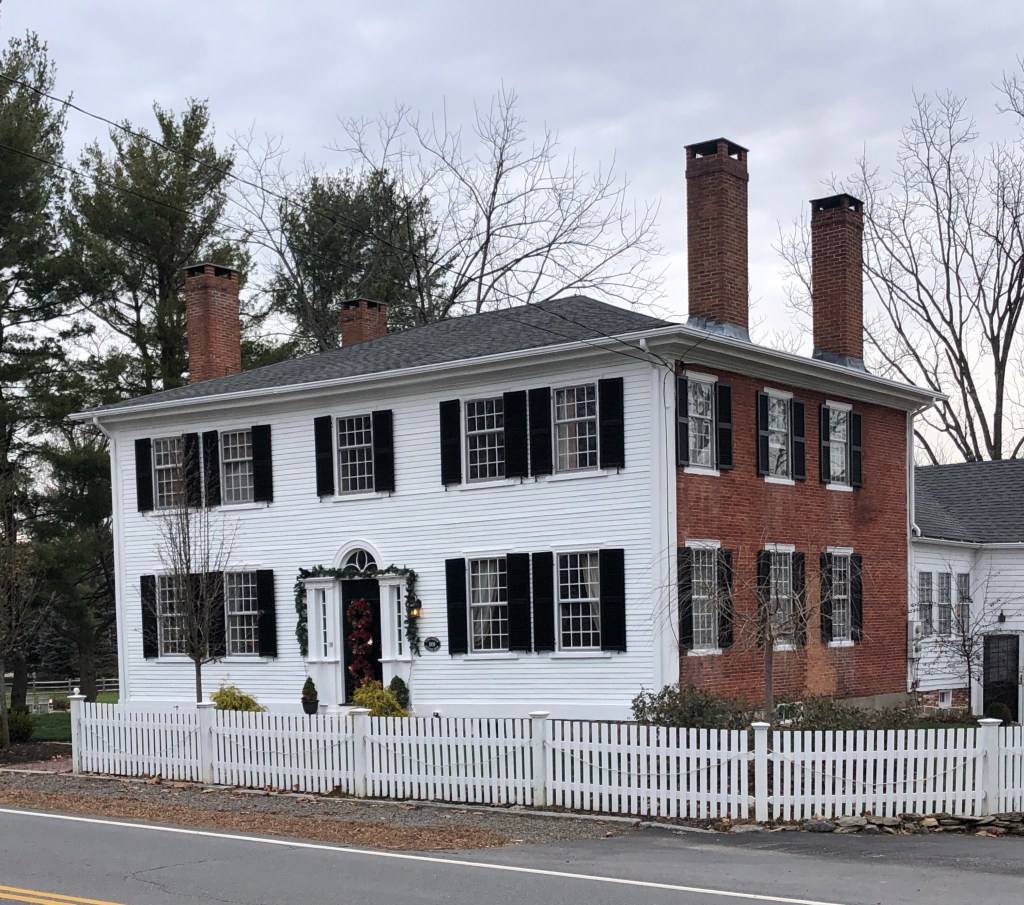
Conant House // c.1800

This stunning Federal home in Hollis, NH was built around 1800 for Josiah Conant, likely as a wedding gift to his new wife, Lucy. Conant was a cabinetmaker by trade and his shop was located across the street, and according to local sources, he used his woodworking skills on the inside and out of his home, with intricate details including mantels, wainscoting and exterior cornice. Half of the second floor was originally a dance hall and was later used for a reading or writing school school run by Lucy. The brick-end Federal home features a Palladianesque entry with sidelights and an arched transom with historic windows!

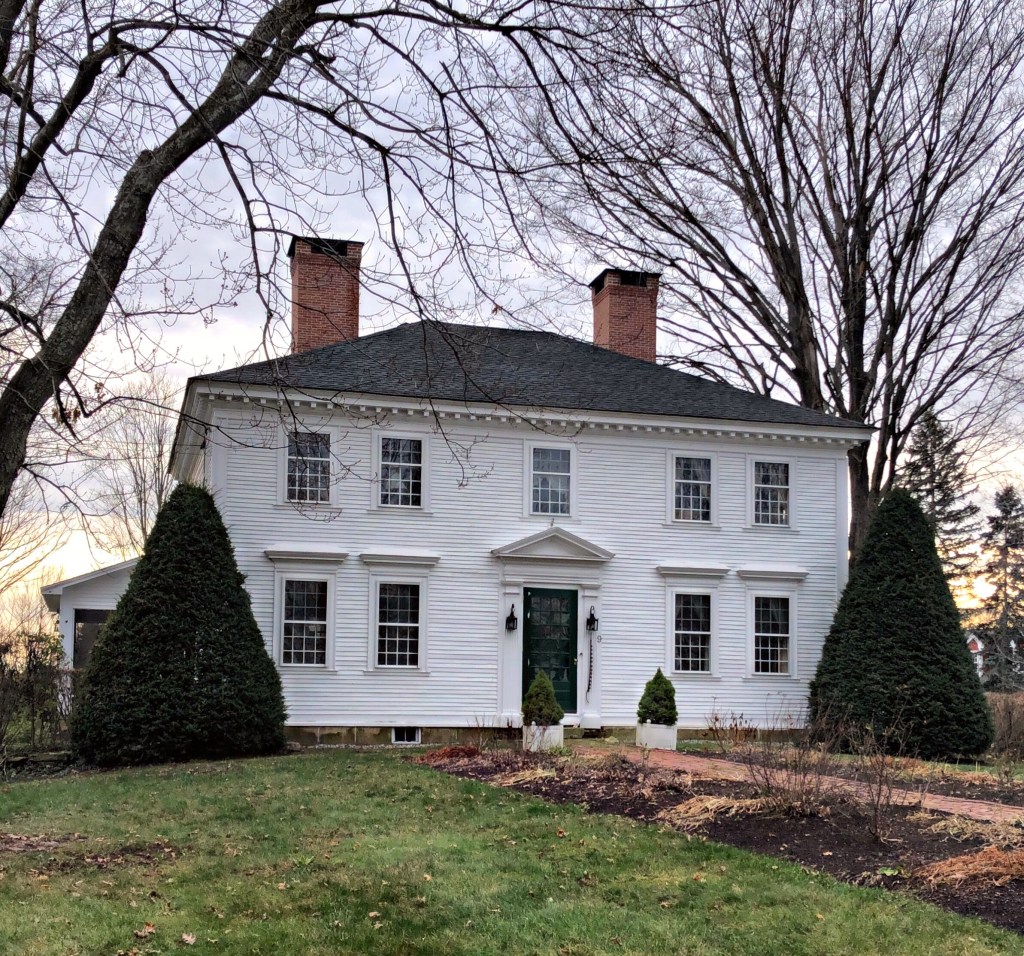
Eli Smith House // 1794

This house on a prominent lot opposite the Town Green in Hollis, NH, was constructed in 1794 for Reverend Eli Smith (1760-1847). In 1794, Rev. Smith married Ama Emerson, the daughter of Rev. Daniel Emerson, then the minister of the Congregational Church in Hollis. After Rev. Emerson’s death, Eli Smith took over the church and became the second minister of the town. Eli’s brother Andrew, a skilled carpenter, is said to have built the stunning Georgian house. After his death in 1847, the property was subdivided and another home was constructed, likely for a member of the family, while Joseph Emerson, one of Eli’s sons lived in the former family home. It remains one of the best-preserved late 18th century homes in the area.

Deacon Daniel Emerson House // 1768

One of the oldest extant homes (and one of my favorites) in Hollis, NH is this charming gambrel-roofed Georgian built in 1768. The home was built for Deacon Daniel Emerson Jr., the son of Reverend Daniel Emerson, who was the first minister in Hollis (his home was the last post). Besides serving as the Deacon for the Congregational Church, Daniel Jr. (1746-1820) also was Coroner and High Sheriff of Hillsborough County. He was Captain of the Hollis Company that went to Ticonderoga in July 1776 returning a year later. The home retains the massive central chimney, a common feature in older homes, to radiate heat to the entire home from the central heat source.