Hosmer House // 1760

This 2-1/2 story wood frame house in Acton, Massachusetts was built in 1760, and is one of the town’s best-preserved colonial-era houses. It is an unusual double house, consisting of one section with a square plan, and the other with a typical colonial “half house” plan, having three bays and an off-center chimney. The house was built by Jonathan Hosmer, Jr., a bricklayer whose workmanship is evident in the house’s many fireplaces. Hosmer was also prominent in civic and military affairs; he served (along with his son, who was killed at 17 years old) in the 1777 Battle of Bennington. The home was later owned by Jonathan’s son Simon, who may have added the attached dwelling, creating the double-house form we see today. In 1974 the property was acquired by the Acton Historical Society, which rents one of the units, and operates the rest of the property as a museum. The home is a great example of a Georgian double-house with a saltbox roof.

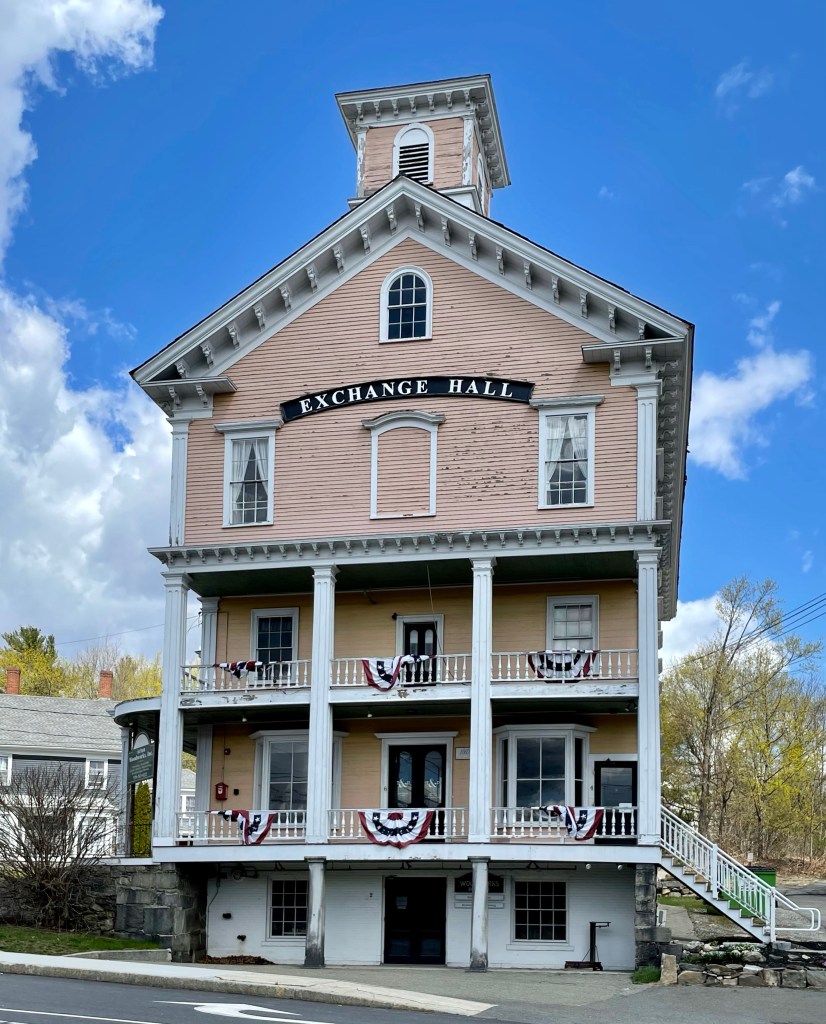
Exchange Hall // 1860

Arguably the most identifiable and iconic building in Acton is Exchange Hall, towering above the small village of South Acton. Exchange Hall was built in South Acton in 1860 to serve a variety of functions, primarily commercial. South Acton, with small milling operations and an ironworks established along Fort Pond Brook, had been a locus of
settlement since the earliest years of the 18th century. While the town’s village center evolved to the north, South Acton remained the site for industrial and economic development into the 19th century, spurred by the arrival of the Fitchburg Railroad from Boston in 1844. On the eve of the Civil War, South Acton supported a number of thriving
businesses, most under the aegis of three men: James Tuttle, his brother Varnum Tuttle, and Elnathan Jones Jr. The latter was the great-grandson of Samuel Jones, who established a successful tavern and store across the road from the site (a previous post). At the cost of $10,000, the three men financed the construction of Exchange Hall, designed to serve as the focus for the group of shops they ran together. The Italianate style Exchange Hall is 3 1/2-stories atop a raised foundation, with full length porches, stunning proportions, and a cupola at the roof.
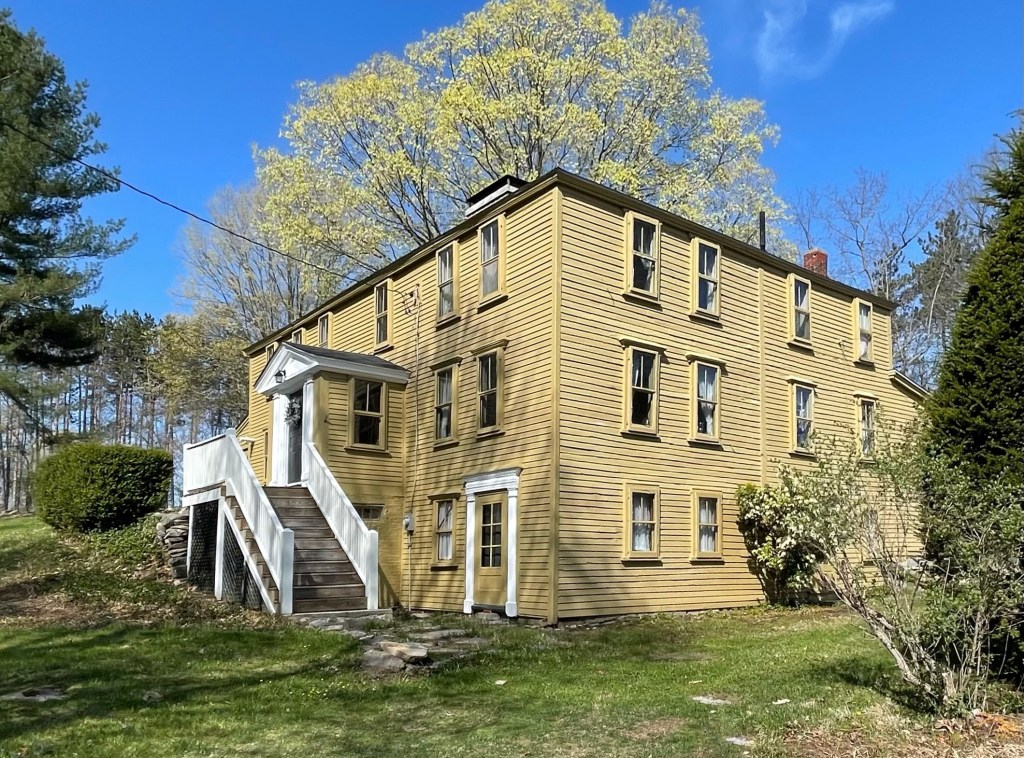
Old Acton Parsonage // c.1740

Not far off Main Street in Acton Center, this stunning old Georgian home was built around 1740 for Jacob Hooker a tailor and later served as the home of James Dudley, a blacksmith in the village. After the American Revolution, Acton called on Reverend Moses Adams (1749-1819) to be the minister for the Acton Meetinghouse. The town acquired the old Dudley House for Reverend Adams to reside in with his family. In 1780, the home was enlarged, and possibly given the raised foundation we see today. Mrs. Adams ran a store out of the basement, accessed by the doorway in the brick foundation. After Adams’ death in 1819, the property went to the next reverend in town, until his death decades later. In 1889, a carpenter, Moses Taylor, purchased the home, restored much of the woodwork, and replaced the historic windows with 2-over-1 windows, popular at the time. Moses moved a house on Main Street to make way for the new Acton Memorial Library, and was active in building and renovating homes in Acton until his death.

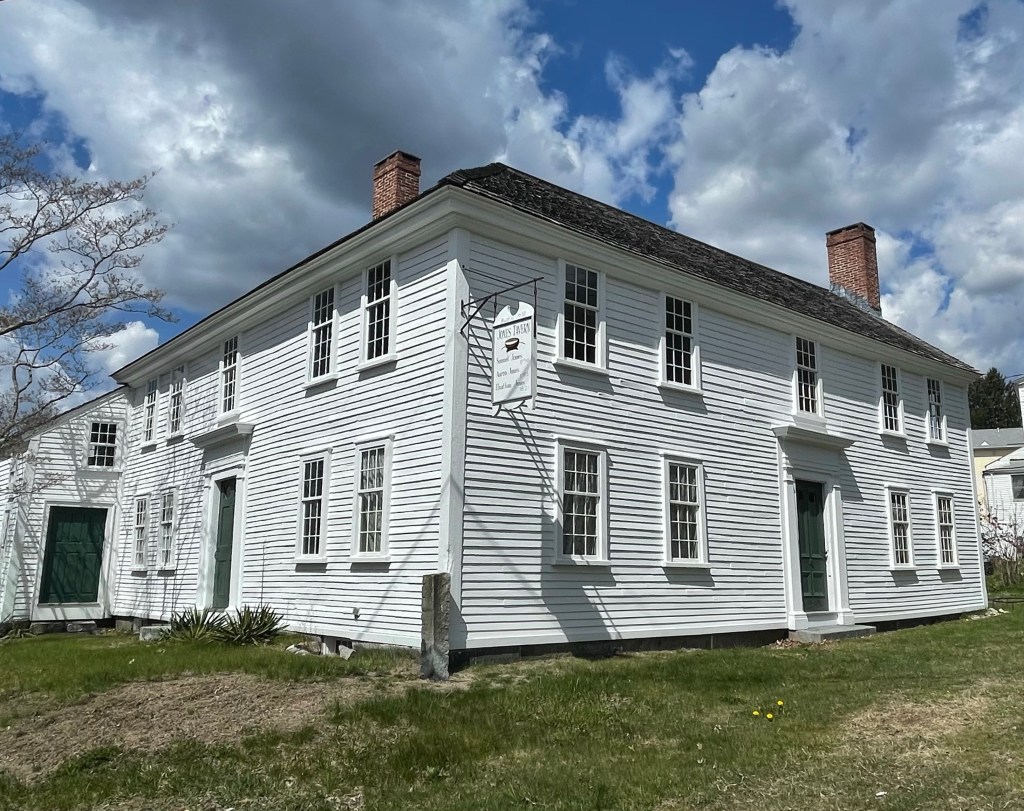
Jones Tavern // 1732

Settlement of South Acton (by colonialists) was begun in 1701 when the Jones and Knight families purchased 600 acres of a private land grant. Over the next 26 years, members of the two families established and operated mills near the Fort Pond Brook, which provided running water for operations. Samuel Jones built a home here in 1732, which as originally built, was a simple, four room central entry Georgian home with gable roof, typical of many eastern Massachusetts homes at the time. In 1750, Jones opened a tavern and general store in his house, enlarging it with a two story addition now visible on the left side. Samuel’s son Aaron Jones, a Harvard graduate and soldier who fought at the Battle of Concord nearby, took over the tavern from his father. In 1818, Aaron more than doubled the size of his establishment when he built a large, 5-bay extension and rear kitchen ell directly behind the existing structure. In addition to enlarging his property, Aaron also had it “modernized”, inserting sash windows (replacing the casement windows) throughout and adding fashionable Federal style door and window surrounds. The additions gave the building two major entries, as well as secondary access to the communal taproom. The property was then willed to his son Elnathan Jones, who operated the establishment until 1845 as both a tavern and hotel. The building remained in the Jones family until it was sold in 1946, and divided inside into multi-family use. The house was sold for salvage in 1964 after years of neglect, but was saved by Iron Work Farm, Inc., a non-profit who maintain the property to this day.

Henry Tuttle House // 1873

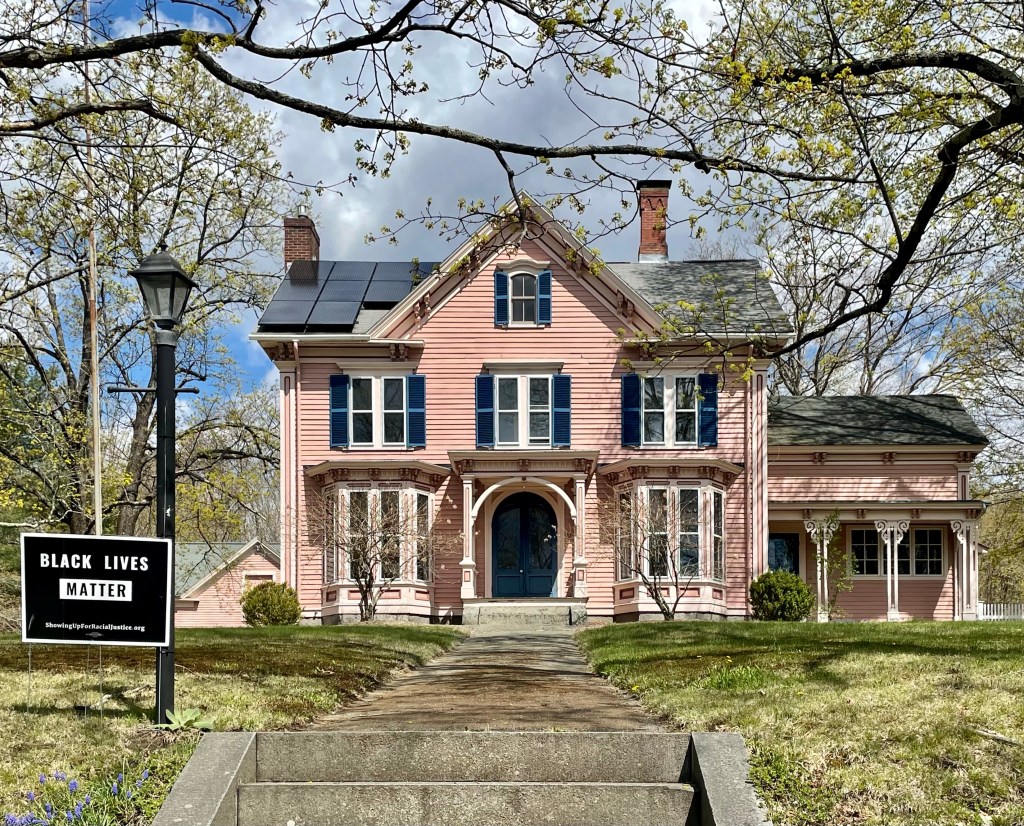
This large Italianate house in Acton was built in 1873 for Henry Waldo Tuttle (1847-1916), who ran a grocery store business in town with his father, James Tuttle. The business did quite well as Henry built this massive home around his 26th birthday, likely around the time of his marriage. The exuberant Italianate home features a wide central gable and a projecting central entrance porch accessed by double entrance doors. The home has a detached stable to the left of the home too!

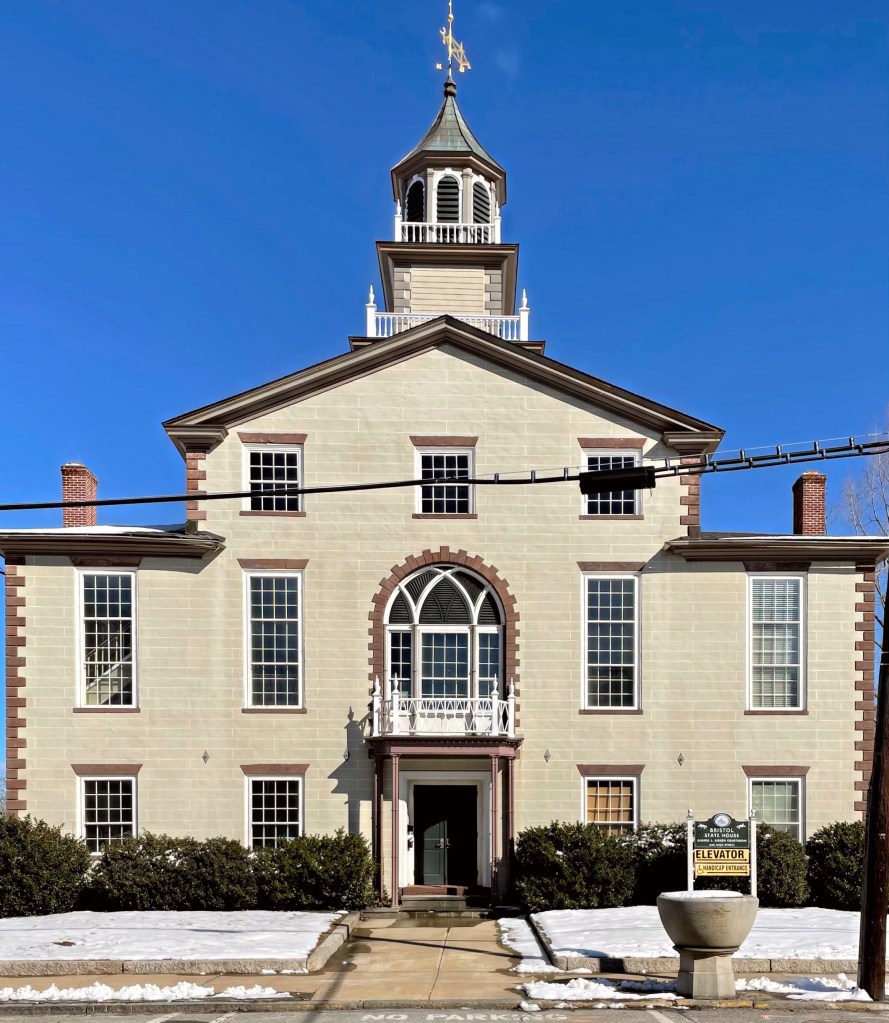
Acton Town Hall // 1863

Acton, Massachusetts, was once part of Concord, the first inland colonial town established in the Massachusetts Bay Colony in 1635. 100 years later in 1735, land that we know today as Acton, separated from Concord to become their own town. Acton’s second Meetinghouse was located here in Acton Center, which was selected for its location more accessible to all houses and farms in the town. The Second Meetinghouse was built in 1806, and burned to the ground in 1862. Immediately after, a town committee was formed to construct a new town hall. Opening in 1863, Acton’s Town Hall stands as a stunning Italianate building with tripartite arched windows, corner quoins, a two-stage cupola with clock, and a bold (and historically appropriate) paint scheme. Acton’s Town Hall remains as one of the finest extant in the state.

Tewksbury State Hospital, Superintendent’s Residence // 1894

Located adjacent to the Administration Building at the Tewksbury State Hospital, the Superintendent’s Residence, built in 1894, combines elements of the Craftsman and Colonial Revival styles wonderfully. The home is two-stories, and built of red brick laid in Flemish bond, capped with a slate hipped roof with exposed rafters. A massive uncovered porch wraps around the home and sits atop a rubblestone foundation. Like the adjacent Administration Building, the Superintendent’s Residence was also designed by Boston architect John A. Fox. From this residence, the massive almshouse and asylum would be run by the superintendent, who oversaw day to day activities and made sure everything was running smoothly. The house appears vacant now.

Wilmot Center Schoolhouse // 1854

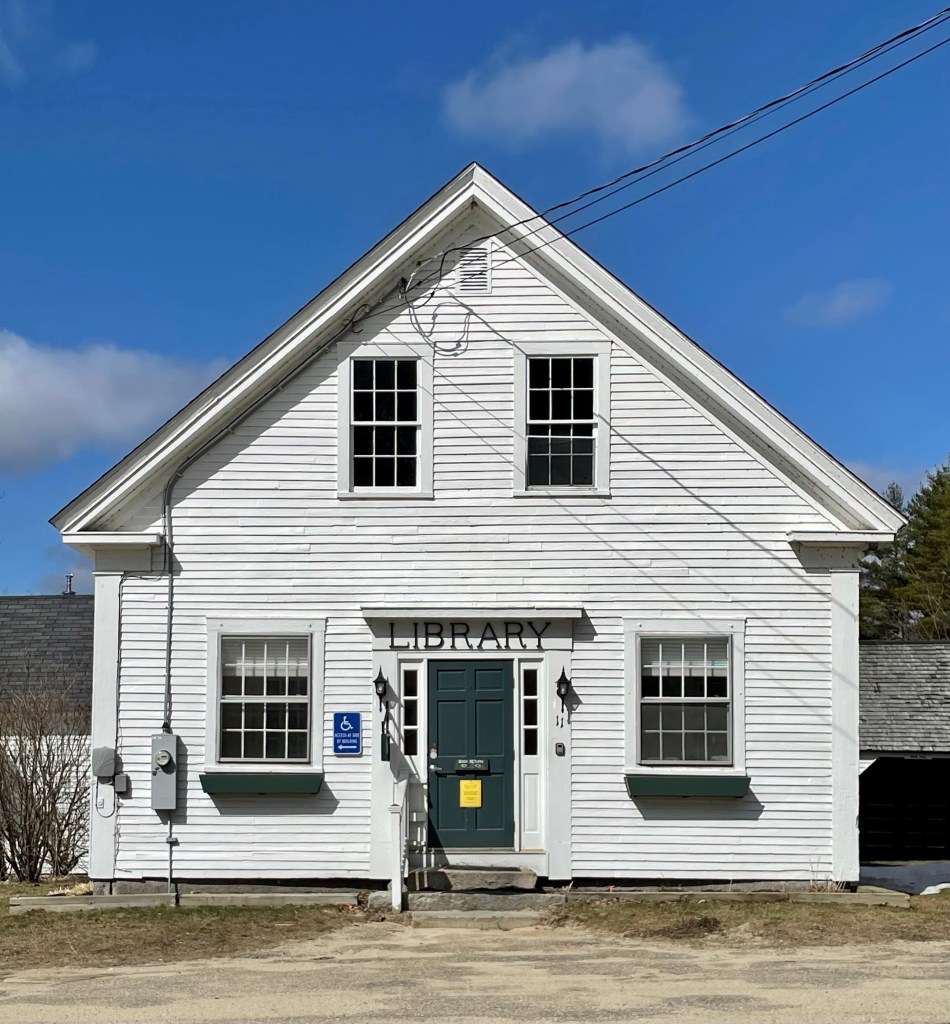
Driving through the quaint village of Wilmot Center in New Hampshire, I had to pull over to snap a photo of this little library building. When I got home, I learned that the building was constructed in 1854 not as a library, but as a schoolhouse! The vernacular Greek Revival school served as one of many district schoolhouses in the region, dispersed around small towns to be within walking distance of the sparsely developed parts of the state. With population growth in the 20th century and the proliferation of the personal automobile, these small regional schools became obsolete. Many of these buildings were converted to other civic uses or as personal residences, but most were demolished. The Wilmot Public Library located in the former schoolhouse in 1972 and is now connected to the town offices next door.

Thomas Casey Building // 1896

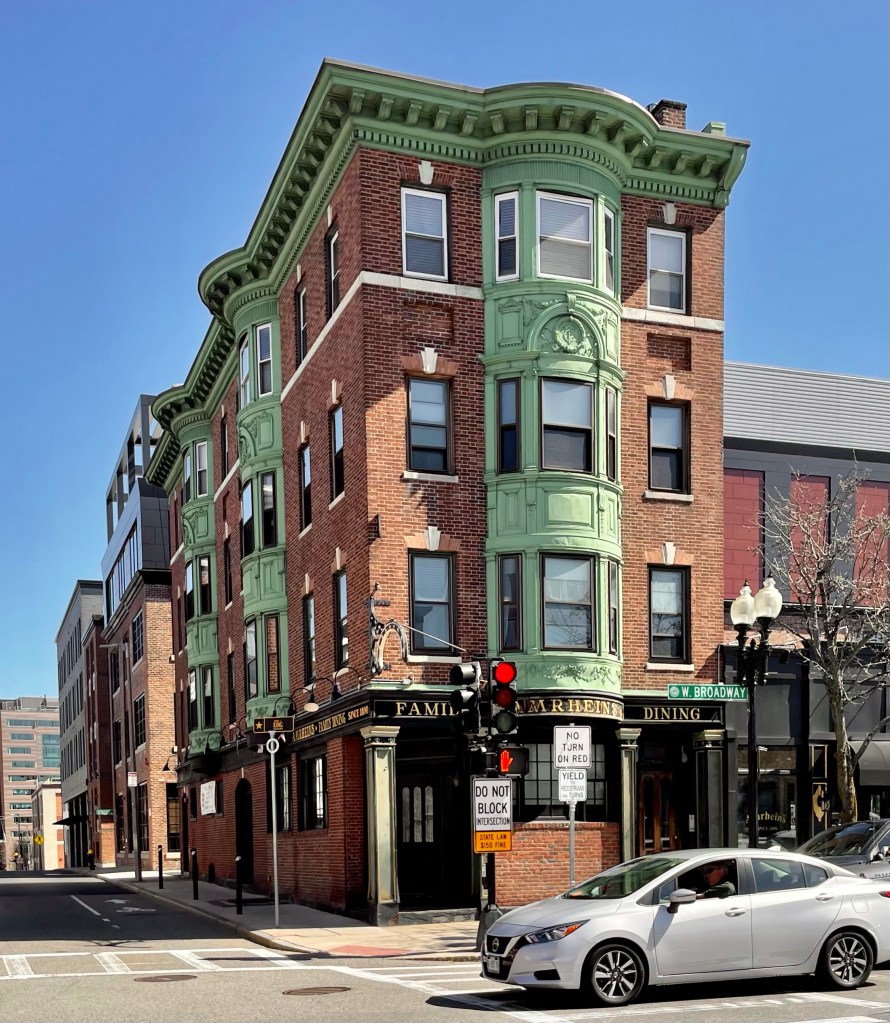
Located on West Broadway in a section of South Boston that has almost been stripped of all of its architectural character and history, sits this historic commercial building, which soon may face the wrecking ball. This building was constructed in 1896 for Thomas Casey, an Irish liquor dealer. He hired Irish-born architect Charles Donagh Maginnis who emigrated to Boston at age 18 and got his first job apprenticing for architect Edmund M. Wheelwright, the city architect of Boston, as a draftsman. The result was a four-story Colonial Revival commercial building, significant for the series of rounded copper bays and cornice. Of special note, there are wreath inlays designed into the bays between the third and fourth floors with the letters “T” and “C” within, representing Thomas Casey. Years after the building was constructed, it was purchased by Emma A. Amrhein, and has – until recently – been home to Amrhein’s Restaurant and Bar. The local landmark had two (unconfirmed) claims to fame; the oldest hand carved bar in America and the first draft beer pump in Boston. The large property was sold, and the developers proposed a large housing development on the site, retaining the Casey-Amrhein building. However, some have recently pushed for the demolition of this building to make the project slightly larger than would be with the historic building.

Russell Warren House // 1807

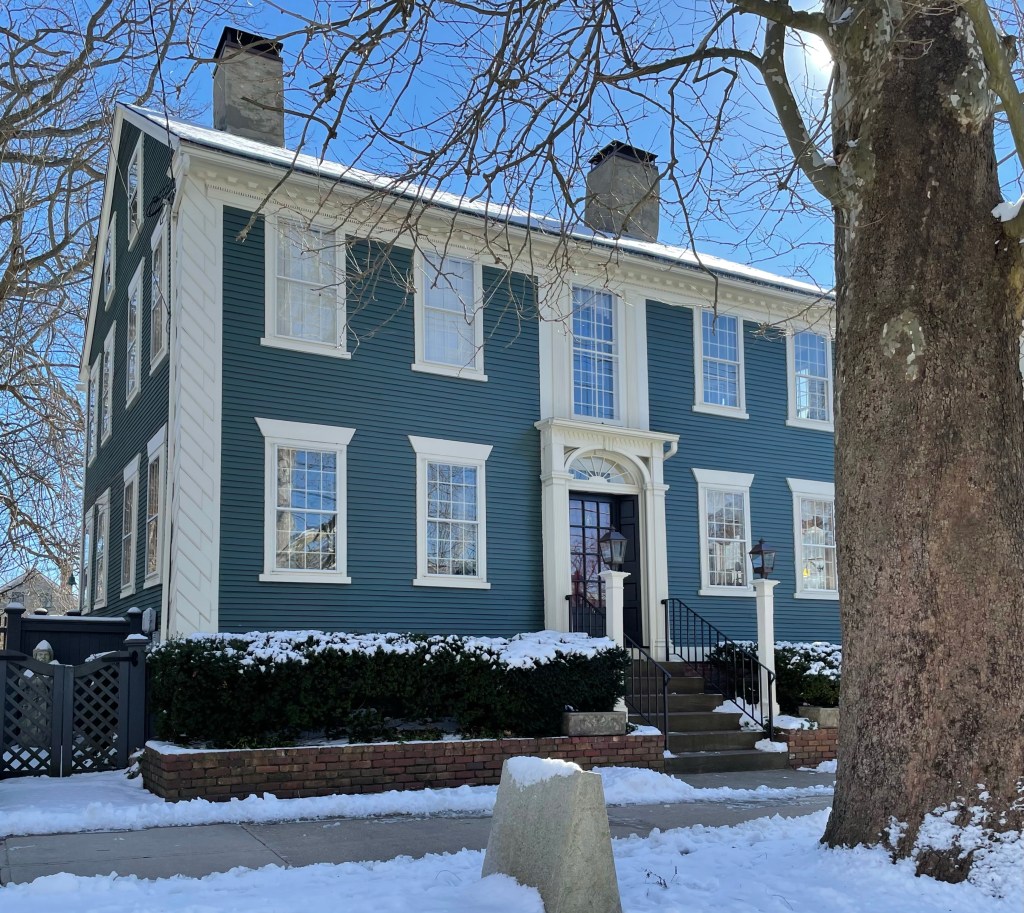
Architect Russell Warren (1783-1860), who I have featured on here numerous times, built this 2-story, 5-bay, hip-roof Federal house in Bristol, Rhode Island. This residence as interpreted by Warren as an example of the Federal style with stylistic features most notably being the angulated quoins (at the corners of the house). The house was designed for William Van Doom, a Bristol tailor of modest means. In 1814, Warren, a young and aspiring architect, saw the significant wealth in Bristol and decided to buy this home he designed. Siting himself in the vicinity of the extremely wealthy DeWolf family, he gained recognition and success by designing three expensive and elaborately crafted houses for them at this time, only Linden Place remaining. Warren lived in this house from 1814 until 1823.