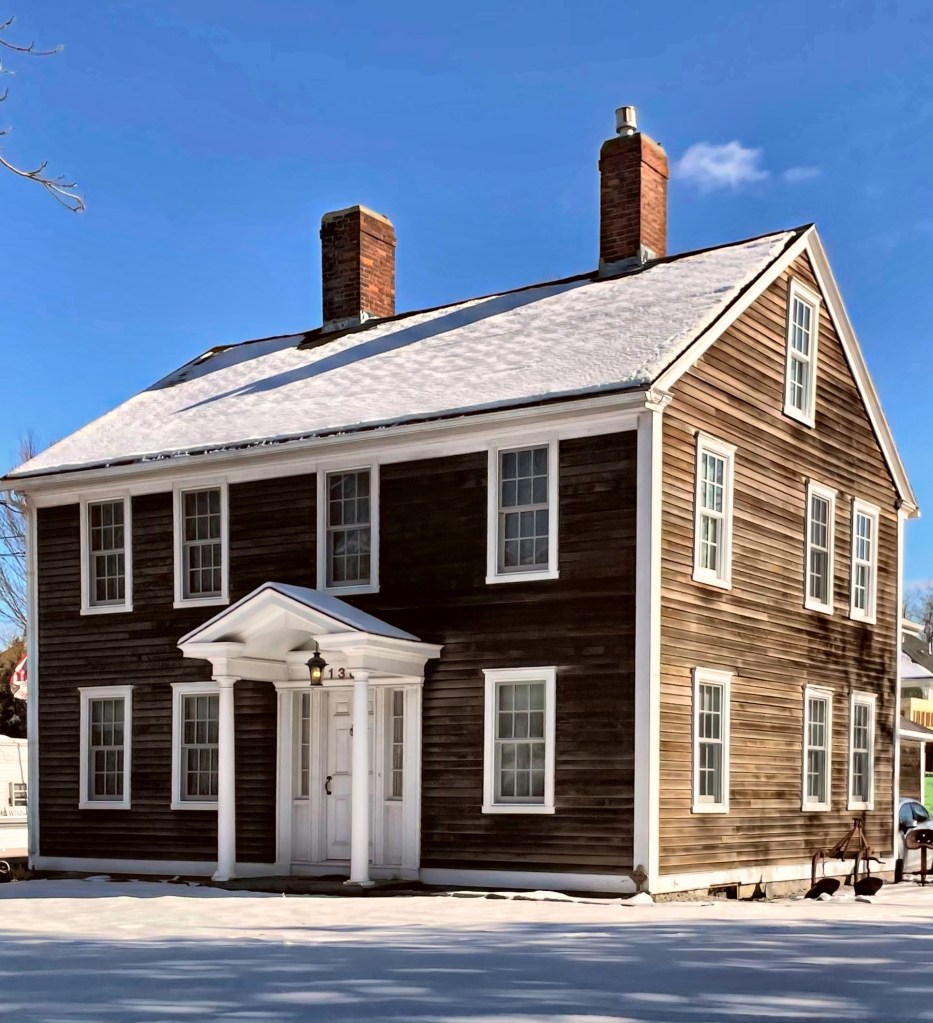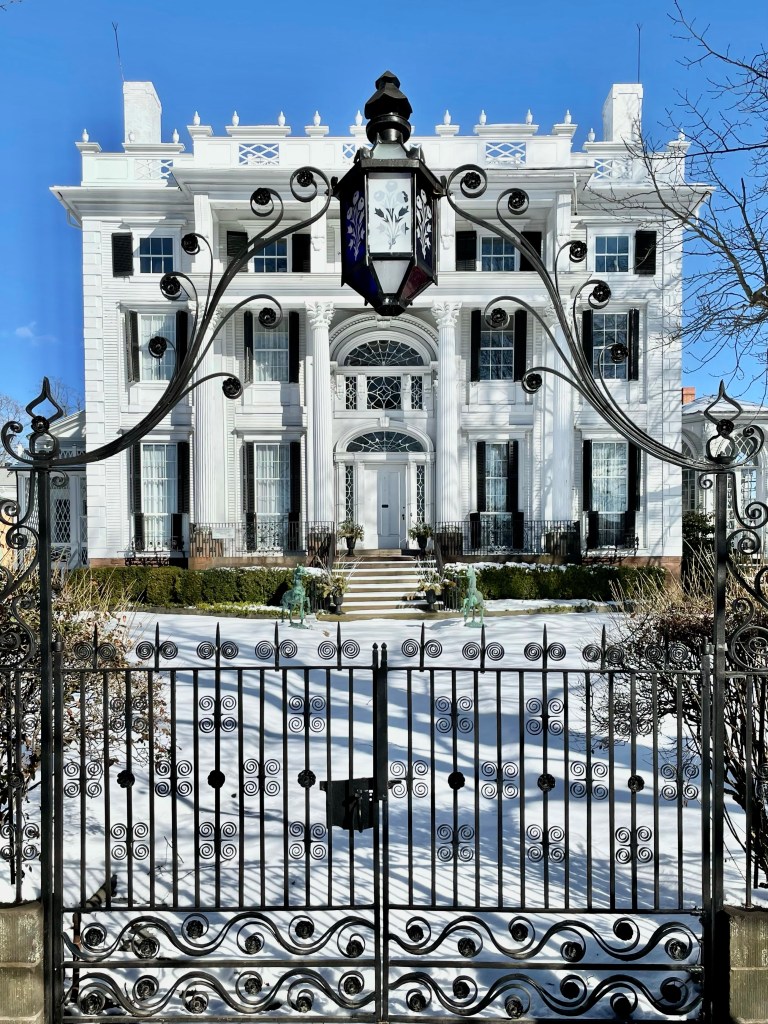
Linden Place // 1810

For the last post in this series on Bristol, Rhode Island, I am leaving you with a house that is architecturally stunning, but holds a dark history. Linden Place was built in 1810 by slave trader, merchant, privateer and ship owner George DeWolf and was designed by architect, Russell Warren. The DeWolfs of Bristol, who became the biggest slave-trading family in U.S. history, transported well over 11,000 Africans to the Americas between 1769 and 1820. The U.S. banned the slave trade in 1808, but the DeWolfs continued dealing in the slave trade until the 1840s by going through Cuba, where they had numerous plantations. They also got help from a DeWolf brother-in-law, who served as a customs inspector in Bristol — thus ensuring family slave ships continued to come and go. In 1825, George DeWolf suffered major financial hits and he and his family fled to his plantation in Cuba, where they’d be beyond reach of his creditors. Stories explain that with the possibility of legitimate payment out of the question, the townspeople sought compensation for George’s debts where they could, and they broke down the front door of Linden Place, and took everything, even peeling the silk wallpaper off the walls.

Following DeWolf’s bankruptcy, the house was bought by his uncle James DeWolf, who was alleged to have directed the murder of a female African slave in 1789 who was sick with smallpox on the slave ship Polly, which he commanded; she was bound to a chair and lowered overboard. James DeWolf was tried and effectively acquitted; which, sadly, should not surprise anyone based on historical precedent. In fact, James DeWolf financed another 25 slaving voyages, usually with other members of his family and was thought to be the second richest man in the United States upon his death in 1837. In later years the house passed to Samuel Pomeroy Colt, a grandson of George DeWolf (as well as the nephew of the inventor of the Colt revolver). His son Russell married actress Ethel Barrymore, who was the great-aunt of current actress Drew Barrymore, and lived in the home. Today, the grand estate is a house museum and event space.
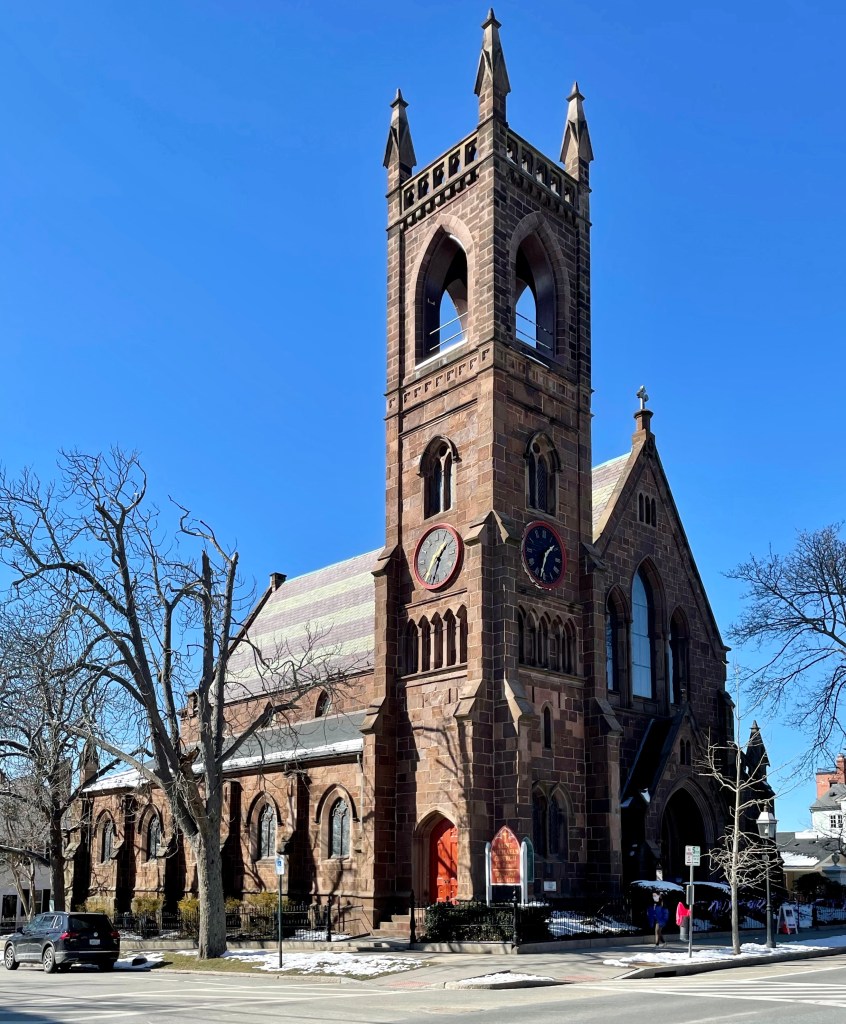
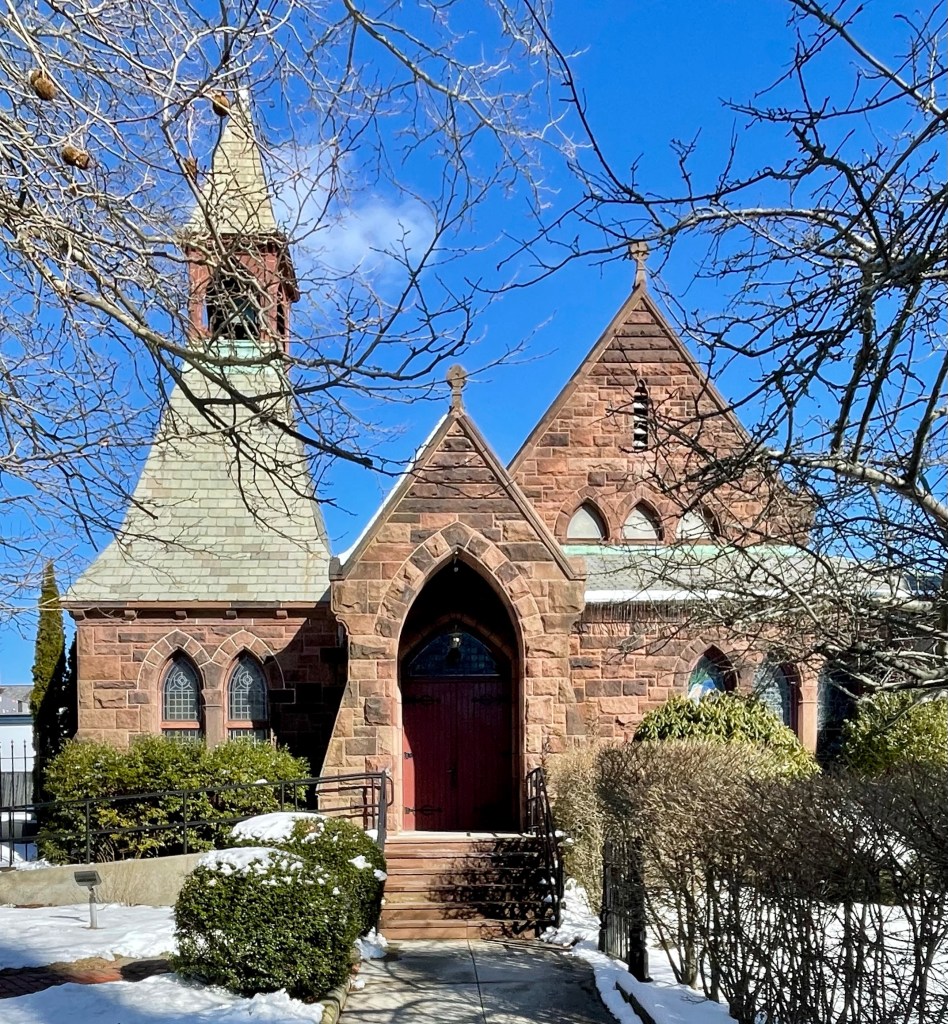
St. Michael’s Episcopal Church // 1860

While I love the quintessential white, wood-frame New England churches that proliferate the region, the stone, Gothic churches always make me stop in my tracks; and this example in Bristol is no exception! St. Michael’s parish was founded in 1718 as one of the Rhode Island’s four colonial churches, funded and overseen from London. The first church, built in 1720, was ironically later burned during a British raid in 1778. It was replaced in 1785 by a plain wooden meetinghouse with funds from local residents and partitioners. In 1833, it was replaced by a wood-frame Gothic church which burned in 1858. Undeterred, the church hired New York City architects Alexander Saeltzer and Lawrence B. Valk, who designed the present brownstone Gothic Revival church. Just over a decade later, the church hired Worcester architect Stephen C. Earle, to design a chapel and parish house, across the street. The chapel building follows the Gothic Revival style, but with more Victorian flair, and is also constructed of brownstone to compliment the church. Together, the two structures transport you to the English countryside with their design and presence on the main street in town. What do you think of them?

Throope Place // 1760

In 1687, William Throope 1637-1704, who migrated to Bristol from Barnstable, Massachusetts by way of England, purchased land in Bristol, Rhode Island. On it, he constructed a small, one-room deep, two-story house. Throope’s grandson, Thomas, Jr. (1710-1771), enlarged the house about 1760, when he constructed this four-bay Georgian home, adding the old 1687 Throope house to the rear. Interestingly, house moves were very common in America to the early 20th century, as materials such as glass, nails, and brick were more expensive while labor was much cheaper, making the reuse of original structures and materials common. The farm eventually passed to Isaiah Drown Simmons (1810-1882), a dairy farmer, in 1830, and remained in the Simmons family until 1922. Records show that the original 1687 house that was moved to the rear of the 1760 house was replaced in the 1830s by Simmons. The home remained in the Simmons Family until after the death of their only daughter Elizabeth, who died in 1914. It appears that the existing front portico was added after that time, which appears more Colonial Revival.

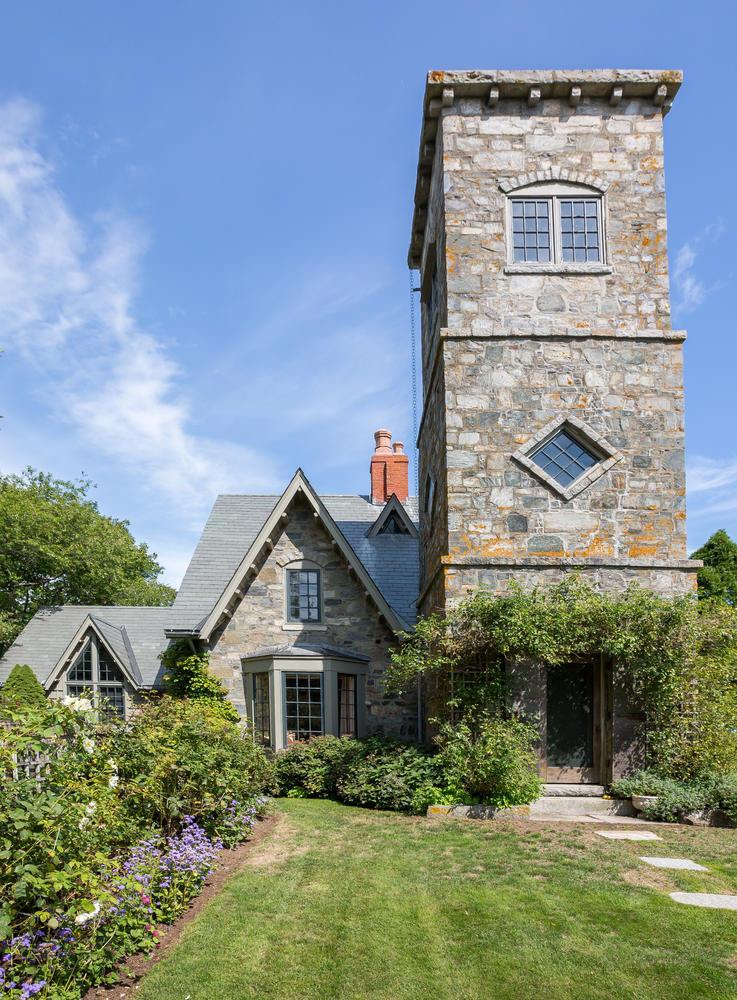
Beckett’s Castle // 1874

On a rise above the Cape Elizabeth’s rocky shore stands Beckett’s Castle, a picturesque Gothic cottage of a century ago. Designed and built by the Portland literary figure Sylvester Beckett for his summer residence, the Castle was begun in 1871 and finished in 1874. It is said that Beckett constructed the cottage from local gray fieldstone largely with his own hands, though he must have had help, or fabricated this fiction as he would have in his own books. The home was patterned after a typical English castle, but on a much smaller scale, and is tucked away from the street. Sylvester Blackmore Beckett was born in Portland, Maine in 1812, as the son of English parents. Although never attending college, he acquired a modest education and became a prominent journalist and articulate writer. He was admitted to the bar in 1859 and spent much of his time administering and settling estates becoming well-connected in town. Beckett held massive parties in the home, and invitations to the social gatherings held there were highly prized; guests were served expansive dinners cooked in primitive fashion in a large fireplace. Sylvester Beckett died in 1882, and went to his only child, Lizzie. The home fell into disrepair in the 1970s, but was restored by the most recent owner. It was sold in 2018, and the listing photos show some great interior spaces.

Cape Elizabeth Twin Lights // 1873

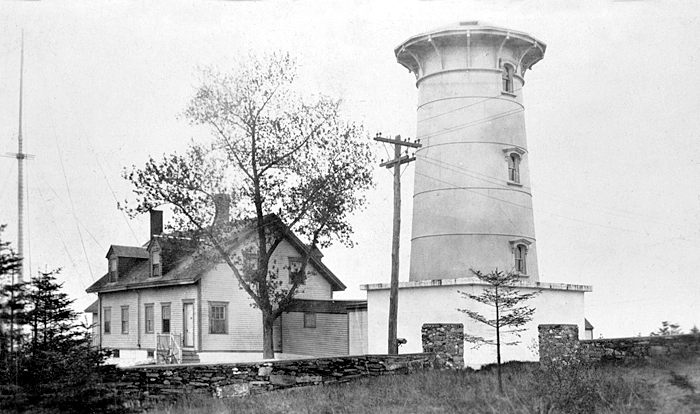
East Light.

At the southern tip of Cape Elizabeth, Maine, two lighthouses have long provided a beacon to ships that sailed the rocky coast where the town protrudes into the ocean. The story of Cape Elizabeth’s Two Lights begins in 1614, when Captain John Smith, who sailed along New England’s shores, gave the appellation to the cape in honor of Princess Elizabeth, King Charles’ sister. After the American Revolution, Portland Harbor became an important trading port, and ships from all over the world would dock there. In 1827, the decision was made to use two lights at this location, a fixed light in the east tower and a revolving light in the west one, so the station would not be confused with the lights at nearby Portland Head Light or Wood Island Light in nearby Biddeford. After land was purchased for a mere $50, the towers were built, spaced by 895 feet and topped by octagonal wrought-iron lanterns housing lamps and reflectors, first shone their lights in October 1828. The stone towers were poorly constructed and keepers would consistently complain about poor working and living conditions. A $30,000 appropriation was made in 1873 to fund the erection of two matching sixty-seven-foot, brick-lined, cast-iron towers set 923 feet apart and featuring elegant Italianate details. In 1878, a new wood-frame, one-and-a-half-story dwelling was built for the principal keeper near the east tower, designed in the Gothic Revival style. During World War II, the west tower became an observation tower after a cylindrical turret was installed atop, which had had its lantern room removed after being discontinued. It was auctioned to the highest bidder in 1959. In 1971, actor Gary Merrill, ex-husband of Bette Davis, purchased the west tower for $28,000. Merrill sold it in 1983, and a new house was built next to it. The keeper’s cottage at the east tower is also privately owned, but the tower is retained by the Coast Guard, and is automated today.

West Light.

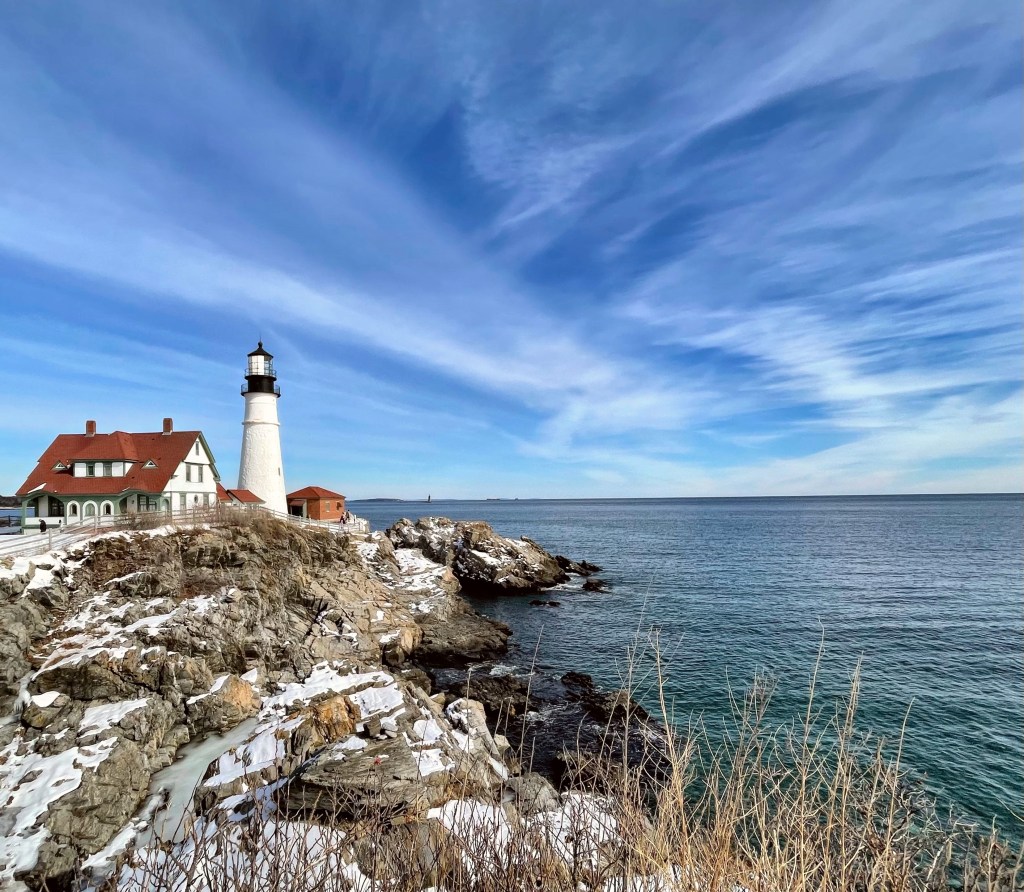
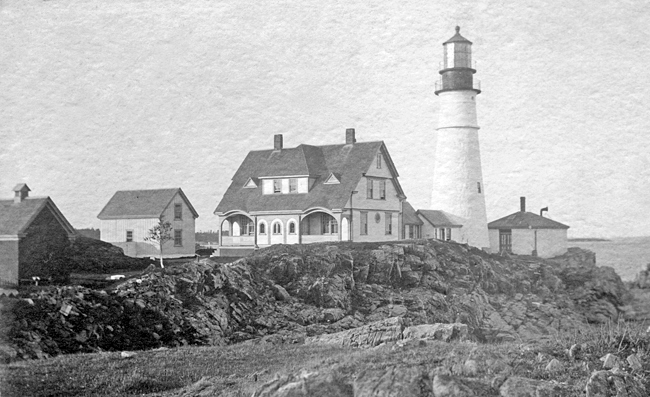
Portland Head Light // 1791

When I think of Maine, I think of rocky coastline, lobster, and lighthouses. Located in Cape Elizabeth, just south of Portland, you will find the Portland Head Light, an obscenely beautiful lighthouse, which has provided a beacon to sailors for centuries (and more recently Instagrammers). In 1787, while Maine was still part of the state of Massachusetts, President George Washington engaged two masons and instructed them to take charge of the construction of a lighthouse on Portland Head. Washington reminded them that the early government was poor, and said that the materials used to build the lighthouse should be taken from the fields and shores surrounding the site. The original plans called for the tower to be 58 feet tall, but when the masons were finished, they climbed to the top of the tower and realized that it would not be visible beyond the land to the south. When the masons were ordered to increase the height another twenty feet for visibility reasons, one quit, leaving a single man to finish the lighthouse and a small dwelling. It was completed, and the light, powered by sixteen whale-oil lamps, first shone on January 10, 1791, following its dedication by Marquis de Lafayette. Over the next century, many issues plagued the building and light-keepers, from cold winters and rogue waves icing over the pathways, to a poorly constructed top of the lighthouse, which was re-constructed due to safety concerns. In 1891, the station’s old stone light-keeper’s house was demolished, and upon its foundation a two-story wood double dwelling was constructed. A square brick oil house was also built at the same time along with a flight of steps at the landing. Portland Head Lighthouse was extinguished from June 1942 through June 1945 to avoid aiding German submarines, which did not work as planned. In 1945, the USS Eagle PE-56 just miles off the coast, was sunk by a German submarine (though previously thought to have been sunk by a boiler explosion), only 13 of the 62 crew survived. The lighthouse is now owned by the town, but the US Coast Guard retains control of the light and fog signals.

Wally’s Cafe Jazz Club // 1947

Historically, the South End neighborhood of Boston was populated by middle- to upper-class white residents until the late 19th century, when financial crises paired with new, modern housing (constructed in the Back Bay West and Allston areas) shifted that population elsewhere. West Indian immigrants and Black Bostonians moved to the relatively new neighborhood and many formerly single-family homes were converted to tenements or multi-family uses. From this, a vibrant Black community flourished, bringing black-owned businesses like restaurants, banks and jazz clubs. The area’s famous jazz clubs boomed during the forties and fifties, yet, many have disappeared over the years with the gentrification and development in the neighborhood. Wally’s Cafe Jazz Club on Massachusetts Avenue, was founded by Joseph L. Walcott. Mr. Walcott “Wally” was a Barbadian who immigrated to America in 1910, eventually settling in Boston. He worked many jobs and eventually saved up enough by 1947, purchasing an old rowhome and converting the space into a club. Wally was believed to be the first African American to own a nightclub in New England. He brought famed jazz musicians to Boston, and they played at this iconic venue for decades until 1979, when the venue shifted across the street to this building. With the jazz movement waning in popularity, Wally maintained his commitment to the music by featuring young musicians who were attending prominent academic institutions such as Berklee College of Music and the New England Conservatory of Music. Mr. Walcott cleverly decided to hire these young music students and mixed them with seasoned professionals who were veterans of the Big Band era. This mix of talent was special, and the format enabled Mr. Walcott to continue to serve the jazz loving audiences of New England. After Wally’s death in 1998 at age 101, his three children took over the bar, and today Wally’s Cafe is still owned and managed by his family, though presently closed due to COVID-19 restrictions.

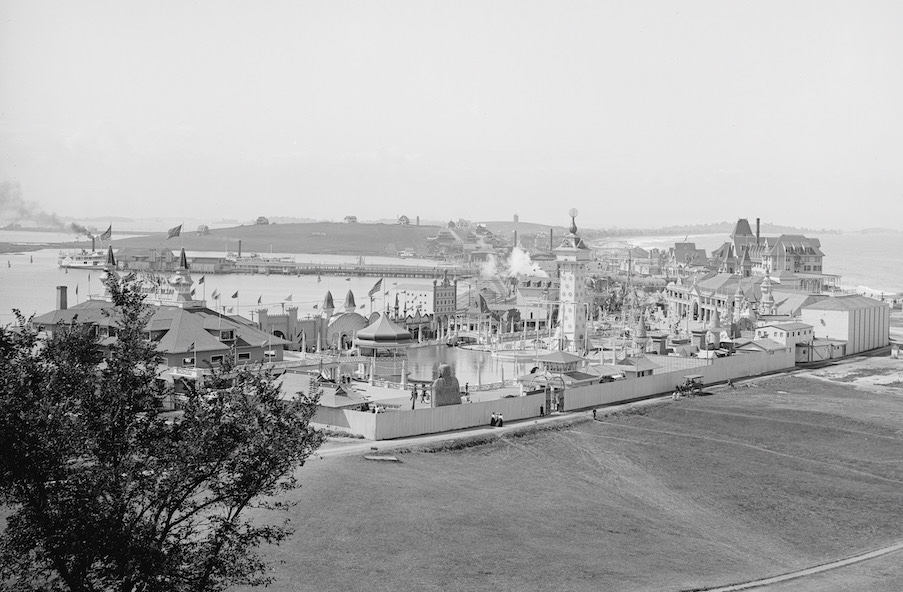
Paragon Park // 1905-1984

The Nantasket area of Hull on Boston’s south shore had been a popular summer destination since the middle of the 19th century, when resort hotels were developed there to take advantage of the ocean breezes and sweeping vistas. Paragon Park, an amusement park developed at the turn of the century was a great addition to provide activities for the summer visitors and resident alike. Convenient transportation in the form of steamship service and an electric railroad from Boston added to the appeal of the area. The park developed rapidly over the early 20th century and featured rides, activities and shows. The park was thought to be a mini World’s Fair, featuring a lagoon at the center with small boats to ride, and new expositions and features added every summer. The park struggled in the second half of the 20th century as the land value was more expensive and the park was only open a couple months a year. It sold in 1984 to developers who sold off many features and demolished almost all of the structures. The Giant Coaster, built in 1917 was one time, the largest roller coaster in New England. When the park was purchased, the roller coaster was sold to Six Flags America near Washington D.C. and is now The Wild One.

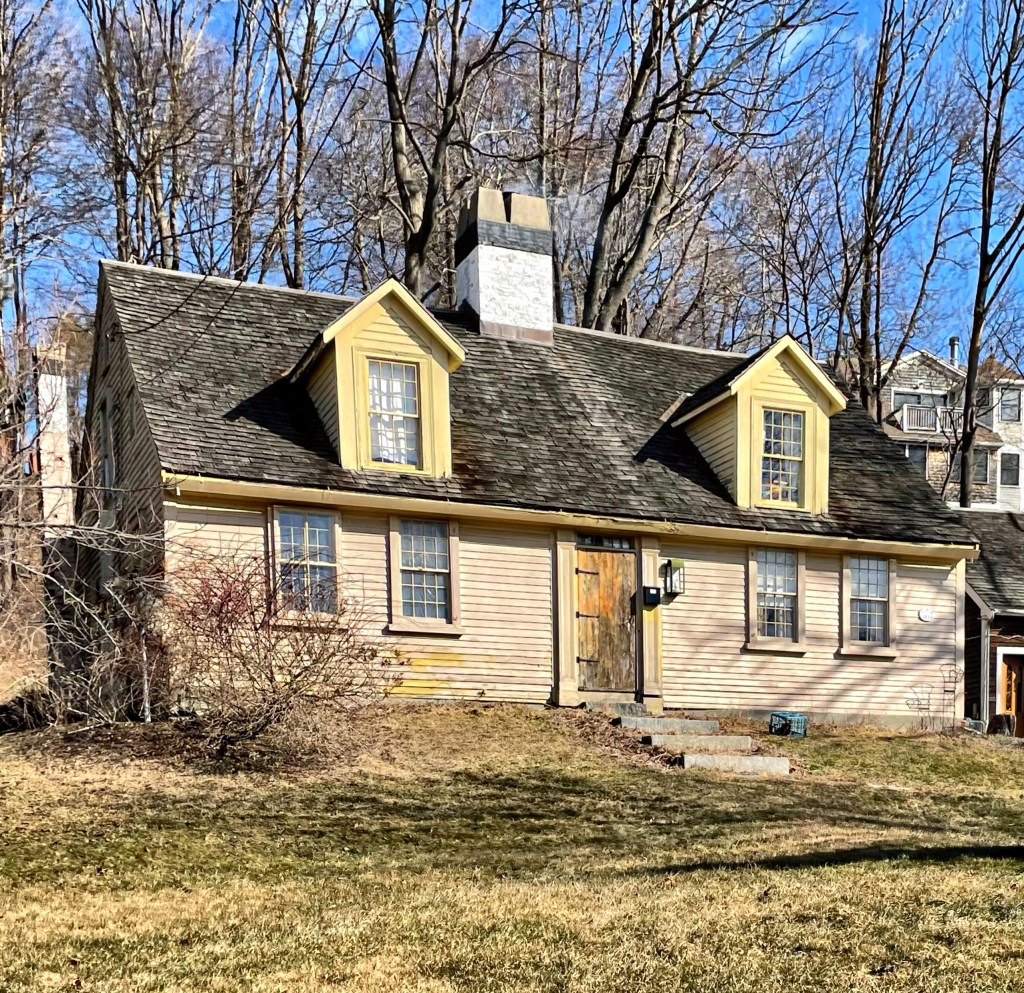
Lovell’s Tavern // 1744

This gambreled Georgian cape house was built around 1744 and first occupied as a tavern. Local tradition holds that in this house, the town officials held meetings and managed governmental duties. After the Revolution, a new town hall was built and the tavern reverted back to its former use. It was occupied by Samuel and Olive Lovell until Olive’s death in the 1840s, she possibly ran the tavern alone for the thirty years she outlived her husband. The home is an excellent example of a pre-Revolutionary Georgian home, with a cedar shingle roof to top it all off!

Loring House // c.1658

Likely the oldest home in the town of Hull, the Loring House has ties to the significant Loring Family, who’s descendants include individuals on both sides of the American Revolution, the US Civil War, and today live across North America, Spain, England and Australia. This house was built on land purchased by Thomas Loring (1600-1661) who came to Hingham in 1634 from England. He built a larger estate in town until a fire destroyed all his belongings, and he chose not to rebuild, but acquired property in the adjoining plantation of Hull. In Hull, he served as constable (court officer and tax collector), and raised his family there. His eldest son, John, married in 1657 and likely had this home built on his father’s vast land holdings within the year. John worked as a house-wright and likely built the home himself. He had two wives (his first wife Mary died at 39), and 15 children at the home, though some likely did not live past infancy as was common in early colonial days. John died in 1714, but left a lasting legacy in New England and beyond. Notably, his grandson was Joshua Loring, a British Loyalist who built the famous Loring-Greenough House in Boston. The old Loring House in Hull is very-well maintained inside and out and serves as a time-capsule of days past.