East Washington Baptist Church // 1877

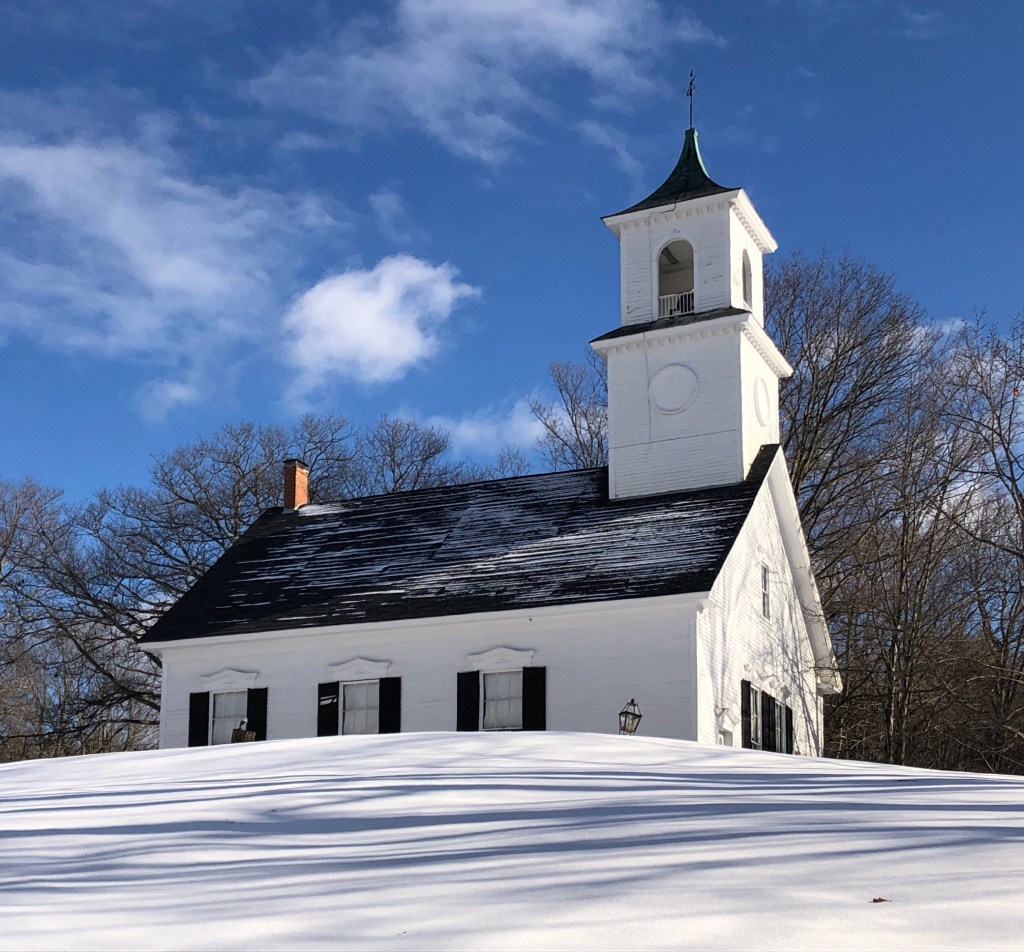
Residents in the eastern portion of the rural town of Washington, NH found it very inconvenient to attend church at the center of town. In 1800, a group of residents on the east side of town banded together to create a new congregation, building a church perched on a low hill soon by 1826. The church was used for decades until it burned in 1844, it was replaced a year later, but that burned as well. Undeterred, the small congregation had yet another church built in 1877. The church remains in great condition, and is still active.

Shedd Free Library // 1881

Aren’t tiny old libraries just the best?!

Located in Washington, NH, the Shedd Free Library is the only Victorian Gothic building in town, and packs a punch for its small size. The library was named for Sarah Shedd, a Washington teacher and poet who went to work in the cotton mills of Lowell, Massachusetts to support her family and educate her siblings. When she died in 1867 she bequeathed $2,500 to her hometown to establish a free public library, an amazing gift! The gift did not appear to be enough as nothing was built until 1881, after Boston architect S. S. Woodcock was selected by Luman T. Jefts, a wealthy shoe manufacturer in Massachusetts, to design the library after a gift to his hometown.

Washington Congregational Church // 1840

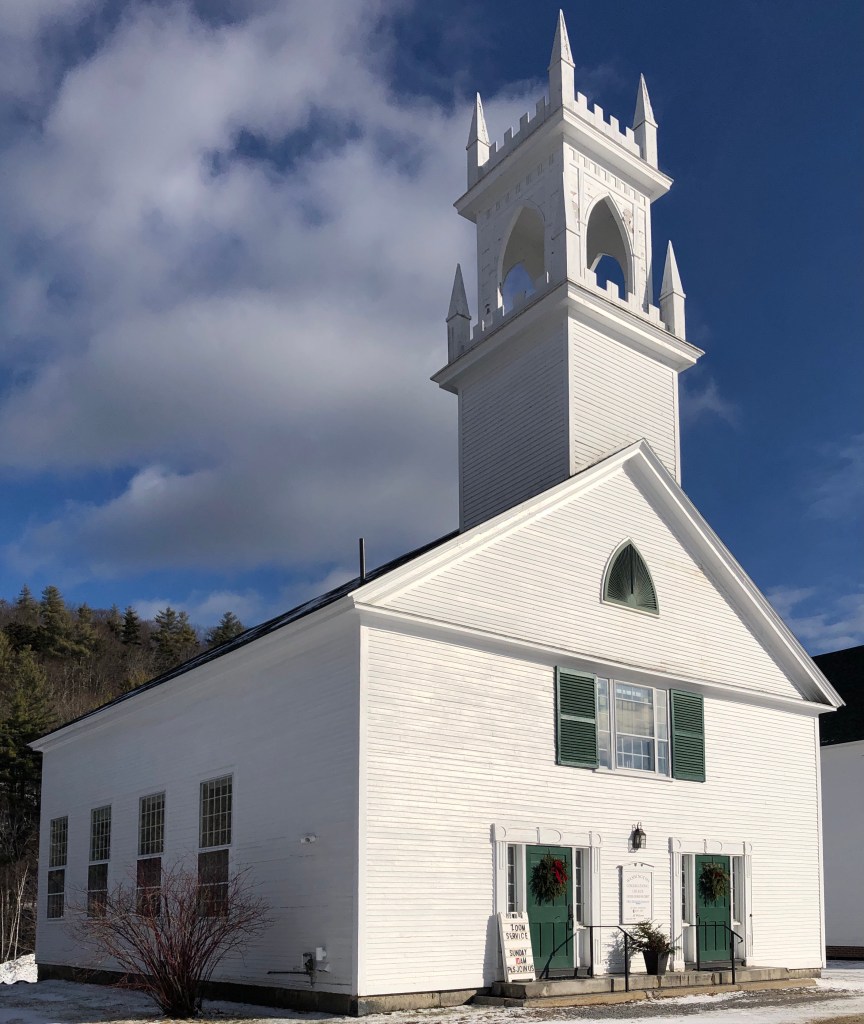
Located adjacent to the Washington Meeting House and Central Schoolhouse on the Washington, New Hampshire Town Green, the Washington Congregational Church perfectly compliments the collection of vernacular buildings here to create a very cohesive, three-building historic district. The church is dominated by a Gothic-inspired two stage square tower adorned by pointed pinnacles and crenellation. The building, constructed in 1840, is a great example of a Gothic Revival vernacular church building in rural New Hampshire and has been well-maintained over the years. In 1960, a fire in the church resulted in several thousand dollars worth of damage. A full basement was built under the church in 1985 to provide space for Sunday School classes and events. The simple arched sanctuary has remained in keeping with the original interior design, and features wide board wainscoting and wooden pews, taken from the old Meeting House.

Old Brick Store // c.1810

While many buildings around the Town Green in Washington, NH are wood-frame construction, some brick buildings stand out. This brick building was constructed in the early 19th century, possibly as a single-family home. The building had commercial use after the Civil War, when Benjamin Muzzey ran a store out of the building with a business partner. After successive owners and uses, Pearl Young leased it around 1920. Pearl saw the use of automobiles growing and had gasoline pumps installed, turning the old brick store into a gas station. Pearl and Mary Young operated a successful a store and post office here for over 30 years before closing up shop. The brick building has since reverted back to a residence.

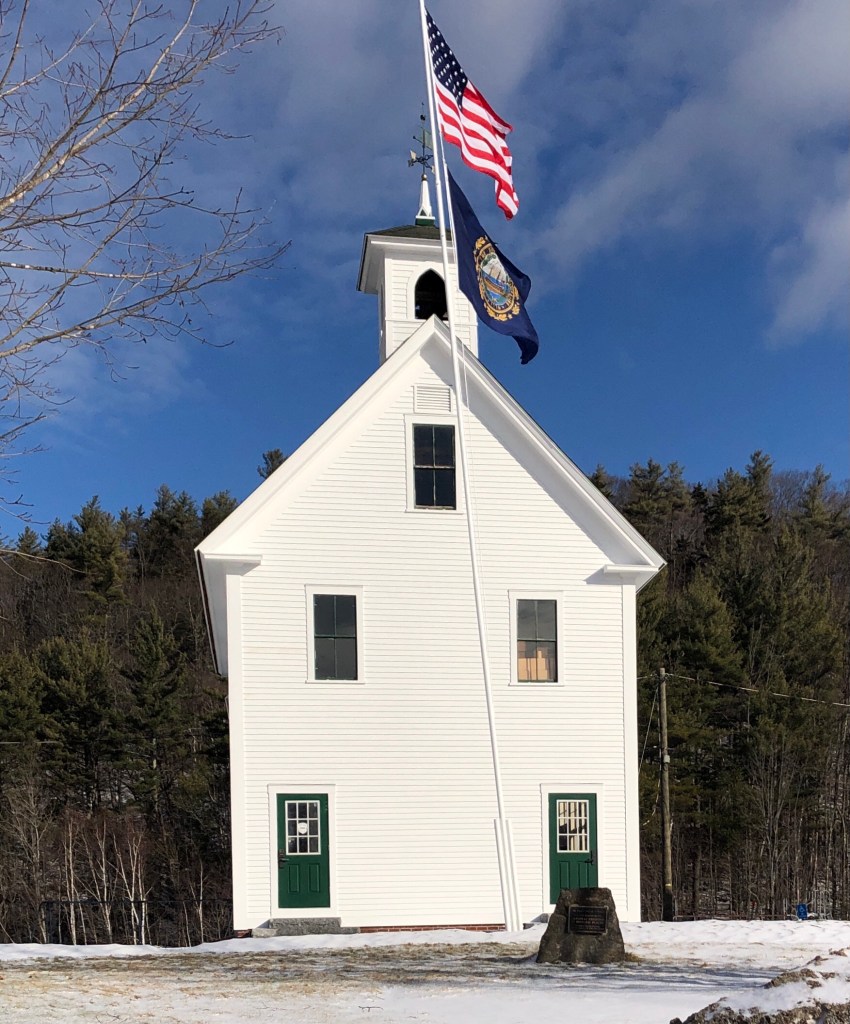
Washington Center Schoolhouse // 1883

Adjacent to the Washington Meeting House, the Washington Center Schoolhouse perfectly compliments the Georgian building, despite being constructed 100 years later. Constructed in 1883, this building served as the principal school house in Washington, and was known as the Center School. There had been an earlier school house near this site, a small brick structure, but by the 1880s it was both worn out and too small and replaced. Eventually, it was decided to build a new school in the general style of the other town buildings, and place its facade flush with the Church (next post). The building now appears to be home to the town’s police department.

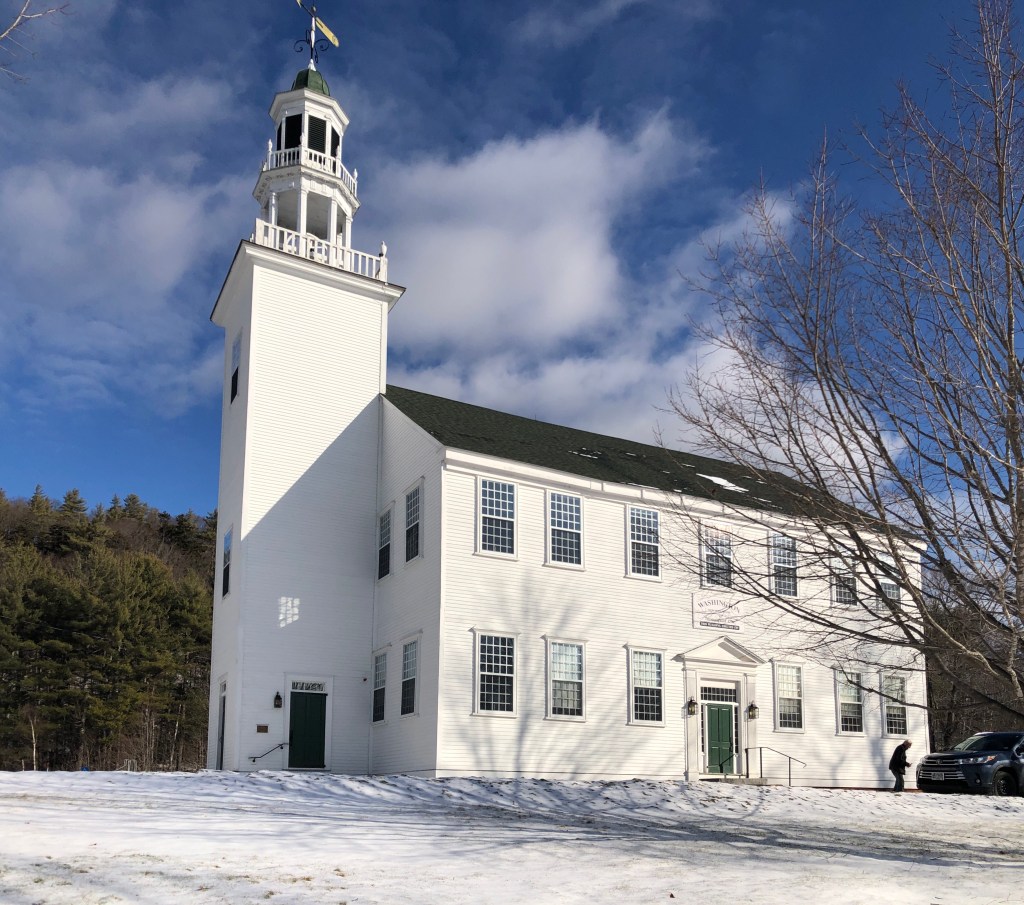
Washington Meeting House // 1787

The Washington Town Hall, originally raised as a meetinghouse in 1787, is the civic and visual focal point of Washington Center in New Hampshire. Land here was first granted in 1735 by Colonial Governor Jonathan Belcher of Massachusetts. The town was one of the fort towns designated to protect the colonies from attack by Native peoples, and it was named “Monadnock Number 8”. The first permanent settlers arrived in 1768 and built log houses. By 1773, the community had 132 inhabitants. On December 13, 1776, the newly established American revolutionary government incorporated the town as “Washington”, after George Washington — one of the first named in his honor. A small townhouse was built but was replaced a decade later with what we see today. The current structure was originally a simple, two-story clapboarded structure, with east and west porches. The tower and belfry rising from the end were added in 1820. The building committee specified all details of the meeting house, including “that the windows should be glazed with squares of glass, seven by nine inches, forty panes to the window”. This attention to detail shows how the meeting house would be a source of pride for the new town and all details were to be discussed to the smallest detail.

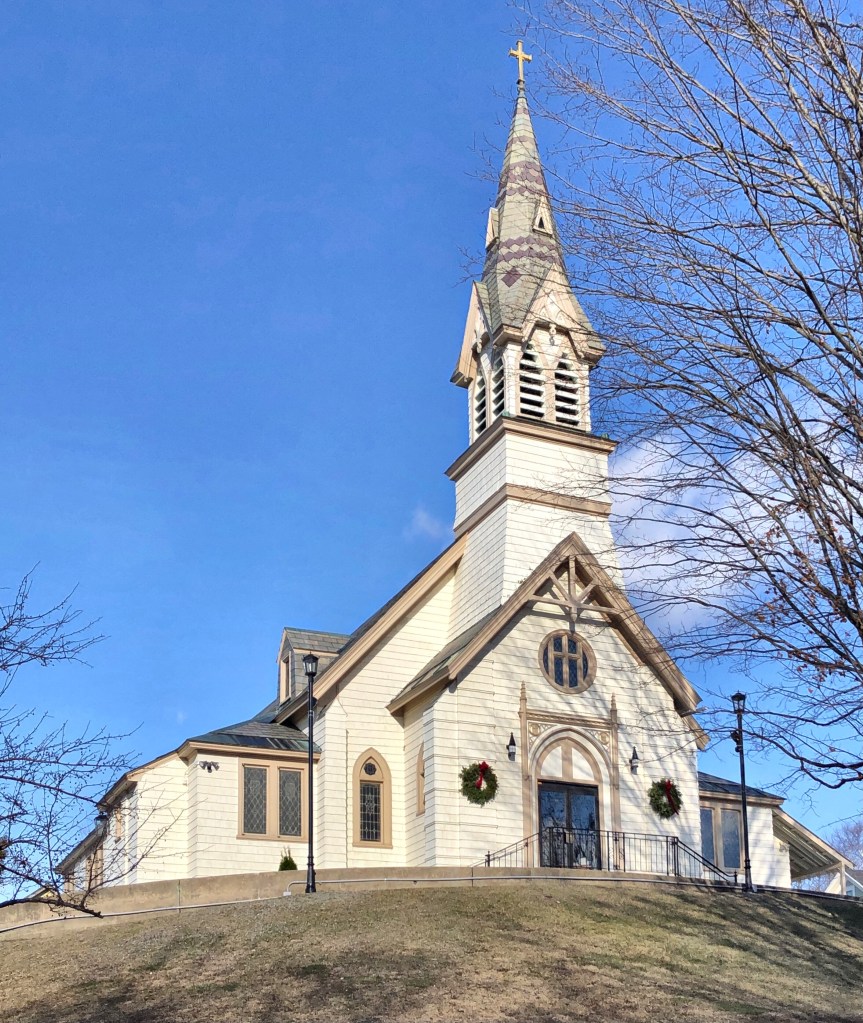
St. Patrick’s Church, Newport // 1882

Perched high on a hill in central Newport, NH, St. Patrick’s Church has served the community in its stunning building for nearly 150 years. The town of Newport began seeing Irish immigrants moving into town looking for work at the mills as early as 1835. The large working-class population created a need for a Catholic church in the growing town. That same year, the Catholic population of the state of New Hampshire was listed at just 720 people. Over the following decades of meeting in homes and small buildings around town, the Catholic population in town, along with the newly established Archdiocese of Manchester, NH, came up with funds for a church in the mill town of Newport. The congregation hired Hira Ransom Beckwith, a carpenter, builder and architect from nearby Claremont to design and construct the new place of worship. Interestingly, Beckwith had only a high school education, so his training as an architect and builder was through apprenticeships. The church is a blend of Gothic Revival and Stick styles, with the lancet windows and tracery paired with the elaborate stick-work in the gable.

Old Sullivan County Courthouse // 1826

In December 1824, a law was passed by the New Hampshire Legislature removing the of the Supreme Court of Judicature from Charlestown, New Hampshire to Newport, which was located at the convergence of multiple stagecoach lines along the Sugar River. Soon after, Sullivan County was formed from the northern part of Cheshire County. At a meeting held January 13, 1825 the town of Newport voted to raise $2,000.00 to assist in building a courthouse and town hall, in the center of town. The building was erected in 1826 with the Newport Town Hall on the first floor and County Courthouse on the second. The building continued to be used as a court as well as social purposes until 1872, when it was deeded to the Town of Newport. Since then, the structure was used as a school and grange hall, and it now is home to a restaurant, appropriately called “The Old Courthouse”. The 1826 building is an excellent example of vernacular Federal style architecture.

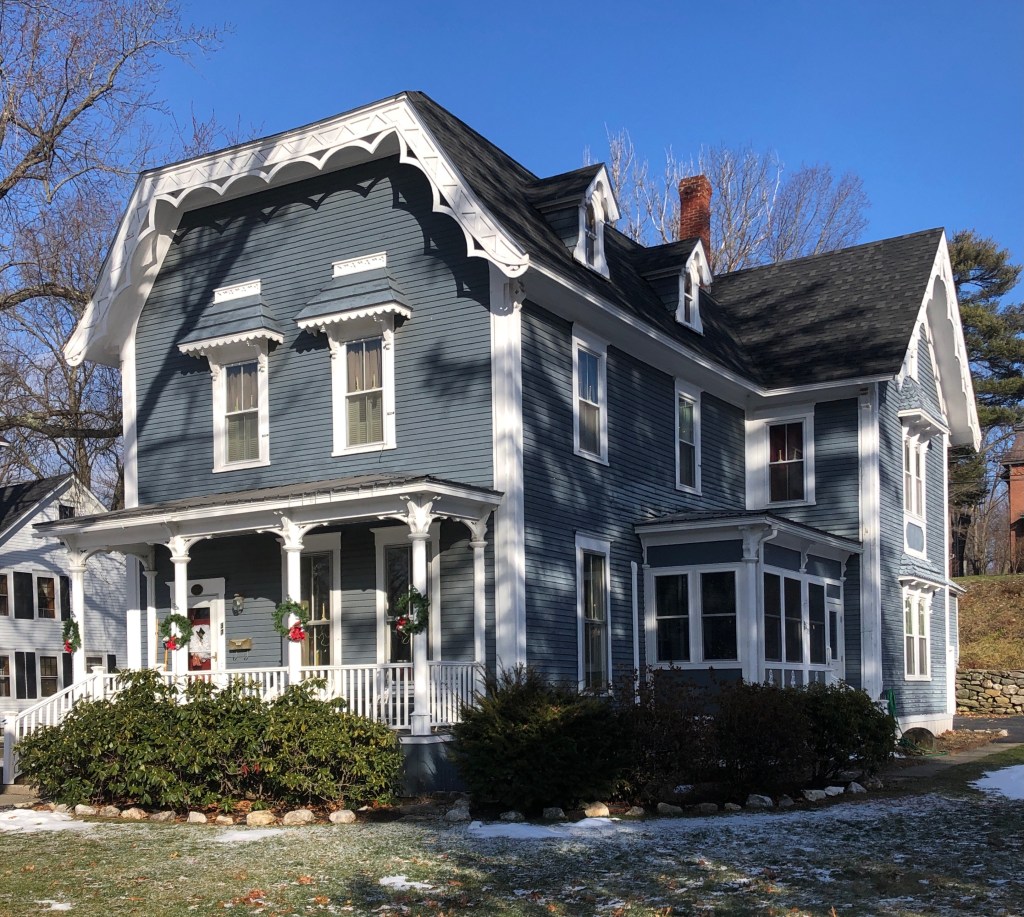
Parmelee House // c.1879

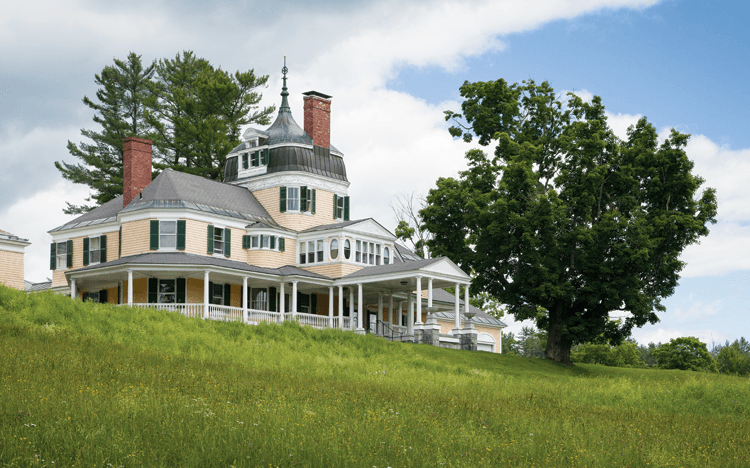
Located on the east side of the Town Common in Newport, NH, the Parmelee house stands out as a unique vernacular Stick style home. The home was built for Joseph Warren Parmelee (1818-1892), the grandson of original settlers of town, Captain Ezra Parmelee and Sybil Hill. He began his adult life as a merchant in Newport, before moving south to Charlestown, South Carolina in 1847. Joseph was forced back north at the beginning of the Civil War, and he lived in New York City until he finally relocated back to his hometown in 1879, which is likely when he built this home for his family. Upon returning, he became active in town affairs, and also pursued interests in history and poetry, creating a book of poems from his home. The Parmelee house retains much of its original detailing from the decorative bargeboards at the gable ends, large eyebrow window hoods at the second floor, and the interesting trapezoidal roof, possibly a vernacular nod to a mansard roof.

Corbin Estate // 1880

Austin Corbin (1827-1896) was a 19th century railroad man known for consolidating what we know today as the Long Island Railroad. He was born in Newport, New Hampshire and eventually graduated from Harvard Law School in 1849. He eventually moved to New York, and founded the Corbin Banking Company, which he leveraged into a successful banking firm, which funded his diversifying into resorts and railroads. In 1873, while following doctors advice of ocean air for his ill son on Coney Island, Corbin recognized the area as an untapped natural location for a summer resort, and proceeded to purchase 500 acres, opening a large hotel and a new railway system to deliver New Yorkers to the resort in 1878. He is infamous for strong-arming the Montaukett tribe on Long Island out of nearly 10,000 acres they occupied around Montauk. The tribe is still seeking compensation for this tactic. In 1880, he built this summer estate in his hometown of Newport, NH as a castle for his greed, also acquiring over 100 acres for the estate. He soon after bought out over 25,000 acres of land for an ultra-private members-only hunting club. Corbin died on the estate in 1896 and the property was eventually purchased by William Ruger. The home was vacant for decades following WWII until Ruger, who co-founded Sturm, Ruger & Co. purchased the estate, likely utilizing the hunting reserve next door. The property and another owned by the Ruger Family were sold separately at auction in 2019.