Richards Free Library // 1899

Designed by Boston architect, James Templeton Kelley, the Richards Free Library (originally the Seth Richards House) is an outstanding example of the Colonial Revival style, in a region where such expressions of opulence are relatively rare. Located on Main Street in Newport, NH, the house was built during a period of great prosperity by one of Newport’s wealthiest citizens. Richards was one of the few in the area able to afford the services of a metropolitan architect for his own home. The family occupied the home until the 1960s when Louise Richards Rollins, offered the family home on Main Street for the to the town for use as a library in 1962. The first floor rooms were renovated and equipped as a library and Ms. Rollins continued to live on the second floor of the library until her death.
Dexter Richards and Sons Woolen Mill // 1905

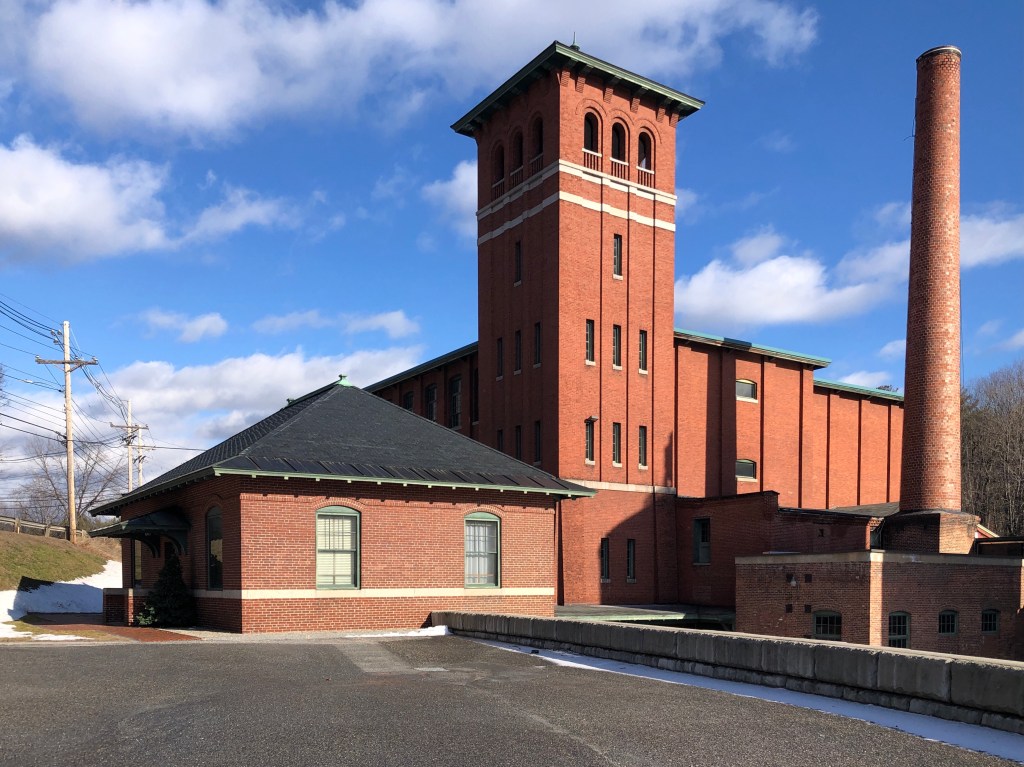
The Dexter Richards and Sons Woolen Mill is the last surviving textile mill in Newport, New Hampshire. It was one of the city’s largest and most successful industries and employers. Built in 1905 on the banks of the Sugar River – which supported industrial activity as early as 1768 – the mill reflects the evolution of water-powered mills throughout the city and the region for more than a century. Designed by Peterborough native Edward A. Buss, Richards Woolen Mill is a typical three-story brick mill building from the early 20th century with granite, brick and metal architectural flourishes; it stands out for its five-story Romanesque tower with three tall arched windows on each side. At the base of the tower, above the entrance, are two slate roundels with the dates “1848” and “1905,” marking when both a previous mill on the site and the existing mill were built. In addition to running the mill, the Richards family was instrumental in establishing the Newport Electric Company (1892) and brought both Western Union Telegraph service (1866) and the Concord & Claremont Railroad (1871) to Newport. Richards and Sons, Inc. dissolved in 1926. The property was purchased by Harry W. Brown and Associates and was renamed the Gordon Woolen Mill. That business made wool linings for Army clothing during World War II. The mill was later owned by William Ruger Jr. an heir to the Ruger Firearms Company. Within the last couple years, the mill was purchased for redevelopment into housing, which has not yet materialized.

Eagle Hotel // 1826

Built in 1826 as the Eagle Hotel, this stunning federal structure is representative of the transition from the 18th century tavern, with its domestic scale and features, to a larger-scale 19th century hotel. The town of Newport was situated at the convergence of two stagecoach turnpikes, which transported people through the town regularly. Due to this, James Breck and Josiah Forsaith built the Eagle Hotel to meet that demand. By 1856, additional hotels were built and then owner, S.H. Edes converted the building into a business block. The upper floors were later occupied as apartments and porches were added to the front facade on each floor (since removed). The building is now home to Salt Hill Pub.

Nettleton House // c.1835

Located just off Main Street in Newport, NH, this stunning 1830s brick house shows an elegant blending of Federal and Greek Revival styles prominent at the time. The home was built for Joel Nettleton, a local hotel and stage coach owner, either by Nettleton himself, or by Samuel George, a local cabinetmaker and painter. The home is a great vernacular example of early-mid 19th century architecture in developing parts of inland New Hampshire and showcases a modest design, though with a use of brick showcasing some wealth. The town acquired the home in 2011 and it has since been occupied and preserved by the Newport Historical Society.

Newport Opera House // 1886

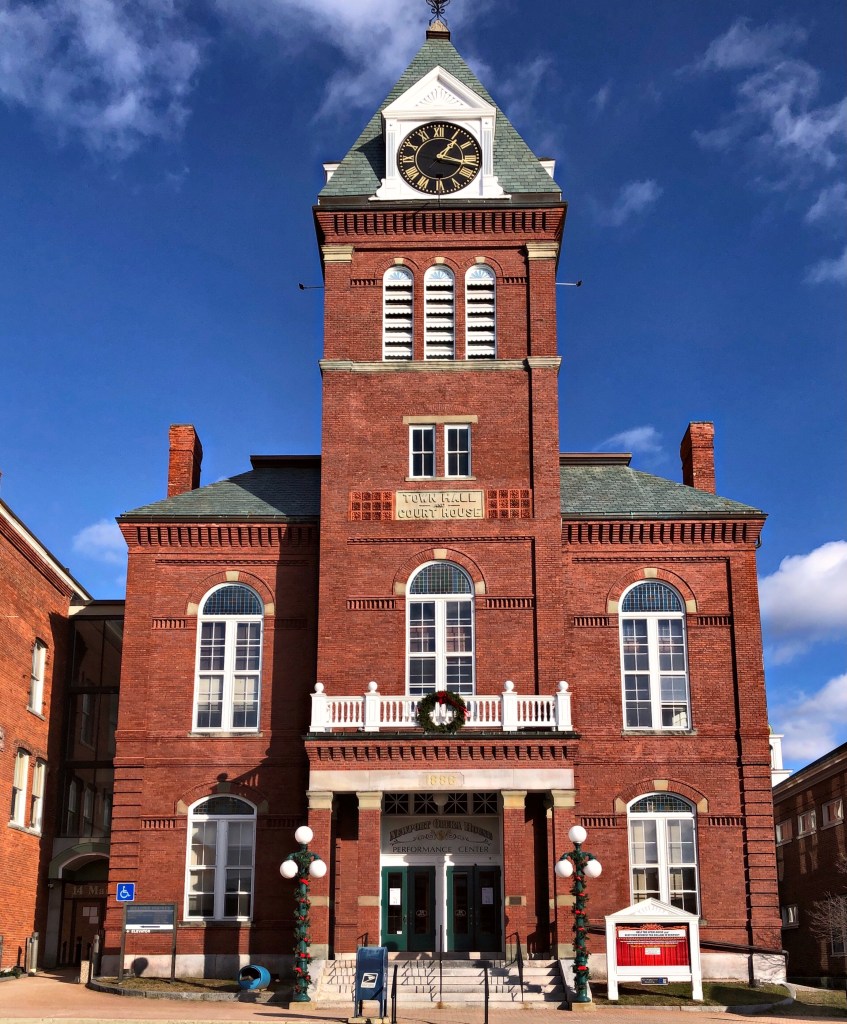
The architectural focal-point on Main Street in Newport, NH is the Newport Opera House, with its solid massing and prominent central tower. The town was growing after the American Civil War and its position as County Seat solidified that growth. A new large civic building was erected in 1872 which housed a new courthouse and town hall. A fire destroyed much of the buildings on Main Street in 1885, and destroyed the courthouse and town hall building. As a response to the loss of the building, a fire-proof structure was erected from designs by Hiram Beckwith, a regionally prominent architect from Claremont. The structure featured space for the county, town, and even an opera house! The jewel of the new building was the Opera House located on the second floor that housed a stage considered the largest north of Boston. The Newport Opera House soon became the center of entertainment in Sullivan County and patrons came from far away to enjoy the large variety of programs presented. The large hall played host to dances, boxing matches, weddings, political rallies, plays, school graduations and more! After a period of severe decline, a group of artists and residents of town worked together to restore the building and use the space as a performance center. It remains one of the finest buildings in this part of the state.

DeWolf Block // 1893

Located next door to the Lewis Block (last post) on Main Street in Newport, NH, the DeWolf Block showcases late Victorian design before the more generic 20th century main street architecture took hold. The DeWolf Block was built in 1893 by Samuel DeWolf Lewis, who also erected the Lewis Block, both named after himself. As was traditional with many business blocks, fraternal organizations occupied the upper floor of the building, and retail uses were located on the ground floor. In the case of the DeWolf Block, it was the Knights of Pythias. By the 1950’s the DeWolf Block was home to J. S. Hirsch Department Store, operated by Joshua & Sally Hirsch, until it was purchased by the Hubert family in the 1970’s. The Huberts operated a clothing store
there until the building was purchased by Sullivan County and has since housed the county offices. The DeWolf Block is a modest Romanesque Revival style building with large, round arched windows at the third story.

Lewis Block // 1886

Following the granting of the royal charter in 1761, Newport, NH was incorporated and named after Henry Newport, a distinguished English soldier and statesman. With excellent soil for farming, and abundant water power from the Sugar River to run mills, Newport grew prosperous. The main street developed, leading to a proliferation of hotels and taverns that were soon situated along the length of Main Street to service the many travelers who stopped along the route, many such structures were wood frame construction. A fire devastated much of Main Street in Newport in 1885, leading to a massive rebuilding campaign by the town’s richest citizens. One of the earliest buildings constructed after the fire was the Lewis Block, developed by Frederick Lewis, who lived a block away, and his son Samuel DeWolf Lewis, who designed the block. The two-story building is broken up by brick pilasters with recessed corbelled detailing which give rise to buttresses capped by gablets (yes its a word), punctuating the flat roof profile.

Frederick W. Lewis Mansion // 1876

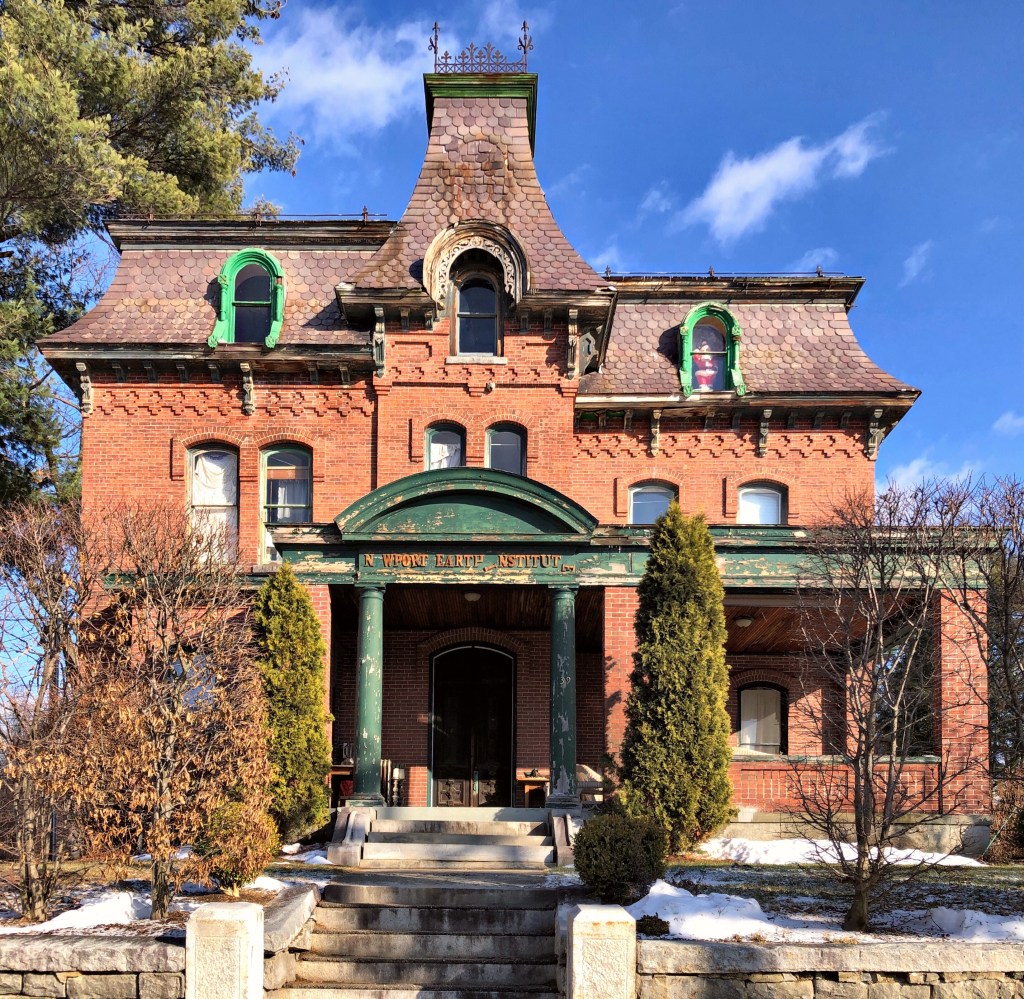
The Frederick W. Lewis Mansion in Newport, New Hampshire is a unique, late-Second Empire home constructed of brick. The home was built in 1876 for Frederick W. Lewis, a merchant who climbed the ranks as a young man, eventually purchasing the store he worked at as a 14-year-old. In 1862, he became cashier of the Sugar River Bank, and held the position until 1865, when the bank was re-organized as a national bank, taking the name of “The First National Bank of Newport.” He then leveraged his position to get into local politics, and took an active role in the development of the town, even incentivizing the railroad to build a stop in town. From this wealth and position, he built this large home. After his death, the home went to his son. By the 1940s, a group of over 30 residents of town purchased the home as a Veteran’s Home. By the end of the 20th century, the home was occupied by the Newport Earth Institute, a school created by esoteric historian and researcher Reverend Vincent Bridges, who died in 2014. The property appears to be vacant now and the home is in much need of some TLC.

Marion Nichols Summer Home // 1935

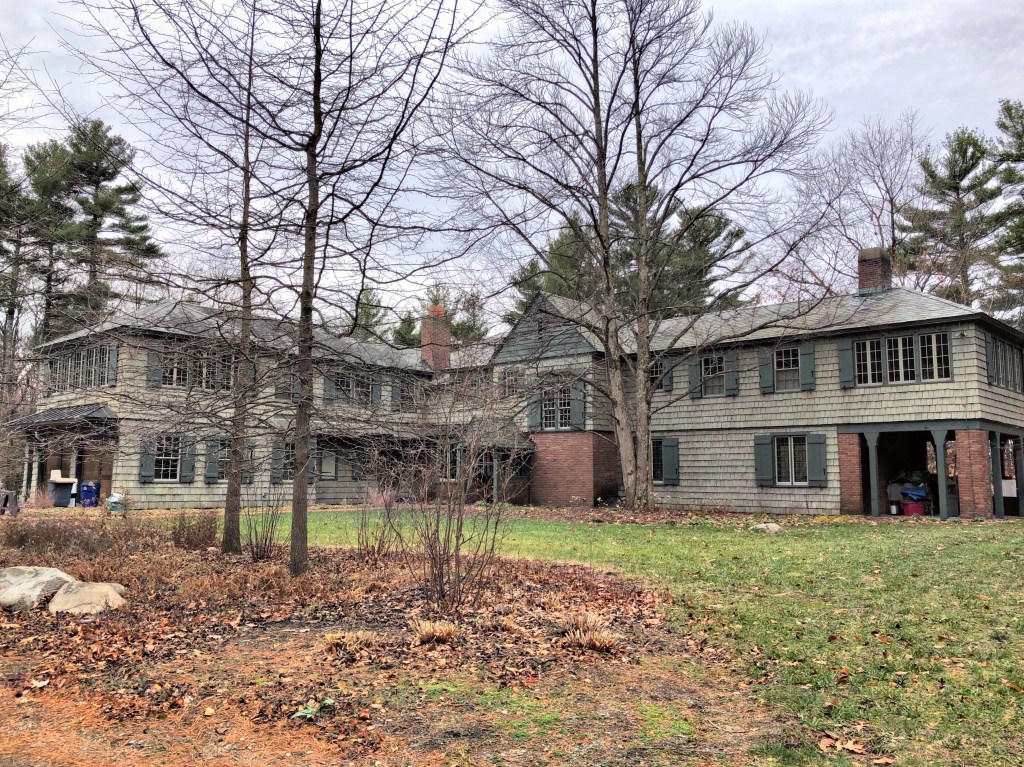
This summer estate in Hollis, NH epitomizes the hidden architectural splendor that can be found off the beaten path in many small New England towns. Hollis began serving as a summer destination in the late 1880s and the trend continued until WWII. In many cases, old family homesteads became summer residences for descendants who had moved to the city but desired to return to their “roots” periodically. The Nichols Home is unique in Hollis as it was designed to be a summer retreat for a well-to-do widow and her considerable servant staff, combining all the comforts available with the advantages of a rural retreat. The design of the main house offers separate living spaces for the family and the servants, including a library, living room and dining room for the use of the family. The servants’ wing was designed to include a two-car garage, a butler’s pantry, a manual dumbwaiter connecting the basement and first floor used to transport fireplace wood and a receiving unit for the delivery of milk, groceries and other goods. Sleeping porches, capitalizing on the benefits of the fresh country air, are an integral component of the house design and are included in both the family and servant wings. The home was designed by the Boston architectural firm of Densmore, LeClear & Robbins, who were hired by the 52 year old widow’s children for their mothers’ summer home. It is said that Ms. Nichols never liked the home and decided to summer instead at the old family summer home down the street.

Hollis Social Library // 1910

An excellent example of Classical Revival architecture, the Hollis Social Library in Hollis, New Hampshire is a single-story building displaying an Ionic portico and capped by a copper dome. The building, which fronts the town green, was constructed in 1910 according to plans by architects Magee and Rowe of Boston. The building was dedicated on August 24, 1910. The Hollis Social Library is believed to be one of the oldest libraries established in the State of New Hampshire. An association was formed in 1851 and a small library was kept in the Congregational Church vestry. After the new Town Hall was built the library was located there until the construction of the current building.