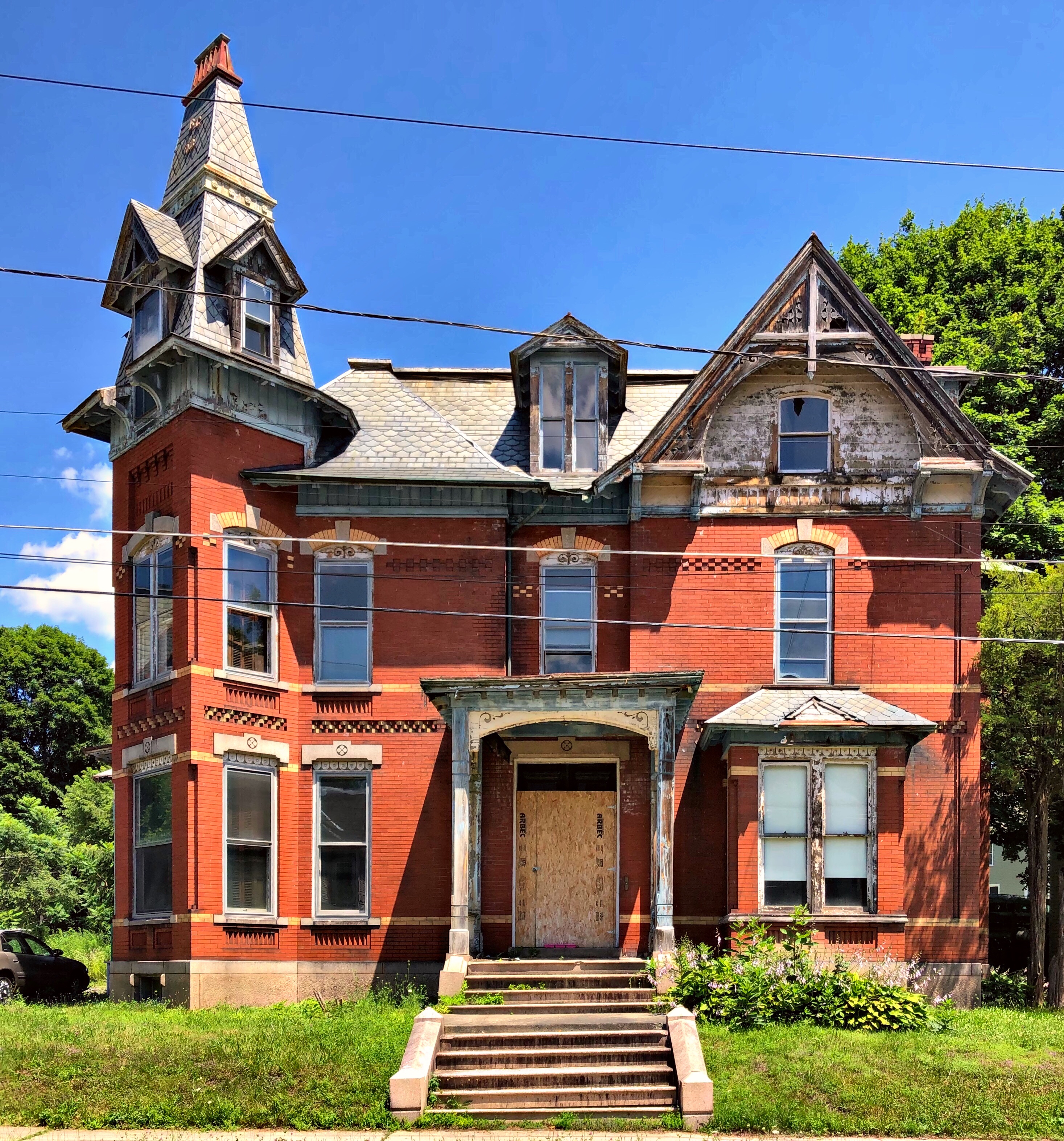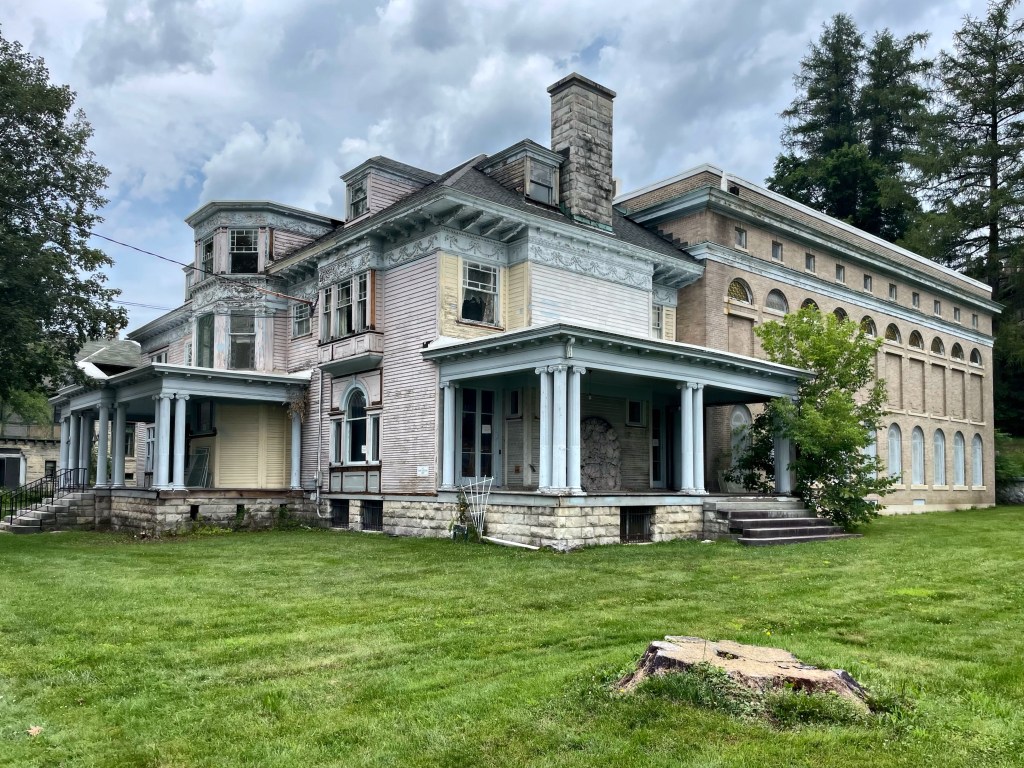
A. C. Houghton Mansion // 1897

The first mayor of North Adams, Albert Charles “A. C.” Houghton (1844-1914), built this house on Church Street in 1897. Albert was born in Stamford, Vermont and would become president and principal owner of Arnold Print Works (now Mass MoCA campus) and the Beaver Mill in town. He did well for himself and had this large mansion built from plans by Berkshires architect Henry Neill Wilson. Tragically, on August 1, 1914, A. C. Houghton was being driven in town by his driver with his daughter Mary and her husband in the car. They crashed and both Mary and her husband died, with seventy-year-old Albert succumbing to his wounds over a week later in his home. His driver soon thereafter shot himself. The Houghton mansion was inherited by Albert’s wife Cordelia, who passed away in 1918. Their daughter Florence Gallup next inherited the mansion but was living in the Boston area, and she decided to sell the family home to the local Masonic Lodge in 1927. They likely added the brick addition at the rear for meetings and events soon after. It is not clear to me what the mansion is used for today, any locals have more information?
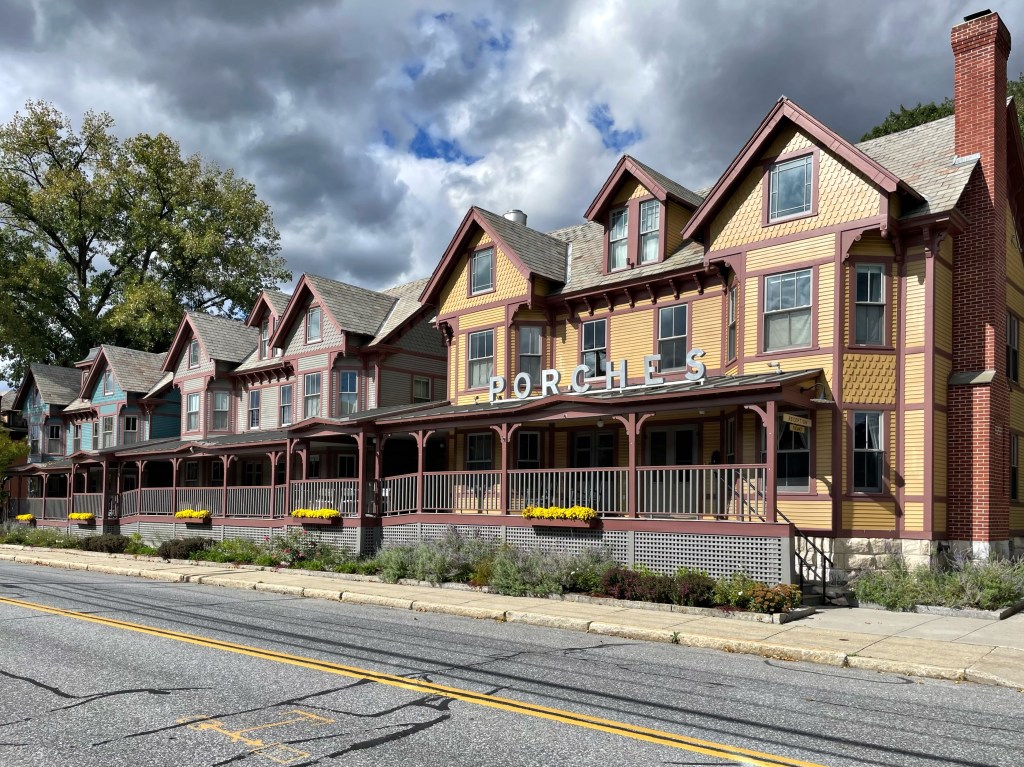
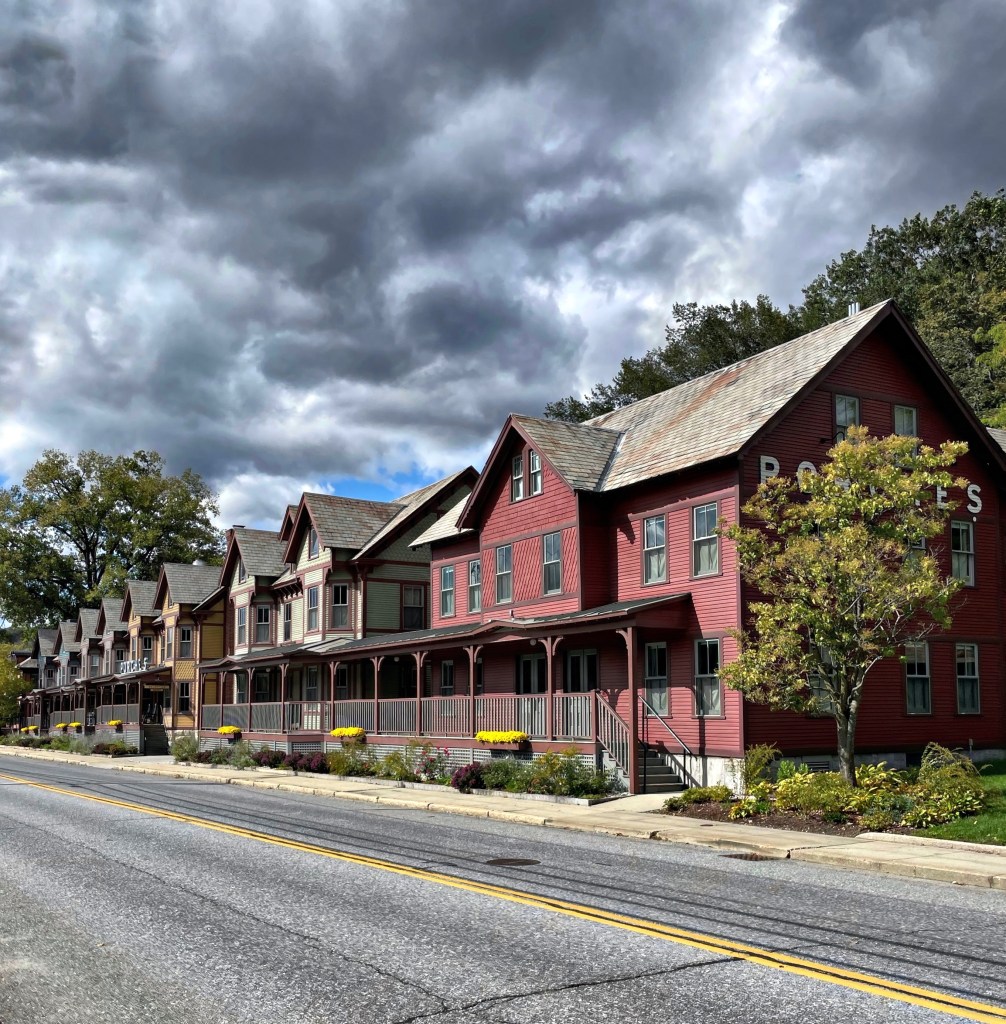
The Porches Inn // 1895

Prior to a few decades ago, there were not many reasons one would visit or stay a weekend in North Adams, Massachusetts. The former industrial city, like many others in the region, saw a sharp decline in population, services, and quality of life when many of the local factories closed in the second half of the 20th century. The major draw of tourists today is Mass MoCA, a museum in a converted factory building complex that is now one of the largest centers for contemporary visual art and performing arts in the United States! The new museum has created a huge demand for restaurants, housing, and hotels of all types in the formerly decaying river city. This is a story of perseverance and rebirth! In the early 2000s, Jack Wadsworth, an alumnus of nearby Williams College, wished to revitalize a block of vacant 19th-century workers houses across from the growing attraction of MASS MoCA. He worked with Burr and McCallum Architects of Williamstown to convert the decaying workers cottages into a boutique hotel. The span of Queen Anne and Colonial Revival cottages were joined via a long porch lined with rocking chairs, and the space between the buildings is bridged with skylights, giving the complex its appropriate name, Porches Inn.

Ashe House // 1898

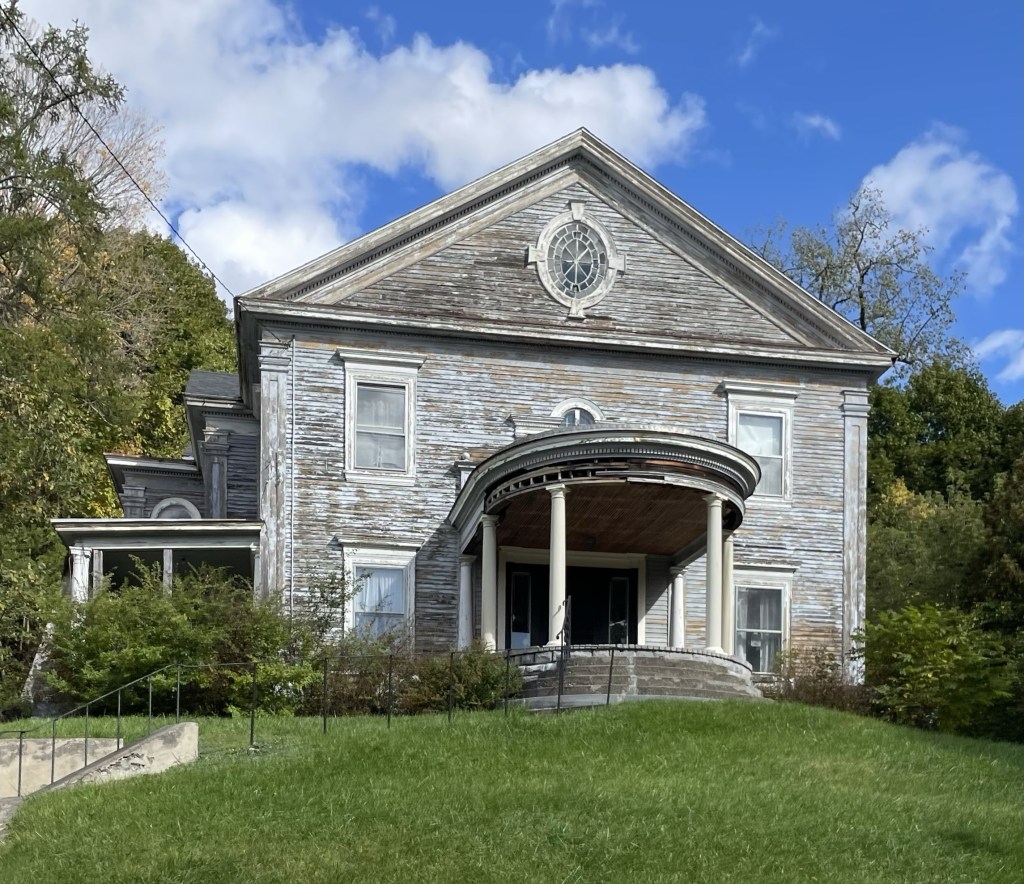
North Adams, like many formerly industrial towns and cities in New England has some amazing old Victorian and Colonial Revival houses built before the factories closed. Luckily for us, this town still has many unaltered residences, with some needing more love than others. This is the Ashe House, built in 1897-8 for Patrick J. Ashe and wife Katherine O’Brien. Classical details from many different styles make this house unique. An oval window dominates the traditional Greek facade which includes a pediment and side pilasters. A palladian window sits over the elliptical porch which is supported by columns. This one has so much potential!!

R.J. Walden House // c.1872

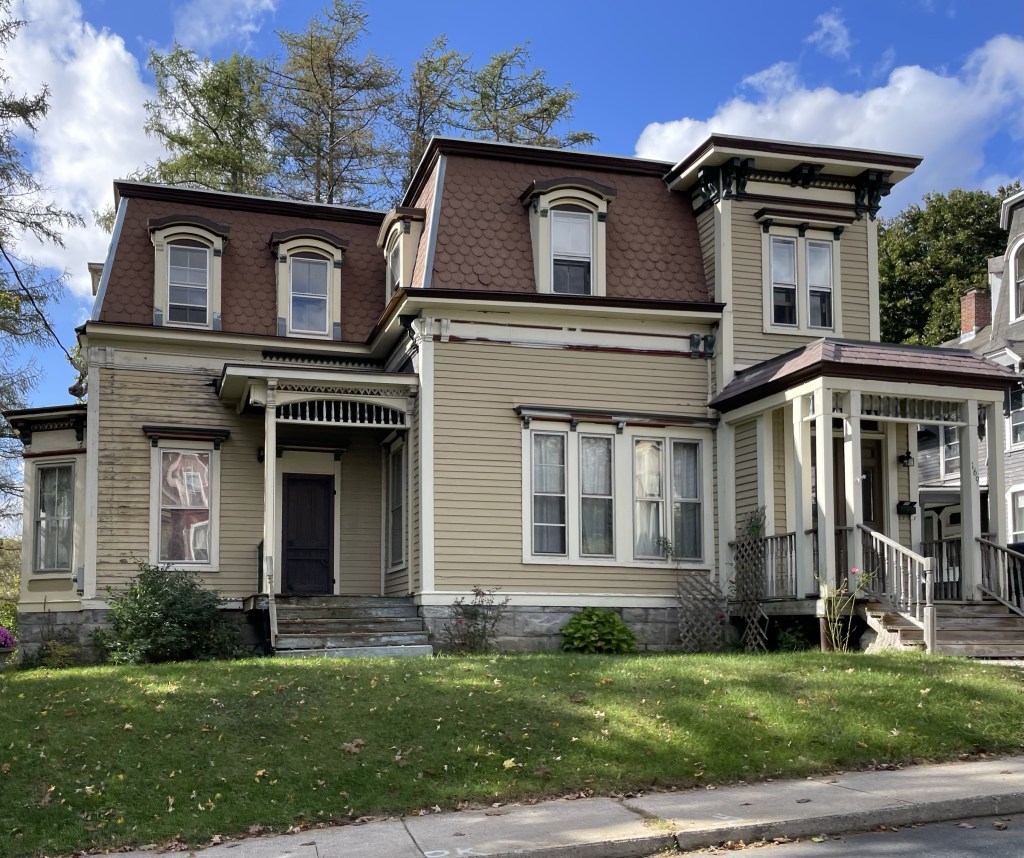
Located on the appropriately named Pleasant Street in North Adams, Massachusetts, this charming Second Empire style house is one of the finest in town. The house was built sometime between 1869-1875 for an R.J. Walden, who was listed in directories as a Deputy Sheriff for Berkshire County, an auctioneer, and real estate agent. Interestingly, the mansard roof is broken by a truncated corner tower with a flat roof. This is a unique one!

The Boardman Rowhouses // 1899

Built between 1899-1901, the Boardman rowhouses of North Adams, Massachusetts were constructed by developer and hardware dealer Walter Penniman and his wife Susan Boardman Penniman to serve as much-needed middle-class housing for workers in the growing city. The name “Boardman” was likely taken from Susan’s maiden name. The entire row is comprised of nine rowhouses, all with a front porch, as well as servants’ quarters on the third floor. Each residential unit is fronted by a porch of granite block with Tuscan columns supporting a shed roof. Entrances are recessed behind round-arched openings, also composed of granite blocks. While much architectural details on the second story are obscured by synthetic siding, the
building’s gables retain simple bargeboarding, and eaves are bracketed. The Boardman’s designer was Edwin Thayer Barlow who opened an architecture practice in the town in the 1890s. The rowhouses are still some of the finest example of middle-class housing built in North Adams in the 19th century.

Sullivan Three-Deckers // 1895

The three-decker is a commonly found housing type in New England’s urban industrial cities. These buildings are typically of light-framed, wood construction, where each floor usually consists of a single apartment, and frequently, originally, extended families lived in two, or all three floors. These were affordable housing, largely built by and for first- or second-generation immigrant families who could build a home and rent the other two units to family or friends to offset the steep cost of a mortgage. These three buildings were constructed around 1895 by David Sullivan, a cabinet-maker in North Adams, Massachusetts. They are all Queen Anne in style with applied stickwork, gabled roofs, and multi-story porches. Housing like this is what keeps so many New England towns and cities (relatively) affordable with increased density without sacrificing character or charm.

Merrill Whitney Tenements // 1897

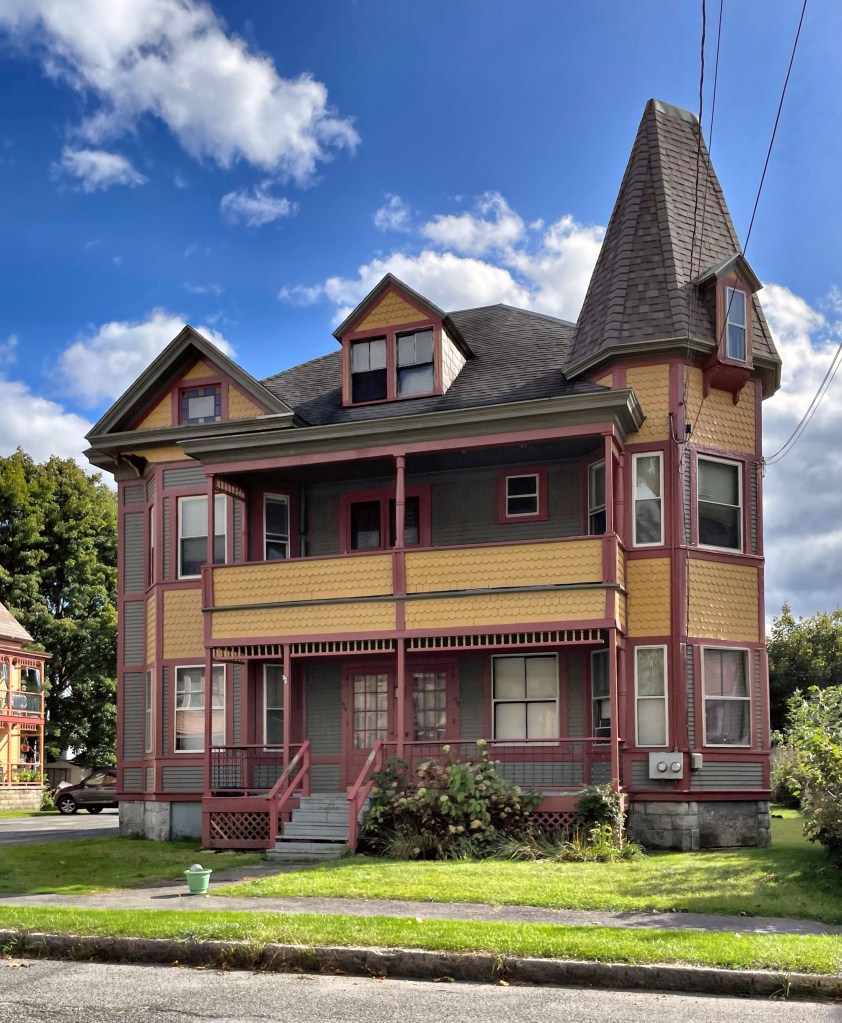
In the late 19th century, Merrill Whitney, a former stone mason, and his wife Harriett, built a dozen multi-family housing units or “tenements” for the surge of working-class residents moving into the City of North Adams, Massachusetts. As the factories and mills were overrun with immigrant workers, rental units were built to provide housing for them and also lined the pockets of established residents of the city who could supply the much needed housing there. Some landowners like the Whitney’s built high-style housing that rivaled some of the single-family homes there. This was a two-family home that was rented through the early 20th century, and still features front porches, a tower, and Victorian-era detailing.

Whitman House // 1881

Built in 1881 for William Henry Whitman, this stunning Victorian house remains one of the better-preserved in the town of North Adams. William Whitman was a successful shoe manufacturer in town that lived modestly until his late 40s when he had this home built. The brick home is trimmed with freestone and features a very prominent three-story corner tower with conical roof. The house is a blending of the Stick and Queen Anne styles, under the umbrella of the ‘Victorian’ classification.

Walker House // 1882

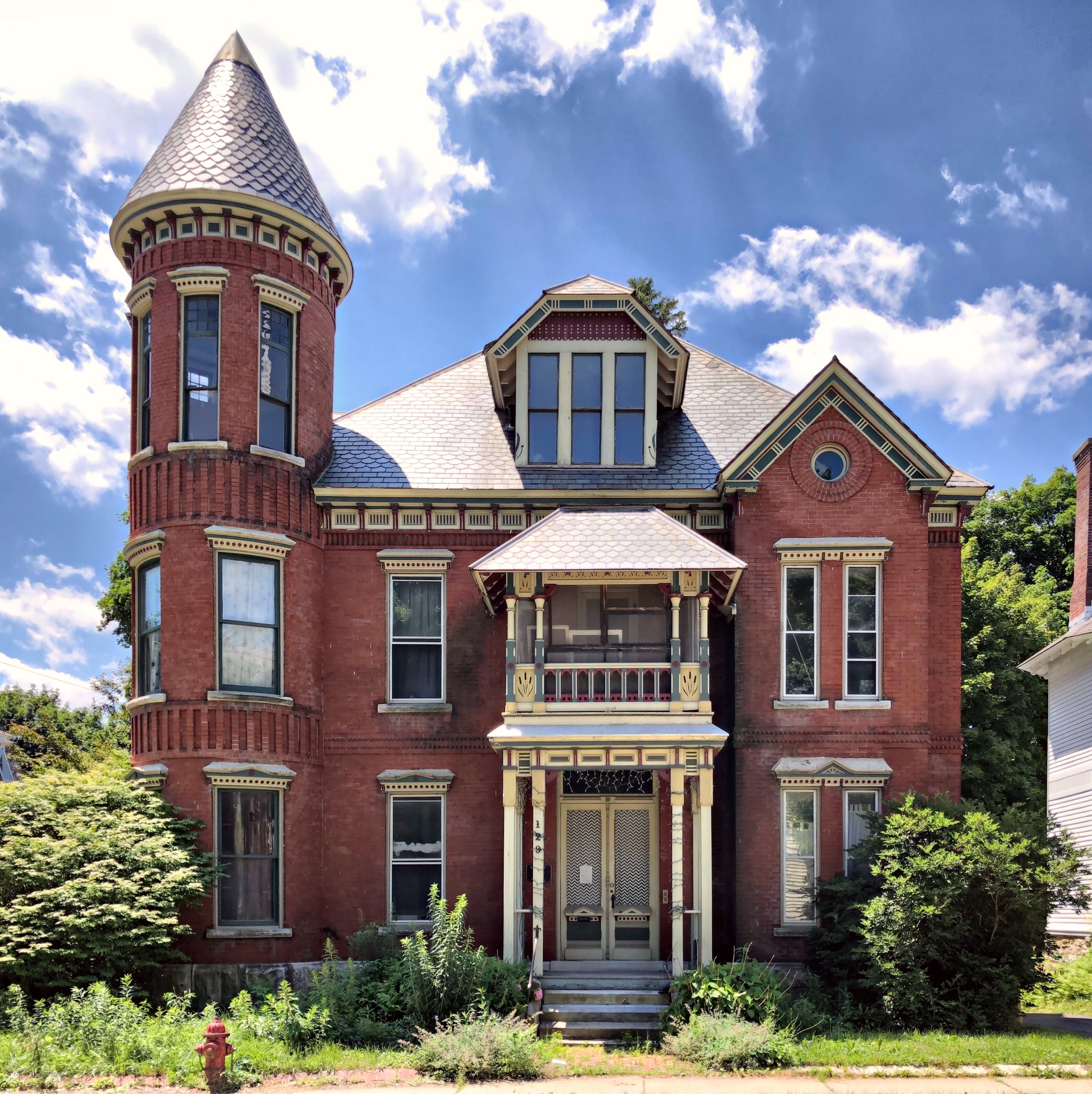
This house was built in 1882 for Frank Walker, a merchant who owned a feed and grain store in Downtown North Adams, Massachusetts. The Stick and Queen Anne style home was designed by architect Marcus F. Cummings, who also designed the Blackinton Mansion. The brick and freestone home was converted to multi-family sometime in the mid-20th-century due to the changing demographics of the town. Since then, the home has seen weathering and deferred maintenance, but retains much of its original detailing and character.

Blackinton Mansion // 1865

This mansion in North Adams, MA was built in 1865 for Sanford Blackinton. Blackinton was said to be the first millionaire in North Adams, and his mansion was the most elaborate home ever built in the city. His mill produced woolen goods during the Civil War including cloth for the Union forces. After the Civil War, many factory owners no longer lived amongst their workers, as they formerly had done, but instead built luxurious mansions in other neighborhoods, away from their factories. These large residences were designed in extravagant modern styles to impress the public and reflect the stature of their owners. European materials were even imported to grace these homes, such as the Italian marble fireplaces in the Blackinton Mansion.

Sanford Blackinton built his mansion in the hopes that it would become the ancestral home for his descendants. However, after the death of his widow (their four children died by the 1870s), the mansion was put up for sale in 1896, and was bought by North Adams’s first mayor, A.C. Houghton.
He in turn donated the mansion, along with $10,000 for renovations, to the city, to be used as a public library and as a meeting place for the local historical society. He requested that the building be known as the Andrew Jackson Houghton Memorial after his late brother. The home, designed by architect Marcus Fayette Cummings, is a high-style Second Empire mansion with a prominent tower, constructed of red brick with brownstone trim.