Sullivan Three-Deckers // 1895

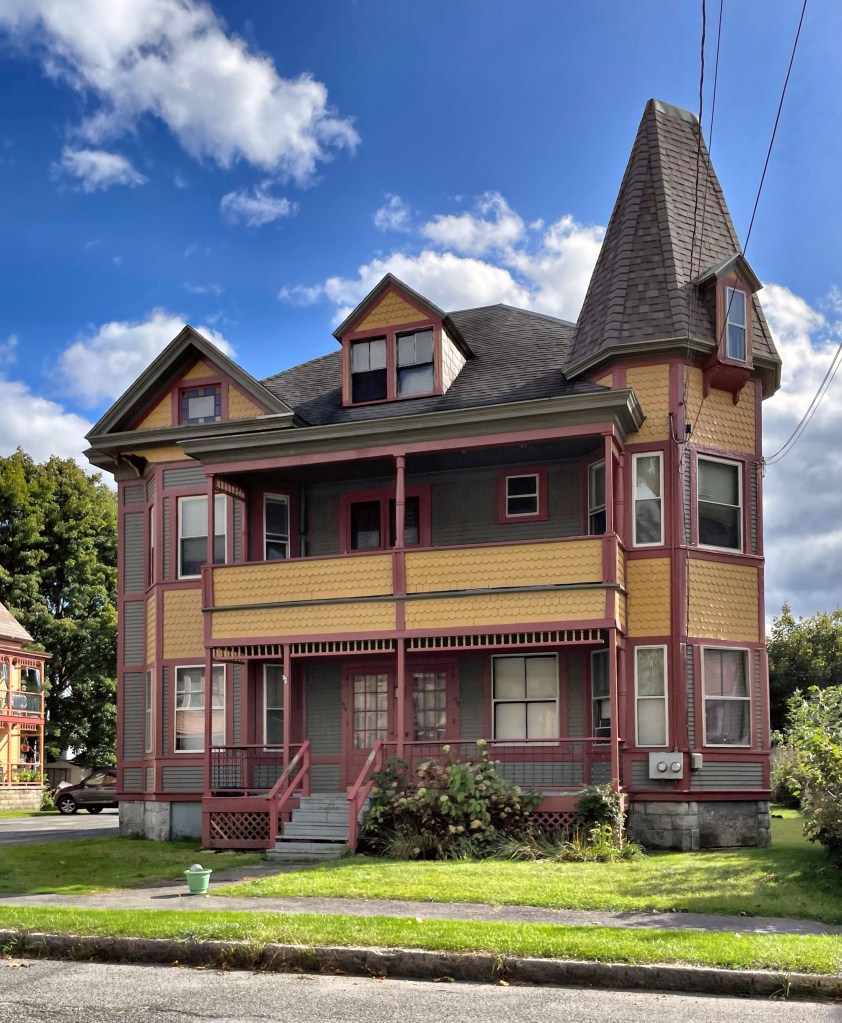
The three-decker is a commonly found housing type in New England’s urban industrial cities. These buildings are typically of light-framed, wood construction, where each floor usually consists of a single apartment, and frequently, originally, extended families lived in two, or all three floors. These were affordable housing, largely built by and for first- or second-generation immigrant families who could build a home and rent the other two units to family or friends to offset the steep cost of a mortgage. These three buildings were constructed around 1895 by David Sullivan, a cabinet-maker in North Adams, Massachusetts. They are all Queen Anne in style with applied stickwork, gabled roofs, and multi-story porches. Housing like this is what keeps so many New England towns and cities (relatively) affordable with increased density without sacrificing character or charm.
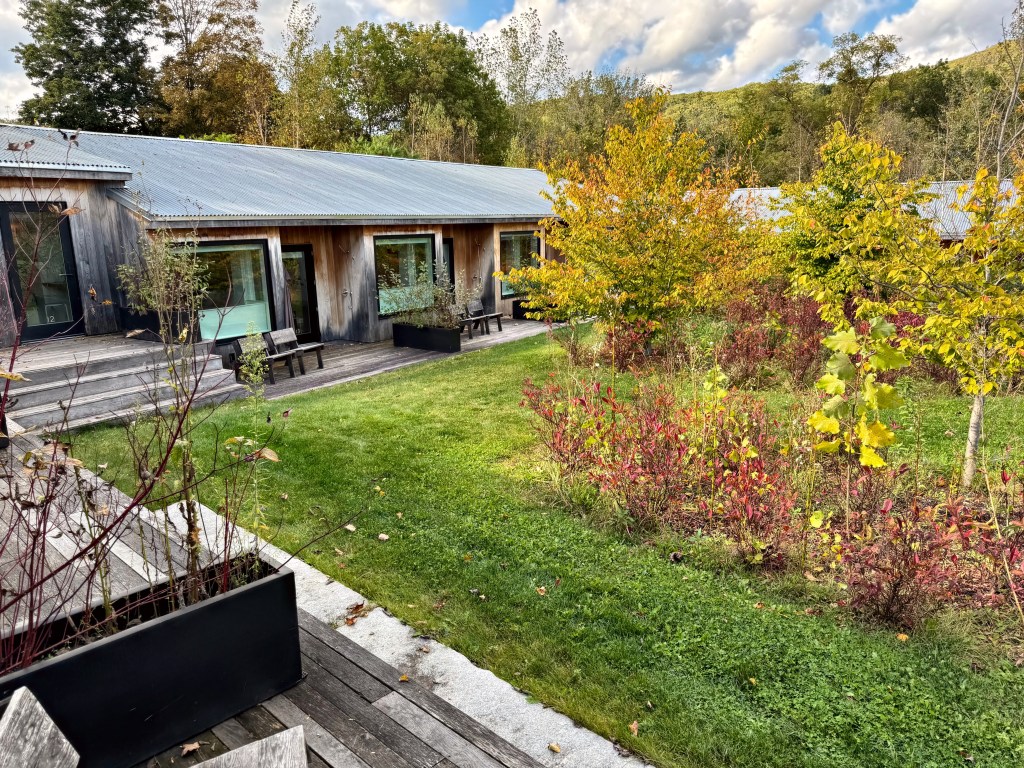
Tourists Hotel // 2018

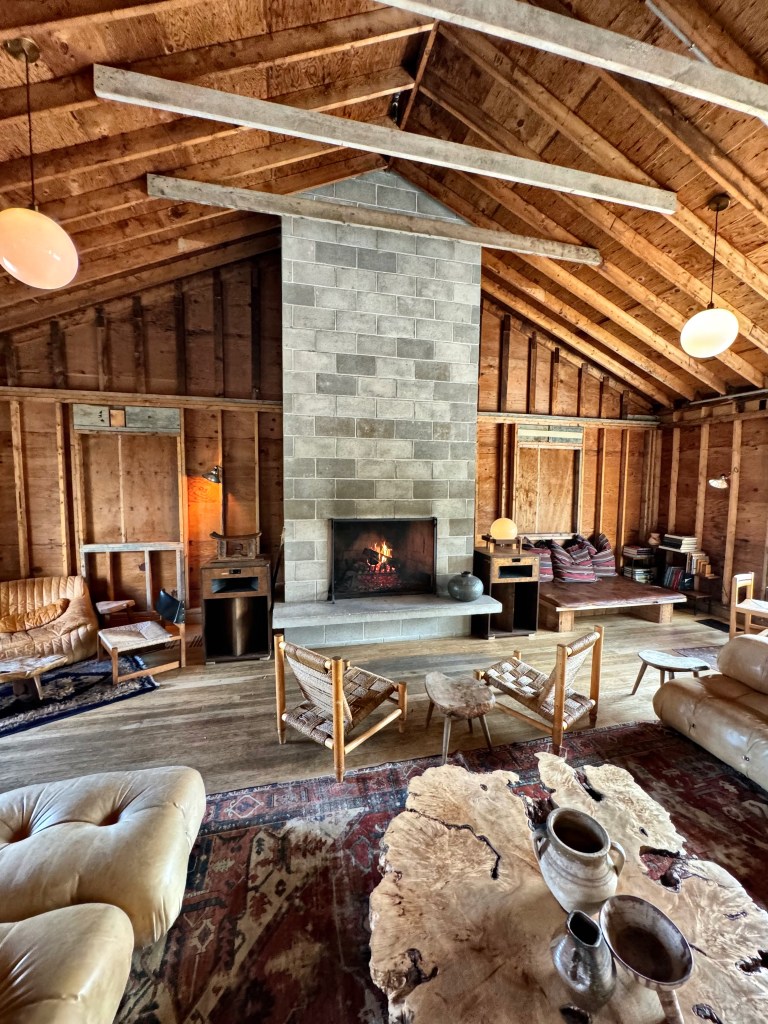
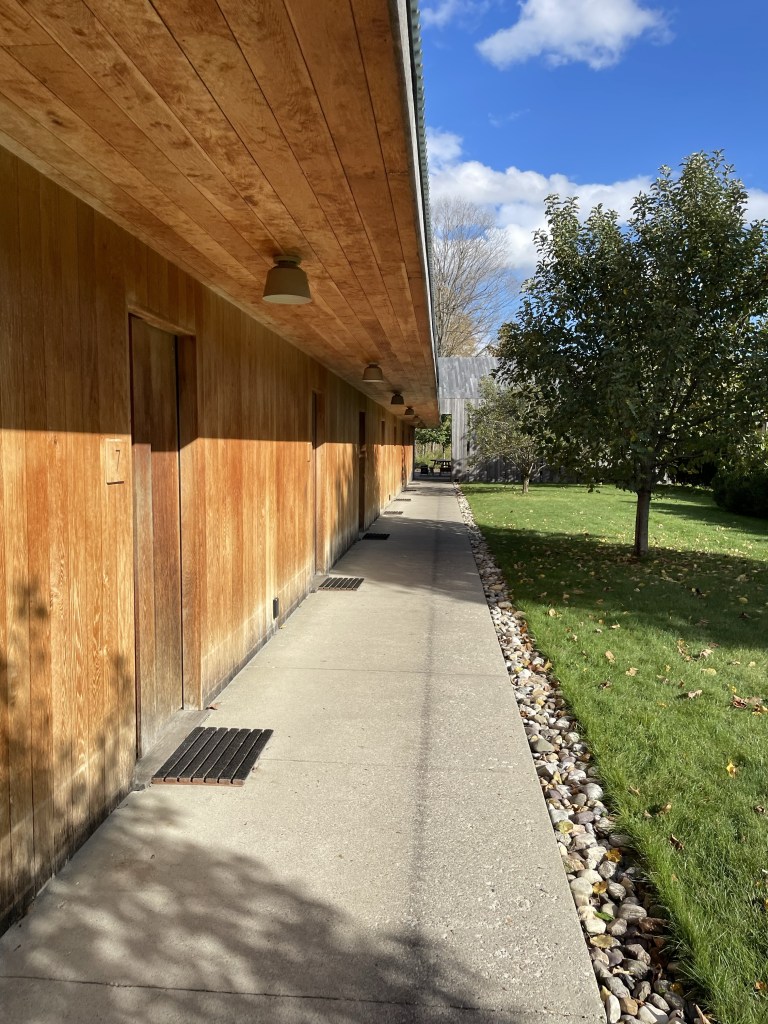
This past weekend, I had the absolute pleasure to stay at one of New England’s coolest new hotels, Tourists Hotel! Located in the industrial-turned-artistic town of North Adams in the Berkshires of Massachusetts this elevated, 48-room hotel modernises the aesthetic of a classic American motor lodge with contemporary design that feels cozy and inviting. The site was originally home to the Redwood Motel, a prototypical 1960s motel on the Mohawk Trail, a designated scenic tourist route which became popular in the automobile era of the 20th century. The reimagined motel was developed by Broder a Boston-based developer who worked with architect Hank Scollard and landscape architecture firm Reed Hilderbrand to design the new hotel. U-shaped in plan, the main part of the hotel surrounds a central courtyard with native flora. Facades are wrapped in white oak planks with the intention to blend the architecture with the surrounding woods. My favorite part was that the rooms have sliding glass doors which open to private decks which make rooms feel more personable. On the crisp fall day, the lounge was an amazing space to cozy up with some spiked cider and chat with other guests. An unexpected treat was to learn that the grounds include dozens of walking trails running along the Hoosac River with a suspension bridge that stretches 220 feet across. Pictures do not effectively showcase how special Tourists is, both in the design details and the attention to detail the staff had during my stay. If you are ever in the Berkshires for a weekend trip, I highly recommend you check them out!

Merrill Whitney Tenements // 1897

In the late 19th century, Merrill Whitney, a former stone mason, and his wife Harriett, built a dozen multi-family housing units or “tenements” for the surge of working-class residents moving into the City of North Adams, Massachusetts. As the factories and mills were overrun with immigrant workers, rental units were built to provide housing for them and also lined the pockets of established residents of the city who could supply the much needed housing there. Some landowners like the Whitney’s built high-style housing that rivaled some of the single-family homes there. This was a two-family home that was rented through the early 20th century, and still features front porches, a tower, and Victorian-era detailing.

Mount Williams Reservoir Gatehouse // 1914

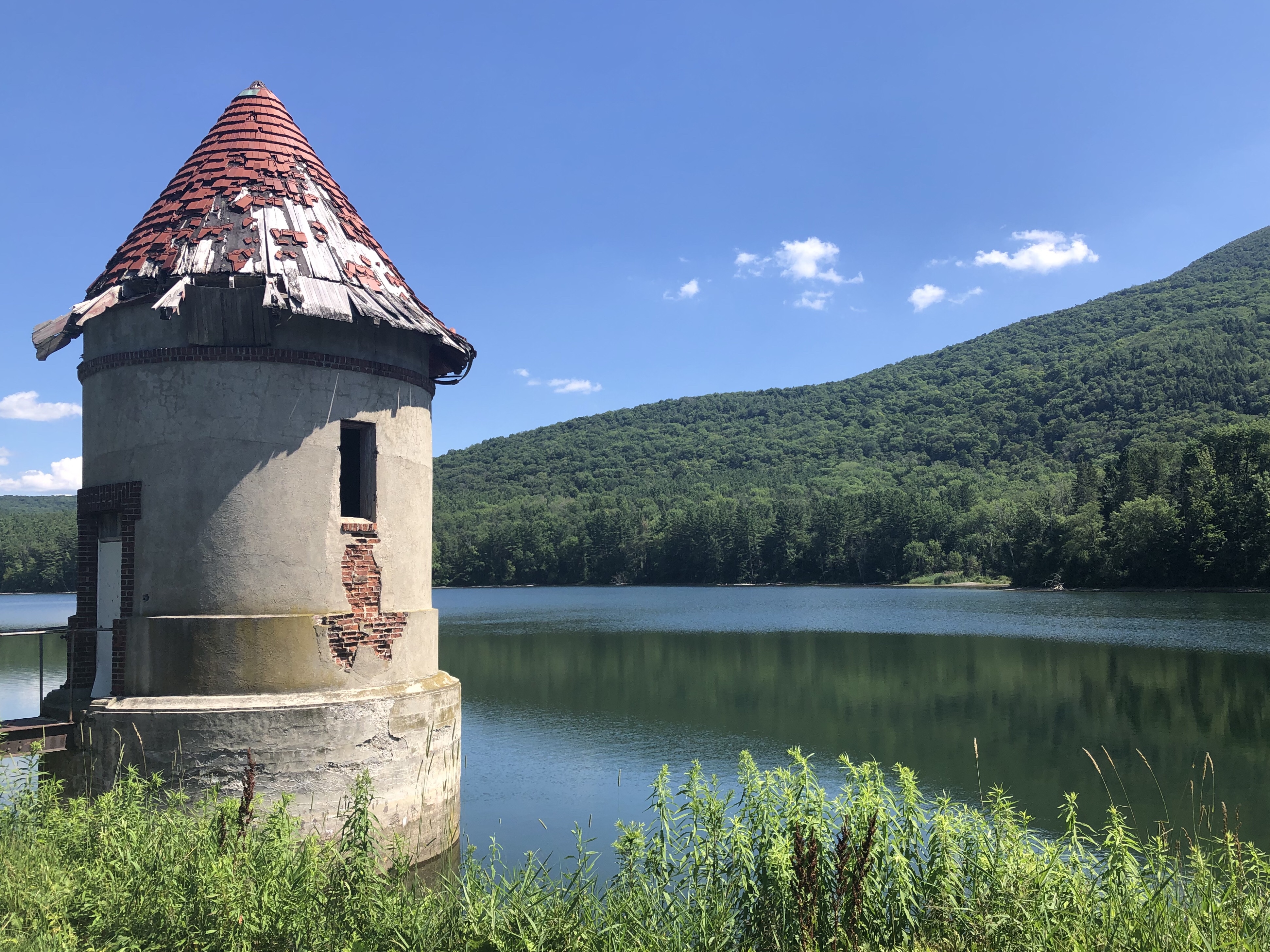
An adequate water supply for the residents and industry of North Adams was from the late 19th century, an issue of paramount importance to residents. For the next several decades the population grew at such a high rate that a reservoir was required, and in 1914, the Mount Williams Reservoir was planned and constructed. Land was selected where a small Brook passed through and a concrete core dam was designed and built that year to impound the brook. At the waters edge, a gatehouse, once perched upon the shore like a castle, is decaying. The gatehouse is a cylindrical brick structure clad in stucco, capped with a red tiled conical roof. The structure remains active to this day with a more modern structure nearby providing support to North Adams’ waterworks system.

Whitman House // 1881

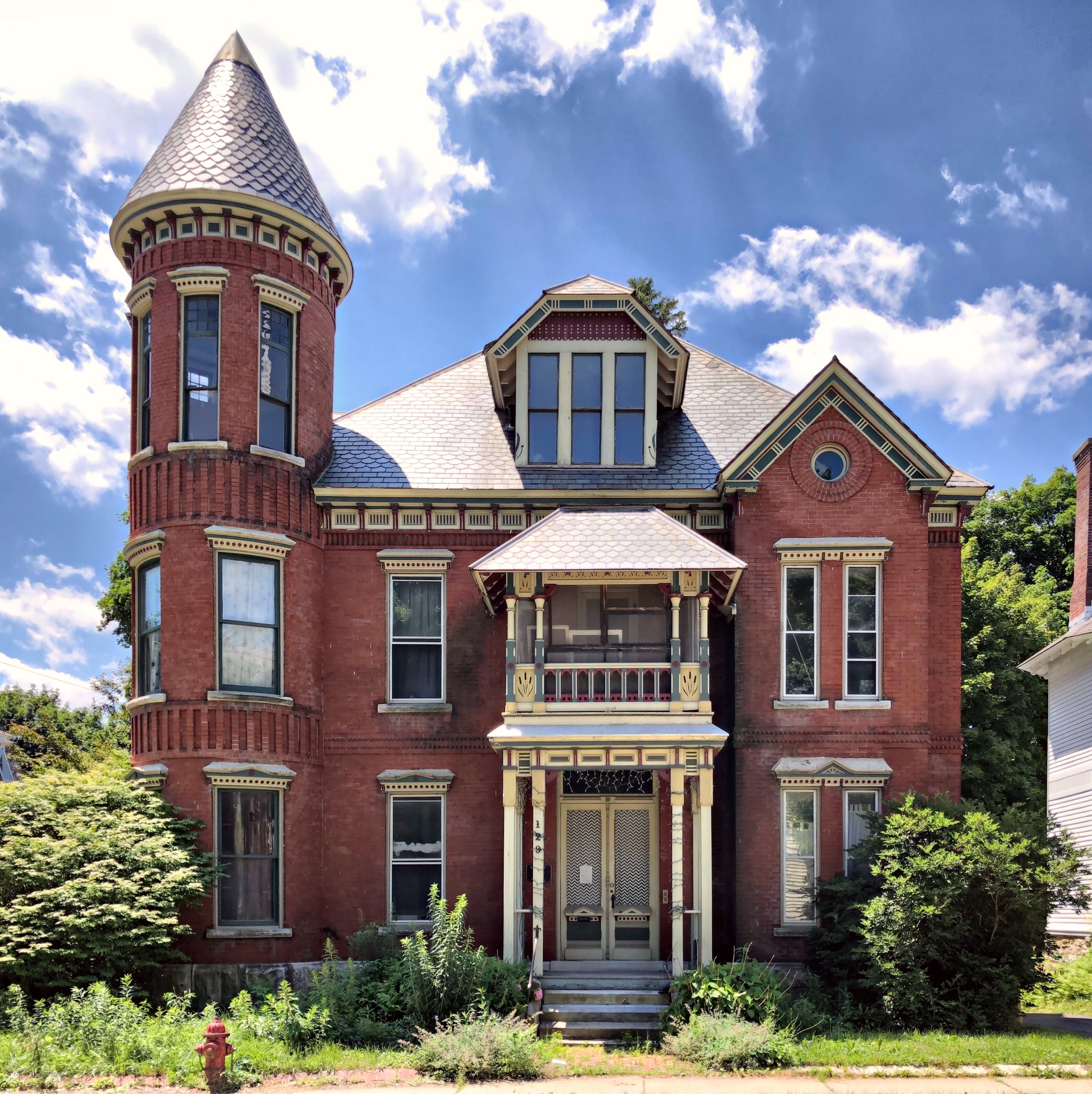
Built in 1881 for William Henry Whitman, this stunning Victorian house remains one of the better-preserved in the town of North Adams. William Whitman was a successful shoe manufacturer in town that lived modestly until his late 40s when he had this home built. The brick home is trimmed with freestone and features a very prominent three-story corner tower with conical roof. The house is a blending of the Stick and Queen Anne styles, under the umbrella of the ‘Victorian’ classification.

Walker House // 1882

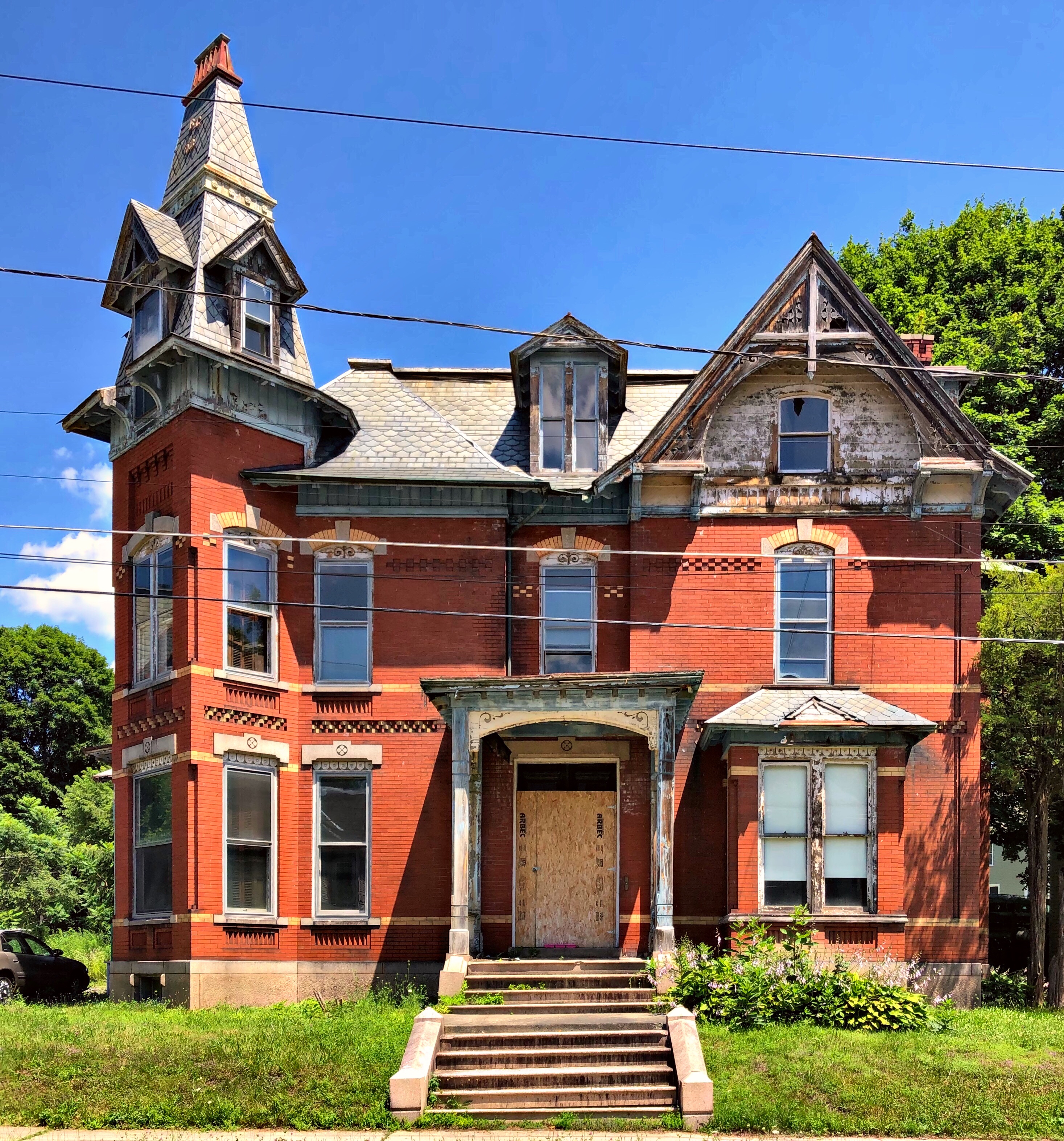
This house was built in 1882 for Frank Walker, a merchant who owned a feed and grain store in Downtown North Adams, Massachusetts. The Stick and Queen Anne style home was designed by architect Marcus F. Cummings, who also designed the Blackinton Mansion. The brick and freestone home was converted to multi-family sometime in the mid-20th-century due to the changing demographics of the town. Since then, the home has seen weathering and deferred maintenance, but retains much of its original detailing and character.

Blackinton Woolen Mill // 1917

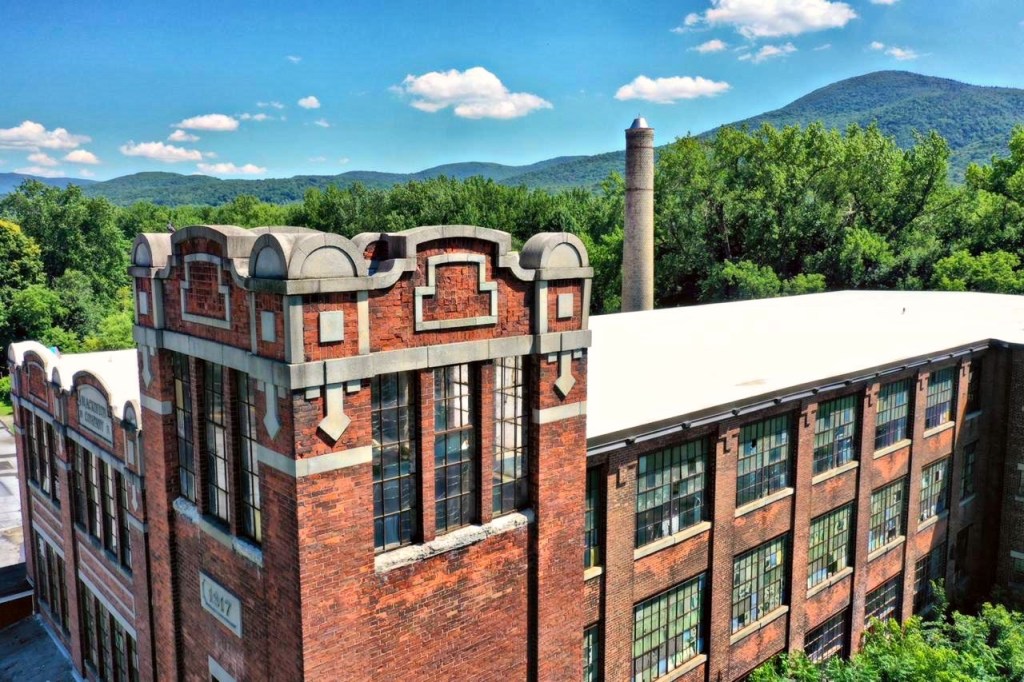
On the outskirts of North Adams, in the village of Blackinton, you will find this massive decaying mill complex slowly being overtaken by Mother Nature and time. The complex is the Blackinton Woolen Mill, which was founded by Sanford Blackinton, who started his woolen mill on the banks of the Hoosic River in 1821 (later building his mansion closer to town). The mill increased production yearly and produced cloth during the Civil War for the Union cause. After, the mill increased production and ran 24 hours a day with the only time the mill would close down would be for mill fires, machinery repairs, or low water supply. In 1869, 162 men, 105 women, and 35 children worked in the mill with the length of the working day being eleven hours! After Blackinton’s death, the mill was succeeded by William Pomeroy, his son-in-law, who had marketed the Blackinton product through his own woolen goods store in New York. In 1917, the present main mill building was built; it is three stories high, with large windows in recessed bays between vertical brick members, resembling pilasters, which rise from the ground to the flat roof. The tower and parapet on the end facing the street are decorated with ornate castellation giving the complex a high-style design. The mill was constructed behind the weave shed (1908) which is a long one-story structure fronting the main street, decreasing the mill’s presence. As is the history of industry in New England, the mill struggled after WWII with a national shift to a service economy away from production. The building has been vacant since the late 1980s and has been eyed for redevelopment into loft and artist studios since.

Fingers crossed!

Blackinton Mansion // 1865

This mansion in North Adams, MA was built in 1865 for Sanford Blackinton. Blackinton was said to be the first millionaire in North Adams, and his mansion was the most elaborate home ever built in the city. His mill produced woolen goods during the Civil War including cloth for the Union forces. After the Civil War, many factory owners no longer lived amongst their workers, as they formerly had done, but instead built luxurious mansions in other neighborhoods, away from their factories. These large residences were designed in extravagant modern styles to impress the public and reflect the stature of their owners. European materials were even imported to grace these homes, such as the Italian marble fireplaces in the Blackinton Mansion.

Sanford Blackinton built his mansion in the hopes that it would become the ancestral home for his descendants. However, after the death of his widow (their four children died by the 1870s), the mansion was put up for sale in 1896, and was bought by North Adams’s first mayor, A.C. Houghton.
He in turn donated the mansion, along with $10,000 for renovations, to the city, to be used as a public library and as a meeting place for the local historical society. He requested that the building be known as the Andrew Jackson Houghton Memorial after his late brother. The home, designed by architect Marcus Fayette Cummings, is a high-style Second Empire mansion with a prominent tower, constructed of red brick with brownstone trim.

St. John’s Episcopal Church // 1868

The St. John’s Episcopal Church in North Adams, MA was established in 1855 by Rev. William Tatlock and Stephen Higginson Tyng Jr. while both were studying at nearby Williams College. A church was built in 1858, but deteriorated quickly, and the congregation gathered funding to erect this large edifice. Architect Stephen C. Earle, a leading architect in Central and Western Massachusetts, designed the Gothic church constructed out of large stone blocks quarried nearby. The church continued to grow over the next decades, and it was added onto as the immigrant community boomed in town following North Adams’ industrial growth. In 1893, the adjoining Parish House was constructed of the same stone as the main church, also designed by Earle. In the 20th century, membership shrunk due to decreasing population, and in 2011, the parishes of St. John’s Episcopal Church in North Adams and St. Mark’s Episcopal Church in Adams merged to form the All Saints’ Episcopal Church.

North Adams Universalist Church // 1893

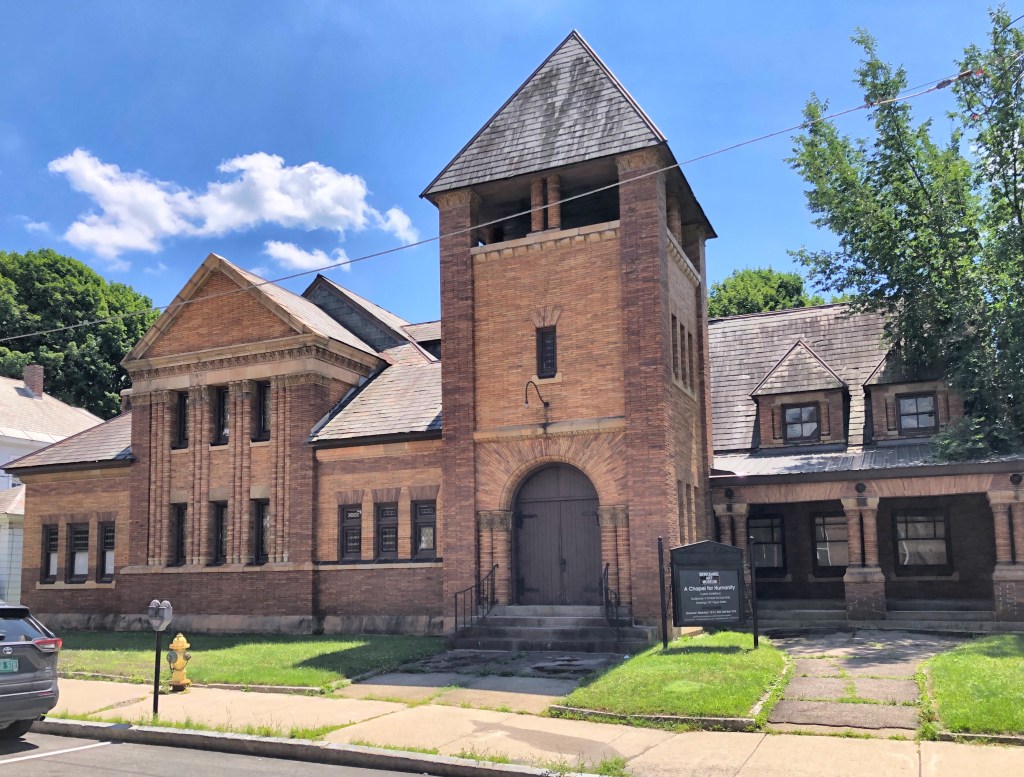
Tucked away off Main Street in North Adams you’ll find this charming little church. The Universalists were organized in North Adams in 1842, restoring an existing church near the Hoosic River. The congregation chose a site for a new church in 1852, and erected a white wooden chapel. It is unclear if the church was outgrown or a fire destroyed it, but the Unitarian society voted to build this church for a cost of approximately $25,000 in 1892. Architect Henry Neill Wilson of Pittsfield drew the plans, and the firm of Porter and Harnam of North Adams constructed the church. Due to the declining population in town in the mid-20th century, the church struggled and was sold to a private owner. The building began to decay by the 1970s and was later sold in 1996 to Barbara and Eric Rudd to house artist Eric Rudd’s installation entitled “A Chapel for Humanity”. The building is currently used as the Berkshire Art Museum Annex.