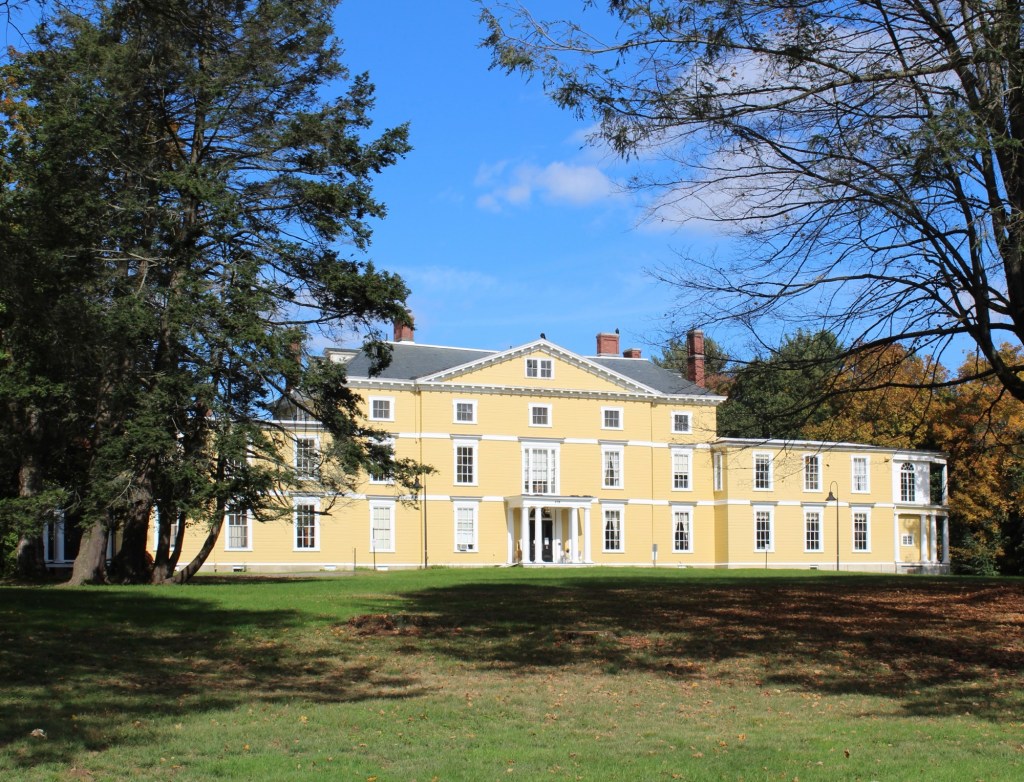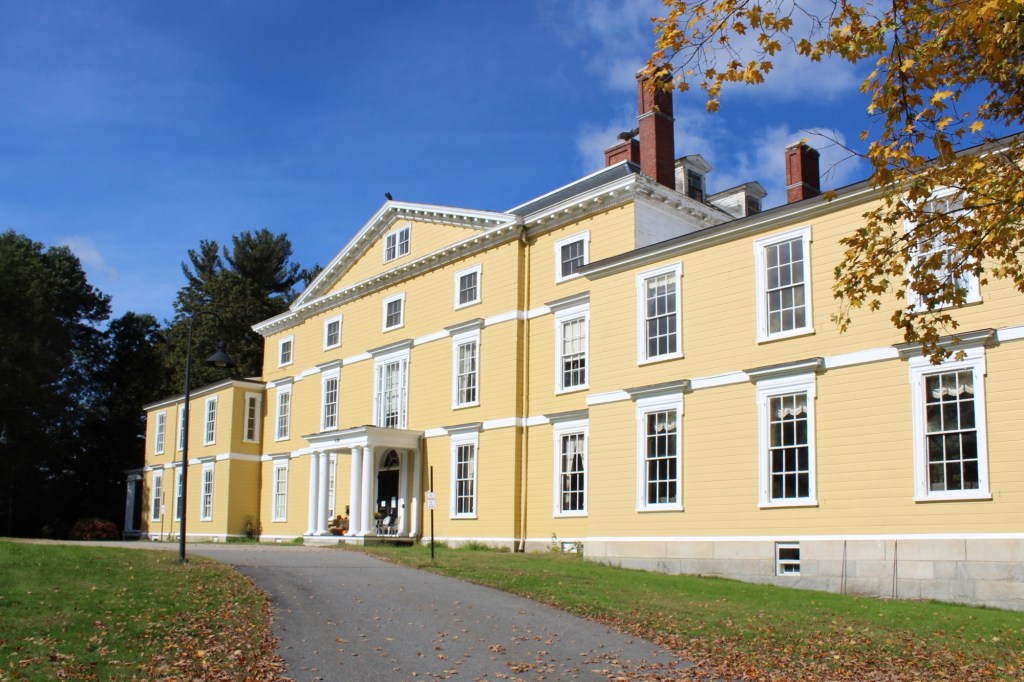
Nathaniel Thayer Mansion // 1902

The Thayer Family is one of the most prominent and well-connected families of New England, and that stature comes with handsome estates. Nathaniel Thayer (1801-1883) was born in Lancaster as the son of Reverend Nathaniel Thayer (1769–1840), a Unitarian congregational minister. Nathaniel Thayer Jr. made his fortune in businesses and held deep ties to his hometown, despite spending most of his time in Boston. He took down the original Thayer home on this site and developed the estate in the 1850s. After his death, the property was inherited by his son, Nathaniel Thayer III (1851-1911), and the house was enlarged and remodeled in the Georgian Revival style in 1902 by the architect and interior designer Ogden Codman Jr. The mansion served as a summer home to Nathaniel, who too spent much of his time in Boston. After his death, the 46-room mansion was sold out of the Thayer family with many of its furnishings sold at auction. The Nathaniel Thayer Mansion house was sold to Atlantic Union College in 1943 at a cost of $12,500. It was used as the school’s administration building between 1945 and 1951, and then as a dormitory until about 1970. From 1973 to present-day, the estate has been home to Thayer Conservatory, Center for Music and the Arts, who do a great job at preserving this significant landmark.

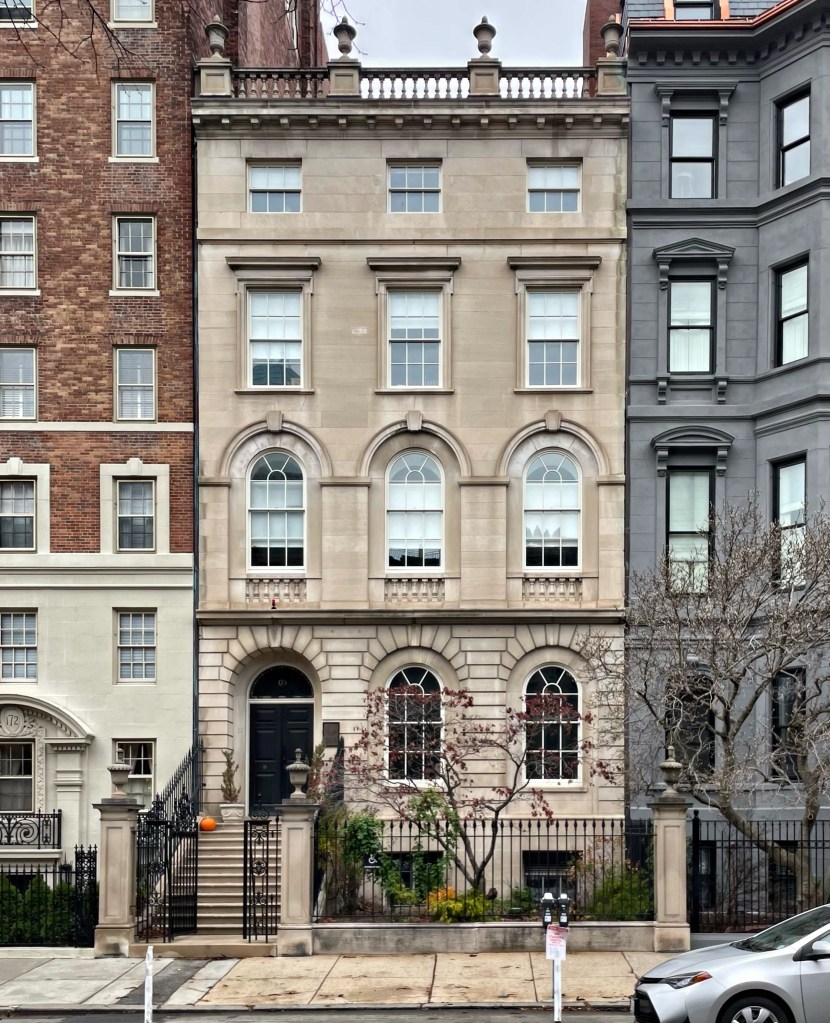
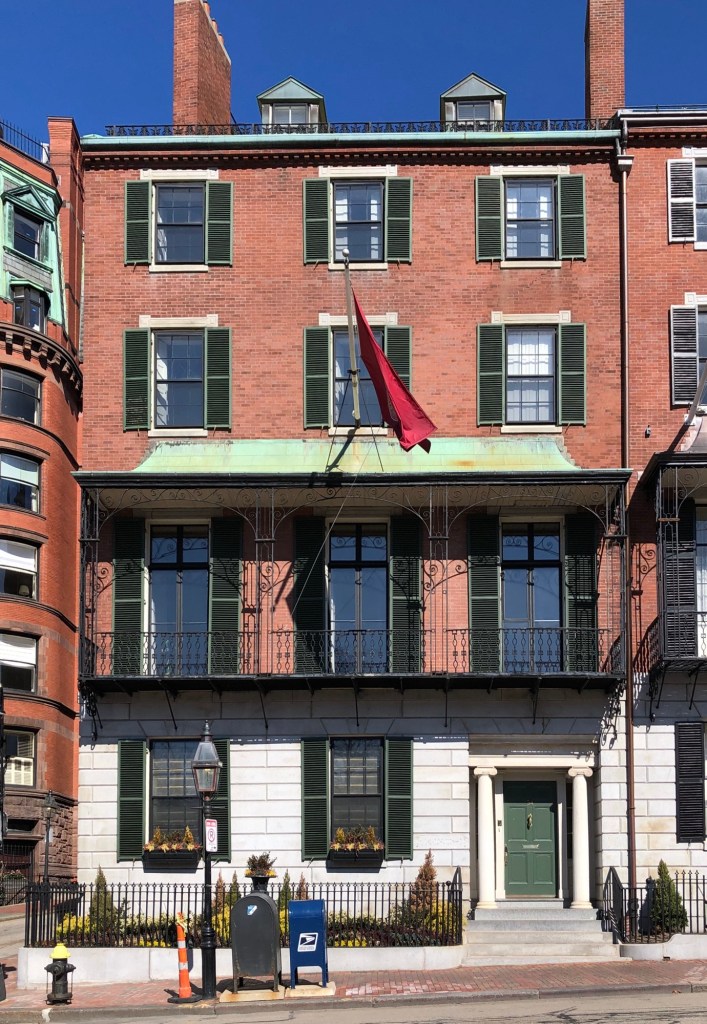
Cushing-Gay Townhouse // 1862

The Cushing-Gay Townhouse at 170 Beacon Street in the Back Bay neighborhood of Boston stands out as one of the most unique and pleasing early remodeled homes to look at. 170 Beacon was built by 1862 as one of two contiguous houses (168-170 Beacon) built for John Gardiner Cushing and his younger brother, Robert Maynard Cushing. John Gardiner Cushing built this house, which was originally a Second Empire style home similar to the dark gray residence nextdoor. The Cushing Family owned the property until 1894 and the property was sold to Helen (Ellis) Brooke, the the wife of Rev. Stopford Wentworth Brooke a British politician and later a minister of the First Church (Unitarian) of Boston. The Brooke’s moved back to England in 1900 and this home was sold to Eben Howard Gay, a banker and note broker. Eben’s wife of less than two years died just before he purchased this house on Beacon Street, she was just 26 years old. As a bachelor, Eben Gay hired architect and interior designer Ogden Codman, Jr., to remodel the 1860s house, giving it the present Adamesque front façade and new interiors to provide a setting for his collection of Chippendale furniture. The after being bought and sold numerous times following Gay’s financial struggles and selling of his prized home, the Cushing-Gay Townhome was purchased by the German Government in 1966 and is today the Goethe Institute, Boston, a cultural center and language school for the German language.

Land’s End // 1864

One of the more architecturally modest and refined Gilded Age summer cottages of Newport sits on one of the most picturesque pieces of land at the southeastern point of Aquidneck Island and is aptly named Land’s End. The cottage was built in 1864, Land’s End was designed by John Hubbard Sturgis for Boston banker, Samuel Gray Ward, his father’s business associate. The home features a refined Italianate style base with a roof comprised of a variation of the Second Empire mansard style called a “turtleback roof”. Land’s End is probably most famous as the residence of Edith Wharton (1862-1937) after she acquired the property in 1889. She worked with Boston designer Ogden Codman, Jr., to experiment with a style of subdued classical interiors and a remodel of the exterior, which was later featured in their book, “The Decoration of Houses”. Wharton was inspired to show what good taste is after the influx of Vanderbilts and other newly moneyed summer residents of Newport. The book focused on how to build and decorate houses with nobility, grace, and timelessness. It would, they hoped, lead its readers out of what Wharton called (pace the Vanderbilts) a “Thermopylae of bad taste” and into an aesthetic Promised Land. Wharton only lived at Land’s End for a decade, when the “stuffiness” of high-society there led her to move to the Berkshires in Massachusetts, where she worked with architect Ogden Codman to design her new home, The Mount. It the monstrous Lippitt Mansion, Breakwater was built at the time, just next door! did not help that Sadly, many of the interiors have been altered since Wharton’s time there, but with more recent interventions, but the book did help shift some of Newports later homes to a more refined, classical taste.

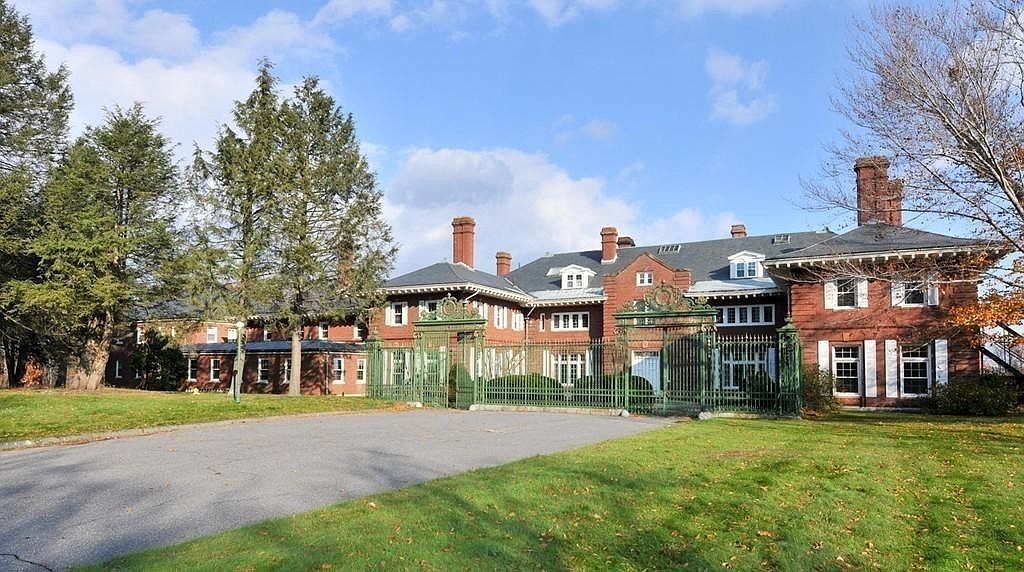
Hawthorn Hill Estate // 1903

The only estate in Lancaster that can rival the Nathaniel Thayer Estate in size and grandeur is the OTHER Thayer estate, built for Bayard Thayer. Sitting on over 55 acres of forests and gentle rolling fields, Hawthorn Hill is one of the most impressive mansions in Central Massachusetts. The property is so secluded that I had to rely on real estate photos to share! The listings mention that there are over 40 bedrooms and 27 bathrooms… Bayard Thayer (1862-1916) is the grandson of Nathaniel Thayer, Unitarian minister of the First Church of Christ in Lancaster and son of Nathaniel Thayer, a banker. When his brother was willed the family estate (featured previously) after the death of their father, Bayard used the opportunity to build a modern estate high upon a hill in town. The mansion was built in 1903-1904 under the direction of Guy Lowell, a renowned Boston architect of the time. In 1907-1908, Little and Browne were commissioned for landscape alterations and in 1914-15, Ogden Codman Jr. was commissioned to renovate the interiors. Bayard died one year later, and the property remained in the family until around WWII. In 1953, the property was acquired by the Boston Cenacle Society, who added a massive dormitory addition to the building. Recent plans were unveiled to subdivide the land and build house lots on half the estate, which gives me mixed feelings.

Hampshire House // 1911

Built in 1911 as a single-family home for Bayard and Ruth Thayer, this building on Beacon Street is one of the most visited in the city (I will get to that later). The four-story home replaced two large townhomes across from the Public Garden and was designed by New York based architect, Ogden Codman, Jr., who was born in Boston into the esteemed Codman family. Bayard Thayer died within five years of the completion of the house, and his widow, Ruth, and their children continued to occupy the massive residence into the 1930s. By 1944, the home was being used as a lodging house, a violation, and it was sold two years later to a realty company who operated apartment houses. From this time the house functioned as a residential hotel known as the Hampshire House. In 1969, Thomas Kershaw acquired the property and kept its name, which it retains today. In the same year they opened the Bull & Finch Pub in the basement, which in 1982 became famous world-wide as the locale for the bar in the television sitcom Cheers, one of the most-watched programs in television history. Pictures of the exterior of the building were used in the show’s credits and scene changes, and the interior was faithfully replicated in a set used in Hollywood. The building is now habitually swarmed by locals trying to get to drink in a piece of cultural history.