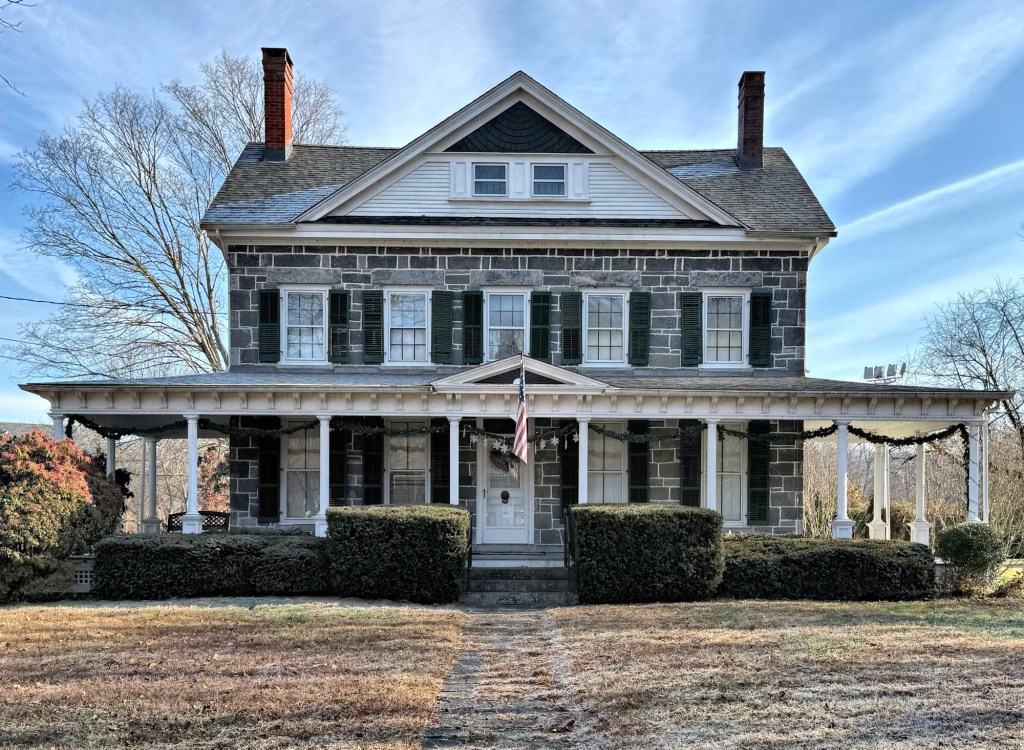
Southworth House – Deep River Historical Society // 1842

The Southworth House, also known as the Old Stone House, in Deep River, Connecticut, is a significant example of a stone, Greek Revival style house built for an important local family. The Southworth House was constructed in 1842 for Deacon Ezra Southworth (1803-1859) from stone harvested from one of the Southworth family’s quarries. Ezra was the son of local shipbuilder, Job Southworth who began building ships at the Deep River landing in the 1790s. Ezra Southworth branched off into manufacturing, becoming a partner and patent holder producing ink wells. His son, Ezra Job Birney Southworth (1844-1919), went into business with his father-in-law in shipping and served as a member of the State Legislature twice. In 1882, Ezra Jr. added the wooden ell onto the rear of the Stone House along with the wrap-around veranda and likely the rear barn as well. Ada Gilbert Southworth Munson was Ezra J. B. Southworth’s only child to live to adulthood and inherited the family home. She was a founding member of the Deep River Historical Society and bequeathed her family home to the Society in 1946, who have maintained the significant home here ever since. 
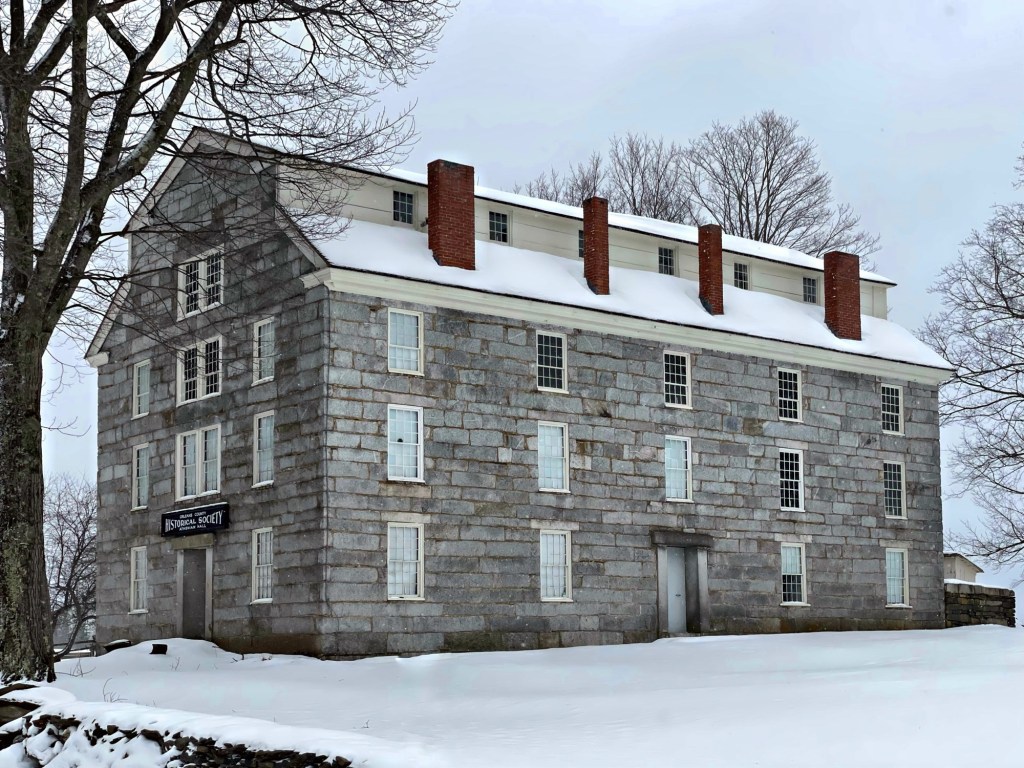
Athenian Hall – Old Stone House // 1836

Across from the Alexander Twilight House (last post) in Brownington, Vermont this massive stone structure which is possibly the first granite public building constructed in the state. Alexander Twilight (1795-1857) is reputed to be the first African American in the United States to graduate from college, where he was likely inspired by the large granite dormitories there (a private institution). Twilight served as headmaster of the Orleans County Grammar School, which due to its rural location, required many students to travel long distances for their education. As a result, they boarded with families in town, including with Twilight. Athenian Hall was built to accommodate the larger number of students attending the Grammar School. The building closed in 1859, two years after the death of Alexander. The building sat vacant for much of the late 19th and early 20th centuries until 1918, when the Stone House was put up for auction. A representative of the railroad in the state of Vermont bid on the structure with the hopes of using the granite stones for bridge abutments. Luckily for us, The Orleans County Historical Society outbid the railroad and won the auction. The building was opened as a museum in 1925 and is today part of the Old Stone House Museum and Historic Village.