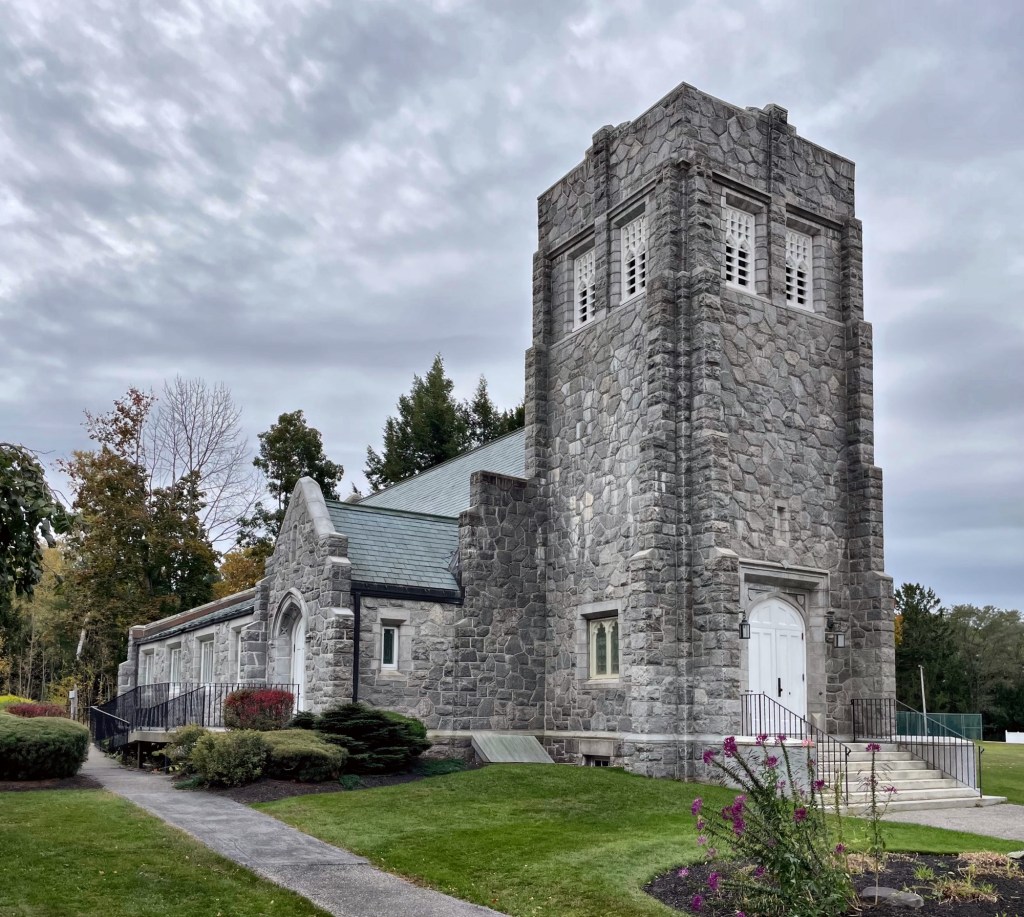
All Soul’s Chapel, Poland Springs // 1912

As part of the ever-growing Poland Springs Resort in Poland, Maine, the operators of the Poland Springs Hotel sought to erect a house of worship for guests and local community members. In 1909, fundraising had risen to total of $15,000 and that, along with a matching contribution by the Ricker Family, who owned the Poland Springs Resort, allowed for the hiring of an architect and the project to commence. Boston-area architect George Henri Desmond furnished the plans for the chapel, and were also hired by the Ricker family to complete plans for alterations to the Mt. Kineo House on Moosehead Lake during the same time period. All Souls Chapel is a Neo-Gothic Revival building constructed of irregular granite blocks with a gable roof covered with slate. It has a central tower with a flat parapet roof and a belfry with ornate louvered openings. The tower is square in plan and contains the principal entrance to the chapel. When the chapel was opened in 1912, it was opened as an interdenominational place of worship for use by Catholics and Protestants. Guests contributed much of the interior furnishings and all of the memorial hand-painted windows placed in the chapel were sponsored by guests or relatives of longtime guests. Today, the chapel hosts weddings, baptisms, and other similar events.
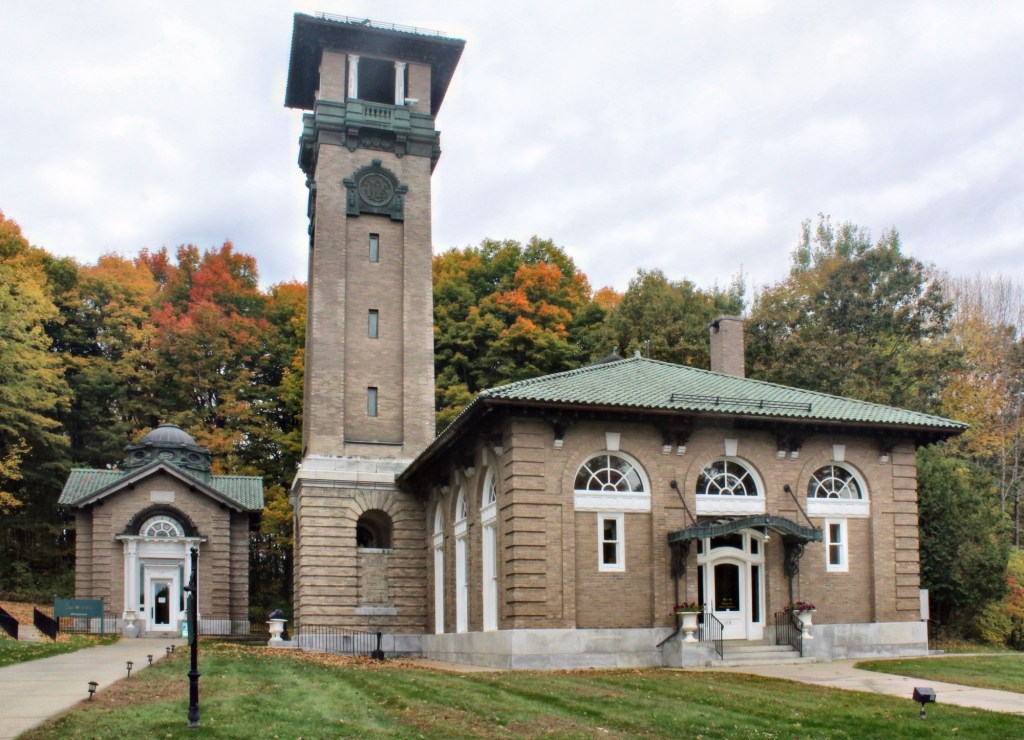
Poland Springs Bottling Plant & Spring House // 1907

The Poland Springs Bottling Plant and Spring House contribute to the rich history of what was once a major American spa resort. In as early as 1797, Jabez Ricker founded a hostelry at the springs on his property in Poland, Maine, and later claimed that drinking the water saved him from a serious illness, a claim that was expanded by other members of his family for generations. In 1876, Hiram Ricker, Jabez’s grandson, opened the Poland Spring House, a “watering place” or spa, acclaimed for its health-giving environment. While the grand hotel burned in 1975, the bottling plant and spring house designed and built in 1907, still remains on the grounds. In 1903 Hiram Ricker’s son, Edward P. Ricker, wrote to architect Harry C. Wilkinson, a native of Poland, Maine, to solicit a design for his proposed bottling plant and Spring House to allow visitors to drink the natural spring water. His idea of bottling the spring waters for transport and sale, which would eventually be the main catalyst for Poland Spring water today! The extravagant Italian Renaissance Revival style buildings sit side-by-side and are of a high-style despite the relatively utilitarian purpose of the facility. Both structures are very well-preserved and are operated as museums, to learn more about the history of the spring water and resort here.

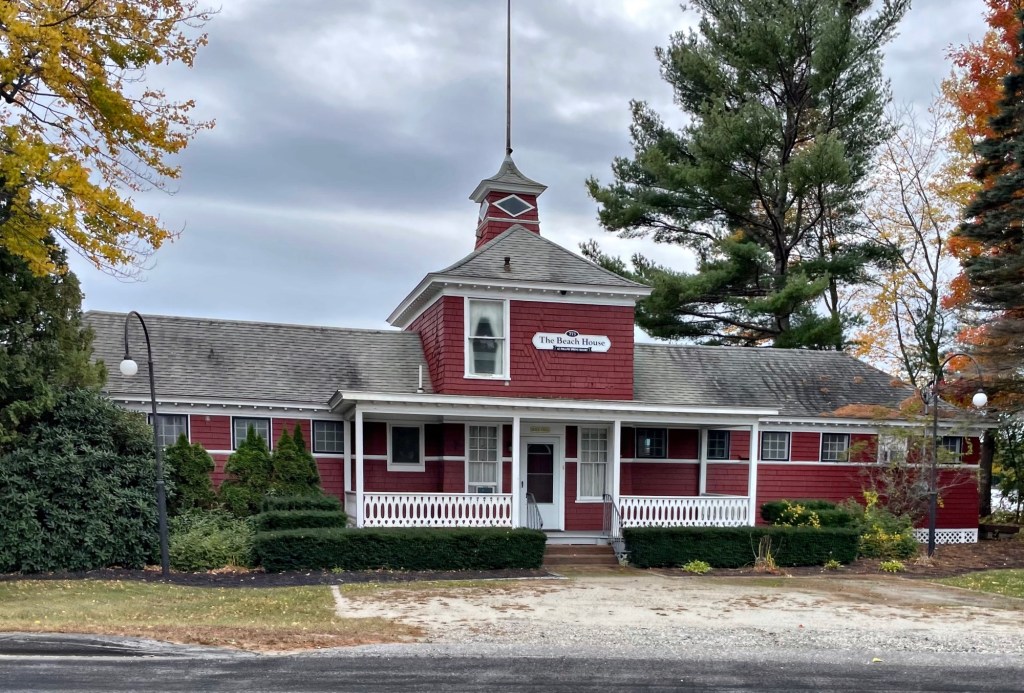
Poland Springs Beach House // 1909

The Poland Springs Resort in Poland, Maine, brought thousands of visitors to the once sleepy community to take in the clean air and healing spring waters on the grounds, and eventually built recreational facilities to keep guests entertained for summers. An 18-hole golf course on the grounds was originally designed by Arthur Fenn in 1896 and redesigned by Donald Ross in 1915; and the Ricker family who owned and operated the resort, sought to take advantage of the nearby Middle Range Pond for guests. In 1909, this 1909 eclectic Queen Anne beach house was built on the northwest edge of Middle Range Pond. For twenty-four years, it was set over the water, supported on piers, but in 1932, it was moved to the east and was set on land. In 1982, the building was remodeled to a private home, now available for rent.

Hiram Ricker House // 1893

The Hiram Ricker House sits in the Poland Springs Historic District of Poland, Maine, and was built as the personal residence of its namesake, who developed this formerly sleepy town into a destination in the 19th and 20th centuries. Hiram Ricker (1809-1893), the son of Wentworth Ricker and Mary Pottle, helped turn his father’s country inn in Poland into a popular late 19th century resort, bringing in droves of tourists to take in fresh air and the healing natural spring water. He and his wife, Janette (Bolster) Ricker had six children, all but one of which helped run the resort. This Queen Anne style residence was designed by Lewiston architect, George M. Coombs, and is set back down a long drive overlooking the resort grounds. Sadly, Hiram Ricker died the same year his residence was built, but the home was occupied by the Ricker Family for years after, notably by Hiram’s son, Hiram Weston Ricker. It is covered in later siding, but the trim details are preserved and typical of high-end Victorian homes of this period in Maine.

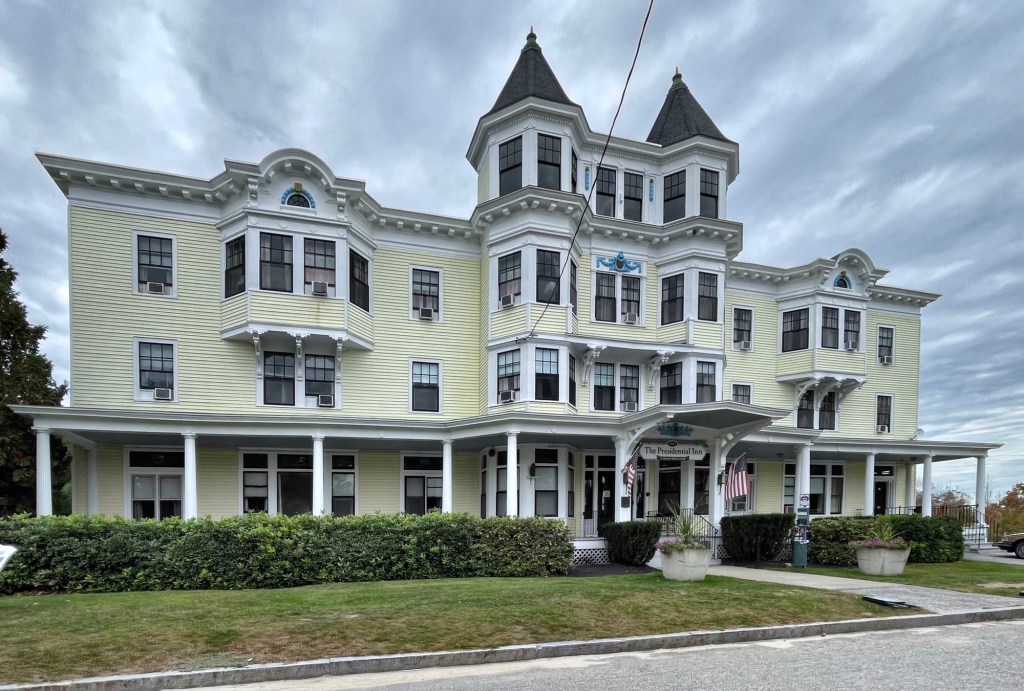
Riccar Inn // 1913

The Riccar Inn, now known as the Presidential Inn, was constructed in 1913 on the grounds of the former Poland Springs House. The structure was the last of the hotel buildings constructed by the Ricker family, who started the resort aimed at drawing in tourists to take in the area’s natural healing waters. The annex hotel building was named Riccar Inn, with the spelling “Riccar” from the historic surname used by members of the family before they emigrated to America. The Queen Anne/Colonial Revival style hotel building survived the 1975 fire that destroyed the main hotel, the Poland Springs House. Architecturally grand, this three-story irregular plan hotel has a flat roof and features a four-story projecting double bay in the front facade topped with two octagonal towers. While covered in vinyl siding, much of the original ornament still shines (and there is likely more underneath the siding to be uncovered at a future date). What a beautiful building.

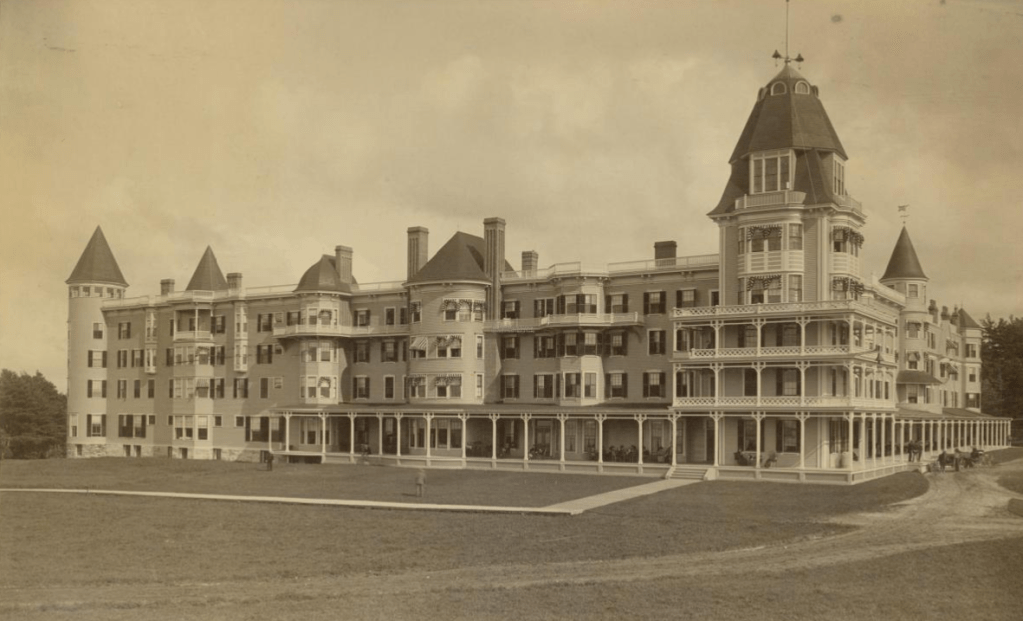
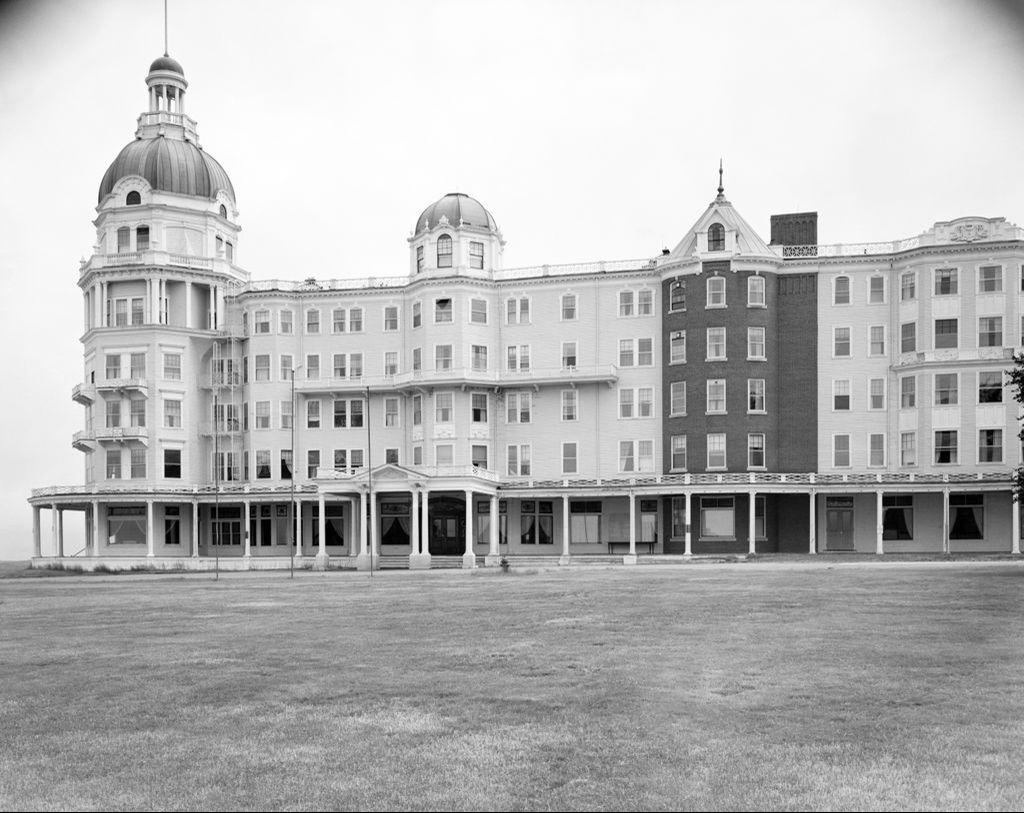
Poland Springs House // 1876-1975

In 1844, Hiram Ricker (1809-1893) of Poland, Maine, drank spring water on his property and found that his chronic dyspepsia was cured. As a result, he began touting the medicinal qualities of the water and in 1859 started selling the water commercially. While the first water was bottled and sold in 1859, it was not until after the Civil War that Hiram Ricker and his sons began heavily promoting the spring as a destination for medical cures – and at the same time promoted the inn and resort that they were building in association with the spring. From this, the Poland Springs Resort (and Poland Springs bottled water) was born. The development saw swarms of tourists looking to escape the polluted cities for clean Maine air and natural spring water, therefore, the Ricker Family built the great Poland Spring House in 1876 to cater to resort visitors taking its waters. The original hotel was Second Empire in style and stood four-stories tall containing 100 rooms. Throughout the 1880s and 1890s, the resort building was expanded, quadrupling its size to 450 rooms as the demand for the resort increased every summer. An annex was also built nearby, named the Riccar Inn, providing even more hotel rooms for guests. By the early 20th century, the 1870s hotel was completely remodeled in the Beaux Arts style by architect Henry Wilkinson with domed roofs and sweeping verandas. After WWII, the resort saw diminishing visitors and would ultimately close in the 1960s. During a period in the 1960s, the hotel was operated as the country’s largest Women’s Job Corps Training Center, but deferred maintenance caught up to the building and it was ultimately shuttered, suffering a devastating fire in 1975, it was demolished soon after. While the large hotel no longer stands, there are many other amazing buildings on the grounds, stay tuned!