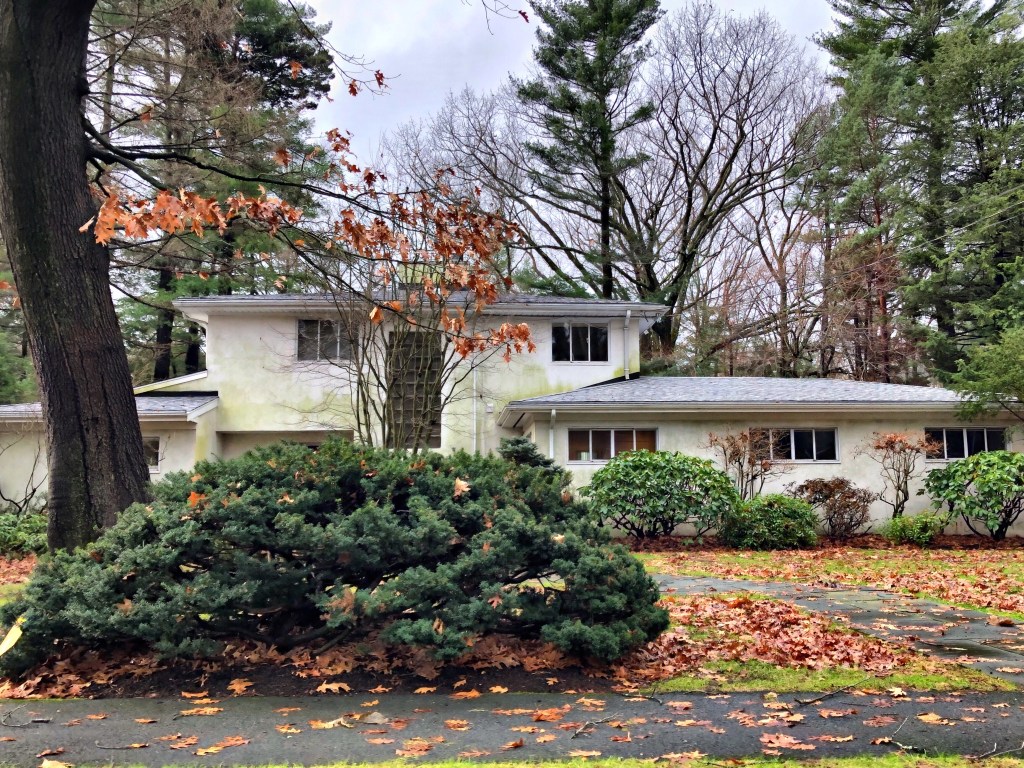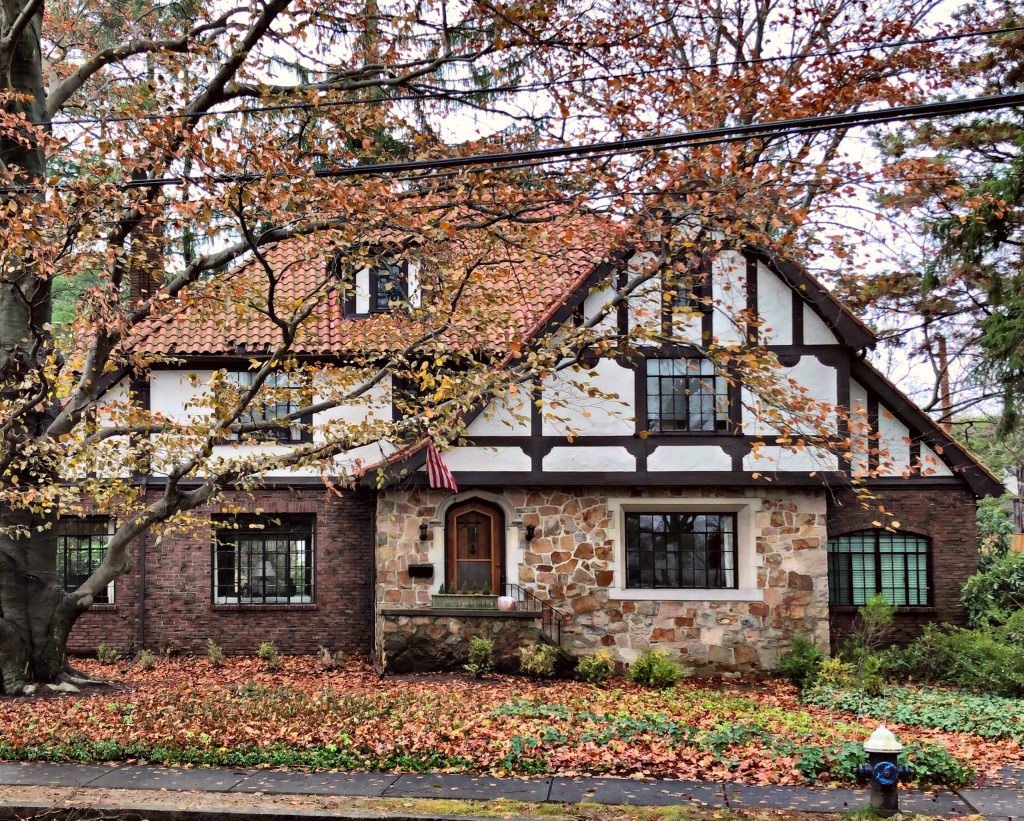
Glacy House // 1930

Residential architecture of the early decades of the 20th century is among my favorites as the Tudor Revival movement took off and was sometimes mixed with other revival styles at the time, creating really unique homes. The Glacy House in South Brookline, MA was built in 1930 as one of the earlier homes in the Walnut Hill development. It was likely designed and built by Walter L. Fernandez, a contractor who appears to have design-built a handful of spec homes to help get the neighborhood’s development going in the early stages. This home was originally occupied by George and Mary Glacy. George later worked as Vice President of the Boston & Maine Railroad, though he later got into legal trouble for hiring companies for railroad projects where he had financial interests, becoming indicted in an antitrust case by a Federal grand jury. The home features a first floor constructed of stone and brick with half-timbering on the floor above. The building is topped by a terracotta red tile roof, which is fairly uncommon for the region.

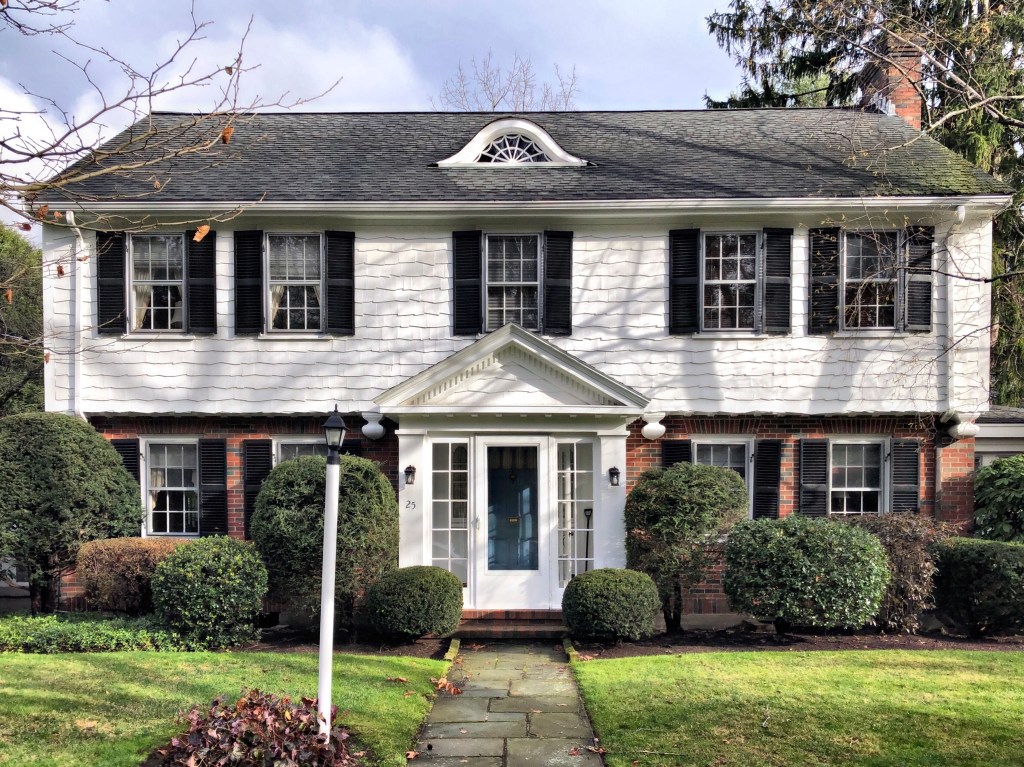
Edith C. Baker School // 1937

At a time when many public school buildings around Boston were designed in the Art Deco or early Modern styles, the Edith C. Baker School in South Brookline went back to basics and represents a nod back to Colonial era design. The whitewashed red brick building was designed and built in phases as the neighborhood surged in population, tied in with the re-emergence of the economy after the Great Depression. The opening of the West Roxbury Parkway in 1919 and the Hammond Pond Parkway in 1932, both precipitated subdivision of the farms in South Brookline for residential development. The first section was completed in 1937 (what is shown in the photo) by plans from the local architecture firm of Kilham, Hopkins and Greeley, who also designed an addition just a year later for the un-forecasted growth in the neighborhood. More additions were added in the decades following WWII, thankfully just as additions and not a scraping of the site which seems to be all the rage now. The school was named as a tribute to Edith C. Baker, a longtime member of the Brookline School Committee from 1900 to her death in 1942.

Webber House // 1935

Located in South Brookline, a neighborhood of mostly early-mid 20th century architecture, you can find amazing residential designs for middle-class suburban families in the Boston area. This home was built in 1935 for Max and Rebeccah Webber in the Garrison Colonial Revival style. The home, designed by architect Harry Morton Ramsay, is characterized by a second-story shingled overhang with decorative pendants reminiscent of 17th century American homes. Adding some extra flair, an eyebrow dormer can be found at the roof, as well as a glazed projecting entry porch with a broad pediment and corner pilasters.

Melnick House // 1935

Built in 1935 (the same year as the Webber House in the last post), the Melnick House in South Brookline shows how the historically oriented designs of colonial New England converged with the Modern principles brought over from the Bauhaus movement from Germany. The 1930s were an interesting time for residential design around Boston as the two diverging styles were often located in the same neighborhoods. The Melnick House was designed by architect Samuel Glaser for Edward S. T. Melnick and his wife, Ethyle Melnick. Edward worked in Downtown Boston as the assistant division manager at Filene’s department store. Architect Samuel Glaser (1902-1983) was born in Riga, Latvia and at the age of four came to the United States with his family, settling in Brookline. He studied architecture at MIT and started his own practice in Boston a niche as a designer of moderately priced homes, particularly in the expanding suburbs where young Jewish families had begun living. The Melnick home combines the austere stucco walls and lack of applied ornament typical of late 1930s Modern architecture in the Boston area with a hipped-roof main block and flanking wings more commonly associated with traditional style houses of the same period. The home features a vertical glass block window which illuminates the interior stair hall.