Frederick Sears Cottage // 1851

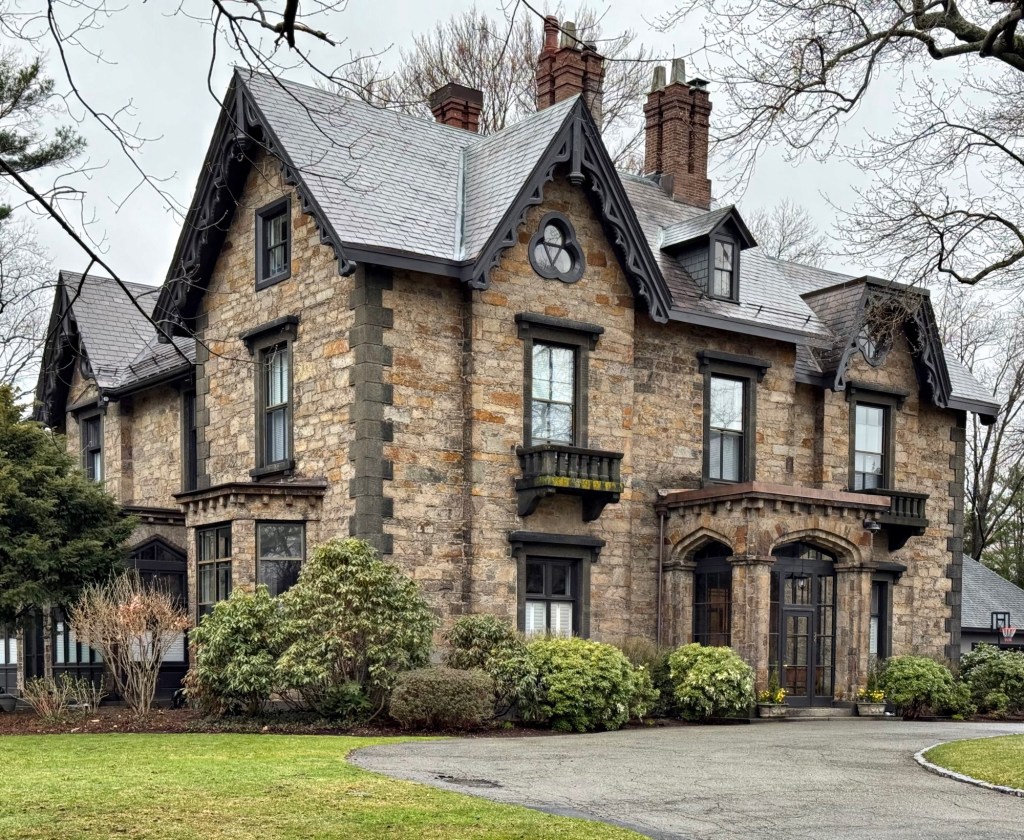
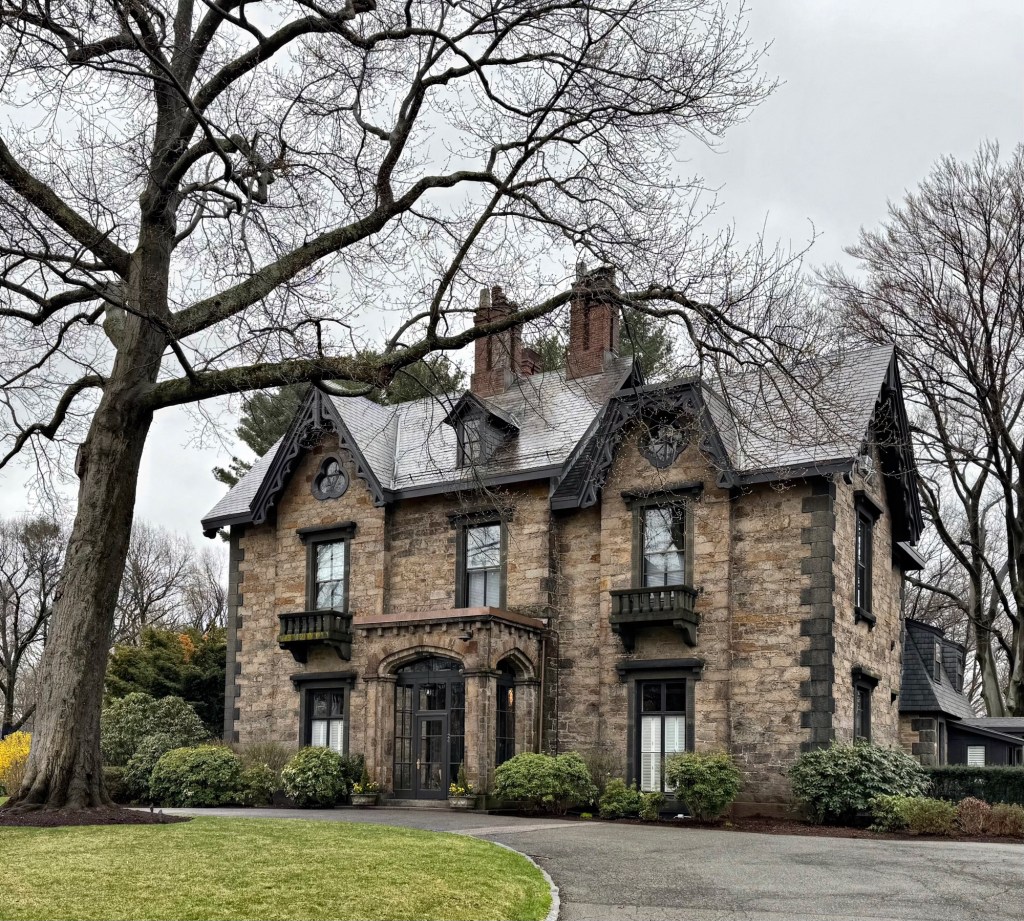
The Frederick Sears Cottage in the Cottage Farm neighborhood of Brookline, Massachusetts, is significant as one of the major surviving examples of Gothic Revival domestic architecture in the Boston area. In 1849, wealthy Bostonian, David Sears (1787-1871) laid out parks and squares in the Cottage Farm neighborhood, and built houses for himself and his children. His own house, erected in 1843, was the oldest, soon followed by houses for his four daughters, Ellen d’Hautville, Harriet Crowninshield, Anna Amory, Grace Rives, and son, Frederick. The Frederick Sears Cottage is the only surviving Sears residence in the Cottage Farm neighborhood. Frederick Sears‘ cottage was built in 1851, though he did not occupy the house long, as just three years after he and his wife married in 1852 to move into this home, Marian died. The house was inherited by Frederick Sears Jr. , and was acquired by Boston University in 1960, who began to expand into this neighborhood. They maintain the significant property very well. The Sears Cottage is an excellent example of the Gothic Revival style in stone with scalloped vergeboards, quatrefoil motifs, corner quoins, and projecting entry. The house is constructed of Roxbury Puddingstone and is said to have been designed by George Minot Dexter.
Dexter-Hall Cottage // 1851

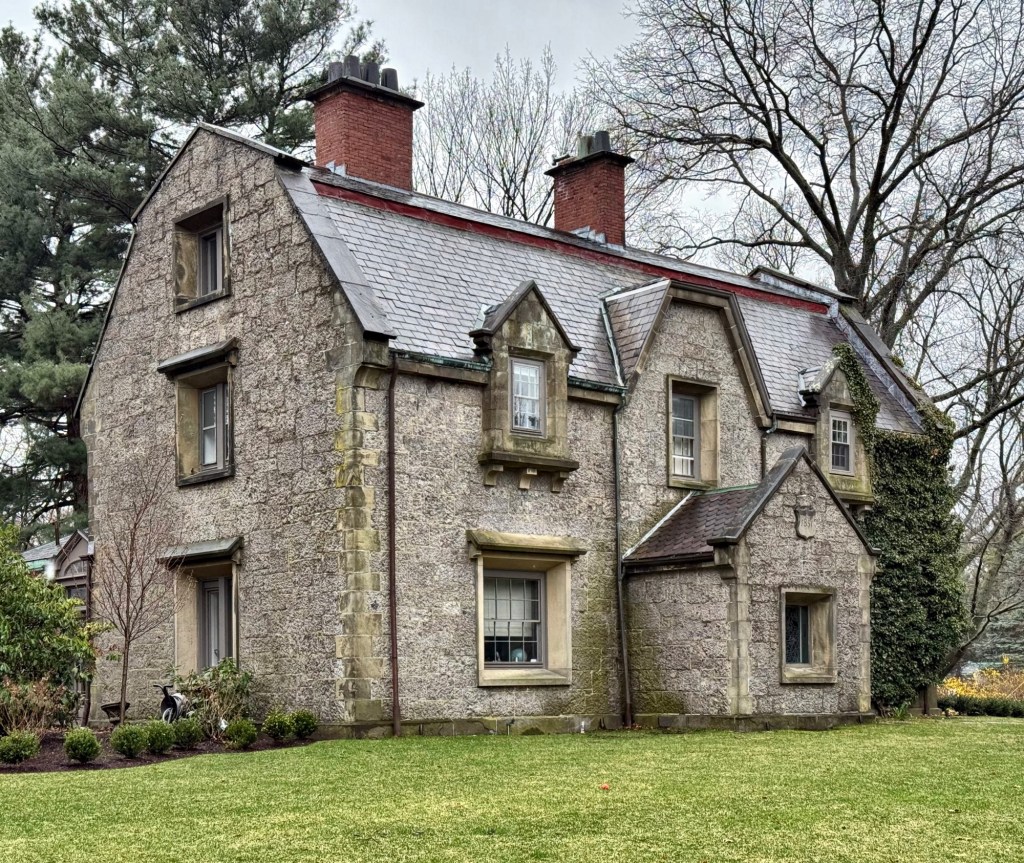
Built across the street from the Amos A. Lawrence House in the Cottage Farm neighborhood in Brookline, the Dexter-Hall Cottage is an early Gothic Revival style residence built in the first period of the district’s history. Architect, George Minot Dexter was gifted a desirable house lot in the neighborhood from Amos Lawrence as a reward for his designing his own property, and in turn, designed this cottage in 1851 in the the same mode as the Lawrence House. The stone cottage has a three bay façade with enclosed center entry. On the second floor are wall dormers as well as a central jerkinhead dormer with a gambrel slate roof. The property was later owned by George M. Dexter’s daughter, Emily, and her husband, Thomas Bartlett Hall. The house remained in the Hall family through at least the 1920s.

Hutchings-Pfaff Gatehouse // c.1884

Once located at the entrance to the Hutchings-Pfaff Mansion, this small stone gatehouse is all that remains of a great Roxbury estate. Built of locally quarried Roxbury Puddingstone decades after the main house was completed, the Victorian Gothic style cottage surprisingly survived the subdividing of the large property and was sold as a private home in the early 20th century. It is uncommon to see these types of outbuildings survive into the 21st century, so I hope to see this charming cottage survive another 150 years!

Ellis House // 1926

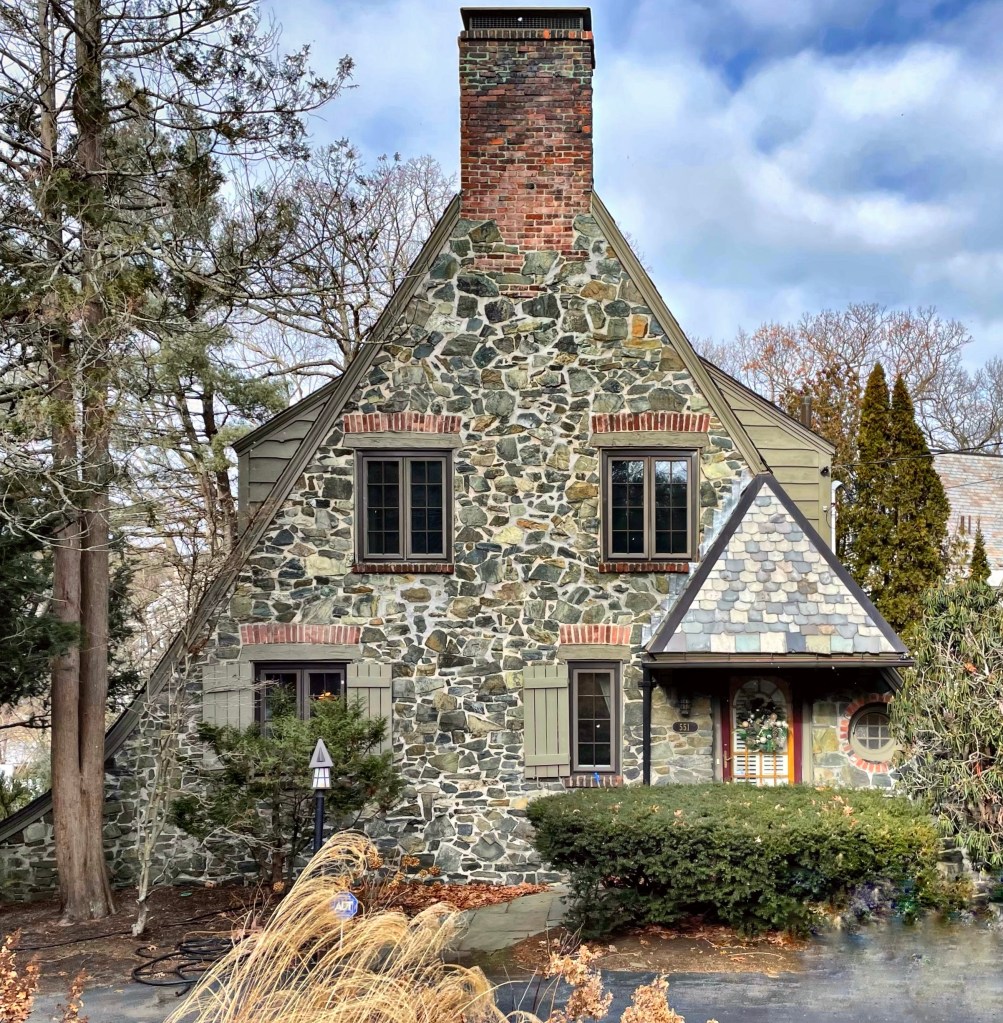
In the land of storybook Tudor houses, this one might just be the most magical of them all! Located on Chestnut Street in Waban Village of Newton, you’ll find this stone Tudor cottage set behind a circular drive. The house was built in 1926, in the interwar period (between WW1 and WW2), a period of rapid suburban development in this part of Newton. The house was first occupied by a Seymour Ellis, who according to newspapers, had a rabid dog! The house exhibits a strong gable to the street which incorporates a massive chimney inside. The gable also sweeps out to form a catslide roof, that incorporates an arched garden gate.