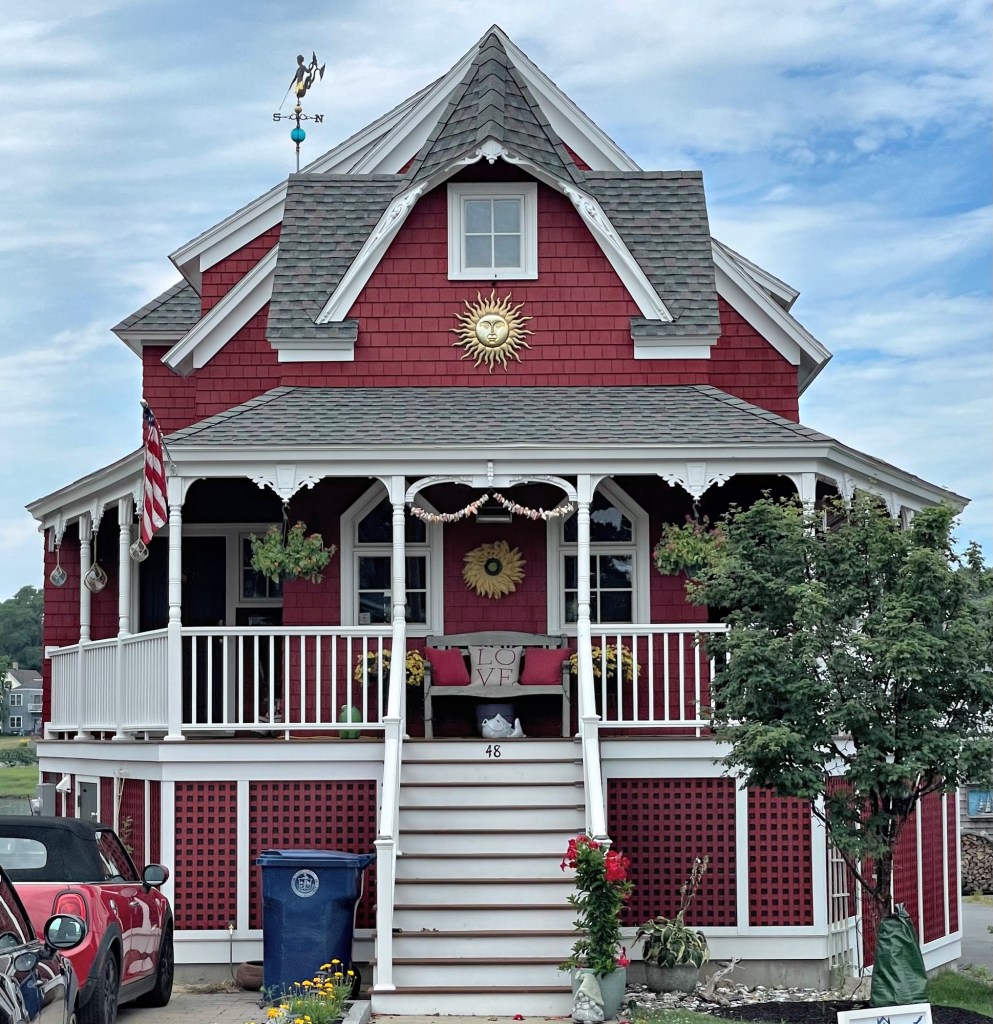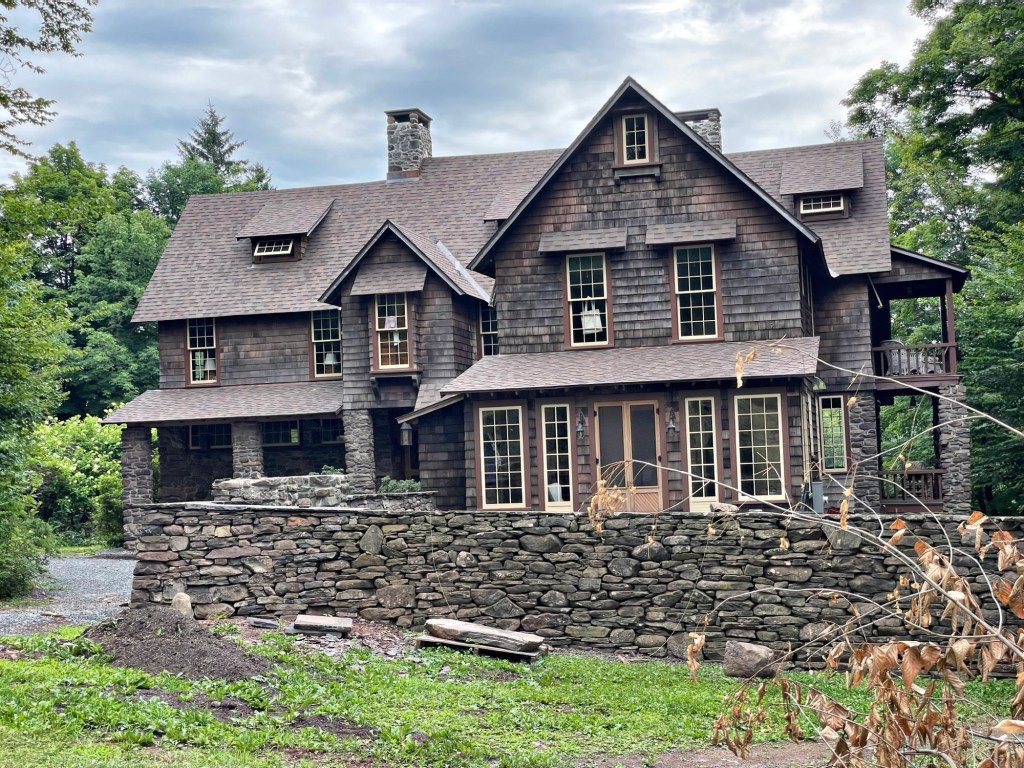
Beauford Lodge Cottage // 1902

This handsome cottage on Thurber Road in the Onteora Park colony in the Catskills of New York, was built by 1902 for Col. James P. Kimball (1840-1902), and his wife, Maria (Brace) Kimball, as their summer home. James Peleg Kimball was one of the most renowned U.S. Army surgeons of the late nineteenth century. The home was meant to be the couple’s place of respite, but Col. Kimball died here in 1902, not long after the family moved into the home to enjoy the fresh air of the Catskills. Maria Kimball retained the cottage for years until it was sold in 1919, and owned later by Clayton McMichael of Pennsylvania, and a director of the Onteora Summer Theatre. The rustic Shingle/Arts and Crafts style cottage was originally named Beauford Lodge, and was later named Stone Acres by McMichael.
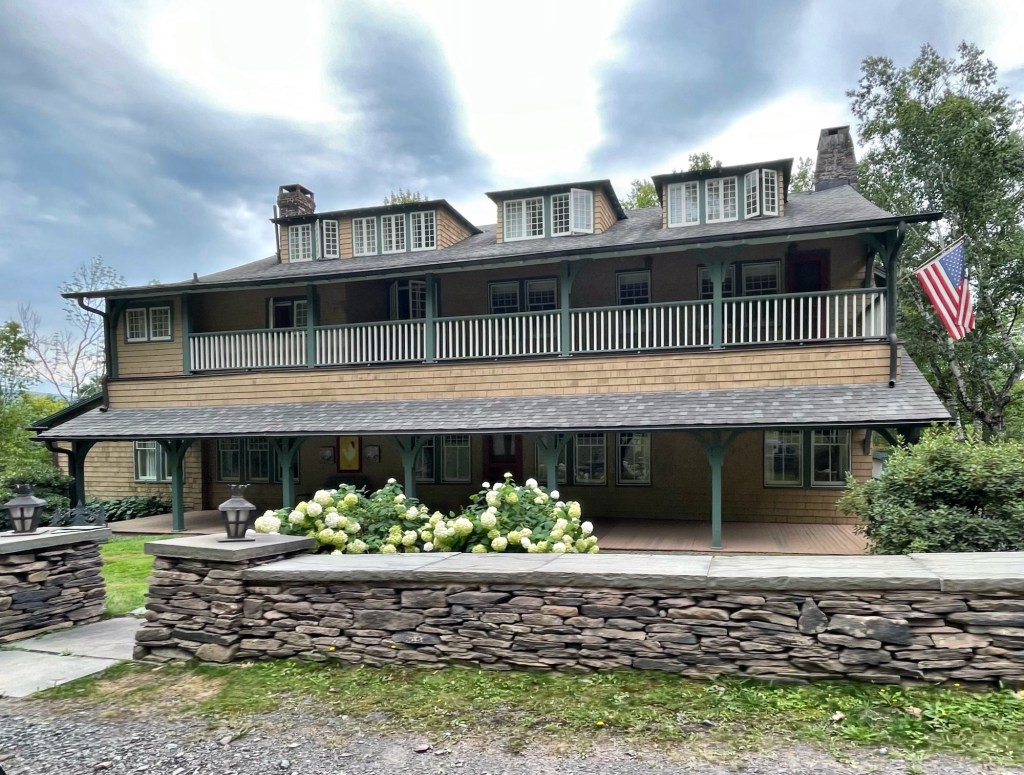
Former Bear and Fox Inn // 1888

Once the heart of the Onteora Park colony in the Catskills Mountains, this large building was known as the Bear and Fox Inn. The inn was built in 1888 from plans by young architect Dunham Wheeler (1861–1938), the son of the founder of the colony, Ms. Candace Wheeler, along with three cottages, while Ms. Wheeler’s Associated Artists interior design company provided the upholstered furnishings. Candace’s daughter, Dora (Wheeler) Keith, painted an inn sign depicting a bear and fox dancing by the light of the moon. In the early development of Onteora Park, there was no sewer or water system, and the original cottages had no kitchens built within the homes. As a result, the Bear and Fox Inn provided a space where cottagers would meet daily for meals. By the 20th century, cottagers would add kitchens inside their homes, and some dinners and events were moved to the Field House. The Bear and Fox Inn was altered with the removal of the large dining room, and converted to a private residence, which remains to this day. The structure is an excellent example of the Arts and Crafts style in a rustic finishes, typical for Upstate New York summer cottages.

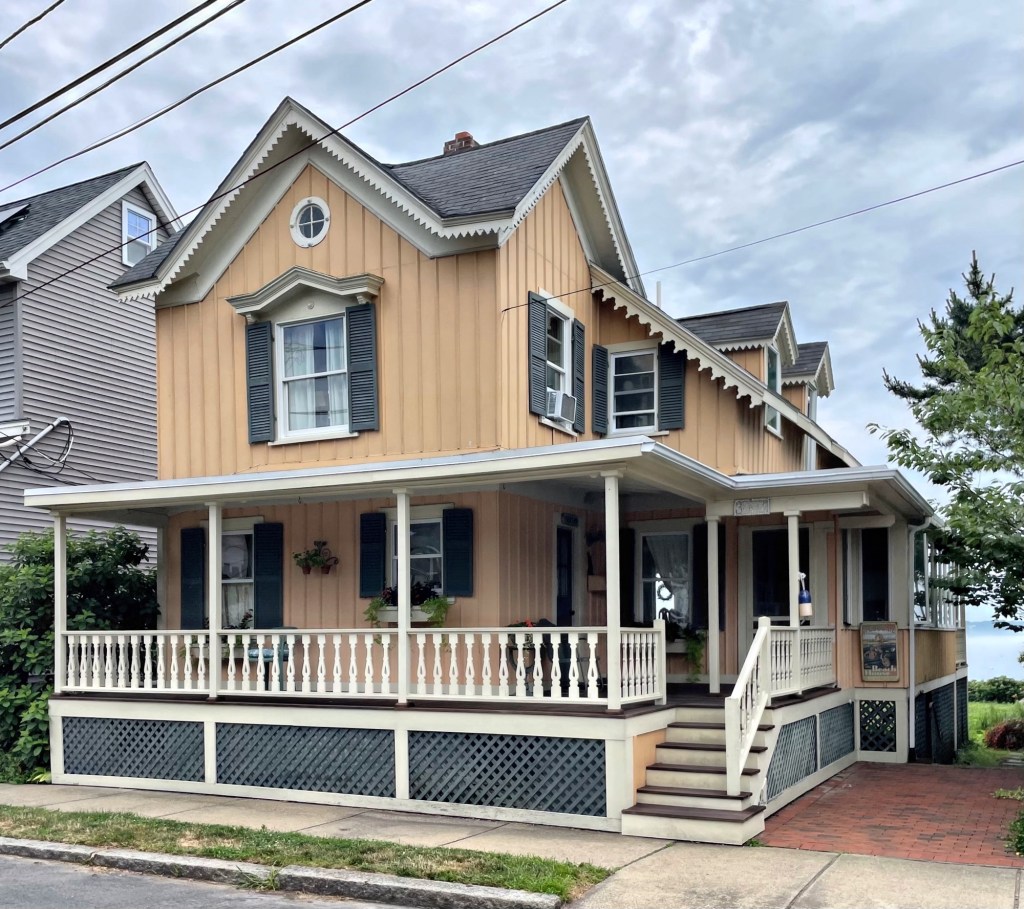
Streeter Cottage // 1882

In 1881, Gilbert Streeter and his wife Rebecca purchased a small house lot in the Salem Willows for a summer cottage for them to retreat across town to during the warmer months. Gilbert Streeter was an amateur historian, businessman, publisher of the Salem Observer and was able to afford a second residence in his hometown. The Streeter cottage was built by 1882 and stands out not only for its excellent state of preservation, but for its unique architecture. The cross-gabled form cottage is covered in board-and-batten siding with bargeboards lining the eaves.

William Bates Summer Cottage // 1885

While Salem is best-known for its First Period and Federal style buildings, the Salem Willows neighborhood features some of the finest Victorian summer cottages in the Boston area. This cottage was built in 1885 by William Marston Bates (1820-1912), a Salem-based dentist, as his summer retreat when not in the office. The Stick style cottage has a steep gable roof with jerkinhead clip at the facade and a wrap-around porch with decorative jigsawn bracketed details. The house is a well-preserved example of the style, examples of which are becoming less-and-less frequent in recent years.

Miles Standish Cottage // c.1890

One of the larger summer cottages on Hull Hill is the Miles Standish Cottage, which dates to around 1890. The cottage was built after the nearby Hull Yacht Club was completed in 1882, which was apparently the second largest yacht club upon its completion. Owner L. Miles Standish was the first owner and the eclectic Craftsman/Shingle style cottage has been lovingly maintained by all subsequent owners. The house appears to now have the name “Last Best Place”, which is very suitable!

Galvin Cottage // c.1882

Hull Hill is a relatively unknown enclave of summer cottages that sit on a rise overlooking Boston Harbor in the coastal community of Hull. The development of Hull Hill began in the 1870’s but became most active in the 1880’s and 1890’s. The land here was previously maintained as pasture and gardens by Hull villagers, but the land here was eventually sold and developed when the Hingham Water Company came to Hull in 1882. That same year, the railroad arrived which provided easier access to the town. This cottage on Andrew Avenue is one of the earliest summer residences built here, and dates to the late 1870s or early 1880s. The cottage was owned by Owen Augustus Galvin, a Boston lawyer, and his wife, Jane Sullivan Galvin. The unique cottage features a hexagonal section with a roof extending down to meet the wrap-around porch. The cottage exemplifies late 19th century cottage/resort architecture.

Haven Avenue Cottages // c.1877

When Andrews Point in northern Rockport, Massachusetts, was opened for development by speculators Eben B. Phillips and George Babson, they envisioned the colony, “Ocean View” as a rival to other nearby summer colonies of Beverly Farms, Gloucester, and Magnolia. Roads were laid out and house lots were plotted with larger lots for big summer cottages along the coast and smaller cottage lots at the interior of the development. The rocky coast and more limited access compared to its rivals, caused Ocean View to lack in sales, but there are still some great remaining cottages to be found here. These two early cottages are great surviving examples of the modest, middle-class homes for summer residents. These two charming Victorian cottages sit side-by-side and were owned by an L. Brigham and Benjamin Lewis and both are in a great state of preservation 150 years later.

High Ridge Manor // 1893

Edward Payson Dutton (1831–1923) was a prominent American book publisher who founded the E. P. Dutton bookselling company in 1852 in Boston, Massachusetts. The business sold fiction and non-fiction, and within a short time expanded into the selling of children’s literature. In 1864, he opened a branch office to sell books in New York City and in 1869 moved his company’s headquarters there and entered the book publishing business. The company did very well, allowing Edward and his wife, Julia the means to build this large summer “cottage” in Ridgefield, Connecticut to escape the rustle and bustle of New York City. The couple purchased the lot in 1893 and appear to have built it soon after. High Ridge Manor is a stunning example of the Queen Anne and Shingle styles of architecture with its asymmetrical plan, continuous shingle siding with rubblestone foundation and chimney, gambrel roof, and towers.

“Good Cheer Estate” // c.1820

Originally built as a Federal period farmhouse, this gorgeous estate is the epitome of what happened to Ridgefield… city money! By the end of the 19th century, wealthy New Yorkers were flocking to small towns every summer for clean air, rest, and relaxation. Ridgefield, Connecticut became an obvious option for its close proximity to New York and bucolic setting of farmlands bounded by old stone and rolling hills. As a result, wealthy summer residents purchased older estates and either demolished or renovated the homes there. Aaron Lockwood Northrop was raised in Ridgefield and was educated in its private schools before moving to New York as a young man, being awarded an apprenticeship as a dentist. Dr. Northrop went on to establish a prominent dental practice and would serve as President of the American Dental Association. As a wealthy adult, he acquired a circa 1820 house on this lot and renovated it, doubling its size and giving the residence its current Victorian flair. The summer house was affectionately named “Good Cheer”. Aaron died unexpectedly in 1908 while overseas in Paris, France. His widow, Caroline, resided at Good Cheer until her own death in 1927.

Maynard Estate // 1901

One of the largest summer estates in Ridgefield is this Neoclassical residence on Peaceable Street, which was built in 1901 for Effingham Maynard and his wife Helen. Maynard was a partner in Clark & Maynard, a New York publishing house. Local lore states that the Maynard Family hired New York architect Stanford White, to design this property, but no definitive proof could be located to substantiate that rumor. The Olmsted Brothers landscape architecture firm designed the grounds which were elaborate with gardens and outbuildings. The two unmarried Maynard daughters, Mary and Helen spent their summers here every year until their deaths in the 1950s.