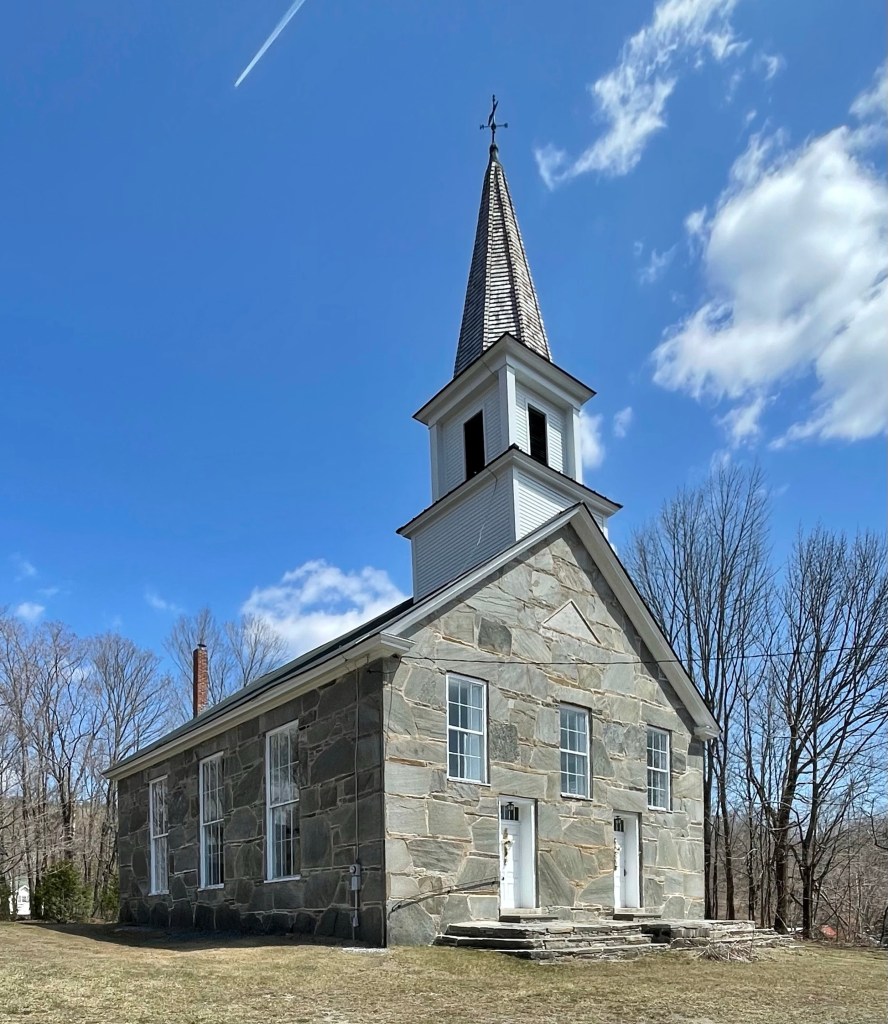
Watkins-Lexington Farm // c.1835

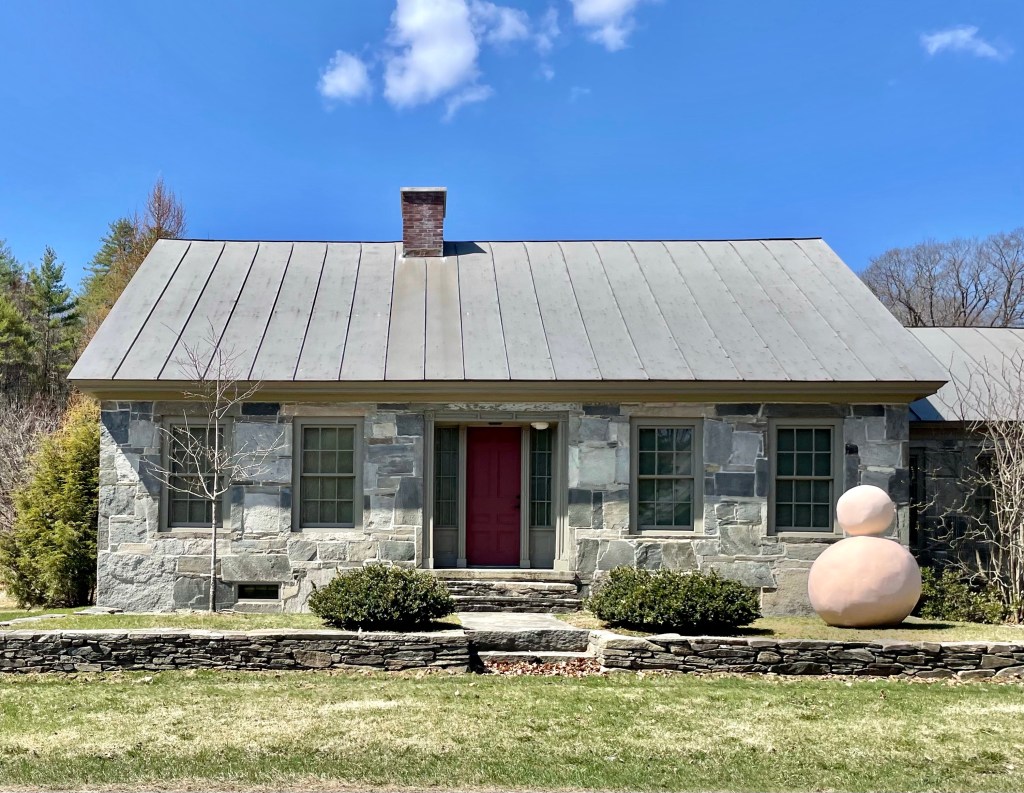
Lexington Farm was built by Elisha Wright Watkins (1805-1886) in around 1835, and was operated as a dairy farm until the 1980’s. Today, the property consists of a snecked ashlar stone farmhouse, cow barn, horse barn and tractor barn, grouped together at the southern extremity of the village of Felchville (also known as Reading). The farmhouse and barns are situated next to a waterfall on a tributary of the Black River, and are surrounded by pastures, hayfields and extensive woodland. A couple decades after Watkins’ death, the property was purchased by Alonzo Goddard. It stayed in that family and was eventually willed to Errol Locke in 1923. Errol, by trade, wasn’t a farmer. He was a Harvard-educated man who graduated there in 1913. Eventually, he went to work for a company called General Radio, which was founded in Cambridge, Massachusetts, in 1915. He started as a clerk, and 37 years later, he retired as president. The company, by that time, had moved to Concord, Massachusetts, which we know, thanks to the important events of April 19, 1775, is not too far from Lexington, where Locke lived. He renamed the Watkins Farm, Lexington Farm, seemingly as a tribute to his home town in the Bay State. In 2009, the Hall Art Foundation began the process of converting Lexington Farm to museum-quality galleries. The former dairy farm’s location and existing structures were ideally suited for this purpose. After approximately three years of restoration, renovation and refitting, Lexington Farm was transformed to approximately 6,000 sq. feet of exhibition space.

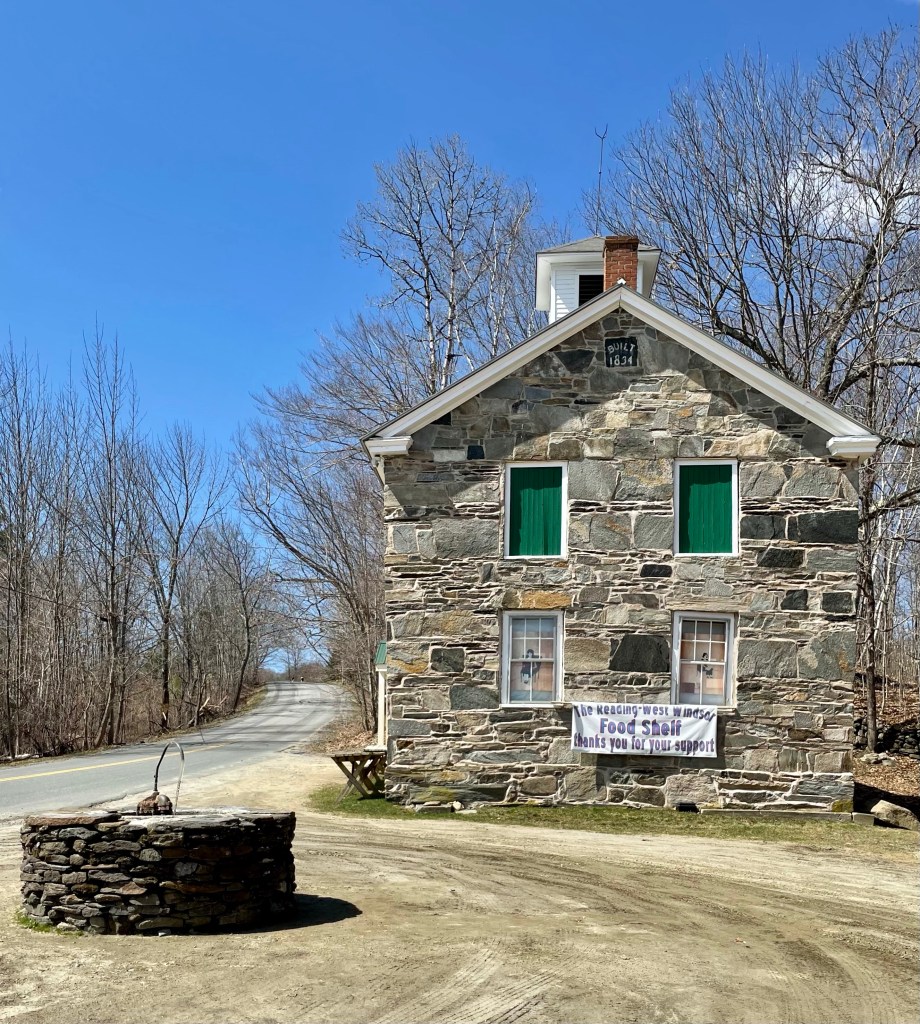
Snecked House // c.1850

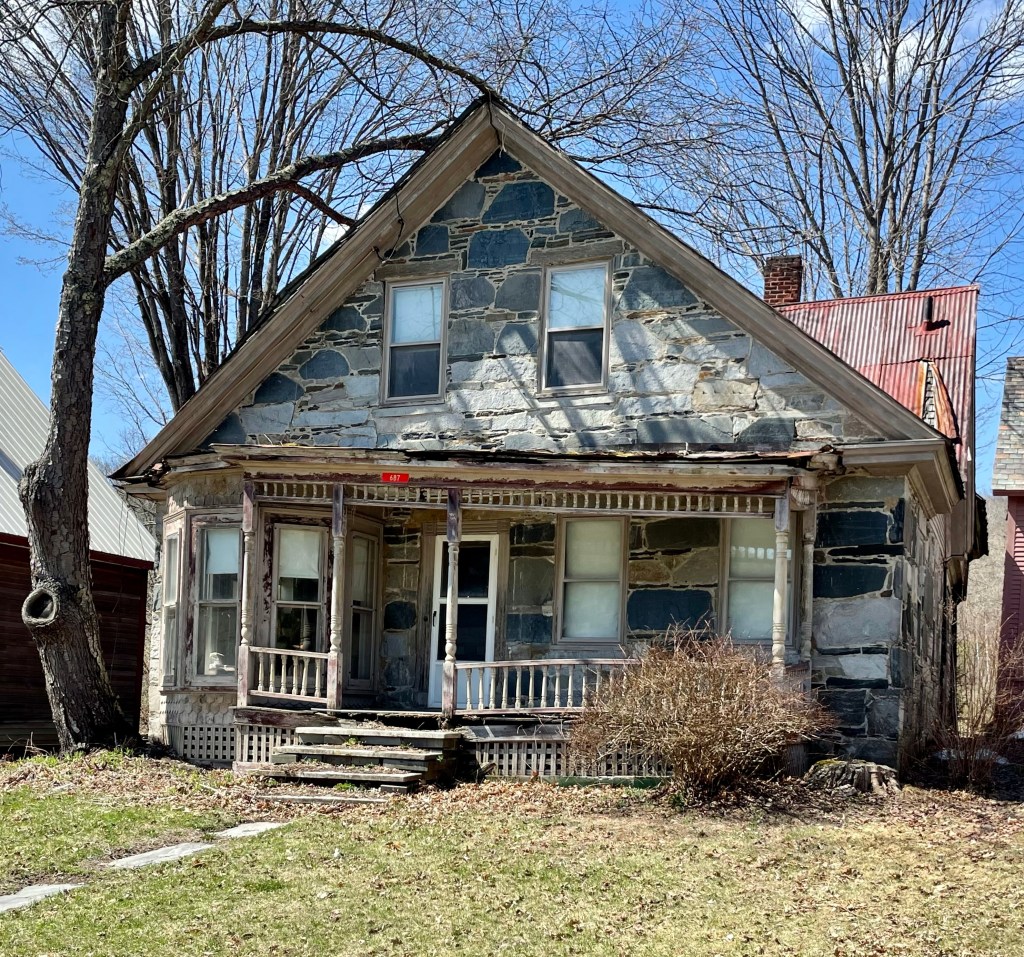
In the early 1830s, skilled masons from Scotland and Ireland came to central Vermont to work on building projects. A number of these workers, mainly from the Aberdeen area, and specialized in a specific building style in which plates of stone are affixed to a rubblestone wall. This method of bonding stonework is so prevalent in Scotland and
Ireland it has been referred to in some journals as ‘Celtic Bond’, but in Vermont, it is known as “snecked ashlar”. The mixture of stone sizes and colors produces a strong bond and an attractive finish. This home is a rare example in the state, which is estimated to have about 50 of these homes left. I could not locate any information on the owners of the home, but the house has seen better days, with the wooden front porch shifting away from the main house. Also, if you look closely, you can see the original wood shingle roofing breathing under the sheet metal roof!

Levi F. Hartshorn House // c.1853

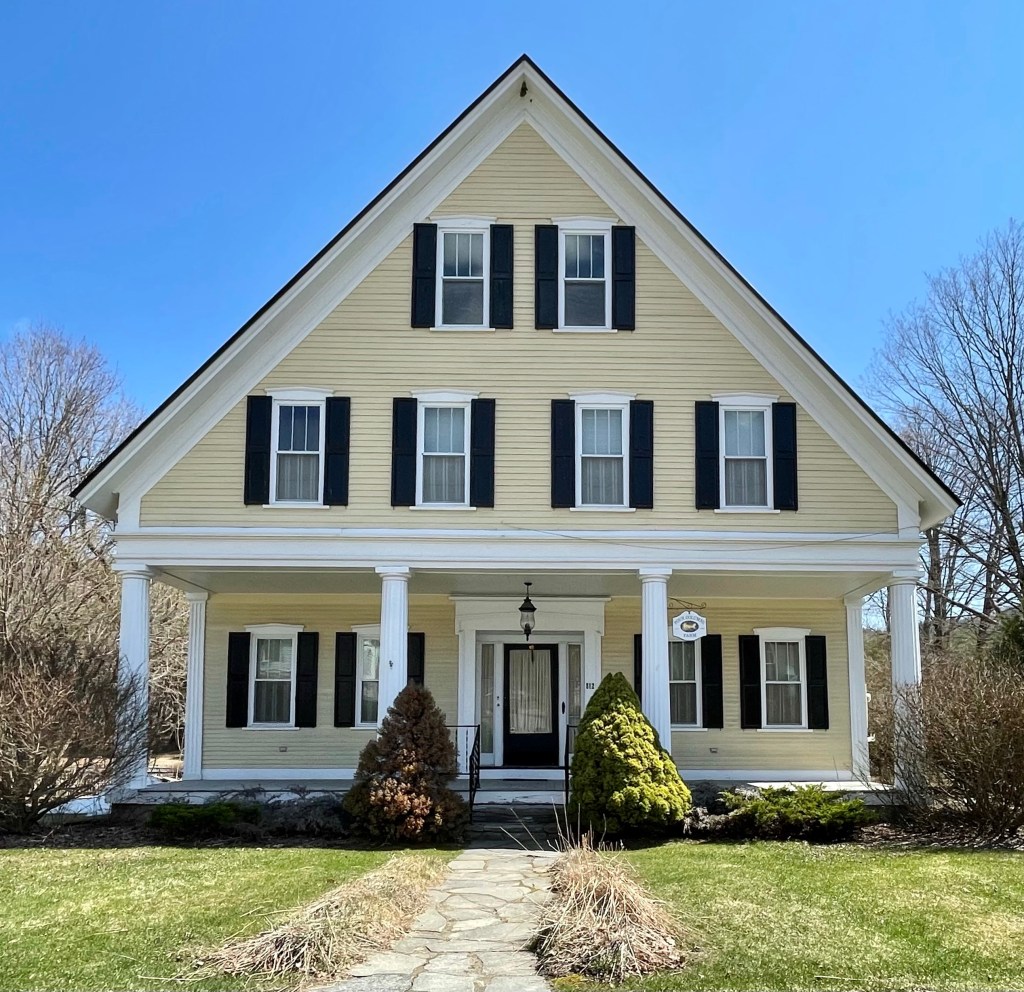
This Greek Revival home in Reading, Vermont was built around 1853 for Levi Fay Hartshorn, and is an excellent example of a vernacular Greek Revival house in Central Vermont. Levi F. Hartshorn moved to Reading, Vermont and opened up a store, also built this home for his family. It appears that Mr. Hartshorn gifted the village one of his shops to be used as a local library, before the present building was constructed.

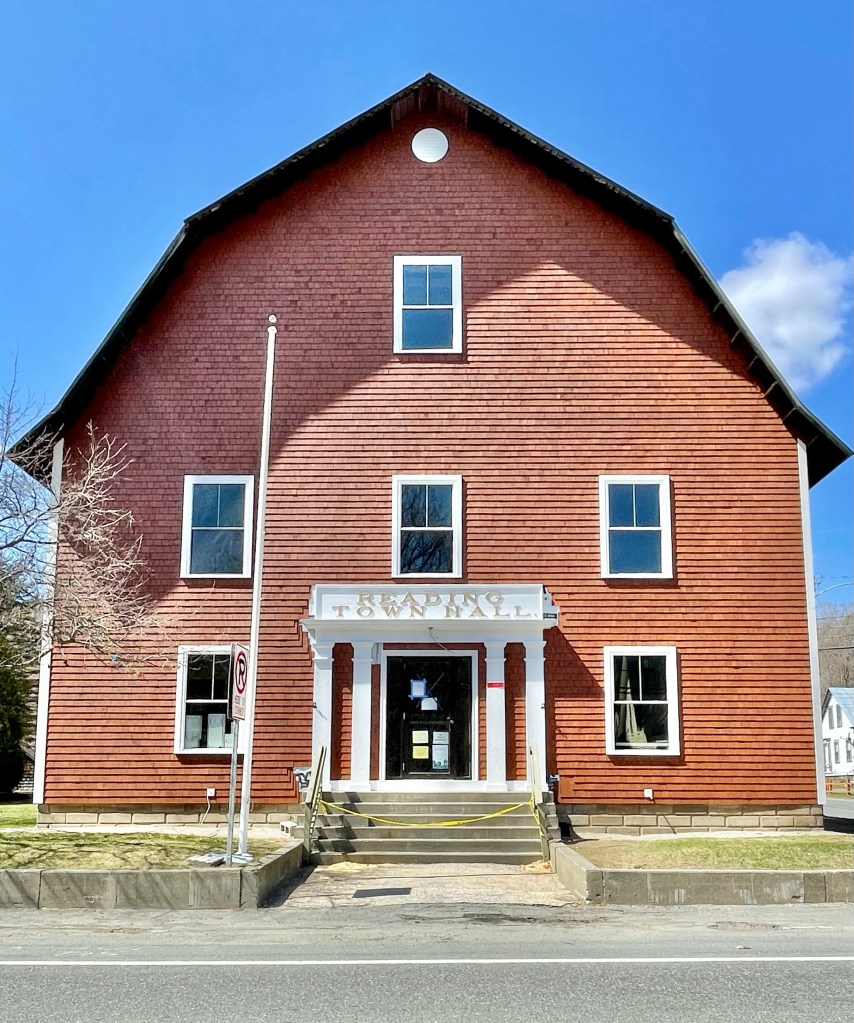
Reading Town Hall // 1911

The Reading Town Hall in Reading, Vermont is an imposing shingle-clad, gambrel roof building which sits in the village of Felchville. The hall was built in 1911 as a gift to the citizens of Reading by Wallace F. Robinson. Wallace Robinson was born in Reading in 1832. He went to Boston as a young man and entered into the provisions (groceries) market, and became quite successful, expanding into the wholesale provisions business and meat packing. He was active in civic and business affairs of Boston, most notably as the President of the Boston Chamber of Commerce and as a State Representative in the Legislature for two terms. By around 1900, Robinson had retired and had taken up a life of philanthropy, spending much of his wealth on memorial buildings and to places that had a lasting impact on him, including Robinson Hall at Dartmouth College and renovations at UVM. The design for the Reading Town Hall is especially notable for the fact that it was designed to resemble historic gambrel roofed barns found in the state.

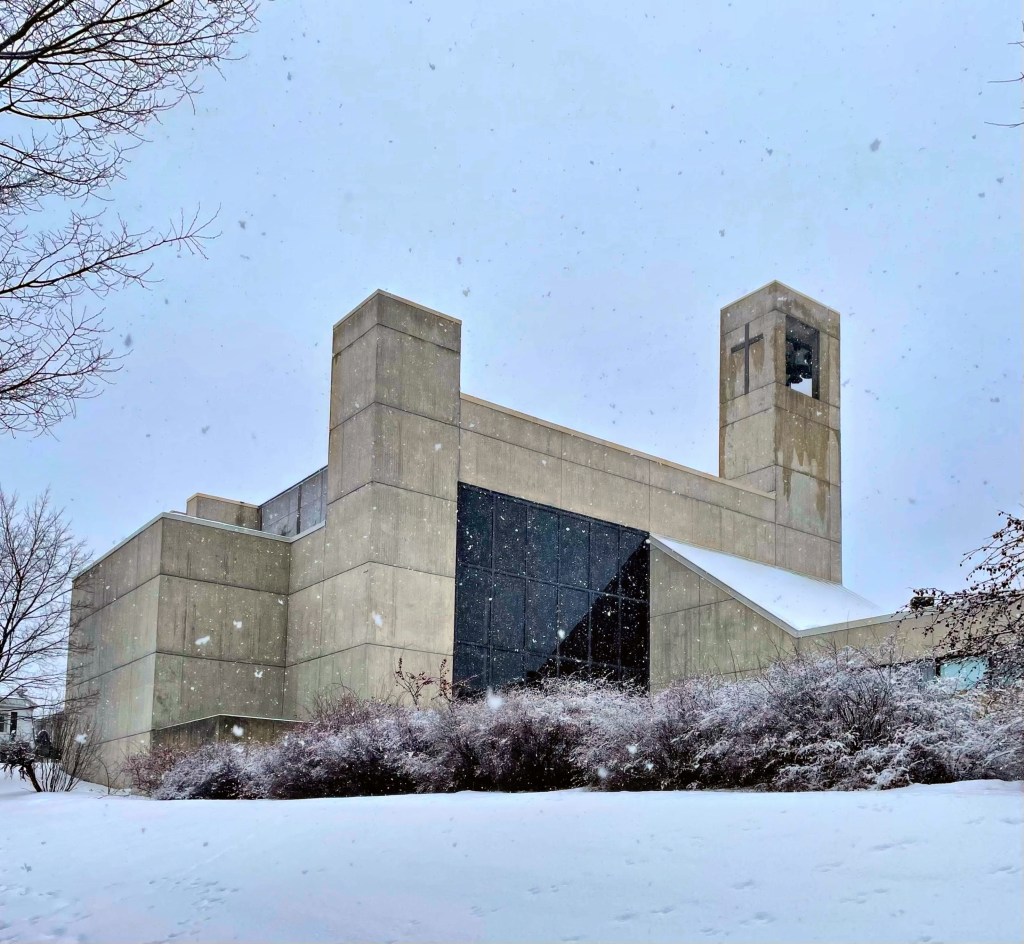
St. Paul’s Cathedral, Burlington // 1973

St. Paul’s Church in Burlington, Vermont, was organized in 1830, when Burlington’s population was about 3,500. About 55 Episcopalians met at a local hotel and laid the groundwork for the parish. In 1832, the fledgling parish dedicated its new building, a neo-Gothic limestone structure, which was enlarged multiple times as the congregation grew as the city did. In 1965, the Diocesan Convention voted that St. Paul’s Church be designated a Cathedral Church of the Diocese (one of two in the state). Just six years later, it was destroyed by fire, sparked by an electrical malfunction in the basement, leading to a new evolution of the church. At the time of the fire, the City of Burlington was engaged in massive urban renewal projects. As a part of this program, the City offered to swap the land on which Old St. Paul’s had stood for a spacious new tract overlooking Lake Champlain and the Adirondacks. Although the decision to change locations was a contentious one, the parish did accept the offer. When discussing designs for a new cathedral, there was a strong desire to make a new statement in architecture, diverging from the traditional Gothic or Colonial designs seen all over the country. An international competition was held to determine the architect of the new Cathedral. The winner was the local firm Burlington Associates, now Truex, Cullins & Partners. Completed in 1973, the Cathedral is made of stressed concrete. The structure stands strong and firm, yet is welcoming. Windows provide sweeping views of Lake Champlain and the distant Adirondacks.

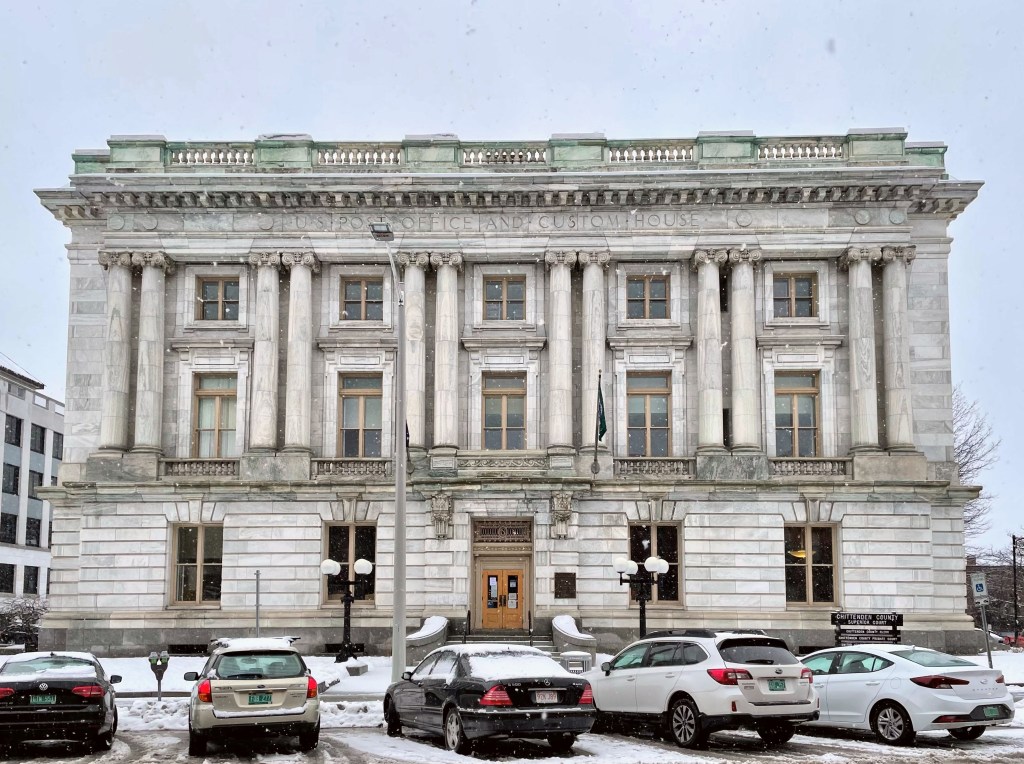
Chittenden County Superior Courthouse // 1906

The Chittenden County Superior Courthouse in Burlington, Vermont was built in 1906 and is one of the most bold architectural designs in the city. The building was actually constructed as the U.S. Post Office and Custom House for Burlington, but changed use in the 1980s after the Old County Courthouse was destroyed by fire. The building was the work of U.S. Treasury architect James Knox Taylor. Taylor designed, many major eastern federal buildings during the late 19th and early 20th centuries. He provided plans for this Beaux Arts structure with a well-appointed exterior finished in marble and dressed granite. Beaux-Arts architecture depended on sculptural decoration along conservative modern lines, blossoming in the United States in the early 20th century after many American architects studied at the École des Beaux-Arts in Paris, particularly from the 1830s to the end of the 19th century.

First Methodist Church, Burlington // 1869

This beautifully designed Romanesque Revival church consists of a large rectangular block with a steeply pitched gable roof and a square tower surmounted by a spire. The church is constructed of Willard’s Ledge stone (a locally quarried purplish limestone) with trimmings of Isle La Motte grey sandstone from quarries north of Burlington. This church is the only Romanesque Revival style church in the city and just one of four pre-1880 churches in Burlington. Architect Alexander R. Esty (1826-1881) designed the building and was a noted New England architect working during the late nineteenth century. He was trained in Boston and opened his own office in 1850 in Framingham, Massachusetts. The congregation remains active and welcoming.

Burlington Savings Bank // 1900

The Burlington Savings Bank building, constructed in 1900, is one of the most architecturally sophisticated buildings in Downtown Burlington, Vermont. The design uses a brick and brownstone facade with prominent wall dormers and a corner tower with conical roof which harkens back to the chateaus and estates of Europe. The recessed corner entrance is framed by free-standing Ionic columns which support a brownstone segmental arch, which helps command the corner presence. The Burlington Savings Bank opened for business on January 1, 1848, and operated under that title until 1988 when it merged with the Bank of Boston to become the Bank of Vermont, which in 1995, was purchased by KeyBank. The corner building is now occupied by Citizens Bank, which continues this buildings legacy as a castle of finance in the city.

Burlington Trust Co. Building // 1891

This narrow, four-story commercial block is located near the Burlington City Hall, and fronts the park it sits on. Constructed in 1891 from local redstone in a unique Romanesque Revival style, the building stands out as one of the most unique in the commercial downtown area. The building was built for the Burlington Trust Company from plans by Clellan W. Fisher, an architect who soon after joined a firm with Stephen C. Earle in Worcester, MA. The design features an unusual checkerboard pattern of inlaid red and white ashlar paired with a stone cornice which similates dentils and brackets. The building is now home to a Burton snowboard retail store, a company started in Vermont in 1977, now the leading snowboard company in the country.

Burlington City Hall // 1928

One of the largest, most grand buildings in Downtown Burlington, Vermont is its City Hall building, constructed in 1928, just before the Great Depression. The brick facade with extensive carved marble trim is Neo-classical in style, with virtually all the finish materials – brick, marble, roofing slate, and granite produced in Vermont. The building replaced the 1850s City Hall, which was poorly constructed and suffered from deterioration, exacerbated by an earthquake in 1925. Architect William M. Kendall was hired to complete the designs of the large, bold Classical building. Kendall spent his career with the New York firm of McKim, Mead & White, the leading American architectural practice at the turn of the century, and showcased the best of that firm with the design of this building.