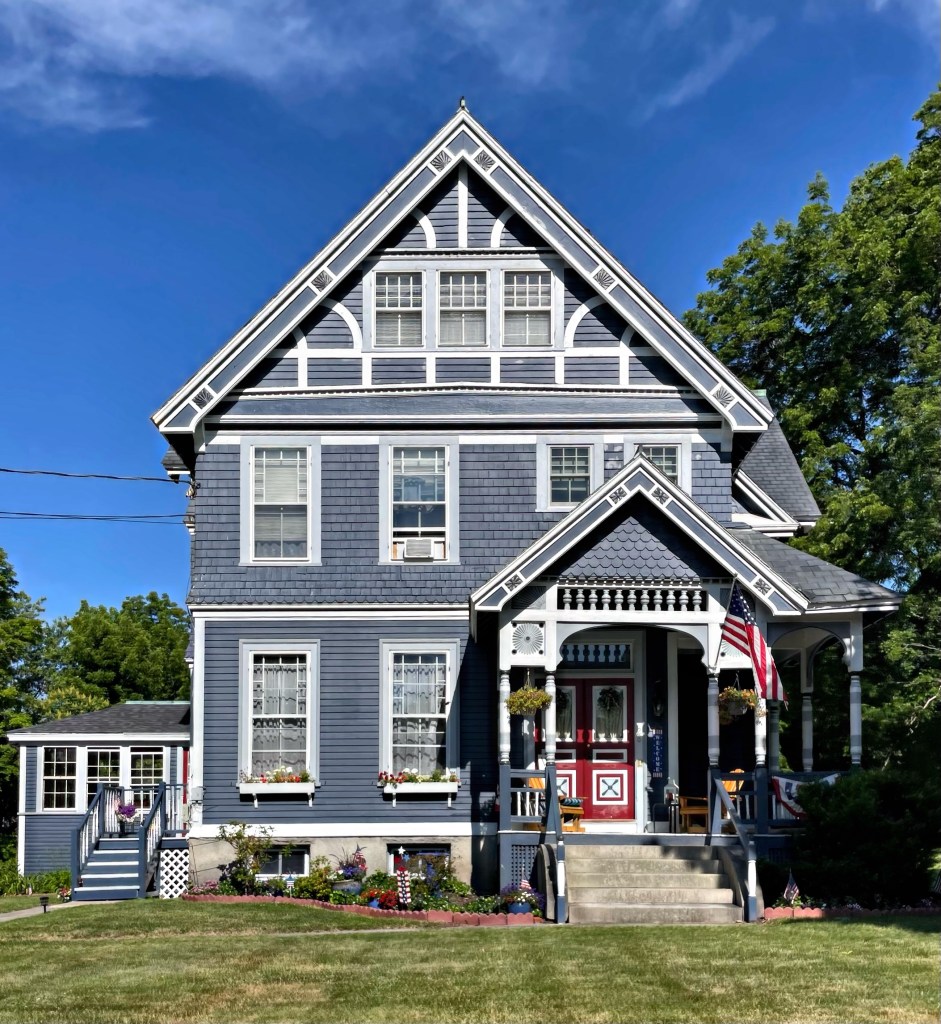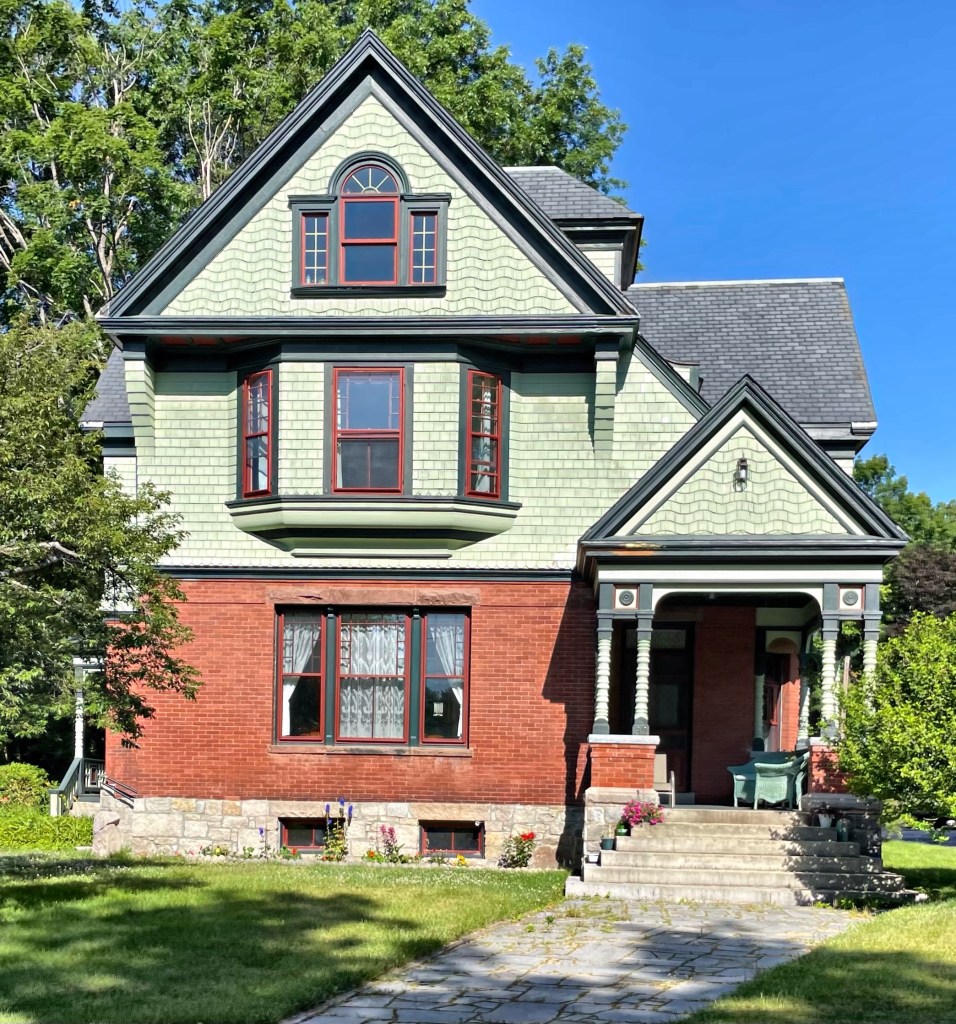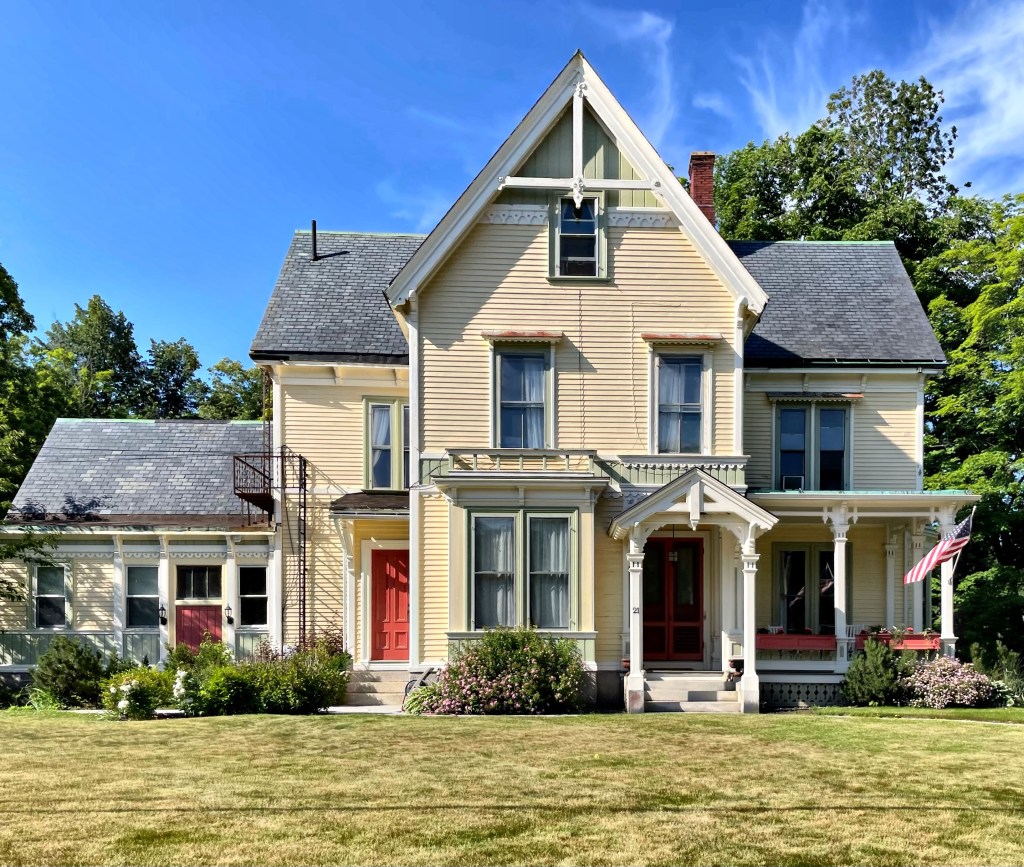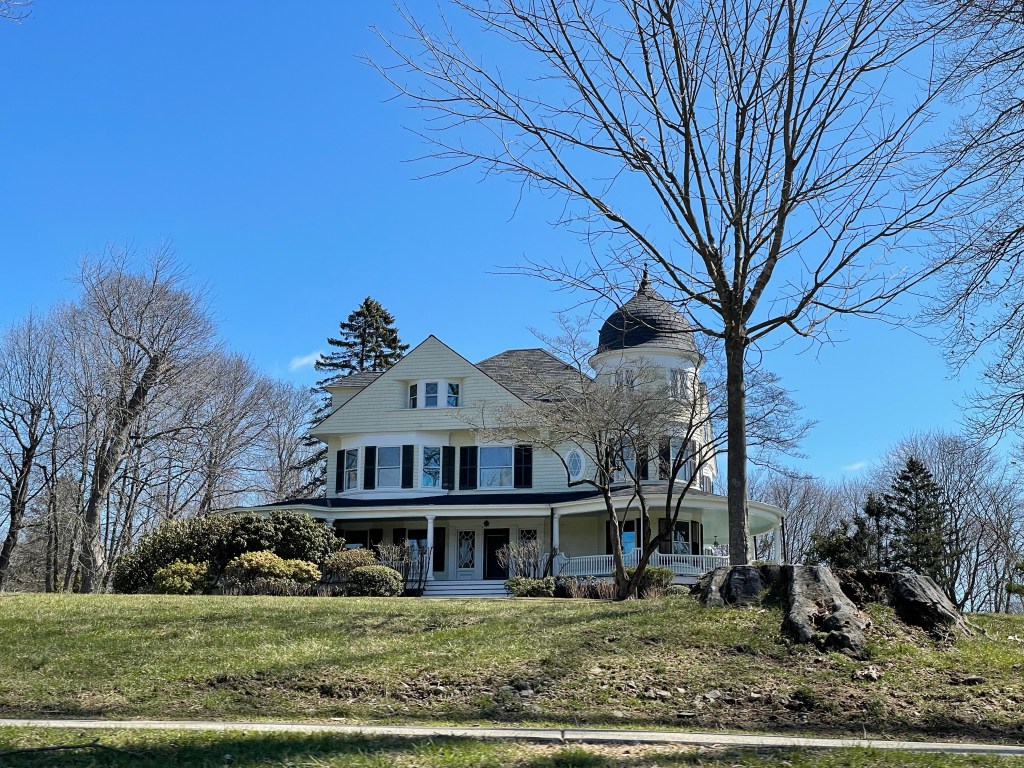
Barrows-Goddard House // 1898

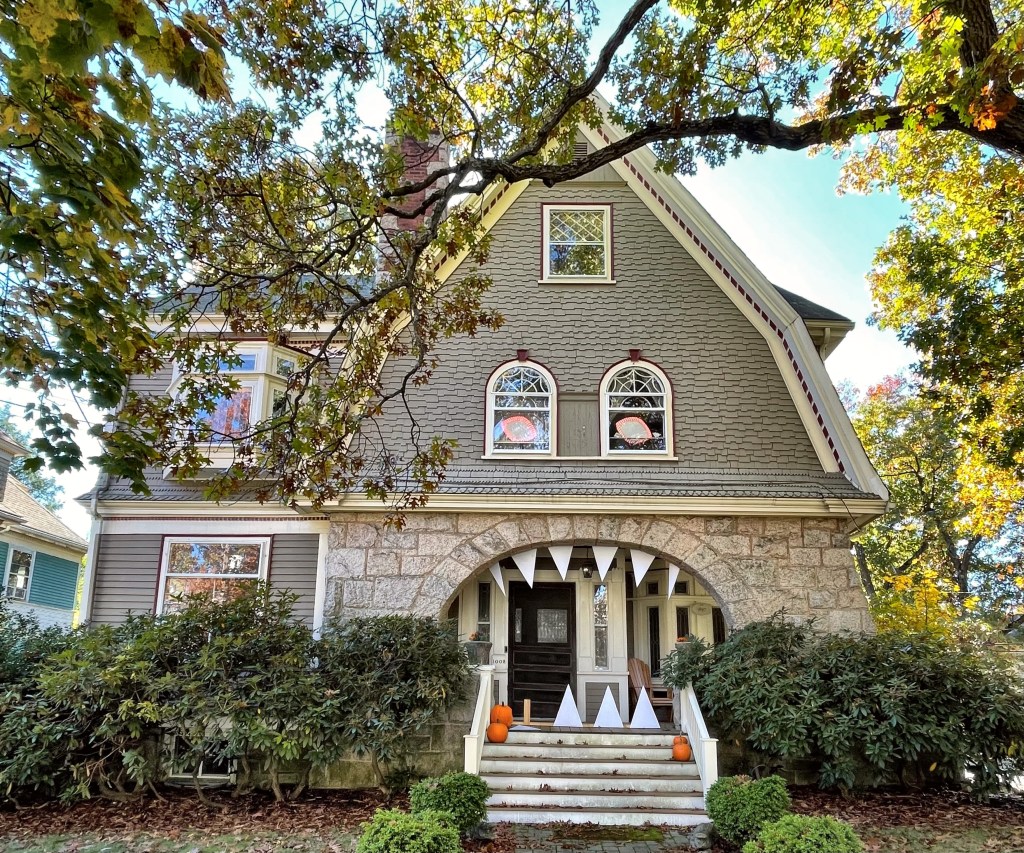
Happy Halloween! To celebrate I wanted to feature one of the more creatively decorated houses in the Boston area, which blends spookiness with architecture! This is the Barrows-Goddard House, so named after its first two owners. The house is located in Newton and was built in 1898 as an eclectic Queen Anne/Shingle style home. The original owner was Joseph Barrows, who developed the property and sold it within a year, relocating to a new home on a less busy street. The property was owned next by Christopher Goddard, an insurance agent with offices in Boston. Architecturally, the gable roof of the main block is intersected by an over-scaled gambrel cross-gable clad in patterned cut wood shingles. The focal point of the design is the Syrian-arched entrance porch of coursed, dressed fieldstone which this time of year, eats trick-o-treaters!
Oscar and Maud Rice House // 1895

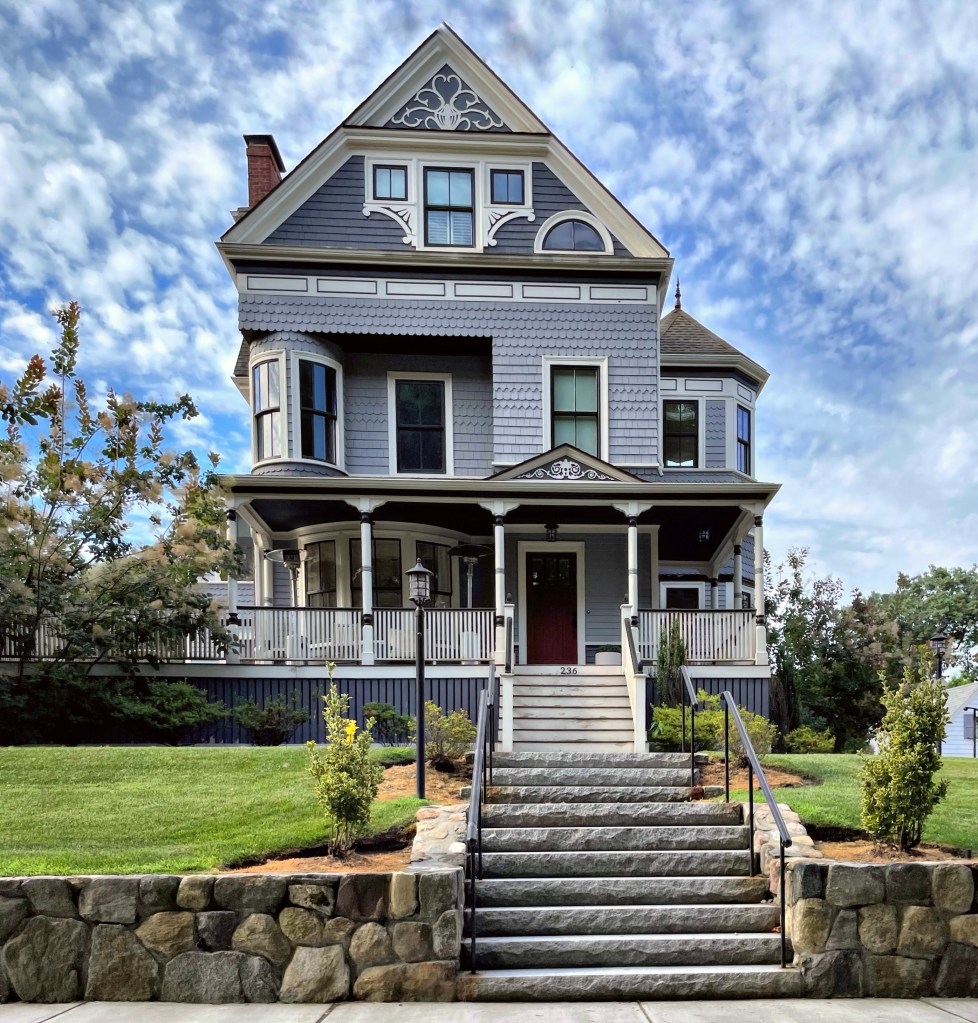
In 1895, when the Queen Anne style was no longer in vogue among architects and builders in the Boston area, the Allston Real Estate Company took a gamble and built this house in a scarcely developed section of Waban Village in Newton on spec, hoping to find a buyer. They found one in Oscar Raymond Rice and his wife Maud Lois Sargent Rice. Oscar worked as a salesman, and Maud volunteered locally with various causes. The family home is a great example of Queen Anne Victorian architecture with varied siding styles, asymmetry, a tower, rounded bay window, porch with turned posts, and applied decoration in the gables. The house underwent a large renovation about five years ago and it still looks great! The listing from 2017 gives me serious house envy.

Baker-Mason House // 1897

Eclectic homes that can not be pigeonholed to a single architectural style are among my favorite as they blend features elegantly into a single, unique composition. This house on Windsor Road in the Waban village of Newton, Massachusetts is an example of an “eclectic” late 19th century home. This old house exhibits elements of the Queen Anne and Tudor Revival styles. The house was built in 1897 for Daniel and Ida Baker. After their death, the home was purchased by a James H. Mason, who got it for an estimated $25,000 in 1909. A listing at the time mentions the property included a 14-room house and large stable, the latter still stands at the rear of the lot (since converted to a car garage).

Jacob Cropley House // 1884

Marblehead is known for its Colonial-era architecture, so its always fun to find a stellar Queen Anne house in town! In 1884, Jacob M. Cropley, a shoe manufacturer, built one of Marblehead’s finest victorian residences on a hill overlooking the harbor. Cropley ran shoe and leather mills in Massachusetts and Wolfeboro, NH, making great money. The house was located on a prominent site on Pleasant Street, and was purchased by the U.S. Government in 1904 about the time that Cropley and his family moved to Boston. The house was purchased by David Lefevour, a grocer, who moved it back on the lot, saving the house from the wrecking ball. On the former house site, a post office was built by the U.S. Government.

George Whiting House // c.1880

Located next door to the Frederick Colony House (last post), the George Whiting House in Wilton, New Hampshire perfectly compliments the Victorian house lined street. George Whiting was the son of David Whiting, a businessman and developer in town. George worked in his family business, as a milk dealer and “contractor” for the family farm. The house he built in Wilton is a blending of Stick and Queen Anne styles, with SOOO much detail.

Frederick Colony House // c.1885

When you look up Queen Anne architecture on Google, this house in Wilton, NH should pop up! The Frederick Colony House was built around 1885 for the mill-owner who built a large cotton mill (last post) in town at the same time. Frederick Colony (1850-1925) was from a prominent textile and cotton mill-owning family based in Massachusetts and Keene, New Hampshire. Colony purchased land along the Souhegan River and built a new mill, there to make his own fortune, and that he did! The Frederick Colony House remains as one of the best-preserved homes in Wilton, and recently sold. Those interiors!

David Whiting House // c.1875

David Whiting (1810-1892) was one of the most prominent men in Wilton, NH in the 19th century. He was involved in local business and politics, eventually using his prominent land at a convergence on Main Street to erect the Whiting House, a large hotel. The building burned down in 1874, along with his other buildings nearby. He donated some of the land to the town, who built the present Town Hall, and he built a new home on another part of the site. This house was likely built for David Whiting as his own residence, shortly after the fire. The house was designed in the fashionable Stick style and represents the best in Victorian-era architecture.

The Tower Cottage // 1880

Tower Cottage was built in 1880 and is one of the best examples of Queen Anne architecture in the town of Ridgefield, CT. The home was designed and built by Charles Betts Northrup, a carpenter and builder who grew up in town. The home was eventually occupied as a summer retreat for Maude Bouvier Davis, who would spend some summers at the house away from the big city. In Ridgefield, Maude was sometimes visited by her niece, Jackie Bouvier, later known as Jackie Kennedy Onassis, First Lady to President John F. Kennedy. Maude owned the property until 1972 and the home has been lovingly preserved since.

Hawley House // c.1865

Located next to the Reverend Thomas Hawley House (last post), this gingerbread cottage on Ridgefield’s Main Street looks straight out of a fairy tale! The home appears to have been built around the Civil War (or a renovation of an earlier house) and blends Italianate and Gothic detailing elegantly under one roof. The home was built on land that was owned by the Hawley descendants and was occupied by a few members of the family until it sold out of Hawley ownership in the 20th century. The house was purchased in 2002 by Gregory and Valerie Jensen who restored the home. Mrs. Jensen is the founder of the Prospector Theatre, a non-profit cinema dedicated to providing a higher quality of life through meaningful employment to people with disabilities.

Rockwell House // c.1850

Built in 1850, likely as a late-Greek Revival or Italianate style home, this property on Main Street in Ridgefield was completely “modernized” in the 1880s in the Queen Anne style popular at the time. The home was originally built for Francis Asbury Rockwell (1818-1881), a tin-smith, wine-maker and inventor who married Mary Lee Everest, who also had deep roots in the community and was a daughter of a local Revolutionary War captain. The couple built a home on Main Street and raised their children there until Francis and Mary died in 1881 and 1883 respectively. The family home was inherited by their eldest son, Charles Lee Rockwell, who became the director of the First National Bank in town. Charles updated the house to give it the Queen Anne Victorian flair we see today.