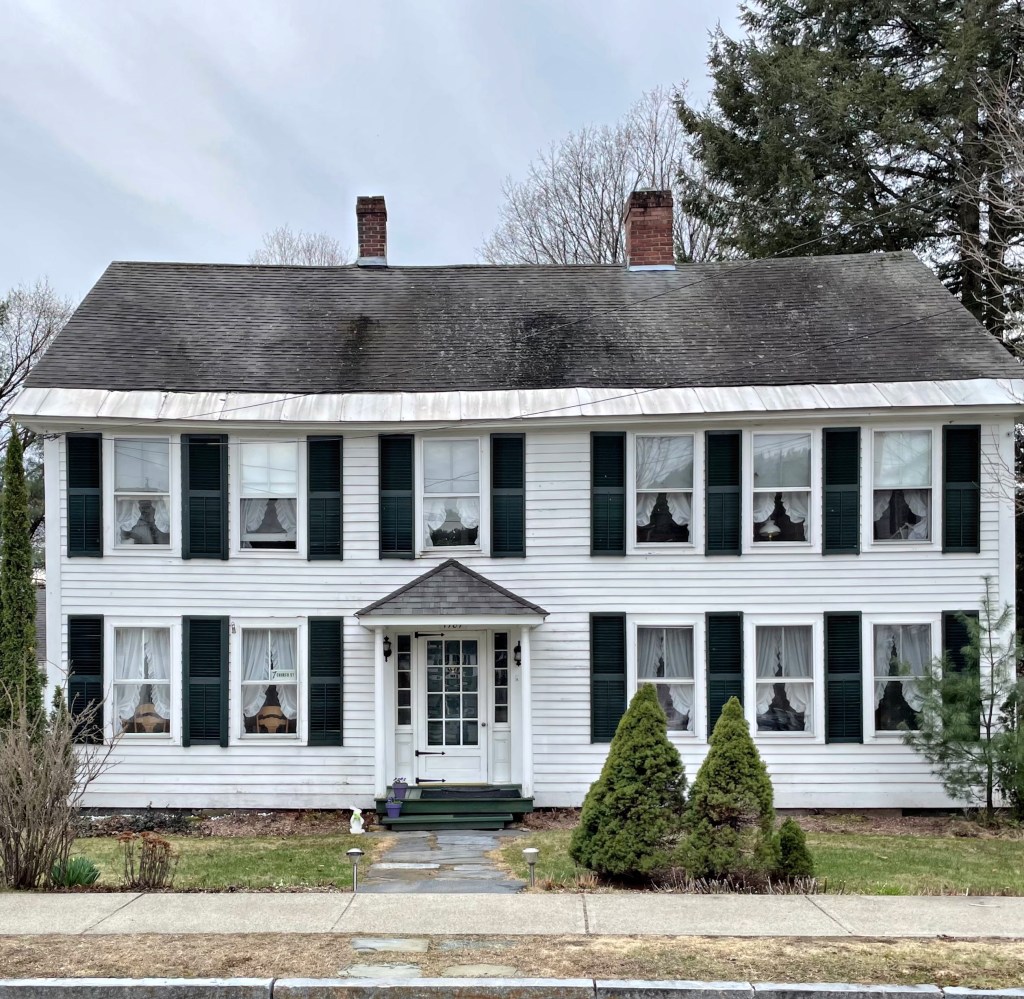
Sawyer Mansion // 1863 & 1914

Originally built in the Carpenter Gothic style in 1863, the Sawyer-Gillett Mansion in Whitingham, Vermont, is the highest-style house in town today. Indistinguishable from its Civil War-era original construction, the house was greatly expanded and altered into an elaborate take on Queen Anne / Shingle styles in 1914. The house was originally constructed by John W. Sawyer, but it was his son, Lincoln H. Sawyer who renovated the house and etched his name “L.H. Sawyer” on the glass of the new front door. The updated house style reflects a nostalgic Victorian preference by the owner, who sawed all the trim and materials on site at the family sawmill. It was recently sold and is now a B&B!
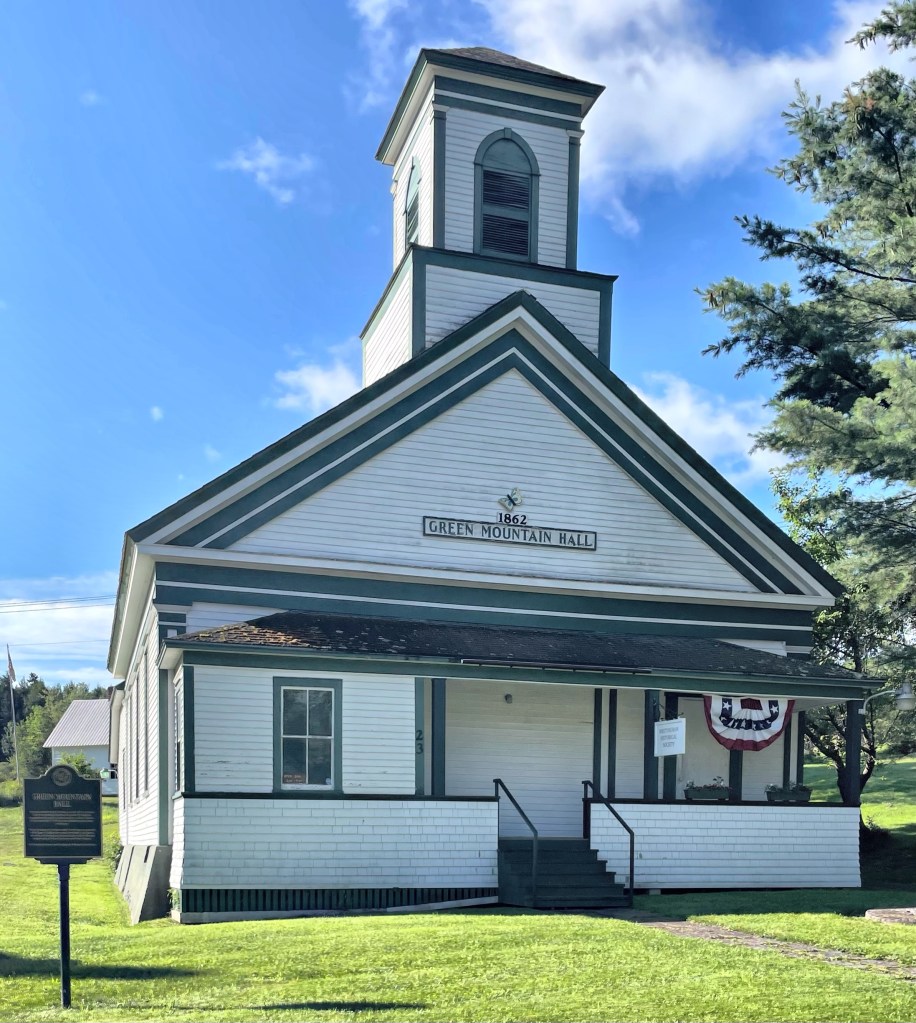
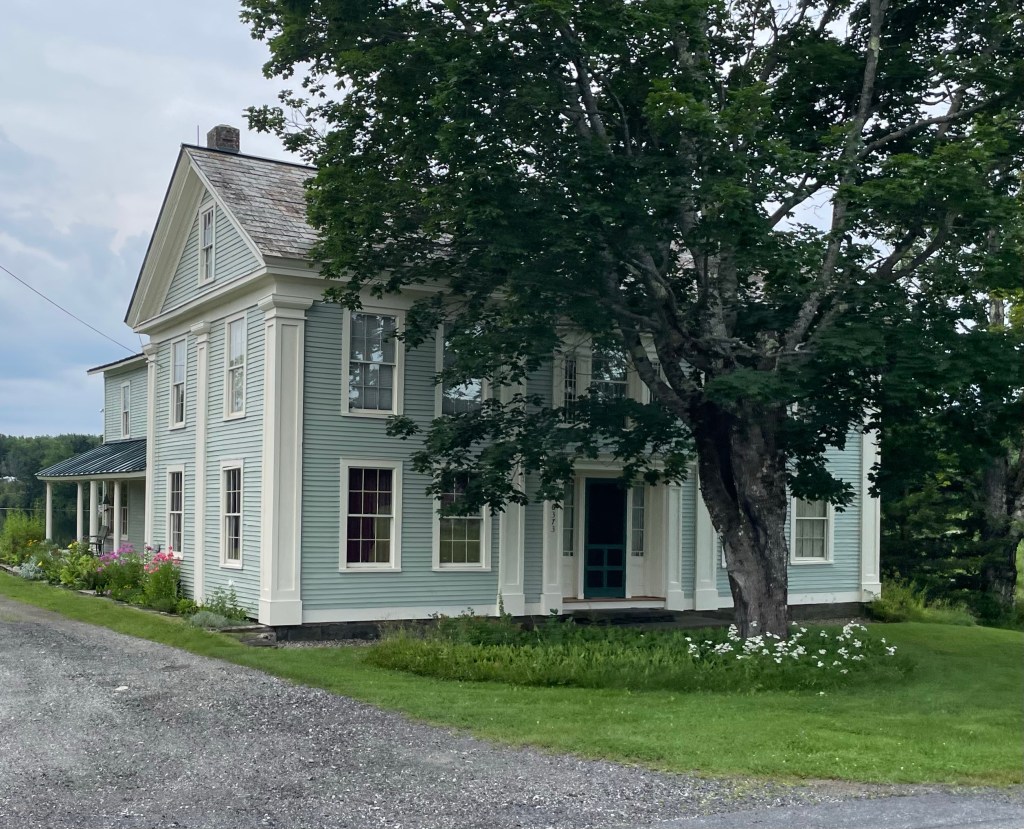
Green Mountain Hall // c.1860

This simple Greek Revival style country church in Whitingham, Vermont is similar in form to the Methodist Church (last post) with a gable front double entry, large full pediment, corner pilasters, and centered two-tiered steeple. Also like the Community Church nextdoor, this was built circa 1860 as a church, but for the Universalist Unitarians in town. In 1892, the church was transferred to the Green Mountain Club, giving it the informal name “Green Mountain Hall,” and in 1905 the Town of Whitingham took it over. The building was used for dances, meetings, social gatherings, and other events until the Whitingham Historical Society took it over in a lease in 1971 to develop into a museum. The well-preserved vernacular building with its c.1920 front porch is a great representation of Vermont architecture, reuse for new uses and update. No waste, and a whole lot of charm!

Reuben Winn House // 1840

The main part of this stunning Greek Revival house in Whitingham, Vermont was built by Reuben Winn around 1840 and was originally located on the town common, southeast of the present village of Whitingham. The building was the only one to be moved from the hill to the valley as development shifted westward to the current town center and its access to water power for industry. This house was moved in 1889 and was run as the Sadawga Lake House hotel by Charles E. Putnam who also was listed in local directories as a slate dealer. The present slate roof was likely added by Putnam! The architectural element which stood out to me was the three part Palladian window directly above the front door that uses the motifs of the Greek Revival pilasters and entablature common to the other façade elements. The home is very well-preserved and even maintains a detached barn on the property!

Amos Brown House // 1802

Tucked away on a dirt road in rural Whitingham, Vermont, the Amos Brown House sits among fields of tall grass, bounded by historic stone walls and rows of apple trees planted centuries ago. I was lucky enough to be able to stay at the Amos Brown House this past weekend and it was everything I could have imagined…and more! The property is owned and managed by the Landmark Trust USA, a nonprofit organization based in southern Vermont that preserves and restores historic properties through creative and sustainable uses for public enjoyment, education and inspiration. In the past, I stayed at the Kipling Carriage House, another charming property. The Amos Brown House is thought to be the oldest house in Whitingham, Vermont, and is a well-preserved example of a Federal style brick farmhouse in this part of the state. The telescoping ells of a summer kitchen, barn, chicken house, and shed showcase how farms would grow over time to serve the needs of these families in the undeveloped wilderness of New England. By the time of The Landmark Trust USA’s acquisition of this property in 2000, the house had seriously deteriorated. Inappropriate repairs and alterations in the 1960s and 1970s had weakened the brick walls, leading to severe cracking and small areas of collapse. They underwent a massive restoration of the property inside and out, and it remains an absolute treasure in the state to this day.

Four Columns Inn // 1832

One of the best examples of a temple-front Greek Revival house in the state of Vermont is this stunner, found in Newfane Village. The house was constructed in 1832 for General Pardon T. Kimball (1797-1873), a cattle-broker, general of the state militia and later, a state senator. Kimball made a name for himself locally as he donated much of his money to social causes, from a local almshouse to other charitable organizations. Kimball died in 1873 after falling from his carriage. The house was converted to an inn in 1965-6 and has since been known as the Four Columns Inn, so-named after the four monumental Ionic columns that dominate the house’s facade.

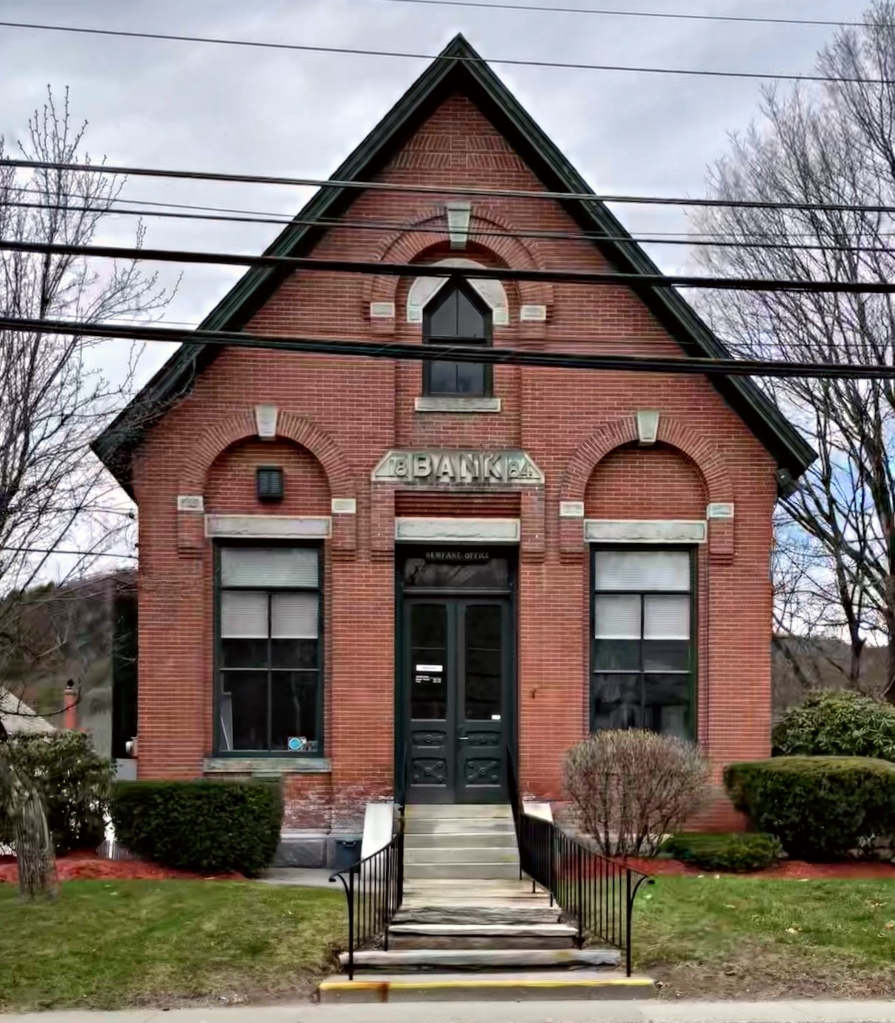
Vermont National Bank // 1884

One of the few brick buildings in Newfane’s Village Center is this charming old bank, right on Main Street. The building was constructed in 1884 as the Vermont National Bank and is a vernacular example of the Romanesque Revival architectural style with the arched openings and brickwork. Vermont architect George A. Hines designed the modest building, which was built for $6,650. The bricks for the building were brought into town by ox cart. Those for the front facade cost 5 cents apiece; those for the sidewalls 3 cents; and those for the back wall 2 cents, showing how the best materials go on the highly visible facades.

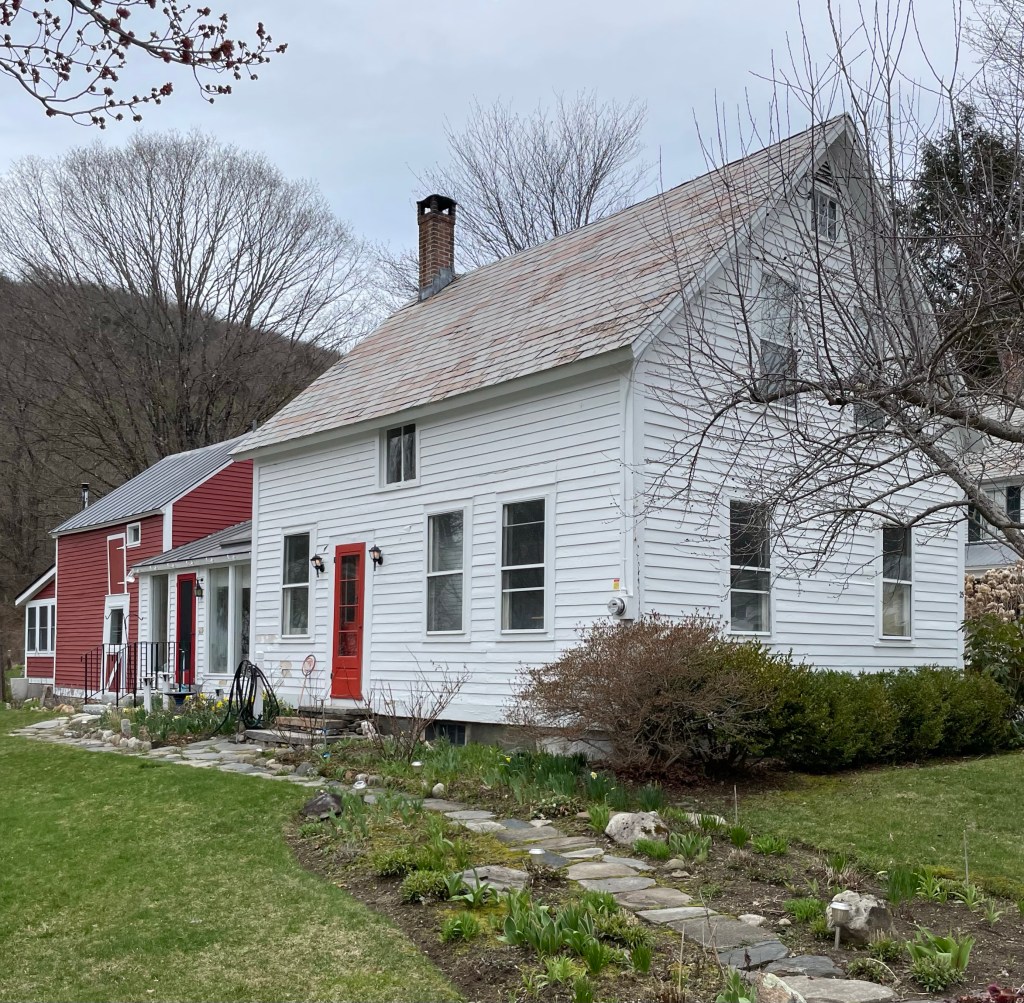
Church House // c.1840

When you think of the quintessential New England Village, what do you think of? These villages of white houses around a town green, usually anchored by a congregational church with a tall, white steeple, have been the subject of myriad photographs and memories for decades. Why are so many like this? Well, historically, the bright white we know of as a common house color was not available until the 1920s. Before the early 1900s, “white” paint was more cream or off-white as we would describe it. Many such villages started seeing white paint proliferate as Titanium Dioxide was mixed with pigments to generate the bright white, about at the same time Colonial Revival style homes saw a second resurgence in popularity. The bright-white paint was more expensive and represented stability and prestige. Publications like Yankee Magazine showed photographs of these charming villages blending into the freshly fallen snow or fall foliage and the romanticization of New England truly began. Newfane, Vermont is one of these villages, which are dominated by the bright white paint. It is an obvious choice, especially due to the number of classically inspired Greek Revival style houses.

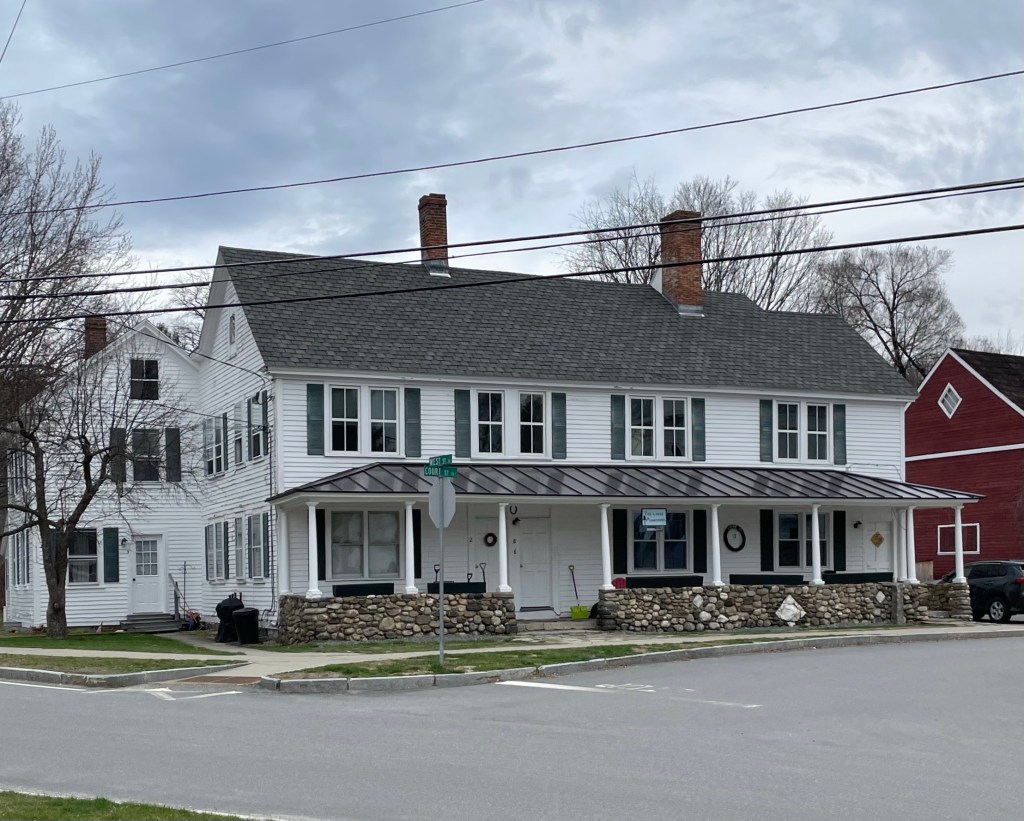
Newfane Odd Fellows Hall // c.1830

Constructed circa 1830 for Anthony Jones, this clapboard building in Newfane, Vermont originally contained tenements and was called the “long building” during the nineteenth century. Around the turn of the 20th century, a federal judge acquired the building and some of its rooms were used as offices during sessions of the county courthouse across the street. Subsequently, the local Odd Fellows Group (I.O.O.F.) occupied a hall on the second story, and for a half century after 1910, part of the first story served as Newfane’s telephone exchange. In 1971, the building was converted to apartments and has remained so since that time.

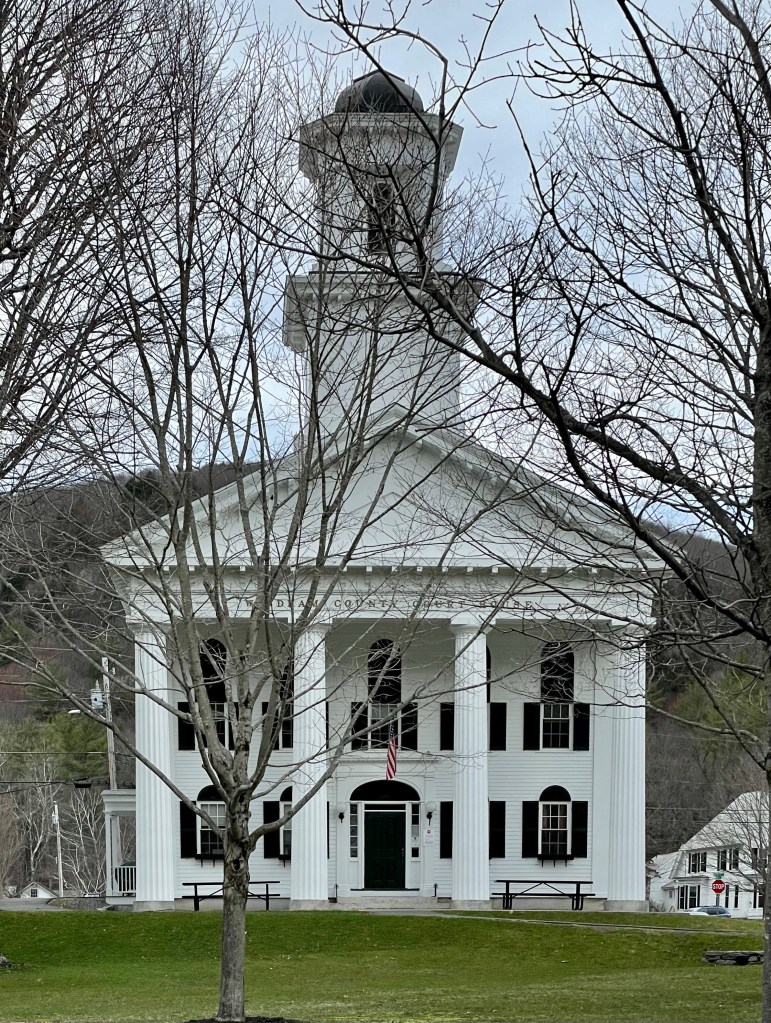
Windham County Courthouse // 1825

When the Windham County courts were transferred from Westminster in 1787, they were housed in the village known as Newfane on the Hill. Four decades later, influential residents convinced their townsmen to shift the village down to their land in a flat part of town, a location better suited for waterpower and commerce and ease of travel in the winter months. The first two buildings constructed were the courthouse and jail on a common. The village center grew rapidly as people moved old buildings down the hill and remodeled them or built anew, establishing a particularly unified townscape. This courthouse building is very stately for such a small town and packs an architectural punch. The two-story building is capped with a belfry and was designed in the Federal style with fan motifs over the windows and door. In the 1850s, nearby Brattleboro tried to usurp Newfane’s county seat status, so they in turn expanded the courthouse, raising the ceiling on the upper floor and adding the monumental Doric portico and pediment to give the building a decidedly Greek Revival appearance.

Old Windham County Jail – Jones House // 1787

Among the earliest buildings in Newfane, this plain two-and-a-half-story, wood-framed and clapboarded gable-roofed house was constructed on its original site on Newfane Hill in 1787 to serve as the county jail. When the residents in town found that living on a hill in winter was less than ideal, much of the town relocated to the flat of town. In 1825, this building was dismantled and moved to its present site. With a new jail being built already, this building was reconstructed as the residence of Anthony Jones, an early resident and businessman. During the middle decades of the century (c.1840-1880), the house served as the Congregational Parsonage for the adjacent church.