Cunningham Block // 1896

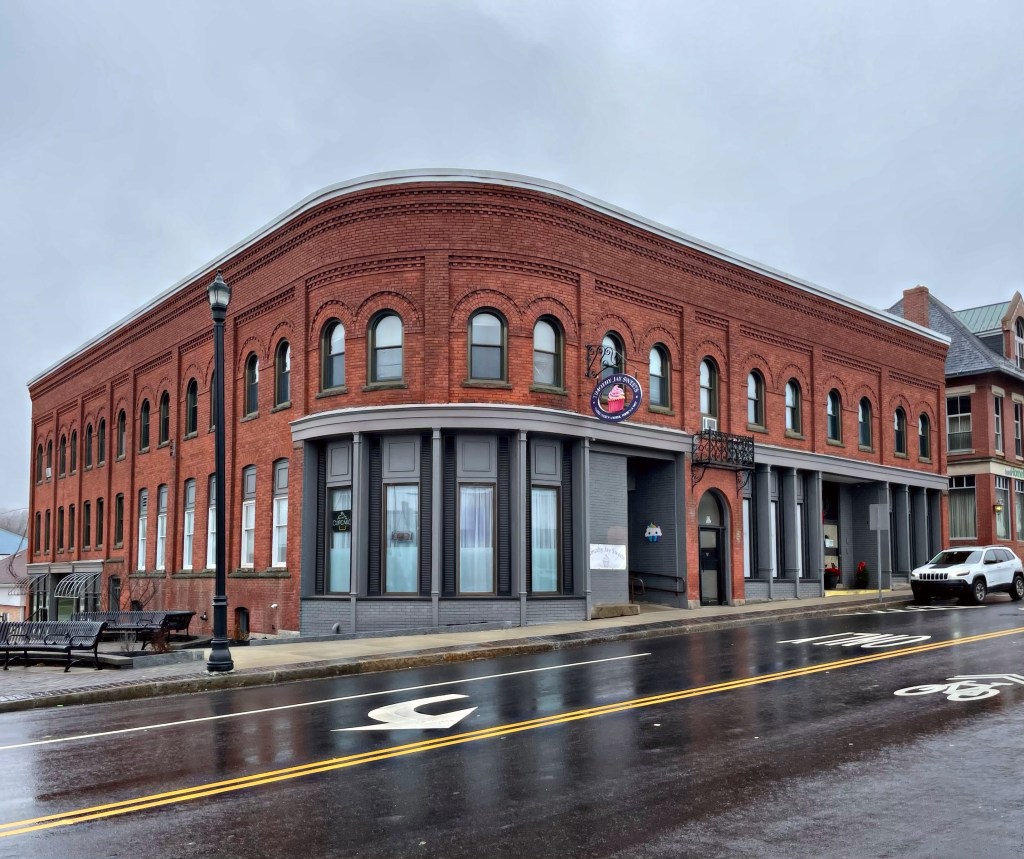
The Cunningham Block in Millbury was constructed by, and named for Winthrop P. Cunningham (1820-1895), and his son and business partner, Russell Clark Cunningham (1845-1907). Winthrop Cunningham had come to Millbury in about 1837 and worked for Waters, Flagg & Harrington prominent gun manufacturers in town. His foundry work there brought him into a partnership with Matthias Felton in the Millbury Foundry Company. The Cunningham Block is sited on a prominent corner lot and built into the slope of the hill which drops down toward the river. I am especially fond of the curved corner facade and repetition of the paired round-arched windows on the second floor.
Grass Hill School // 1861

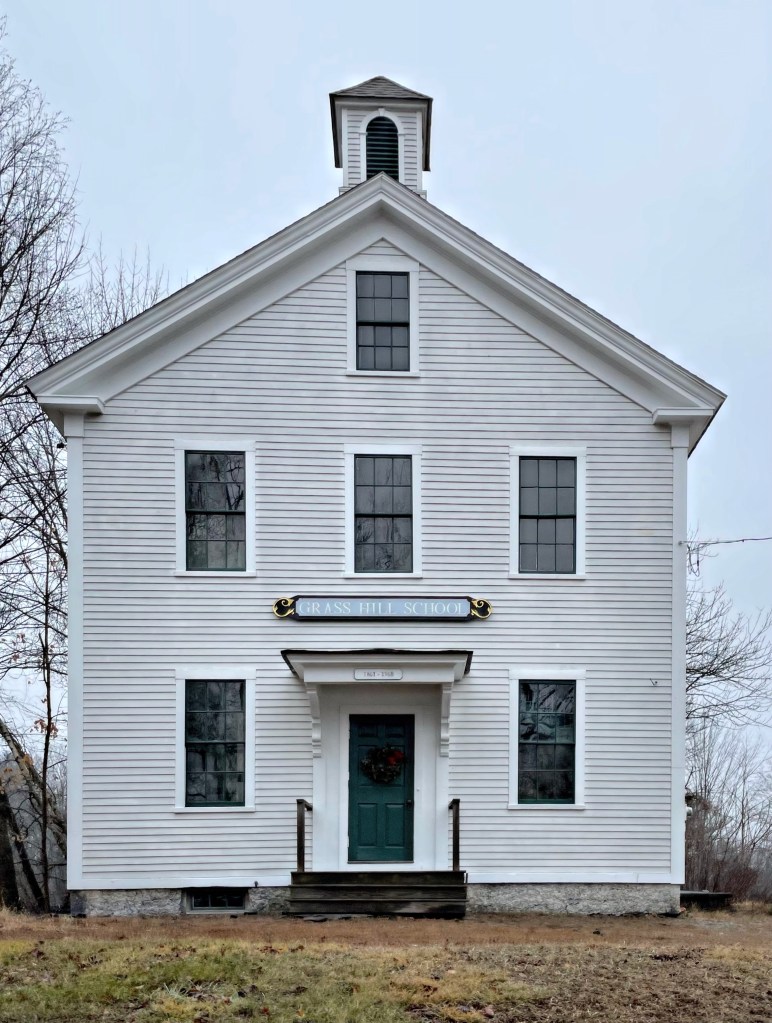
In western Millbury, the Grass Hill school was constructed to provide a place of learning for children in the agricultural section of town. The district school, a remnant of the system of autonomous school districts that characterized the educational system of Massachusetts in the 19th century, this is a larger example of many of them. West Millbury had many wealthy farmers and they financed a district school here as far back as 1814. After two earlier, smaller school buildings, this two-story school was erected and was one of the most substantial. At one time, students in eight grades taught there, all at the same time, with grades 1-4 downstairs and 5-8 upstairs. As there weren’t many students, each grade only took up one or two rows. The building remained as a school for the town until 1968, and the building was leased to the Millbury Historical Society long term. They just completed a massive restoration project for the building, it looks great!

Bond Farmhouse // c.1800

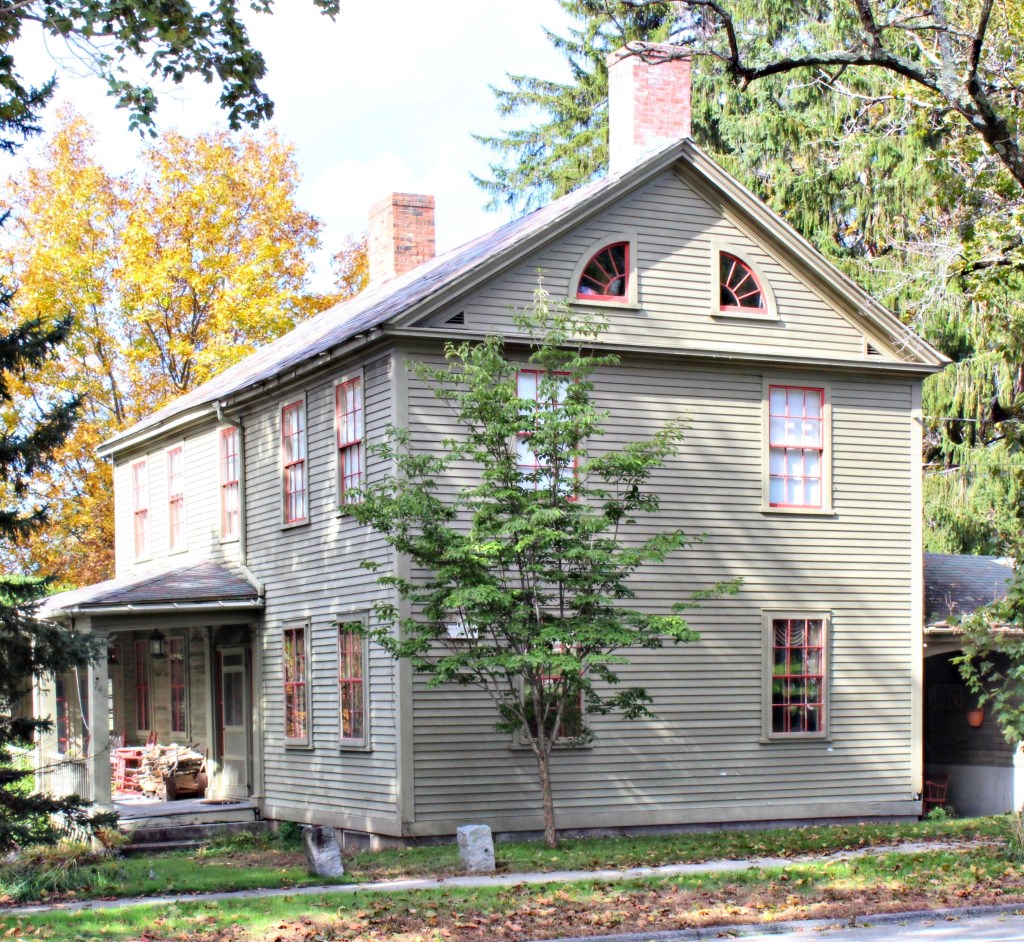
This farmhouse is unreal… Located on a rural back road in Millbury, I came across this rambling old Cape house with a stone wall and everything! The home appears to have been built in the late 18th or early 19th century, possibly as a half-cape (with the door and two windows to the right) for Emery Bond, or possibly his father, Oliver Bond. The home (like many Cape houses) was added onto as the family grew and finances could necessitate a more substantial house. It likely added the two bays to the left of the front door next, then bumping out the sides by the 20th century to give it the present, elongated appearance. It’s not often that a once-modest Cape house stops me in my tracks!

Hawthorn Hill Estate // 1903

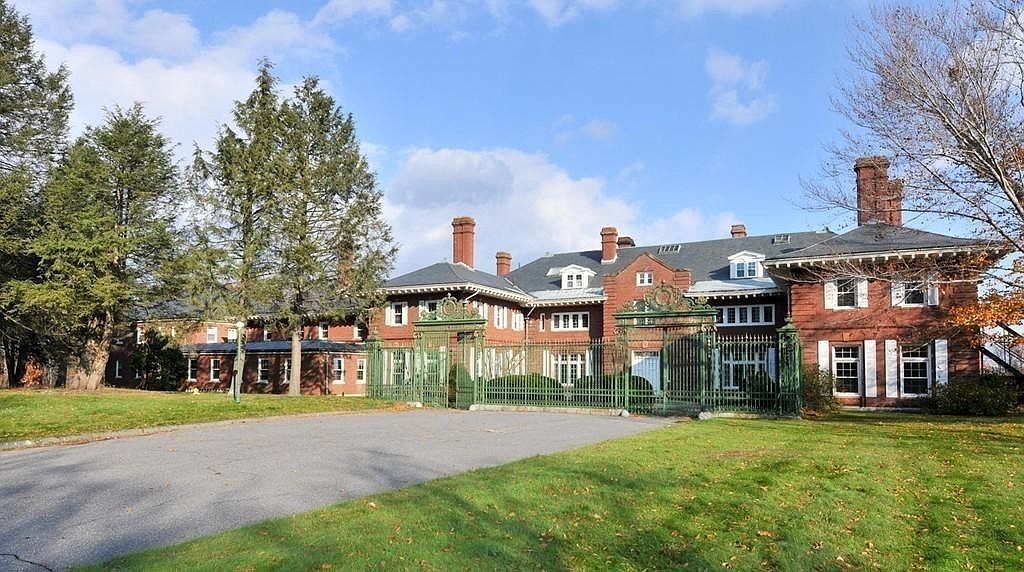
The only estate in Lancaster that can rival the Nathaniel Thayer Estate in size and grandeur is the OTHER Thayer estate, built for Bayard Thayer. Sitting on over 55 acres of forests and gentle rolling fields, Hawthorn Hill is one of the most impressive mansions in Central Massachusetts. The property is so secluded that I had to rely on real estate photos to share! The listings mention that there are over 40 bedrooms and 27 bathrooms… Bayard Thayer (1862-1916) is the grandson of Nathaniel Thayer, Unitarian minister of the First Church of Christ in Lancaster and son of Nathaniel Thayer, a banker. When his brother was willed the family estate (featured previously) after the death of their father, Bayard used the opportunity to build a modern estate high upon a hill in town. The mansion was built in 1903-1904 under the direction of Guy Lowell, a renowned Boston architect of the time. In 1907-1908, Little and Browne were commissioned for landscape alterations and in 1914-15, Ogden Codman Jr. was commissioned to renovate the interiors. Bayard died one year later, and the property remained in the family until around WWII. In 1953, the property was acquired by the Boston Cenacle Society, who added a massive dormitory addition to the building. Recent plans were unveiled to subdivide the land and build house lots on half the estate, which gives me mixed feelings.

Carter House and Publishing Company Building // 1820

Here is a two-for-one post! These two absolutely gorgeous Federal style buildings on Main Street in Lancaster were built in 1820 for George Carter and his brothers who ran a publishing company in the sleepy town. The Carter family was very active in the Swedenborgianism, a very small church in the general realm of Christianity, and they helped create a small enclave of worshippers in town. The brick, Carter and Andrews Publishing Company building (on the other side of a dead end street from this house) was built at the same time as the Carter home. The company was extremely popular in publishing children’s books, textbooks, and maps. One of my favorite publications the company made was “Peter Piper’s Practical Principles of Plain and Perfect Pronunciation”, now say that three times fast!

Lancaster Industrial School for Girls – Rogers Cottage // 1855

The Lancaster Industrial School for Girls in Lancaster, Massachusetts, was was established in 1854 as one of the most progressive correctional institutions of its day, and the first in the U.S. for girls. Throughout the 19th century, state governments struggled with how to best deal with youthful law-breakers and vagrants. Some states began to provide correctional facilities, often known as “Industrial Schools,” while other states continued to incarcerate “delinquents” in prisons alongside adults who often were charged with much more heinous crimes. Institutions like the Lancaster Industrial School led the way in social reform, copying a cottage system created in France that emphasized a wholesome, family-like atmosphere and the opportunity to rise above the “low life” slums from which Victorians assumed delinquent children came from. All girls who were under 17 years old at the time of commitment, were housed in one of eight “cottages” where they would each have their own rooms and chores. The Rogers Cottage seen here was one of a handful of the earliest cottages, all identical in design. Matrons and teachers taught the girls the domestic arts, including how to cook and sew. The Industrial School closed in the 1970s and has been used in an ever-diminishing role by the State of Massachusetts ever since. There have been talks about this complex being sold for redevelopment with some old buildings saved, but I am not holding my breath.