St. Anthony of Padua Catholic Church // 1956

Believe it or not, the city of North Adams, Massachusetts has long been home to a large Italian population. The first waves of Italians first arrived to this part of the Berkshires in the mid-late 19th century, many of which were hired to build the Hoosac tunnel, which when it was finished, was the second longest tunnel in the world. It took almost 25 years to build! Some Italians were experienced stone carvers and others worked in the cotton mills and other factories in the area. As the Italian population grew, Roman Catholic churches were required for these new first- and second-generation families in the mill town. The first St. Anthony of Padua Roman Catholic Church was erected in North Adams in 1906. Four years later, the 1910 census noted that roughly 16% of North Adams’ population was of Italian descent. After the first church burned down around 1950, money was raised to build the present church which is located across the street from Mass MoCA. The church was designed by architect Anthony DePace (1892–1977), an American architect who designed numerous Roman Catholic churches throughout the Northeastern United States area during the mid to late 20th century. Architecturally, the building features late-Romanesque and Art Moderne details. Eventually, the decline in the number of Catholics in North Adams in recent decades led to the consolidation of parishes in 2009. St. Anthony’s is the sole remaining Catholic church in North Adams and the church and parish are now known as St. Elizabeth of Hungary, possibly after a merging of multiple parishes.

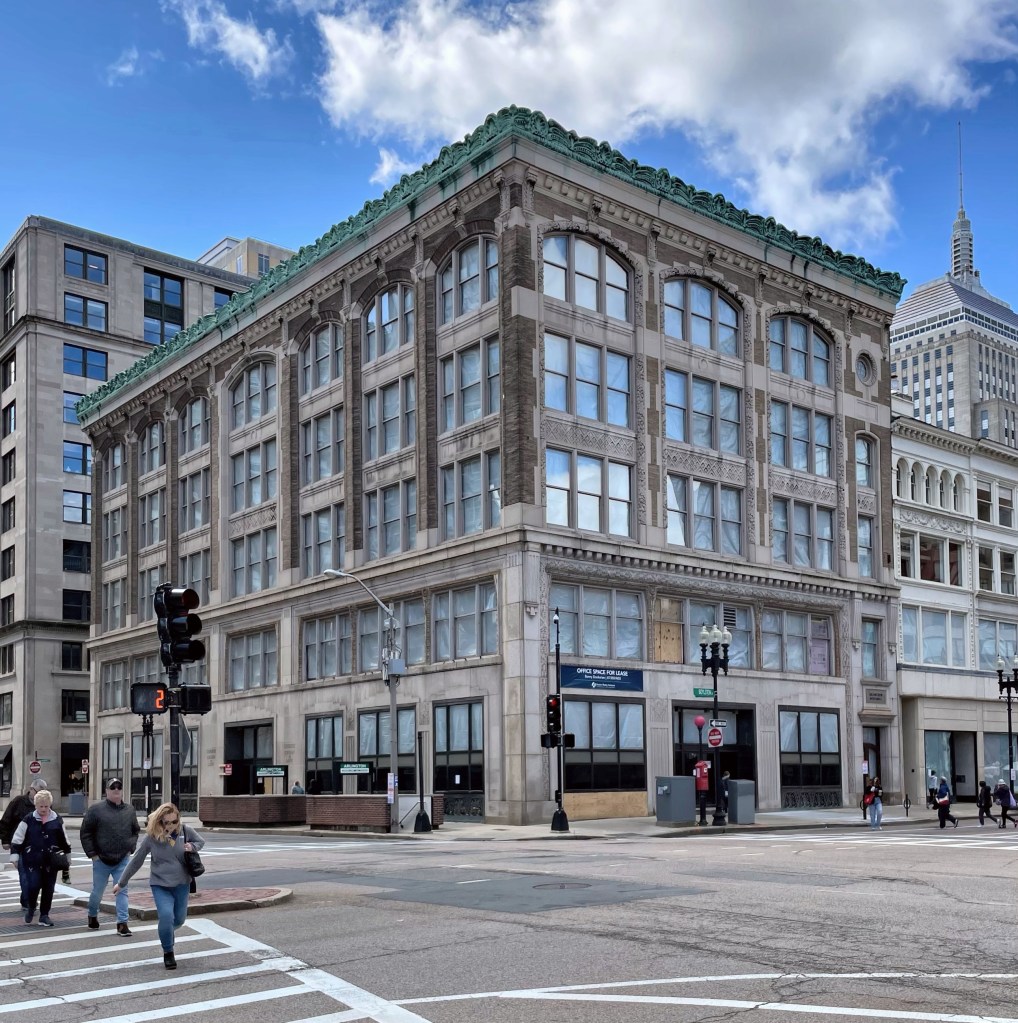
Arlington Building // 1904-2022

This one took me a while to write about because it still pains me to see it was demolished… The Arlington Building was constructed in 1904 as a mid-block building on Boylston Street, across from the Public Garden for the Bryant and Stratton Commercial School. It was designed by architect William Gibbons Rantoul of the firm Andrews, Jacques & Rantoul in the Beaux Arts style. The school building was significantly altered when Arlington Street was extended southward through Boylston Street, making this building suddenly a corner landmark. The new Arlington Street elevation was modeled after the Boylston Street facade. By 1929, Shreve, Crump & Low, established in 1796, the oldest purveyor of luxury goods in North America, moved into the building. The next year, they hired architect William T. Aldrich to add Art Deco embellishments and storefront designs, along with interior renovations to modernize the structure. The luxury company had downsized and moved out of the building, and its prominent site was threatened when owner/developer Druker Co. submitted for a demolition permit to raze the building (and others on the block) to erect a modern office/commercial building. After years of fighting between local preservationists and business interests and developers, the latter won and the building was demolished by late 2022. The new building, 350 Boylston Street, is presently undergoing construction, and in my opinion, is a poor attempt to fit into the surrounding context and is neither as unique or inspiring as the former building.

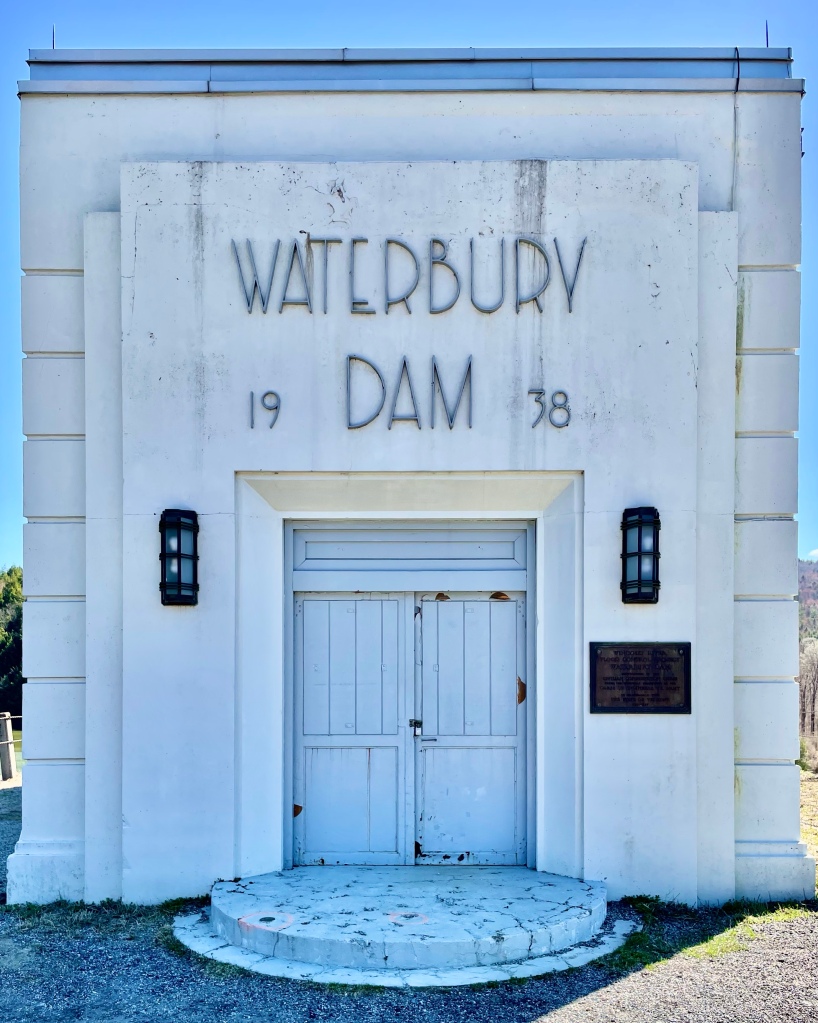
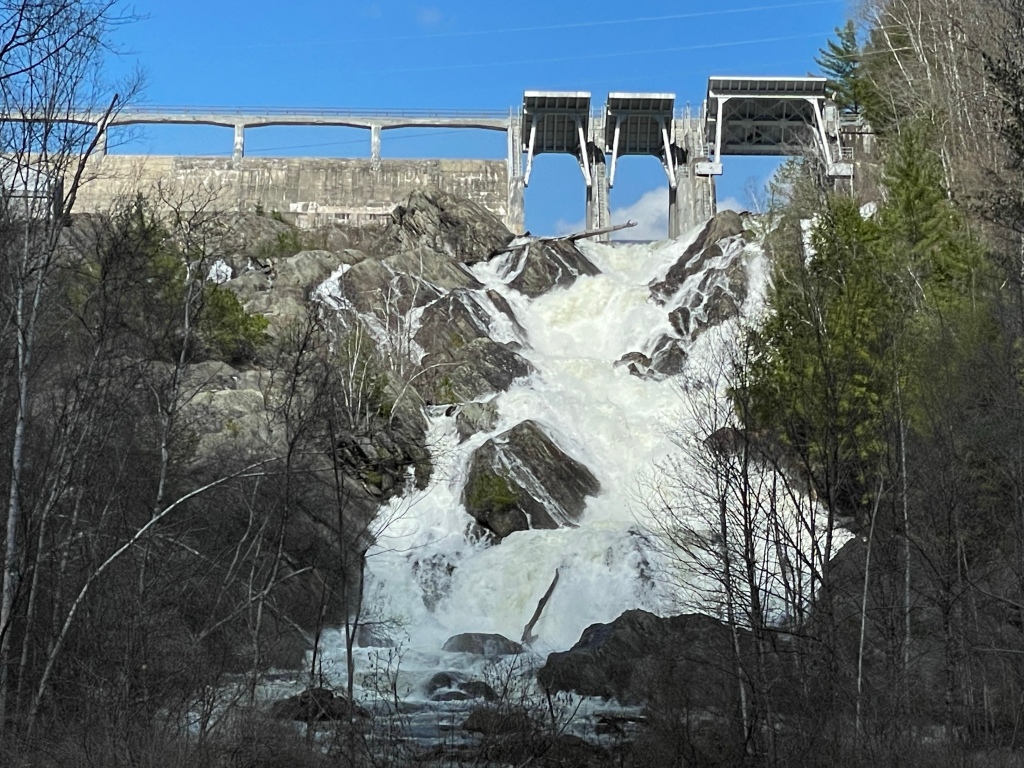
Waterbury Dam // 1938

In November of 1927, a disastrous storm hit the State of Vermont. Severe flooding in the Winooski River Basin area resulted in the loss 55 lives and damages totaling over $22 Million. A Corps of Engineers study was initiated soon thereafter to investigate “the improvement of the Winooski River for the purposes of navigation in combination with the development of waterpower… and the control of floods.” The report presented a comprehensive plan for flood control and power development, consisting of: the construction of seven reservoirs; the installation of seven new hydropower plants, and the enlargement or improvement of 12 existing plants. Construction of the Waterbury Dam and Reservoir began in 1935 and was completed in 1938. The dam and reservoir were designed and built by the Corps of Engineers using contract services and Civilian Conservation Corps (CCC) labor, all thanks to the New Deal legislation enacted by President Franklin D. Roosevelt. The gatehouse at the top of the dam’s embankment is a rare example of Art Deco architecture in the state of Vermont and was completed in 1938 as the last piece of the project. The building and dam remain today as part of the Little River State Park and are a great example of Engineering History and a look into human intervention in the natural landscape.

Avon Cinema // 1938

There are fewer and fewer historic movie theaters in America, largely due to the proliferation of larger theaters at the end of the 20th century and the more recent trend of streaming. Smaller, family-owned theaters are becoming rare, so if we value the charm and character of these spaces, we have to support the arts at these spaces! The Avon Cinema is located in Providence’s East Side neighborhood and premiered on February 15, 1938 with the French film Beethoven’s Great Love (titled “The Life and Loves of Beethoven” in the U.S.) The theater was originally constructed in 1915 and operated as the Toy Theater for a few years before it closed. After decades, the building was purchased by the Dulgarian Brothers, who reopened the theater, naming it Avon. The Dulgarian family has owned and operated the theater to this day and have made a point to restore the building and maintain the historic charm.

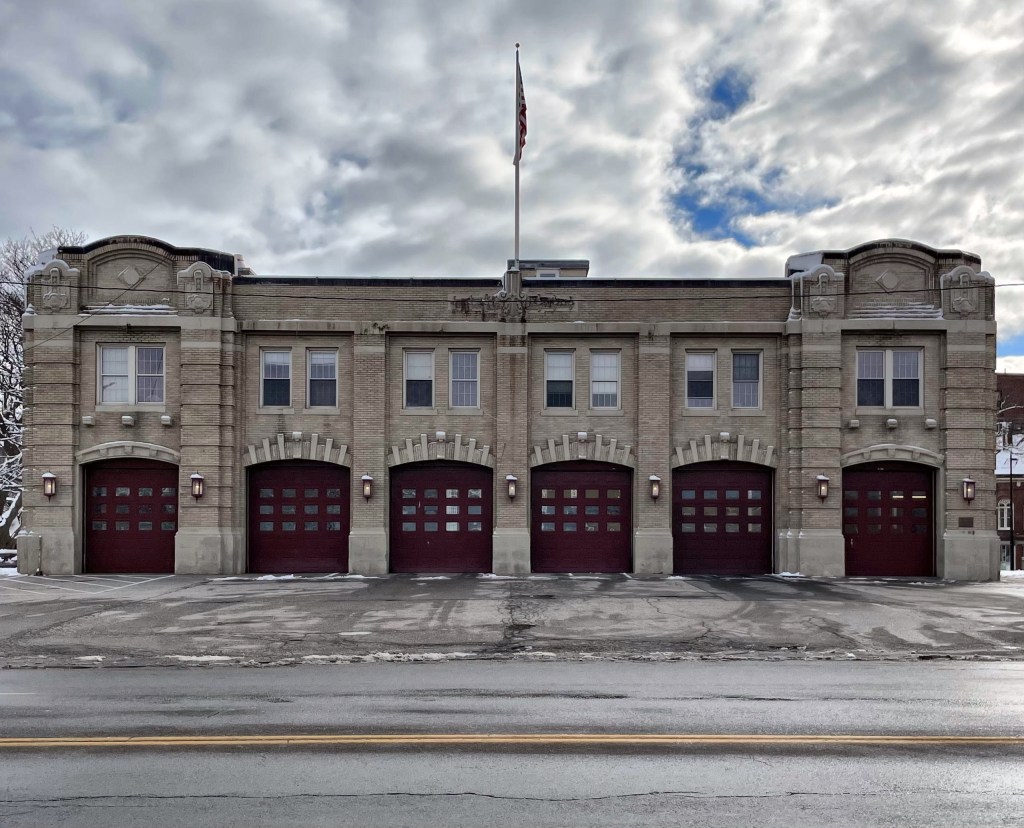
Portland Central Fire Station // 1924

The Central Fire Station in Portland, Maine was built in 1924 and designed by William R. Miller & Raymond J. Mayo, architects located at 465 Congress. Lester I. Beal, a draftsman employed by Miller & Mayo, participated in the design. It was erected to contain the administrative offices of the Portland Fire Department, as well as to house fire engines and other apparatus of the inner city district. Portland has one of the oldest fire departments in the nation, 1768, when Falmouth appointed fire wardens to look for fires at night and alert the residents. In 1786, the citizens of Falmouth formed a separate town in Falmouth Neck and named it Portland, after the isle off the coast of Dorset, England. After the Great Fire of 1866 destroyed much of Downtown Portland, a new central station was built in 1867. The structure was deemed obsolete with new, large ladder trucks replacing smaller engines. The entire downtown block was demolished for the current Central Fire Station for the present building. The small building is at the center of a large lot, which is likely a candidate for redevelopment in the future (after some adjacent surface parking lots are developed).

Everett Savings Bank // 1930

Located next door to the First Congregational Church of Everett, you can find one of the finest eclectic commercial buildings in the region, and it is one that is often overlooked. The Everett Savings Bank was built in 1930 from plans by architect Thomas Marriott James for the Everett Savings Bank, which was established in 1889. This building was constructed just at the beginning of the Great Depression, at a time when banks and American citizens were penny pinching. The budget was likely set before the Stock Market Crash of 1929 as the relatively high-style bank building would have been a big expense at the time. The bank blends Art Deco and Spanish Renaissance Revival styles elegantly. The structure is constructed with sandstone walls that are decorated with figured panels and semi-circular multi-pane windows are outlined by rope molding. Crowning the building is a bold arcaded frieze with Moorish inspired cornice. Swoon!

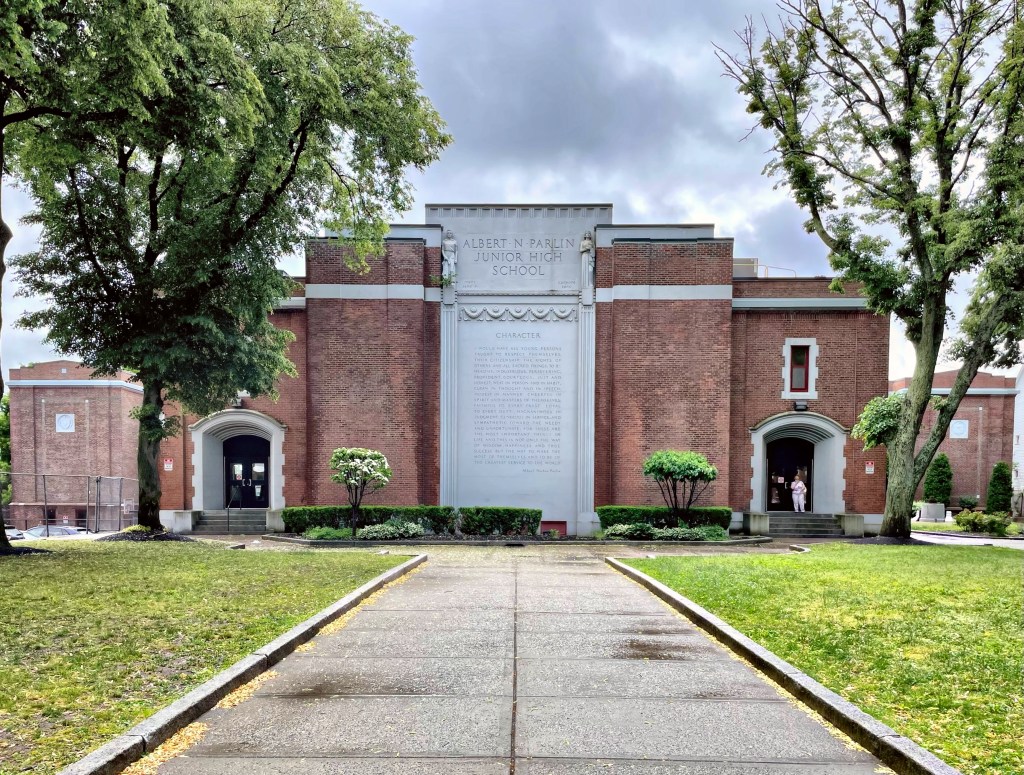
Albert Parlin School // 1931

Albert Norton Parlin (1848-1927) was born in Everett, Massachusetts to Ezra Parlin and Nancy Pickering-Parlin. At a young age, Albert lost both his parents – his mother passed in 1853 at the age of 26 and his father passed in 1858 at the age of 37, both succumbing to “consumption” (tuberculosis). At the age of nine, young Albert had become an orphan, and was raised by his grandmother at the Pickering Estate. He found his first job as a floor-sweep and errand boy in a retail cloak store. At seventeen, Albert Parlin began working with Magee Furnace Company, a Boston-based company where Mr. Parlin spent twenty-eight years of his professional career, moving up the ranks to become treasurer of the company. After he became successful, he gave back to his hometown, when in 1892, he donated his familial home and money to the City of Everett for the erection of the Parlin Memorial Library, to honor his late son. Parlin was not done giving to his hometown. He also left funds and a large piece of land to the City of Everett for a new Junior High School in 1915. The architectural firm of Desmond & Lord was commissioned to design the school which is set deep on the lot to give the building a beautiful front lawn. The 1931 building blends Art Deco and Tudor Revival styles with a large central panel.

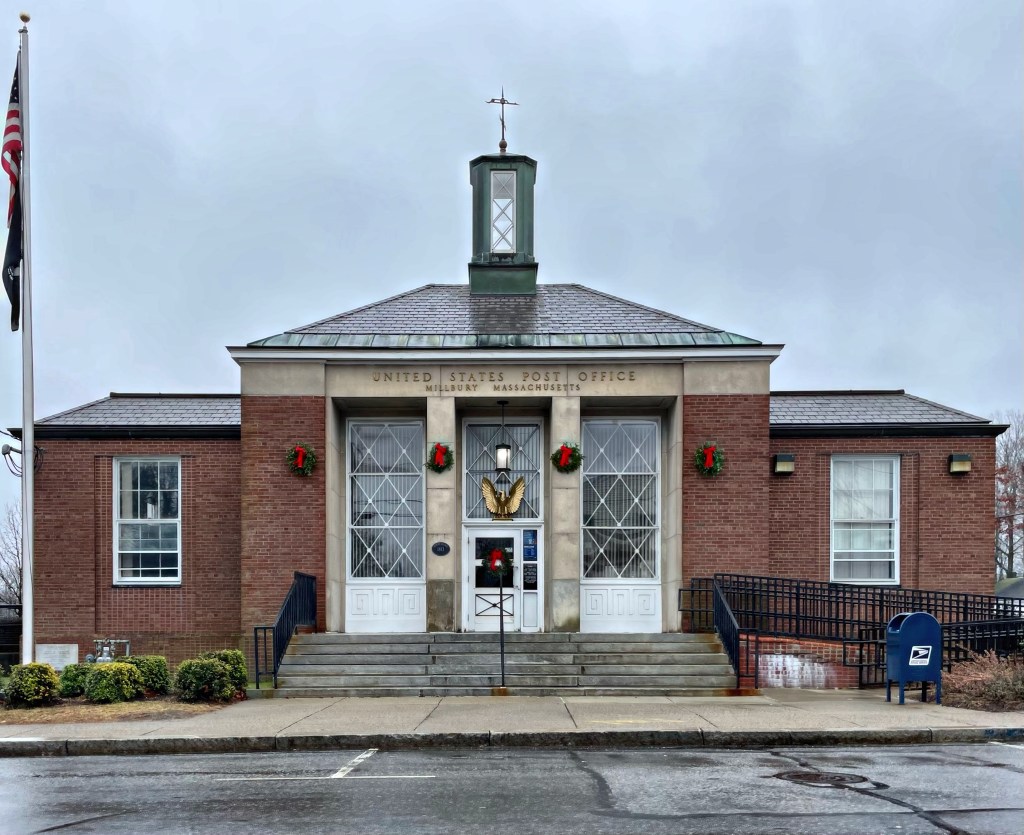
Millbury Post Office // 1940

Located in downtown Millbury, MA, the town’s local post office stands as a great example of Art Deco and Colonial Revival architecture styles, showing how well different styles can be incorporated into a single, complimentary design. The Millbury Post Office building was constructed in 1940 from plans by Louis Adolph Simon, who served as Supervising Architect in the Office of the Supervising Architect for the U.S. Treasury from 1933 until 1939, when the office was moved to the Public Works Administration / Works Progress Administration. The post office was designed at the tail end of the New Deal programs to help stimulate local economies by building infrastructure and providing jobs to locals. Inside, a mural “An Incident in the King Philip’s War, 1670” was painted by Joe Lasker and installed in 1941 and was “revivified” in 1991.

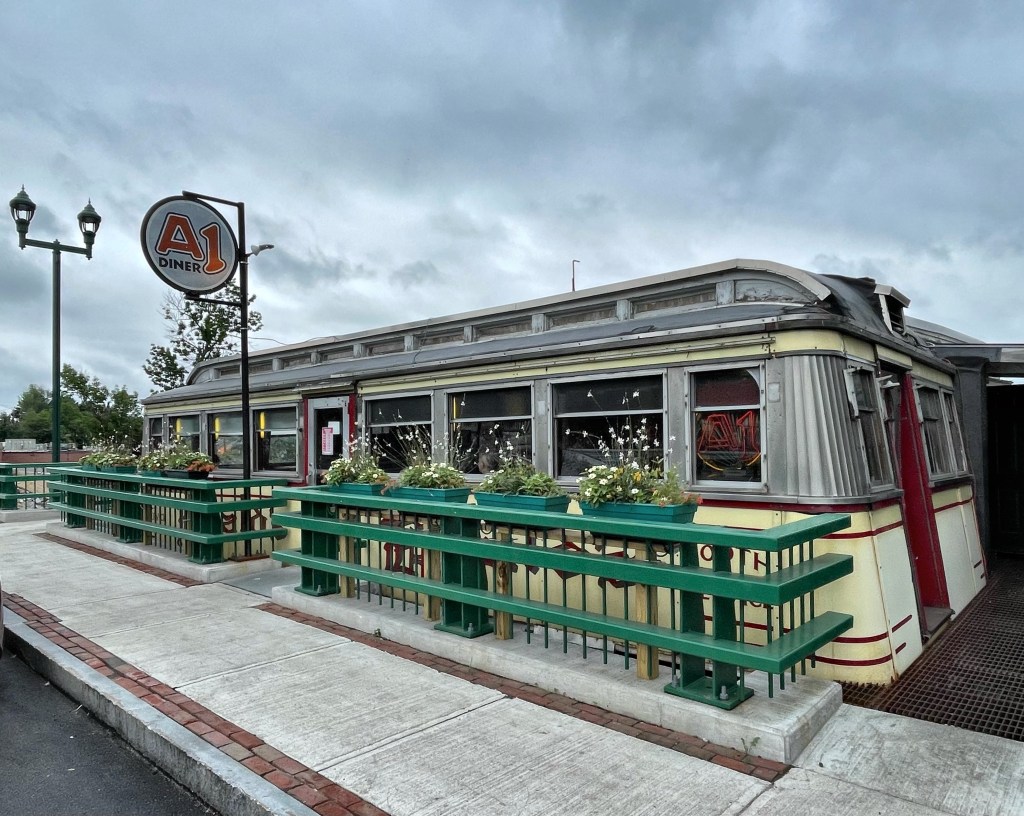
A1 Diner // 1946

Arriving by truck in 1946 from the Worcester Lunch Car Company factory in Worcester, Massachusetts, this piece of Americana has served dishes to Gardiner, Maine workers, families, and tourists for nearly a century. The diner opened as Heald’s Diner under the ownership of Elmer “Eddie” Heald. The Worcester Lunch Car Company began in 1906 and which shipped ‘diners’ all over the Eastern Seaboard. The first manufactured lunch wagons with seating served busy downtown locations, and due to their compact size, and ability to be easily moved, were great options for young businessmen and immigrants looking to start in the food industry, think Triple-deckers for restaurants. The Gardiner, Maine location is special as the diner itself is situated about 20 feet in the air on stilts, due to the location near the Kennebec River, which often flooded downtown. Heald sold his diner in the early 1950s, and it was sold again to Al “Gibey” Gibberson who named the diner after himself, Al’s Diner and ran it until he sold it in 1988, to owners who didn’t name it after themselves but called it the A1 Diner instead, likely as the “l” in Al looked like a 1. The diner is quintessential roadside American history inside and out, and the food is even more impressive. Do you have an old diner near you?

Hatch Memorial Shell // 1940

Located at the Charles River Esplanade in Boston, the Hatch Memorial Shell has long been an iconic landmark and meeting place for Bostonians and tourists alike. Built in 1940, this outdoor amphitheater structure replaced an earlier 1920s shell, envisioned by Arthur Fiedler, the first permanent conductor of the Boston Symphony Orchestra. Construction began on the first shell in 1928 and Arthur Fiedler conducted the first Boston Pops concert there on July 4, 1929, followed by a month of concerts during that first summer, a tradition that has continued to this day. A second temporary shell was constructed of metal in 1934, which was unsatisfactory for the famous orchestra. In 1940, the construction of the new music shell took place, donated by benefactor Maria Hatch, to build a memorial for her late brother, Edward, who it is named after to this day. The permanent shell was designed by Richard J. Shaw, a Boston architect known for designing churches. The Art Deco design, with intricate woodwork adorning the interior and a terrazzo tile roof, was dedicated on July 2, 1940, just in time for Independence Day celebrations.