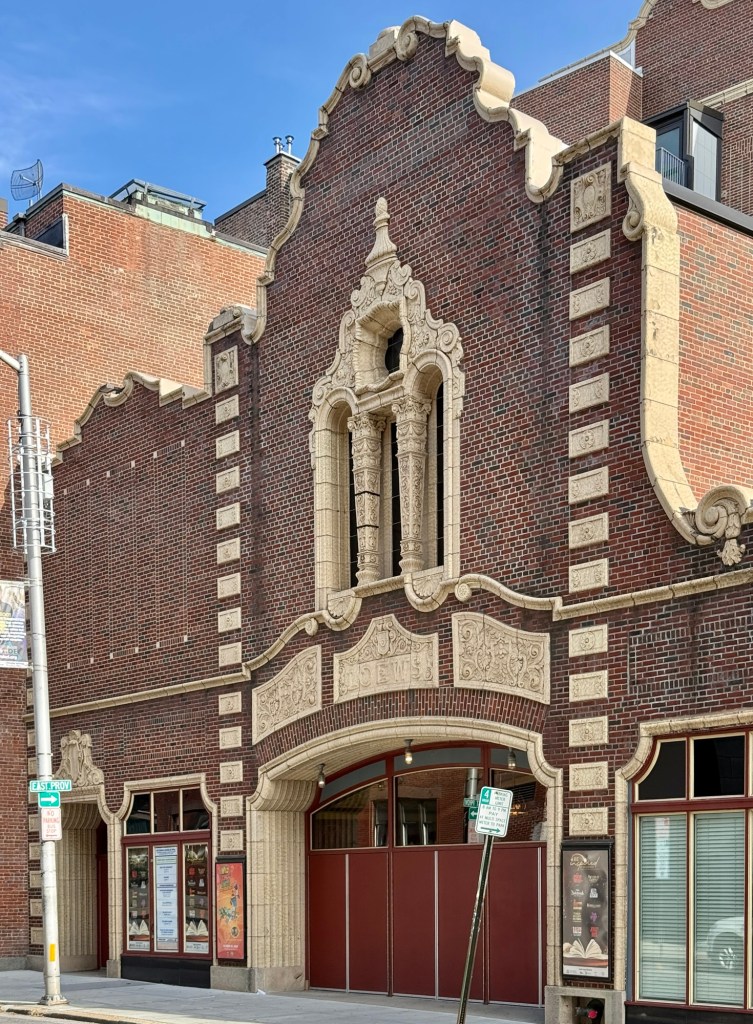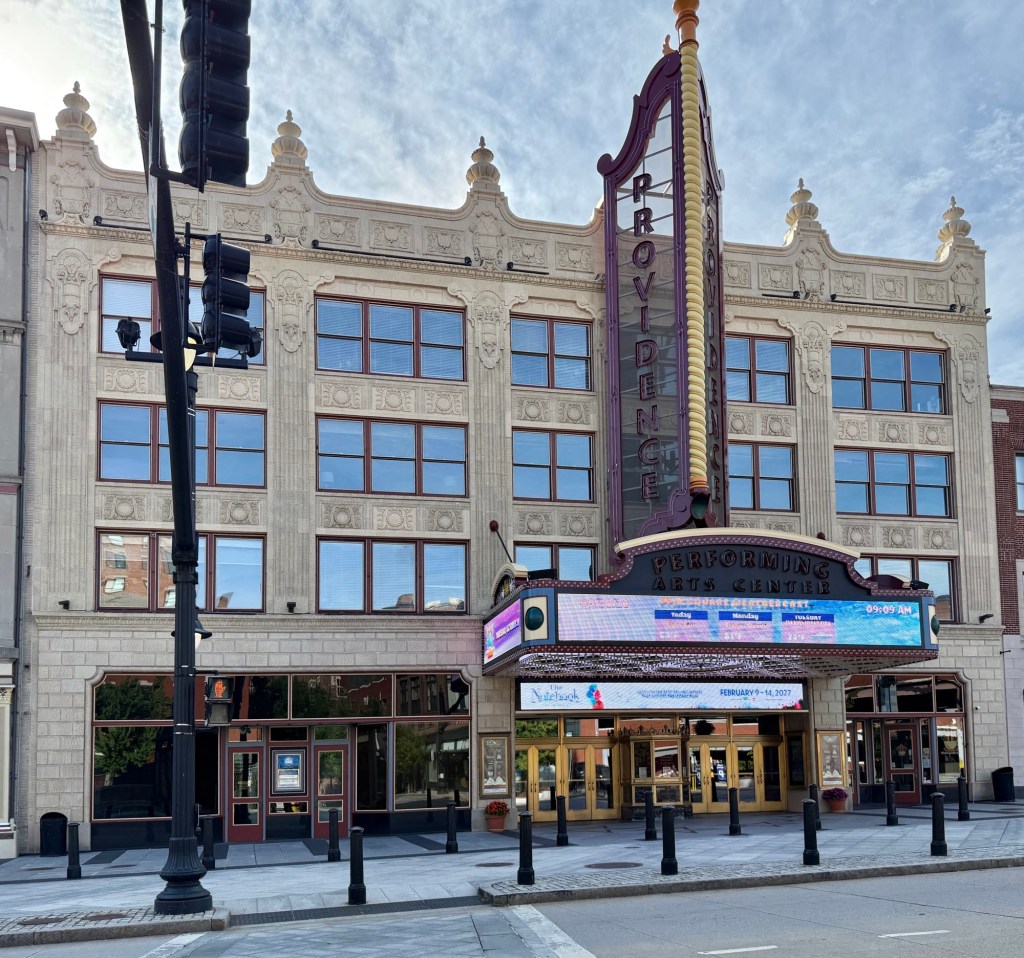
The old Loew’s State Theatre, now the Providence Performing Arts Center in Downtown Providence, opened on October 6, 1928, as one of the grand movie palaces built by the Loews chain during Hollywood’s golden age. Designed by the Chicago firm Rapp & Rapp, the country’s leading theater architects at the time, the building blends Baroque and Rococo influences earning it the nickname “The Jewel of Weybosset Street.” The primary facade is a four-story, terra-cotta sheathed, steel-frame structure with with fluted pilasters, molded panels, finials at the parapet, and a large modified prismatic marquee. On the Richmond Street elevation, a one-story brick structure with terra-cotta trim and secondary entrance/exit provides additional flair to what would otherwise be a more stripped-down feature. After WWII, when theaters began to see declining revenue, the building cycled through names like the Palace Concert Theatre and Ocean State Theatre before a group of local preservationists and civic leaders saved it from possible demolition in the late 70s. The building was listed on the National Register of Historic Places in 1977 and the theater reopened as the Providence Performing Arts Center in 1982. The roughly 3,100-seat venue has since been carefully restored to its original splendor and today ranks among the largest and best-preserved movie-palace-era theaters in New England, hosting national Broadway tours, concerts, and comedy shows.