The Billows Cottage // 1895

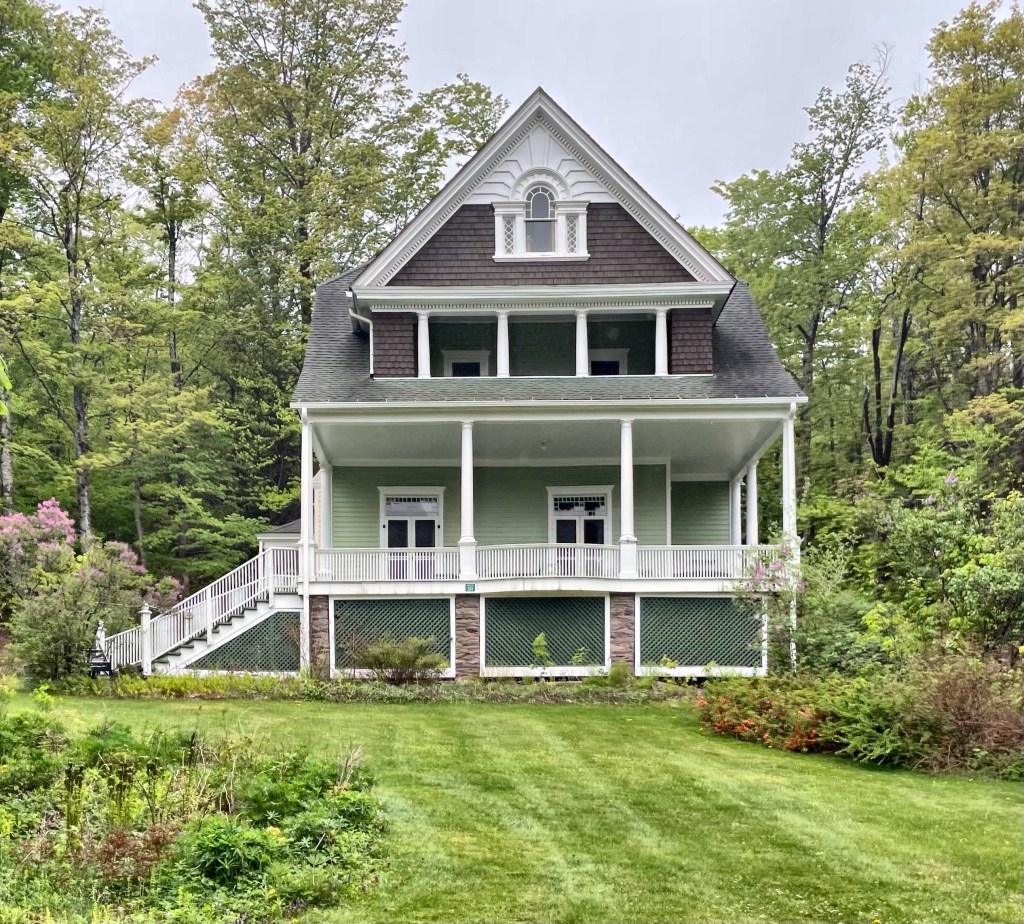
The Billows Cottage in Kennebunkport, Maine was built in 1895 for a B.S. Thompson, a wealthy coffee and tea merchant. The house was originally designed by Henry Paston Clark, a Boston architect who was very busy furnishing designs of some of the summer colony’s most iconic buildings and cottages. For this cottage, he designed it in a blending of Shingle and Colonial Revival styles with a side-gabled roof punctuated by dormers and sweeping verandas with rubblestone foundation. By 1904, the cottage was purchased by Robert C. Ogden of Philadelphia, who helped establish Wanamaker’s Department Store. Under Ogden’s ownership, the house was remodeled and expanded numerous times, but still retains its charm!

Edwin Packard Cottage // 1899

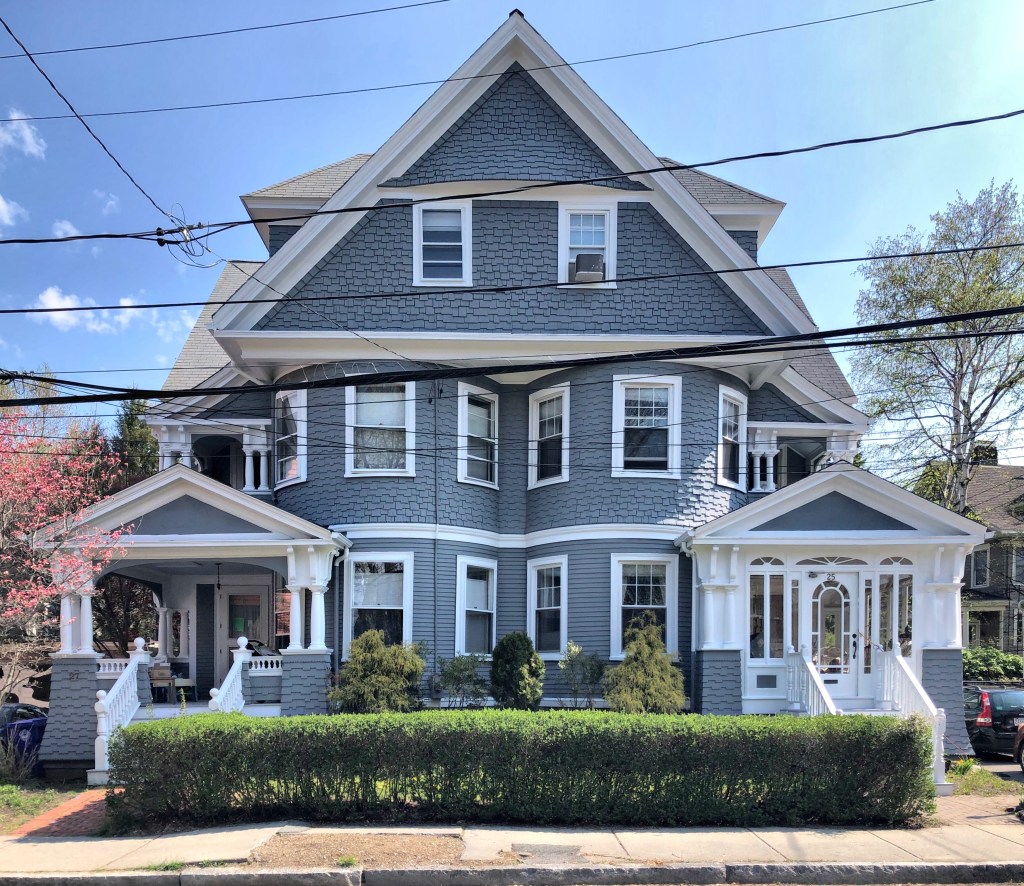
Yet another of the large summer “cottages” in the Cape Arundel Summer Colony of Kennebunkport is this stunning eclectic home, built in 1899 for Edwin Packard of New York. As a young man, Edwin married Julia Hutchinson and would soon amass an ample fortune. He became European buyer for A.T. Stewart & Co. In 1889 he came President of the Franklin Trust Company, resigning in 1892 to become President of the New York Guaranty and Indemnity Company. He was a Director of the Franklin Safe Deposit Company, the American Writing Paper Company, the Fajardo Sugar Company and the Brooklyn YMCA, and a member of the New York Chamber of Commerce. Busy man! From his wealth, he sought solitude and relaxation in Kennebunkport, hiring Maine architect John Calvin Stevens to design this cottage for his family to retreat to for summers away from the city. The Shingle style and Colonial Revival style house features a prominent gambrel roof, Palladian windows, and bay windows, all covering a sweeping front porch.

Grayling Cottage // c.1900

John Bach McMaster (1852 –1932) was born in Brooklyn, New York to a rich plantation owning father and mother who ran operations in New Orleans until the outbreak of the Civil War. After this, John graduated from the College of the City of New York in 1872, worked as a civil engineer in 1873–1877. Falling in love with the field of American History, he switched careers and in 1883, became professor of American history in the University of Pennsylvania. McMaster is best known for his History of the People of the United States from the Revolution to the Civil War (1883), a valuable supplement to the more purely political writings of earlier years. The book was a huge success and John was able to purchase house lots in the newly established Cape Arundel Summer Colony in Kennebunkport, Maine, a colony populated by many wealthy Philadelphians for summer homes. He first appears to have built “The Kedge”, a chunky, but beautiful cottage on a cliff. McMaster would also have this larger cottage built by the turn of the 20th century, which in design, appears to be a more eclectic Shingle style dwelling. Just a stone’s throw from the Atlantic, the house features continuous cedar shingle siding, sweeping porches to provide views of the ocean, a prominent chimney, and Colonial-inspired fanlight motifs.

Richard E. Edwards House // 1981

The Colonial era has had a grip on New England residential design since the 1700s, with each subsequent “revival” showcasing the character-defining features in bold new ways. With this house on College Hill in Providence, Rhode Island, the architect, Friedrich St. Florian, blended traditional Colonial Revival residential design with the flair and quirkiness that comes with the Post-Modern style, popular in the 1980s. The house is five bays wide at the facade with a central projecting bay at the entrance. Post-Modernism takes architectural precedence and turns it on its head, with quirky takes on features and larger proportions. The Edwards House exhibits decorative stone lintels, a Classically inspired entry with pilasters, and a very large cupola at the roof. What do you think of this house? I feel it works well for the neighborhood as it is contextual to the surrounding Colonial-era and Colonial Revival style residences while clearly being of the late 20th century.

Stephen O. Metcalf House // 1892

I am on a Colonial Revival style kick lately, so bear with me on this recent span of posts on houses in the style! This estate house is an earlier example in Providence, built in 1892 for Stephen Olney Metcalf (1857-1950) a multi-millionaire who was in business in woolen textiles and insurance before diversifying his portfolio further serving as President of the Providence Journal and Evening Bulletin. To make an architectural statement, Mr. Metcalf called the renowned Boston firm of Andrews, Jacques and Rantoul to design his new residence. The oversized Colonial Revival house is an excellent example of how Revival architecture tend to be a more free interpretation of their prototypes, being larger and having exaggerated features and proportions. In his will, Stephen O. Metcalf bequeathed this residence to the Rhode Island School of Design (RISD), an institution his mother helped found, and his daughter served as President. The mansion remains the RISD President’s House to this day.

Henry Samuel Sprague House // 1902

Colonial Revival houses just exude New England charm! This house in Providence’s East Side/College Hill neighborhood was built at the turn of the 20th century in 1902 for Henry Samuel Sprague, a Providence grain dealer, for $15,000. Mr. Sprague clearly did well for himself financially as he could afford a house lot on one of the city’s most beloved streets, Prospect Street. The large mansion has many architectural details which stand out including contrasting brick and shingle on the first and second floors, a massive projecting portico covering a prominent entry, bold fluted pilasters at the center bay, and three pedimented dormers at the slate roof. Inside, this old house has some amazing woodwork and details too!

Sarah and John Tillinghast House // 1904

This stately yellow brick Colonial Revival sits on the edge of the College Hill neighborhood of Providence, and I couldn’t help but to take a few photos! This residence was completed in 1904 for Sarah and John Tillinghast in the later years of John’s life (he died less than two years of moving into this home). The house exhibits a large semi-circular portico with balustrade above, the portico is flanked and surmounted by Palladian windows with elliptical reveals. The house was recently proposed to serve as a suboxone clinic, but that was shut down by neighbors. It appears to be divided into residential units now.

Kennebunkport Post Office // 1941

During the Great Depression, the federal government built over 1,100 post offices throughout the country as part of the New Deal’s Federal Works Agency. Many of the post offices funded and built in this period were designed by architect Louis Simon, Head of the Office of the Supervising Architect for the U.S. Treasury. Few architects had such a role in designing buildings nationwide than Federal architects who designed buildings ranging from smaller post offices like this to courthouses and federal offices. They really are the unsung designers who impacted the built environment in nearly every corner of the nation. As part of the Treasury Department Section of Fine Arts, artists were hired to complete local murals inside many post offices built in this period, depicting local scenes and histories of the towns they were painted in. In Kennebunkport, artist Elizabeth Tracy who submitted a preliminary sketch of her piece “Bathers” which was approved depicting a beach scene, though the townspeople had not been consulted. Unfortunately, the opinion of a vocal part of the Kennebunkport populace was highly negative to Tracy’s painting, largely due to the fact that her beach scene depicted people on a beach in adjacent Kennebunk, not Kennebunkport! Within a few years, the townspeople gathered funds to hire artist Gordon Grant to paint a satisfactory replacement mural in 1945. The new mural remains inside the post office.

Andrews Hall – Brown University // 1947

Andrews Hall was built after WWII to serve as a dormitory for Pembroke College, the women’s college affiliated with Brown University (later merging in 1971). The new building was named for Elisha Benjamin Andrews, president of Brown University (1889-1898) who was instrumental in the establishment of the college for women in 1891. The new building created a central link, joining Miller and Metcalf halls and nearly doubling the dormitory capacity of Pembroke College, creating an enclosed yard in the process. The architectural firm of Perry, Shaw, Hepburn & Dean (in existence today as Perry Dean Rogers Architects) was hired to provide the plans, which serves a northern edge of the small former Pembroke College quad. Principal architect Thomas Mott Shaw used specially colored brick to give the building a weathered look to achieve harmony with the two buildings which it connected. The style of Andrews Hall is Colonial Revival with a hip on cross-gable roof and is constructed of brick with central three-bays clad limestone facing the courtyard. The building is set over the dining hall which is set into the sunken landscape with the terrace above. The three buildings were recently renovated by CBT Architects and shine today!

Alumnae Hall – Pembroke College – Brown University // 1926

It’s not often that a building has not one, but three distinct and beautifully designed facades. Lucky for us, the 1926 Alumnae Hall at Pembroke College (now Brown University), fits the bill! Alumnae Hall on the Pembroke Campus was dedicated in October 1927 with funds for the building raised through the efforts of the Alumnae Association with Stephen O. Metcalf would duplicate all gifts of students and alumnae. The campaign continued until 1926, when the $50,000 contributed by the students and the $150,000 contributed by the alumnae, together with Mr. Metcalf’s matching funds, were deemed sufficient to start the building. The cornerstone was laid in May 1926 with the Boston architectural firm of Andrews, Jones, Biscoe and Whitmore as architects, who designed the building in the Colonial Revival style. Alumnae Hall, built of brick with limestone trim, was designed to accommodate the social and religious activities of the Women’s College. Its main entrance is a balustraded stone terrace on the campus leading to an auditorium on the main floor, the various sections create a visually stunning complex of wings and facades built into the landscape.