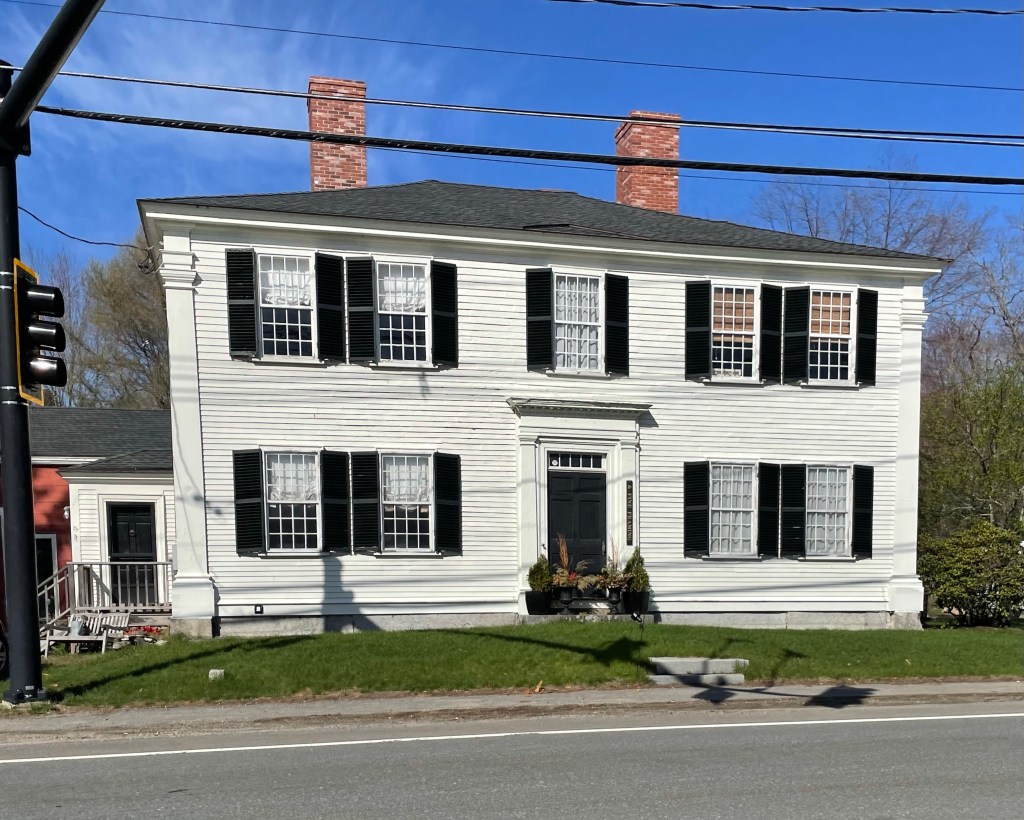
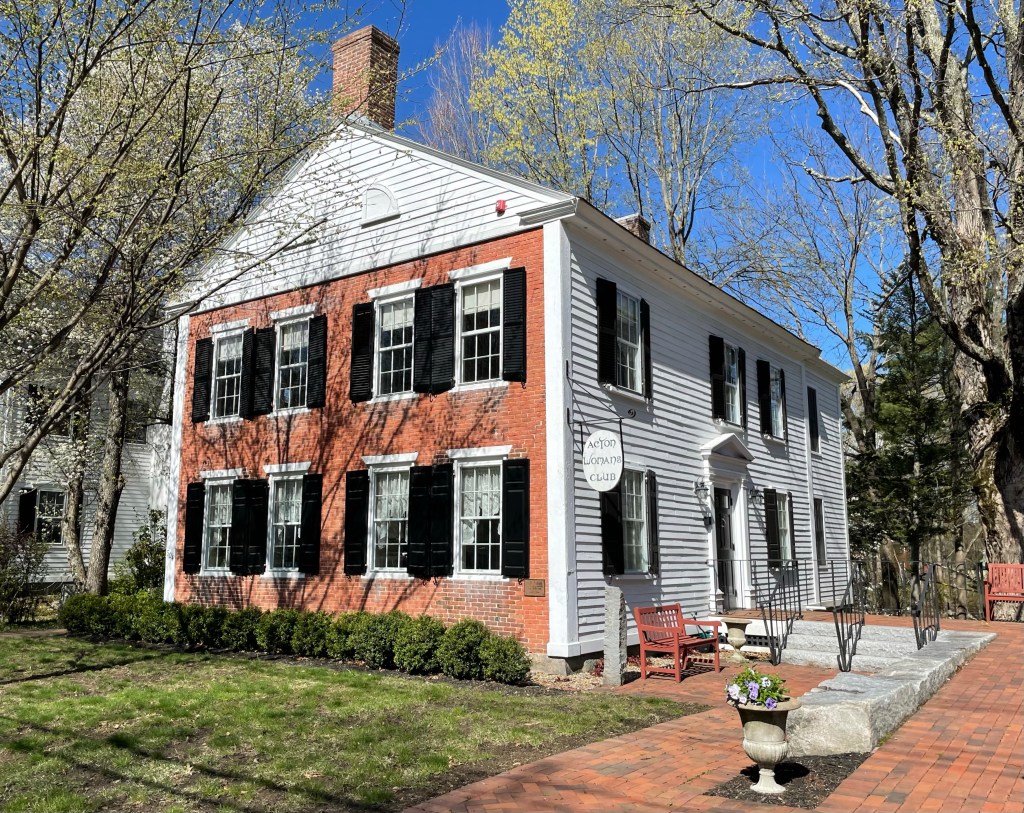
Hennessy’s Bar // c.1826

St. Patricks Day in Boston is not the same this year. It has been a year since I have been crammed into a dimly lit, wood-paneled Irish Pub, with a pint of Guinness and good conversations with strangers. So for now, I will drink my sorrows in highlighting one of many Irish pubs in Boston, Hennessy’s. The building was constructed as one of a row around 1826 along with the adjacent buildings on the block (today containing Son’s of Boston and Blackstone Grill). All four buildings were identical and stood 3-1/2 stories as Federal style commercial buildings with retail space at the ground floor and office or residences above. The buildings were sold off separately and in the 1960s, this building was acquired by the Charlestown Savings Bank, who thought to “Colonialize” the building. They removed 1-1/2 stories and altered the openings at the ground floor (it could have been MUCH worse). The bank moved out just decades later and the building has since been home to Hennessy’s.

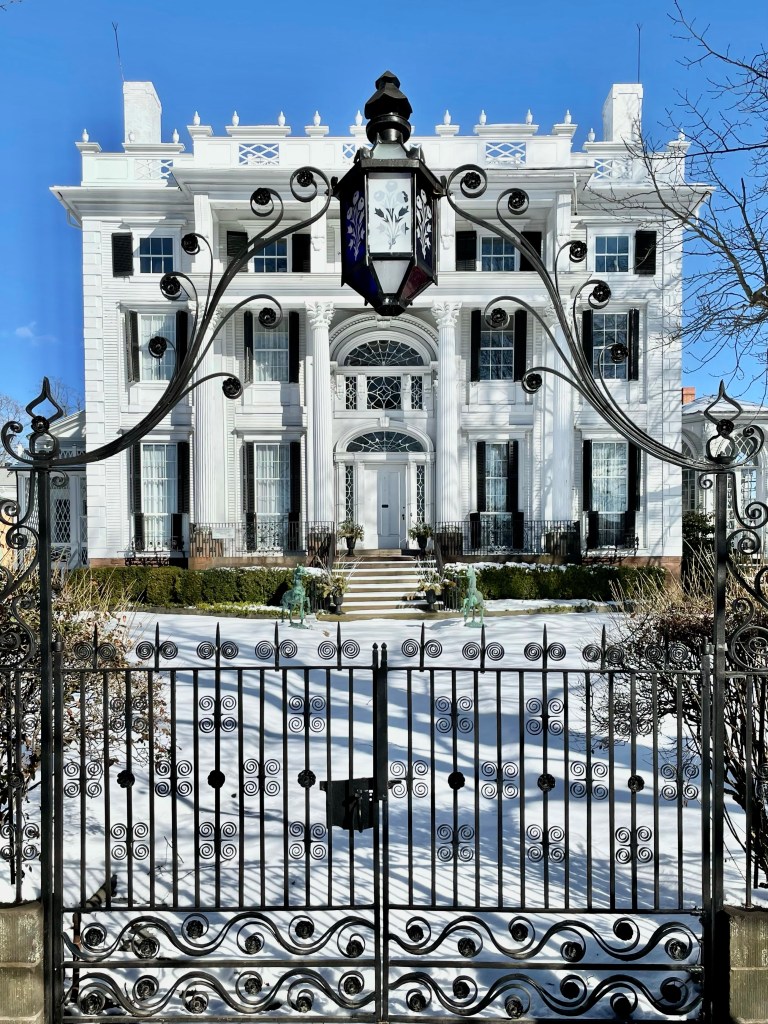
Linden Place // 1810

For the last post in this series on Bristol, Rhode Island, I am leaving you with a house that is architecturally stunning, but holds a dark history. Linden Place was built in 1810 by slave trader, merchant, privateer and ship owner George DeWolf and was designed by architect, Russell Warren. The DeWolfs of Bristol, who became the biggest slave-trading family in U.S. history, transported well over 11,000 Africans to the Americas between 1769 and 1820. The U.S. banned the slave trade in 1808, but the DeWolfs continued dealing in the slave trade until the 1840s by going through Cuba, where they had numerous plantations. They also got help from a DeWolf brother-in-law, who served as a customs inspector in Bristol — thus ensuring family slave ships continued to come and go. In 1825, George DeWolf suffered major financial hits and he and his family fled to his plantation in Cuba, where they’d be beyond reach of his creditors. Stories explain that with the possibility of legitimate payment out of the question, the townspeople sought compensation for George’s debts where they could, and they broke down the front door of Linden Place, and took everything, even peeling the silk wallpaper off the walls.

Following DeWolf’s bankruptcy, the house was bought by his uncle James DeWolf, who was alleged to have directed the murder of a female African slave in 1789 who was sick with smallpox on the slave ship Polly, which he commanded; she was bound to a chair and lowered overboard. James DeWolf was tried and effectively acquitted; which, sadly, should not surprise anyone based on historical precedent. In fact, James DeWolf financed another 25 slaving voyages, usually with other members of his family and was thought to be the second richest man in the United States upon his death in 1837. In later years the house passed to Samuel Pomeroy Colt, a grandson of George DeWolf (as well as the nephew of the inventor of the Colt revolver). His son Russell married actress Ethel Barrymore, who was the great-aunt of current actress Drew Barrymore, and lived in the home. Today, the grand estate is a house museum and event space.

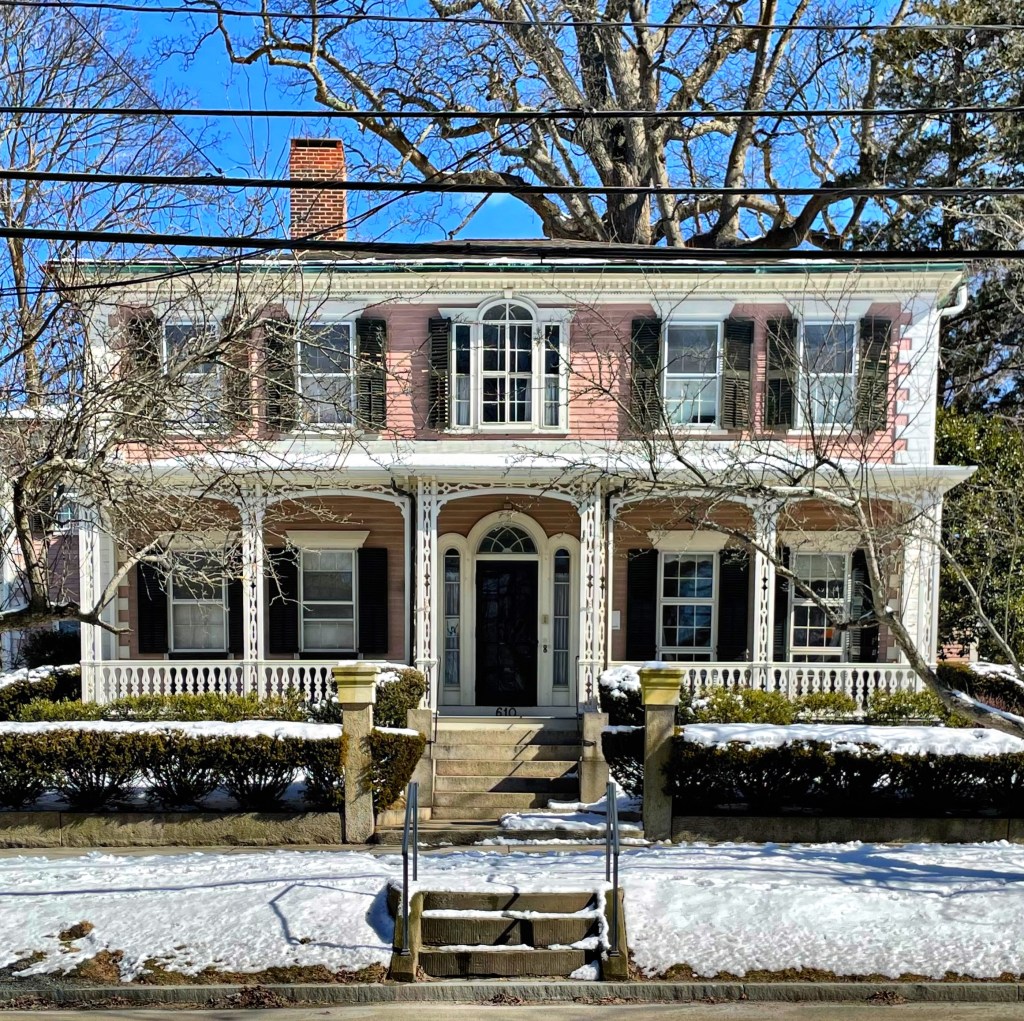
Luther-Babbitt House // 1809

In 1809, Giles Luther built this two-story, 5-bay, hip-roof Federal house, which has been substantially enlarged and altered over the years in succeeding styles. Original detailing on the facade includes the Palladian window, modillion cornice, quoins, and wide-beaded window casings with splayed lintels. Giles Luther (1775-1841), a shipmaster, merchant, and farmer, was more importantly the first Grand Marshall of the Bristol Fourth ofJuly Parade, which is believed to be part of the oldest Fourth of July celebration in the country. In 1825 Luther’s business failed; the Commercial Bank took this house and sold it in 1828 to Jacob Babbitt. Babbitt owned part of a wharf in town and in his will of 1849, he left the “use and improvement” of this house to
his son Jacob, Jr. (1809-1862). The younger Babbitt was wealthy and likely made the mid-19th century modifications to the home, including the Italianate triple-arched door and full-width porch with delicate cut-out posts and railings. The home was occupied for much of the 20th century by the Bristol Nursing Association, and sold in the 1970s to a private owner. The home was for a period ran as a bed & breakfast but appears to be back to a private residence today.

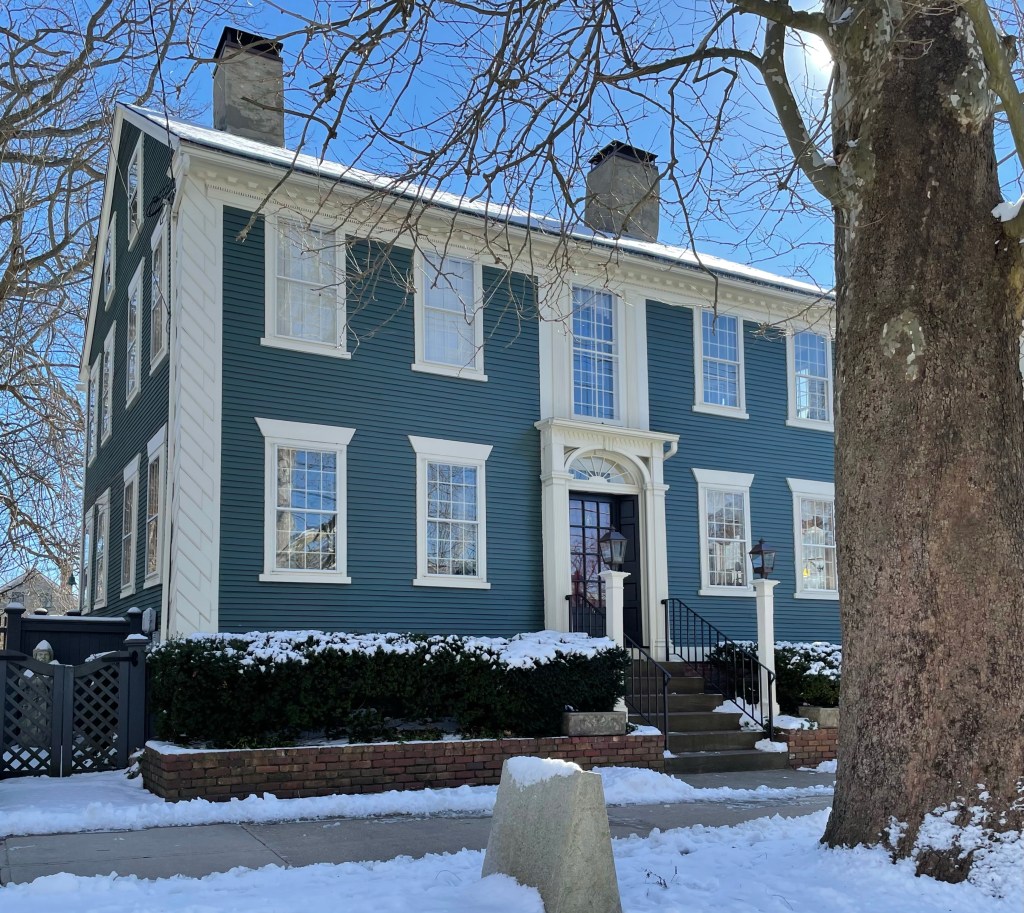
Russell Warren House // 1807

Architect Russell Warren (1783-1860), who I have featured on here numerous times, built this 2-story, 5-bay, hip-roof Federal house in Bristol, Rhode Island. This residence as interpreted by Warren as an example of the Federal style with stylistic features most notably being the angulated quoins (at the corners of the house). The house was designed for William Van Doom, a Bristol tailor of modest means. In 1814, Warren, a young and aspiring architect, saw the significant wealth in Bristol and decided to buy this home he designed. Siting himself in the vicinity of the extremely wealthy DeWolf family, he gained recognition and success by designing three expensive and elaborately crafted houses for them at this time, only Linden Place remaining. Warren lived in this house from 1814 until 1823.

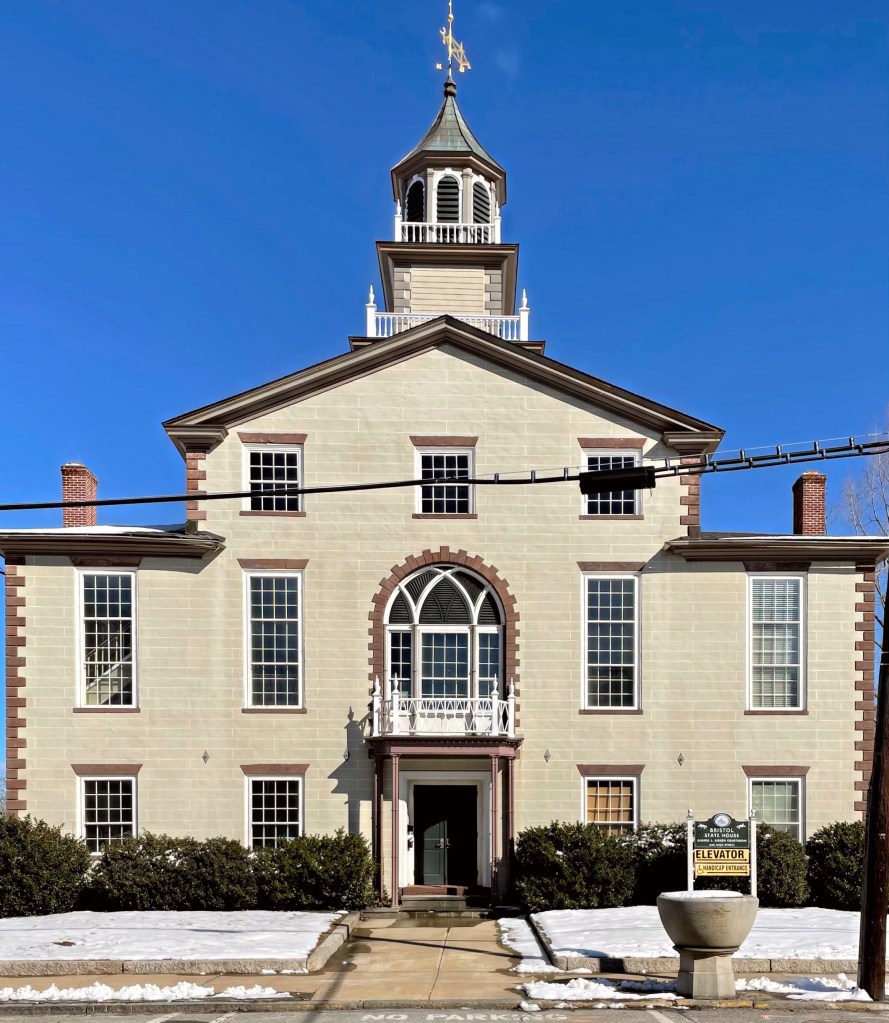
Bristol County Courthouse // 1816

Located on the Bristol Town Green, facing the main commercial area and harbor, the old Bristol County Courthouse is a well-preserved example of a building for civic use in town, at the height of its growth. It is believed that the courthouse is the work of architect Russell Warren, who lived in a home he designed just blocks away. This Federal-style stone building is faced with brick and subsequently stuccoed, giving it the unique composition it has today. The focus of the symmetrical facade is the large central arched window with granite quoins, and Y-tracery that echos Gothic design. As part of the 1836 state Bicentennial, the stucco facing was added over the original brick facing, and the exterior was painted a Gothic Revival sand color with darker trim, replicated in a 1976 restoration. From 1819, the courthouse served as one of the five state houses used in rotation by the Rhode Island General Assembly (in 1854, the General Assembly decided to meet only in Providence or Newport). In 1853, it reverted to courthouse use, a function which ceased in the early 1980s. The Bristol County Sheriff maintained offices there until 1997, when the building was purchased from the state for $1 by the Bristol Statehouse Foundation. The nonprofit foundation has worked to restore and maintain the building. Today, the building is used for education, community programs, meetings, and events.

Richmond-Herreshoff House // c.1803

Located on Hope Street, just south of the downtown area of Bristol, Rhode Island, this beautiful Federal-style home overlooks the water, and once oversaw a large ship-building empire. The home was built by Lemuel Clarke Richmond (1782-1876), possibly in response to his marriage to Hannah Gorham in 1803. Richmond was a wealthy whaler who owned nearly twenty ships, including the Empress, a Bristol-built bark. The Federal style home features a five-bay facade with central entry. A modest portico surrounds the door which has a fan light transom above. Oh, and there are some gorgeous 12-over-12 windows on the home, at the ground floor the windows have flared lintels above. The home was sold by Richmond in the early 1850s and rented out to Charles and Julia Ann Herreshoff, who resided there with their eight children! It was here where sons John and Nathanael overlooked the water as young boys and became consumed by the beauty of the ships that sailed by their front yard. The brothers later ran the internationally renowned Herreshoff Manufacturing Company, which occupied land all around the home (and was featured previously). The home was acquired by the family in the 1860s, and often changed hands within the family over the next decades until it was inherited by Norman F. Herreshoff. A collector of Americana, Norman Hcrreshoff completed a series of renovations to the family home, including remodeling of the kitchen to be “old-fashioned” and replacement of the front porch with the small Ionic portico which we see today. The home is owned by the Herreshoff Marine Museum, but has seen better days.

“The House with the Eagles” // 1808

In 1807, a young John Howe (1783-1864), a descendent of the DeWolf family, married Louisa Smith, and built this family home soon after. He hired local esteemed architect Russell Warren (who was the same age as Howe at the time) to design the home, which is a simply designed, hipped roof home with an elliptical fanlight and sidelights at the central entrance. It is embellished with superb architectural woodwork with an ornate roof balustrade. Howe and his family lived in the home until 1822, when it passed to ship captain, Benjamin Churchill, who appears to have been involved with the transport of slaves to the Americas. According to local legend, Churchill gave the house its name by having the sailors of his ship, the Yankee, carve four American eagles, which he placed at the corners of the Chippendale balustrade that crowned his roof. Churchill’s tenure in the home was brief, and in 1825 the house passed to Byron Diman, a powerful merchant with interests in whaling, banking, and the local cotton mills who served as governor of Rhode Island in 1846–1847. The home has been restored numerous times and is well maintained.

William Throop Jr. House // 1805

While much of the downtown area of Bristol features early 19th century wood-frame houses, there are some substantial masonry homes providing a great layering of styles and materials in the neighborhood. This brick Federal style home was built in 1805 for William Throop Jr. (1771-1850), a stonemason and merchant, who had a shop on the DeWolf wharf in Bristol, where many slave ships set sail from. Throop himself was a descendant of William Throope, who built “Throope Place” (previously featured) on the north side of town. We understand that William Jr. likely had connections to the slave traders of Bristol based on his ties to the DeWolf Family, which is compounded by the fact his two daughters Juliana and Jane married Judge James Eppinger of Georgia. Juliana first married Eppinger in 1820, but died in 1859, and her younger sister Jane then married James Eppinger one year later. The Eppingers built a house in Bristol where they would spend time, and often brought enslaved with them to maintain their home. On October 12, 1829, Nancy Gindrat, a 22 year old slave to James and Juliana Throop Eppinger, escaped in Bristol. Eppinger frantically wrote to his father in-law William Throop and others that he would offer a large sum to anyone who could find her, though he never did. It was interesting to learn how inter-connected Rhode Island and Georgia were in the early 19th century, both bonded by the slave trade. The William Throop Jr. House remained in the family for a century until it was converted into a rooming house in the early 20th century, to house workers at the nearby industrial buildings. The home was restored and reverted back to a one-or-two-family residence in the 1970s.

George Coggeshall Farmhouse // 1799

In the decades after the American Revolution and British burning of Bristol, Rhode Island, the port city rebuilt with grand mansions downtown and farmhouses on vast land holdings beyond. One of such farms was that of George Coggeshall (1752-1812), who built this Federal home in 1798. George Coggeshall was an ancestor of Wilbour Coggeshall, who operated a farm on Poppasquash Point in town (featured recently), now the site of the Coggeshall Farm Museum. After George’s death in 1812, the farm was purchased by Nathaniel Bullock, who would later become Lieutenant Governor of Rhode Island. The home is a great example of the early Federal style of architecture. It features a large central chimney, classical pedimented entrance with fluted pilasters, and flared lintels over the first floor windows. Oh, and that stone wall with cute little gate!

Joseph Reynolds House // 1698

This three-story wood-frame house is one of the oldest buildings in Bristol and the oldest known three-story building in Rhode Island. The home was built by Joseph Reynolds (1679-1759), a patriarch in the Reynolds Family, who later built the Reynolds-DeWolf House I featured previously. The house is five bays wide and three deep with the roof extending lower to the rear, giving the house a classic New England saltbox appearance. Joseph built this house, and also operated a tannery and gristmill on his land. The home is nationally significant as during the ownership of the house by his son Joseph II, Marquis de Lafayette occupied the north parlor chamber. Lafayette was a general in the Continental Army and was responsible for the defense of Bristol and Warren from September 7 to 23, 1778 during failed military operations to drive the British from occupied Newport. The home was added onto and altered in 1790 to give it the current design, with Federal detailing. The home remained in the Reynolds Family until 1930.