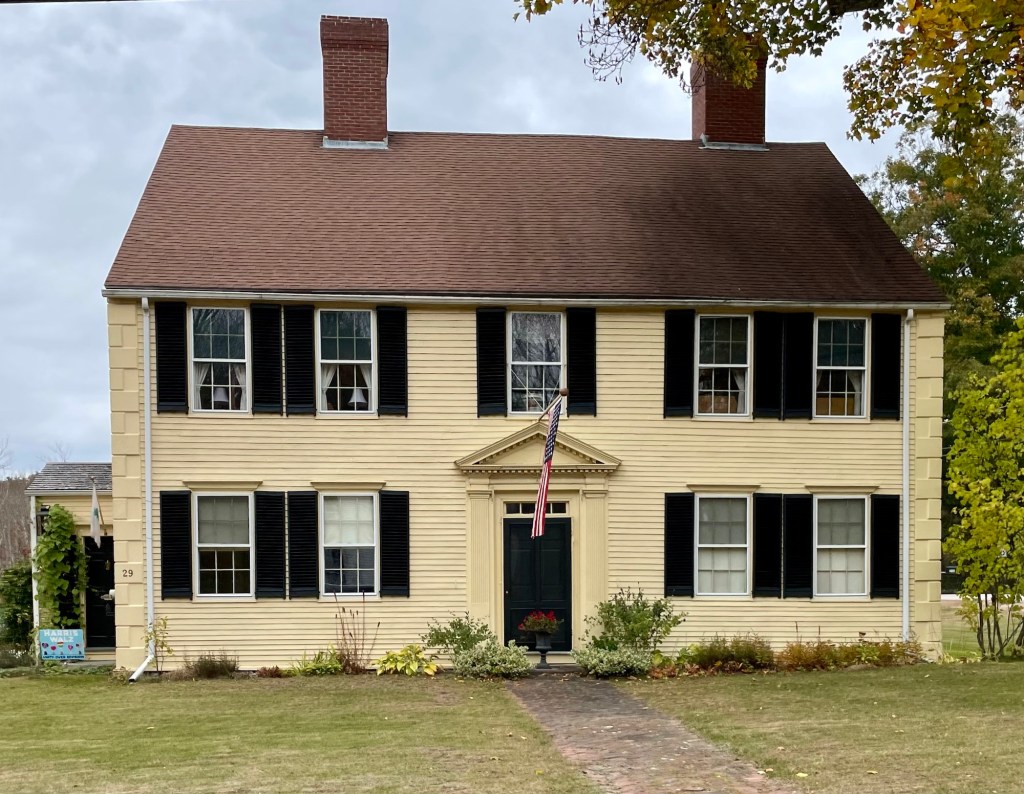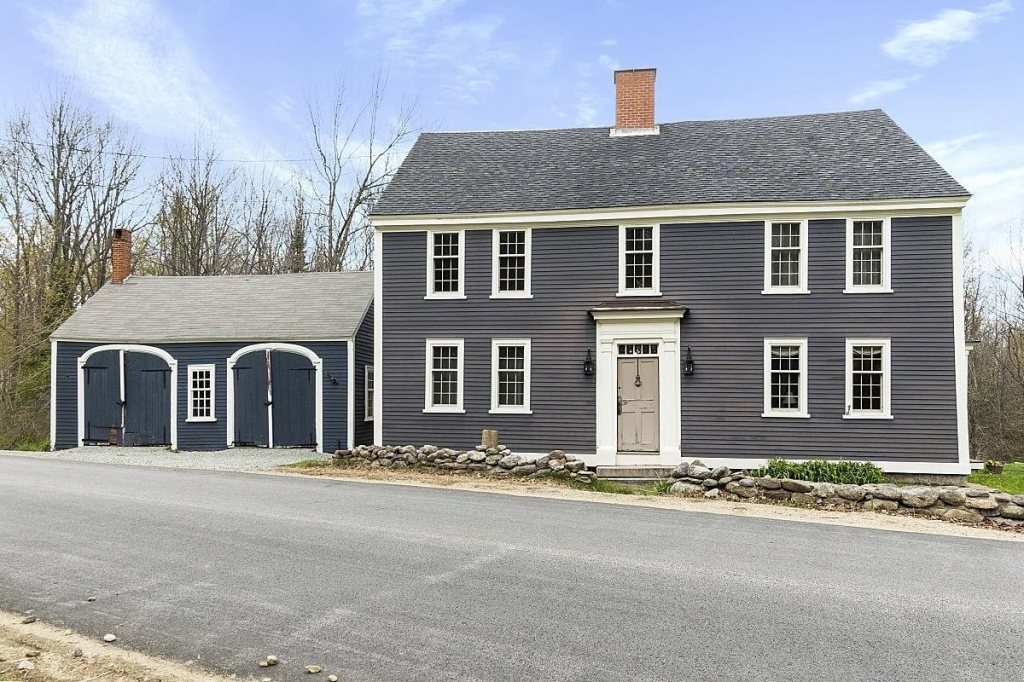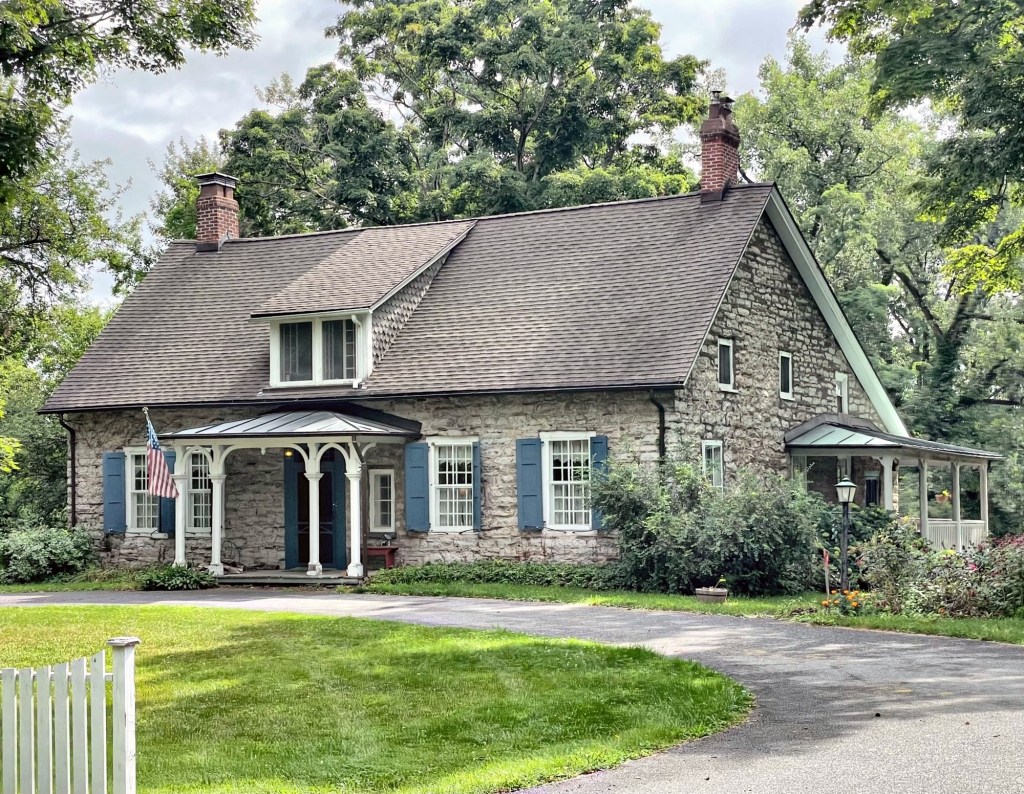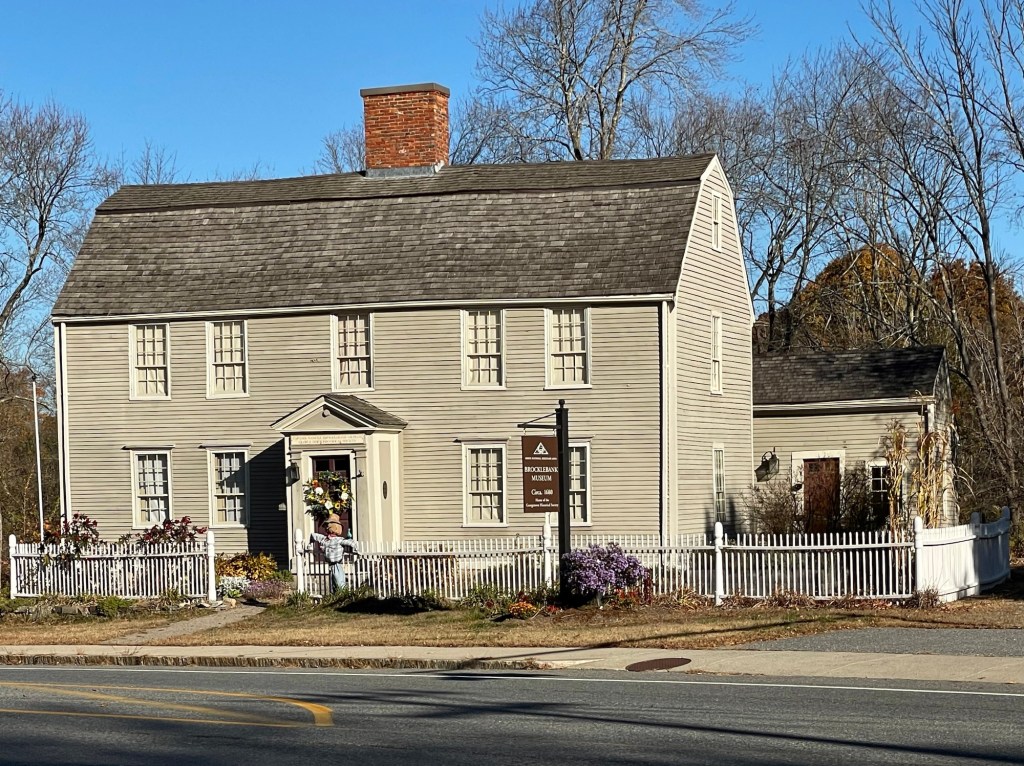
Captain Silas Jones House // c.1774

Brick houses are not too common on Nantucket, so I love to highlight them whenever possible! This gambrel-roofed residence was built by 1774 for Silas Jones, a whaling captain around the time of his marriage to Judith Gardner. As originally built, this house had brick endwalls while the facade and rear walls were constructed of wood. It was not until under the ownership of Silas’ son, Daniel, that the house was “modernized” with its present appearance. Daniel added brick walls to the front and rear walls, added brownstone lintels and sills to the openings, and added twin chimneys, likely replacing a single, central chimney. Due to his materiality and heavy presence, the house looks more like it belongs in Salem or Providence, so seeing it in the coastal town of Nantucket makes my heart sing. Standing out is a good thing!

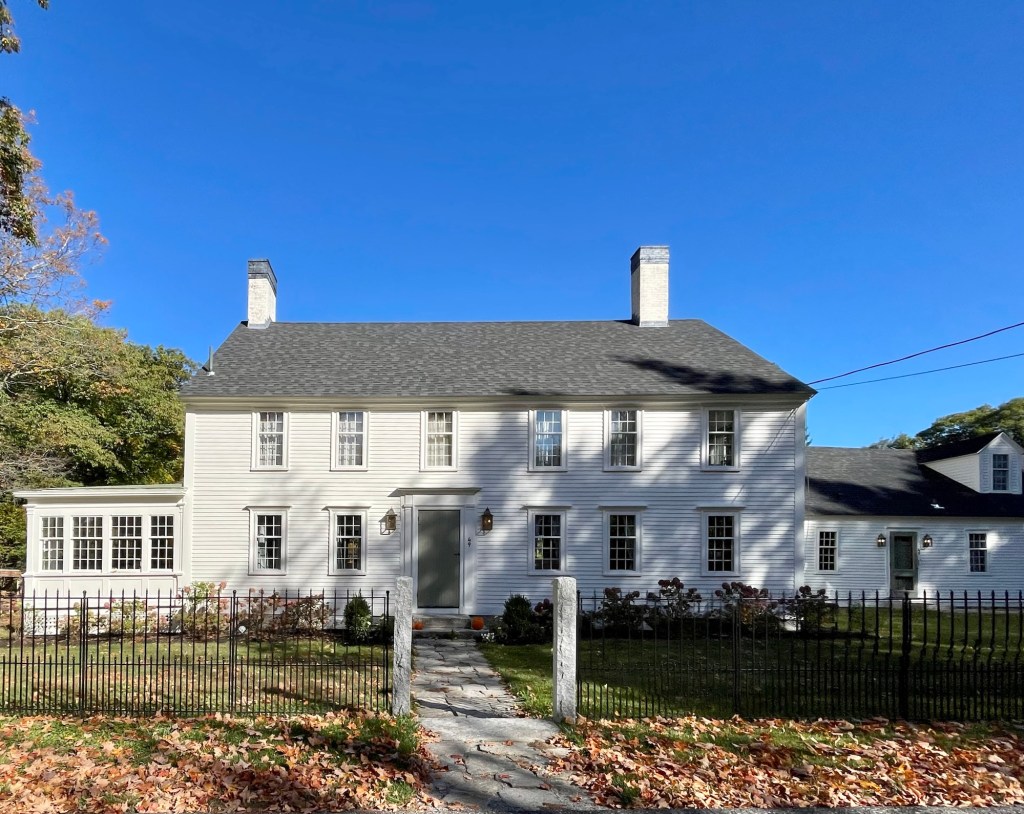
Andrew Myrick House // 1755

Nantucket is an old house lovers dream. A large part of the reason for this is that much of the island was designated as a local historic district in 1955, making it one of the earliest historic districts in the United States! This means that since 1955, the Nantucket Historic District Commission has been overseeing the island’s preservation, demolitions and alterations to historic buildings. This is the Andrew Myrick House located on Orange Street. The Georgian dwelling was built in 1755 by Andrew Myrick (1704-1777), a shipbuilder and storekeeper who was born in Charlestown, Massachusetts and eventually settled on island, constructing this home for his family. He and his wife Jedidiah had over 16 children, some of which died in childhood. Myrick would eventually hang himself at the age of 71. The home remained in the family until 1827. Fun fact: Andrew’s grandson, Peter Myrick was said to have set sail from Nantucket in 1833 in search of sea serpents. He came back empty handed.

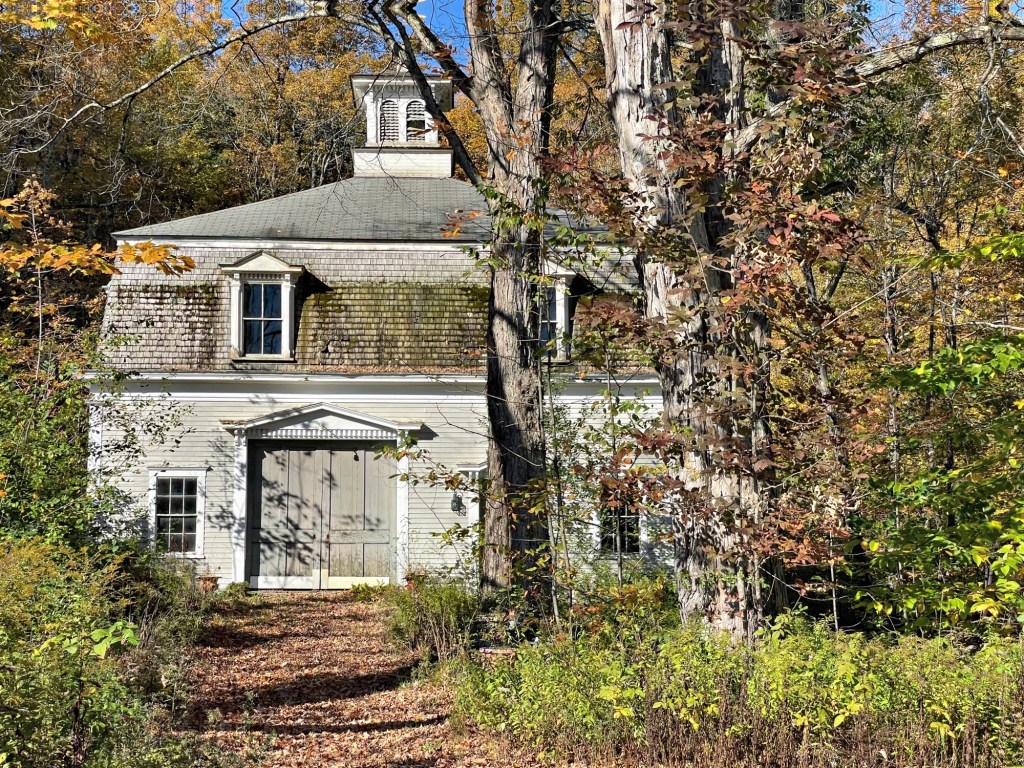
Joshua Coffin House // 1756

Nantucket in the off season is just as magical as the peak of summer. Quiet streets, gray shingled buildings, and the smell of the ocean is the perfect medicine! This is the historic Joshua Coffin House on the island of Nantucket. The house is one of the best examples of a mid-18th century sea captain’s residence on the island and it is in a great state of preservation. The dwelling was built in 1756 for newlyweds Joshua Coffin and Beulah Gardner on land given to them by Beulah’s father as a wedding present. The couple raised their children here until Joshua died at sea in a hurricane while on a whaling trip in the West Indies. The house remained in the family since at least 1971 and has been lovingly maintained by its stewards.

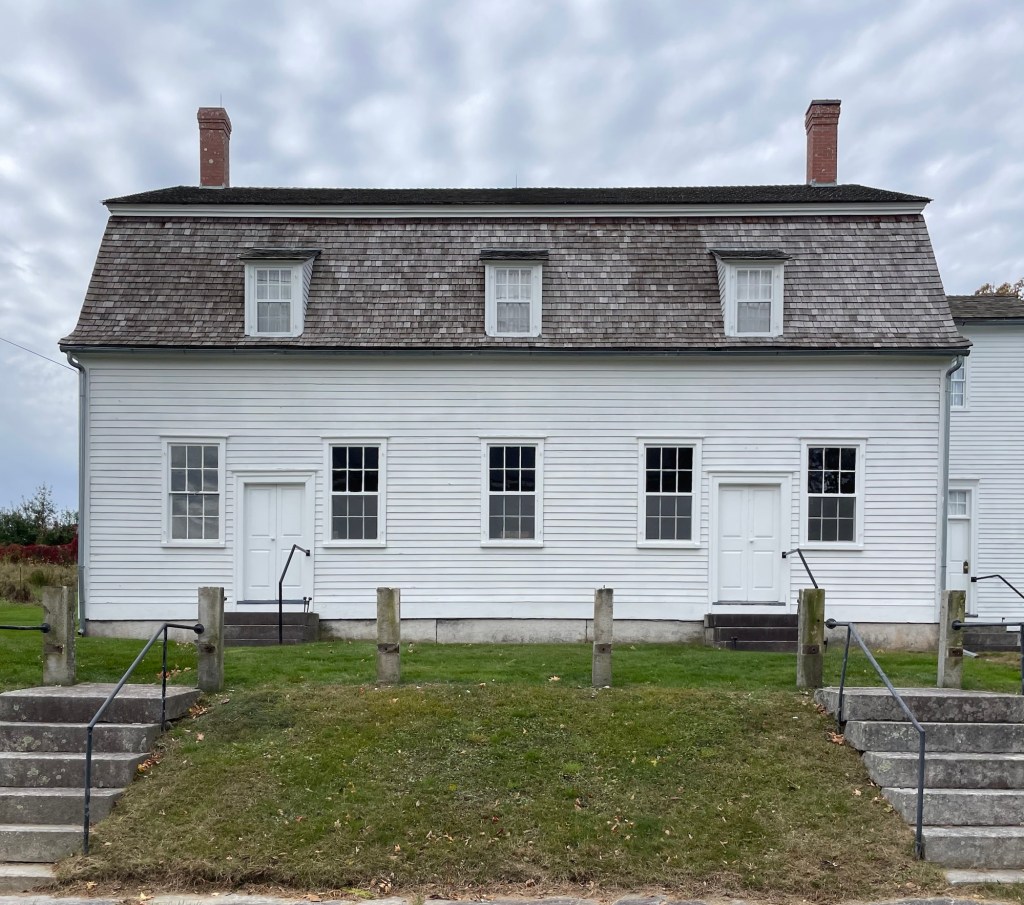
Wellman-Fisher-Richardson House // c.1745

The Fisher-Richardson House in Mansfield, Massachusetts is considered to be one of the oldest buildings in the suburban town. The home dates to sometime between 1743 and 1751 and was built for its original owner Ebenezer Wellman (1720-1776). The property was eventually owned by Lemuel Fisher, who in about 1800, doubled the size of the house adding its western half. When Lemuel died in 1820, the property was inherited by his youngest son, Daniel, a farmer and blacksmith who also built a gristmill nearby. The home was later inherited by Daniel’s daughter, Evelina and her husband, Captain Ira Richardson. By 1930, the gambrel-roofed Georgian house was in disrepair, and the owner at the time contacted SPNEA (now Historic New England) who drafted an agreement to acquire and restore the house. However, as local interest in the property increased, the owner deeded the property to the town, and the town took on the costs of restoration. The property is now managed by the Mansfield Historical Society.

Benedict House // c.1740

The Benedict House in Ridgefield, Connecticut is a stunning Colonial-era cottage that was once the home of a cobbler, who had his shop on the property. The Benedict family, headed by James Benedict, Sr., were original proprietor settlers of Ridgefield. This house and shop have been attributed to James’ son James Benedict (1685-1762), who owned the land and was a shoemaker and deacon of the Congregational Church. Ensign Benedict was also a fence viewer, a term new to me. Fence viewers had power to make and enforce rulings regarding escaped or trespassing livestock, the location of fences, and, above all, maintenance of fences. With fences so crucial to keeping livestock where it belonged, loose boards and rotting posts were big concerns. The fence viewer could even compel a property owner to pay for needed maintenance or repair conducted by a neighbor if he or she failed to keep up their fence properly. The property left Benedict family ownership in 1848, and it was later extensively restored by renowned architect Cass Gilbert, who bought the property in 1920. Cass Gilbert also restored a few other Colonial-era houses in town. It was later the home of Robert and Mildred Wohlforth, both writers of note and six-decade residents of Ridgefield.

David Scott House // 1714

One of the oldest extant houses in Ridgefield, Connecticut is this charmer, which was moved not once, but twice! The house was built for David Scott (1678-1760), an Irish-born resident of the town, who purchased one of the town’s original Main Street house lots which sat undeveloped. Scott had abandoned his wife, Mary in Ireland, and settled in Ridgefield, entering into a new relationship with Elizabeth St. John. A woman scorned, Mary unexpectedly arrived in America and filed suit against her husband, citing Elizabeth as the “pretended wife of David Scott.” A judge awarded Mary three acres of her husband’s land. David Scott and his second wife lived at this 1714 house until they moved in 1740. His property (which included two enslaved Africans) was sold to Vivus Dauchy, a Frenchman. In the 1920s, as the Scott House section of Main Street commercialized, the owners relocated this house to Catoonah Street, building a commercial block in the former location. After numerous other owners, the most recent owner, The Ridgefield Preservation Trust (now the Ridgefield Historical Society) put it to use as a new historical society headquarters, after saving the Colonial-era home from demolition for stores and a parking lot! It was relocated to its current site and has been meticulously restored.

Alna Meetinghouse // 1789

The Alna Meetinghouse in Alna, Maine was built in 1789, and incorporated in 1796 as a Congregational church. The 40′ by 52′ foot building is one of the finest examples of a traditional New England meetinghouse in the state of Maine and Regular church services were held here until 1876. In recent years the building has been used for Town Meetings. Unlike many of the other meetinghouses of this period, the Alna meetinghouse has only one door. This door leads into a vestibule that contains the stairway to the gallery. The original box pews are still in place, as is the original pulpit with a sounding board hung from the ceiling. The building remains well-preserved and sits right on the side of the road!

John Banister House // 1751

This deep, gambrel-roofed house is among my favorites in Newport. The house was built in 1751 for John Banister (1707-1767), a Boston-born merchant who moved to Newport in 1736, marrying Hermoine Pelham (1718-1765), a granddaughter of Gov. Benedict Arnold, that next year. Banister quickly established himself as a leading Newport merchant, trading with England, the West Indies, engaging in privateering and the slave trade. In 1752, he held one of the last public slave auctions in Rhode Island at his store, describing them in advertisements as “the finest cargo of slaves ever brought into New England”. The couple also built a country estate in Middletown, Rhode Island. John and Hermione had two sons, John and Thomas, who grew up in this home. John inherited the house after his father’s death in 1767, but the two brothers would soon find themselves on opposite sides of the battle for independence. Thomas was a loyalist, and even enlisted in the British army during the occupation of Newport, while John supported American independence. In retaliation for his patriot views, the occupying British forces seized this house, along with John’s farm in nearby Middletown. The house became the headquarters of General Richard Prescott during the occupation, although John later reclaimed his property following the British evacuation of Newport in 1779. The house has a later Federal entry, but otherwise is one of the best-preserved Colonial homes in Newport. It is a single-family home.

Harkness House // c.1730

The award for the cutest house in Newport goes to this c.1730 beauty on Green Street! This charming Georgian cape house sits just one-and-a-half stories tall under a squat gambrel roof. The house was originally located at the corner of Thames Street and was moved at least twice until it was placed on its present site by the Newport Restoration Foundation, after they acquired it in 1983, restoring it soon after. The center-hall house has just two rooms on each floor with a central staircase and chimney. The small dormers add some light to the second floor without compromising the historic and architectural integrity of the cottage.

Langley-King House // c.1710

Built c. 1710 this amazing Georgian Colonial house would have originally been a smaller, central chimney structure built by Nathaniel Langley. Major remodeling to effect the Georgian style seen today was done by a subsequent owner of the property. That owner was likely John Brown (1694-1764) a wealthy merchant that may have gifted or sold this home to his daughter, Ann Brown and her new husband, Charles Handy. Handy was a merchant and operated a spermaceti factory just to its west. Later owner, David King and his heirs owned the house for much of the 19th century. The house is on its original site and was purchased by the Newport Restoration Foundation (NRF) in 1969 and restored in 1970-71.