The John Reed House at 37 Orange Street in Nashua, New Hampshire is a testament that houses can be updated over time with thoughtful renovations, and still be pretty darn amazing! The house was originally constructed in 1840 in the then-popular Greek Revival architecture style. Within a decade, to ‘keep up with the Jones”, the house was “modernized” with Italianate style detailing, including the brackets at the eaves and the large, square cupola with round arched windows and shutters. Decades, later, Queen Anne/Colonial Revival changes were made, with the full-length front porch with turned, fluted posts, enlarged windows, and an oversized front door. The house today blends these very different styles very well and adds to the house’s significance.
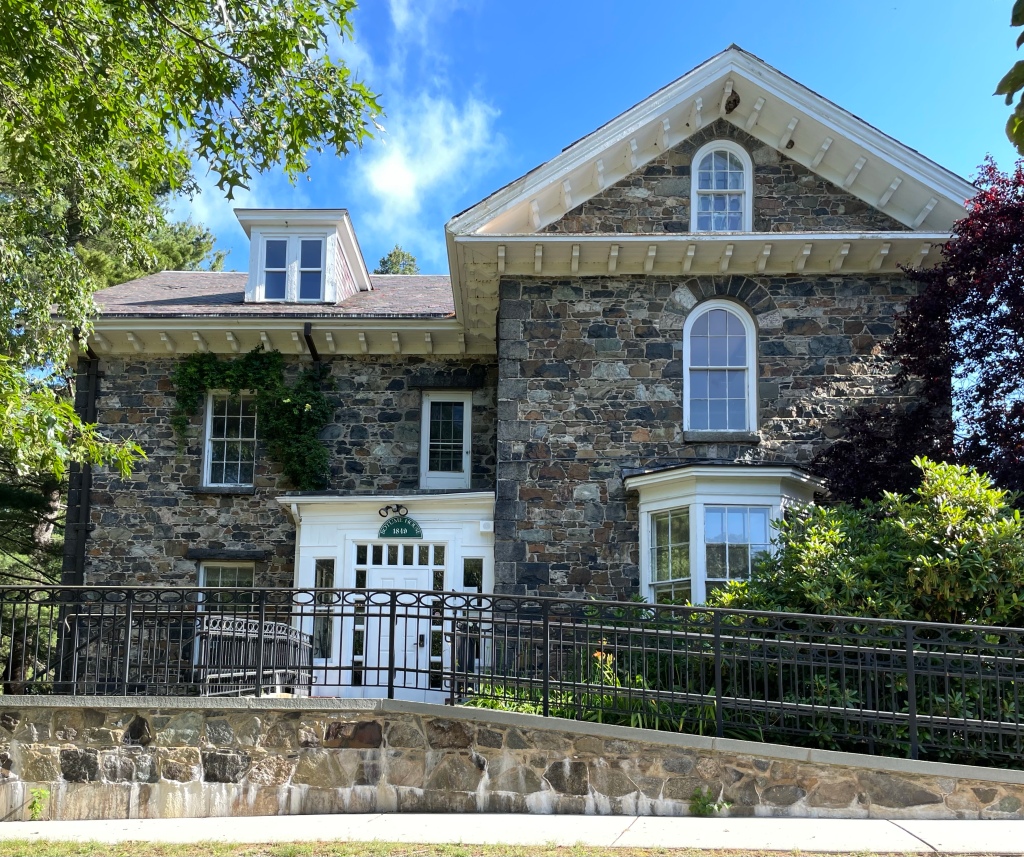
Inspired by suggestions from books by Andrew Jackson Downing, the Gen. George Stark House is one of the finest dwellings in the Italian villa style in New Hampshire. Located on a triangular plot just north of Downtown Nashua, the house was built in 1856 by a man who, though then only in his early thirties, was one of New Hampshire’s most experienced civil engineers and surveyors, and was the superintendent of the Nashua and Lowell Railroad. General George W. Stark (1823-1892) was born in Manchester, N.H., and as a young man worked on surveys of the canals and factories being built in the late 1830s in his native city. In 1836, during the first days of railroading in northern New England, Stark was employed with the engineers who laid out the route of the Nashua and Lowell Railroad. He climbed the ladder, eventually working as treasurer and assistant superintendent of theHudson River Railroad, subsequently rising to the position of superintendent. He later became superintendent of the Nashua and Lowell Railroad, whose route he had helped to plan, and in 1857, at about the time he saw the completion of his Italianate villa, he became managing agent of the Boston and Lowell line. In the same year, he was commissioned Brigadier General of the Third Brigade of New Hampshire Militia, giving him his title, General. The Stark House was occupied by General Stark and by members of his family until the property was acquired by The First Church of Christ, Scientist, about 1928. Today, it houses offices but retains a distinct residential character regardless.
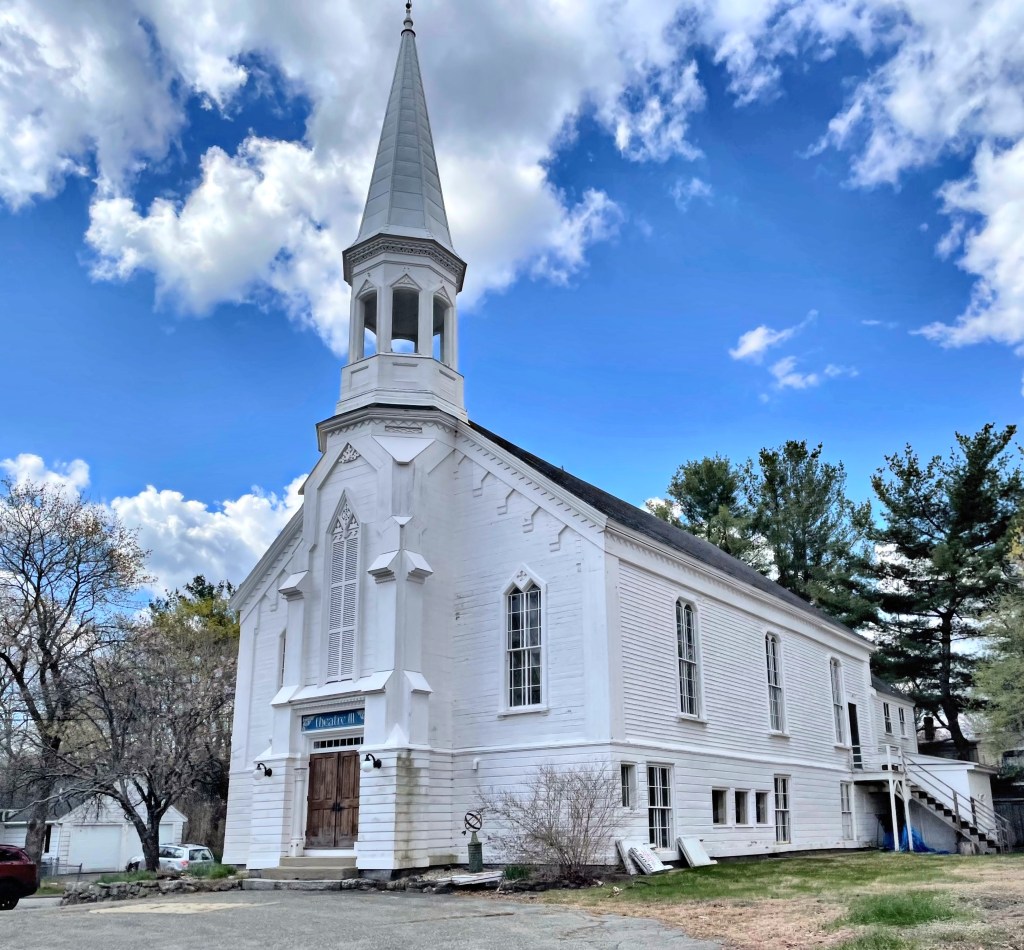
This beautiful church in Acton, Massachusetts was built in 1868 by the Universalists of West Acton who sought a house of worship closer to their homes, rather than taking horses to the other part of town every week. The building exemplifies the influence of both Gothic Revival and Italianate styles on rural churches of the time. Gothic elements include the double pointed lancet windows with quatrefoil ornament, buttresses, and pointed lancet panels on the tower and belfry. Italianate elements include the rusticated base and the corbel table at the eaves. Religious services ceased in 1925. At that time, the church building was bought by leading men in the village who gave the building to the West Acton Women’s Club, which began in 1890 by Lucy Mead (the wife of Oliver Mead, who built the Mansard home nearby). In the 1950’s, the church was used as a community center. It is now home to a local performing arts center, Theatre III Box Office.
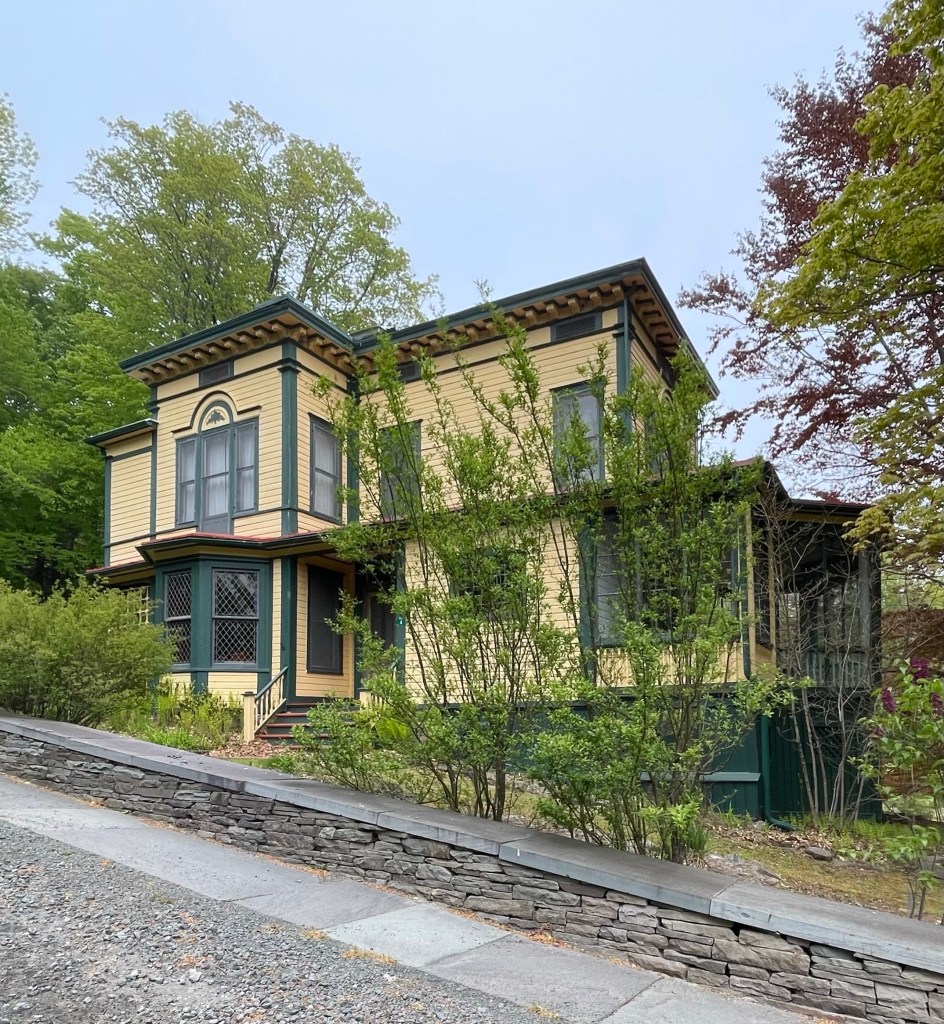
Elka Park in Hunter, New York, is a really unique summer colony developed in the late 19th century as a country retreat for wealthy German-Americans to escape the woes of city life, primarily from New York City. Between 1890-1896, a total of 21 homes were built as summer cottages, 17 remain to this day. Almost all “cottages” were built with at least 4 bedrooms with space for servants, guests would lodge at the nearby Elka Park Clubhouse, which was destroyed by fire and replaced after WWII. The private community remains a secluded respite and relatively unknown to most. This cottage was built in 1896 for a tax commissioner Mr. Kurth, from plans by Hugo Kafka, a Czech-American architect with an office in New York City. Kafka also had a summer cottage at Elka Park. This cottage was purchased in the 1920s by Johann Kliegl, a German inventor and businessman who settled in New York, developing the “Klieglight”, a carbon arc lamp used heavily in filmmaking at the time. The late-Italianate style cottage remains well preserved to this day and even has a historically appropriate paint scheme!
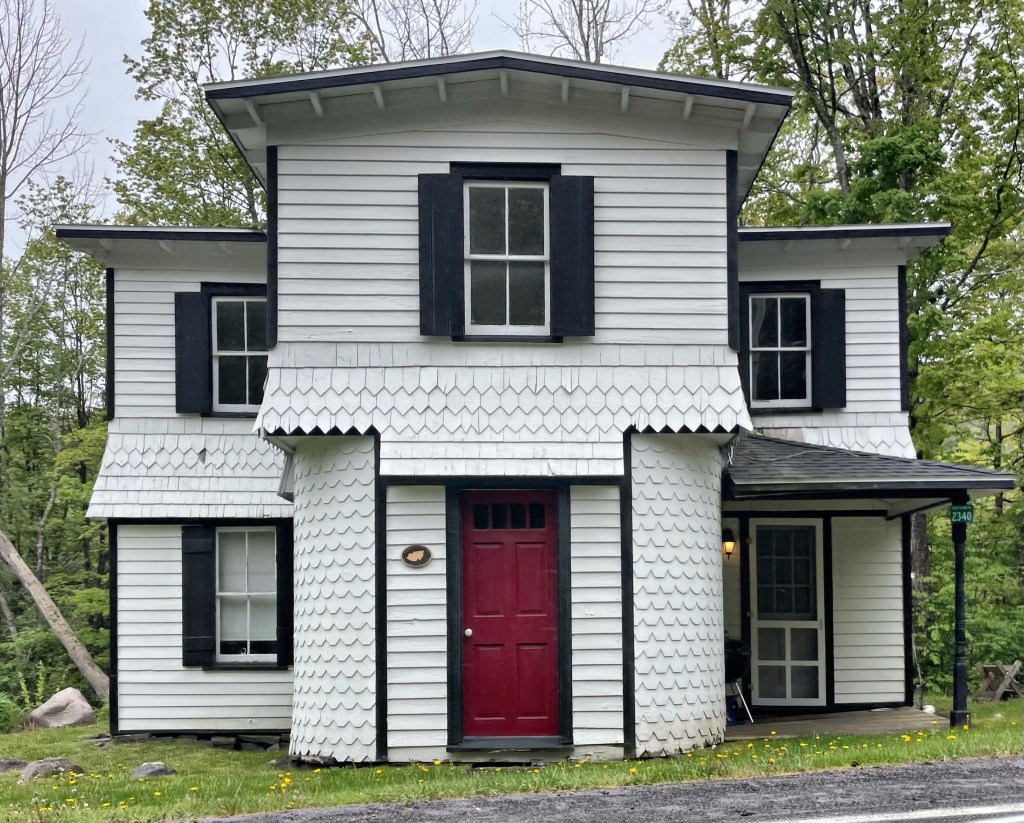
Believe it or not, but I occasionally venture out of New England, and a favorite place of mine to explore is Upstate New York. On a recent trip, I ended up driving through the tiny town of Hunter, New York, located in the middle of the Catskills. This charming little building was constructed c.1885 as the Platte Clove Post Office. The building was constructed to serve a rural portion of the town and was built as an early mixed-use building with the post office at the ground floor and small residence upstairs for the postmaster to live. The exterior cladding features both shingle and clapboard siding with overhanging eaves. The post office here ceased by 1911 and the use reverted solely to residential.
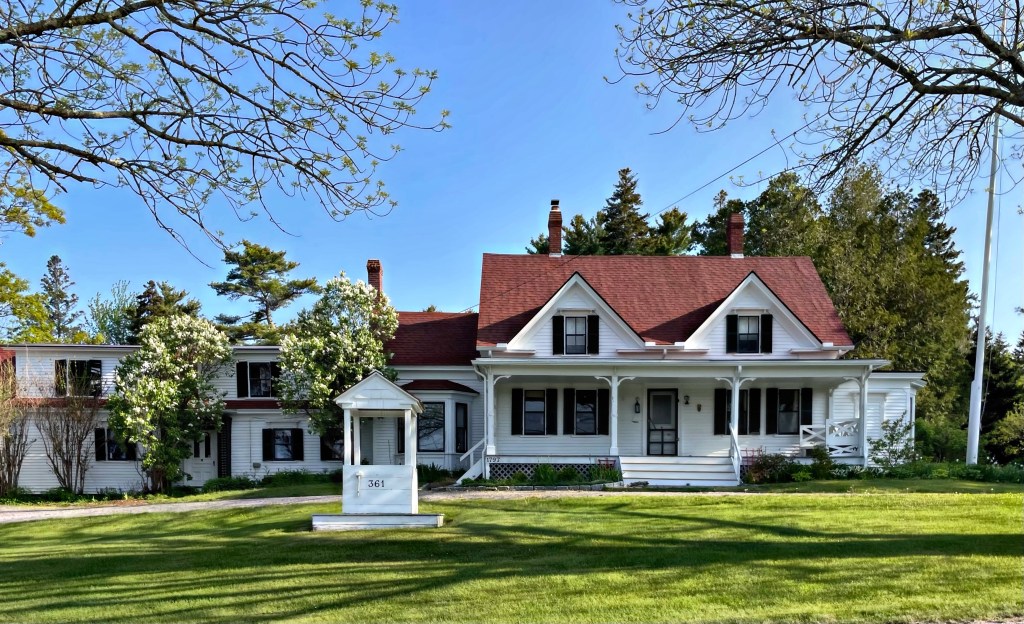
Reach-View has been home to members of the Currier family and their descendants since the late 1700s. Richard Currier (1773-1837) first built a small home on land he bought in 1797 from his future father-in-law, Rev. Ebenezer Eaton, one of the original proprietors and settlers of the future town of Sedgwick, Maine. In 1799, Richard married Abigail Eaton, daughter of Ebenezer and Abigail Herrick Eaton. They lived together in Reach View until Richard died in 1859. Richard willed Reach View to their unmarried son Ebenezer “Eben” Eaton Currier, who lived there with his mother until her death in 1870. He was responsible for rebuilding much of the house after 1864. Eben’s sister would later purchase Reach-View and add the piazza (porch), bays, and interior detailing. The home remains a true family estate in the sleepy coastal town of Sedgwick.
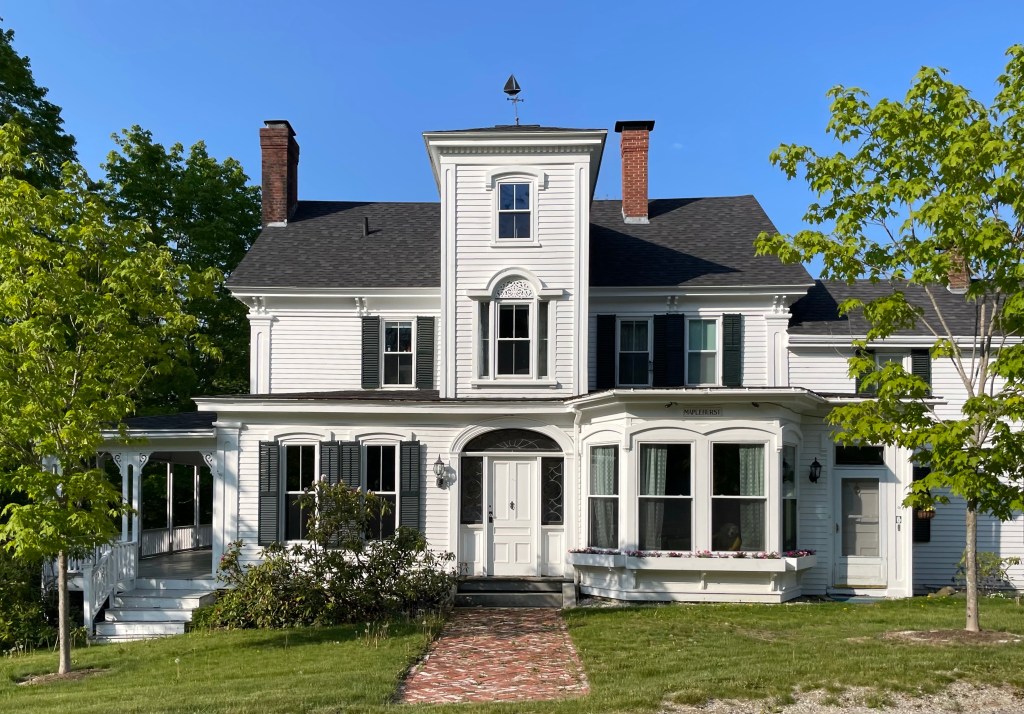
Wyer Groves Sargent (1810-1900) was a descendant of the famous Sargent and Choate families and at the age of seven, arrived to the sparsely developed town of Sedgwick, Maine in 1817 with his parents. Twenty years later, Wyer has this house built in 1837. The original house was a one-story Cape house with a central chimney and an ell connected to a barn. He worked in the village of Sargentville in the town of Sedgwick as a merchant, operating a store, and traveling extensively to buy and sell goods along the New England coast. Operating a lucrative business allowed him to expand his outdated and cramped home in 1868 to the current configuration. It was then known as Maplehurst. Wyer raised the house and extended the front by adding a floor beneath it. When Wyer died in 1900 the house went to his daughter Martha Spooner. Martha sold it to Dr. Frederick Sweet. Last known, the home is still owned by Dr. Sweet’s great-granddaughter.
This stately mansion on Main Street in Sedgwick, Maine, was built in the mid-19th century as one of three adjacent, near-identical homes. This house was purchased by Luther Groves Philbrook who appears to have “Victorianized” the formerly modest five-bay residence. He added a central tower, porch, and side addition. The home recently was listed for sale and has been decaying for years, here’s to hoping this old home gets restored.
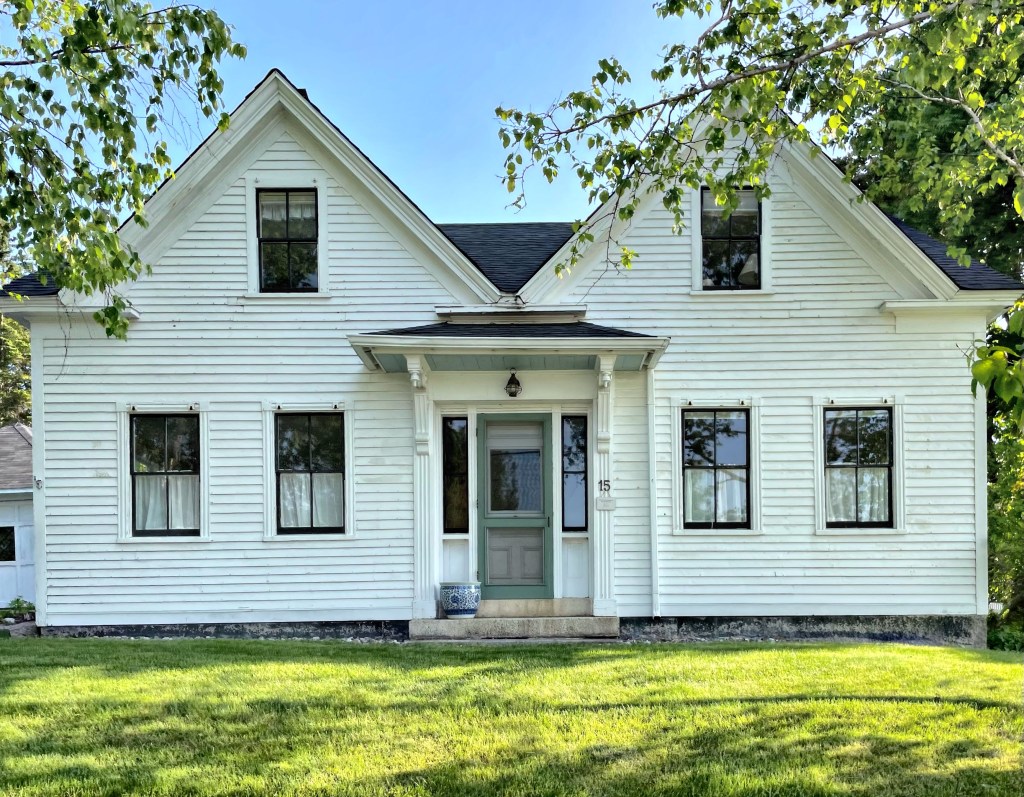
Dr. Rufus Hagerthy (1859-1933) was born in Surry, Maine to father, Daniel Hagerty (sic) a naturalized citizen in 1871 who hailed from County Kerry, Ireland and mother, Carrie. Rufus went to Bowdoin College where he completed his study of medicine in 1884. He moved back to Sedgwick, Maine and married Jane C. Holden (1861-1896), the couple lived in this home, which served as a home-base for Dr. Hagerthy to make house calls by horse or sleigh (depending on the weather). Dr. Hagerthy was eventually wealthy enough to get involved in real estate, and developed Byard’s Point in Sedgwick in 1909, the town’s first sub-division.



 Buildings of New England