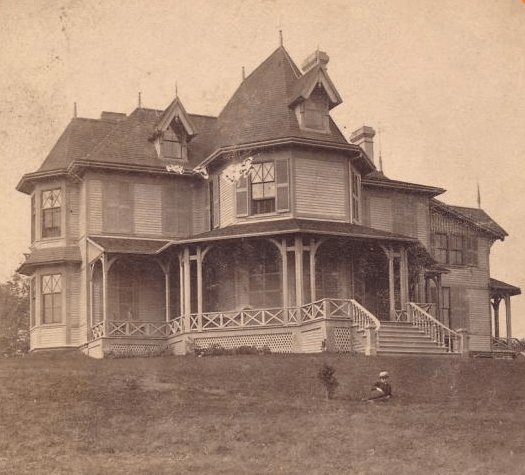
The Anchorage Cottage // 1878

This charming Victorian cottage in Newport was built in 1878 for Henrietta and Dr. Stephen Cambreleng Powell as their summer cottage. The well-connected couple hired New Haven architect David R. Brown to design the residence, which is an excellent example of the Queen Anne and Stick/Eastlake architecture styles. David Brown, the architect, apprenticed under the famed Henry Austin for years in New Haven, Connecticut before becoming a partner of the firm. As any good summer cottage needs a fun name, the couple named their cottage “The Anchorage”. The cottage is now known as the Old Beach Inn, and is among Newports many charming old inns.

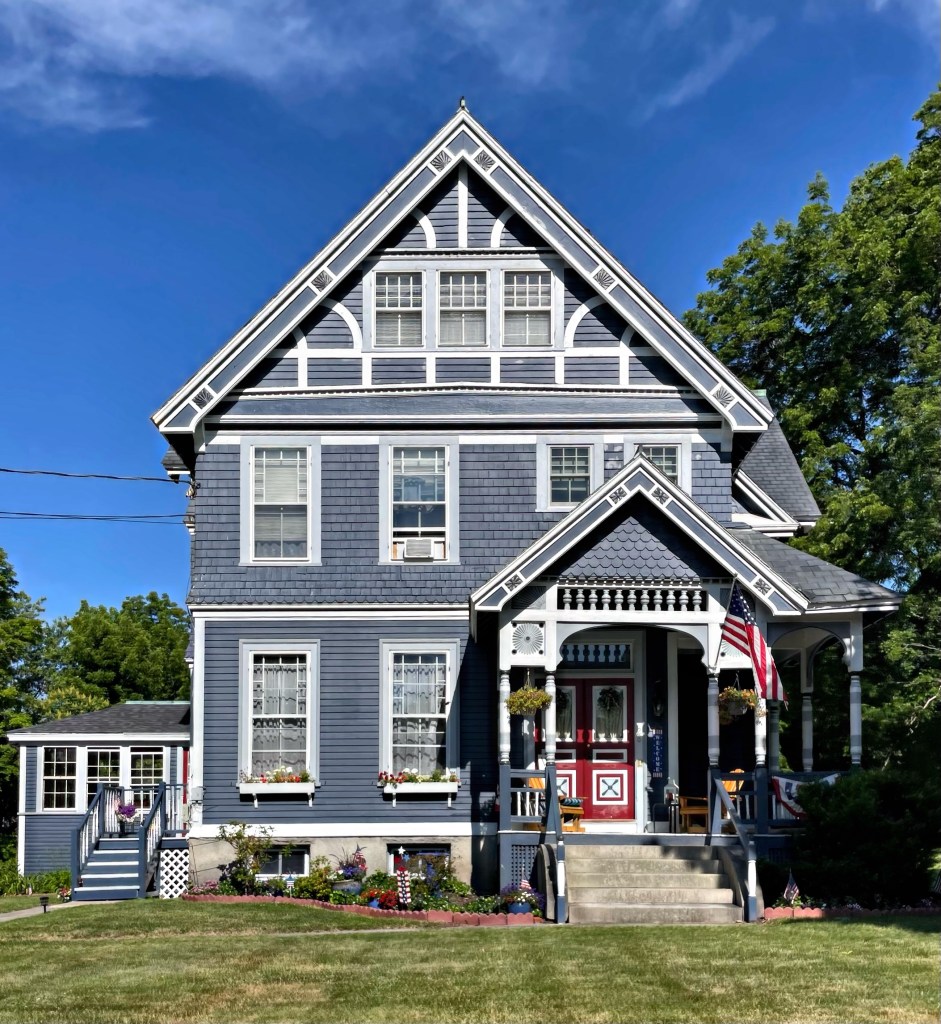
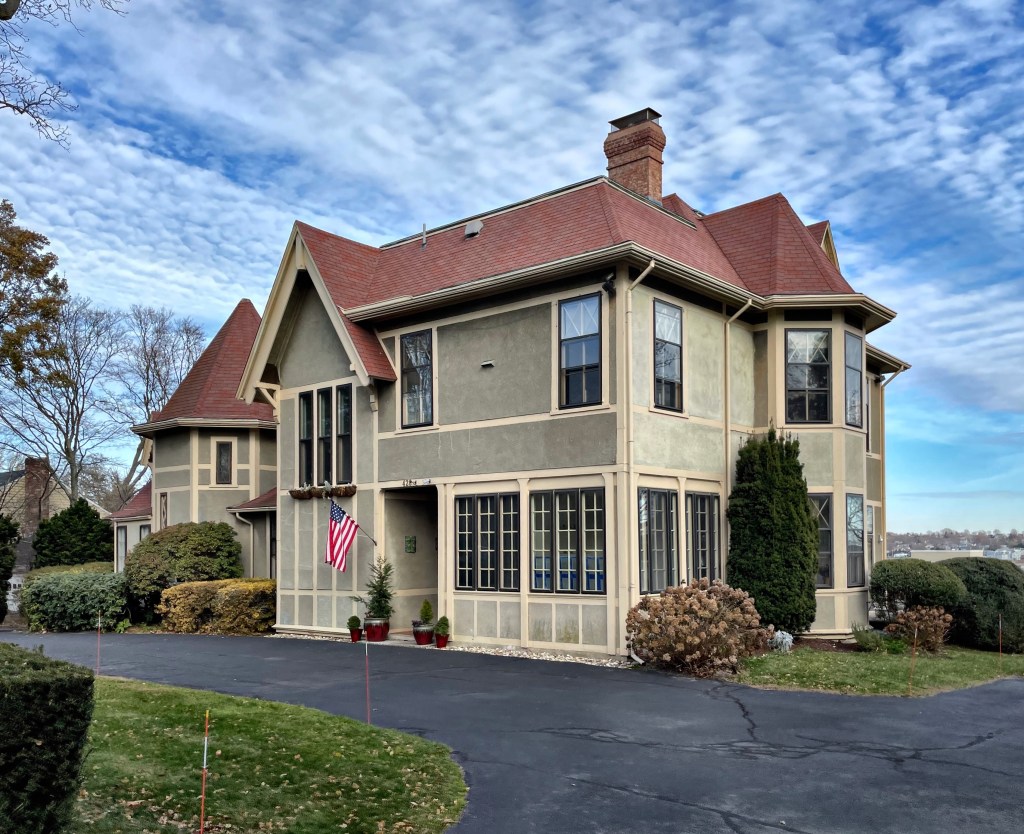
George Whiting House // c.1880

Located next door to the Frederick Colony House (last post), the George Whiting House in Wilton, New Hampshire perfectly compliments the Victorian house lined street. George Whiting was the son of David Whiting, a businessman and developer in town. George worked in his family business, as a milk dealer and “contractor” for the family farm. The house he built in Wilton is a blending of Stick and Queen Anne styles, with SOOO much detail.

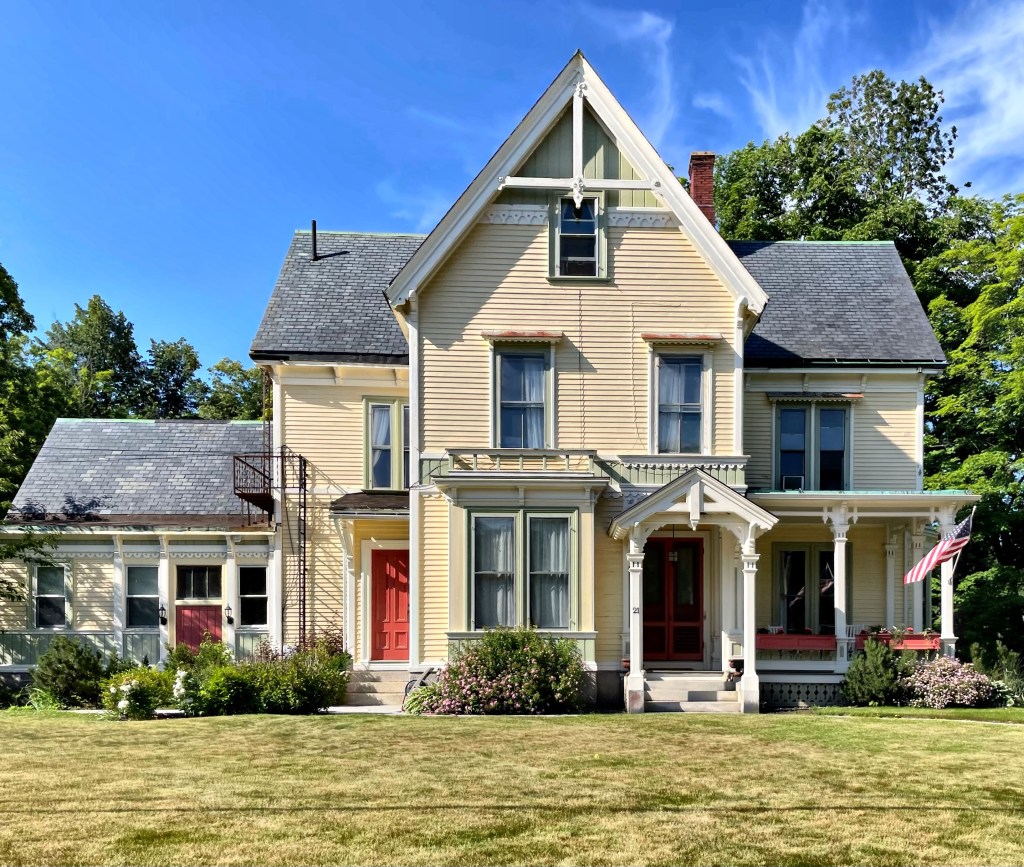
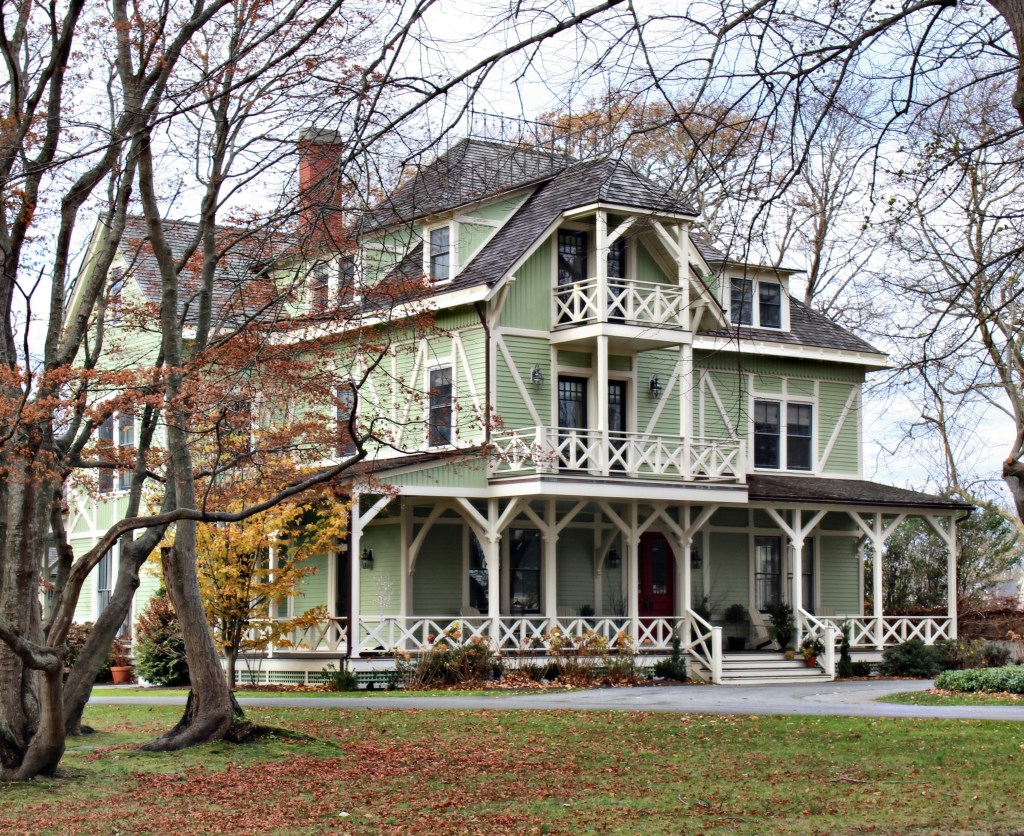
David Whiting House // c.1875

David Whiting (1810-1892) was one of the most prominent men in Wilton, NH in the 19th century. He was involved in local business and politics, eventually using his prominent land at a convergence on Main Street to erect the Whiting House, a large hotel. The building burned down in 1874, along with his other buildings nearby. He donated some of the land to the town, who built the present Town Hall, and he built a new home on another part of the site. This house was likely built for David Whiting as his own residence, shortly after the fire. The house was designed in the fashionable Stick style and represents the best in Victorian-era architecture.

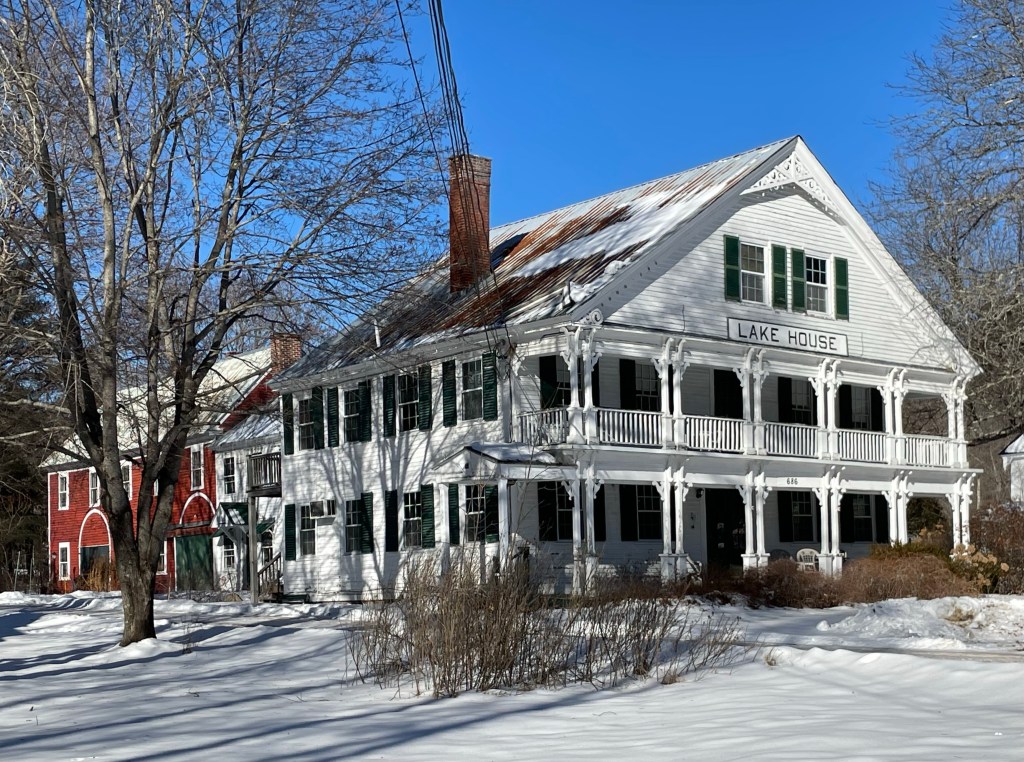
Lake House Hotel // 1797

Eli Longley (1762-1839) came to Waterford, Maine by way of Bolton, Mass., in 1789 and erected a log cabin in town. As the first settler to build in this part of town, he owned a substantial piece of property, which was frequently travelled through as the area was being developed. Seeing a need for lodging, he built a one-story tavern in the location of this building, which was added onto and modified as demand and the area’s population grew. Longley would also subdivide some of his land for house lots along the new town common, selling to new settlers as they arrived. Longley sold the tavern in 1817, which was acquired later in 1847 by Dr. Calvin Farrar. Taking advantage of a nearby mineral spring, Dr. Farrar opened a successful hydropathic spa, which used natural waters to cure patients of their ailments. The spa was taken over by Dr. William P. Shattuck, who expanded the site as the “Maine Hygienic Institute”, a hospital exclusively for lady patients employing eclectic treatment. This business and the tourism it generated helped shift the town from a sleepy village to a tourist destination by the late 19th century, where city-dwellers would flock to view the natural scenery and breathe in the clean air. In the 1860s-70s, Shattuck “modernized” the Lake House Hotel with the two-story Victorian-era porch and sawn decorative trim.

Stephen Cummings House // 1886

One thing about Victorian-era houses that I love so much is the fact that it’s so rare to find two houses that are the same! The uniqueness and detail is just amazing and stalking these homes never gets old! This 1886 beauty was built as a double-house for Stephen Cummings of Norway, Maine. Cummings was a member of the family which built many of the grand homes in town as they ran a woodworking and carpentry company. Architect John B. Hazen designed the Stick style home with a octagonal bay at the facade, capped by a tower, giving the home a sort of pagoda effect.

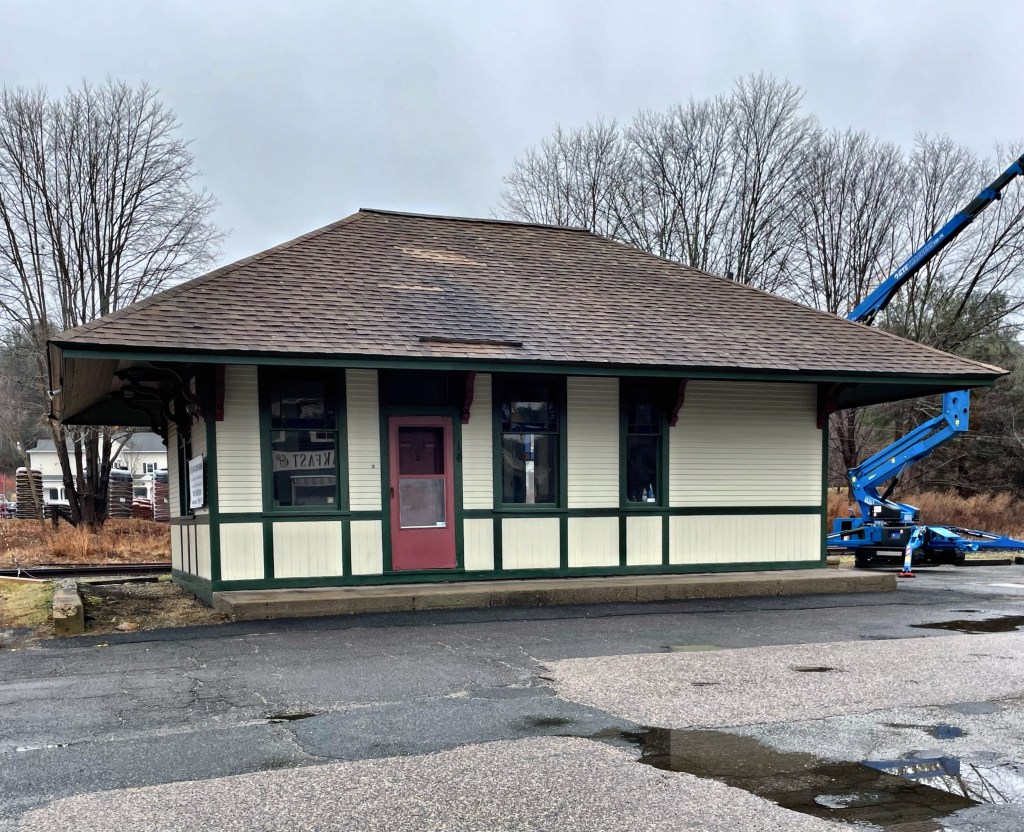
Willington Train Depot // 1895

TOOT TOOT! Next stop, Willington, Connecticut. Historically, all of central Connecticut was occupied by various Algonquin tribes which for thousands of years inhabited the region, the larger Pequot and Mohegan, and the smaller Nipmuck, Podunk, Shenipset and Skunkamaug all sharing a common-lineage, and language. In 1720, a party of eight men, originally from England, bought 16,000 acres of the region and called it Wellington after the town in England. Willington was incorporated in 1727. Like many early towns, Willington began as a farming community with modest industry until the 19th century, when the American Industrial Revolution saw mills and factories sprouting up all along the river towns in the region. Villages spouted up in town, mostly following their geographic location in relation to the town center (South Willington, West Willington, etc.) and each had their own industry and character. By the 20th century with industry in decline, many of the former mills and villages closed up and residents moved to “greener pastures”. The town is today mostly rural and serves as a suburb to larger towns nearby.

This train depot is located in West Willington just over the town line of Tolland. Due to this, the depot was originally named Tolland Station. Rail service began here in 1850, when the New London, Willimantic and Palmer Railroad Company built a freight and passenger station near this location. The rail line was later absorbed into the larger Central Vermont Railway in 1871. The original depot burned down in 1894, and was replaced that same year by this structure. The line, and this station, were in use for passenger service until 1947, when it closed. The depot has luckily been occupied by businesses ever-since, preserving this building typology in America that we are losing every year.

John N. A. Griswold House // 1863

John Noble Alsop Griswold (1822-1909) was born into wealth, with his family business involved in land speculation in New York as well as the N. L. & G. Griswold Company, which imported sugar and rum from the Caribbean on clipper ships. In his 20s, John traveled to China for a trade and within a year of that trip, was appointed United States consul at Shanghai, serving in that role until 1854. Upon his return to America, he helped develop several prominent railroads, serving as president of the Illinois Central Railroad and chairman of the board of directors of the Chicago, Burlington and Quincy Railroad. He eventually settled in Newport and helped shape the sleepy town into a summer resort town for high-society. His statement-piece in town was his own mansion on Bellevue Avenue, built in 1863 from designs by Richard Morris Hunt, and completed that next year. It was the first of Hunt’s many notable works in Newport, and is considered a prototype work of the Stick style of architecture in America. Hunt would go on to design Ochre Court, The Breakers, and other Gilded Age mansions in Newport and all over the northeast. Griswold died in the house in 1909; it remained vacant until 1915, when it was acquired by the Art Association of Newport, which now uses it as a museum gallery. I really want to see the inside of this beauty!

“Rest Haven” – “Le Chalet” // 1870

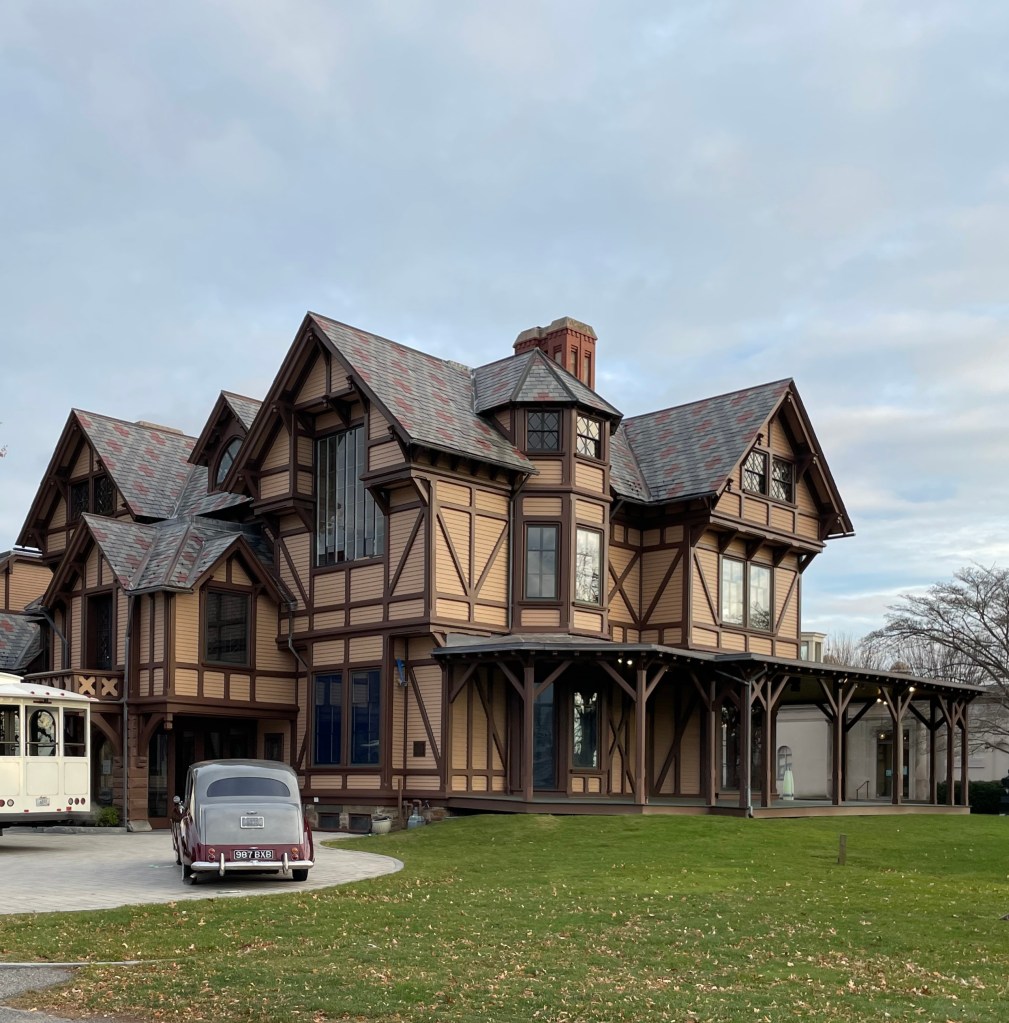
Bellevue Avenue in Newport is best-known for its massive summer cottages, many of which are built of stone and look more like art museums than a house. “Rest Haven” is one of the most stunning summer cottages in Newport and can stand toe-to-toe with the later mansions which neighbor it. The Stick style cottage was built in 1870 as a spec. house for merchant and financier John N.A. Griswold, who had his own cottage farther up the street (last post). Similar to his own house, he hired world-renowned architect Richard Morris Hunt to design the house, which was to be sold soon after completion for a profit to Anna Gilbert of New York, a wealthy widow who wanted to keep up with high-society in Newport. Anna Gilbert’s son, Charles Pierrepont Gilbert, was a New York architect who trained at the Ecole des Beaux Arts in Paris. He and his wife, Clara, summered at Resthaven until 1916. The home was likely renamed “Le Chalet” by a subsequent owner. The cottage was altered over the years, but restored a number of years ago by Newport Collaborative Architects and Behan Bros, and looks stunning!

Anglesea Cottage // 1880

Imagine being a neighbor to The Breakers? This 1880 home at Ochre Point along the iconic Newport Cliff Walk was built for wealthy grocery goods merchant of Philadelphia, Walter H. Lewis. The stunning home was designed by architect Detlef Lienau, who was first trained as a carpenter and cabinetmaker in Berlin before attending architecture schools in Munich and Paris. He eventually settled in New York City and was responsible for some amazing homes and commercial buildings there. His design for Anglesea, a summer cottage for Lewis, was French inspired with Stick style detailing. Stonemasons and woodworkers from Italy, along with American craftsmen, built Anglesea, which was designed to afford views of the sea from every angle. The home was purchased and modified in the Colonial Revival style in 1896 by Frederick Pearson and wife Lesley Ayer Pearson. The couple inherited much of their wealth from Lesley’s father James Cook Ayer, who was the wealthiest patent medicine businessman of his day and inventor of Ayer’s Sasparilla. The home remained in the family and was used for high-society gatherings until it was sold out of the family in 1996. Anglesea was purchased by Alfred Carpionato, a Rhode Island developer, who expanded and renovated Anglesea from 1996-2003, with the assistance of architect Friedrich St. Florian. The building is used for events by the group.

Bird’s Nest Cottage // 1872

One of the more unique and relatively modest summer cottages in Newport, Rhode Island is Bird’s Nest Cottage on Bellevue Avenue. The cottage was built in 1871-2 for Samuel Freeman Pratt, who lived his early life in Boston. The son of a carpenter, Pratt was was working as a carver in Boston, where he saw success as an inventor with several patents to his credit. From the success of one of his inventions, a device for sewing machines, the invention gave him the financial freedom to explore other interests, namely architecture. In Boston, he likely learned his craft from partner John Stevens, before setting out on his own. He designed buildings in Oak Bluffs on Martha’s Vineyard, but decided to reside in Newport. While many state that this cottage for Pratt was designed by the Newport resident and star-chitect Richard Morris Hunt, the design and the fact that it was his own cottage lead me to believe it was designed by Pratt himself. The eclectic cottage features complex gable shapes, fancy stickwork under the eaves, projecting corner bays, and a wall covering of multicolored slate roof shingles. It is now a professional office.