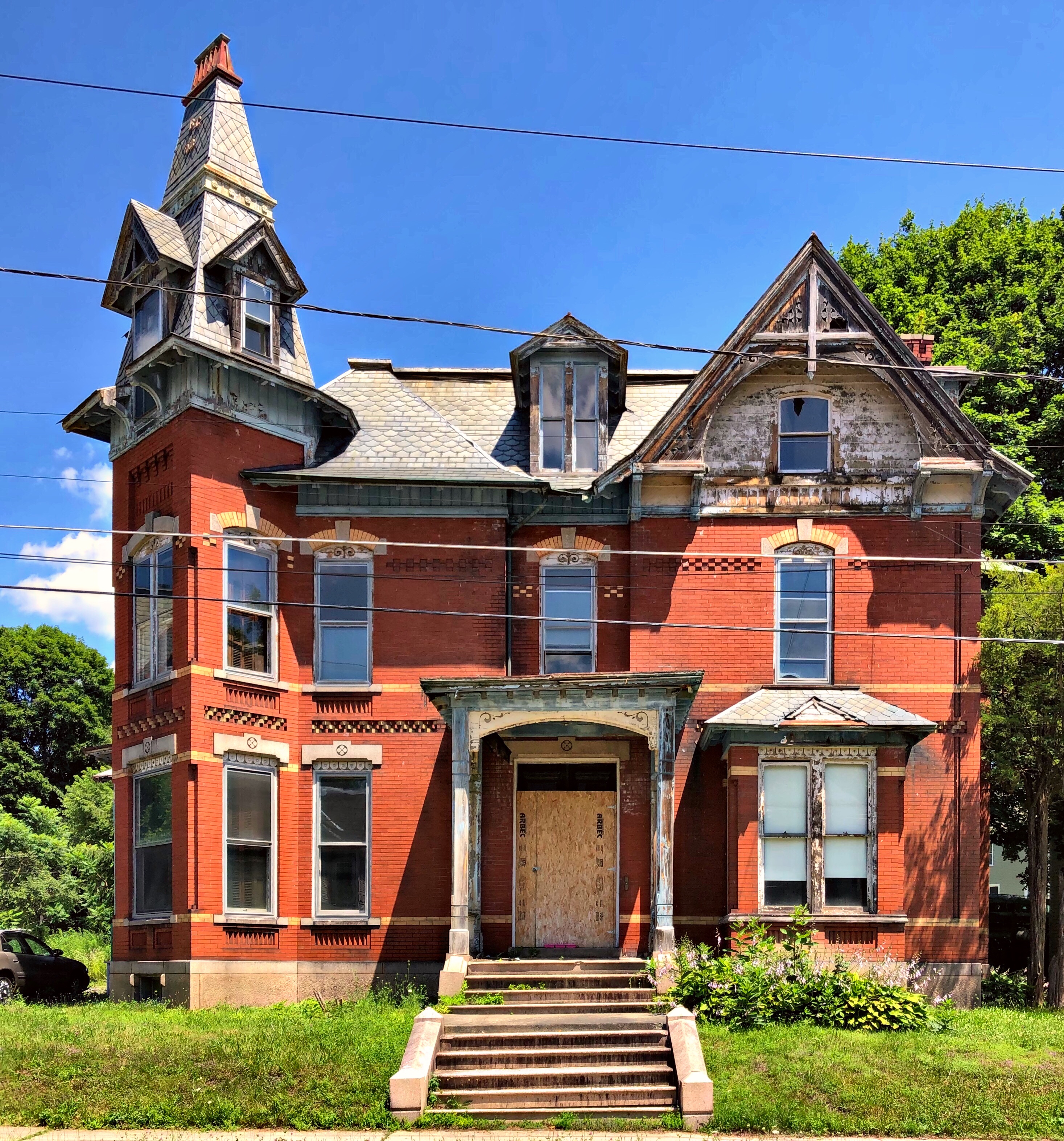
This house was built in 1882 for Frank Walker, a merchant who owned a feed and grain store in Downtown North Adams, Massachusetts. The Stick and Queen Anne style home was designed by architect Marcus F. Cummings, who also designed the Blackinton Mansion. The brick and freestone home was converted to multi-family sometime in the mid-20th-century due to the changing demographics of the town. Since then, the home has seen weathering and deferred maintenance, but retains much of its original detailing and character.
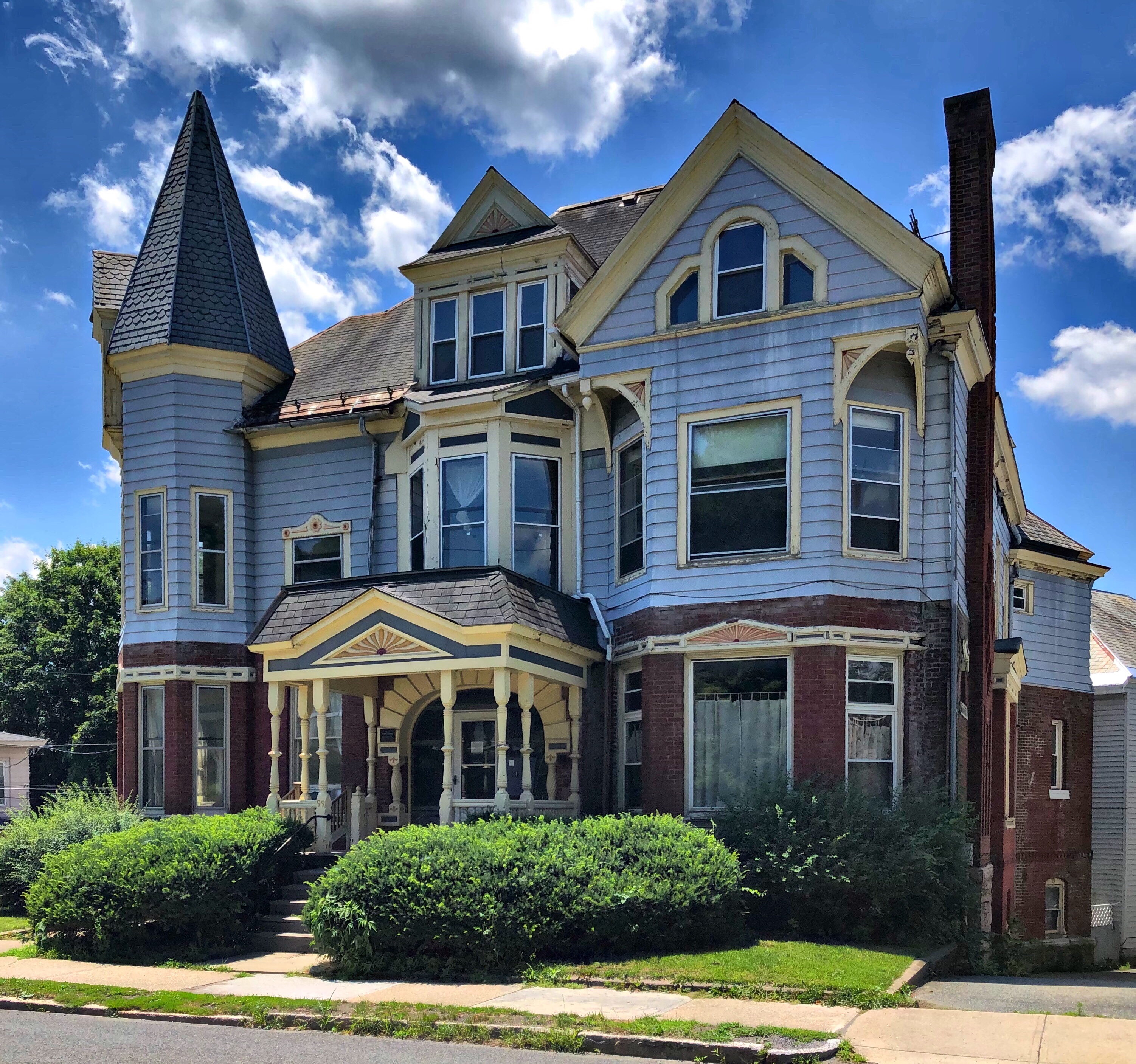
Edmund Burke Penniman (1841-1929) was born in North Adams, a son of Mr. and Mrs. Edmund B. Penniman. His father an established lawyer, and mother died, leaving the young boy with a sizable estate. Just before the Civil War broke out, he developed a mill, which had to shut down when the war began. After the war, the company had no orders to fill and they sold the property. Penniman became treasurer for the North Adams Manufacturing Company, and later served as President of the Hoosac Savings Bank. He and his family resided in this Stick style home until his wife’s death in 1909. The home features a brick ground floor and clapboards (now aluminum) above. The Victorian home has a rusticated arched entryway protected by a projecting porch with stickwork. A large corner tower gives the house a large street presence.
This stunning Stick style house in North Adams was built for Charles Cutting (1850-1940), founder of the C. H. Cutting Company, a prosperous clothing company in town. The company started as a partnership between 20-year old Cutting and a Mr. Silsby, who retired just a year after co-founding the company. Cutting used his business connections to help establish other local clothing companies including the Bay State Clothing Company in Adams, the Orange Clothing Company in Orange, MA, and the Athol Clothing Company in (you guessed it) Athol. With his wealth, he had this amazing Victorian home built on East Main Street where he lived until his death in 1940.
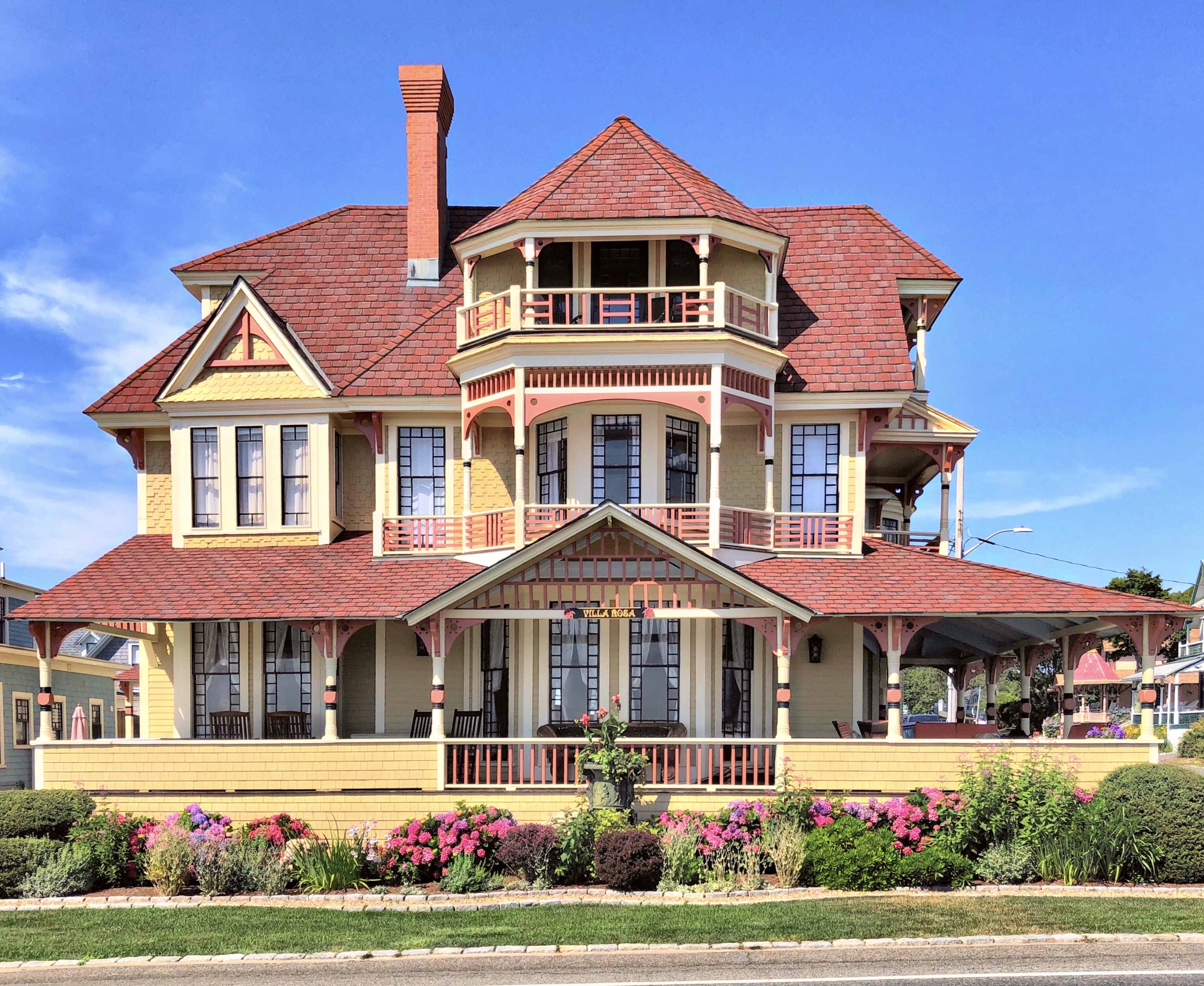
This Victorian mansion in Oak Bluffs was built in 1875 as part of the Oak Bluffs Land and Wharf Development, a private off-shoot development inspired by the success of the Wesleyan Grove campground. The Stick style house was occupied by wealthy businessmen and their families from its completion to after WWII. The home was purchased by Joe Overton of Harlem, NY, likely the home’s first Black owner. Under Overton’s ownership, Martin Luther King Jr., Adam Clayton Powell Jr. and other civil rights leaders visited what has come to be known as the Summer White House for African Americans. Overton was New York’s first African American labor organizer and president of NAACP New York Chapter. The home served as an informal inn, which provided a safe night’s stay for African American elite visiting the island. There was a guestbook with the signature of nearly every major Civil Right’s organizer in it, even Fidel Castro stayed here once. The home is now owned by Valerie Mosley, who named it after her grandmother as Villa Rosa.
Prior to 1866 the area now called Oak Bluffs was largely undeveloped with the exception of the famed Methodist meeting camp at Wesleyan Grove that had been established in 1835. By the 1860s the meeting camp was attracting large numbers of middle class visitors from Boston and surrounding towns who came for summer retreats; in 1868 approximately 600 tent and cottage lots were being leased in the Methodist compound. The Land & Wharf Company catalyzed this success into profit, by developing a more commercial presence on Circuit Avenue and developed housing on large lots to the east.
The first major structure built by the Land & Wharf Company was the Arcade Building. In it, they established their office from which they directed development of the resort. The central open arcade provided access to the campground from the heart of Oak Bluffs’ commercial area. The Arcade was designed by Boston carpenter/architect/inventor Samuel Pratt (1824-1920) who was also responsible for many of the cottages in Oak Bluffs. The Arcade remains a historically significant and well-preserved commercial building in town. My bad photo doesn’t do it justice! 😦
Located at the heart of Oak Bluffs, this modest, wood-frame building has held some of the most important civic and cultural uses on the island. Built in 1882, the growing town of Cottage City (later renamed Oak Bluffs), which separated from Edgartown, needed a new town hall and fire station with the rapid development caused by summer visitors and increased year-round residents. After WWII, the property was renovated and expanded to allow space for a small police department in the building as well. In 1966, a new town hall was built across from the ferry pier at the waterfront, and the town soon after sold the former, outdated building, and two years later, it was purchased by The Cottagers, Inc. The Cottagers, Inc., is a philanthropic organization founded in 1955 by a group of African-American women who owned cottages or homes on Martha’s Vineyard. The social group provided a safe space for the growing Black community who lived on and visited Martha’s Vineyard. The building remains as an iconic landmark not only for its historical use and architecture, but as a symbol of the diversity and the black community in the small island town.
One of the most unique buildings I have ever seen is the Union Chapel in Oak Bluffs on Martha’s Vineyard. The chapel, built in 1870 in the American Stick Style, is in the form of an Octagon, very unique for churches. Built as an inter-denominational house of worship, it is significant as the first non-sectarian religious building to be erected in a community that until 1870, was noted primarily for its strong association with the Methodist Church and its summer camp meeting (Wesleyan Grove) assemblies. The Chapel offered islanders and seasonal visitors regardless of religious affiliation not only an opportunity to worship but a gathering place for cultural activities. According to historic images, the chapel once had more elaborate stick work and finials, since removed, likely due to storms and general maintenance concerns. The chapel was designed by island resident Samuel Freeman Pratt (1824-1920) who had no known architectural training besides working as a wood carver in Boston, yet his work is characterized as having a dynamic and festive style. Pratt’s other major contribution to Oak Bluffs’ architecture, the Sea View Hotel, was erected at the head of the wharf in 1872, but burned down in 1892.
Located on the iconic Circuit Street in Oak Bluffs, this Eclectic Victorian cottage has a storied past related to Black history on the island. Even though Oak Bluffs was a relatively safe place for African Americans to be, there were still limits on their rights. In some parts of Oak Bluffs there were laws that said that certain property could only be owned by whites. The island became a vacation spot for thousands every summer in the 19th century and seeing a lack of options for Black travelers, Mrs. Georgia O’Brien and Ms. Louisa Izett began to operate an inn for people of color. The inn was one of two such residences in Oak Bluffs and has since been listed on the African American Heritage Trail of Martha’s Vineyard. The home has since been named the Tivoli Inn and retains much of the original gingerbread trim. In recent years, Martha’s Vineyard was given the nickname, “The Black Hamptons,” due to its popularity as a place for wealthy African-Americans to vacation, it remains a very diverse island in summer months.
This stunning Victorian home in Oak Bluffs on Martha’s Vineyard was built in 1878 as a summer home for Oliver Ames (1831-1895), a businessman, investor and Governor of Massachusetts. Oliver Ames was the son of Oakes Ames, who is credited by many historians as being the single most important influence in the building of the Union Pacific portion of the transcontinental railroad. After his father’s death in 1873, Oliver Ames became the executor of his father’s vast estate and business dealings, and spent vast sums of money on properties in the places he lived including North Easton, MA, Boston and Martha’s Vineyard. He summered at this large home fronting the ocean in Cottage City, then a part of Edgartown. He decided to run for state senate in 1879, after he was unsuccessful in securing passage for the separation of the Martha’s Vineyard community of Cottage City, where he owned a summer house, from Edgartown. Winning election, he saw through the incorporation of the town (now known as Oak Bluffs). Ames served as the Governor of Massachusetts between 1887 and 1890, and continued to summer in his beachfront home during that time. The eclectic Victorian home blends many popular styles at the time from the Shingle style with the continuous shingle siding, the Stick style with the delicate stick-work at the veranda, to Queen Anne with its asymmetric massing and square tower.



 Buildings of New England