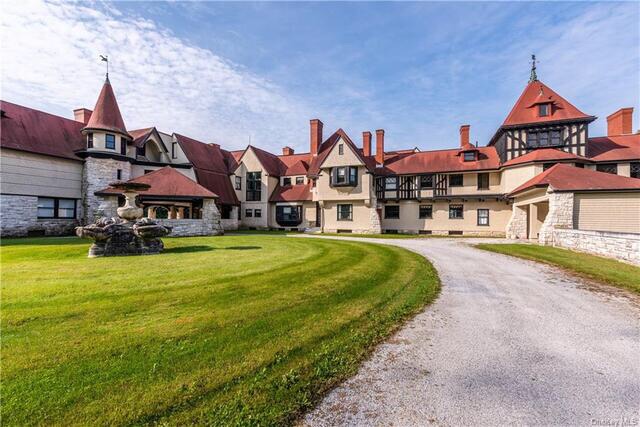
Glacy House // 1930

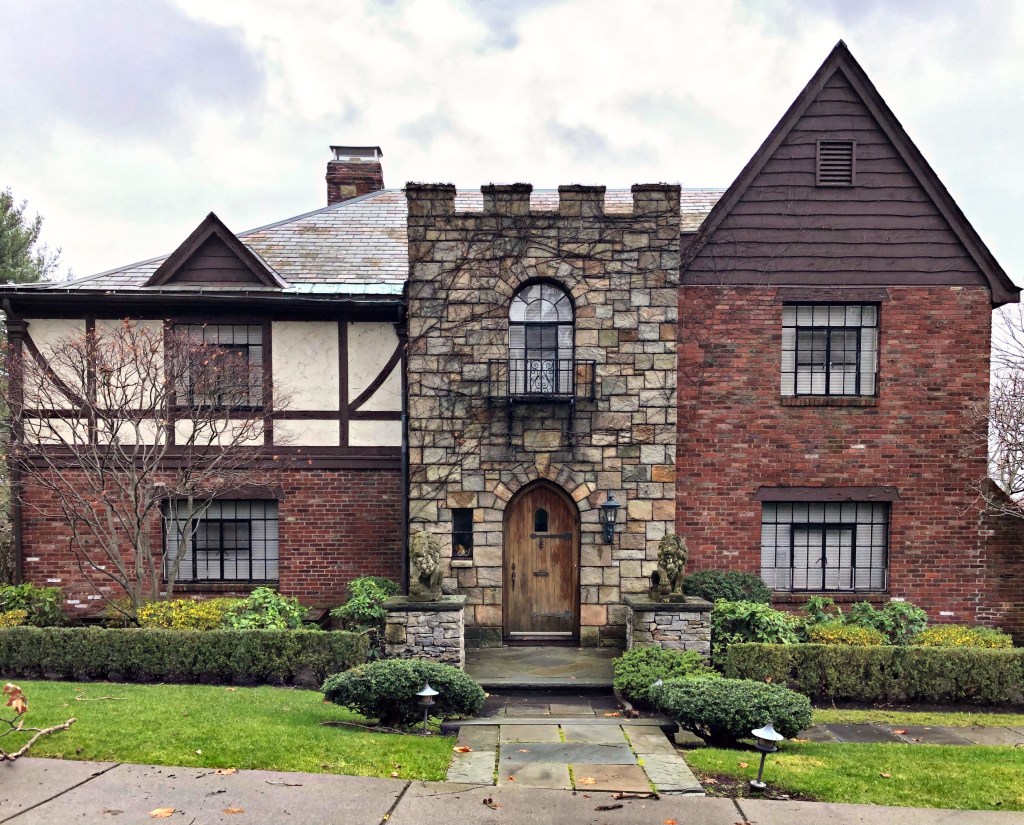
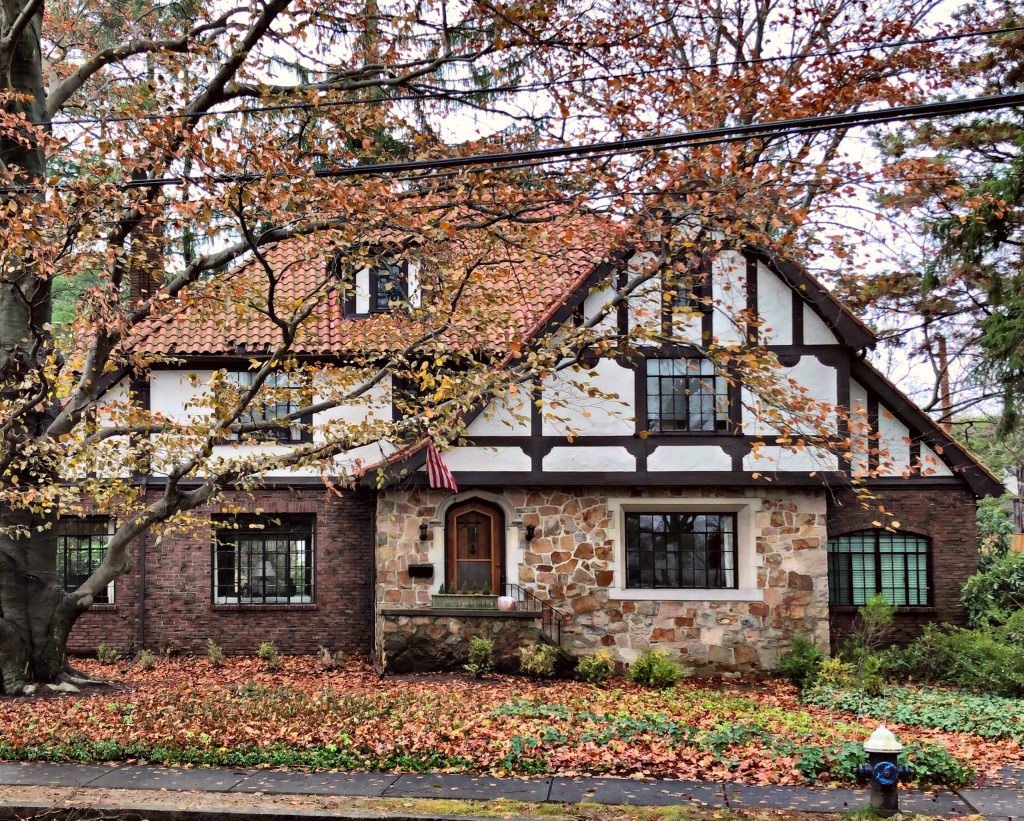
Residential architecture of the early decades of the 20th century is among my favorites as the Tudor Revival movement took off and was sometimes mixed with other revival styles at the time, creating really unique homes. The Glacy House in South Brookline, MA was built in 1930 as one of the earlier homes in the Walnut Hill development. It was likely designed and built by Walter L. Fernandez, a contractor who appears to have design-built a handful of spec homes to help get the neighborhood’s development going in the early stages. This home was originally occupied by George and Mary Glacy. George later worked as Vice President of the Boston & Maine Railroad, though he later got into legal trouble for hiring companies for railroad projects where he had financial interests, becoming indicted in an antitrust case by a Federal grand jury. The home features a first floor constructed of stone and brick with half-timbering on the floor above. The building is topped by a terracotta red tile roof, which is fairly uncommon for the region.

Chaffee House // 1931

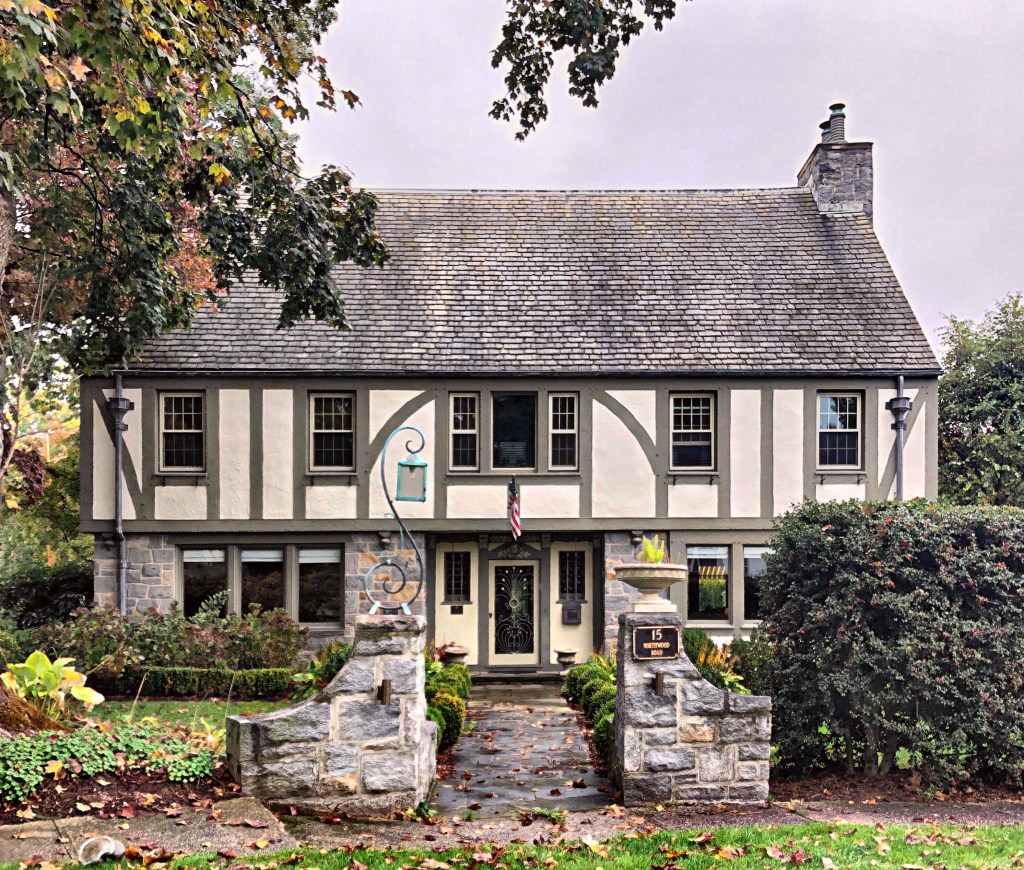
Herbert Almon Chaffee and Irma Chaffee had this Tudor home built by 1931 for their family in Fairfield, Connecticut. Mr. Chaffee was the Vice President and Assistant Treasurer of the City Savings Bank of nearby Bridgeport. Chaffee also at that time worked as Vice President of the A.W. Burritt Company, a lumber mill that produced building supplies and also operated as a real estate company that bought land and constructed on it. The home he had built clearly showcased the company’s work and features hallmarks of the English Tudor Revival style, with half-timbering, slate roof, and jettying (upper floor slightly overhanging the first).

Waban Branch Library // 1929

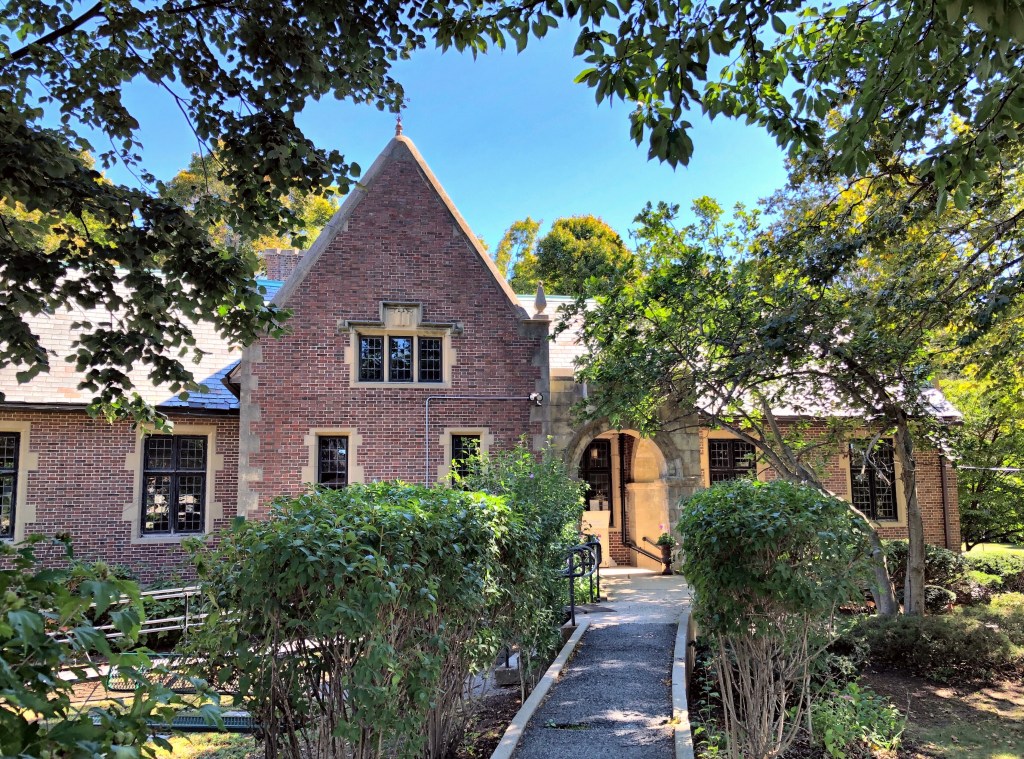
The Waban Branch Library was designed by Gifford LeClear of the architectural firm Densmore, LeClear & Robbins in the Tudor Revival style in 1929. The village of Waban, in the aims of constructing a new public library for the established suburban neighborhood, gathered over $63,000 for the designing, construction and furnishing of the new branch library in Newton. The building is constructed of brick and faced with limestone at the entrance, stone trim exhibits some carvings of books and other library-oriented objects, the building topped by a slate roof.

Angier Residence // c.1905

This Tudor mansion in Waban Village was built around 1905 for George and Amelia Angier. George was the President of the Angier Chemical Company of Brighton. The company sold (among other things) Petroleum Emulsion, which was to be drank, serving as an anti-septic and soothing agent in the throat, stomach and intestines, it doesn’t sound safe to me! After their house was built, Mrs. Amelia Angier spent much of her time with charitable clubs and organizations. In 1916, before America joined WWI, Amelia started a fund and group to provide aid to the French who were wounded in the on-going war.

Strong’s Block // 1896

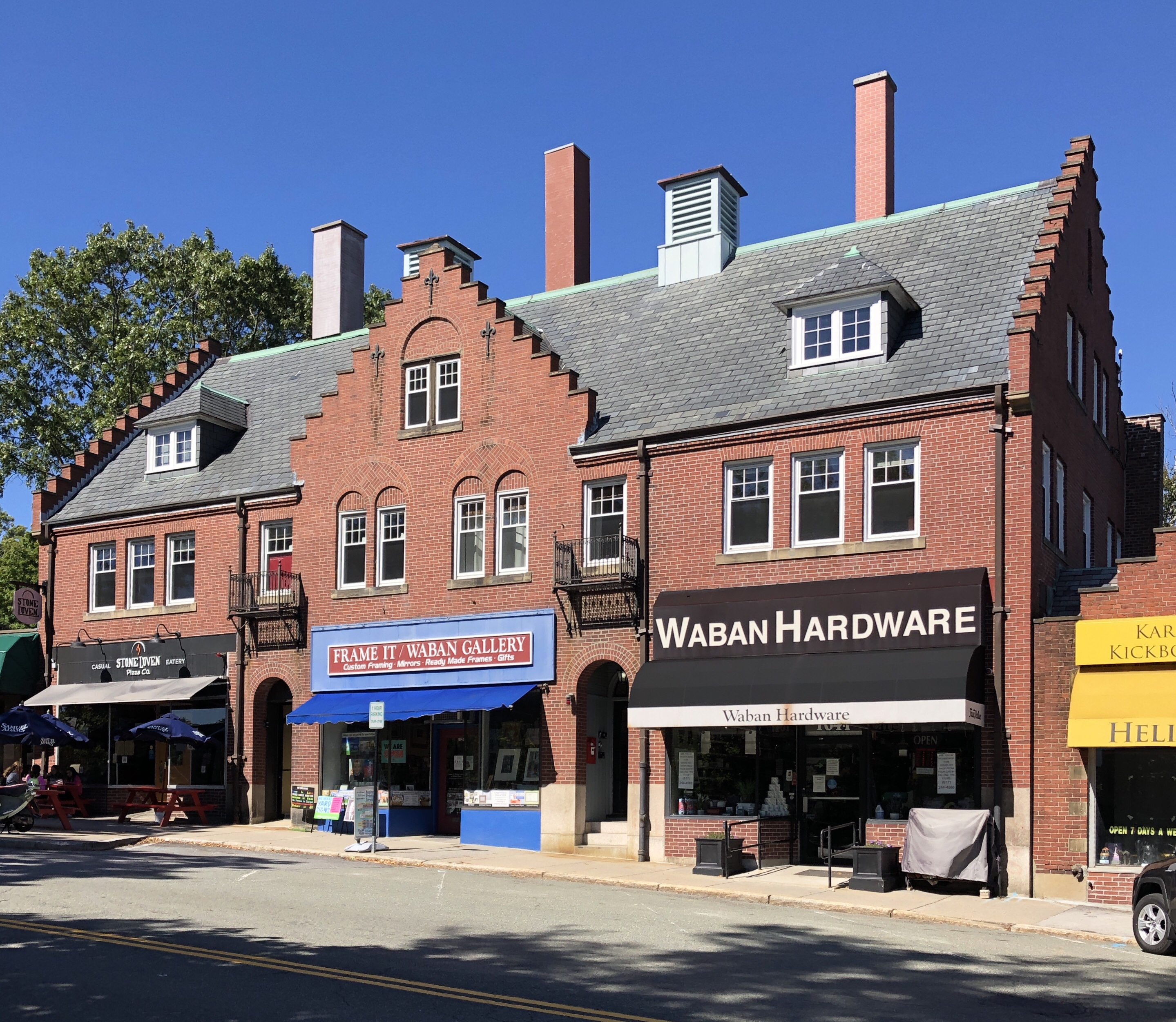
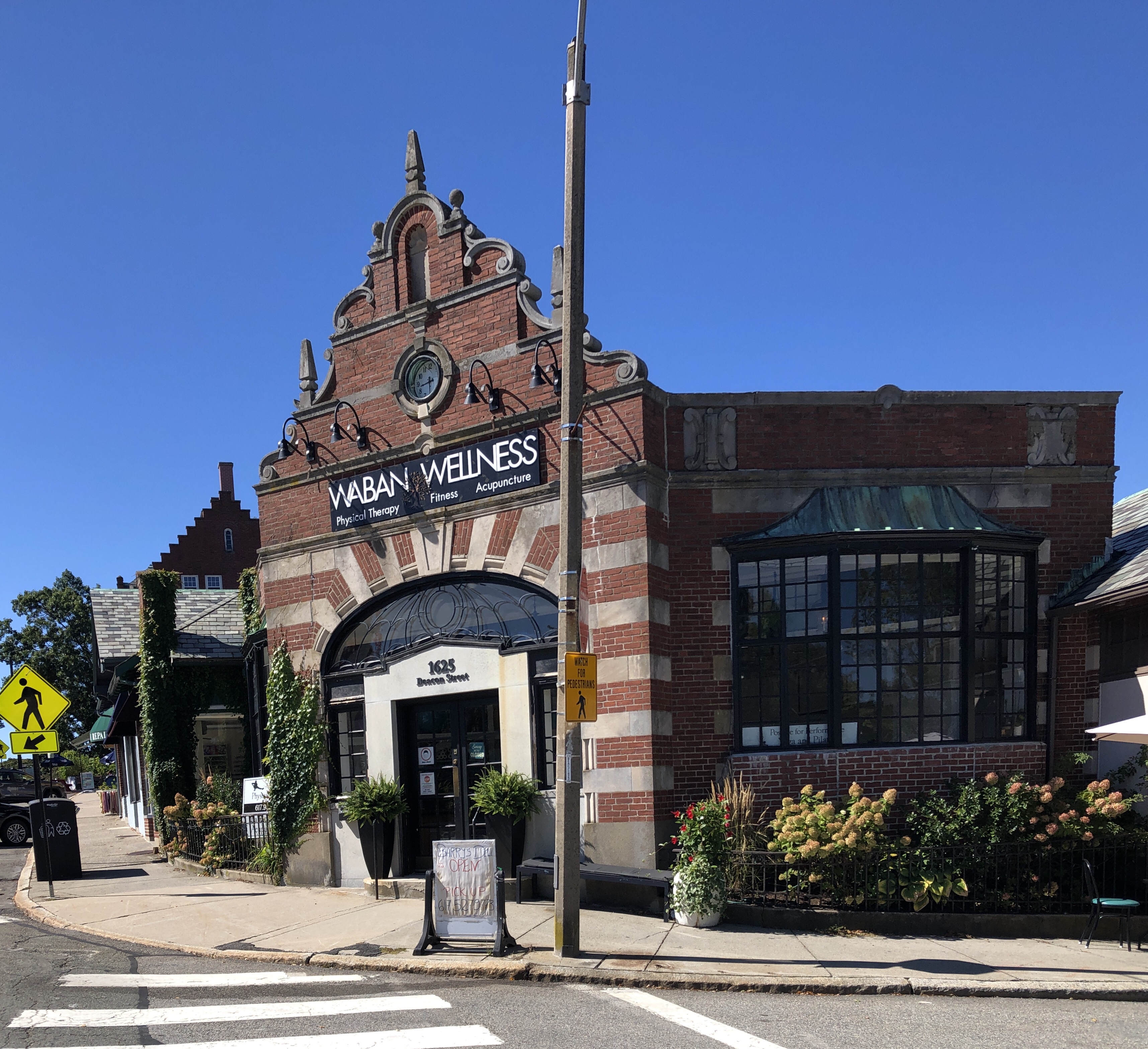
William C. Strong, a prominent local citizen who resided nearby, had this stylish commercial block built to serve the expanding population of the village which eventually became known as Waban. After the completion of the Waban Train Station, the demand for neighborhood retail became apparent and William Strong was an early developer to realize this. He hired Lewis Bacon, an architect who resided nearby, to design the commercial block. The result is a stunning Dutch Revival building with gables showcasing stepped parapets. The upper stories were apparently used as apartments when completed. Notwithstanding Strong’s efforts, the Waban commercial district developed rather slowly. It was not until 1924 that the row of one-story shops was added to its right. The addition was designed by Edward B. Stratton, who followed suit with Tudor and Jacobean motifs, to compliment the Dutch Revival block.

Agawam Center School // 1939

Located in Agawam Center this interesting architectural example of a late-Tudor Revival school building really caught my eye. The building replaced a 1870s town hall and two-room schoolhouse which were both outgrown as Agawam’s population increased due to the proximity of nearby Springfield. The architect was Paul B. Johnson, who was based out of West Springfield and ran a small architectural office there. He attended Cornell and MIT for architectural training and worked primarily around Springfield. The school building is constructed of a deep red brick, laid in varied relief for a rough faced surface and a cast stone Tudor arch around the main entrance for contrast. The school was later renamed after Benjamin Phelps, the first superintendent of schools in Agawam.

Blackinton Woolen Mill // 1917

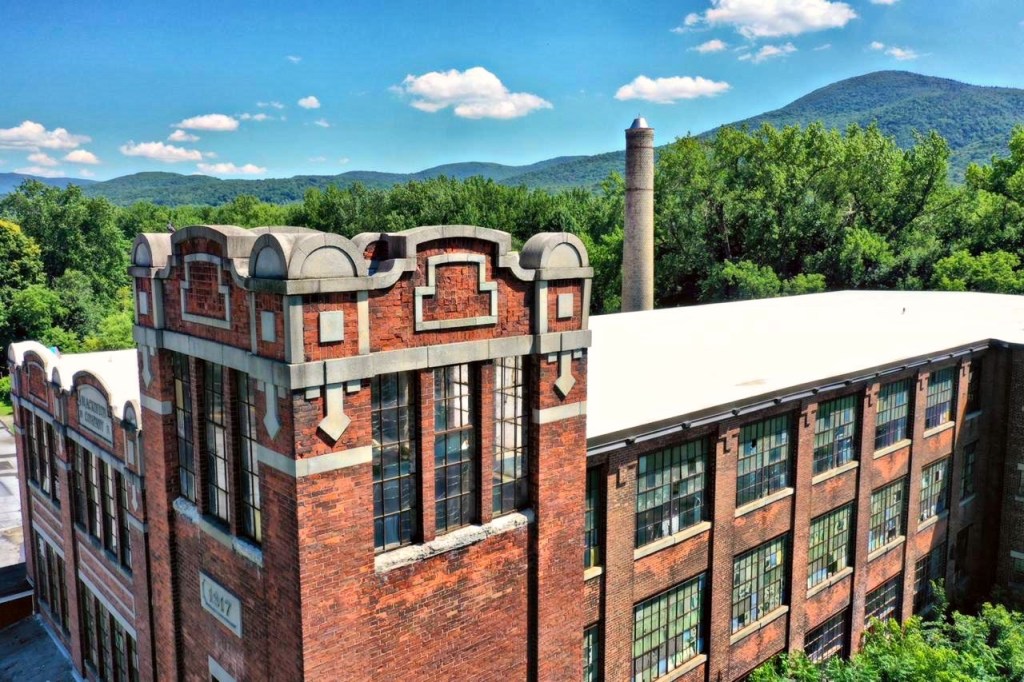
On the outskirts of North Adams, in the village of Blackinton, you will find this massive decaying mill complex slowly being overtaken by Mother Nature and time. The complex is the Blackinton Woolen Mill, which was founded by Sanford Blackinton, who started his woolen mill on the banks of the Hoosic River in 1821 (later building his mansion closer to town). The mill increased production yearly and produced cloth during the Civil War for the Union cause. After, the mill increased production and ran 24 hours a day with the only time the mill would close down would be for mill fires, machinery repairs, or low water supply. In 1869, 162 men, 105 women, and 35 children worked in the mill with the length of the working day being eleven hours! After Blackinton’s death, the mill was succeeded by William Pomeroy, his son-in-law, who had marketed the Blackinton product through his own woolen goods store in New York. In 1917, the present main mill building was built; it is three stories high, with large windows in recessed bays between vertical brick members, resembling pilasters, which rise from the ground to the flat roof. The tower and parapet on the end facing the street are decorated with ornate castellation giving the complex a high-style design. The mill was constructed behind the weave shed (1908) which is a long one-story structure fronting the main street, decreasing the mill’s presence. As is the history of industry in New England, the mill struggled after WWII with a national shift to a service economy away from production. The building has been vacant since the late 1980s and has been eyed for redevelopment into loft and artist studios since.

Fingers crossed!

Wilkinson House // c.1895

At the end of the 19th century, many homes built were a hybrid of architectural styles. The Wilkinson House on Church Street in North Adams, MA is one of these examples. The term Eclectic can often be used to describe the phenomena when many architects of the 19th and early 20th centuries designed buildings in a variety of styles according to the wishes of their clients, or their own, blending features and styles which in the past may have been reserved for a single style. This home exhibits features of the Queen Anne and Colonial Revival styles.

Hotel Touraine // 1897

The Hotel Touraine at the corner of Boylston and Tremont Streets in Boston was built in 1897 as one of the most luxurious hotels in the city. Designed by the local firm of Winslow and Wetherell, the Jacobean Revival style building commands the well-trafficked corner opposite the Boston Common. Early articles described the hotel as “a large and sumptuously equipped house, with internal decorations in the style of the Chateau de Blois (a French chateau). Winslow and Wetherell appeared to have been inspired by the Louis XII wing of the Chateau, as many design elements of the hotel closely resemble it. The hotel was advertised as having 350 rooms valued at $2 a night up to $3 a night for a room with a private bath. Separate men and women’s parlors, a library, and elevator service made the hotel desirable for the upper-class Bostonians and visitors to the bustling Downtown area. The hotel’s rich clientele eventually began frequenting the larger hotels near Copley Square and the stature of the Touraine slipped with a changing Downtown character. By the 1960s, the hotel closed and was converted to apartments.