Former Noank Methodist Church // 1902

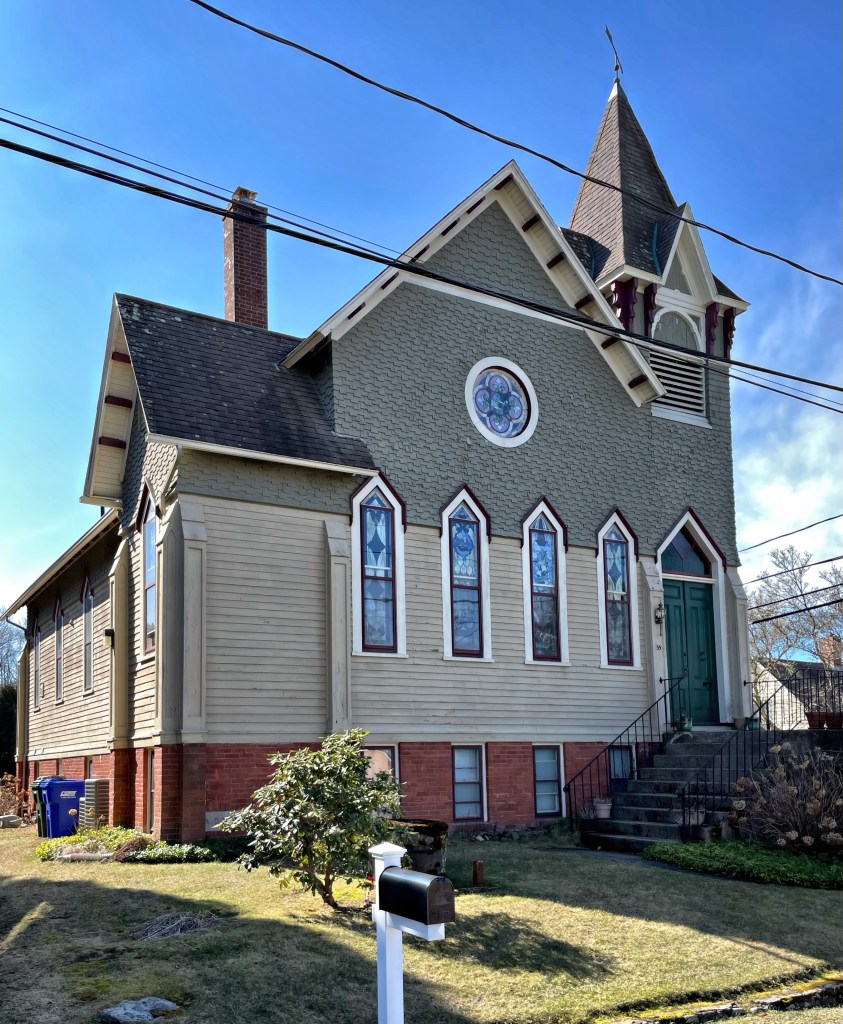
Adaptive reuse of old buildings always makes me so happy to see! Besides the obvious benefit of preserving an old building which contributes to the history and character of an area, there are clear environmental benefits to renovating older buildings for new uses when older uses are no longer viable. In 1902, the village of Noank was bustling with workers in the shipyards, many of whom attended or hoped to attend religious services close to home rather than travelling to adjacent towns. As a result, the local Methodist church-goers had this building constructed. Architecturally, the building is a hodge-podge of styles with interesting lancet windows as a nod to the Gothic style, shingle and clapboard siding which reads Queen Anne. The Noank Methodist Church merged with the Groton Methodist Church to form Christ United Methodist Church, which moved to a new building in 1972. The former church was converted into a residence. Preservation wins!
Josephus Fitch House // 1809

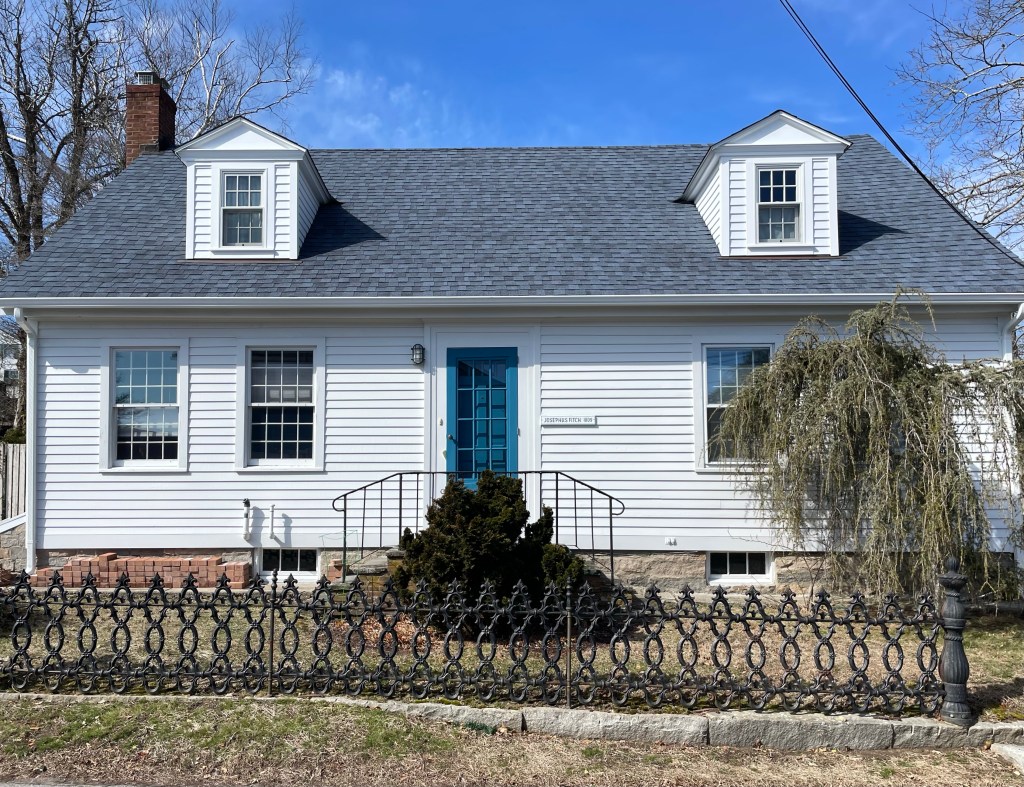
Not far from the Pelatiah Fitch House is this charming Federal Cape house in Noank, CT, built for Pelatiah’s grandson, Josephus (there are a lot of great names in this family)! Pelatiah’s eldest son Josephus was born in 1745 and was equipped for service in the American Revolution by his father. He survived the war, but in 1778, he perished at sea aboard a whaling vessel. Josephus Fitch Jr., his mother and siblings remained in Noank and tried to re-establish a life after losing their father who was just 32 years old. He grew up and married, and eventually purchased land in town, building this cape house in 1809. The house is vernacular with modest trim surrounding the door, 12-over-12 windows, and two small dormers at the roof.

Pelatiah Fitch House // 1754

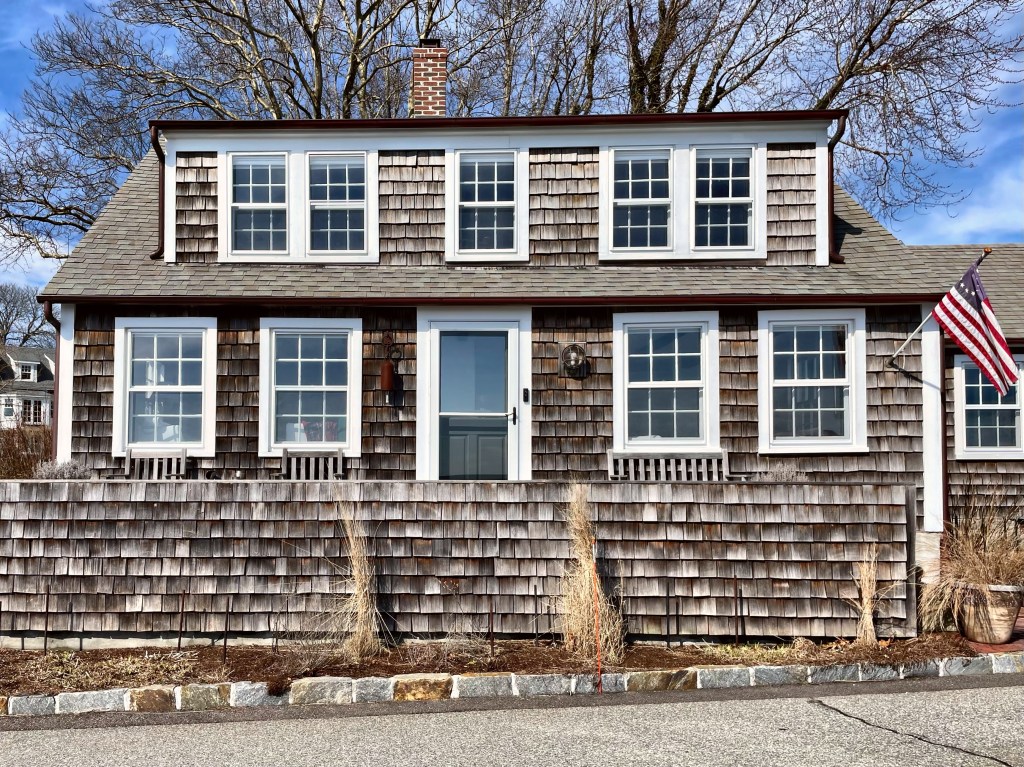
One of the oldest extant homes in the charming fishing village of Noank, CT, is the 1754 Pelatiah Fitch House which has survived nearly 300 years on the waterfront site. The home was built for a Pelatiah Fitch (1722-1803) upon the time when he relocated to Noank to work as a doctor. Dr. Pelatiah Fitch came from a long line of distinguished ancestors, and was born in Norwich, CT. After practicing medicine twenty-eight years in Noank, he removed to Vermont, later moving a to Salem, NY about 1780 where he lived out his final days. This Georgian seaside cottage was built by Dr. Fitch and his new wife Elizabeth when they were in their mid-twenties. After the Fitch Family moved out, the cottage was expanded a few times, notably with the addition of the oversized dormer at the roof.

Moses Latham House // c.1845

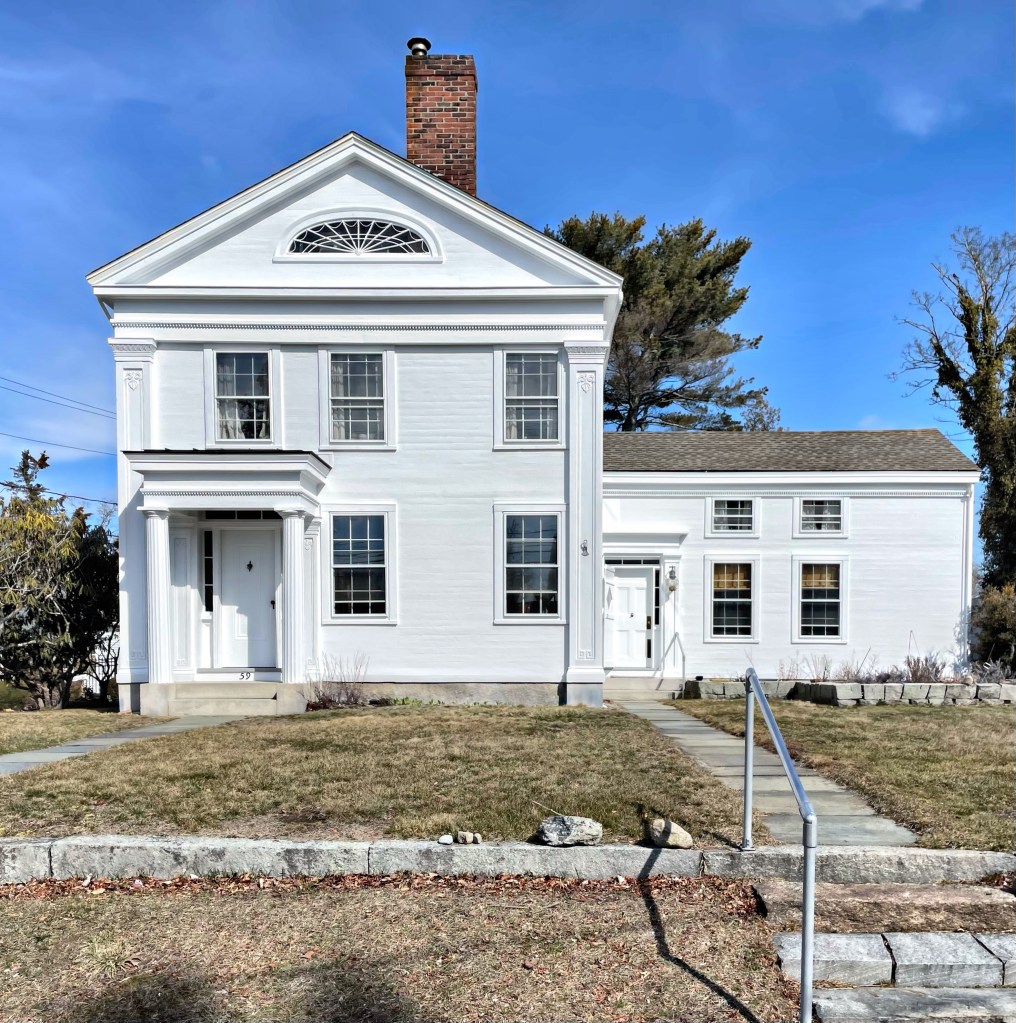
Noank is a charming seaside village within the town of Groton that is centered on a peninsula at the mouth of the Mystic River where it spills out into the Long Island Sound. Historically, the area was known as Nauyang (meaning “point of land”) and was a summer camping ground of the Pequot people, but they were driven out in 1655 following the Pequot War. White settlement was slow here until the mid-19th century, when the shipbuilding and fishing economy took off here. As a result, houses, stores, churches and industries were built, and an entire village was formed. Most extant homes here were constructed starting in the 1840s as the village (and nearby Mystic) saw economic growth from the maritime trades. This house, the Moses Latham House, was constructed for Mr. Latham in about 1845. The house is Greek Revival in style with flush-board siding, a fan light in the gable which reads as a pediment, and a simple portico supported by fluted Doric columns.

Woods-Gerry House // 1860

There are always those houses that just stop you in your tracks… For my last post (for the time being) on Providence, I wanted to share this significant property, known as the Woods-Gerry House, perched atop College Hill. Owner Marshall Woods, who married into the Brown family and was active in the affairs of Brown University. Locally he was also involved on the building committee for St. Stephen’s Church where he was a factor in selecting renowned architect Richard Upjohn to design the church. He must have liked Upjohn so much (or got a good deal) that he hired Richard Upjohn to design his new home on Prospect Street. The exterior of the three-story brick building stands out amongst the other Italianate mansions built in the same decade nearby, but is elevated design-wise with a bowed centerpiece on its east elevation with the handsome new front entrance renovated in 1931 by then-owner, Senator Peter Gerry, who was a great-grandson of Elbridge Gerry, the fifth Vice President of the United States (who had given his name to the term gerrymandering). Today, this significant building is owned by the Rhode Island School of Design and houses the Woods Gerry Gallery. The grounds are also very well designed.

Smith Owen Mansion // 1861

You honestly cannot beat Providence when it comes to brick Italianate mansions… The Smith Owen Mansion on College Hill was built in 1861 for jeweler and silversmith Smith Owen (1809-1889) and is one of the finest homes in a neighborhood full of historically and architecturally significant properties. Mr. Owen was in business with his brother George, and they manufactured and sold some of the best jewelery in the region, largely from their commercial block downtown (featured here previously). He hired Alpheus C. Morse and Alfred Stone, local architects who furnished the plans for the colossal home. Owen lived here until his death, which occurred less than a week after his wife’s passing. His daughter Lydia Dexter Owen Beckwith (1850-1947) inherited the property and lived here with her family until her death. It was under Lydia’s ownership that the Colonial Revival entrance details were added with projecting vestibule with columns and urns and central fan transom. It is really something special!

Rose and Howard K. Hilton House // 1900

Tudor Revivals may just be my favorite style of house. The interesting roof forms and gables, the use of stone, brick or stucco, and the presence of garrisoning and half-timbering in designs are always so charming. This enchanting Tudor Revival home in Providence, Rhode Island, was built in 1900 by local architect Howard K. Hilton (1867-1909) as his personal residence with wife Rose. He first worked in the office of H. W. Colwell and continued his training under Ellis Jackson joining him in partnership (Jackson & Hilton) and under the firm name was identified with the design of several churches, schools, hospitals and various other buildings in his native city before he retired in his final years. This home is very unique for its site on a narrow urban lot with the door at the side, brick first floor with jettying at the second floor of wood construction with half-timbering. While writing this, I noticed that there are also projecting gargoyles which serve as water spouts to send water away from the structure during rainfall events. Tudors are really the best!

William Binney House // 1859

Another of Providence’s stunning monumental Italianate mansions on College Hill is this, the William Binney House, which was built in 1859 from plans by local architect Alpheus C. Morse. In the mode of an Italian Renaissance palace, it features a strong, symmetrical facade, molded string course, classic trim detail at the windows and doors in brownstone, and a shallow hip roof. The original owner, William Binney (1825-1909) was born in Philadelphia and became a prominent attorney and became involved on various boards, building more wealth. Additionally, he was elected as member of the Rhode Island Assembly and the Providence City Council continuously 1857 to 1874. The house’s rear ell and wooden bay would provide sweeping views to Downtown Providence even today from the aptly named Prospect Street.

First Church of Christ Scientist, Providence // 1906

One of the most stunning and monumental buildings in Providence is this building, a church which pretty closely resembles the Rhode Island State House! Christian Scientists in Providence began to hold informal services in 1889 and received a charter from the state legislature in 1895. Construction started on this church, the First Church of Christ, Scientist in 1906 from plans by local architect Howard Hoppin who roughly modeled the building after the congregation’s Mother Church in Boston. The Classical Revival building is capped by a copper hemispherical dome supported by a colonnade of Corinthian columns. The main block of the structure at the street is fairly modest, possibly due to the residential character of its surroundings.

Andrews Hall – Brown University // 1947

Andrews Hall was built after WWII to serve as a dormitory for Pembroke College, the women’s college affiliated with Brown University (later merging in 1971). The new building was named for Elisha Benjamin Andrews, president of Brown University (1889-1898) who was instrumental in the establishment of the college for women in 1891. The new building created a central link, joining Miller and Metcalf halls and nearly doubling the dormitory capacity of Pembroke College, creating an enclosed yard in the process. The architectural firm of Perry, Shaw, Hepburn & Dean (in existence today as Perry Dean Rogers Architects) was hired to provide the plans, which serves a northern edge of the small former Pembroke College quad. Principal architect Thomas Mott Shaw used specially colored brick to give the building a weathered look to achieve harmony with the two buildings which it connected. The style of Andrews Hall is Colonial Revival with a hip on cross-gable roof and is constructed of brick with central three-bays clad limestone facing the courtyard. The building is set over the dining hall which is set into the sunken landscape with the terrace above. The three buildings were recently renovated by CBT Architects and shine today!