Folliett Lally House // 1855

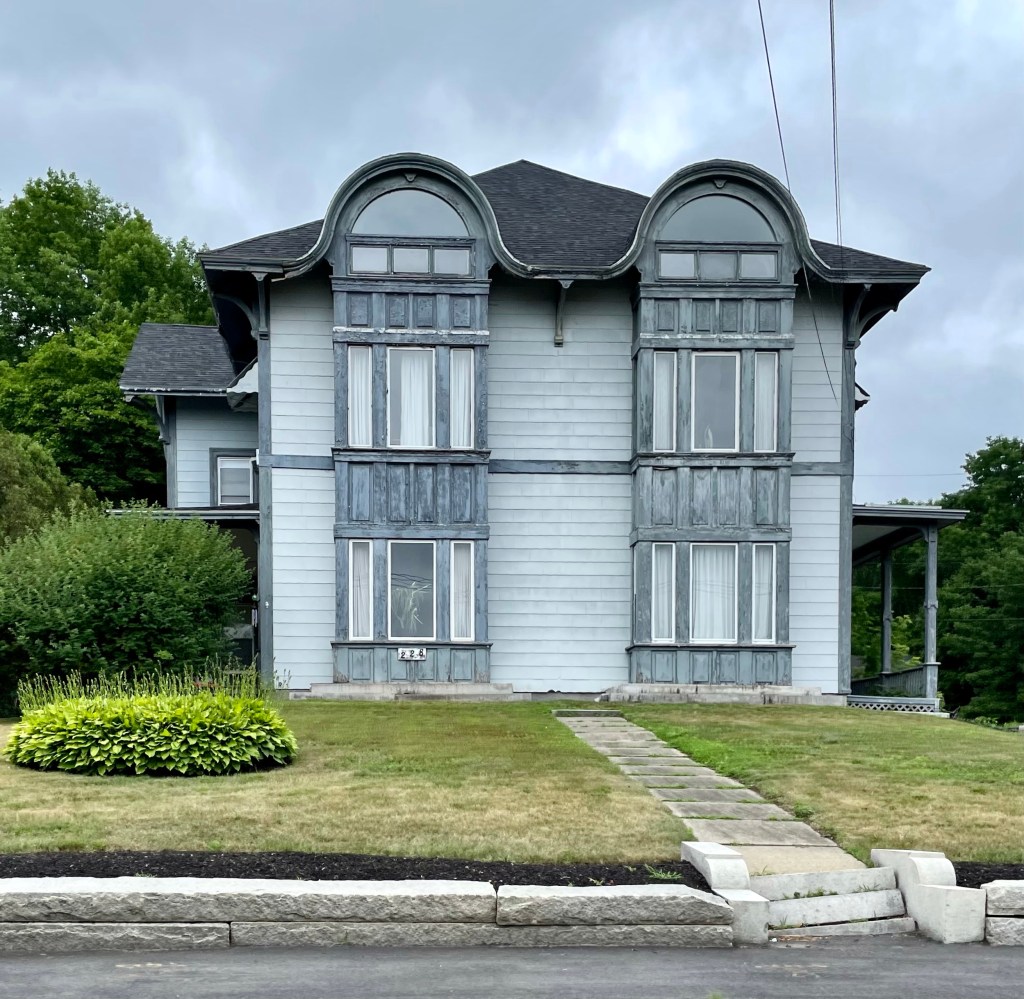
One of the most unique homes in the state of Maine has to be this stunner in the small town of Farmingdale. Perched high on a hill overlooking the Kennebec River, the mansion was built in 1855 for Folliett Lally, a wealthy Civil Engineer. In 1842, Lally was hired by the U.S. Government to map out the border between present day Maine and New Brunswick, Canada. The issue arose after the Treaty of 1783 ending the American Revolution had described the northeastern boundary of the new United States, but with unclear boundary descriptions. After the Aroostook War in 1838-9, a cold war between the U.S. and Britain (who controlled New Brunswick), the long-standing controversy was ended with the Webster-Ashburton Treaty (1842). The new boundary was proposed by the King of the Netherlands, a mediator, who granted the U.S. more of the disputed area. We have Folliett Lally to thank for mapping and charting out the present northestern boundary of the United States. Now back to the house. The home was designed by Charles Alexander, a Portland-based architect. The home was sold, likely after Lally’s death, to two men, who converted the it to a double house, with entrances on both side elevations. A brick wall was run through the center of the home separating the house in half. The building was since divided up more and apparently has eight units.

Robert Thompson House // 1867

Just a few doors down from the Nathaniel Stone House (last post) in Farmingdale, Maine, this large Italianate style home similarly commands the prominent siting overlooking the Kennebec River. The house was built in 1867 for Robert Thompson (1806-1888), a Scotsman, who took over a pottery company in nearby Gardiner. Robert and his wife Phebe had two children, Lucy and David, the latter died within his first year of life. After the couple passed, they willed their home to daughter Lucy, who married a druggist, James Jackson. The Colonial Revival style doorway was added sometime after their passing in the early 20th century.

Captain Nathaniel Stone House // 1872

The Captain Nathaniel Stone House in Farmingdale, Maine was constructed in 1872 on a small plot of land overlooking the Kennebec River. The charming home was constructed by Nathaniel Stone (1797-1884), a retired ship chandler,(a dealer in supplies or equipment for ships) who moved back to his hometown after making his fortune in Boston. He lived here with his wife, Martha, and his adopted son, Uriah, in this fashionable Second Empire style. Nathaniel died in 1884, outliving his wife by two years. The property was willed to his adopted son Uriah, who quickly sold the home on account of him seeing ghosts inside, he refused to live there because of it. The home was acquired by William Ring, a businessman who owned real estate in nearby Gardiner, Maine. Between 1886 and 1912 he and his family resided at the former Stone House, but by the turn of the Twentieth-century he grew increasingly in debt, and on several occasions he borrowed against his property to meet his obligations. Before the home went up for auction in 1912, a massive fire broke out in the home, destroying all the interior woodwork, and William perished inside. Although significantly damaged, it was largely rebuilt to its original appearance by its eventual buyer and has been an architectural landmark on the Kennebec River ever since. Now that I think of it, maybe Uriah Stone could see the future and saw William Ring as a ghost!

Harkness Estate – Carriage House // 1908

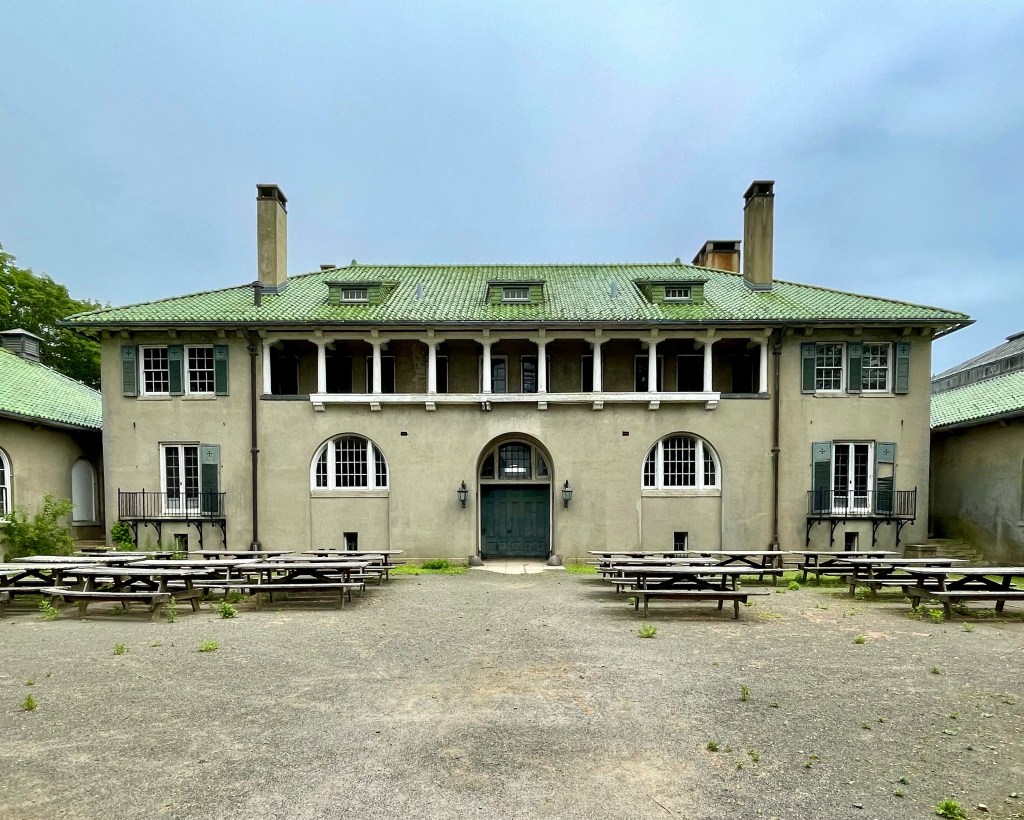
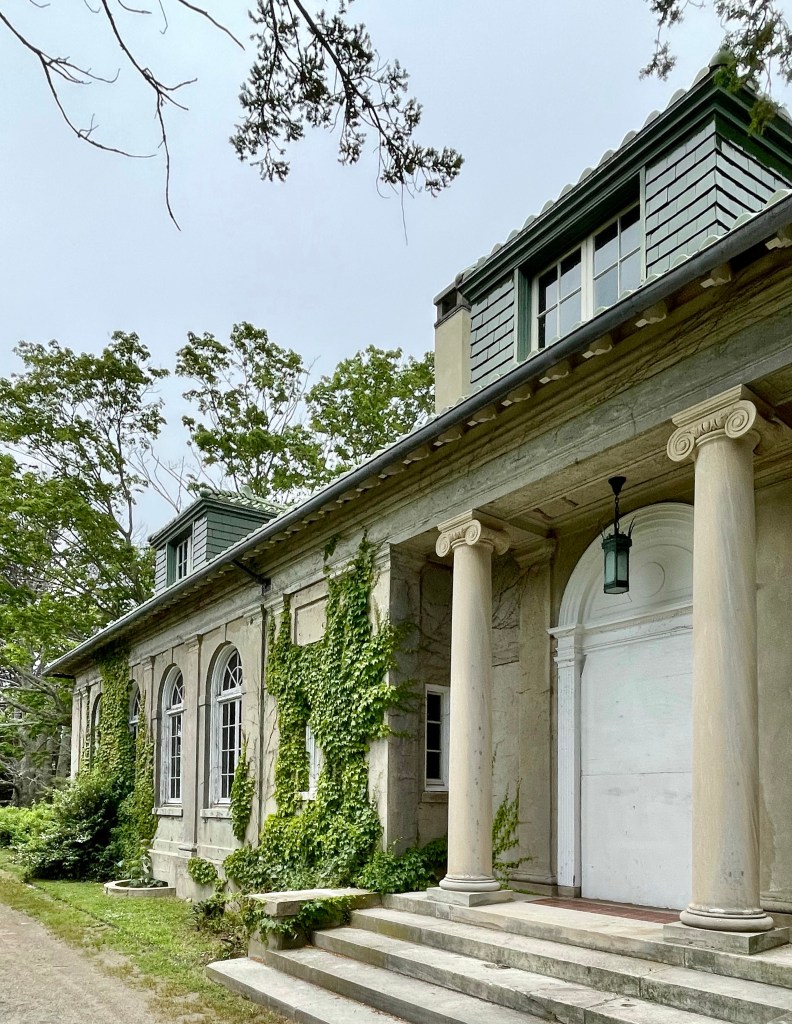
Another of the stunning buildings on the Harkness Estate is this massive all-purpose building that served a variety of functions, but I will call it the Carriage House. The building was constructed in 1908 and designed by James Gamble Rogers, mimicking the Renaissance Revival grandeur of the main home, Eolia. As previously mentioned, the large, U-shaped building was a multi-use support compound for the Harkness Family and their farm. The South Wing (right) of the building served as a clubhouse for Edward Harkness and his friends, with a billiards room, squash court, and two bowling lanes. This wing has large windows looking out towards the ocean and the large gardens on the property. The central block contained a garage with a turntable to facilitate the parking of limousines, a gas pump and a car wash for Mr. Harkness and his growing automobile collection. The North Wing (left) contained the horse stables, carriage area, tack room, smithy, and even a space dedicated to dog grooming. Upon close inspection you can see small rounded stones near the portals to allow the wheels to hit them rather than damage the building. Perhaps most importantly, the Carriage House was the location for the furnace room with its huge steam boiler. This boiler heated the Carriage House as well as the Mansion via an underground steam line. Apparently the building will soon be undergoing a restoration. Fingers crossed!

Harkness Estate – Water Tower // 1910

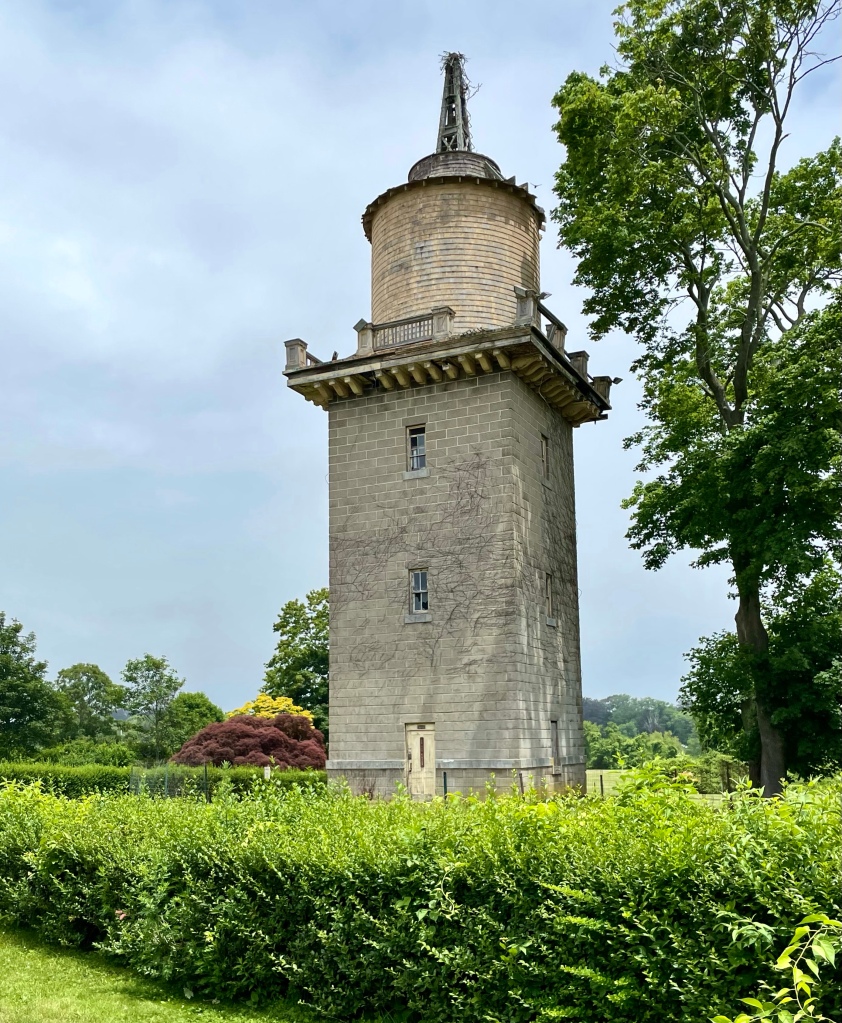
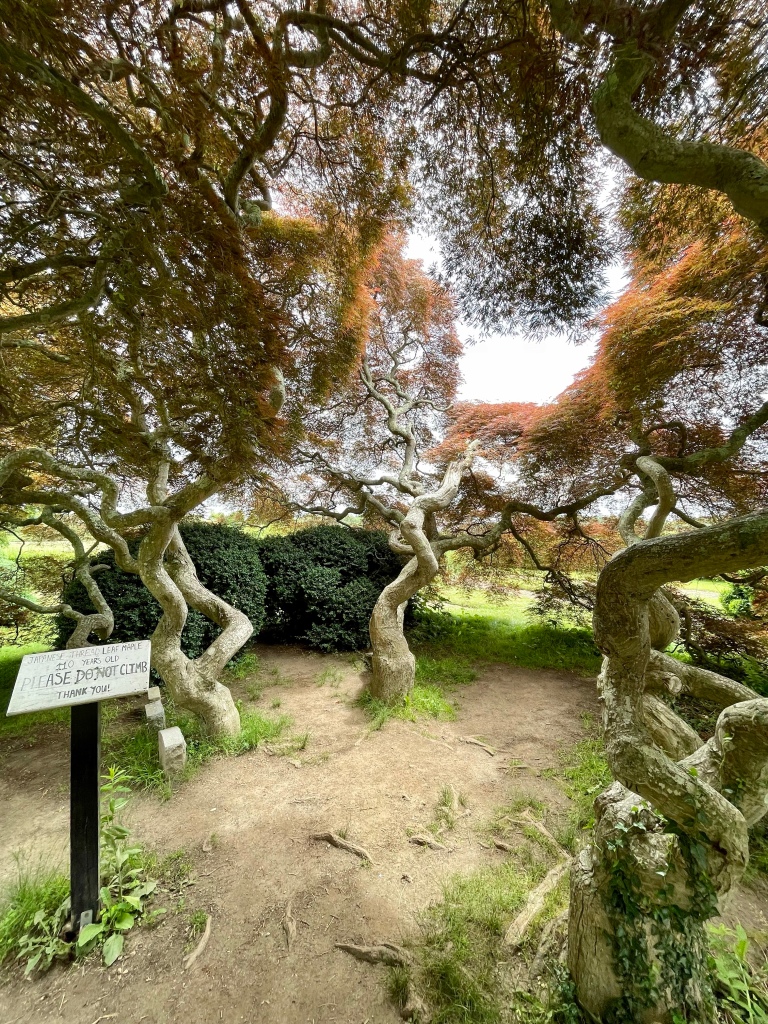
One of the most unique buildings on the grounds of the Harkness Estate has to be the most functional, the 1910 water tower. The structure was designed by architect James Gamble Rogers, a really under-appreciated architect who was commissioned by Edward and Mary Harkness to revamp their summer compound. The water tower features a skeletal frame with concrete block tower protecting it, surmounted by a shingled water tank which once had a functioning wind mill on it! Nearby the water tower, a garden designed by female landscape architect Beatrix Farrand frames the tower very well. In that garden sits a 110+ year old Japanese Thread Leaf Maple tree, which is probably the most beautiful tree I have ever seen.

Harkness Estate – Old Farmhouse // c.1860

On the sprawling grounds of the Harkness Estate (featured previously), this wood-frame home showcases the more human-scaled farmhouses that many in New England once had. The farmhouse was likely built in the middle of the 19th century and was used until the early 20th century when the farmland (and likely other surrounding coastal farms) were purchased and turned into the massive 237-acre estate. Interestingly, the Harkness Estate was used as a summer house for the Harkness family, but also as a ‘gentleman’s farm’. Gentleman’s Farms were an important element of the upper-class lifestyle in the Gilded Age as they served as formal summer mansions and working farms that often supplied produce and dairy products to the owners’ winter residences. The wide open spaces and ability to have a tranquil lifestyle was appealing to many who lived in dense urban centers for most of the year. While nearly all “gentleman farmers” had servants actually do all the work, they sure loved the idea of living on a farm. At its peak, the Harkness Estate with it’s prized herd of Guernsey cows, 65 employees, 35 of whom were year-round support staff. It is likely the lead farmer and family lived in this building, right in the center of the estate.

Harkness Estate – Eolia Mansion // 1908

Eolia, the Harkness Estate, sits on the shoreline of Waterford, Connecticut and is significant as one of the most complete grand-scale, seaside estates in Connecticut. Similar to Seaside Sanatorium (featured previously), the Harkness Estate is another Connecticut State Park in the coastal town, but is quite opposite as the buildings and grounds are in much better condition and get use! The property was developed as a formal seasonal retreat and working farm in the early 1900s for William Taylor and Jessie Stillman, until it was purchased by Jessie’s sister Mary and her husband Edward Harkness soon after. Edward S. Harkness (1874-1940) spent most of his life managing, with his older brother Charles, a tremendous fortune built up by their father Stephen Harkness, who had had the foresight in 1870 to become John D. Rockefeller’s business partner by investing in the Standard Oil Company. Edward Harkness married Mary Stillman, daughter of wealthy New York attorney Thomas E. Stillman, in 1904. Mary’s maternal grandfather was Thomas S. Greenman, a shipbuilder in Mystic, Connecticut, who co-founded George Greenman & Co shipyard (now part of the Mystic Seaport Museum). As the centerpiece of this summer estate, the premier NY architectural firm of Lord & Hewlett, designed this stunning Renaissance Revival mansion which holds a whopping 42-rooms. Mary hired female landscape architect Beatrix Farrand to design the absolutely stunning gardens on the grounds. In 1918, Edward Harkness was ranked the 6th-richest person in the United States, and the couple decided to give away much of their wealth, including selling off some of their property in Waterford for Camp Harkness for children with polio. Mary and Edward were very private people who avoided public attention and acclaim, unlike many of the rich of today. Mary Harkness’s final gift, was written in her will, that her beloved estate Eolia, would be gifted to the State of Connecticut.

Stay tuned for some more buildings on this stunning estate!

Beebe-Phillips House // c.1832

The Beebe-Phillips house in Waterford, CT, was built in the 1830s by Orrin Beebe (though some accounts say it was built for his wife Lydia after his death), and is an excellent example of a traditional full-cape house in Connecticut. The home is a vernacular example of the Federal style with no frills or expensive details. The house was originally located elsewhere in town but was moved to its current site on Jordan Green in 1974 by the Waterford Historical Society, next to the Jordan Schoolhouse.

White Family Cottage // c.1920

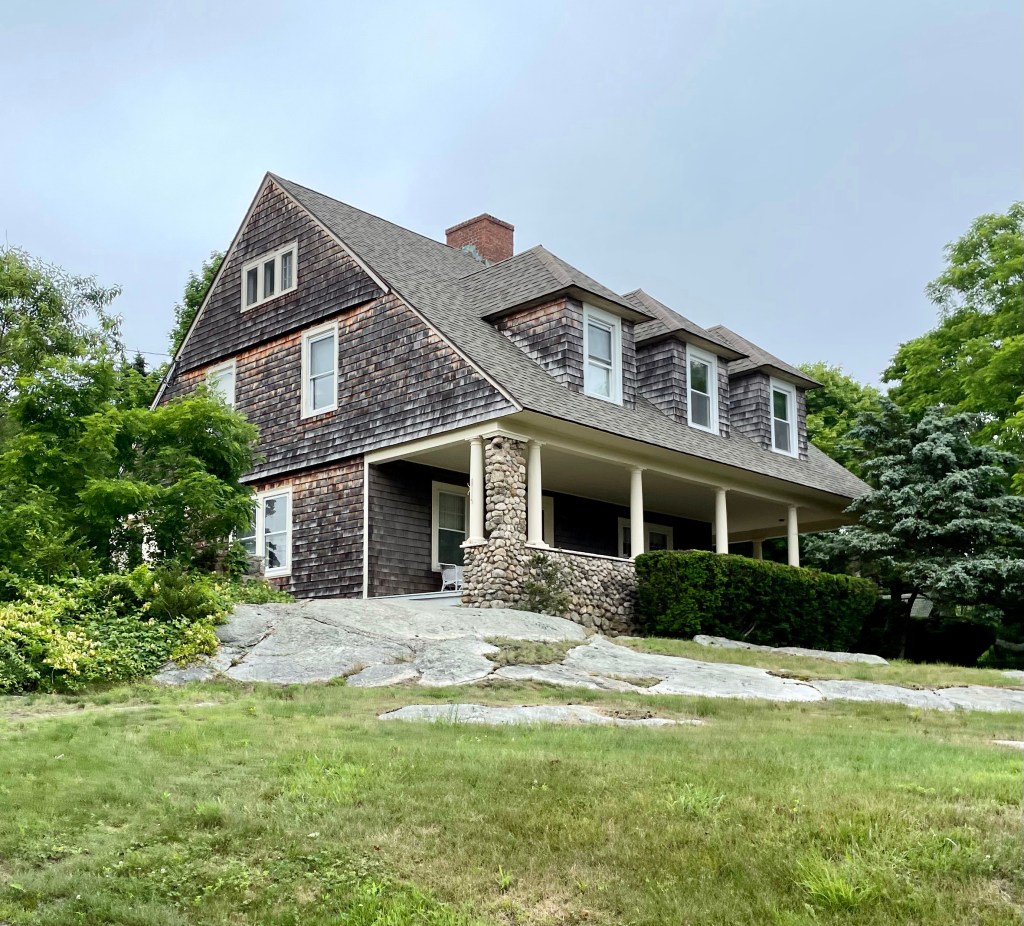
About a decade after the White Family Estate in Waterford was built, artist Henry Cooke White, a painter, designed and had this summer cottage built on part of his land. The gambrel roofed Shingle style house was likely used by family and friends when they would visit Henry at his mansion on the water, which he spent nearly all his time at painting. The house, along with the other homes built for the White Family, remain in the family’s ownership and are very well-preserved.

Henry C. White Estate // 1913

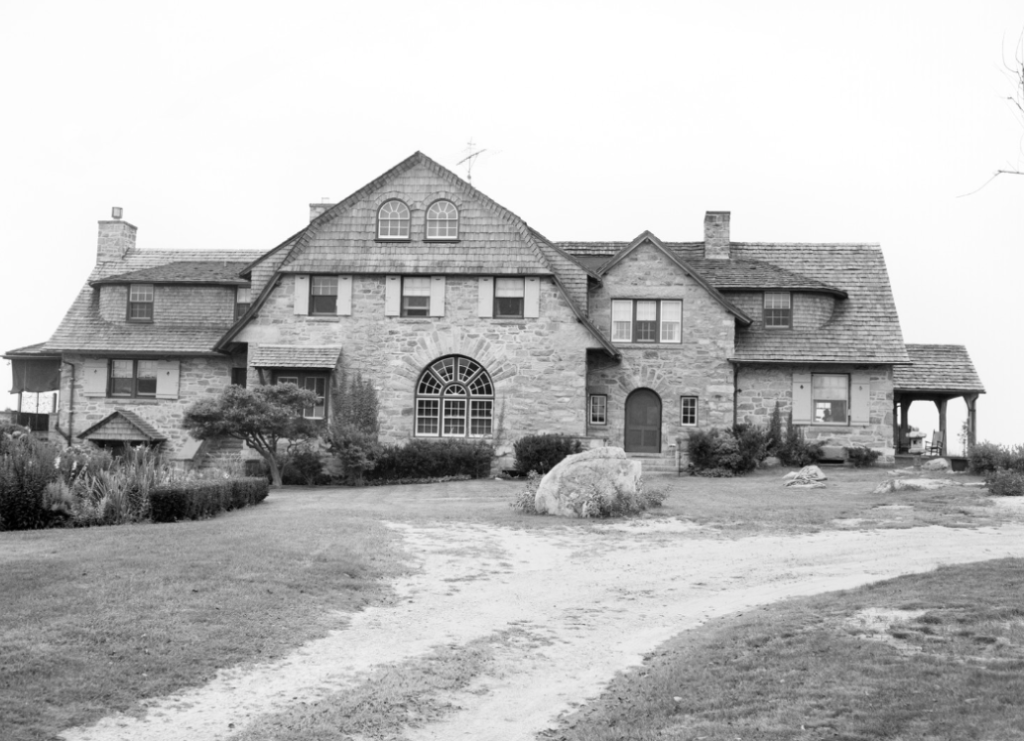
White Estate, c.1970, taken by Wayne Andrews

Henry Cooke White (1861-1952), the patriarch of an extremely artistic family, purchased undeveloped land on a coastal part of Waterford, Connecticut in 1891. When passing through the area he found a vantage point overlooking the water, he was overwhelmed by the panoramic view of Long Island Sound, writing in his memoirs, “…I was convinced that this was my Promised land.” Not long after, he built a summer cottage on what became known as White Point the following year. The Whites wintered with his parents in Hartford until they built a year-round home in Waterford in 1913, designed by Wilson Eyre, a Philadelphia architect, after he was inspired by Charles Lang Freer’s home in Detroit. The rustic Shingle style house was constructed of ashlar stone masonry with shingles above, which is sited perfectly on the rocky shoreline. Also on the site is a boat house and garage (which I could photograph from the street) in similar detailing. Henry‘s son and grandson both followed his footsteps: Nelson Cooke White (1900-1989), who was born at White Point, and inherited his father’s love of the sea, became a noted marine and landscape painter; and Nelson Holbrook White (1932-) who was taught by his grandfather and later studied in Italy how to perfect his painting.