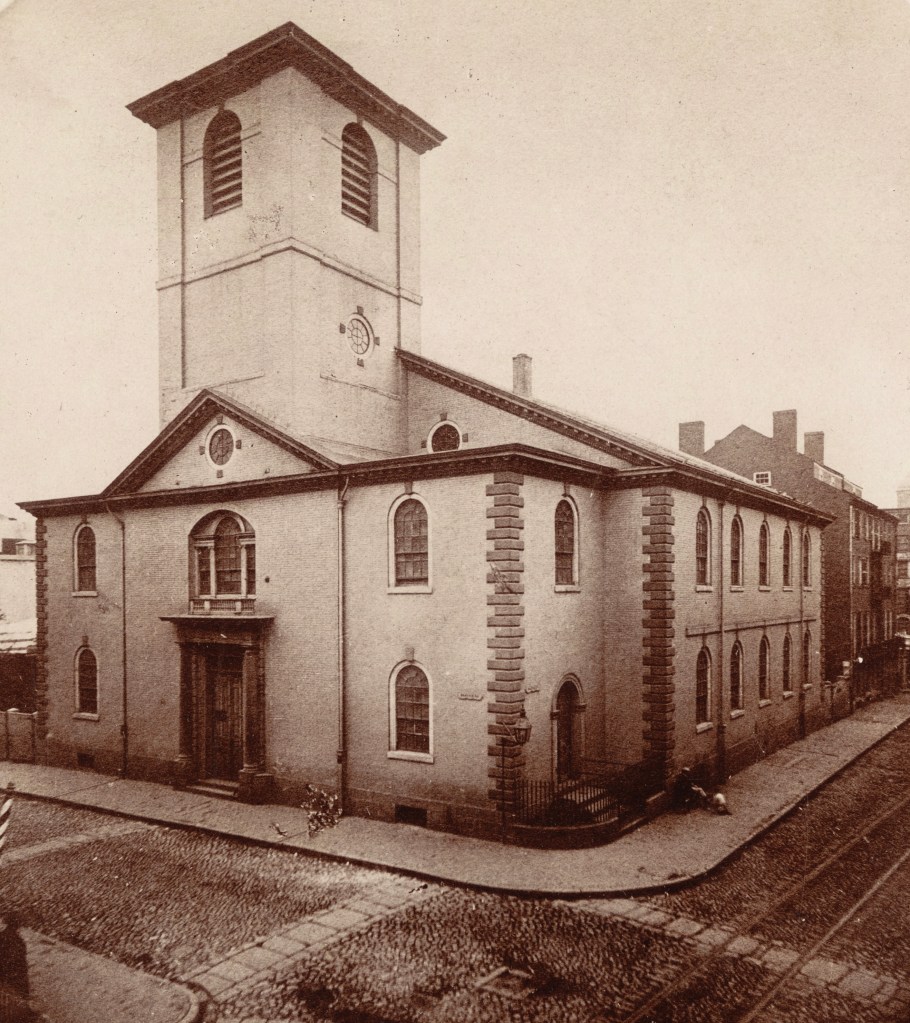
Blanchard Building // c.1855

Image courtesy of Boston Archives.

Did you know that Boston once had it’s own Hogwarts? While we didn’t have wizards and witches in the streets, we did have young magicians learning the tricks of the trade! The Boston School of Magic was founded in the 1880s by William Davis LeRoy (1862-1919), a professional magician who also served as President of the Conjuror’s Club of Boston. Upon opening its doors, the Boston School of Magic was one of a handful of such schools in the country. For $75, you could learn how to escape from a pair of handcuffs from a professional instructor at W.D. Leroy’s “School of Magic”, and even buy some magic items for shows from his large catalogue. Mr. LeRoy was also friends with the famous Harry Houdini, who purchased items from his store and consulted with him on new acts. Houdini was extremely popular in Boston and held many acts and feats of strength here. The Boston School of Magic was located in the second floor of the Blanchard Building at 103 Court Street, a brick commercial building with stone facade constructed in the middle of the 19th century. The building was demolished in the 1920s and replaced with a two-story structure, which too was razed for Government Center.
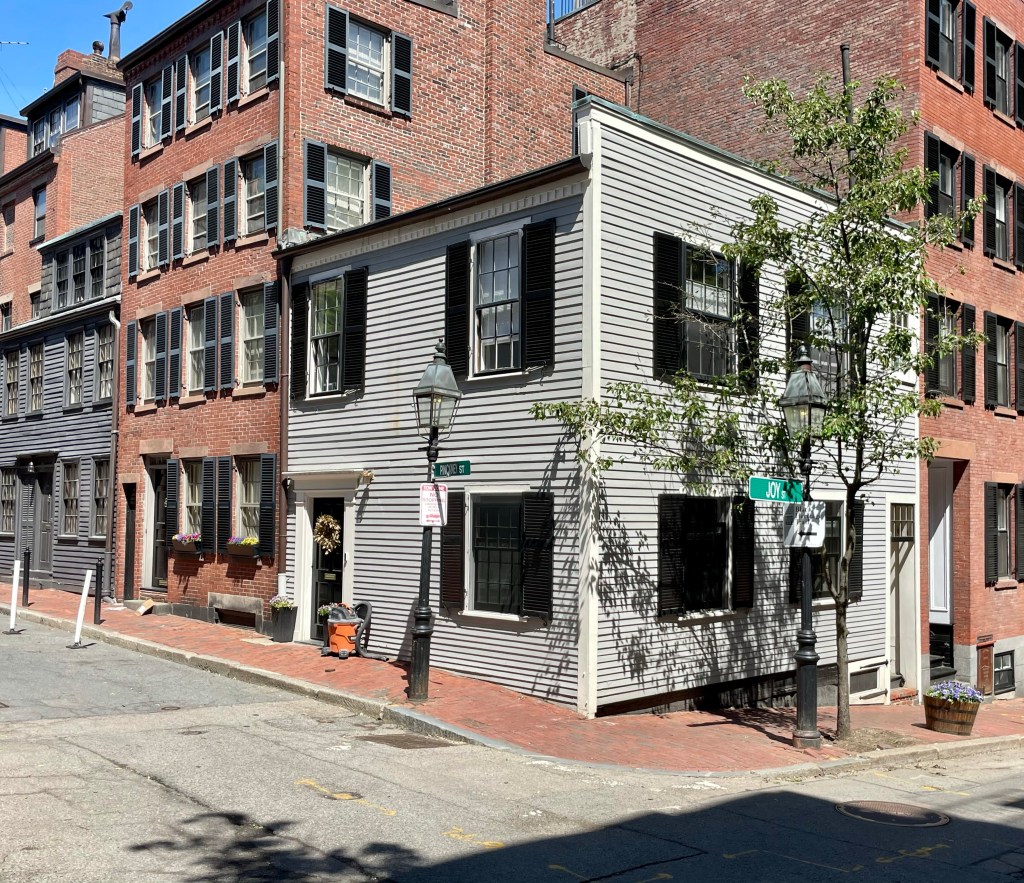
Glapion-Middleton House Ell // c.1800

Less than a dozen wood-frame buildings exist on Beacon Hill in Boston, and this curious building is one of them, and also happens to be one of the oldest structures in the neighborhood! Built by 1800, this structure was constructed as an ell/addition to the Glapion-Middleton House at 5 Pinckney Street in Boston. The Glapion-Middleton House (previously featured) was constructed in 1787 after two Black men, George Middleton and Louis Glapion and their wives, built a small double house in the abolitionist center of Boston, Beacon Hill. In recent years, some have speculated that due to this living arrangement and other accounts, that Glapion and Middleton were in-fact gay men, but this is unsubstantiated. After the home was constructed, a two-story, five-bay ell was constructed which connected the home to Joy Street at the corner. The ell served as additional space for the two families and they appear to have had a workshop or store in part of the building. In 1855, owners demolished the center bay of the ell and erected a brick townhouse, similar to others in the neighborhood. The ell in this building was occupied as a store for the majority of its life and became an Italian restaurant and soon after a “Boyer’s Creamery Luncheon”. The property has since been converted to a residence.

Stanhope Stables // c.1868

Boston has many examples of adaptive reuse, likely none as frequent as converted horse stables and carriage houses from the 19th century. These one-story stables with a mansard roof on Stanhope Street in the Back Bay were constructed by 1868. The street once held other stable buildings, but those lots were either redeveloped or closed for the extension of Clarendon Street. The stables were used to store the horses and carriages of wealthy Back Bay residents including Jacob Pfaff, Dexter Follett, and Barney Corey. When automobiles replaced horses as a primary way of getting around, these buildings were converted to garages. As the land value raised here, they were adapted to commercial use eventually as restaurants. The building at the far left (now Red Lantern) was originally occupied by Gundlach’s Hofbrau German Restaurant, followed by the Red Coach Grill. A large fire occurred at the restaurant in 1955, likely destroying any historic fabric inside. The Stanhope Stables are threatened for redevelopment as the high-value land facilitates a higher and better use (presently proposed as a hotel). While the preservationist in me wants to see these stables remain intact, my stance is that the brick facades should be reconfigured into a new development in a lobby or restaurant.

What do you think?

Brattle Street Church // 1772-1872

Boston’s constant churning of development has given us amazing architectural landmarks, and incredibly unfathomable architectural loss. One of such cases of loss is the former Brattle Street Church which was located on Brattle Street, roughly where the main entrance to Boston City Hall is located today. Demolition of significant architecture in Boston began way before the period of Urban Renewal in the mid-20th century, and the loss of the Brattle Street Church in Downtown Boston showcases this. The Brattle Street Church had been founded in the 1690s by a group of merchants seeking an alternative to the authority exercised by Increase and Cotton Mather in Boston’s existing congregations. Despite these beginnings, the church remained Congregational through the 18th century. At the time of the Revolution, Brattle Street counted such figures as John Hancock, Samuel Adams, Joseph Warren, and John and Abigail Adams among its parishioners. The original wooden church was replaced in 1772 by this stunning brick building, designed by Thomas Dawes. Just years after the doors opened, the American Revolution upended life in Boston. This building was a survivor, and was apparently hit by cannon-fire by the American batteries at the siege of Boston. A cannonball can be seen lodged into the building at the second floor, to the right of the Palladian window. After the American Civil War, development of the Back Bay led to a shifting population away from the downtown core, and a new church was erected for the congregation, the Brattle Square Church, designed by Henry Hobson Richardson. This church was demolished in 1872, just 100 years after it opened its doors and took a cannon for America.

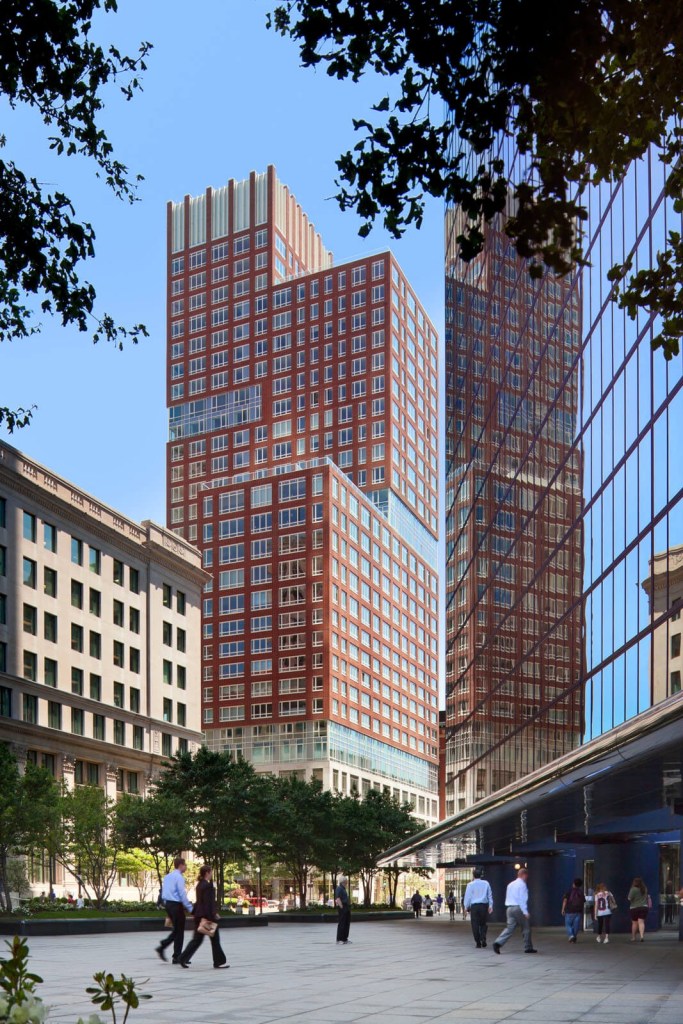
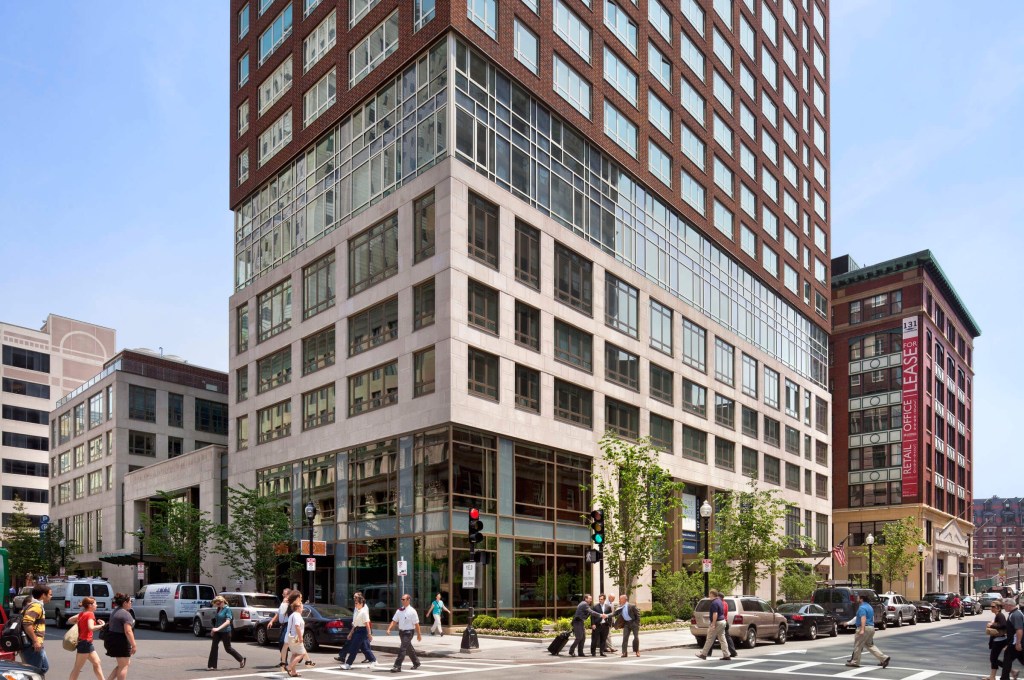
The Clarendon // 2010

Few architects today continually put out good designs for new construction. One of those firms is Robert A. M. Stern Architects (RAMSA), who designed The Clarendon, a high-rise apartment building catty-corner to the tallest building in New England, the Hancock Tower. The Clarendon rises 32-stories atop a five-story limestone base, which relates to the scale of the base of the Old John Hancock Building (across the street). Above, the building is clad in the traditional Boston palette of red brick and limestone, but expressed in a way that relates to its modern neighbors with two-story recessed masses that break up the sheer height of the building. Above the base, the building sets back to create elevated green spaces and to mitigate wind conditions caused by the John Hancock Tower. Together the design features and materials provide a nod to historical context in Boston, while being unapologetically Modern. Part of the appeal for me is how this building does not command the corner, but adds to the rich layered fabric in this section of the Back Bay.

What do you think of the Clarendon?

St. George’s Church // 1759

Schenectady’s oldest extant religious building, St. George’s Church, sits in the center of the Stockade Historic District in Schenectady, New York. As Schenectady was settled and dominated by Dutch settlers, English settlers began moving to the riverfront town, due to its rich fur trade and opportunity. With the growth of English residents, a church where the services were conducted in the English language became necessary. The blossoming congregation hired architect Samuel Fuller, who arrived to Schenectady from Boston in 1758, at the height of the French and Indian War. Ground was broken on the stunning Gothic church in 1759 and it was finally completed in 1763, delayed due to fighting nearby. The church was originally more modest for the smaller congregation, but underwent a large building campaign in the mid 1800s thanks to Reverend William Payne. He oversaw the construction of a new parish house, a new rectory, as well as two successive expansions of the church and the addition of a stone tower and spire to the west front of the church, giving it the appearance we see today. The congregation is still highly active and maintains the building beautifully to this day.

First Reformed Church, Schenectady // 1863

The First Reformed Church of Schenectady is the oldest congregation in the city. Founded by Dutch settlers, Schenectady’s first colonists, the first church lasted over a decade until it burned in the Schenectady Massacre in 1690, when a party of more than 200 French and allied Mohawk warriors attacked the unguarded community of Schenectady, destroying most of the homes, and killing or capturing most of its inhabitants. Sixty residents were killed, including 11 enslaved Africans. An expanding congregation after, outgrew its second and third buildings, replacing them with larger structures. The fourth was lost in Schenectady’s Great Fire of 1861, causing yet another building campaign. The present church building, an architectural landmark in Gothic design, was completed by the highly regarded Victorian-gothic architect Edward Tuckerman Potter in 1863. Potter is also known for his designs of the Nott Memorial Building (previously featured), in Schenectady, and Mark Twain’s home in Hartford, CT. A fire in the church gutted it in 1948, but the community at large banded together to fund the restoration efforts of the amazing architectural landmark.

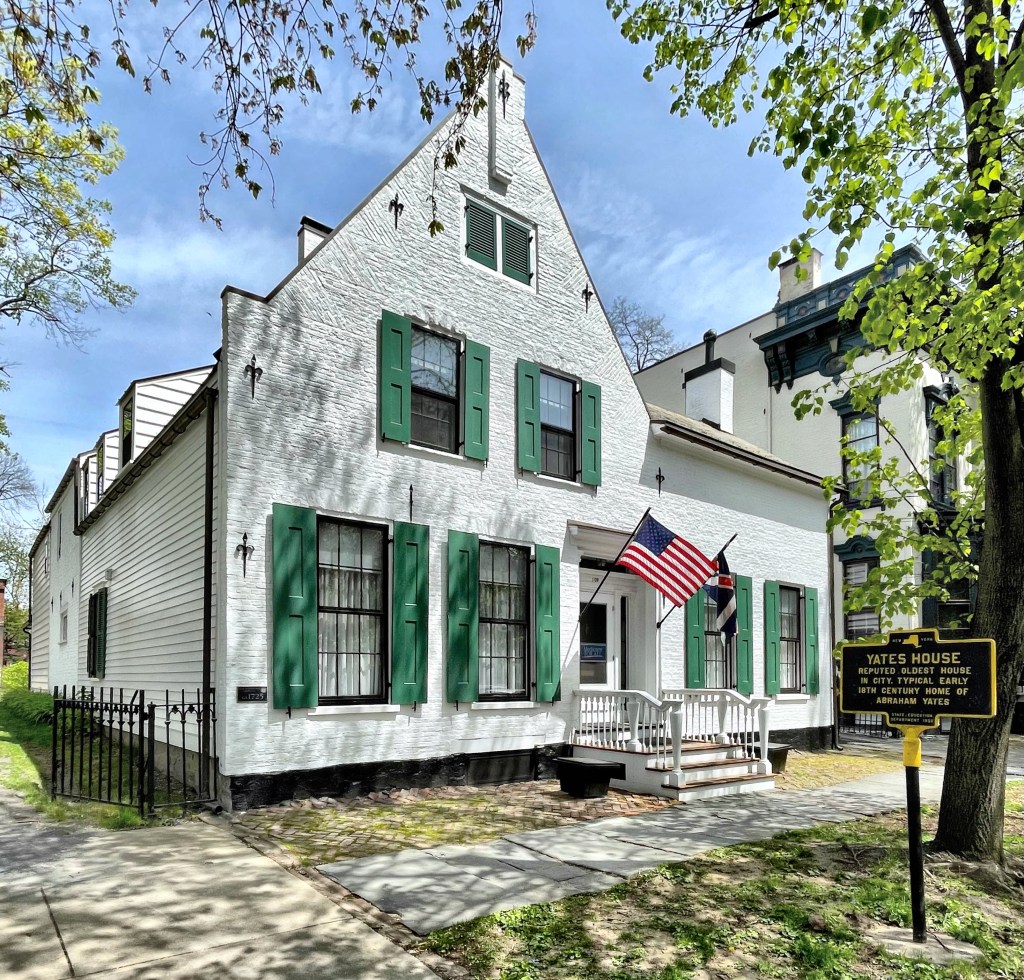
Yates House // 1730

Thought to be the oldest extant home in Schenectady, New York, the Yates House serves as an excellent example of Dutch-inspired architecture found in the days before the founding of the United States of America. The house, believed to have been constructed around 1730, is an example of Dutch Colonial architecture. Dutch Colonial architecture was clearly common in New Netherland, present-day New York. As a contrast with New England, which featured British-inspired Georgian architecture, the homes and buildings found in the New Netherland colony was unapologetically Dutch. The Yates House in Schenectady’s Stockade neighborhood features a Dutch gable end wall facing the street with interesting brickwork.

Teneyck-Yates House // 1760

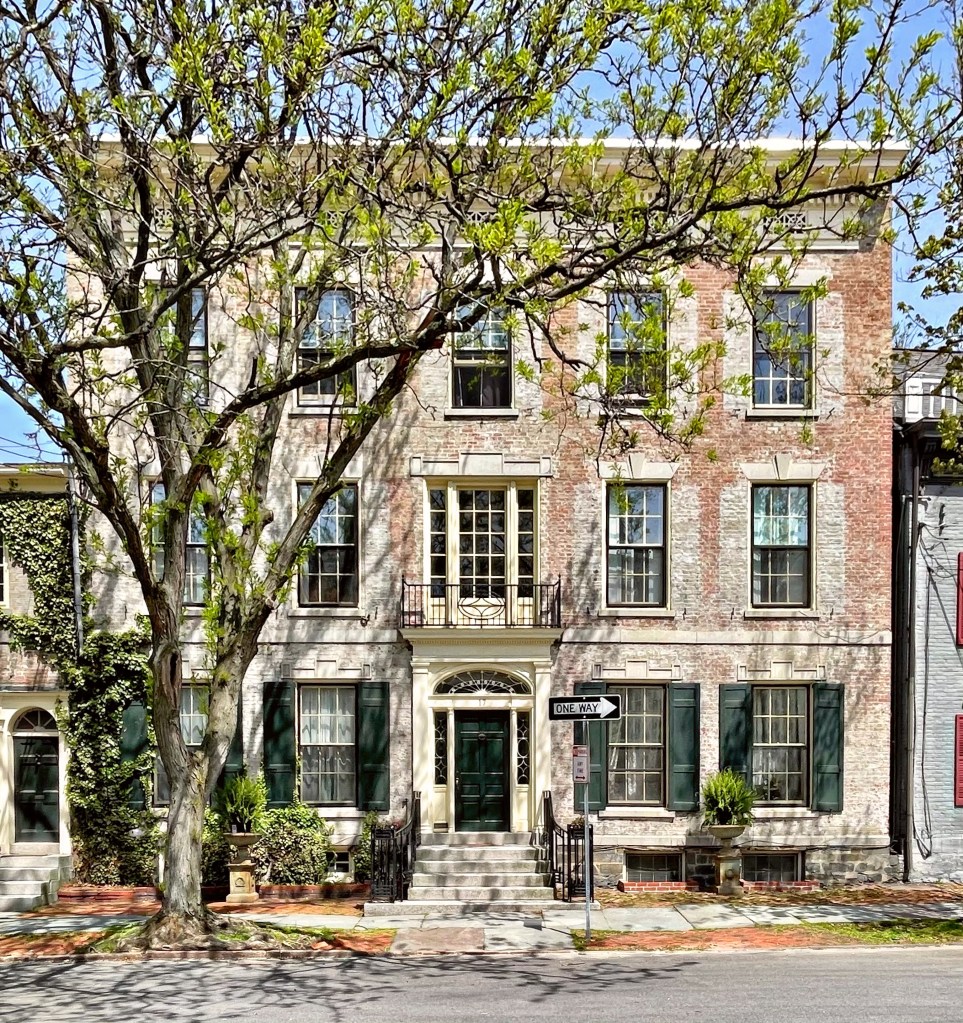
Tobias H. Ten Eyck was born in 1717 to a wealthy family from Albany, New York. He lived in Schenectady as a child and met his wife, Rachel De Peyster. The year he married Ms. De Peyster, he had this brick Georgian mansion built, which at the time, had a gambrel roof. Tobias was counted among Schenectady’s wealthiest businessmen, dealing in trade here until his death in 1774. The house was purchased next by James Ellice, who lived in the home with his wife Ann. While on a business trip to Montreal as an “Indian fur trader”, Ellice died at the young age of 33. His widow Ann remarried Joseph C. Yates, a lawyer. The couple occupied this home and Joseph built the one story law office to the side of the building to run his firm out of. He also had this home “modernized in the early 1800s, boxing off the third story and adding the Federal period detailing. He served as the mayor of Schenectady (beginning in 1798), being appointed successively to twelve one-year terms. In 1805 he was elected as a state senator, in 1808 as a State Supreme Court justice, and in 1823, as the seventh governor of New York (1823–1824).

Jacob A. Swits House // 1792

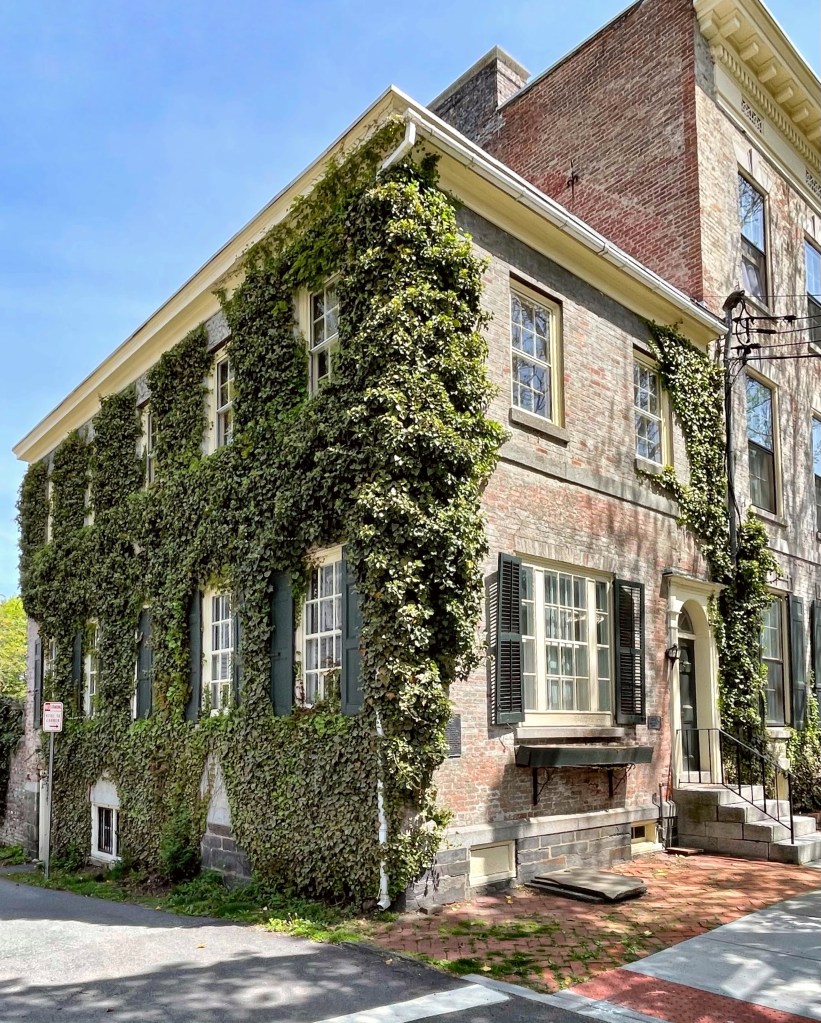
This gorgeous house in Schenectady’s Stockade neighborhood was built in 1792 for Jacob A. Swits. Swits was a descendant of the first settlers of Schenectady and served in the local militia upon the start of the American Revolution. He later, worked in town as a merchant and was involved with local affairs. He became Major General of the regional militia during the War of 1812. Between these two wars, he had this home built, which was likely a asymmetrical three-bay Federal home. Sometime later, the rightmost bay was added and much of the ornate detailing was added.