Hull Yacht Club // 1891-1930s

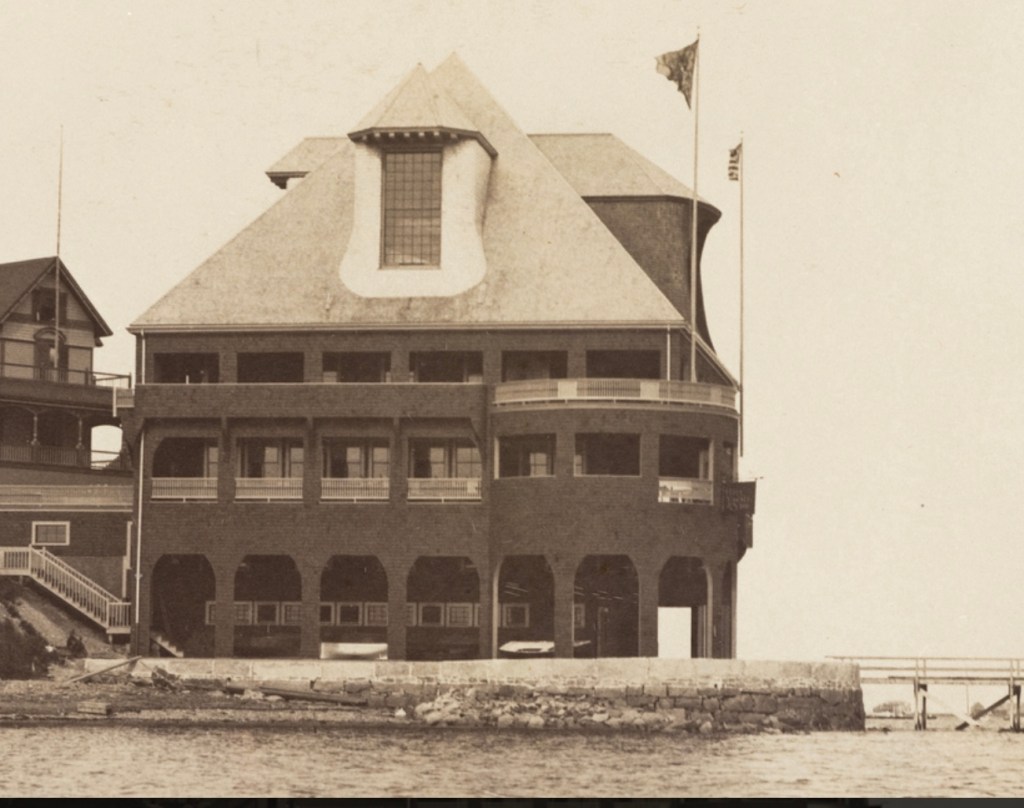
c.1891 image of second Hull Yacht Clubhouse, Stebbins Collection, HNE

In the Spring of 1880, thirteen Hull, Massachusetts, summer residents, who owned and raced small sailboats, met and decided to form a yacht club. The Hull Yacht Club was founded that same year. During the first two seasons there was no club house, sailing events were run from a private pier and dock and meetings were held at members homes. Even though they started with no club house, being close to Boston with plenty of deep, protected water, drew many new members. The first clubhouse here was constructed in 1882 and the club saw membership soar to over 500. The clubhouse was quickly deemed inadequate for the Boston-area elite and their massive sloops. The second Hull Yacht Club was completed in May 1891. The New York Times and Outing Magazine described the new club as one of the grandest yacht clubs in America, and at the time, it had the second highest membership in the country! The main club house was designed by architect S. Edwin Tobey, and stood four stories, with a 12 foot wide piazza on three sides covered by endless expanses of shingles. The third floor had billiard rooms and public and private dinning, committee room, reading room, wine room, The second floor housed three bowling alleys, and the first floor had lockers, showers, laundry, spar storage. The club merged a couple times over the subsequent decades, but suffered heavily due to the Great Depression, when the Gilded Age monies stopped flowing as freely. The club sold the massive shingled building to developers who sought to convert the building into a resort, but it was deemed a fire hazard and razed in the 1930s. The club erected a new, modest clubhouse near Point Allerton later.

Fort Revere // 1898-1947

Fort Revere, named in honor of Paul Revere, was acquired as Nantasket Head Military Reservation in 1897 under the large-scale Endicott program, which initially included seven forts in the Harbor Defenses of Boston. The fort replaced the outdated Revolutionary-era fortifications and built upon the earthworks, creating batteries were built 1898–1906. Additionally, a 1903 concrete water tower was constructed to provide water and reconnaissance to the fort. After the American entry into World War I in early 1917, the fort was expanded to include temporary structures such as quarters and additional storehouses. With the outbreak of World War II in 1939, Fort Revere was again built up with temporary structures to accommodate the 1940–1941 mobilization. With new defenses completed elsewhere in the Boston area, the fort’s remaining original guns were scrapped in 1943. After the war, Fort Revere was disarmed and turned over to the Commonwealth of Massachusetts. Remains of Fort Revere include six gun emplacements built into the southeast, east and north sides of Telegraph Hill. They are connected by dugouts or bunkers and are of concrete and brick construction. Additionally, tunnels and storerooms can be explored, lined with graffiti and crumbling concrete. I highly recommend you all check it out and explore the grounds, its a great place to explore and learn history! Fingers crossed to see the remaining fortifications restored to their former glory.

Fort Revere Tower // 1903

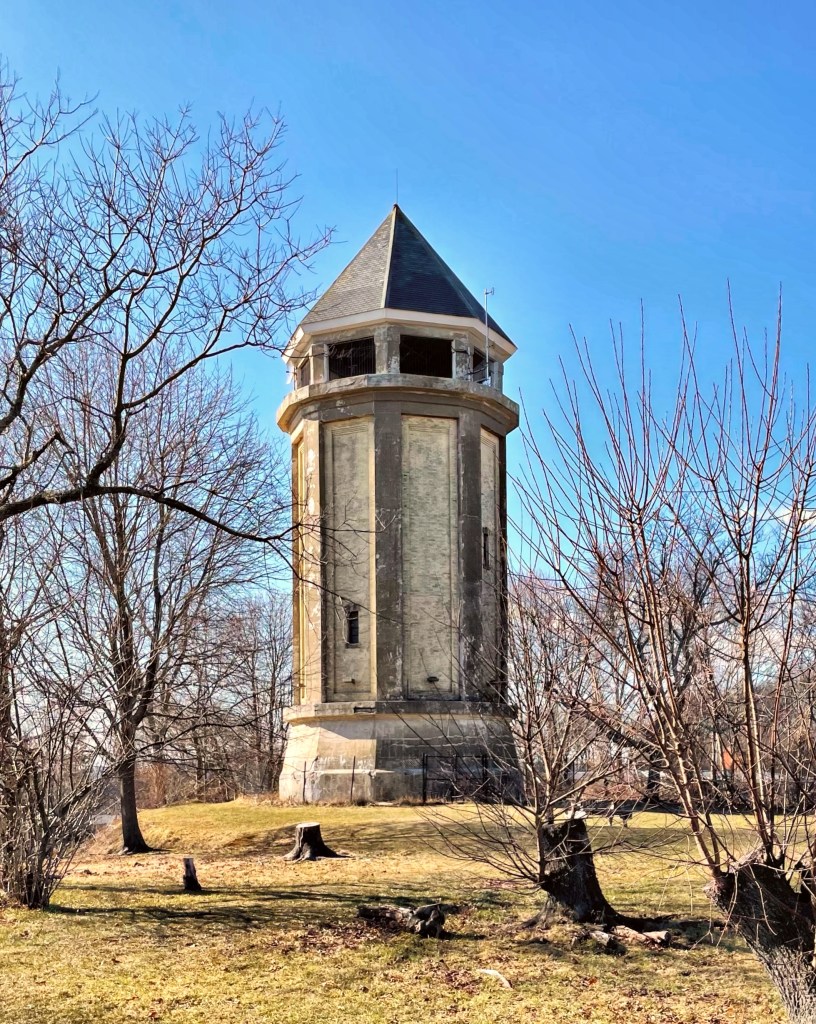
The Town of Hull, Massachusetts was first settled in 1622 and officially incorporated in 1644, when it was named for Kingston upon Hull, England. The town juts out into the Boston Harbor, which historically had provided as a defense for approaching vessels into the harbor. As early as 1673, Telegraph Hill in Hull, was used as the highest point in the Boston harbor area from which signals could be sent warning the approach of vessels. The site was first used as a fort in 1776 to defend the port of Boston. Fort Independence was built on top of the hill in 1776-1777, to be succeeded by the much larger Fort Revere in 1903 (see next post). The first telegraph tower was built on the hill in 1827. Several other telegraph stations later occupied the site until 1938, when radio communications made the site obsolete. Though little of the original Revolutionary-era fort remains, the fort which began construction at the turn of the 20th century lasts as a stunning reminder to the importance of coastal defenses, high atop hills. At the highest point of Telegraph Hill this water tower which rises 120 feet off the ground was built in 1903 for the new Fort Revere as the first reinforced concrete water tower in the United States. At the top of the tower, an observation deck (now closed) was also used to send messages to other harbor defenses. The tower was restored in 1975 was designated an American Water Landmark in 2003. It was periodically open to the public until mid-2012 when it was closed due to safety concerns.

Lewis and Harriet Hayden House // 1833

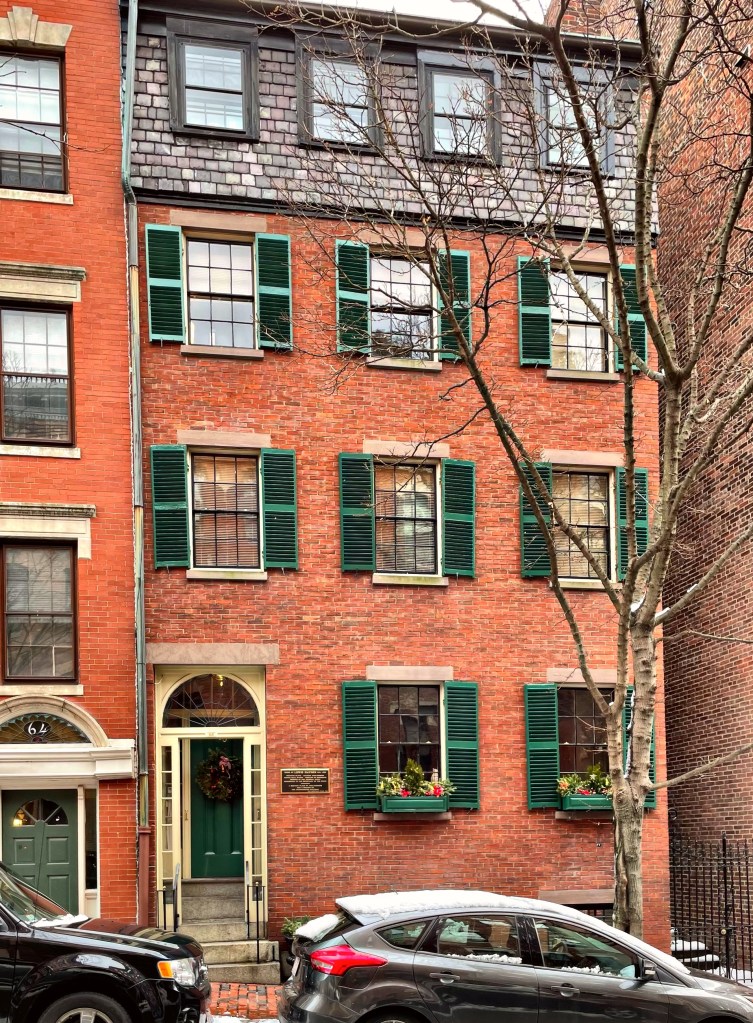
Lewis Hayden was born into slavery in Lexington, Kentucky, in 1811, as one of a family of 25. Hayden was first owned by a Presbyterian minister, Rev. Adam Rankin. He sold off Lewis’ brothers and sisters in preparation for moving to Pennsylvania, and he traded 10-year-old Hayden for two carriage horses to a man who traveled the state selling clocks. In the mid-1830s, Hayden married Esther Harvey, also a slave. She and their son were sold to U.S. Senator Henry Clay, who sold them both to the Deep South, and Hayden never saw them again. By 1842, Hayden married a second time, to Harriet Bell, who was also enslaved, and he cared for her son Joseph as his stepson. After this marriage, Hayden began making plans to escape to the North, as he feared his second family might be split up like the first. In 1844, he and his family escaped with assistance of abolitionists all the way to Canada. From Canada, the Haydens moved in 1845 to Detroit in the free state of Michigan, and the next year, they moved to Boston, at the center of anti-slavery activity with the city’s strong abolitionist base. In Boston, Hayden became a lecturer and ran a clothing shop, acquiring enough money to live in this large home in Beacon Hill. The Haydens routinely cared for fugitive slaves at their home, which served as a boarding house. Guests included Ellen and William Craft, who escaped from slavery in 1848. Hayden prevented slave catchers from taking the Crafts by threatening to blow up his home with gunpowder if they tried to reclaim the pair. Hayden died in 1889, outliving the abolishment of slavery. Harriet died in 1894 and left $5,000, the entirety of their estate, to the Harvard University for scholarships for African American medical students. It was believed to have been the first, and perhaps only, endowment to a university by a former slave. Their former home remains a stop on Boston’s Black Heritage Trail.

Glapion-Middleton House // 1787

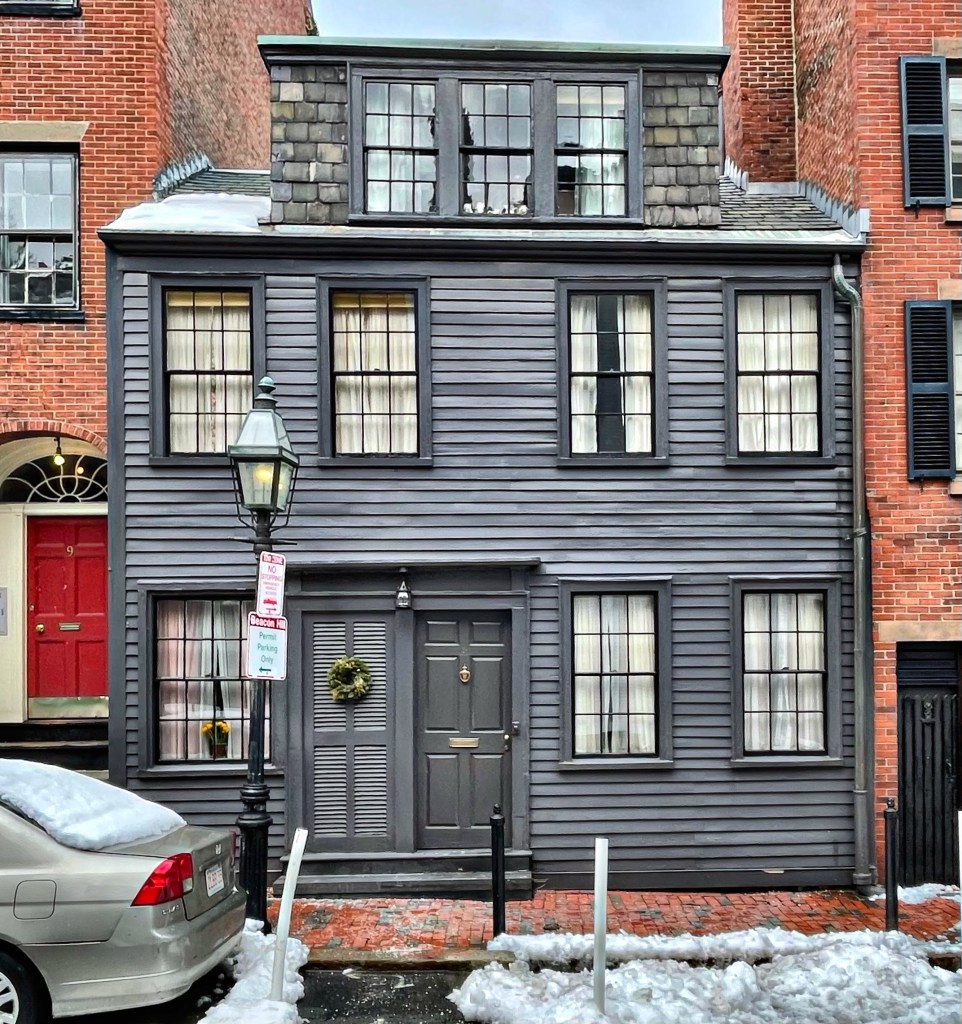
George Middleton and Louis Glapion built this two-family residence in Boston’s Beacon Hill neighborhood in 1787, which is now the oldest extant home on Beacon Hill. This wood structure is a typical example of late 18th century Boston homes built by African Americans. Louis Glapion worked as a hairdresser and may have been from the French West Indies. Glapion lived and ran his business out of 5 Pinckney Street until his death in 1813. His wife Lucy continued to live there until 1832. George Middleton was a “horse breaker” (horse trainer) by trade and was adored in the diverse community of Beacon Hill. Middleton was one of 5,000 African Americans to serve in the military on the Patriot side of the Revolutionary War, leading an all-Black militia called the Bucks of America. The group is believed to have guarded the property of Boston merchants during the Revolution. After the war, he became the third Grand Master of the African Lodge, later known as the Prince Hall Masons. In 1796, Middleton founded the African Benevolent Society, which helped orphans and widows through job placement and financial relief. He died in 1815, outliving his wife and apparently left no children when he died in 1815.

Richardson Building // 1895

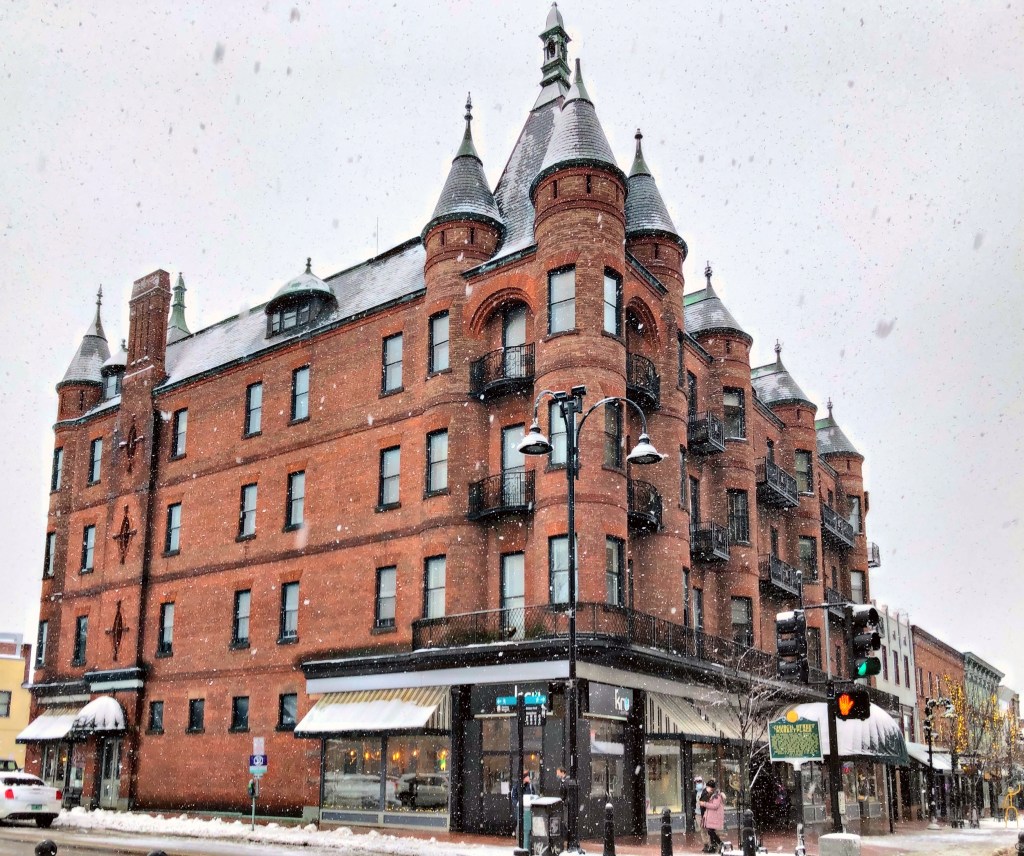
Located across from the Federal style Unitarian Church and Romanesque style Masonic Temple and rounding out the nicest intersection of Burlington Vermont, I present, the Richardson Building. The Richardson Building was constructed in 1895 by developer Albert Richmond, and can be classified as Chateauesque with its rounded bays surmounted by conical roofs and finials, showing the complexity of a French Chateau. The building was likely constructed for a commercial interest as an income property with retail at the ground floor and professional offices above. In 1911, the famous building was purchased by Frank D. Abernethy, who purchased his partner’s share of their business and created the Abernethy’s Department Store, soon the largest department store in town. Despite being a prominent, long-term fixture on Church Street, Abernethy’s went out of business in November 1982. The building was later renovated and new tenants moved in.

Burlington Masonic Temple // 1898

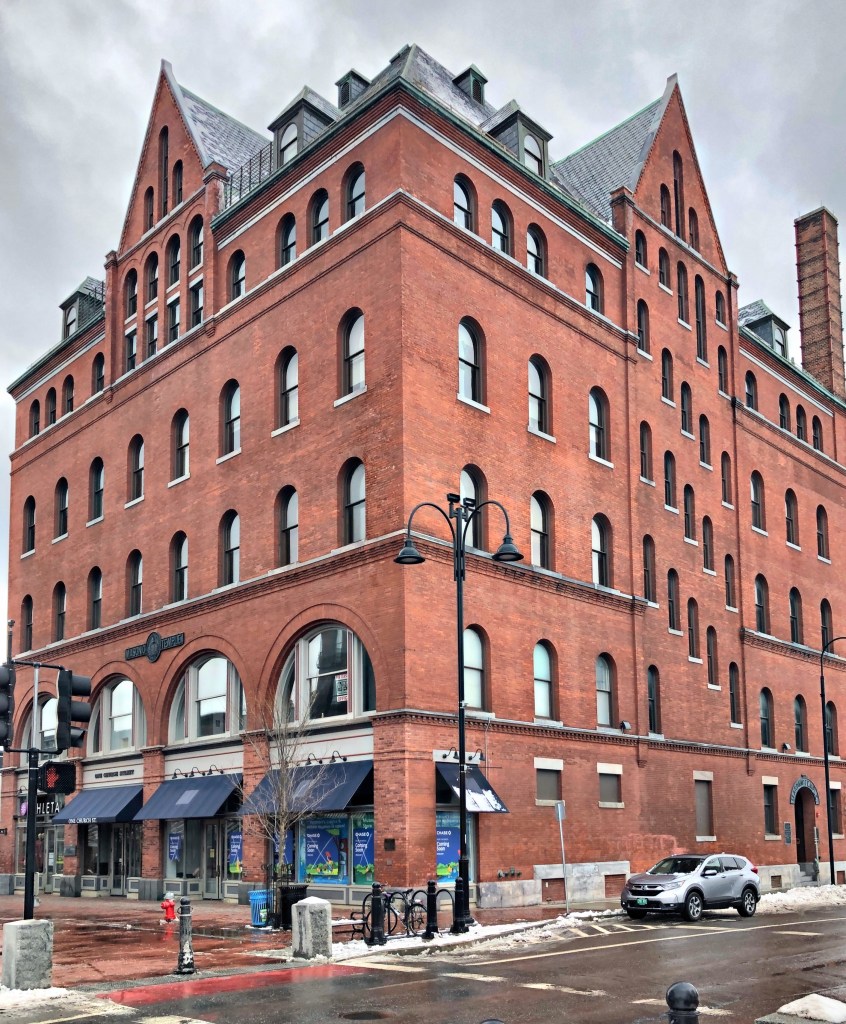
This large, imposing brick structure across from the Unitarian Church in Burlington, Vermont, was built in 1898 as the state headquarters of the Grand Lodge of Vermont, Free and Accepted Masons. Masonry, also known as Freemasonry, is the oldest and largest fraternity in the world, and they erected architectural landmarks in cities and towns all over the globe. At the end of the 19th century, the Masons in Vermont wanted a large new headquarters to host events and meetings for those visiting from all over. The building was designed by John McArthur Harris of Wilson Brothers & Company of Philadelphia at the time the firm was working on major buildings for the UVM campus. Above the retail use at the ground floor for rental income, multiple floors of meeting and banquet rooms, parlors, library, offices, and regalia spaces culminated in a fifth-floor assembly hall surrounded on three sides by a sixth-floor gallery. At the roof, the gables, along with small hipped dormers, animate a great hipped roof that evokes the symbolic Masonic pyramid. The massive roof, round arches, and a striking stair-step side elevation give the building a purely Richardsonian character, minus the carved sandstone and monumental arches.

Unitarian Church, Burlington // 1816

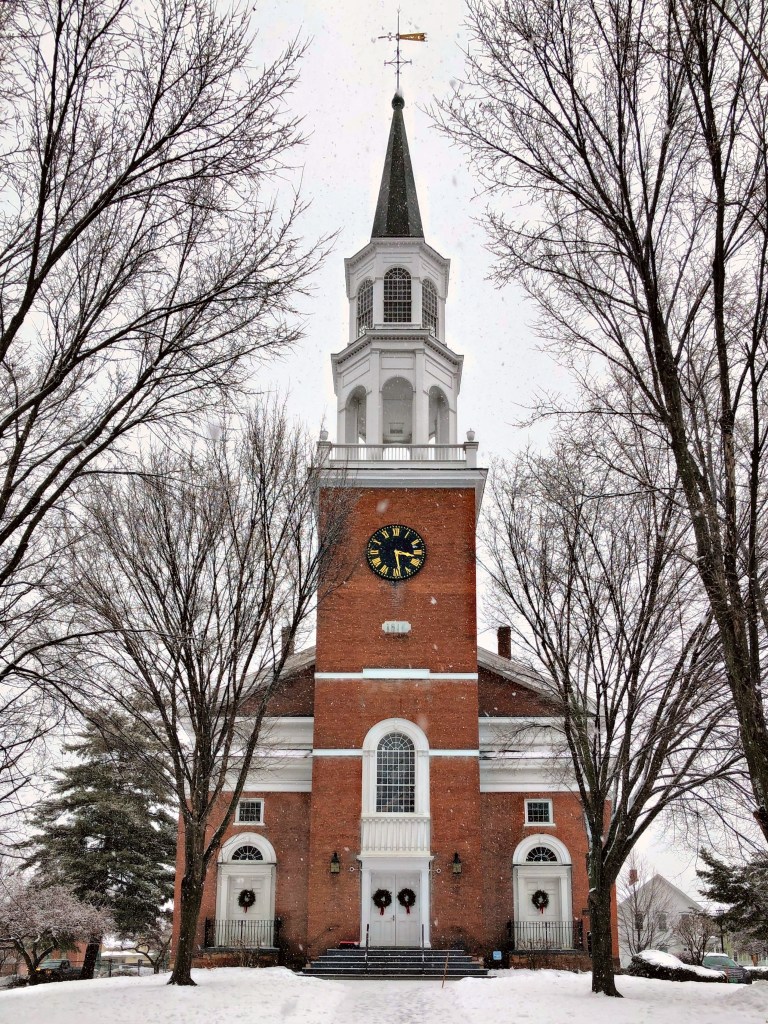
The building that gives Burlington’s iconic Church Street its name is this, the Unitarian Church of Burlington. One of the most stunning Federal style churches in New England, the church is the oldest surviving place of worship in Burlington, built in 1816. The church was designed by English architect Peter Banner (possibly with assistance of Charles Bulfinch), years after his crowning achievement, the Park Street Church in Boston was completed. From the head of Church Street, the church oversaw the growth of Burlington from a small lakefront town to the largest city in the state. In August 1954, the church steeple was struck by lightning, causing it to shift over two feet in a matter of months, unknown to the congregation and public. It was decided that due to concerns the steeple may collapse through the building, it was selectively demolished and reconstructed. The church remains an active part in the city and architectural landmark for Burlington.

St. Paul’s Cathedral, Burlington // 1973

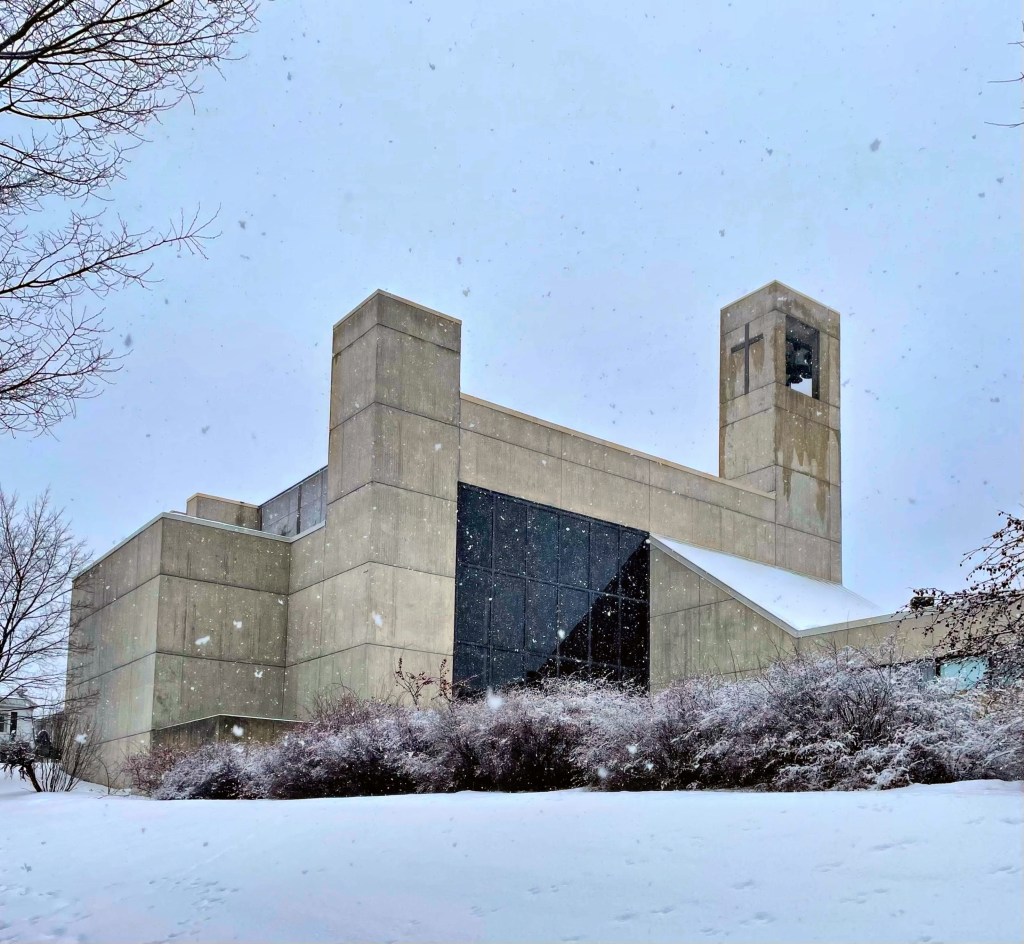
St. Paul’s Church in Burlington, Vermont, was organized in 1830, when Burlington’s population was about 3,500. About 55 Episcopalians met at a local hotel and laid the groundwork for the parish. In 1832, the fledgling parish dedicated its new building, a neo-Gothic limestone structure, which was enlarged multiple times as the congregation grew as the city did. In 1965, the Diocesan Convention voted that St. Paul’s Church be designated a Cathedral Church of the Diocese (one of two in the state). Just six years later, it was destroyed by fire, sparked by an electrical malfunction in the basement, leading to a new evolution of the church. At the time of the fire, the City of Burlington was engaged in massive urban renewal projects. As a part of this program, the City offered to swap the land on which Old St. Paul’s had stood for a spacious new tract overlooking Lake Champlain and the Adirondacks. Although the decision to change locations was a contentious one, the parish did accept the offer. When discussing designs for a new cathedral, there was a strong desire to make a new statement in architecture, diverging from the traditional Gothic or Colonial designs seen all over the country. An international competition was held to determine the architect of the new Cathedral. The winner was the local firm Burlington Associates, now Truex, Cullins & Partners. Completed in 1973, the Cathedral is made of stressed concrete. The structure stands strong and firm, yet is welcoming. Windows provide sweeping views of Lake Champlain and the distant Adirondacks.

Follett House // 1841

One of the last remaining grand 19th-century lakeside mansions in the city of Burlington, Vermont, the Follett House stands as an excellent example of Greek Revival architecture and preservation. The Follett House was built in 1841 for Timothy Follett, a prosperous Burlington developer and former Chittenden County judge. Follett hired architect Ammi B. Young to design his estate. Young would go on to become the first Supervising Architect of the U.S. Treasury Department. As a federal architect, he was responsible for creating monumental civic buildings across the United States numerous custom houses, post offices, courthouses and hospitals, many in his favorite Greek Revival style. The house is oriented facing west toward Lake Champlain, with a terraced lawn extending towards the water. The main facade features monumental columns creating a greek temple front, supporting a pediment. The secondary entry is a more modest interpretation of the style with a smaller classical portico. After the home was built, Follett became president of the Rutland & Burlington Railroad, the first Railroad between Boston, MA and Burlington, VT, from 1845-1852. He lost the house, along with his personal fortune, when the railroad went bankrupt in 1852. The house was soon after bought by Henry R. Campbell, superintendent of the rival Central Vermont Railroad.